
This Tennessee Waterfall Becomes A Beautiful Fall Escape When The Leaves Change
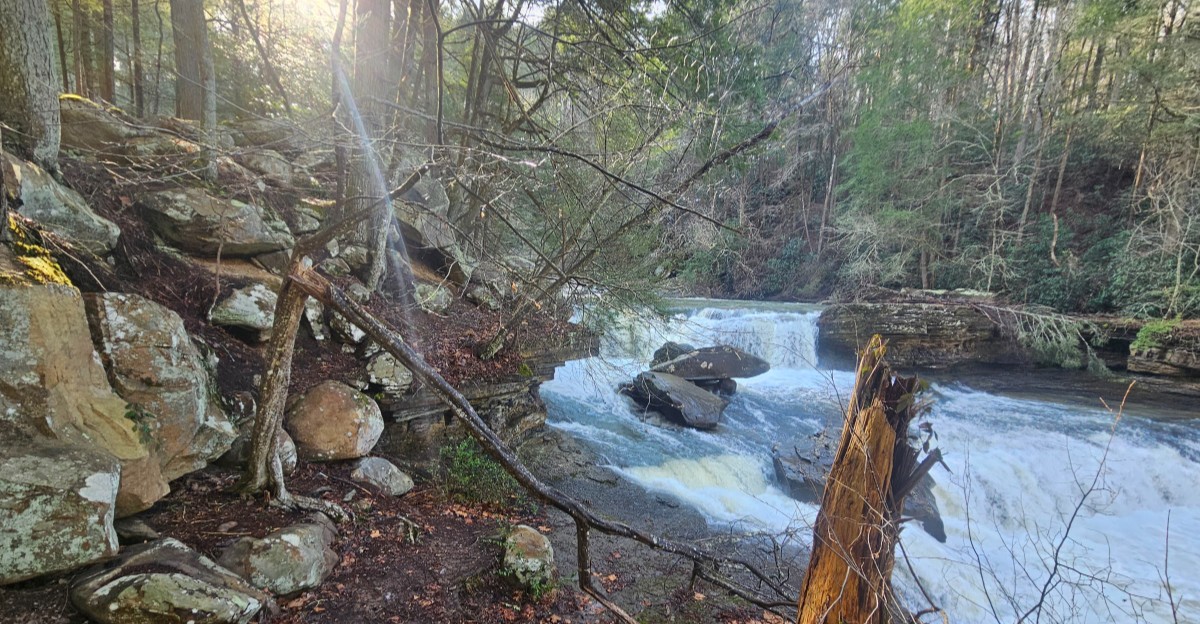
What happens when a quiet Tennessee waterfall gets surrounded by blazing fall color? The whole scene starts looking like something you would expect on a postcard.
Autumn gives this peaceful spot an entirely different personality. Gold, orange, and red leaves frame the rushing water, while the cooler air makes the short trip outside feel especially refreshing.
It is the sort of place where you may plan to stay for twenty minutes and end up lingering much longer.
Tennessee is beautiful during fall, but seeing colorful leaves around moving water adds something extra to the season. Bring a camera, wear shoes that can handle uneven ground, and give yourself time to enjoy the view without rushing.
This waterfall may be fairly simple compared with some of the state’s bigger natural attractions, but once the leaves change, it becomes a fall escape that feels surprisingly special.
A Cascade That Stretches The Whole Creek
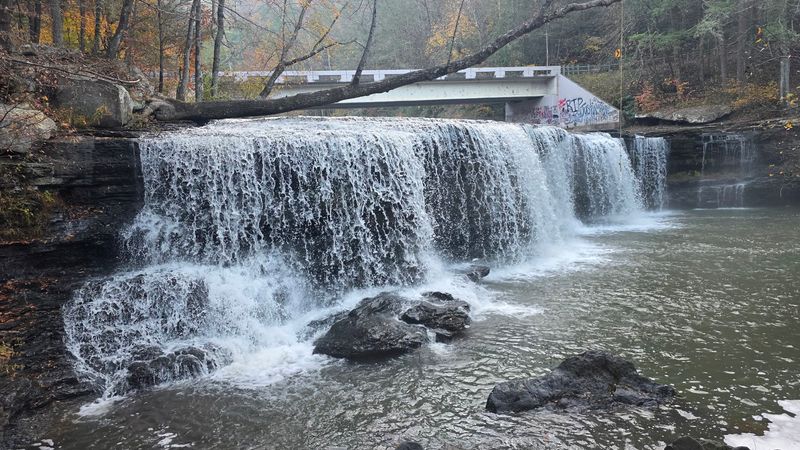
Eighteen feet does not sound tall until you see it spread across an entire creek. That is the trick here.
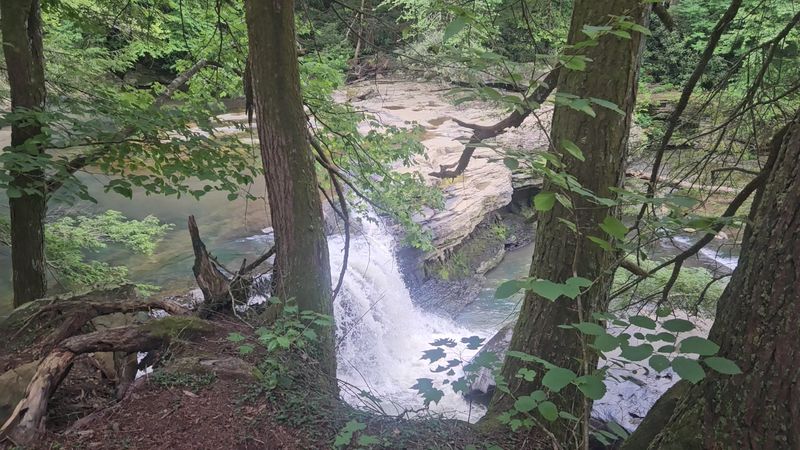
Crooked Fork Creek does not trickle over a narrow lip. It pours across the full width of the rock shelf.
The result looks less like a single stream and more like a moving wall of water. After a good autumn rain, the volume swells and the sound carries far into the woods.
Potter’s Falls sits in Morgan County, on the eastern edge of the Cumberland Plateau. The plateau is famous for sandstone layers that break off in clean, flat ledges.
Those ledges are exactly what create wide waterfalls like this one.
Below the drop, water gathers in a broad pool. In fall the surface catches reflections of the trees above, turning the whole basin copper and green.
Photographers tend to love a cloudy day here. Overcast light softens the glare on wet rock and makes leaf colors look richer rather than washed out.
Fun detail worth knowing: the falls sit almost directly beneath a road bridge. Drivers cross over the top without realizing a major cascade is churning below them.
Pull over, step out, and the surprise hits immediately.
When The Plateau Turns Gold And Crimson
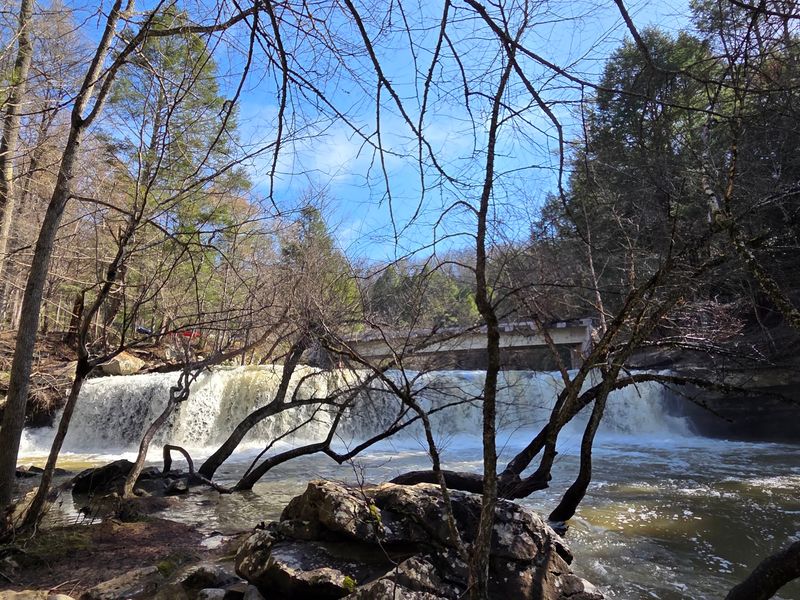
Timing matters more than luck with fall color. In this part of East Tennessee, the hardwoods usually reach peak somewhere between late October and early November.
Elevation on the plateau nudges things slightly earlier than the valleys nearby. Maples handle the reds. Hickories and poplars bring the yellows. Oaks come in last with deep bronze and rust tones that hang on well into November.
Here is a helpful trick. Color looks strongest on a cloudy day right after rain. Wet bark darkens, which makes the leaves pop by contrast.
Rain does something else useful too. It boosts creek flow, so the cascade runs fuller and louder than it does during a dry stretch.
The forest wraps tightly around the water on both banks. That means you are not just looking at leaves in the distance.
They arch overhead and drift down onto the pool while you stand there.
Fallen leaves collect in the eddies along the rock edges. Swirling clusters of red and yellow spin slowly in place, which is oddly mesmerizing to watch.
Morning light filters through the canopy at a low angle in autumn. Arrive within a couple hours of sunrise and the whole gorge glows.
Two Waterfalls For The Price Of One Short Walk
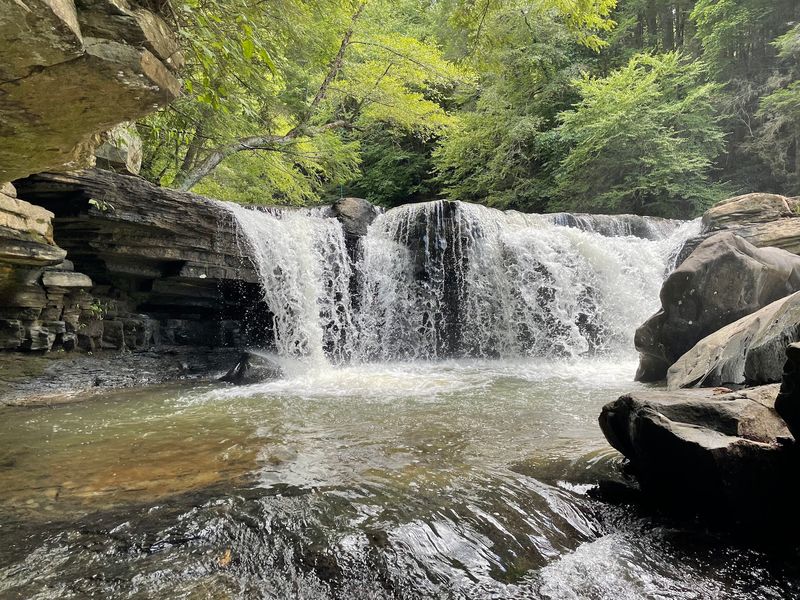
Most people stop at the first waterfall and head home. That is a mistake. There are two distinct drops to see, an upper and a lower.
The upper falls sits right beside the road, visible almost from the parking pull-off. It requires almost no effort at all.
The lower falls takes a short walk down a trail through the woods. Plenty of folks consider it the better of the pair, with a more secluded setting and a wider pool below.
Distance is genuinely short. You are talking minutes, not miles. Still, the route involves stepping across and around boulders rather than a smooth graded path.
Trails run along both sides of the bridge, which gives you options. Some paths follow the creek downstream.
Others climb a bit for higher viewpoints through the trees.
Bring a walking stick if your balance is not perfect. The rock hopping is manageable but uneven, and autumn leaves can hide dips and gaps underfoot.
Plan on an hour minimum to see both cascades without rushing. Two or three hours lets you explore side trails, sit on a warm boulder, and simply listen to the water move.
Crooked Fork Creek Sets The Soundtrack
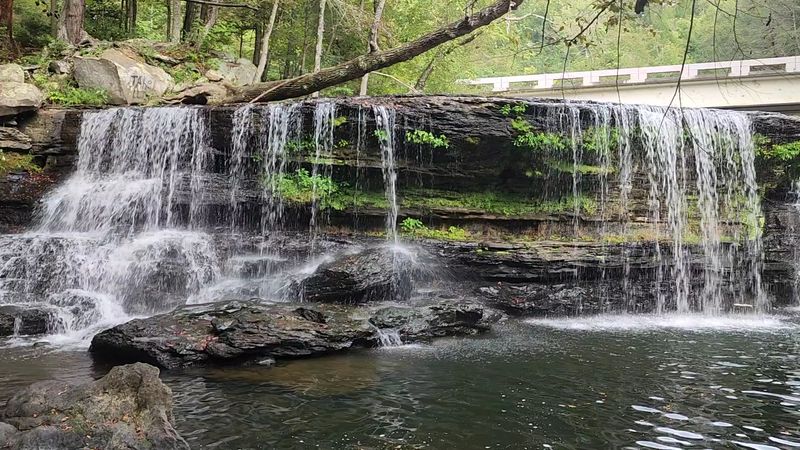
Close your eyes for a second and the creek does all the talking. Crooked Fork Creek runs year round, which means the sound never fully stops.
It shifts from a soft rush in dry spells to a steady roar after storms.
Water moves over sandstone in layers here. Small chutes, shallow slides, and mini drops appear all along the banks, not just at the main falls.
Those smaller features are easy to overlook. Slow down and you will spot pockets where the current spins in tight circles against the rock.
The deep pool at the base is the centerpiece. It stretches wide enough that the mist from the falls never quite reaches the far edge.
Autumn changes the water’s look completely. Cooler temperatures clear up the creek, so you can see gravel and stone several feet down.
Fish live in these waters, and quiet observers sometimes spot small ones darting between shadowed rocks. Patience rewards you.
A practical note about the rocks. Wet sandstone gets slick, especially where spray lands or moss grows.
Test your footing before shifting your weight, and skip the edges when the creek runs high after heavy rain.
Getting There From Downtown Wartburg
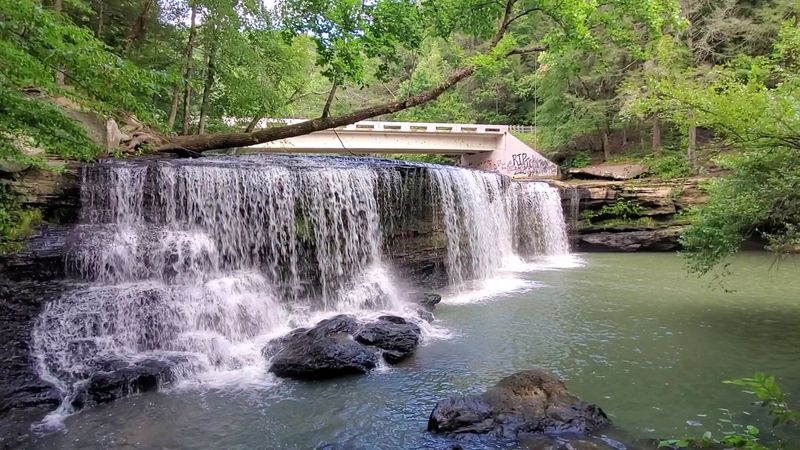
Directions could hardly be simpler. Start on Main Street in Wartburg, the small county seat that anchors this corner of Tennessee. Turn onto Old Mill Road, then turn again onto Potters Falls Road.
That last road delivers you straight to the bridge over the creek. The full address reads Potters Falls Rd, Wartburg, TN 37887, which navigation apps handle without trouble.
The drive itself deserves credit. Rolling farmland gives way to thick forest, and in autumn the roadside trees form a tunnel of color.
Wartburg sits close to several other outdoor draws, including the Obed Wild and Scenic River area. Stacking a couple of stops into one day trip works nicely.
Cell service on the plateau can be patchy. Download your map before leaving town so a dropped signal does not turn into a wrong turn.
Once you cross the bridge, look immediately to the left. A small pull-off area appears just past it, and the upper falls are right there below.
Fill your gas tank in town. Rural roads out here have few services, and the last thing anyone wants on a crisp fall afternoon is a fuel worry.
Parking Is Tight, So Arrive Early
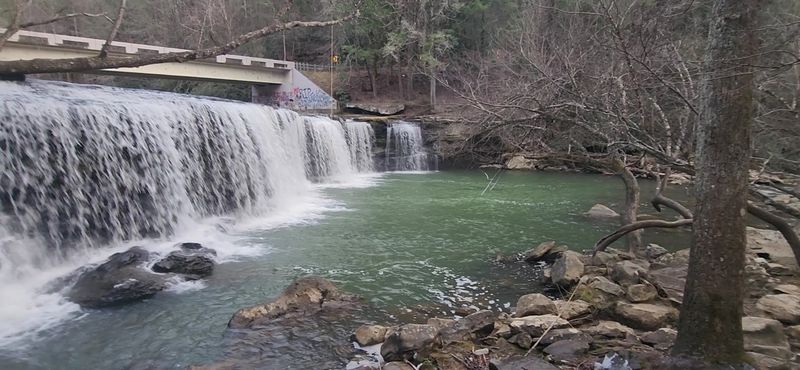
Here is the one honest challenge. Parking space is limited to a roadside pull-off that fits only a handful of vehicles, roughly three or four at a time.
Weekends in peak leaf season fill that space fast. Early morning is your best bet, ideally before nine.
Weekdays are noticeably calmer. If your schedule allows a Tuesday or Wednesday outing, take it.
Drivers in low-clearance passenger cars often prefer to park up the road on the shoulder and walk down instead of squeezing in near the bridge. It saves scraped bumpers and stress.
Pull completely off the pavement wherever you stop. The road is narrow and other vehicles need room to pass safely.
Worth setting expectations: this is a natural area with no developed facilities. No restrooms, no trash cans, no paved walkways.
That means packing out everything you bring in. A small bag in your daypack handles wrappers and bottles easily.
The site stays open around the clock, but daylight hours are the sensible choice. Autumn sunsets come early on the plateau, and the boulder route back up is far easier with light on your side.
What To Wear And Pack For Crisp Weather
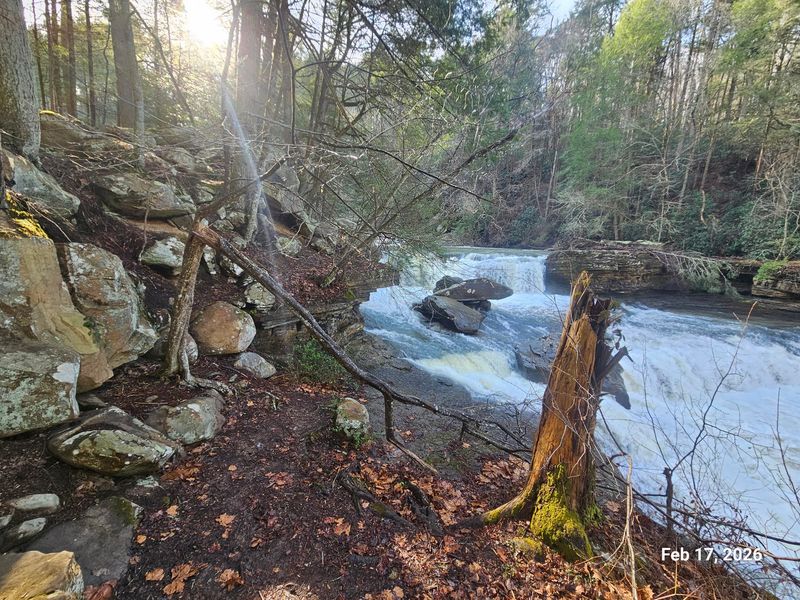
Footwear makes or breaks this outing. Sturdy shoes with real tread beat sneakers every time, because the approach involves stepping over uneven boulders.
Layers are your friend in October. Mornings on the plateau can start near freezing and warm up considerably by midday.
A fleece or light jacket you can tie around your waist solves the temperature swing. Add a knit hat if you plan an early start.
Trekking poles or a simple walking stick add real stability. Several stretches reward a third point of contact, particularly on damp rock.
Toss in a thermos of hot cider or coffee. Sitting beside a cold creek with something warm in hand is one of autumn’s small pleasures.
Camera gear appreciates a lens cloth here. Mist from the falls settles on glass quickly, especially when flow is strong.
Bring more water than you think you need. Short hikes still cause dehydration, and there is no source to refill from safely.
Leave the swimwear behind this time of year. The creek turns genuinely cold once autumn settles in, and the appeal in fall is the scenery rather than the water itself.
Safety Notes Worth Reading Before You Go
A little caution goes a long way at a place this open. There are no railings or barriers along the rock edges above the falls.
Parents should keep small children within arm’s reach the entire time. The drop-offs arrive without warning, and wet stone offers poor grip.
Water levels change fast on Crooked Fork Creek. Heavy rain can turn the calm pool into a strong, pushing current within hours.
Avoid the creek entirely during high water. The scenery from the bank is still excellent, and the sound is even more impressive.
Downstream from the main pool, the flow picks up strength. That section is not the place for wading or letting kids wander unsupervised.
Wildlife shares the space, including snakes that sometimes sun themselves on rocks near the bridge. Watching where you place hands and feet handles most concerns.
Tell someone your plans, since cell coverage in this part of Tennessee can be unreliable. A simple text before you lose signal is enough.
Treat the place gently and it stays beautiful. Potter’s Falls has earned its reputation on the Cumberland Plateau, and carrying out your trash keeps it that way for the next person.