
This Upstate New York Farm Lets You Cut Your Own Flower Bouquet And Take It Home
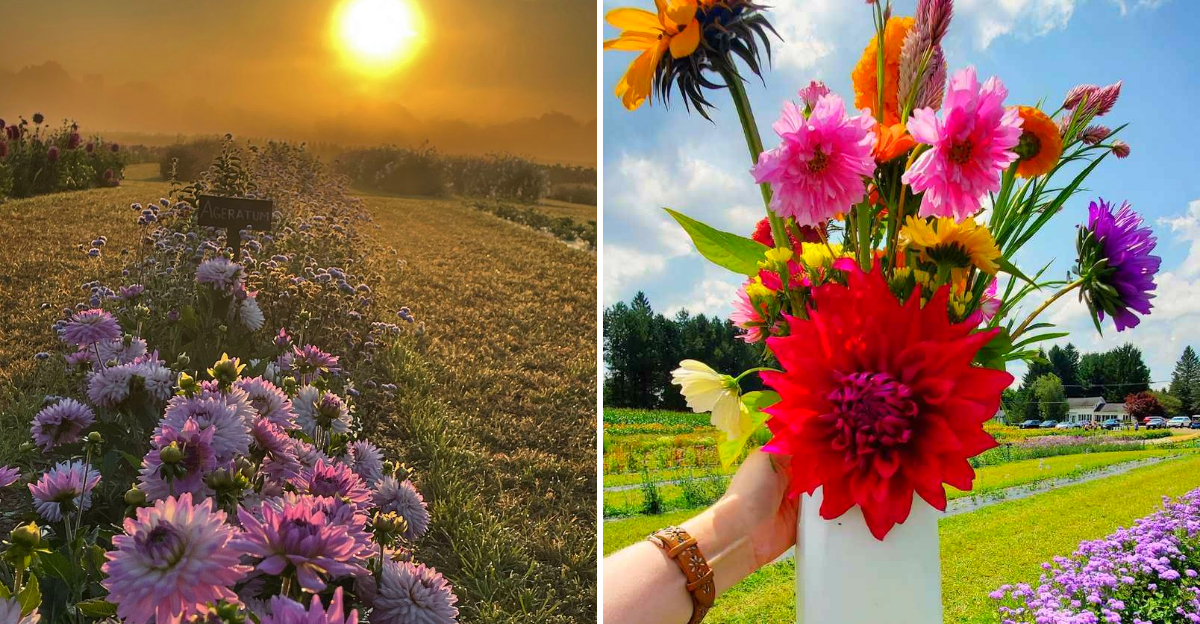
Most farm stands hand you a bag of tomatoes. This one hands you clippers and points at four acres of flowers.
That’s the whole arrangement at a spot in Western New York, about half an hour south of Buffalo, where instead of picking from buckets somebody else already filled, you walk the rows and make the calls yourself.
Too many dahlias? Your business. Zinnias in colors that technically clash?
Nobody’s stopping you. You leave with an armful of flowers arranged exactly the way your own questionable instincts decided, which is a very different feeling than grabbing a pre-wrapped bunch at the grocery store.
The window runs from July until the first hard frost, and it might be the friendliest afternoon New York has going in that stretch.
Four Acres Of Blooms And A Pair Of Clippers
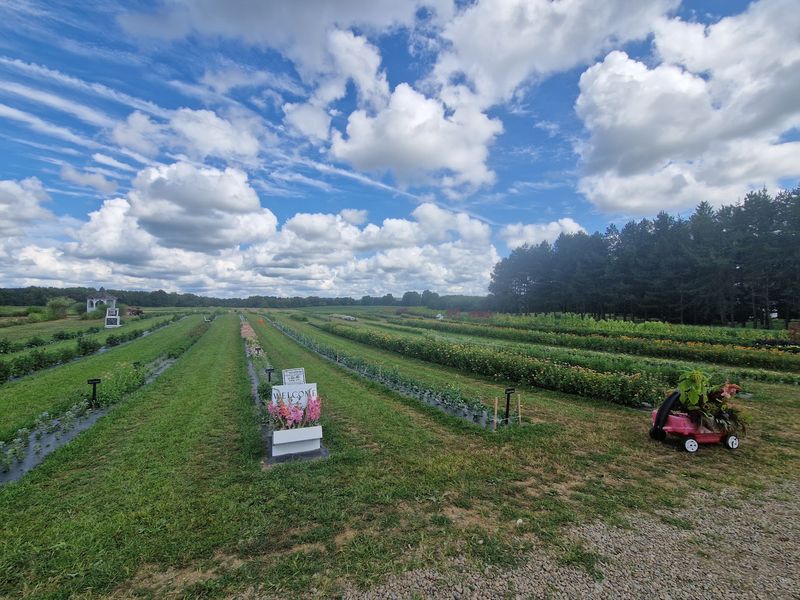
Handing a stranger sharp tools and access to thousands of flowers sounds risky. Somehow it works beautifully here.
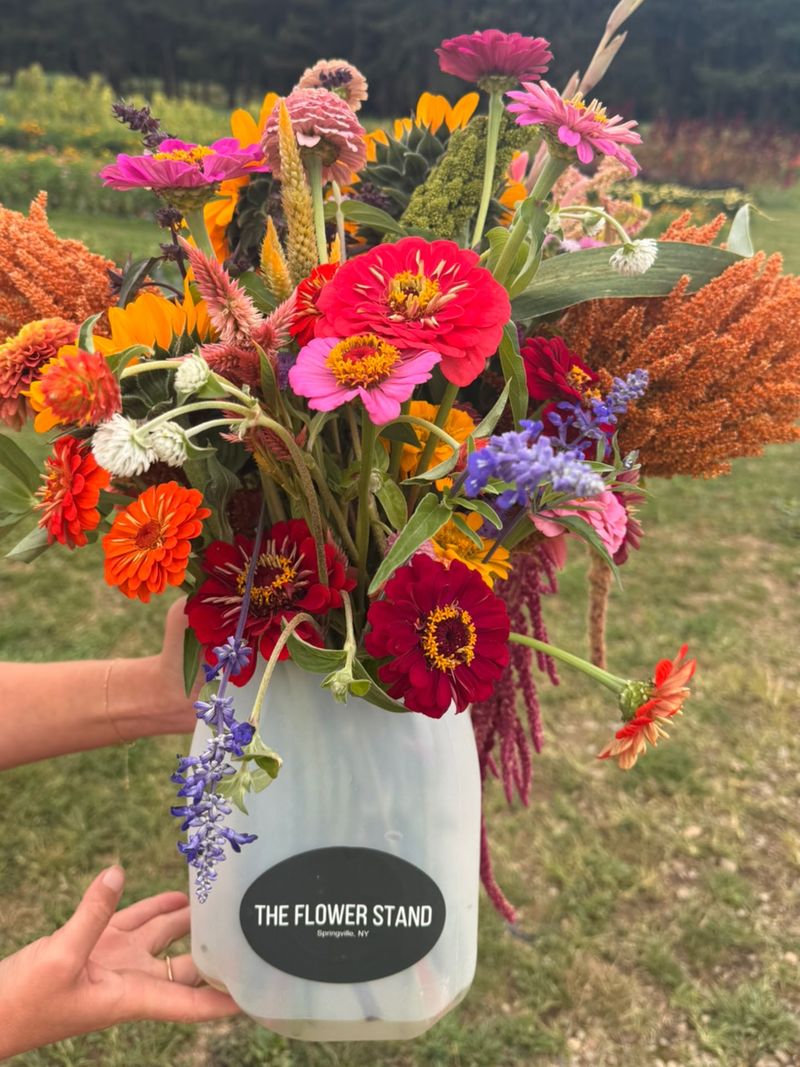
Guests grab picking tools at check in, choose a pre priced container, and wander groomed aisles until the container is full.
Pricing follows the vessel rather than the stem count, so there is no math happening in your head while you shop the rows. Fill it generously. That is the whole point.
Over 150 varieties grow across roughly four acres, which means the color palette shifts every few weeks. Zinnias hold court in high summer.
Gladiolus stand tall like exclamation points. Dahlias steal the show near Labor Day, and early August tends to be the loudest stretch of the season.
Bees and butterflies work the same aisles you do, humming along without much interest in your business. The rows sit wide and level, so movement is easy and unhurried.
Most visitors arrive thinking they will spend twenty minutes. Most stay far longer. Something about choosing flowers by hand slows the clock down in the best way possible.
The Flower Stand, Where Vaughn Street Turns Colorful
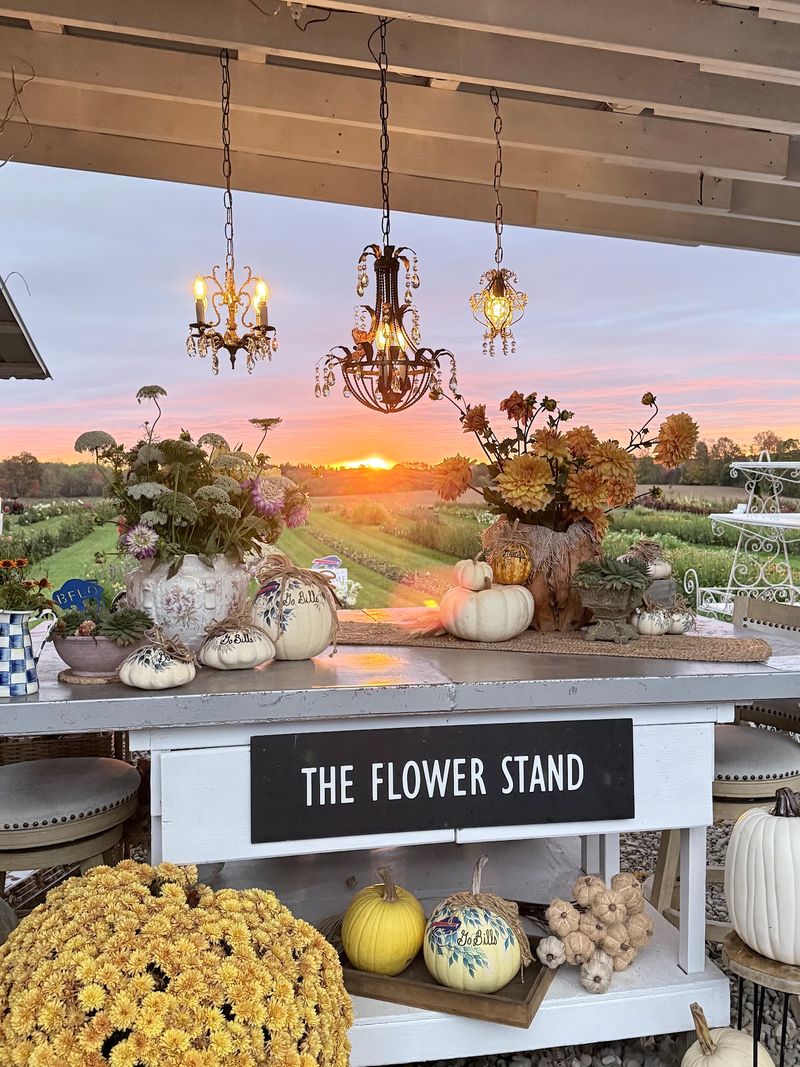
The name is refreshingly plain for a place this pretty. The Flower Stand sits at 13187 Vaughn Street in Springville, New York 14141, along Route 240 in Erie County. Rolling farmland surrounds it on all sides.
Getting there from Buffalo takes a little over half an hour, which qualifies as a quick jaunt by Western New York standards. The drive itself deserves credit.
Barns, hayfields, and long green horizons roll past your window.
Arrival feels casual rather than commercial. A small shop greets you first, stocked with flower related gifts and a produce area holding fresh vegetables.
Staff explain how the containers work and where the good blooms are hiding that week.
Music plays softly across the field, low enough to hear the bees over it. Seats sit near the rows for anyone who wants to pause and just look around.
The whole property carries a lived in warmth. Nothing is staged for photos, though photos happen constantly anyway.
It simply looks like what it is, a working farm that happens to be gorgeous nine weeks out of the year.
Five Generations Deep In The Same Soil
Century old farms tell better stories than new ones, and this ground has been in the same family for five generations. Beans came first in the 1930s. Cows followed in the 1970s.
Dairy gave way to something unexpected when owner Ellen Krzemien, a Cornell Master Gardener, converted part of the acreage into flower fields. What started small grew to roughly four acres of u-pick blooms.
Farm transitions like that take nerve. Trading milk for marigolds is not the safe play. The gamble clearly landed, because the fields now draw visitors from across the region every summer.
Knowing the history changes how the place feels underfoot. Those neat rows sit on soil that fed a family through several very different decades of American farming.
The Flower Stand also holds certification as a Women Owned Business Enterprise, which adds another layer to the story. Support here goes straight to a local operation run by people who know every variety by name.
Five generations is a long run for any business. Flowers, it turns out, made an excellent sixth act.
Book Before You Go, Seriously
Appointments are required for every u-pick visit, and that rule is the secret sauce. Booking keeps the fields calm instead of crowded.
Nobody elbows anybody for the last good dahlia. You often get whole rows to yourself, which explains why the atmosphere reads as peaceful rather than busy.
The season runs from around the Fourth of July through the first hard frost, usually mid October. Historically the farm welcomed guests Tuesday through Sunday, though current scheduling often reserves Sundays for private events.
Weekday and Saturday u-pick slots tend to be limited.
Check the website before making the drive. Availability shifts with the growing season and with what the fields can support that week.
Planning ahead also lets you aim for specific blooms. Early August brings the widest variety.
Dahlia devotees should circle Labor Day weekend on the calendar.
A reservation on a flower farm sounds fancy until you experience the payoff. Space, quiet, and unhurried picking beat a free for all every single time. Book it, then bring water and a hat.
Zinnias, Gladiolus, And About 200 Cousins
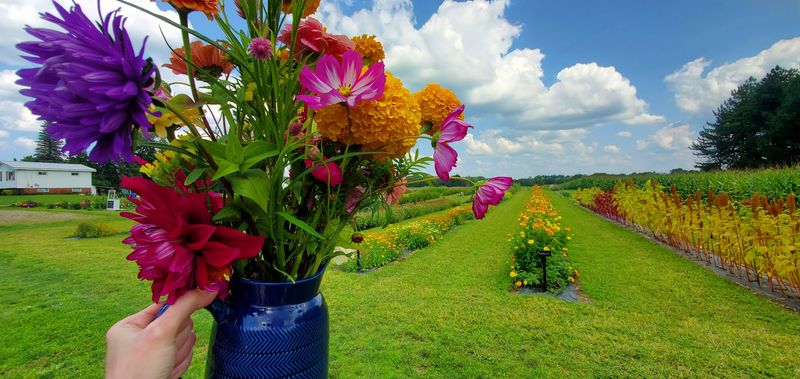
Counting varieties here becomes a losing battle. The farm grows somewhere between 150 and 200 distinct types, which is a preposterous number for one property.
The heavy hitters show up first. Zinnias in every shade, sunflowers with faces the size of dinner plates, gladiolus stretching skyward, and dahlias that look almost architectural up close.
Then come the supporting players that make a bouquet sing. Lavender, Queen Anne’s lace, feverfew, cosmos, baby’s breath, lisianthus, strawflowers, statice, and verbena all earn their spot in the rows.
Herbs grow here too, which surprises people. Dill, basil, chamomile, and huacatay, a Peruvian mint, add texture and scent that no ordinary filler can match.
Mixing herbs into flowers is the move that separates a good bouquet from a memorable one. A few stems of dill turn a simple bunch into something with real personality.
Bloom availability rotates all season long. August visits and October visits produce completely different bouquets, which gives repeat guests a solid excuse to keep coming back.
Rows Built For Everybody
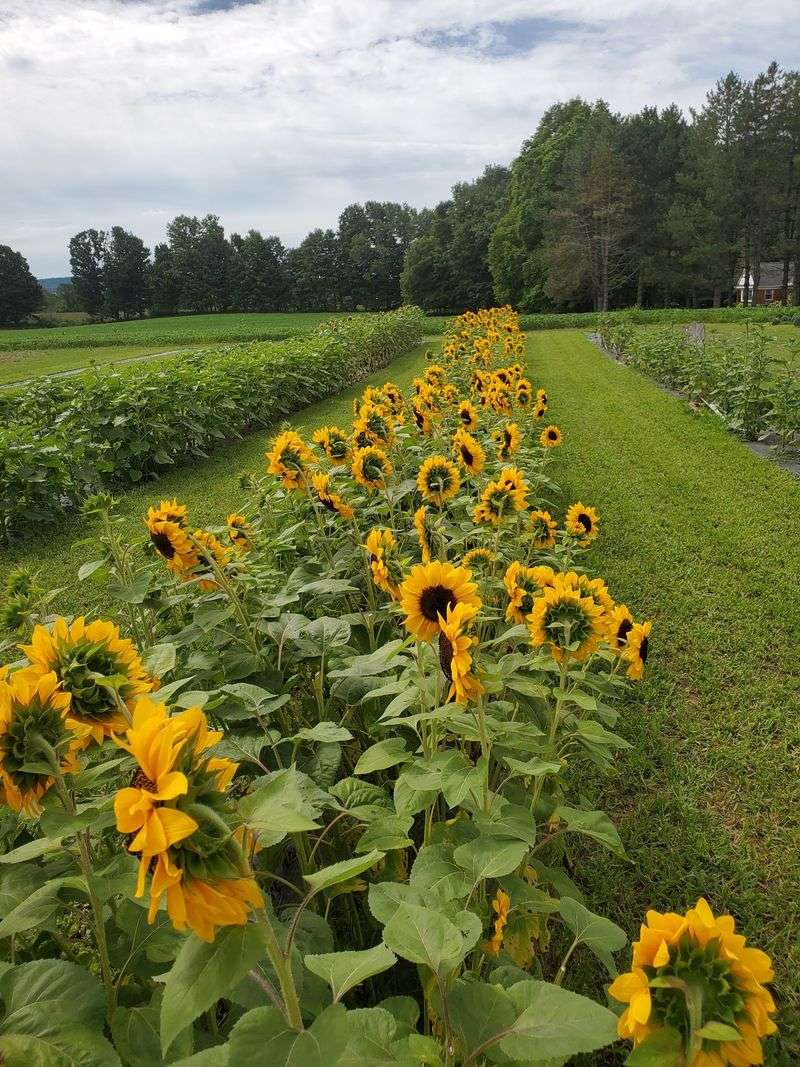
Accessibility rarely gets mentioned in farm write ups, and it should. The aisles here are groomed flat and wide, which makes the fields navigable for guests using wheelchairs or walkers.
Neat rows are not just for looks. They mean grandparents, toddlers, and anyone moving slowly can all reach the same blooms without a struggle.
Service animals are welcome with advance notice, so a phone call ahead handles that easily. Staff plan for it rather than improvising on the spot.
Seating sits near the picking areas for anyone who needs a breather between rows. Shade and water matter on hot afternoons, and the open fields get plenty of sun.
Bring a hat. Bring an umbrella if you want portable shade. Longtime visitors swear by that trick during August heat.
Thoughtful design shows up in small choices like level ground and nearby chairs. Nobody makes a big announcement about it, which somehow makes it feel even more genuine.
Everyone should get to pick flowers. This farm quietly built that idea into the layout.
Grown, Not Flown, And Proud Of It
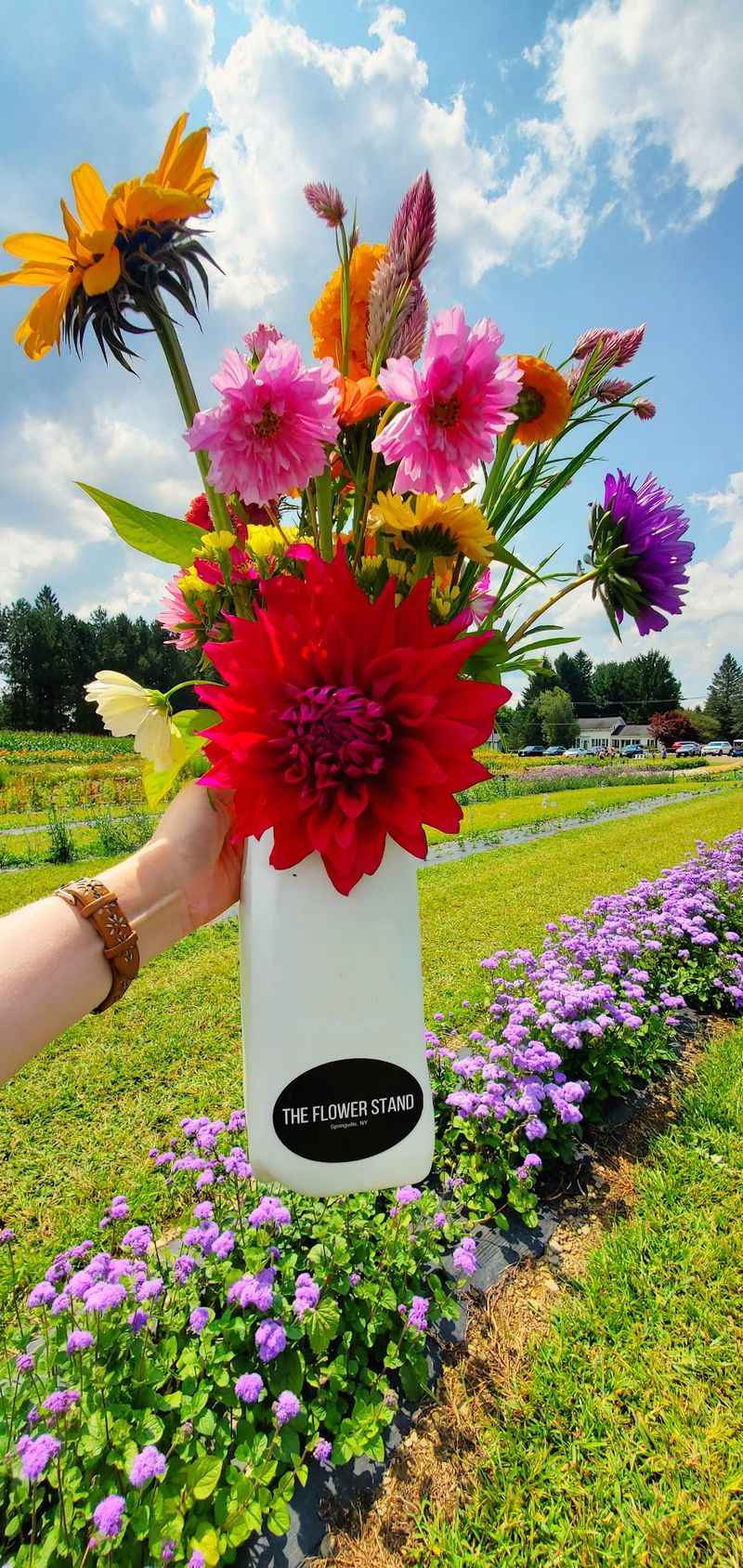
Most cut flowers sold in the United States travel a very long way before reaching a vase. The Flower Stand takes the opposite approach through the Grown, not Flown movement, which champions American grown blooms.
Picking a stem that grew forty feet away changes the math entirely. No refrigerated cargo, no border crossings, no week of travel.
Freshness shows immediately. Field cut flowers hold their shape and color far longer than anything that spent days in transit.
Supporting a local grower also means supporting Erie County soil, seed choices, and a small crew who show up every morning to weed and water.
The movement is bigger than one farm, though small operations carry it. Every u-pick container sold here counts as a vote for flowers grown close to home.
There is a satisfaction in knowing exactly where your bouquet came from. You can point to the row.
Farm to vase does not get the attention farm to table receives. Spend one afternoon in these fields and the concept clicks instantly.
Pumpkins Crash The Party In October
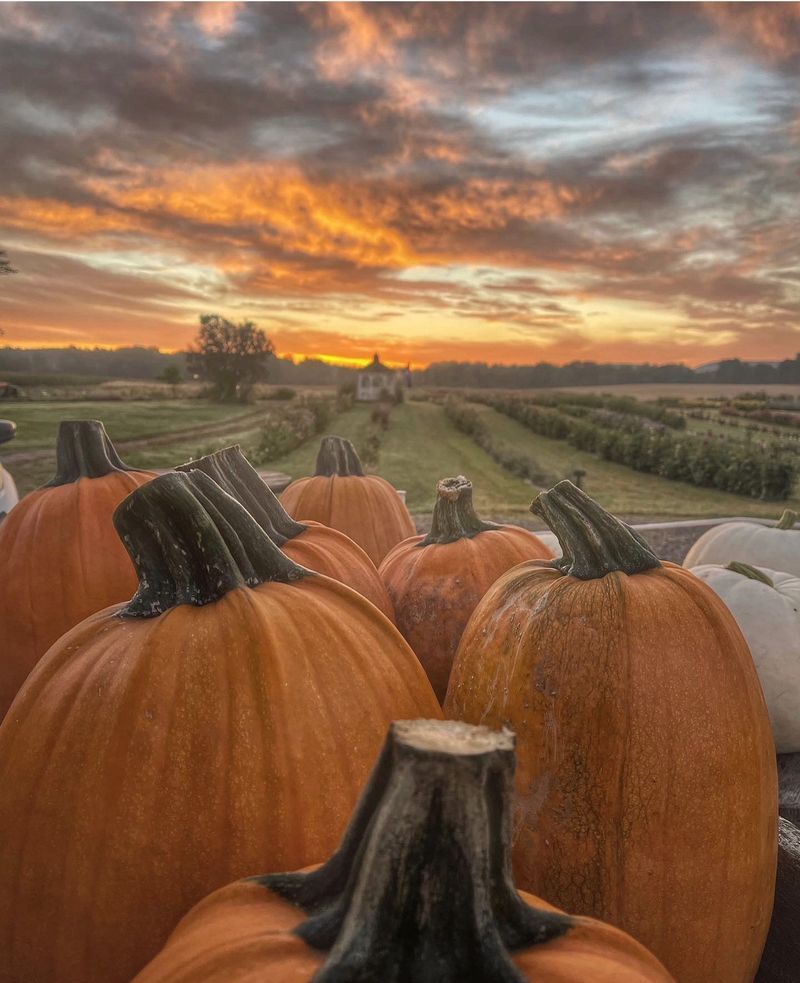
September and October catch some visitors off guard. Plenty of blooms still hold on late in the season, and dahlias look their absolute best around Labor Day.
Then the pumpkins arrive. The farm stocks unusual varieties, the kind with strange shapes, odd colors, and bumpy skin that never show up at a grocery store.
Pairing a late season bouquet with a warty blue pumpkin makes for a spectacular porch display. Fall decorating and flower picking in one stop is efficient work.
Fresh vegetables sit at the produce stand as well, so dinner ingredients can ride home alongside your flowers.
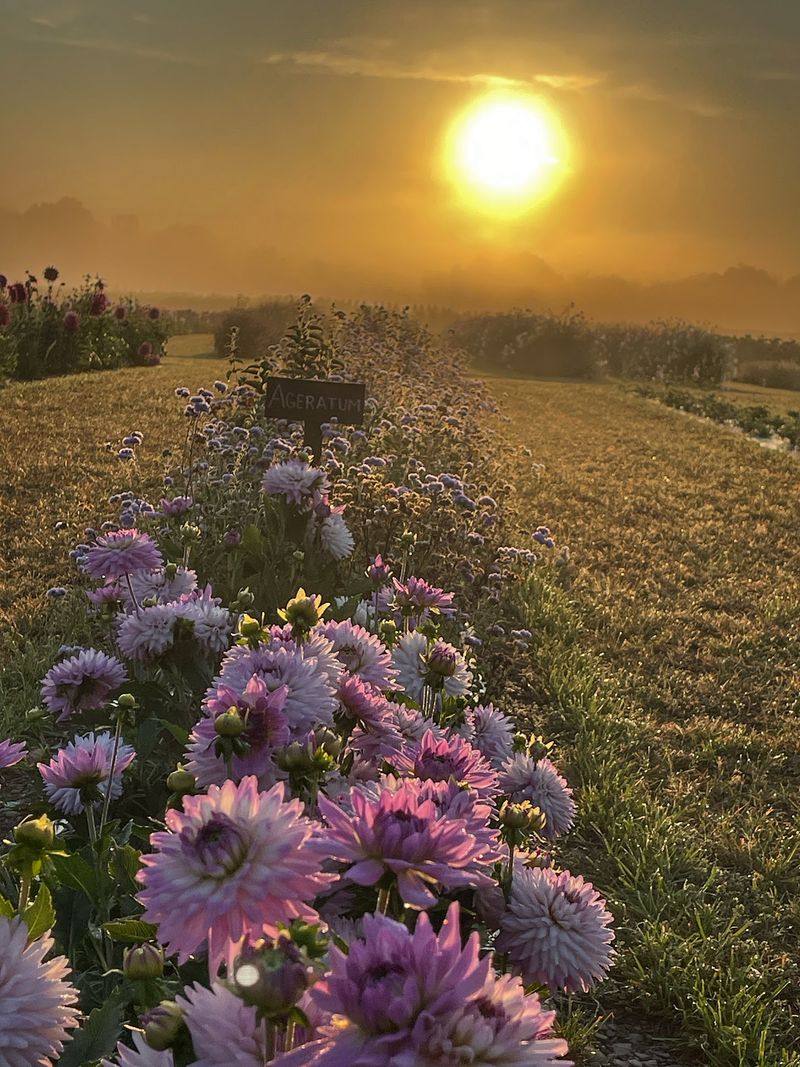
Autumn light across the fields adds a golden tint that summer sun cannot replicate. Photographers tend to prefer it.
The season closes with the first hard frost, usually mid October. After that the fields rest until the following July.
Squeezing in a fall visit takes a little scheduling luck. Anyone who manages it gets flowers, pumpkins, and a farm at its most cinematic moment.
Ready Made Bunches For The Time Crunched
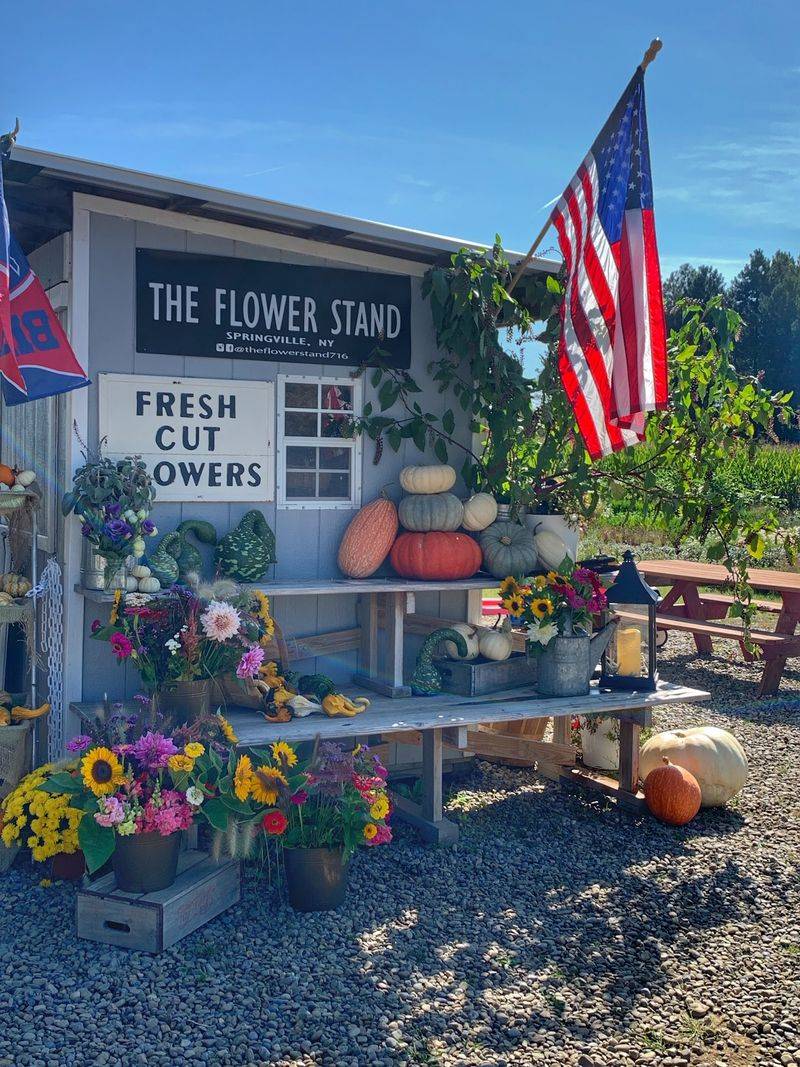
Not every visit allows an hour among the rows, and the farm accounts for that. Pre cut bouquets sit ready at the stand for anyone in a hurry.
Grabbing a finished bunch on the way to a birthday dinner counts as a legitimate strategy. The flowers were cut the same day either way.
The small shop also carries flower related gift items, which handles the problem of showing up somewhere empty handed.
Bigger plans get bigger options. DIY flower buckets let you haul home a serious volume of stems for a project, and flower bars work well for events where guests build their own arrangements.
Community Supported Agriculture farm share subscriptions round out the offerings. Signing up means a steady supply of local blooms throughout the growing season.
Weddings, showers, and celebrations all benefit from farm direct flowers. The freshness advantage is difficult to argue with.
Flexibility like this makes the farm useful rather than just charming. Sometimes you want the full field experience.
Sometimes you just want the flowers.
What To Bring, And What To Expect
Preparation makes the difference between a lovely afternoon and a sunburned one. The fields sit wide open, so shade is scarce and the sun does not negotiate.
Pack a hat, sunscreen, and water. An umbrella works surprisingly well as portable shade on hot days, a trick regulars have figured out.
Closed toe shoes beat sandals on farm ground. Comfortable clothes you do not mind getting a little pollen on are the smart call.
Bring a container of water for the car ride home. Fresh cut stems appreciate a drink, especially on warm days.
Budget more time than you think you need. Almost everyone underestimates how long picking takes once the choices start piling up.
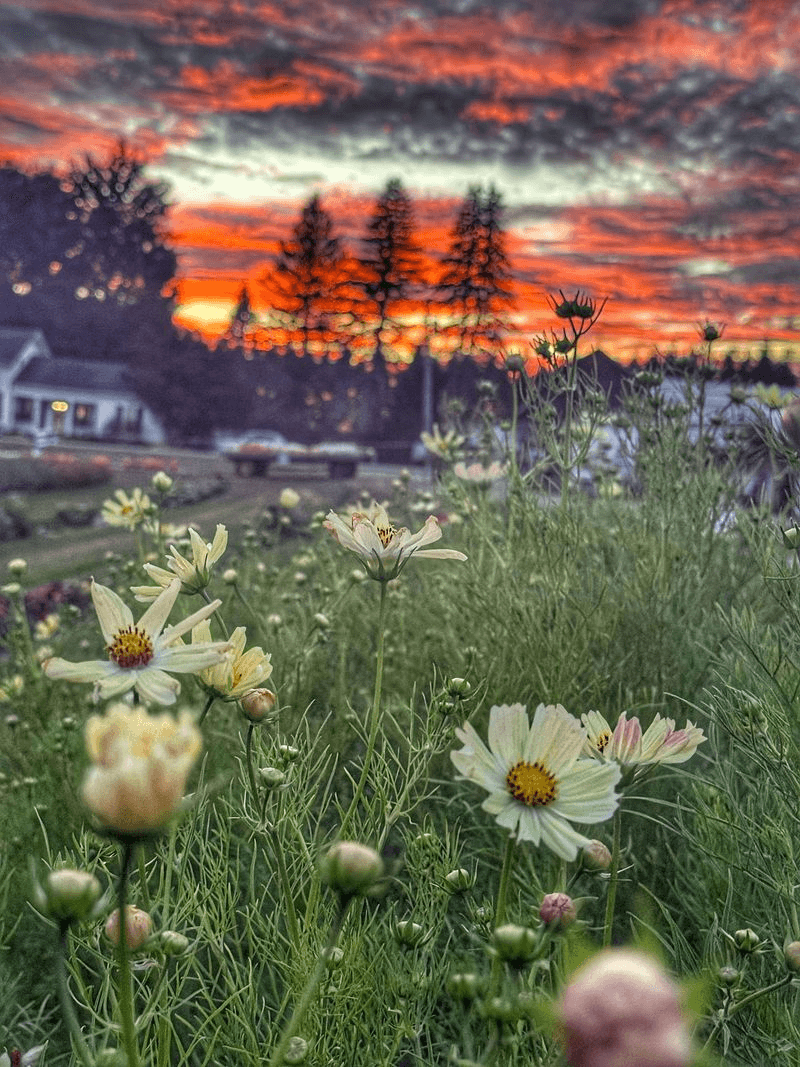
Cameras earn their keep here. Rows of color stretching toward the horizon photograph beautifully in morning or late day light.
The farm sits in a corner of Western New York worth exploring afterward, with Springville nearby for a bite. Flowers first, though. That is why you drove out.