
Walk 65 Feet Above The Forest Floor On A Canopy Bridge In Kirtland, Ohio
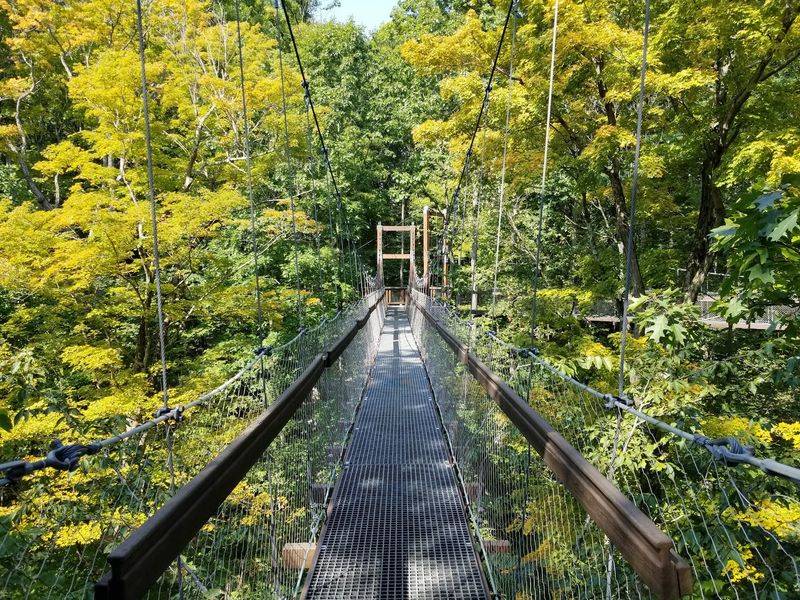
Most of the time, walking in the woods in Ohio means looking up at the trees. There’s one spot northeast of Cleveland where you do the opposite, stepping onto a bridge strung 65 feet in the air and looking down through branches at the ferns below.
Kids tend to freeze for a second, then grin and keep going. It’s the kind of afternoon that sticks with a family long after the drive home.
A Treetop Bridge in Lake County
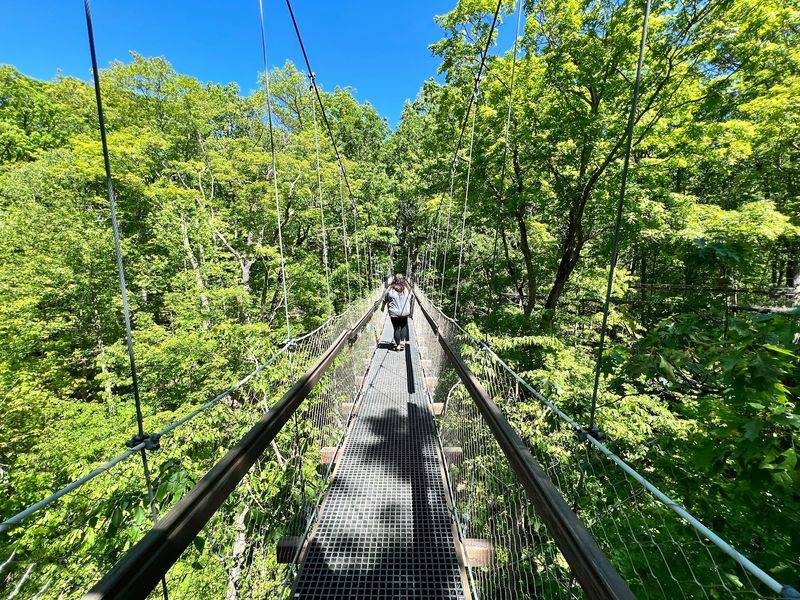
Sixty-five feet is higher than it sounds. That’s roughly a six-story building, and it’s exactly where the Murch Canopy Walk puts you at The Holden Arboretum, 9550 Sperry Road in Kirtland, Ohio.
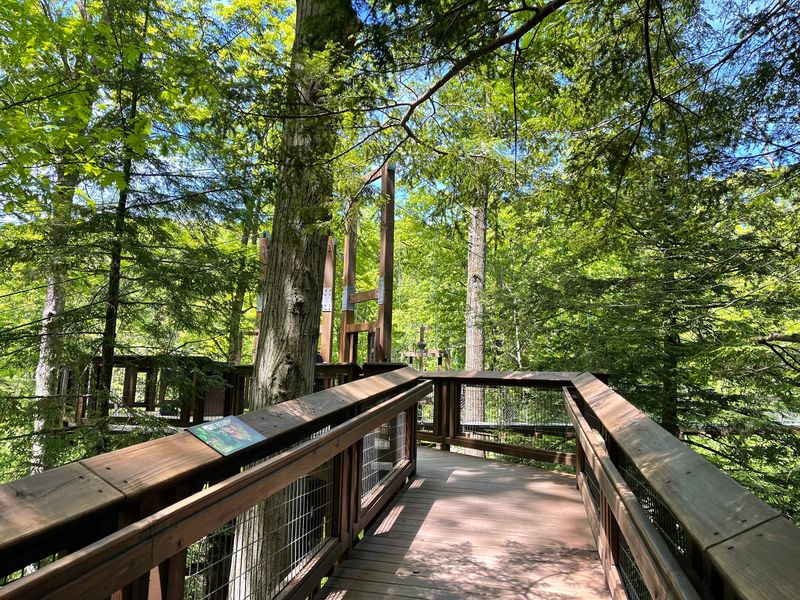
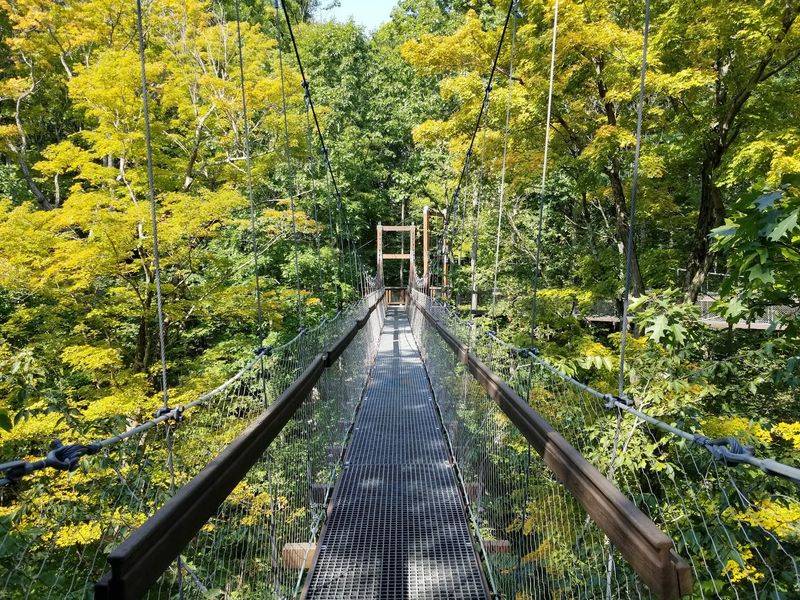
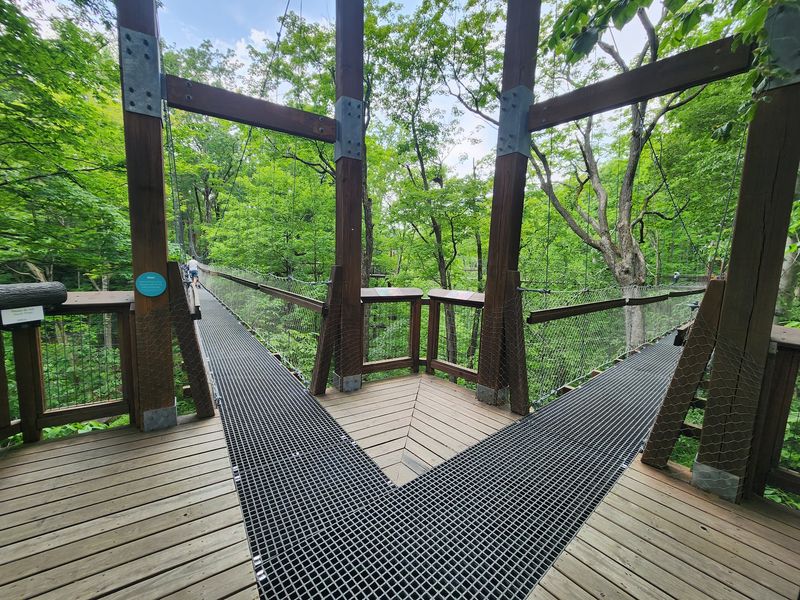
The walkway runs about 500 feet through the upper branches of a mature hardwood forest, carried on a series of suspension bridges anchored between platforms. You’re not peering at treetops from a distance.
You’re standing inside them, close enough to see the underside of leaves and the shape of a squirrel’s route between limbs.
Holden itself covers roughly 3,600 acres of trails, gardens, ponds, and woods in Lake and Geauga Counties, which makes the canopy walk one feature among many rather than the whole show. Still, it’s the piece most first-time visitors come for, along with its taller neighbor.
The arboretum is a plant conservancy and research institution as much as a place to spend a Saturday, so signs along the route explain what you’re looking at. Expect a slight sway underfoot.
That’s normal, and part of why the walk sticks in memory.
How a Family Trust Became 3,600 Acres
Behind the trails sits a story that began with a loss. The arboretum was established as a living memorial to Elizabeth Holden, daughter of mining businessman Albert Holden, and a trust carried the idea forward until the grounds opened to the public in 1937.
What started as a memorial planting grew into one of the larger arboreta in the country. Today Holden Forests and Gardens manages the Kirtland property alongside its research and conservation work, which is why you’ll notice labeled collections, plant records, and study plots mixed among the ornamental gardens.
That history explains the layout. Some sections feel formal and curated, with paved loops and identification tags on nearly every shrub.
Others feel like plain northeast Ohio woodland, which is more or less what they are.
Nearly nine decades of planting also means real size in the tree canopy. The oaks, beeches, and maples supporting the elevated walkway aren’t saplings, and the height of the bridge only works because those crowns have had generations to fill in.
Knowing the backstory makes the view from above land a little differently.
Stepping Onto the Murch Canopy Walk
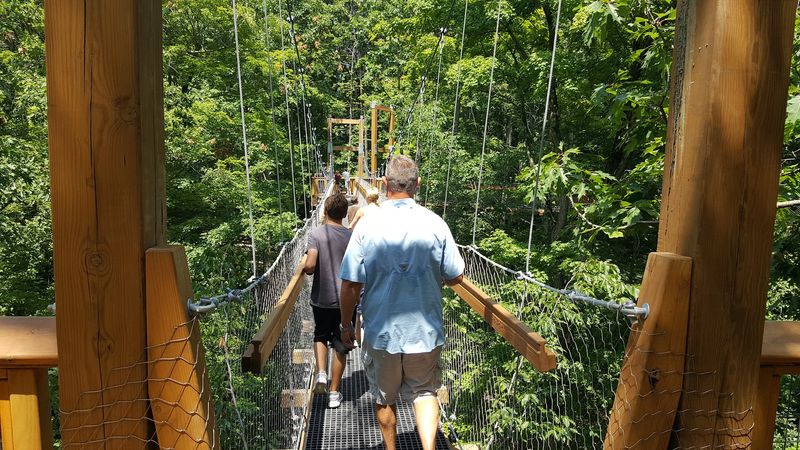
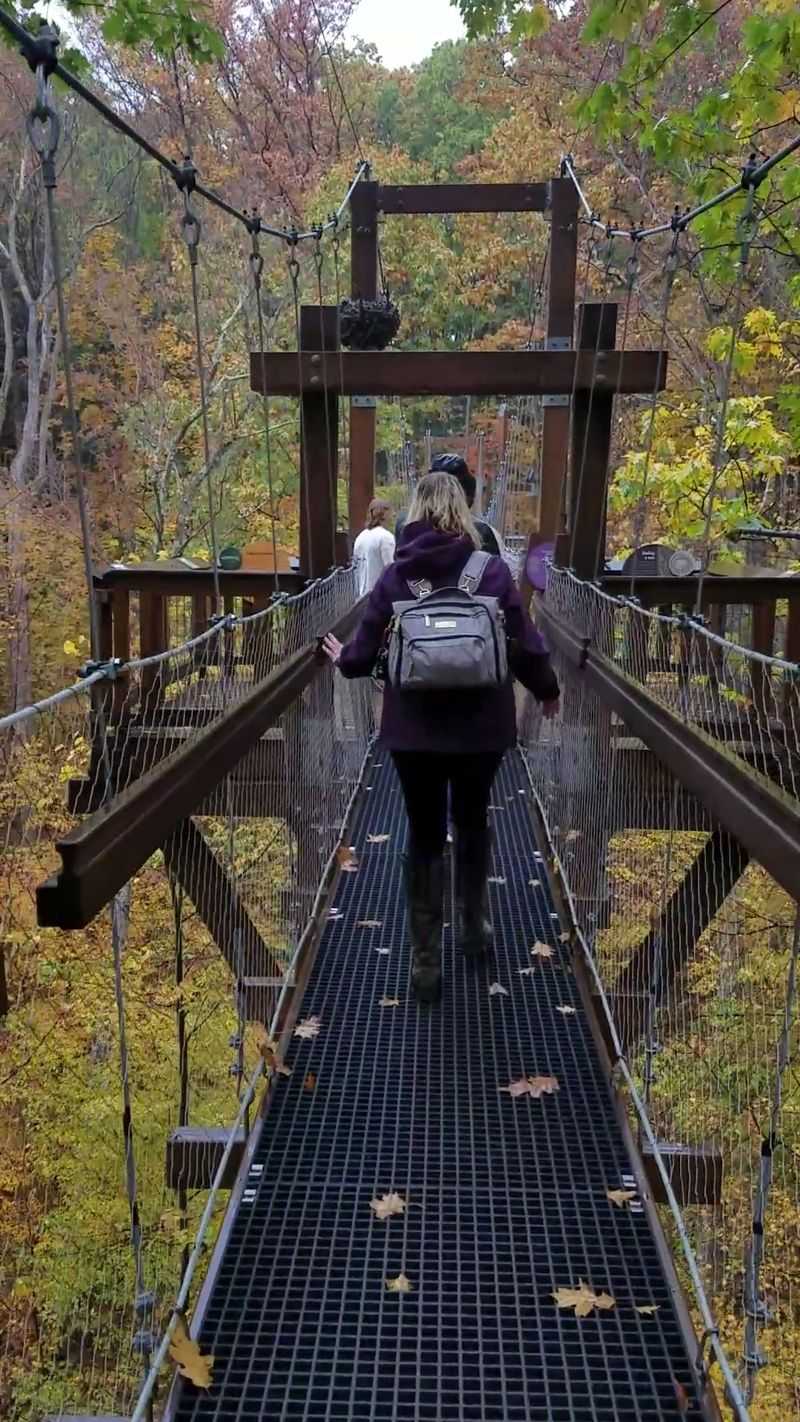
A short ramp is all it takes to get up there, which surprises people expecting a climb. The suspension bridges measure about 36 inches wide, so you walk single file, one hand loosely on the railing out of habit more than need.
Visitors often describe the canopy walk as the easier of the two elevated structures, and that’s fair. There’s no long stair climb, just a gradual rise and then a series of spans that flex gently as you move across them.
Attendants monitor how many people are on the bridges at once, which keeps things orderly even on busy weekends. It also means there can be a brief wait at the entrance during peak fall color.
Educational panels along the platforms cover canopy ecology, the insects and birds that live up high, and how forest layers work. Kids who won’t read a museum placard will somehow read these.
A few visitors have mentioned wishing it ran longer, which is honest feedback. At 500 feet, it’s a walk rather than a hike, and pairing it with the tower makes the trip feel complete.
202 Steps Up the Kalberer Emergent Tower
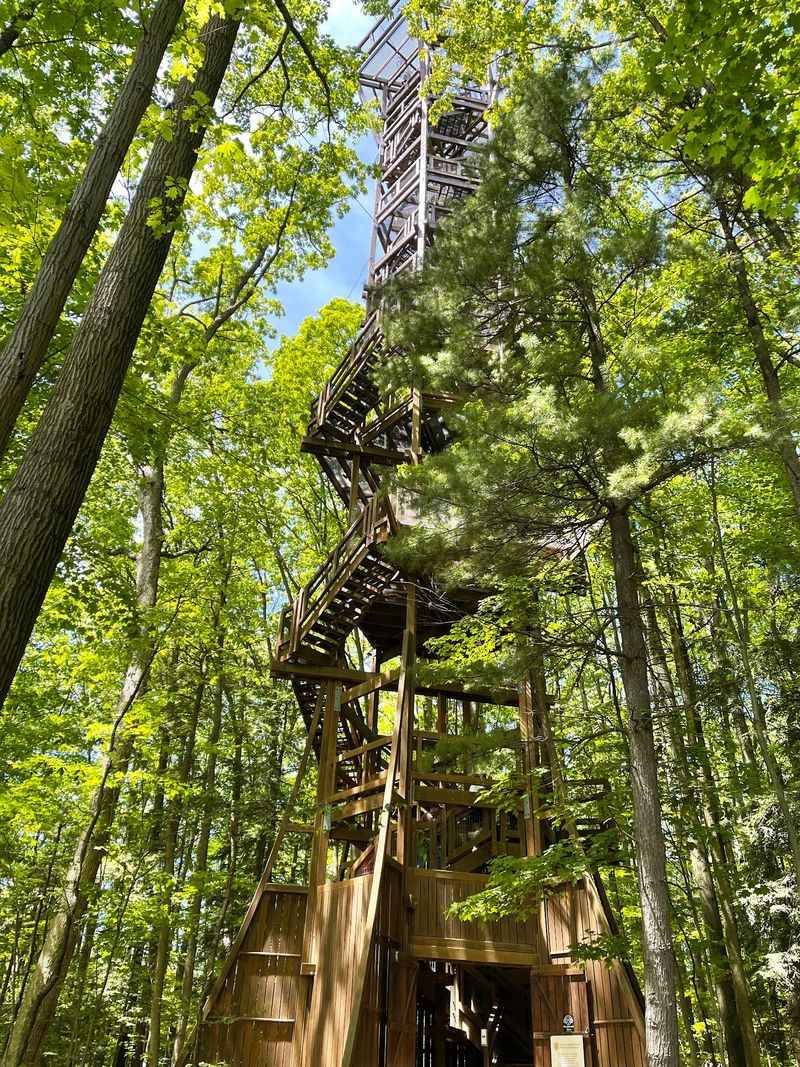
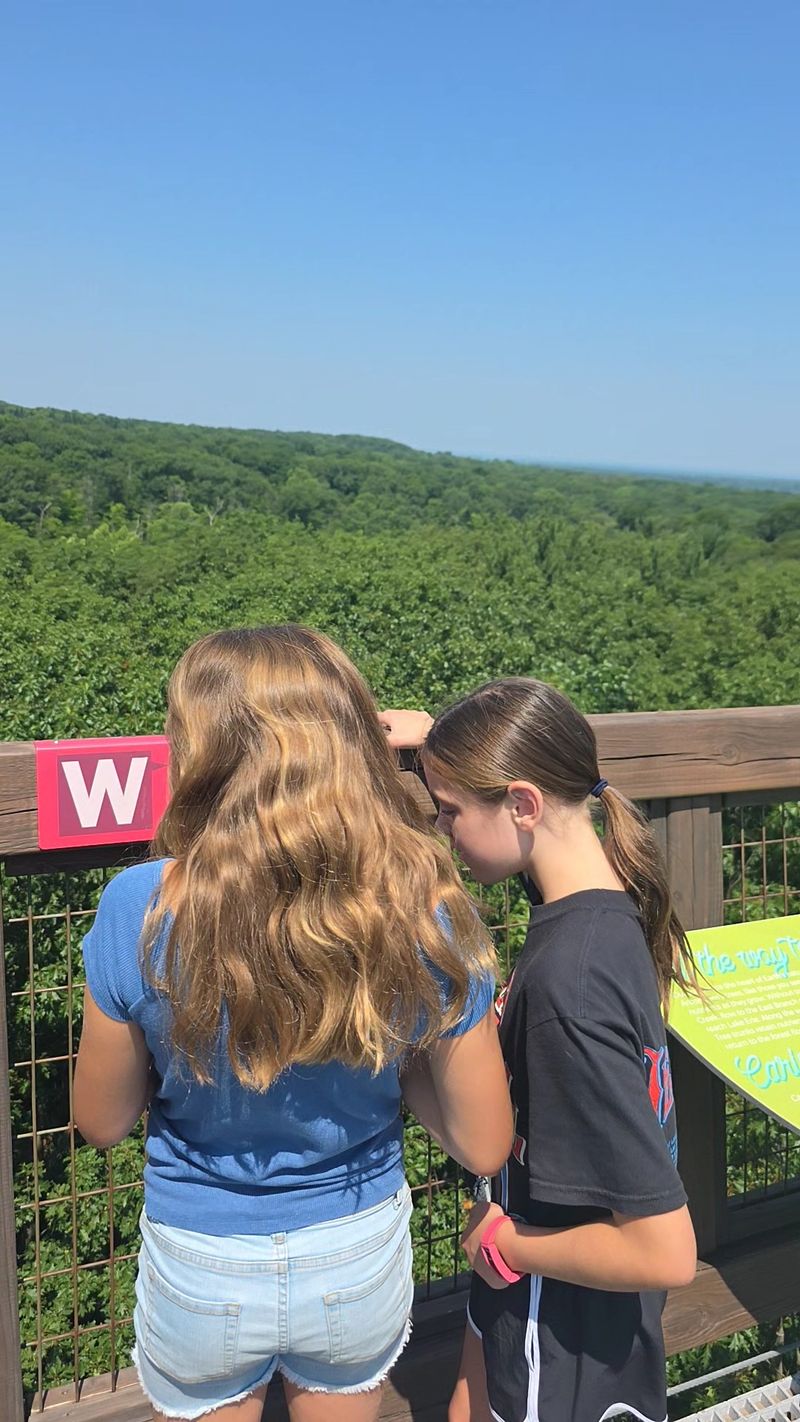
Count them on the way up if you like: 202 steps to the top of the Kalberer Emergent Tower. At 120 feet, it pushes above the treeline entirely, so the forest that surrounded you on the bridge suddenly spreads out below like a rumpled green blanket.
Rest platforms break up the ascent, and they get used. Parents mention them gratefully, and one family noted their four-year-old marched the whole flight with more energy left than the adults.
From the top you get 360 degrees of northeast Ohio. On a clear day, the flat blue line of Lake Erie appears to the north, roughly 10 miles away as the crow flies.
The tower is a favorite among regulars, and it’s the single most-mentioned feature in visitor comments. Bird activity around the upper platforms can be excellent, especially in spring migration.
Worth knowing: staff close the tower during thunderstorms and high winds, sometimes with little warning. That’s a safety call, not an inconvenience, though it can cut a climb short.
Buckeye Bud’s Adventure Woods

Turn kids loose here and the grown-ups get a break. Buckeye Bud’s Adventure Woods is a natural play area with a log-and-timber obstacle course, a smaller observation tower to climb, and an interactive maze that eats up a good half hour without anyone noticing.
Nothing about it looks like a plastic playground. The materials are logs, stumps, stone, and rope, set into the shade of real trees, which fits the surroundings better and holds up to Ohio weather.
For families driving in from Cleveland or Akron, this section earns its keep. Little ones who’ve reached their limit on labeled plant collections get a place to run, climb, and balance before the group heads toward the canopy structures.
The maze is the sleeper hit. Older kids treat it as a race, younger ones as a hiding game, and either way it buys parents a few quiet minutes on a nearby bench.
Plan it as either the warm-up or the reward, depending on your crew’s stamina. Trying to do it last with exhausted kids rarely works out.
Butterflies, Pollinators, and Peak Season
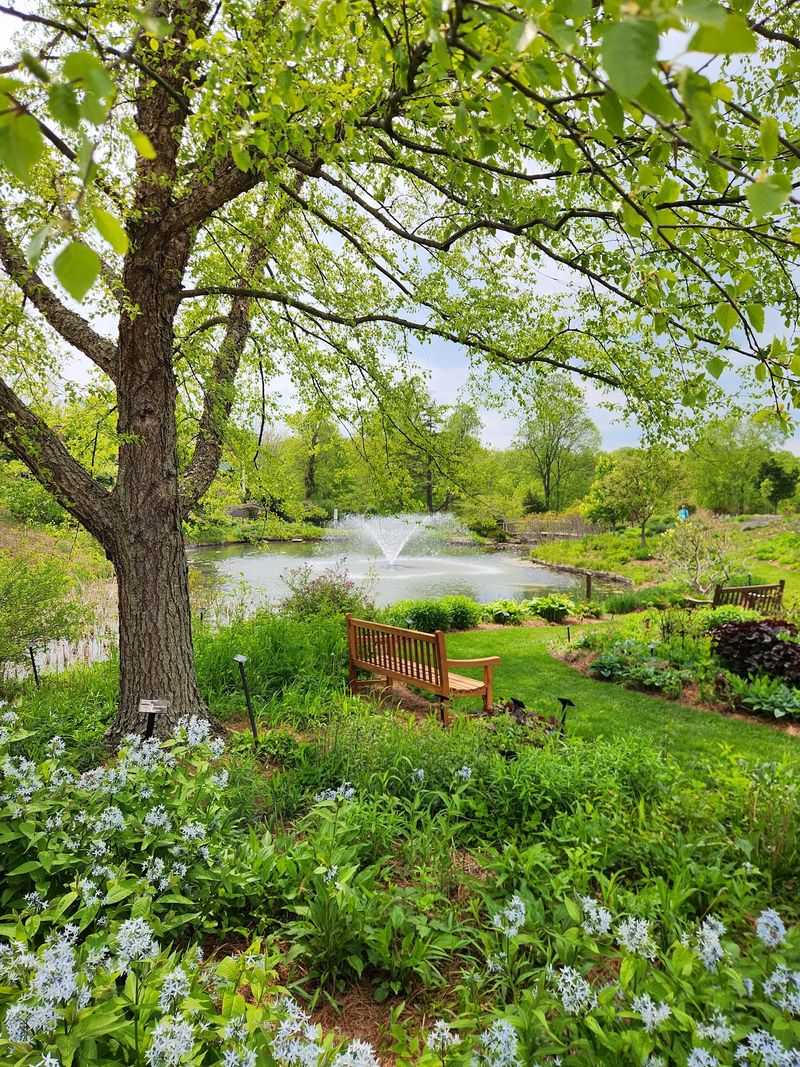
July through September is when the Arlene and Arthur S. Holden Jr. Butterfly Garden really comes alive.
Nectar plants fill in, the beds hum, and monarchs and swallowtails work the blooms in numbers that stop people mid-path.
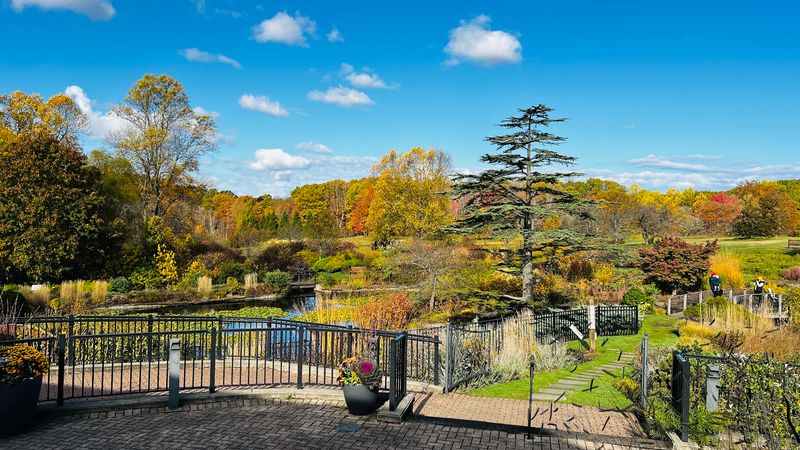
Visitors regularly single out this garden for its layout, which pairs planted beds with a nearby pond and makes for one of the prettiest compositions on the property. Photographers linger.
So do kids with phone cameras.
Pollinator activity isn’t limited to butterflies. Bees, hoverflies, and hummingbirds all show up, and several guests have remarked on the sheer volume of insects in the air on warm afternoons.
Birding is strong across the grounds too, from pond edges to the tower platforms. Bring binoculars if anyone in the car cares about that sort of thing.
Timing matters more here than almost anywhere else at Holden. Come in April and you’ll find early color but a quiet butterfly garden.
Come in August and you may struggle to leave it.
Gardens, Ponds, and Corning Lake

Water shows up again and again as you wander. Corning Lake anchors the northern end, and smaller ponds appear along the garden loops, each one reflecting whatever is blooming nearby.
The cultivated gardens sit close to the visitor center and stay compact enough for a moderate walk. Rhododendrons put on their display in late spring, and May and June bring the heaviest bloom across the collections.
Benches are everywhere, many of them memorial benches tucked into small alcoves off the main paths. Regulars point out that you’re never far from a place to sit, read, or eat a sandwich.
Beyond the manicured areas, miles of trails run through woods and meadows with a rougher, quieter feel. That contrast is the property’s real strength.
A short paved stroll and a genuine hike both start from the same parking lot.
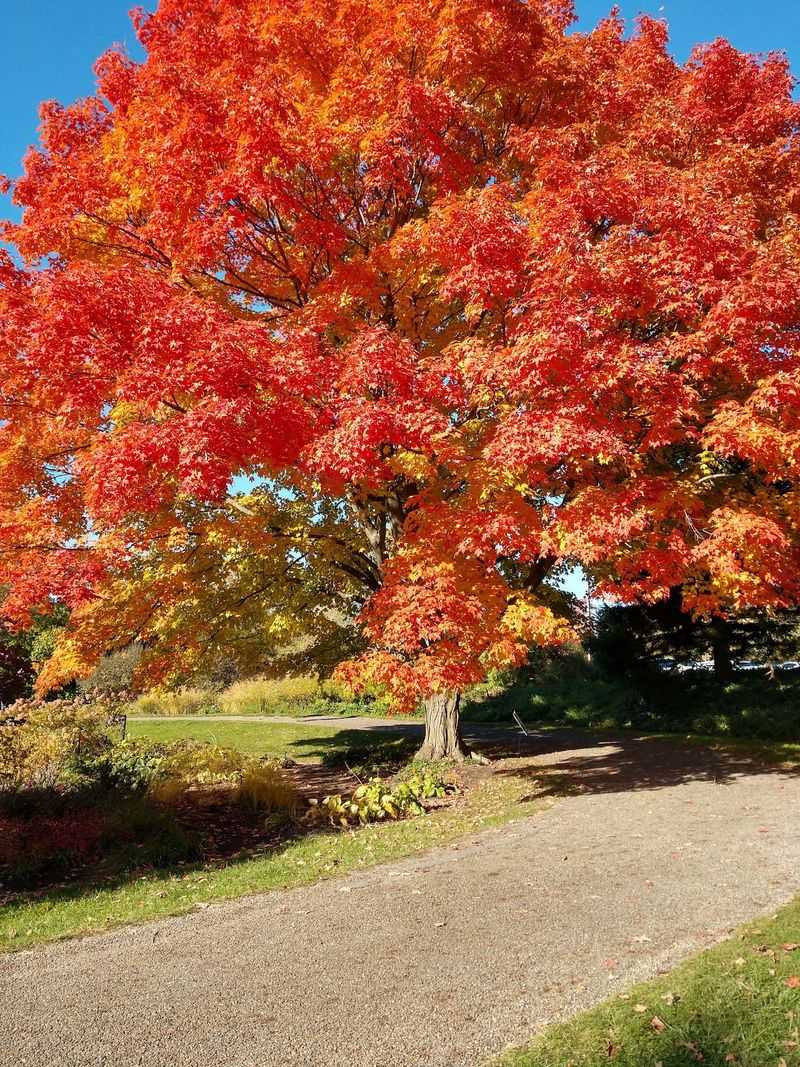
Fall brings the crowds, and with good reason. Maple and oak color through 3,600 acres is a serious draw for anyone driving up from Columbus or over from Toledo.
Tram Tours and Getting Around
Covering 3,600 acres on foot isn’t realistic in one visit, and the tram tours exist for exactly that reason. Guided rides carry visitors past sections that would otherwise take an hour of walking to reach, with commentary along the way.
There’s an additional fee for the tram, and it’s a popular option with older visitors and anyone managing a long day with small children. Some guests have suggested a drop-off shuttle for the farther trailheads, which is a reasonable wish given the distances involved.
Mobility aids help too. Wheelchairs are available, and cart or scooter rental has been offered for around $20, though availability and pricing can shift, so it’s smart to ask at the visitor center when you arrive.
Staff hand out printed maps at the entrance, and those maps mark where stairs appear along routes. Using one saves backtracking, especially with a stroller.
Pick two or three destinations rather than trying to see everything. Nearly everyone who visits admits they missed something and plans to return.
Accessibility Notes Before You Commit
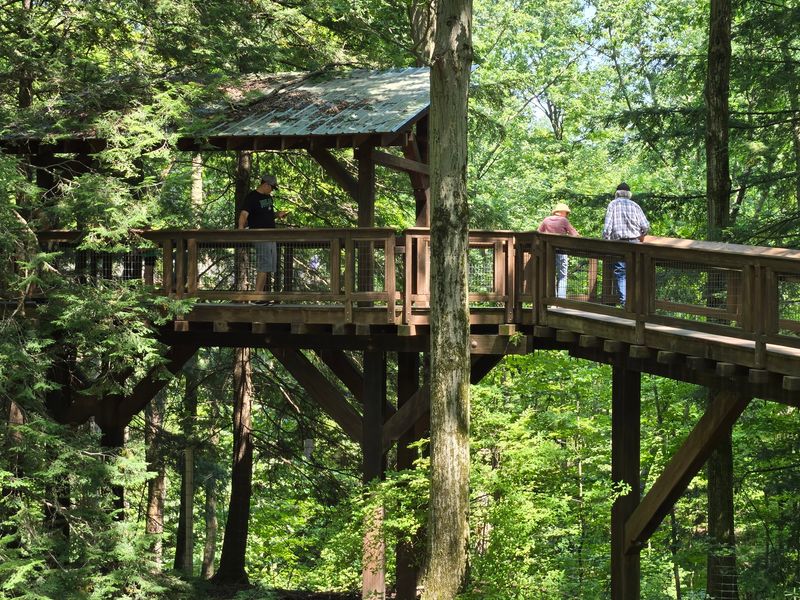
Paved, mostly flat paths connect the Corning Visitor Center to the canopy walk, which makes the headline attraction reachable for a lot of visitors who’d otherwise skip it. The suspension bridges run 36 inches wide and can accommodate some wheelchairs.
Honesty helps here, though. Portions of the approach path include loose gravel, and that surface can be tough going for certain mobility devices.
Worth factoring in before you make the drive.
Strollers and wagons handle the route to the canopy walk and many of the garden loops without trouble. Farther trails get narrower and rootier.
Visitor center restrooms are wheelchair accessible, and additional restrooms open seasonally near the Rhododendron Discovery Garden. Accessible parking sits close to the visitor center.
The Kalberer Emergent Tower is stairs only, all 202 of them, so plan for part of your group to enjoy the canopy walk while others climb. Several families have found that split works fine, since the two structures sit near each other and nobody waits long.
Seasonal Hours for the Structures
Here’s the detail that trips people up: the canopy walk and tower keep different hours than the arboretum itself. The grounds run Tuesday through Sunday, 9:00 a.m. to 5:00 p.m., closed Mondays, while members can access the grounds dawn to dusk.
The elevated structures typically operate April through October, Tuesday to Sunday, 10:00 a.m. to 4:45 p.m. In November they shift to Saturdays and Sundays only, 10:00 a.m. to 3:45 p.m., weather permitting.
Both close for winter. If your reason for driving to Kirtland is the bridge and the tower, a December or February trip won’t deliver, though the trails and grounds remain open.
Last entry falls 15 minutes before closing, so rolling in at 4:40 in July leaves very little room. Arrive with time to spare.
Temporary closures also happen during thunderstorms, high winds, or snow, and occasionally for scheduled maintenance. Hours can change seasonally, so a quick check before leaving home is never wasted effort.
What Admission Costs a Family
Access to both the Murch Canopy Walk and the Kalberer Emergent Tower comes with general admission, so there’s no separate ticket for the elevated structures.
Adult admission generally runs $19 to $21, children ages 3 to 12 come in at $13 to $15, and kids 2 and under enter free. Prices can shift with the season, so treat those as ballpark figures.
Discounts apply for active-duty military, veterans, and Museums for All participants using SNAP, EBT, WIC, or Medicaid cards. Tickets can be bought online ahead of time or at the gate, and admission and memberships are typically handled with major credit cards, cash, or checks.
Frequent visitors lean hard on membership. One family mentioned an $80 summer pass they used repeatedly, and members also gain reciprocal entry at other botanical gardens and conservatories.
A fair warning from a past guest: arriving at 2:00 p.m. with a 5:00 p.m. closing time makes the ticket feel expensive. Give yourself a morning start and the math looks much better.
Food, Picnics, and Restrooms
Nobody stumbles onto a fast food drive-through out here, and a visitor put it plainly: you’re not near a McDonald’s. Packing water and lunch is the move.
Inside the Corning Visitor Center, the Grab + Go Cafe serves salads, bowls, wraps, and snacks from April through mid-November on select days. Snacks and beverages are generally available year-round, along with a gift shop and vending machines.
Picnics are welcome, and picnic tables are scattered around the grounds alongside all those memorial benches. Plenty of visitors simply eat on a bench with a pond view and call it a day.
Restrooms sit at the visitor center, with seasonal facilities near the Rhododendron Discovery Garden. Guests consistently note they’re clean and modern, which matters when you’re four hours from home with kids.
Trash bins are provided, and staff appreciate visitors using them. Comfortable walking shoes belong on the packing list too.
Between paved loops and dirt trails, most families log more miles here than they expected.
The Drive In From Ohio Metros
Sperry Road makes a good first impression. The approach winds through trees and open land before reaching the main entrance, and more than one visitor has called the drive in picturesque on its own.
Cleveland families have it easiest at roughly 30 to 45 minutes. Akron sits around 45 minutes out, Toledo runs about 2 hours 15 minutes to 2 hours 30 minutes, Columbus lands near 2.5 hours, and Dayton stretches closer to 3 hours 50 minutes.
GPS is your friend here. Several guests found the final turns a little confusing, and following directions rather than instinct saves a wrong turn or two on rural Lake County roads.
The main parking lot sits at the Main Entrance, with accessible spaces near the Corning Visitor Center and overflow gravel parking opened during busy stretches like peak fall color.
There’s also limited closer parking near the Rhododendron Discovery Garden, available with a pass you pick up at the visitor center. Ask about it if walking distance is a concern for anyone in your group.
Is the Climb Worth the Drive?
Budget 1.5 to 2 hours for the canopy walk and tower together, then add more for everything else, because almost nobody manages to see it all in one trip.
The pairing is what makes the stop land. You walk through the canopy at 65 feet, then climb above it at 120, and the shift in perspective between the two is genuinely different rather than repetitive.
Holden suits a wide range of visitors. Families with young kids, grandparents who’d rather ride the tram, birders, gardeners looking for ideas, and anyone who just wants a long quiet walk all find their version of the place.
Timing shapes the experience more than anything. May and June bring the heaviest bloom, July through September the butterflies, and October the fall color plus seasonal programming that draws real crowds.
Skip the deep winter months if the bridge is your goal. Otherwise, pick a clear weekday morning, pack a lunch, wear shoes you can walk miles in, and let the afternoon go where it wants.