
The California Coastal Road Trip That Makes Every Five Minutes Feel Like A Photo Stop
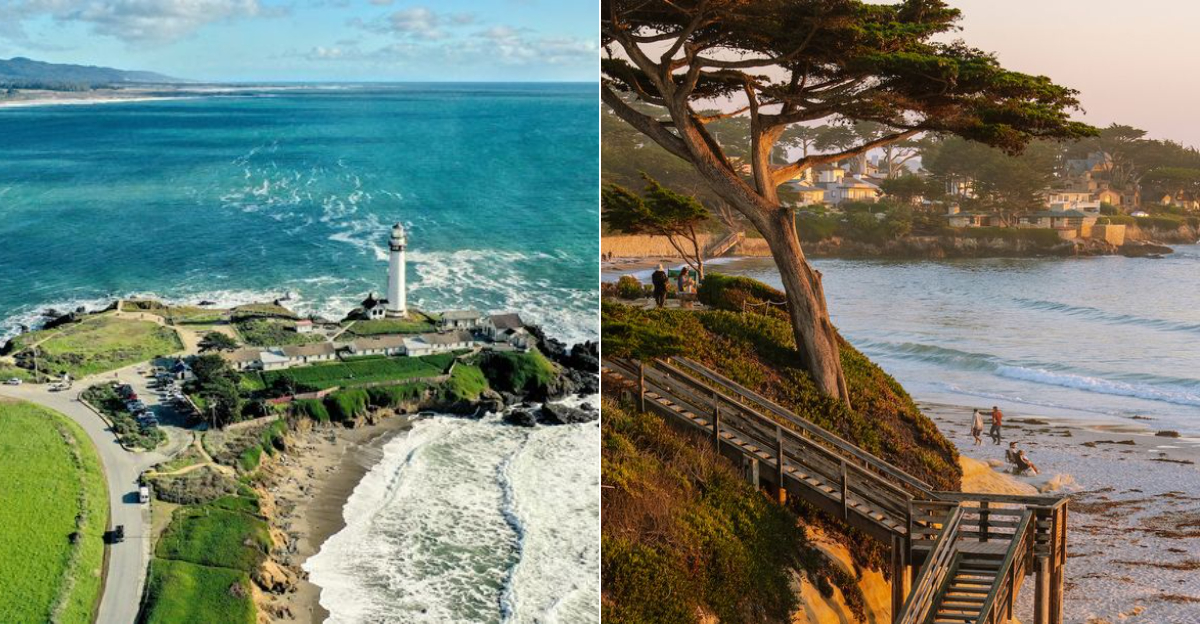
California Highway One turns an ordinary coastal drive into a long chain of impossible-to-ignore stops.
Waterfalls, cliffs, sea arches, and beaches keep appearing mile after mile, making the route feel less like transportation and more like a full-day adventure.
How do you keep driving when purple sand, crashing waves, and a waterfall above the ocean appear around the next bend?
Sea otters may drift below the cliffs, whales sometimes surface offshore, and every turnout seems ready to steal another ten minutes.
Some highlights require short detours, while others appear directly beside the highway. Slow down, check road conditions before leaving, and give yourself far more time than the map suggests.
This is not a drive built for strict schedules or rushing toward the finish. Keep the camera ready, pull over only at safe designated areas, and let California’s coastline decide how many stops the day needs.
Bixby Bridge Views
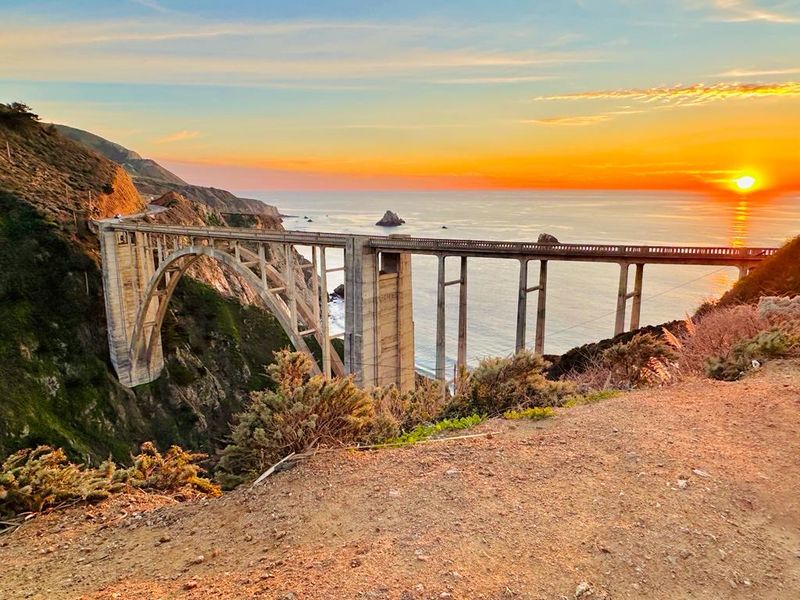
Some bridges are just bridges. Bixby Bridge is something else entirely.
Built in 1932, this concrete arch structure stretches gracefully over a deep canyon, with the Pacific crashing far below. It looks like it belongs in a painting, not on a road map.
Photographers have been obsessed with this spot for decades, and honestly, it is easy to see why. The light changes here constantly.
Morning fog wraps around the bridge like a soft blanket, and by sunset, the whole scene turns gold and pink. Have you ever watched the sun disappear behind an ocean horizon framed by something this dramatic?
Stopping here feels like a reward. Pull over at the north viewpoint for the classic shot that everyone knows but nobody gets tired of seeing.
The canyon drops sharply below, the ocean stretches endlessly ahead, and the bridge ties it all together. There is no bad angle.
Every photo you take here will look like a professional shot it. Do not rush this stop.
Walk both sides of the viewpoint, breathe in the salt air, and let the scale of this place really sink in. This is what California road trips are made for.
McWay Falls Magic
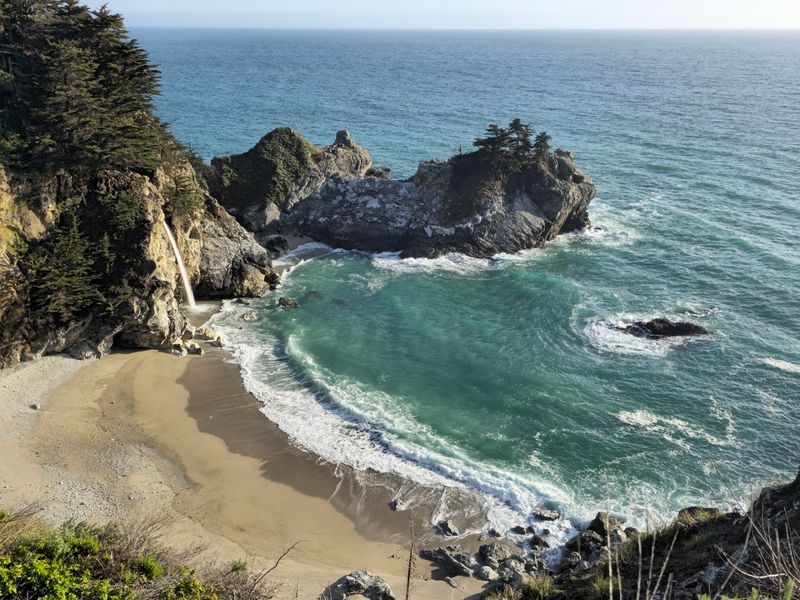
An 80-foot waterfall dropping straight onto a beach sounds like something from a fantasy novel. McWay Falls in Julia Pfeiffer Burns State Park is completely real, and it is absolutely worth the stop.
This rare tidefall is one of only two in California that flows directly into the ocean. That alone makes it special.
Right now the main viewing trail is closed for repair work, but you can still catch the whole scene from a pullout right along Highway 1.
The cove below is not accessible to visitors, which actually makes it feel more magical. You watch from above, like you stumbled onto a secret.
In season, gray whales pass just offshore, and the park is full of towering redwoods that add another layer of wonder. This is one of those stops where people plan to spend ten minutes and end up staying an hour.
Bring snacks, find a spot on the overlook, and just soak it in. Julia Pfeiffer Burns State Park also offers camping nearby for those who want to wake up to this kind of scenery every single morning.
Pfeiffer’s Purple Sands
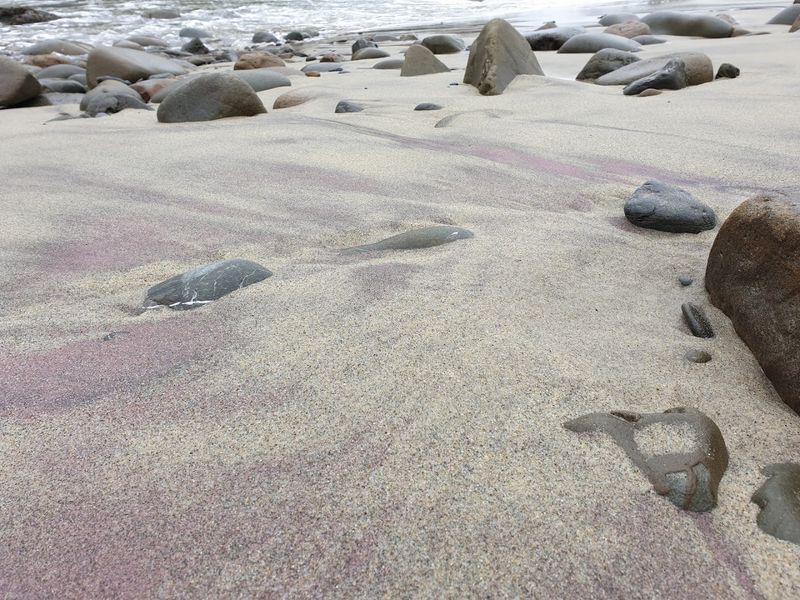
Purple sand. Yes, that is a real thing, and yes, it exists right here in California.
Pfeiffer Beach gets its distinctive color from manganese garnet minerals that wash down from the cliffs above. Walking on it feels oddly surreal, like the beach decided to show off a little.
Then there is Keyhole Arch. This natural rock formation sits right at the water’s edge, and during certain times of year, the setting sun aligns perfectly with the opening.
Light pours through in beams that look almost otherworldly. Can you picture yourself standing there, camera ready, as that light show unfolds just for you?
Getting here takes a bit of effort. The access road is narrow and unmarked, and parking is limited, so arriving early is a smart move.
Check current road conditions before you head out because the road can be tricky after rain. The effort is completely worth it.
Crowds are smaller here than at many other Big Sur stops, which means you get more space, more quiet, and more time to actually enjoy the moment. This beach rewards the curious traveler who is willing to go just a little bit off the obvious path.
Bring layers because the wind off the Pacific can surprise you fast.
Point Lobos Splendor
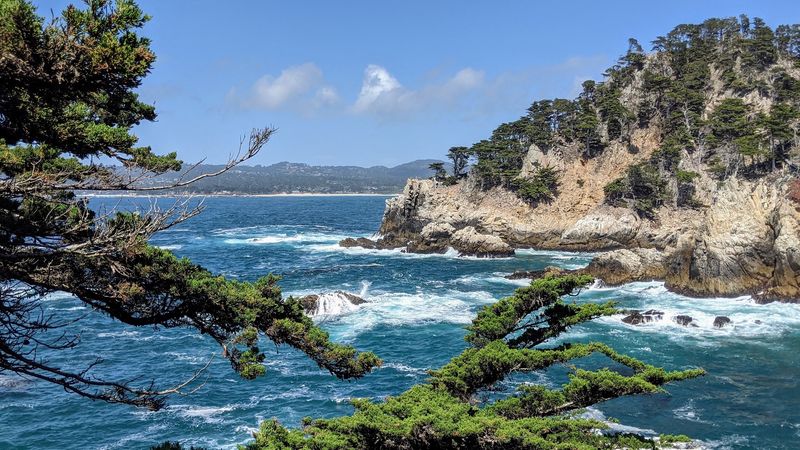
Point Lobos does not ease you in gently. The moment you arrive, the scenery hits hard.
Rocky coves, ancient Monterey cypress trees twisted by the wind, sea otters floating lazily in kelp beds, and waves crashing against dramatic stone formations. This place means business.
The Cypress Grove Trail is one of the best short hikes on the entire California coast. It winds through trees that look like they have been sculpted by the ocean breeze over hundreds of years.
Around every bend, another jaw-dropping view opens up. Are you the kind of traveler who loves discovering something unexpected around the corner?
Wildlife here is genuinely abundant. Harbor seals haul out on the rocks, sea lions bark from offshore, and bird watchers will have an absolute field day.
Point Lobos State Natural Reserve requires an entrance fee, and reservations are sometimes needed during busy periods, so check ahead before you visit. Early morning visits are magical because the light is soft and the crowds are thin.
The reserve covers both land and an underwater area that divers love exploring. Even from the shore, the water is so clear you can see into the kelp forest below.
This is a stop that earns its reputation every single time.
Carmel-By-The-Sea Charm
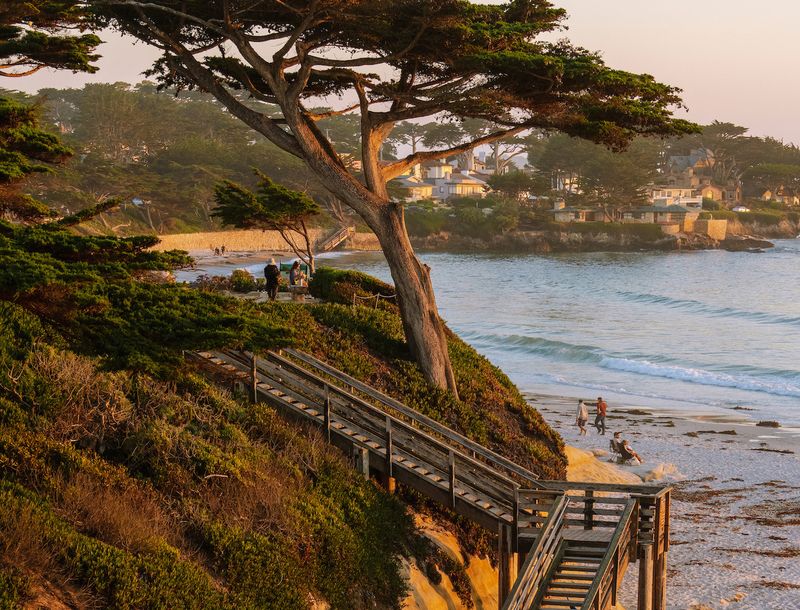
Carmel-by-the-Sea looks like someone took a European fairy tale and planted it right on the California coast. The architecture is genuinely unlike anything else in the state.
Hugh Comstock designed many of the famous cottages here in the 1920s, complete with steeply pitched roofs, rounded doorways, and tiny windows that practically beg you to peek inside. It is adorable in the best possible way.
Art lovers are going to have a hard time leaving. Over a hundred galleries line the streets, showcasing everything from impressionist paintings to bold contemporary sculpture.
The town has been an artist colony since the early 1900s, and that creative energy is still very much alive. What kind of art do you think you would bring home as your California souvenir?
Carmel Beach is just a short walk from the village center, and it is one of the most beautiful stretches of sand on this entire highway. White sand, turquoise water, and dramatic cypress trees framing the shore make every sunset here feel like a private show.
Dogs are welcome on the beach, which makes the whole scene even more joyful. Grab something to eat from one of the many local spots, then stroll the village streets without any agenda.
Carmel rewards slow, curious wandering more than almost anywhere else on this road trip.
Pigeon Point Lighthouse
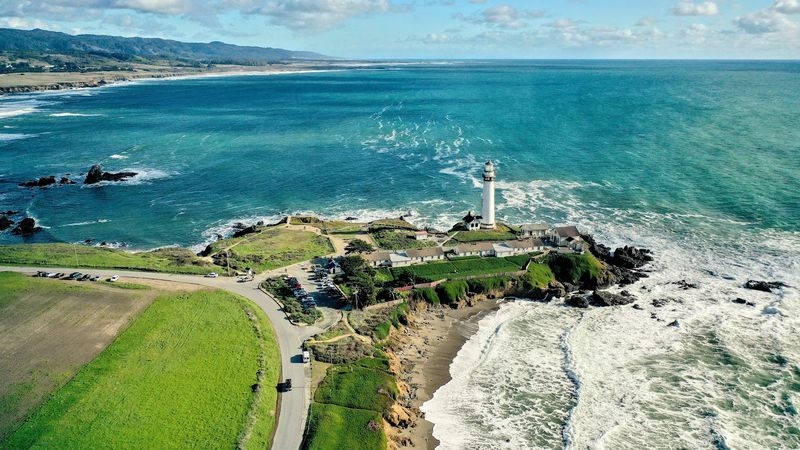
Standing 115 feet tall on a dramatic cliff above the Pacific, Pigeon Point Lighthouse has been guiding ships safely since 1872. That is over 150 years of history staring back at you from a single white tower.
There is something quietly powerful about that kind of longevity.
The lighthouse tower is currently undergoing restoration work, but the grounds are open and the views from the cliff are absolutely stunning on their own. Scan the water on a clear day and you might spot harbor seals lounging on the rocks below, or even migrating whales passing just offshore.
Have you ever watched a whale surface from a lighthouse cliff? That is a memory that does not fade easily.
The original Fresnel lens from the lighthouse is on display in the fog signal building nearby, and it is a fascinating piece of engineering history. The lens is enormous and beautifully intricate, a reminder of how much skill went into keeping sailors safe before modern technology.
Pigeon Point Lighthouse is located along Highway 1 between Santa Cruz and Half Moon Bay, making it a natural and rewarding stop on any northward journey up the coast. Check current hours before visiting since grounds access can vary.
Bring a jacket because the wind off the ocean at this elevation is refreshing and relentless all at once.
Elephant Seal Gathering
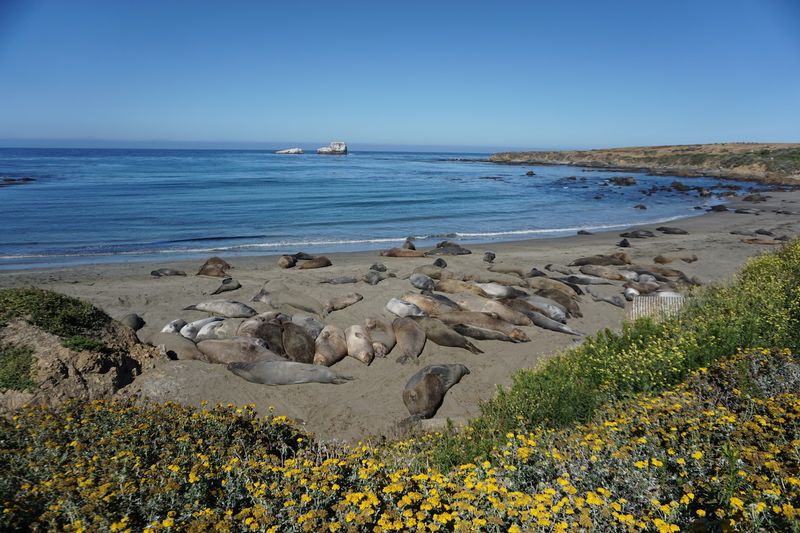
Nothing quite prepares you for the sight of thousands of elephant seals covering a beach. These animals are enormous, loud, and completely unbothered by the humans watching from the boardwalk above.
Northern elephant seals can weigh up to 5,000 pounds, and seeing a group of them together is one of the most jaw-dropping wildlife experiences on the entire California coast.
Piedras Blancas Elephant Seal Rookery near San Simeon is free to visit and accessible year-round. Different seasons bring different spectacles.
December through March is peak season for pupping and mating, when the beach is at its most dramatic and chaotic. Spring brings molting season, when the seals look a little scrappy but no less fascinating.
What season do you think would make for the best visit?
Knowledgeable volunteer docents are often on-site and love sharing facts about these remarkable animals. The boardwalk is wheelchair accessible, which means this incredible experience is available to just about everyone.
Bring binoculars if you have them because the detail you can see from the viewing area is remarkable. The sound alone, a mix of deep gurgles and loud barks, is something you will not forget.
This stop requires zero hiking, zero special gear, and zero planning beyond just showing up. Sometimes the best wildlife encounters are the simplest ones.
Morro Rock Landmark
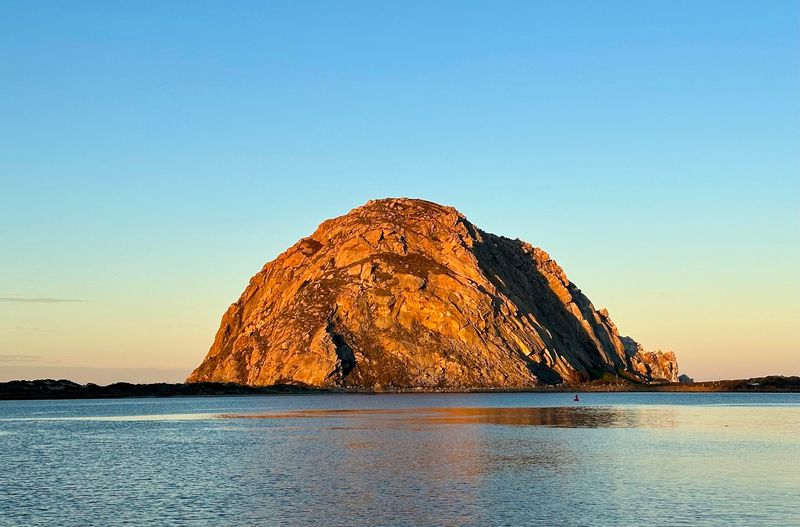
Few natural landmarks stop people in their tracks quite like Morro Rock. This massive 576-foot volcanic plug rises straight out of the water at the entrance to Morro Bay, and it commands attention from every direction.
It is the last in a chain of ancient volcanic peaks called the Nine Sisters, and it has been a landmark for sailors and explorers for centuries.
Morro Rock is a protected bird sanctuary, home to nesting peregrine falcons that have made a remarkable comeback from near extinction. Watching these birds dive at full speed is one of the most thrilling things you can witness from the shore.
The surrounding bay is equally alive with sea otters, sea lions, and an impressive variety of shorebirds. What would it feel like to watch a peregrine falcon hunt with that giant rock as the backdrop?
Visitors can drive right to the base of the rock along Embarcadero Road, making it one of the most accessible dramatic landscapes on the entire route. The waterfront area nearby is lively and fun, with kayak rentals and fresh seafood spots to explore.
Morro Rock itself cannot be climbed, but the views from the base are more than worth the stop. This iconic California landmark is located at the base of Morro Rock, Morro Bay, California, and it makes a perfect final scene for an unforgettable coastal road trip.