
Peace And Quiet Vanished From This New Hampshire Swimming Hole Once Tourists Arrived
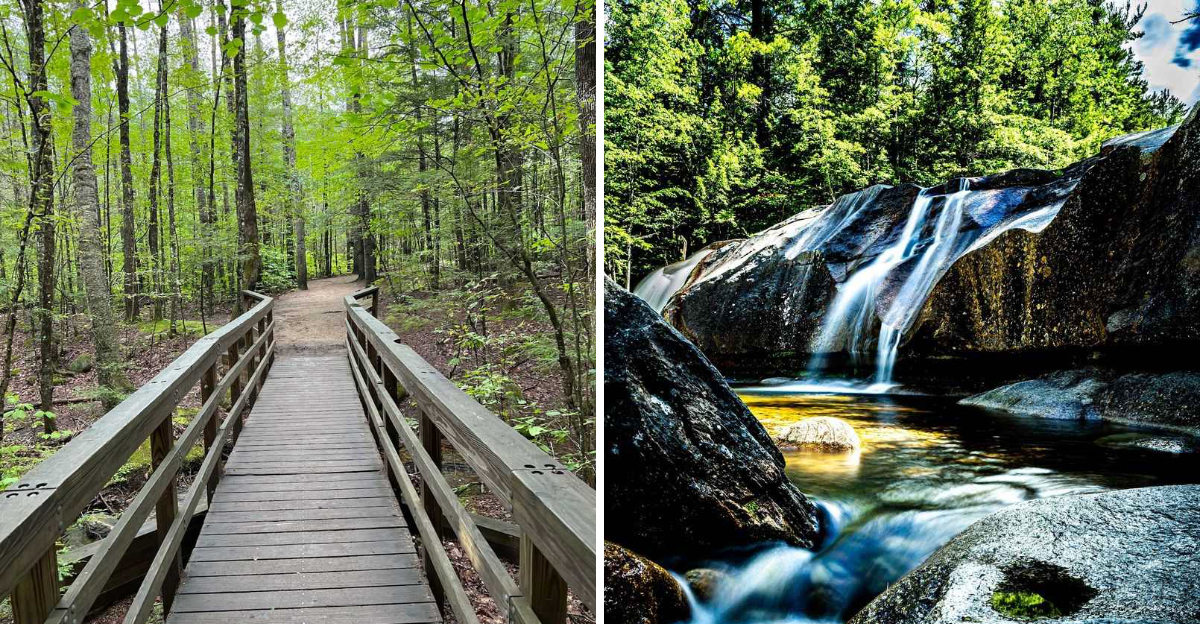
Quiet mornings barely exist anymore at this New Hampshire swimming hole. Word spread fast, and peace packed its bags.
Water spills over ancient granite in tiered pools built for cooling off on a hot afternoon. Sunlight scatters across wet stone while the steady brook keeps up its endless rush.
Families wade in shallow pockets while braver visitors climb higher. Who could resist colder water and narrower chutes carved straight through solid rock?
History runs far deeper than the water here, older than most visitors truly realize. New Hampshire holds onto stories most people never bother to ask about.
There is a lot more waiting past that first pool, held in every bend the brook takes. Curious yet?
Maybe it is time to plan a trip and see for yourself.
Where Water Carved Stone Over Thousands Of Years
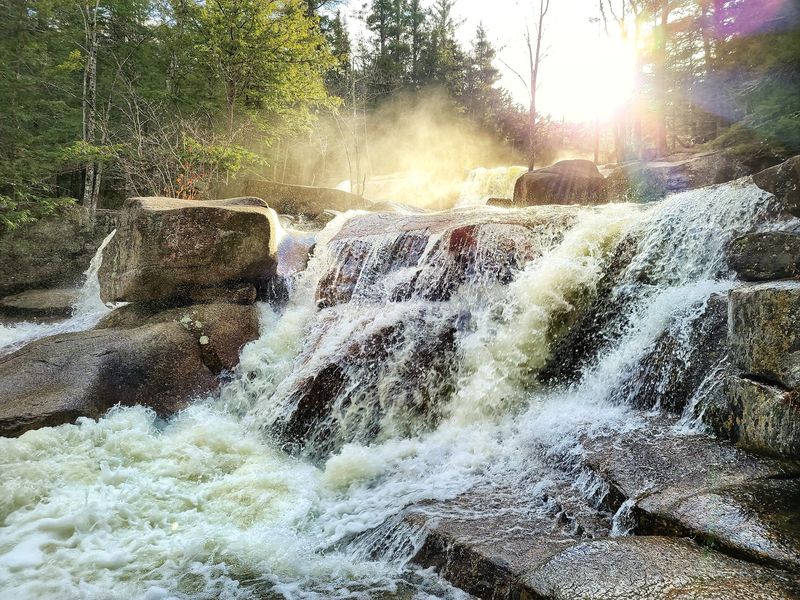
Lucy Brook does not ask for permission. It rushes down from Big Attitash Mountain, slicing through ancient granite with quiet, relentless force.
Over thousands of years, that flow carved out one of New Hampshire’s most striking natural features.
The result is a series of tiered waterfalls, smooth rock ledges, and shallow pools that look almost too perfect to be natural. The total drop across the cascades spans roughly 75 feet.
Each level offers its own character, from wide, lazy pools to narrow chutes that shoot water through tight granite channels.
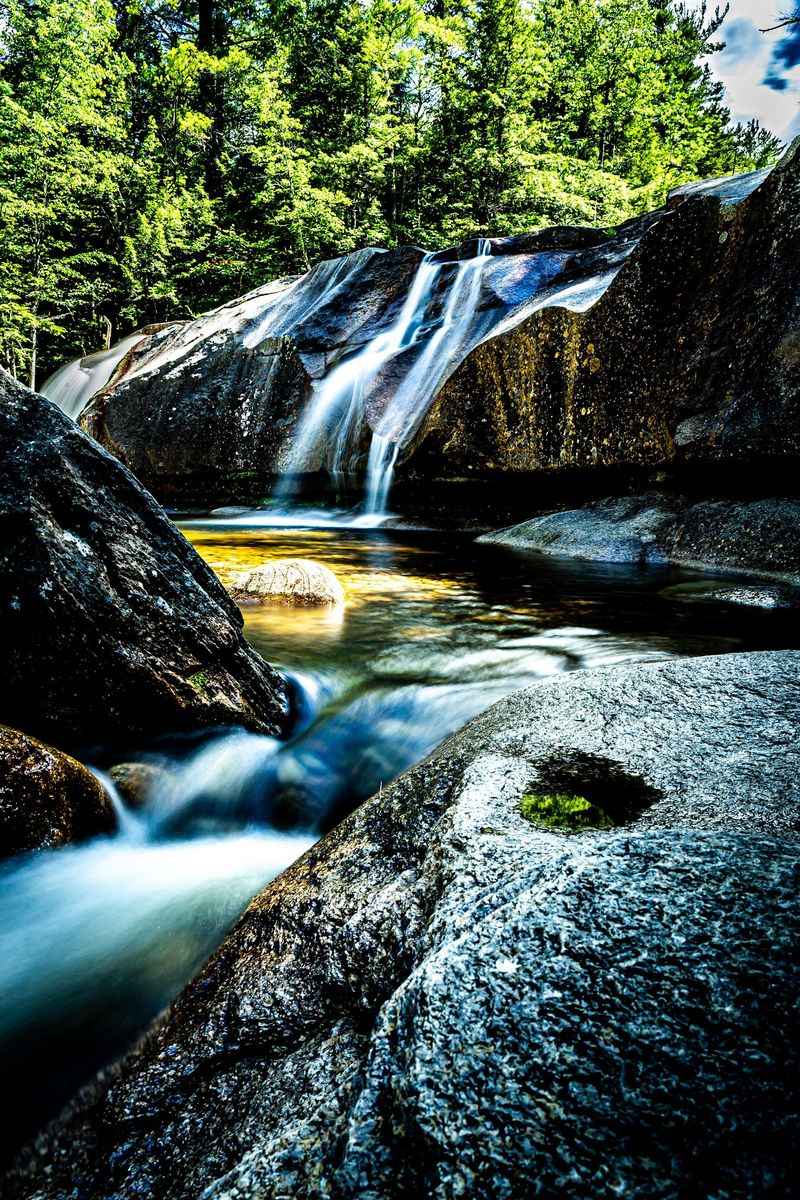
Sunlight filters through the forest canopy above, scattering light across the wet stone in constantly shifting patterns. The rocks themselves tell the story, worn smooth by centuries of flow, pocked with rounded potholes where swirling water once drilled deep.
Visitors standing at the base can feel the cool mist drifting off the falls. The geology here is genuinely dramatic, and no photograph fully captures the scale of what water can accomplish over time.
The Fascinating History Behind The Name
Before tourists arrived in numbers, this land had a much quieter story. The Abenaki people knew this site long before European settlers mapped it, referring to the area as a place connected to water spirits.
That reverence for the land did not disappear when settlers arrived.
The name Diana’s Baths carries two competing explanations. One theory links it to Diana, the Roman goddess of the hunt and the natural world.
The other theory ties the name to a visitor from Boston who is said to have renamed the falls after the goddess decades before the Lucy family ever owned the land, well before the property became linked to their sawmill operation.
By the 1890s, the Lucy family recognized that sightseers were already making their way to the falls. They built a boarding house and a small souvenir shop to welcome them.
The mill later transitioned to a concrete dam and turbine system in the 1930s. The U.S. government eventually purchased the property, and the old buildings were removed in the 1960s.
Remnants of the old mill structures are still visible today, half-hidden among the rocks.
The Trail That Almost Anyone Can Handle
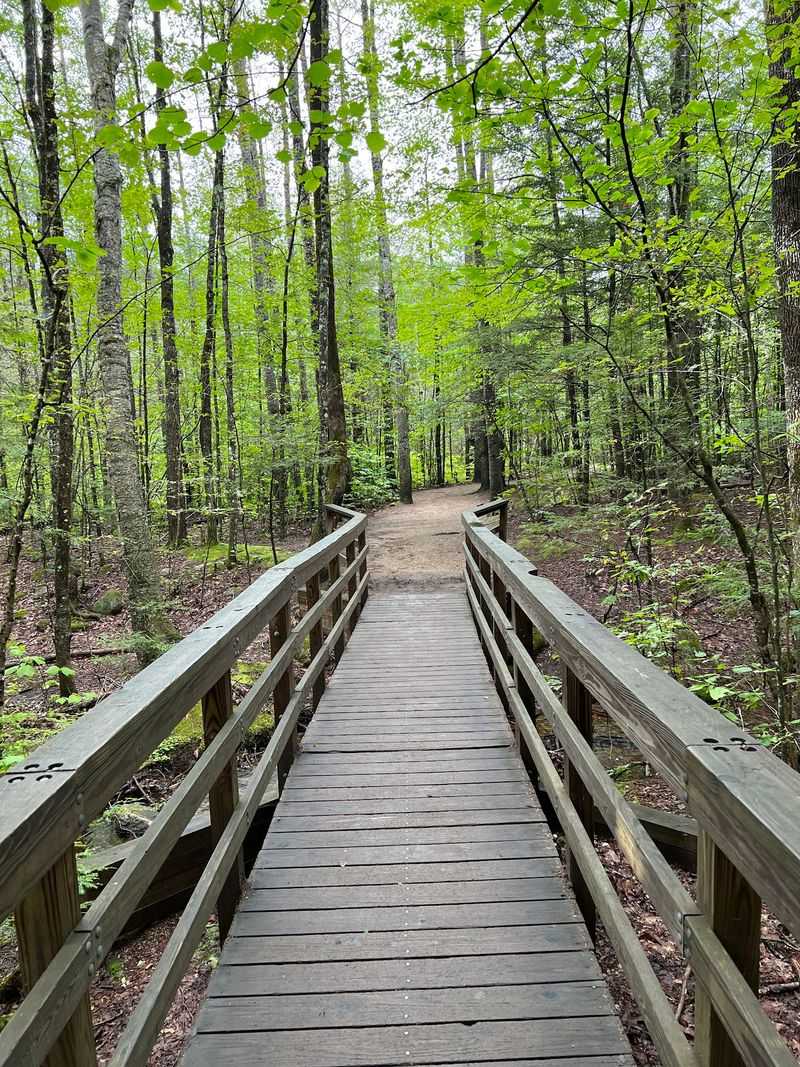
Not every waterfall demands a grueling climb to reach it. The path to Diana’s Baths is refreshingly accessible, following a wide, crushed gravel surface that stays mostly flat the entire way.
Families with strollers have made it. Visitors using wheelchairs have made it.
That accessibility is no accident.
The main trail is part of the Moat Mountain Trail and includes an ADA-accessible section from the parking area to the falls. The hike from the lot to the cascades covers roughly 0.6 miles one way, making the full round trip just over a mile.
Interpretive signage and benches appear at intervals along the route, offering chances to rest and learn about the surrounding forest.
The trail runs alongside Lucy Brook for much of its length, so the sound of moving water accompanies visitors the whole way. Shade from the tree canopy keeps the path cool even on warm summer days.
For those who want more challenge, the Moat Mountain Trail continues past the falls and gains significant elevation toward North Moat Mountain, rewarding hikers with broader views of the White Mountains region.
How Popularity Changed Everything
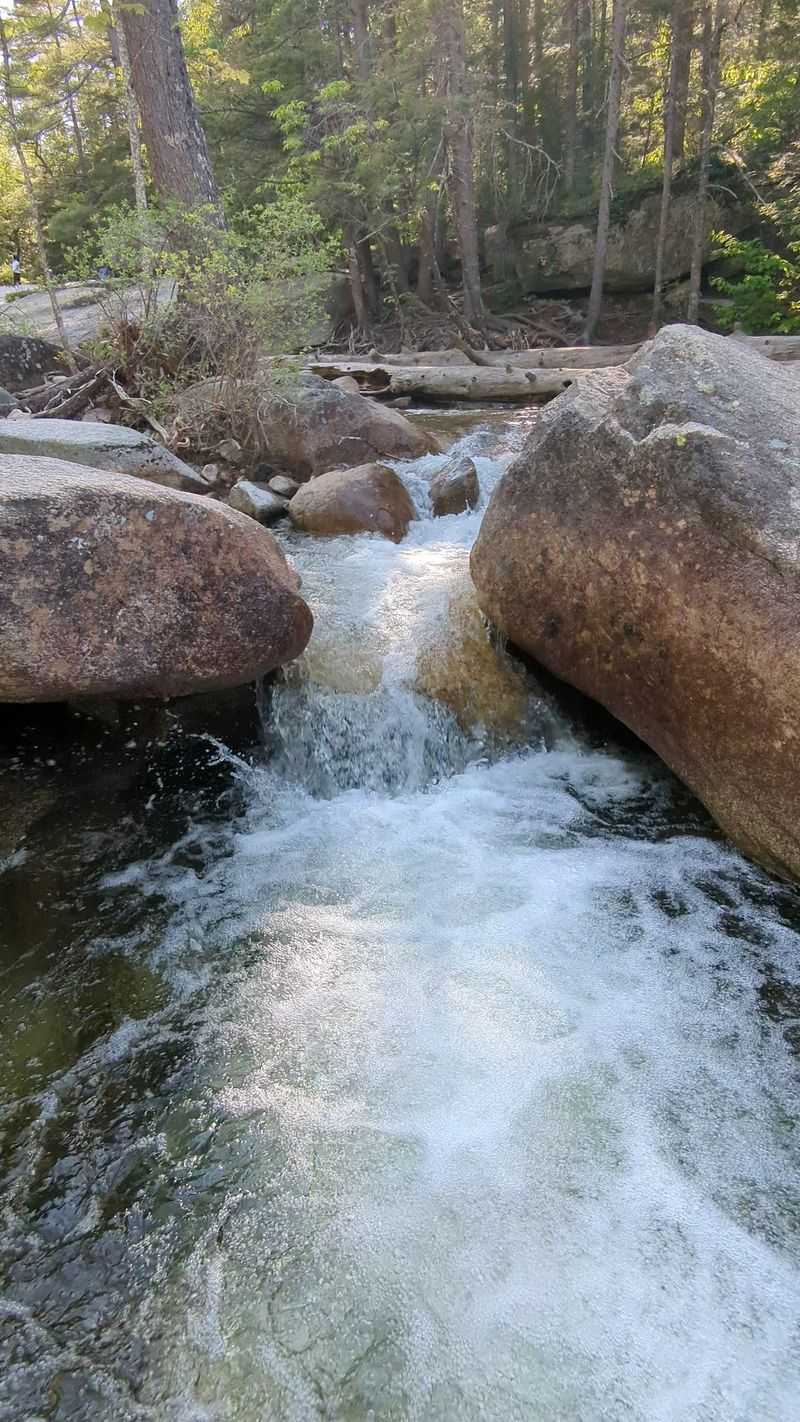
Quiet mornings at Diana’s Baths are now a rare commodity. What was once a local secret has become one of the busiest natural attractions in New Hampshire, drawing visitors from across the region and well beyond.
The transformation happened gradually, then suddenly.
Summer weekends now bring crowds that pack the rocky ledges and fill every pool with splashing swimmers. The sounds of conversation, laughter, and the occasional barking dog now mix with the rush of Lucy Brook.
For visitors seeking solitude, the experience can feel jarring compared to what photographs suggest.
In 2022, the Leave No Trace organization designated Diana’s Baths a Hot Spot, a label reserved for natural areas experiencing measurable human-created damage. Excessive trash, trail erosion, and vegetation loss all contributed to that designation.
The U.S. Forest Service has since worked with partner organizations to manage the impact, installing proper facilities and running outreach efforts.
The baths are still stunning, but the atmosphere has fundamentally shifted from the quiet sanctuary it once was, and honest visitors will tell you that upfront.
Parking Realities That Catch Visitors Off Guard
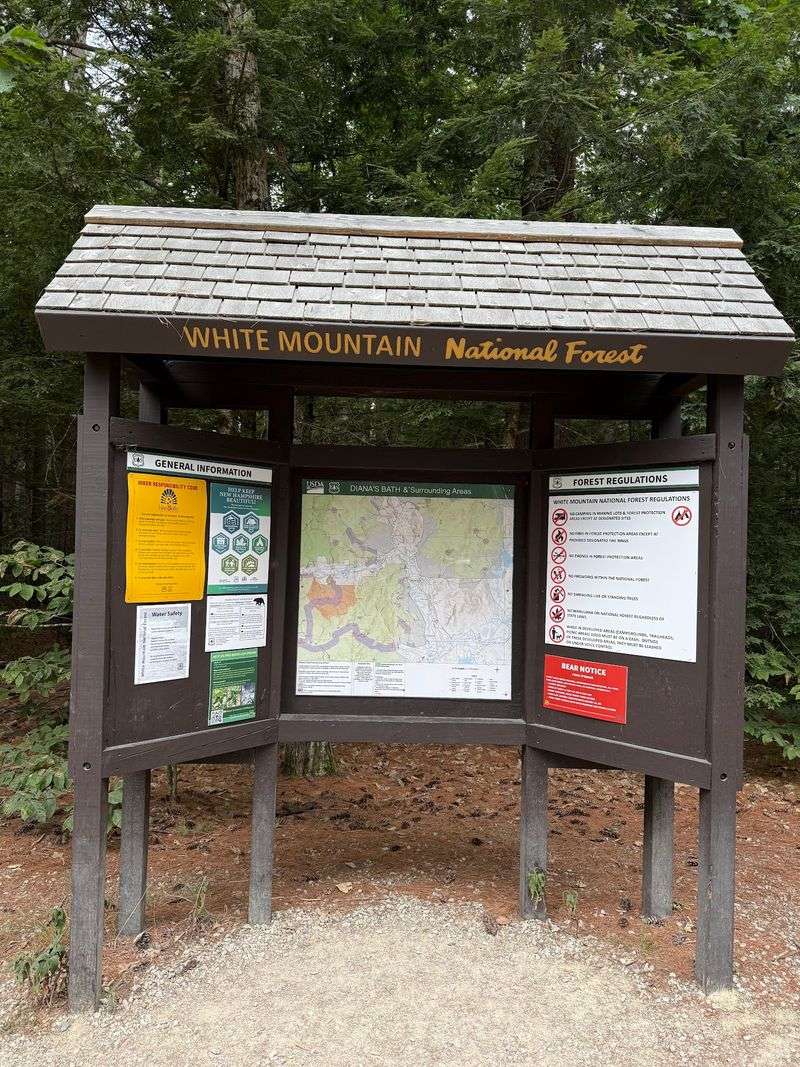
The parking situation at Diana’s Baths has become its own kind of adventure. The lot fills up fast, often reaching capacity before 8 AM on summer weekends.
Latecomers face long waits, frustrated U-turns, and the temptation to park along the roadside, which is strictly prohibited and actively enforced with fines.
A parking fee is required and paid at a self-serve kiosk near the trailhead. The kiosk accepts debit and credit cards, which makes the process straightforward.
Holders of an annual National Parks pass can use it here, which is a welcome perk for frequent outdoor visitors.
The practical advice from nearly every experienced visitor is the same: arrive early or plan for disappointment. Weekdays are significantly calmer than weekends.
Rainy days, counterintuitively, can be some of the best times to visit, as the falls run higher and the crowds thin out considerably. Having a backup plan in mind before leaving home is smart.
The North Conway area in New Hampshire offers plenty of alternative trails and scenic spots worth exploring if the Diana’s Baths lot is already full when you arrive.
Swimming, Wading, And Rock Hopping For All Ages
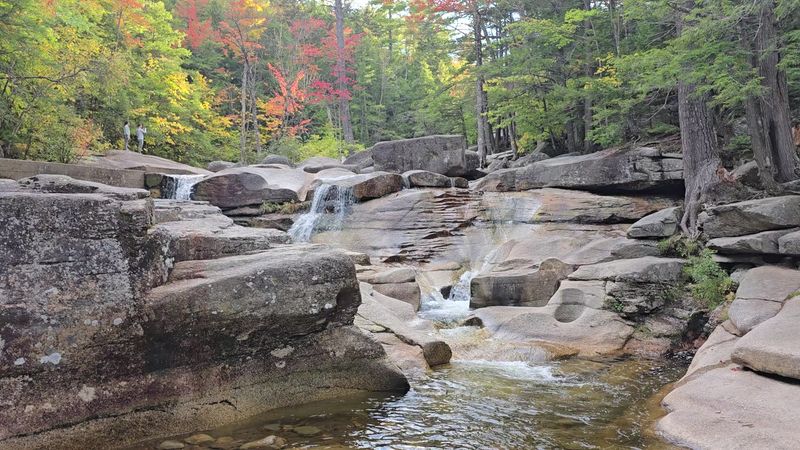
Cool water on a hot day is a simple pleasure, and Diana’s Baths delivers it without apology. The pools range from ankle-deep wading spots to deeper basins where swimmers can fully submerge.
Children gravitate toward the shallower sections, while older visitors often climb higher along the falls to find less crowded perches.
The granite is worn smooth in many places, which makes the footing deceptively tricky. Water shoes with solid grip are strongly recommended, especially for anyone planning to scramble across the rocks.
The surface can be slippery even in dry sections where spray from the falls drifts across the stone.
Higher up the cascade, some natural rock slides have formed where water channels through narrow grooves in the granite. These draw adventurous visitors willing to navigate the climb.
The variety of the terrain is part of what makes the spot so appealing across age groups. Families can spread out across multiple levels, with younger kids playing safely in lower pools while older family members explore further upstream.
The whole area rewards curiosity and a willingness to move carefully across uneven ground.
What To Bring And What To Leave Behind
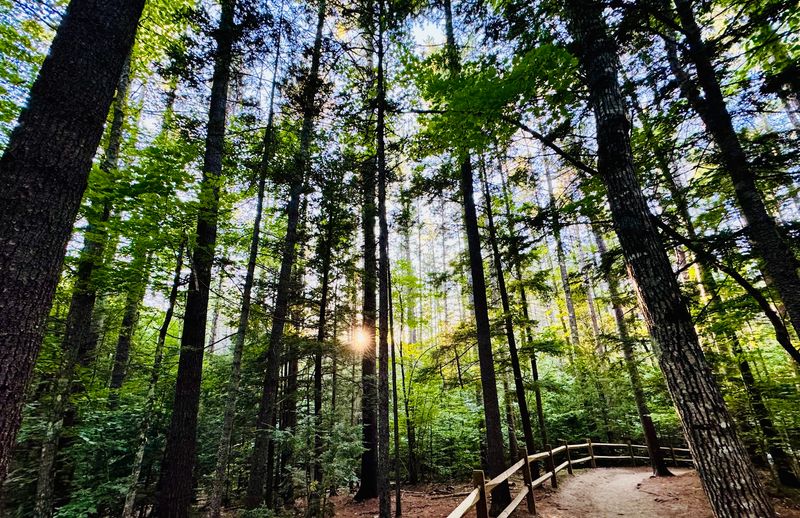
Preparation makes the difference between a frustrating trip and a great one. Diana’s Baths sits within White Mountain National Forest, at West Side Rd, Bartlett, NH 03812, and the area operates on a pack-it-in, pack-it-out basis.
There are no food vendors or concession stands anywhere near the falls.
Bug spray is a must, particularly during spring and early summer when insects are active along the brook. Sunscreen matters too, since the upper sections of the falls sit in open sunlight with little shade.
Water shoes or sandals with ankle support will protect feet on the slippery rocks. Bring more water than you think you need, especially on warm days when the hike back feels longer than the hike in.
Trash receptacles are available near the trailhead, but the responsible approach is to carry a small bag and take everything out with you. No camping or fires are permitted at the site.
Dogs are welcome but must remain on a leash at all times. Single-stall restroom facilities are available near the parking area, so plan accordingly before heading down the trail.
The Best Seasons To Visit And Why Timing Matters
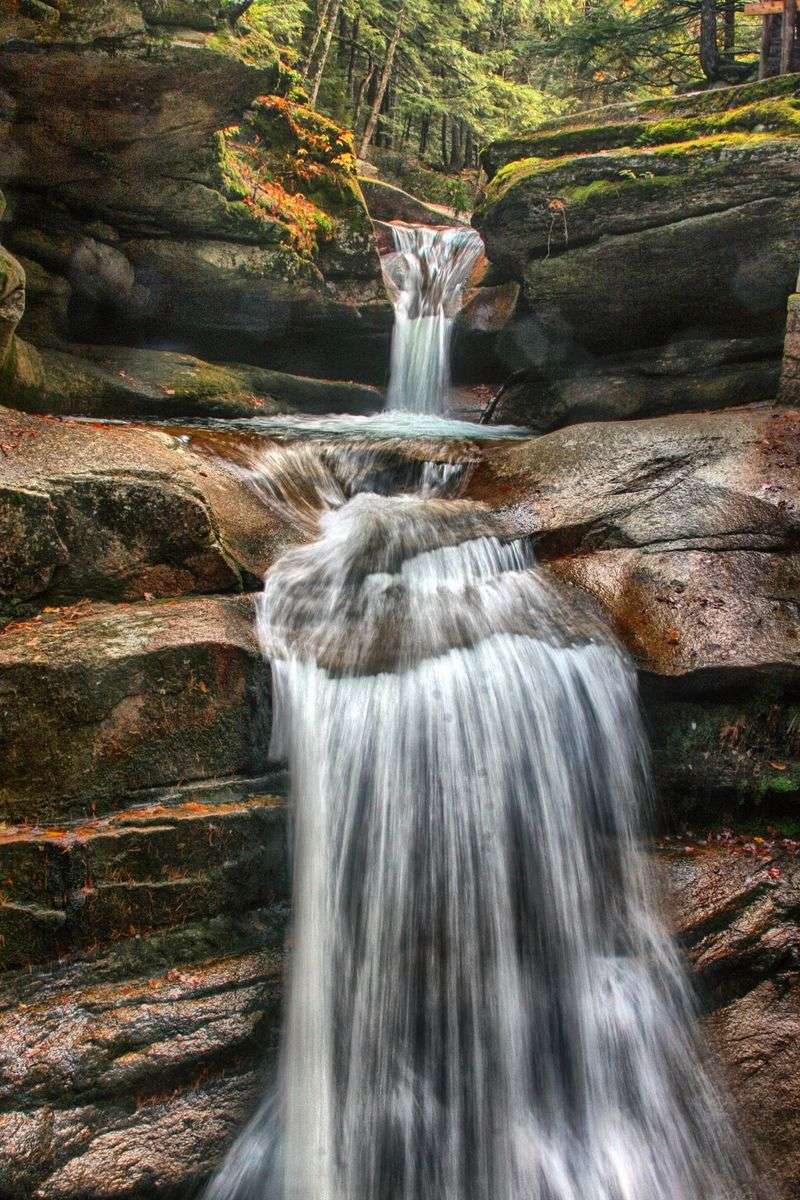
Summer gets all the attention, but Diana’s Baths earns a second look in every other season. Spring brings powerful cascades fueled by snowmelt from Big Attitash Mountain, pushing more water through the granite channels than any other time of year.
The falls roar in May in a way that summer visitors rarely see.
Autumn transforms the surrounding forest into something almost surreal. Red, orange, and gold foliage frames the waterfalls, creating conditions that photographers travel long distances to capture.
Crowds thin out after Labor Day, which means fall visitors often get the peaceful experience that summer regulars only dream about.
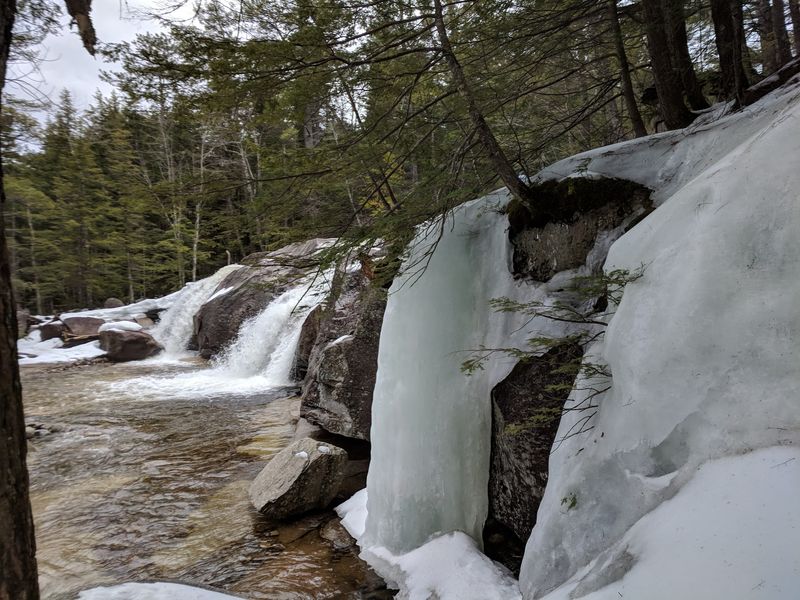
Winter visits are possible and genuinely striking. When temperatures drop far enough, the falls partially freeze into sculptural ice formations that cling to the granite ledges.
The trail remains accessible in winter for those with appropriate footwear, and the forest takes on a hushed, almost cinematic quality. Regardless of season, early morning arrivals consistently offer the best combination of light, lower visitor numbers, and the natural sounds of the brook without the backdrop of a crowd filling every pool.
Photography Tips For Capturing The Falls At Their Best
Photographers who show up at noon on a Saturday in July will fight for space and deal with harsh, unflattering light. The falls reward those who plan more carefully.
Early morning light, especially in the hour after sunrise, casts soft, warm tones across the wet granite and creates natural reflections in the still pools.
Overcast days are underrated for waterfall photography. Diffused cloud cover eliminates harsh shadows and allows the water to appear silky and luminous without blowing out the highlights.
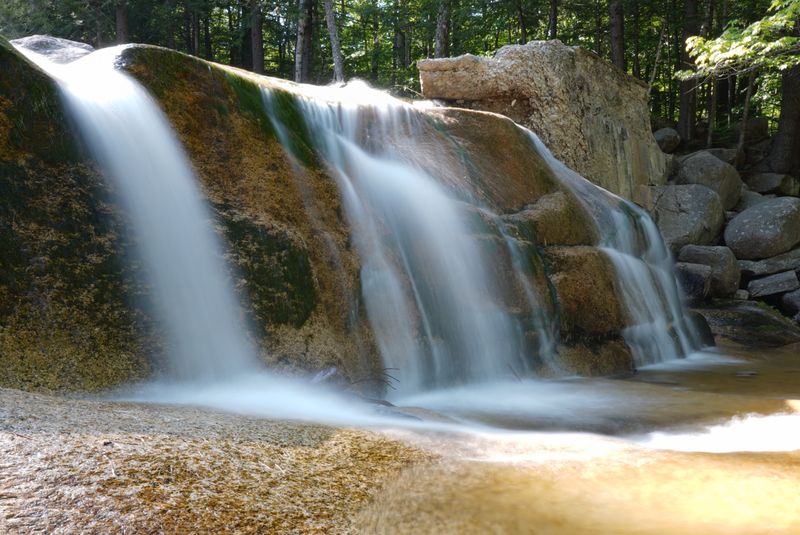
A polarizing filter reduces glare on the water surface and makes the colors in the surrounding foliage pop. A neutral density filter opens up the possibility of long-exposure shots that turn moving water into smooth, flowing ribbons of white.
A tripod is essential for any exposure longer than a fraction of a second. Even small movements blur the image.
Beyond the main cascade, the surrounding area offers quieter compositions: close-up shots of water moving through potholes, moss-covered rock details, or the interplay of light and shadow in the forest canopy above the brook. The variety of subjects makes this location worth multiple visits at different times of day.
Nearby Adventures Worth Adding To The Itinerary
Diana’s Baths sits in a part of New Hampshire that packs an impressive amount of outdoor variety into a small geographic area. After the falls, the surrounding White Mountain National Forest opens up a wide range of options for extending the day.
Cathedral Ledge, a dramatic granite cliff rising above the Saco River Valley, is just a short drive away and offers panoramic views that stretch across the valley floor.
Rock climbers from across the region make regular trips to Cathedral Ledge and nearby Whitehorse Ledge, both of which feature established routes across a range of difficulty levels. Echo Lake State Park sits at the base of Cathedral Ledge and provides a calmer setting for swimming, kayaking, and picnicking with mountain views as a backdrop.
For hikers who want more elevation after the easy walk to the falls, the Moat Mountain Trail continues past Diana’s Baths and climbs toward North Moat Mountain, rewarding the effort with sweeping views across the White Mountains. The North Conway village area, just a few miles from the trailhead, offers additional dining and shopping options for wrapping up a full day outdoors in this corner of New Hampshire.