
Spend An Evening At This Waltham, Massachusetts Forge Making Your Own Bottle Opener
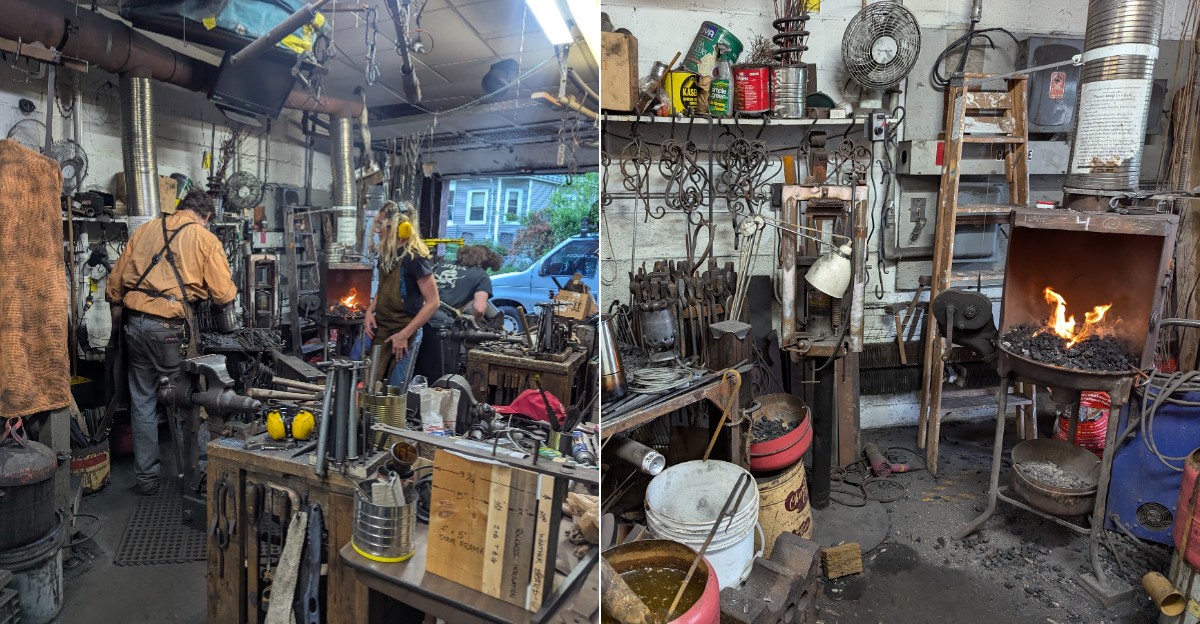
The air smells like warm metal. Anvils ring out around you like a strange kind of music.
Sparks jump, the steel turns orange, and suddenly you understand why people have loved this craft for thousands of years.
Picture yourself standing in front of a glowing coal fire in Massachusetts, hammer in hand, turning a plain bar of steel into something you will actually use at home. No experience is needed here.
A patient instructor walks you through every step, from safety gear to your final twist of the metal. You hammer, you bend, you shape, and you sweat a little.
Then you go home holding a handmade tool that came out of your own effort.
Massachusetts has plenty of museums and historic trails, but this is history you get to swing at. It is loud, it is hot, and it is genuinely fun.
Where Iron Meets Evening Fun
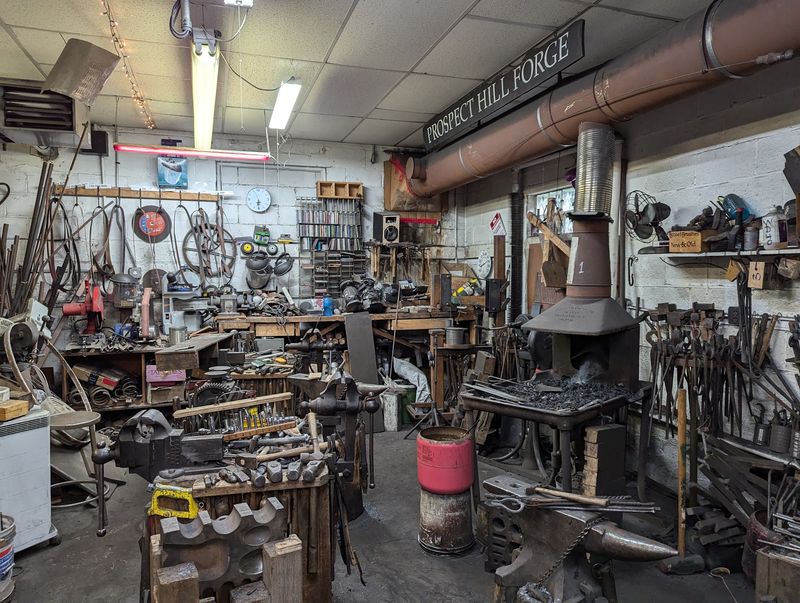
Prospect Hill Forge sits on a quiet street in Waltham, Massachusetts, and from the outside it looks modest. Then the door opens and you hear it.
Hammers. Lots of them.
Inside waits a working smithy built for teaching, not for show. Classes here are hands-on from the first minute, and the most popular one for first-timers is the forged iron bottle opener workshop.
You start with a straight bar of steel and finish with a curved, twisted tool that opens things and looks great doing it.
The shop welcomes complete beginners. Nobody quizzes you on metals or asks about your background.
If you can follow directions, you can forge.
What surprises most visitors is how quickly the fear disappears. Safety comes first, the steps are broken into small pieces, and each move is demonstrated before you try it.
Massachusetts is packed with historic sites, but few let you participate in the history so directly. Blacksmithing shaped tools, buildings, ships, and farms across New England for centuries.
Evening sessions are especially popular, so checking the online calendar ahead of time is smart. Spots fill fast and schedules shift.
Your First Swing, Explained Simply
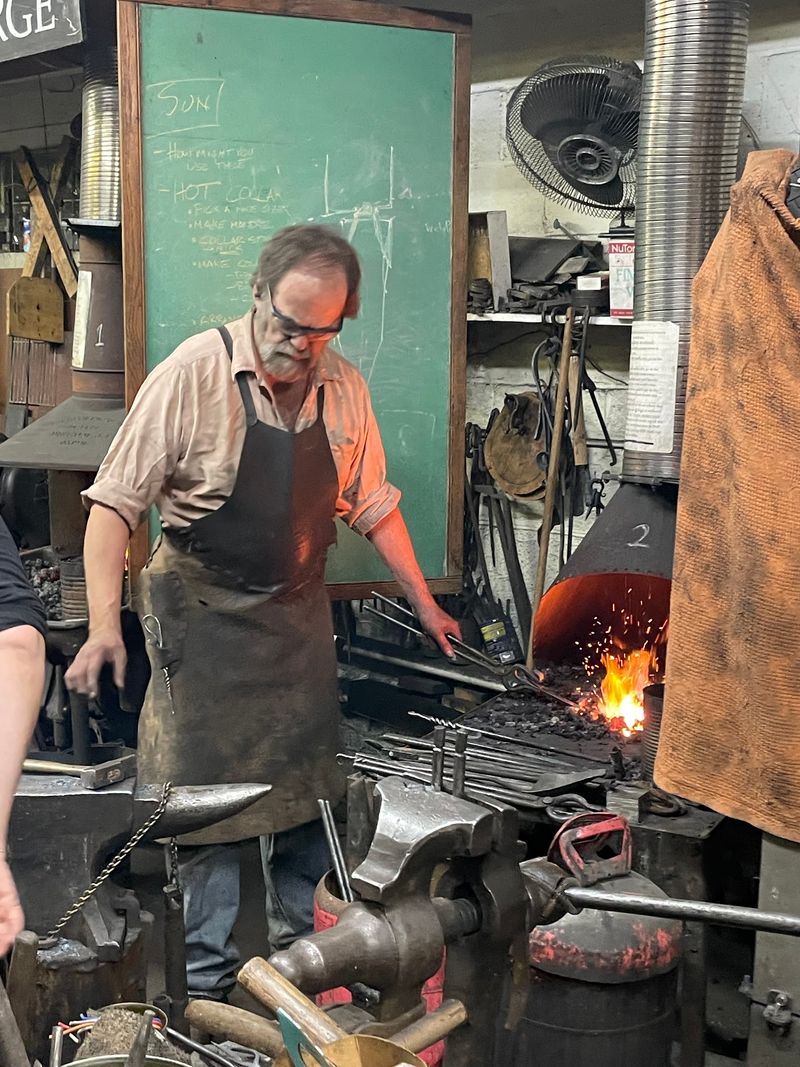
Here is the funny part about blacksmithing: brute force is not the secret. Understanding how the hammer moves matters far more than muscle.
Classes here teach the physics of hammering, which sounds fancy but really means learning to let the tool do the work. Once that clicks, the steel starts moving the way you want it to.
Beginners learn the core techniques that blacksmiths have used forever. Drawing out makes metal longer and thinner.
Cutting separates it. Bending curves it.
Twisting adds that spiral decoration everyone loves on a finished opener.
Each step gets demonstrated slowly, then you try it at your own station. Mistakes are fine.
Hot steel is forgiving, and you can reheat and reshape.
Roughly thirty percent of students are women, and success rates match those of the men in class. Age and size matter less than attention and patience.
The pace feels relaxed rather than rushed. Questions are welcome, and people often stay a bit longer than the posted class length because the conversation keeps going.
By the end, most people walk out with a new understanding of how everyday objects were once made across Massachusetts and beyond.
What shape will you twist into your handle, a tight corkscrew spiral or something loose and wavy?
Dress Smart Before You Arrive
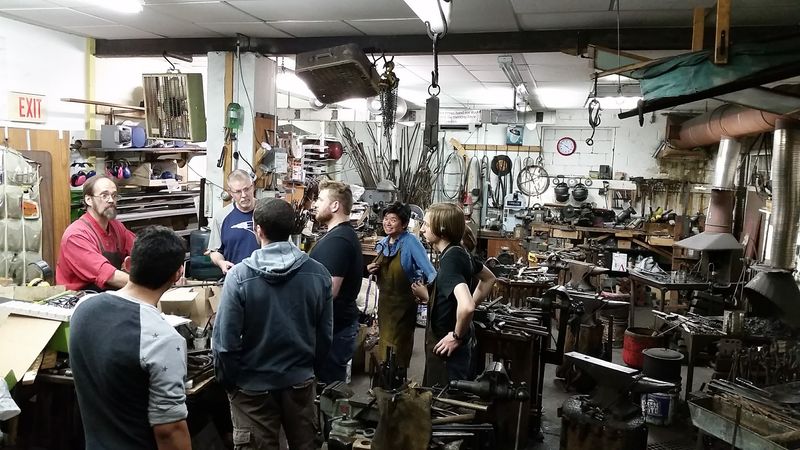
Nobody wants to show up in flip-flops and get turned away. A few clothing rules keep everyone comfortable and safe around hot coals.
Closed-toe shoes are required. Leather high-tops are ideal, but plain sneakers work fine.
Sandals and clogs with holes are not allowed, for reasons that become obvious once sparks start flying.
Natural fiber clothing is strongly recommended. Cotton, wool, and linen behave well near heat.
Synthetic fabrics can melt, which is exactly the kind of surprise no one needs.
Long pants are the smart choice, and they should be long enough to cover the tops of your shoes. That way stray hot bits of coal or steel bounce off instead of finding your socks.
Protective gear gets handed out after the safety talk. An apron, eye protection, and ear protection are all provided, so you do not need to buy anything in advance.
Expect to get dirty. Coal dust settles on everything, and you will likely sweat.
Wearing older clothes saves you a laundry headache later.
Coal Fire, Anvil, And Tongs
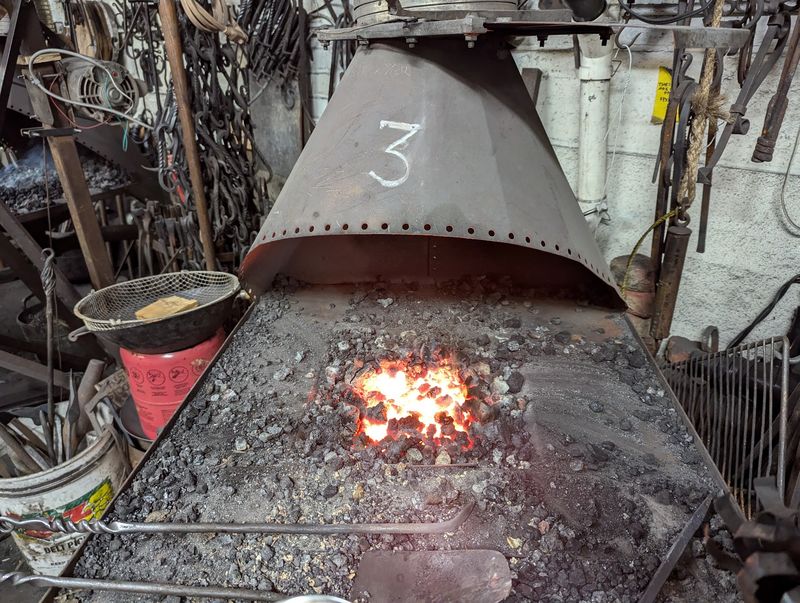
Real coal. Not gas, not a pretend setup for tourists.
Each workstation runs a coal forge, the same fuel smiths in Massachusetts used generations ago.
Managing that fire becomes part of the lesson. You learn where the hottest spot sits, how deep to bury the steel, and how to tell when the metal is ready by its color alone.
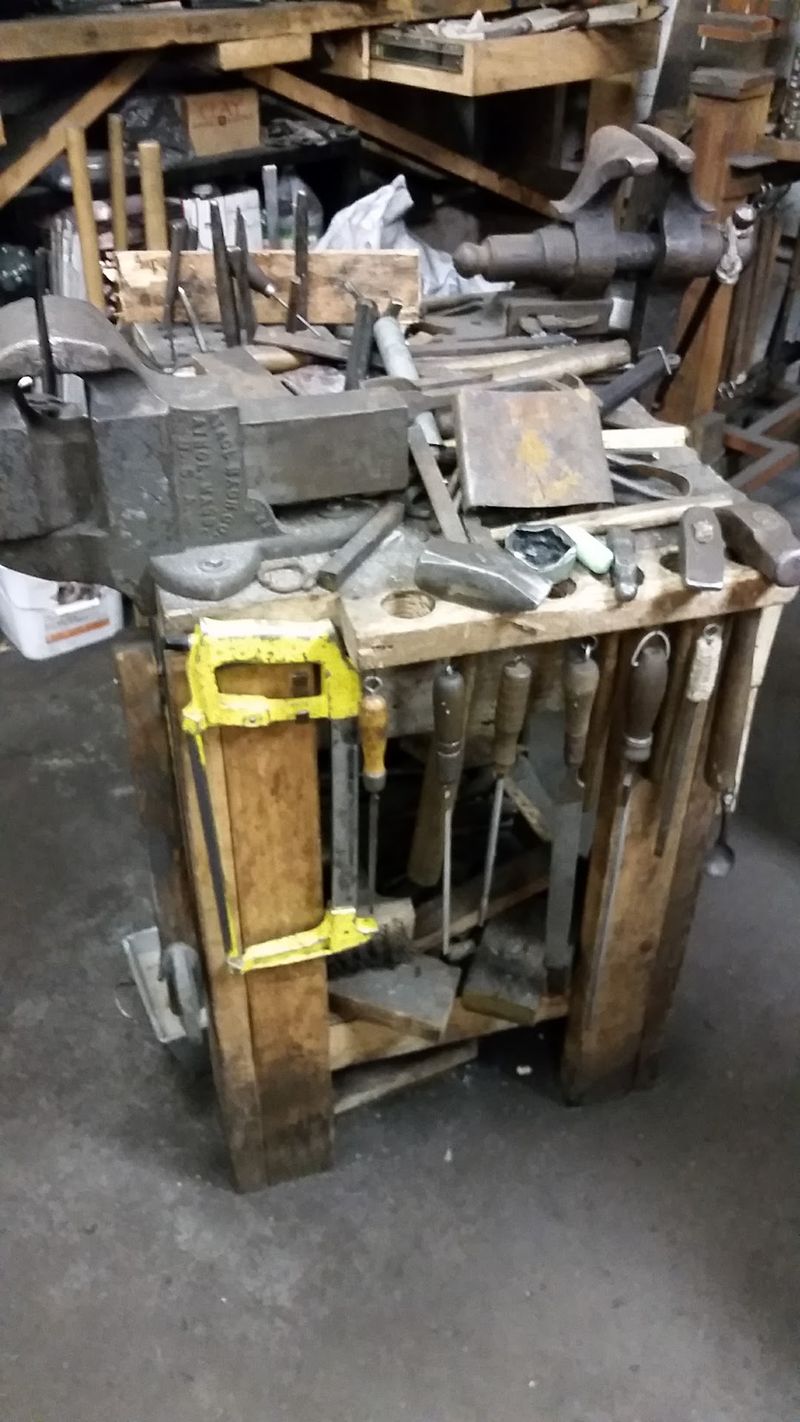
Tongs hold the hot bar steady. The anvil gives you a solid surface with different shapes built into it for bending and curving.
The hammer does the rest.
Worried about smoke? Well-managed coal fires produce surprisingly little of it, and the shop also runs a HEPA filter to keep the air clean.
The sound is something else entirely. Multiple anvils ringing at once creates a rhythm that visitors often describe as oddly satisfying, almost musical.
Many of the tools in the shop were made by hand right there. Holding a hammer that a smith forged themselves adds a layer of meaning to the whole evening.
Watching raw iron shift from gray to red to bright orange never gets old. It feels a little like magic, even when you know the science behind it.
Teens Can Join The Fun
Family trips often hit a wall when teenagers decide nothing is interesting. Handing one a hammer and a forge usually fixes that fast.
Introductory classes here are generally open to anyone thirteen and older. Younger teens in the eleven to thirteen range have specific options available with a parent supervising.
That makes the shop a strong choice for parents looking to share an activity instead of just watching from a bench. Both of you make something.
Both of you leave with a story.
The requirement is simple: you need to be able to follow instructions carefully. Focus matters more than strength, and the lessons are built in clear, manageable pieces.
Birthday celebrations happen here often. Couples book classes as a change from dinner plans.
Solo travelers show up and end up chatting with strangers over the anvils.
Class sizes stay small, which means individual attention rather than shouting across a crowded room. You are never left guessing what to do next.
Because the age rules vary by class, checking the website before booking saves confusion. Not every session works for every age group.
Massachusetts offers plenty of family outings, but not many end with a teenager proudly showing off metal they shaped themselves.
Which family member do you think would swing the hammer best?
More Than One Right Way
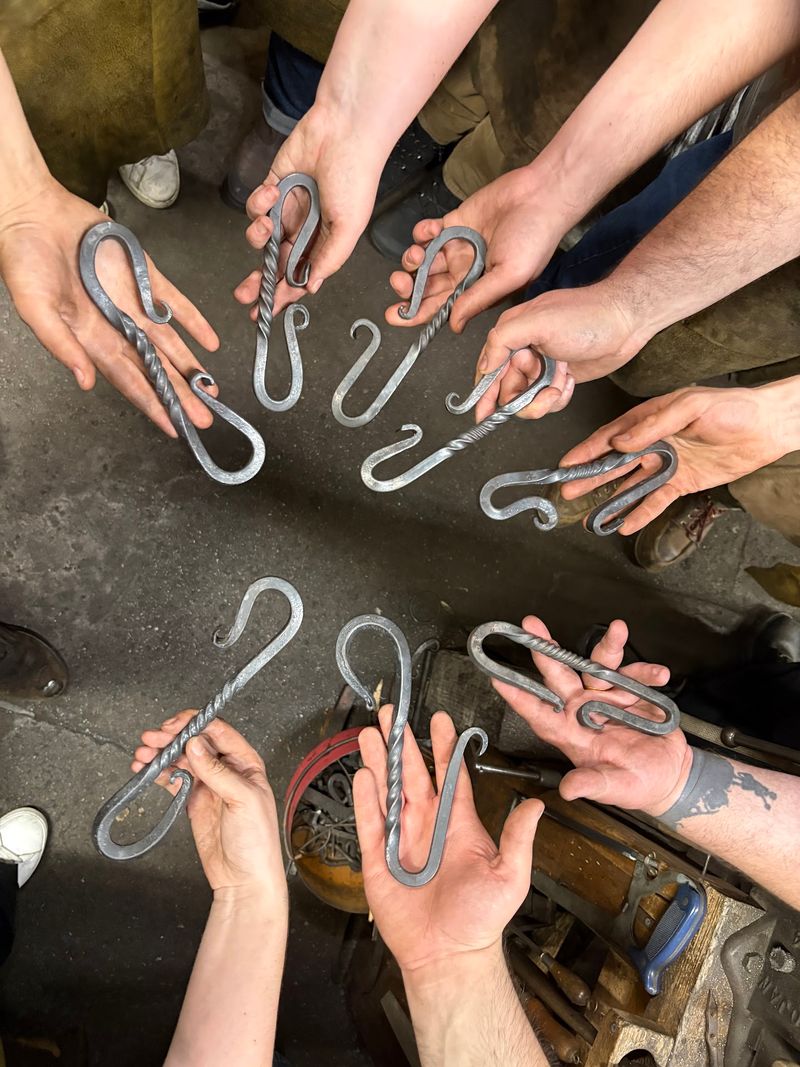
A guiding idea runs through everything taught here: there is no single correct way to approach the craft. Smiths have always solved problems differently.
Instead of memorizing one rigid method, students learn how metal behaves under the hammer. Understand the behavior, and you can invent your own approach later.
That philosophy takes the pressure off. Your opener does not have to match anyone else’s.
In fact, in a typical class, every finished piece looks noticeably different.
Some come out chunky and rustic. Others turn out sleek with a tight twist.
Both are correct, and both work.
Beyond openers, the skills carry over. Hooks, copper flowers, and other simple projects use the same foundation of drawing out, bending, and twisting.
People who catch the bug often come back for additional classes, building confidence until they can tackle their own project ideas. There are also Open Smithy hours listed on the calendar for those wanting more time at the anvil.
Visitors regularly leave describing a feeling of empowerment, that quiet realization that they can actually make things with their hands.
Massachusetts has a long tradition of makers and craftspeople, and this shop keeps that thread alive in a hands-on way.
If you could forge any object at all, what would you attempt first?
Inside The Ringing Smithy Space
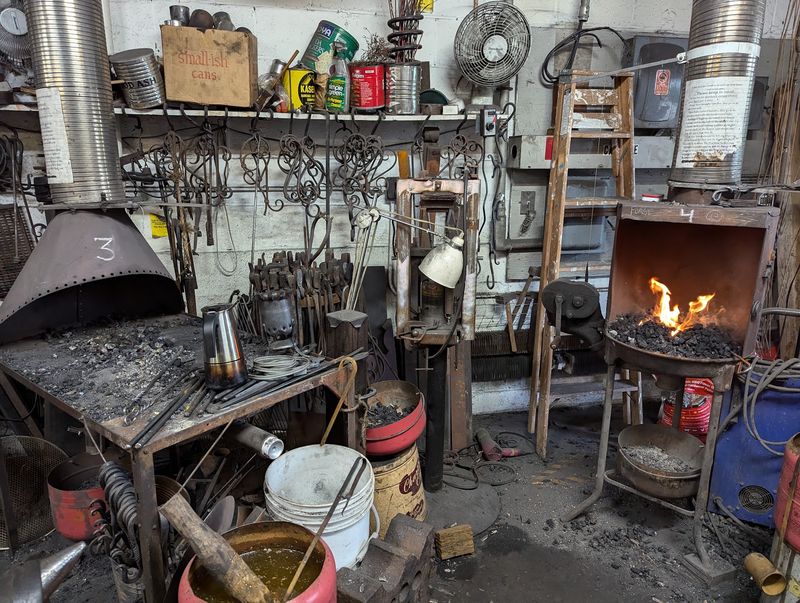
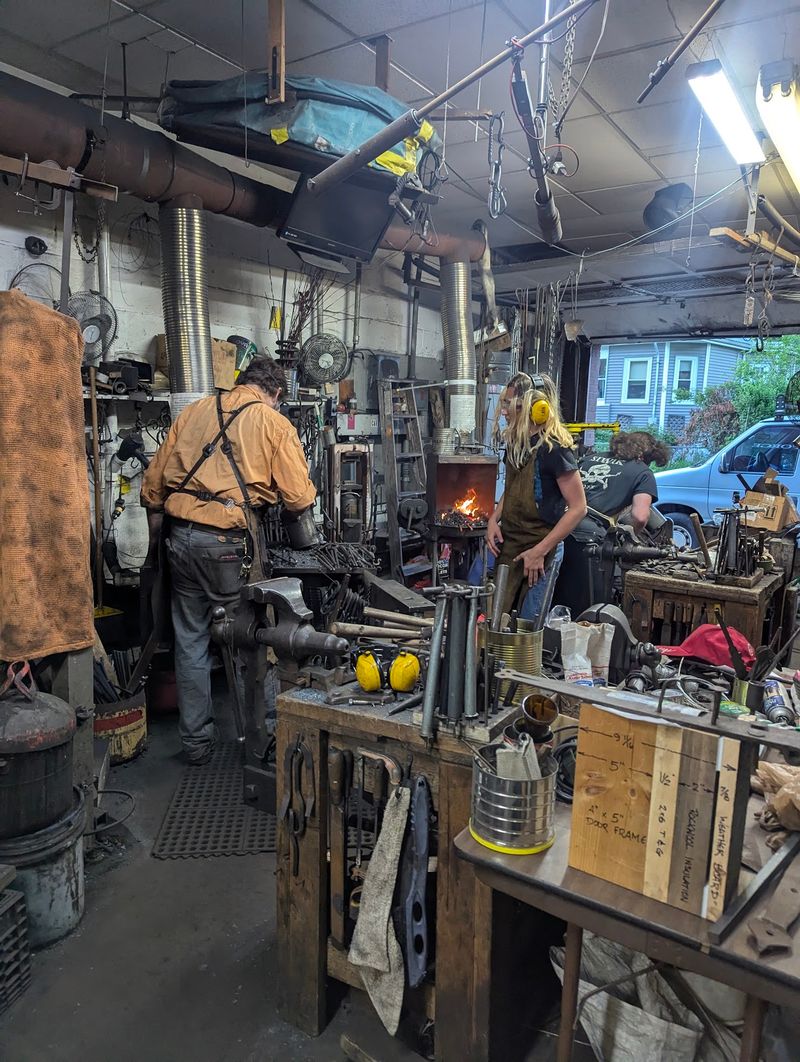
Step through the door and the room tells you immediately that work happens here. Tools hang on racks.
Steel stock leans in corners. Everything has soot on it.
Multiple workstations fill the space, and each one comes equipped with its own coal forge, anvil, and a set of blacksmithing tools within arm’s reach.
The space feels compact and personal rather than cavernous. That closeness means you can see what others are doing and pick up tips just by watching.
Heat radiates from the forges, and the glow gives the whole room a warm orange tint once the fires get going. Cameras love it.
Hammer strikes overlap into a steady rhythm that visitors often remember long after the class ends. Some call it the best part.
Air quality stays better than expected thanks to careful fire management and a HEPA filter running in the background. Your clothes will smell faintly of coal, which honestly feels like part of the souvenir.
Photos are welcome between steps, and the finished pieces look fantastic lined up on a workbench at the end of the session.
Gift certificates are available too, which makes this an easy present for someone hard to shop for.
Which sound would you miss more, the hammer or the crackling fire?
Plan Your Visit The Smart Way
Booking ahead is the single best piece of advice for this experience. Classes are popular, and seats disappear quickly.
The online calendar lists what is coming up, since schedules and availability shift throughout the year. Checking it before making travel plans prevents disappointment, and there is also a notification list for future openings.
Plan for extra time as well. Sessions tend to run longer than the clock suggests because nobody gets rushed out the door once the hammering starts.
Arrive dressed correctly, eat beforehand, and bring water. Physical effort is part of the deal, and you will feel it in your shoulders the next day in the best way.
You will find the shop at 38 Guinan St, Waltham, MA 02451, an easy trip from Boston and a convenient stop while exploring eastern Massachusetts.
Gift certificates make a thoughtful surprise for anyone curious about traditional crafts or looking for an unusual date idea.
The takeaway is simple. You leave with a forged iron bottle opener that carries every hammer mark you made, plus a new respect for the people who once built everything this way.
Massachusetts has no shortage of attractions, but few hand you a tool you made yourself.