
This New York Arboretum Hides 200 Acres Of Cold-Hardy Trees With Seriously Jaw-Dropping Views
Most people head into the Catskills thinking about waterfalls, hiking trails, or ski slopes. A 200-acre arboretum usually is not the first thing on the list, which makes finding this place feel even better.
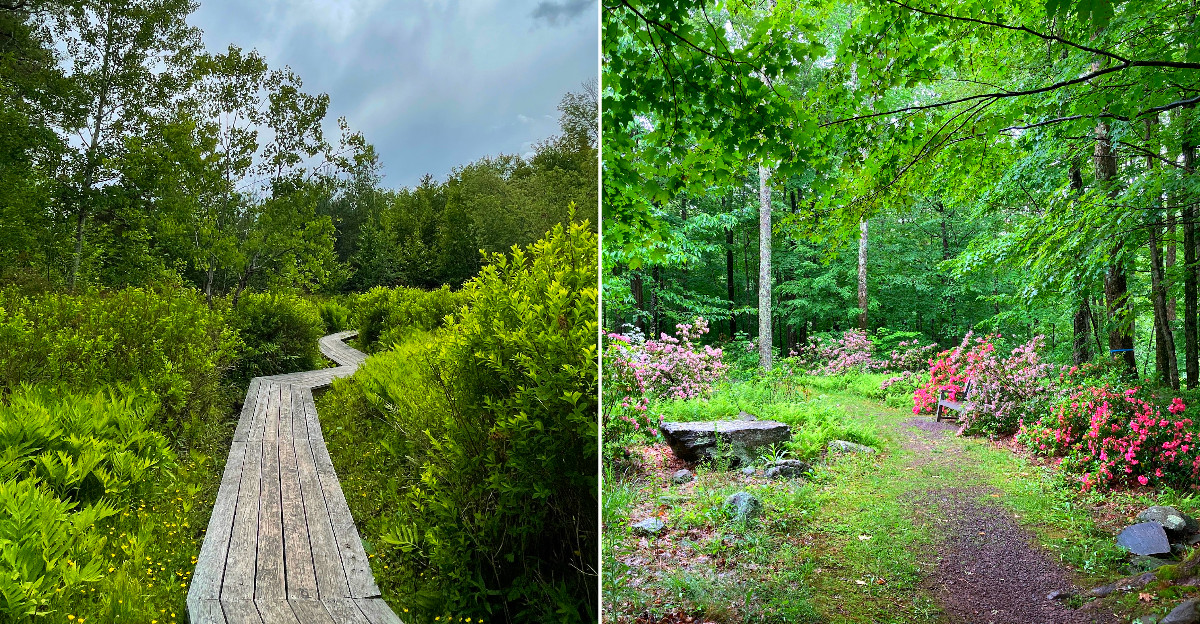
High in the mountains, cold-hardy trees grow beside open meadows, wetlands, rocky outcrops, and quiet trails with wide Catskills views.
The setting feels more like a peaceful nature preserve than a formal garden, and that is a big part of the appeal. New York has plenty of famous outdoor stops, but this one rewards a slower kind of visit.
You can spend a morning wandering beneath evergreens, watching the landscape open up around you, and barely hear anything beyond the wind in the trees.
Admission is free with a suggested donation, making it an easy detour that can quickly become the highlight of the day.
A Mountain Garden Built To Beat The Cold
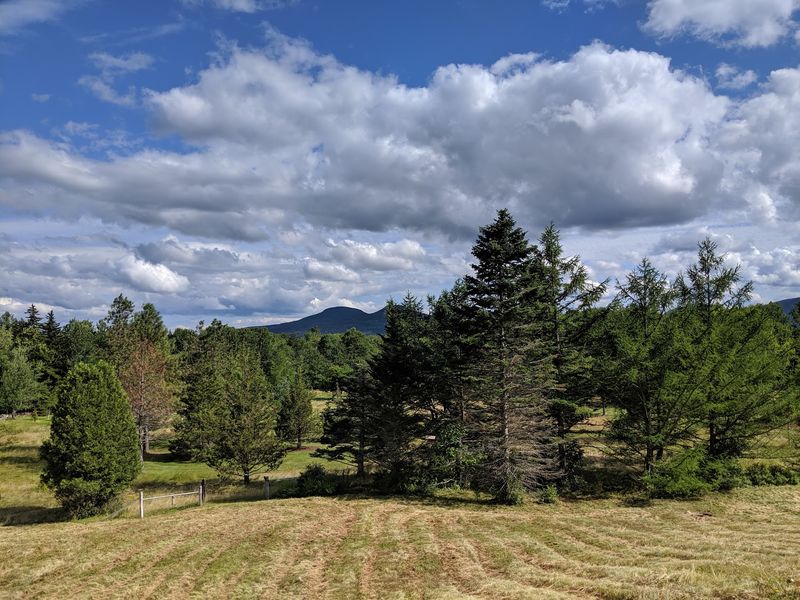
Most gardens get planted where life is easy. This one took root around 2,400 feet up, where the mountain climate gives cold-hardy trees a serious test.
The whole idea started as an experiment in cold-hardiness. Which trees could survive a Catskills winter? Which ones would sulk, and which would stretch out and thrive?
Decades later, the answers are standing right in front of you, tall and healthy and labeled.
That makes the place useful as well as pretty. The collections show which native and exotic trees can handle the arboretum’s exposed, high-elevation conditions, making the grounds as useful for learning as they are for wandering.
Still, you do not need a plant degree to love it. The ground rolls between open meadows and shaded woods, with grey Devonian bedrock breaking through the grass and revealing just how rocky this mountaintop really is.
Views arrive without warning. One moment you are reading a sign about ferns, the next you are looking across a valley at ridgelines stacked in layers of blue.
Quiet is the other draw. Birdsong, wind in the needles, maybe a frog or two. Rush hour never made it up here.
Meet Mountain Top Arboretum In Tannersville
The name is Mountain Top Arboretum, and the address is 4 Maude Adams Road in Tannersville, New York 12485. Greene County, deep in the Catskills, a short drive from the village center.
Founded in 1977, it began with just seven acres of test plantings. Growth came steadily, and today the grounds cover 200 acres of gardens, trails, meadows, forest, and wetland.
It runs as a nonprofit public charity devoted to conserving its Catskills landscape, managing native plant communities, caring for cold-hardy tree collections, and providing environmental education. Memberships and donations keep the gates open.
Gardens and trails welcome visitors year-round, dawn to dusk, every single day. The Education Center keeps its own schedule, open Tuesday through Saturday from 9 AM to 4 PM. Restrooms stay unlocked daily from 8 AM to 6 PM.
Designated parking is available near the entrance, and visitors are asked to use only the marked parking areas.
Nonmembers are encouraged to leave a $5 suggested donation, which helps support the nonprofit arboretum and its work.
West Meadow Sets The Opening Scene
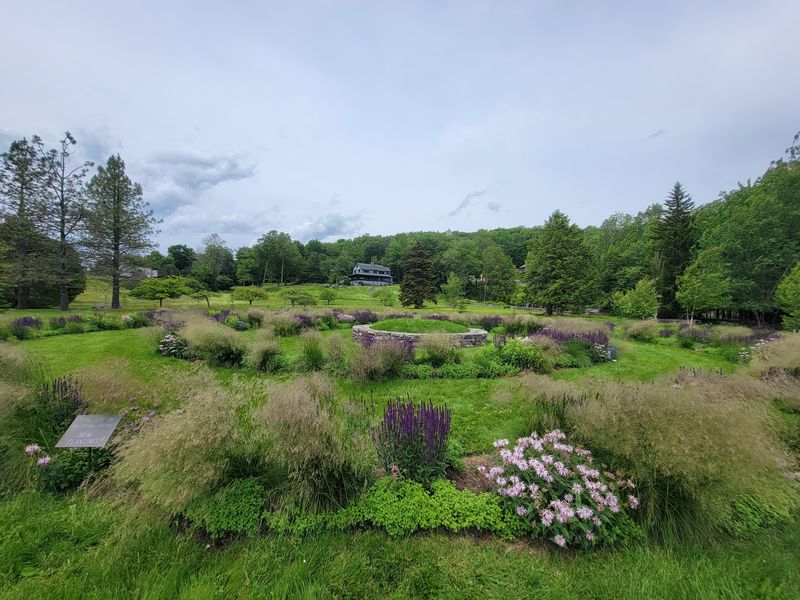
First stop for most visitors, and it earns that spot. West Meadow spreads open and bright, with mown paths curling between specimen trees planted across grassy slopes.
Grey bedrock pokes through the turf in flat sheets, a reminder that this soil is thin and the rock beneath is extremely old. The exposed sandstone dates to the Devonian era, roughly 375 million years ago.
A small pond anchors one corner, ringed with plants that like wet feet. The pond adds another small habitat to the meadow, while birds, butterflies, and other wildlife give visitors plenty to watch nearby.
Look for the labyrinth too. Walking its circles takes only a few minutes, but it slows your pulse in a way that feels almost unfair to the rest of your day.
Labels sit beside many of the trees, so curiosity gets rewarded instead of frustrated. Conifers, flowering shrubs, unusual cultivars, all named and explained.
Benches appear in smart places, angled toward the best sightlines. Sit long enough and the meadow starts showing you things you missed while walking.
The West Meadow is close to the parking area, but the arboretum warns that soft path surfaces can make many areas difficult for wheelchairs and strollers.
Spruce Glen And Its Towering Old Hemlocks
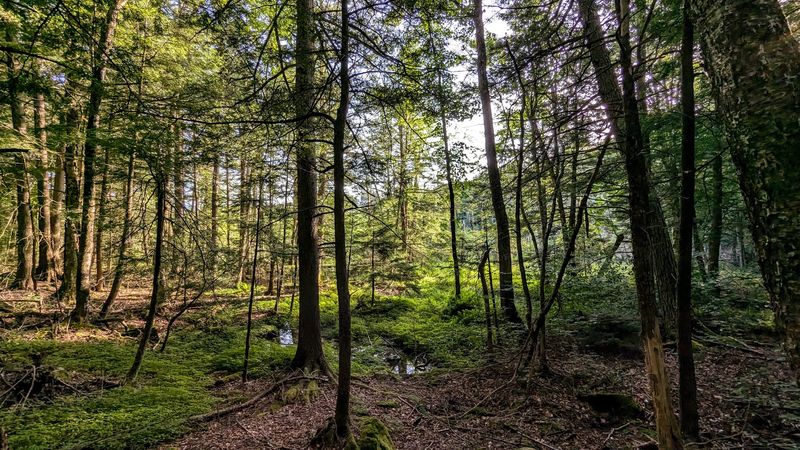
Shade changes everything. Crossing into Spruce Glen, the temperature drops and the light turns green and soft, filtered through dense evergreen branches high overhead.
Old growth hemlocks grow here, tall and straight, some of them standing since long before the arboretum existed. Their trunks feel like columns in a very quiet building.
Moss covers the ground and the rocks in thick cushions. Footsteps go silent. Even chatty groups tend to lower their voices without being asked.
The trail here is rougher than the meadow paths, threaded with roots and stones. Sturdy shoes make the walk far more pleasant, and hiking boots are better still.
Small streams trickle through after rain, catching light in short flashes. Ferns crowd the edges, unfurling in spring and holding on late into fall.
Hemlock forests also keep mountain water cool and clean, which matters for the trout and insects downstream. Shade doing serious ecological work.
Wildlife shows up often in this section. Chipmunks, woodpeckers, warblers in migration season, and the occasional deer that freezes and stares before slipping away.
Bring a layer. It stays cool in there.
Hidden Marsh Feels Like A Storybook Page
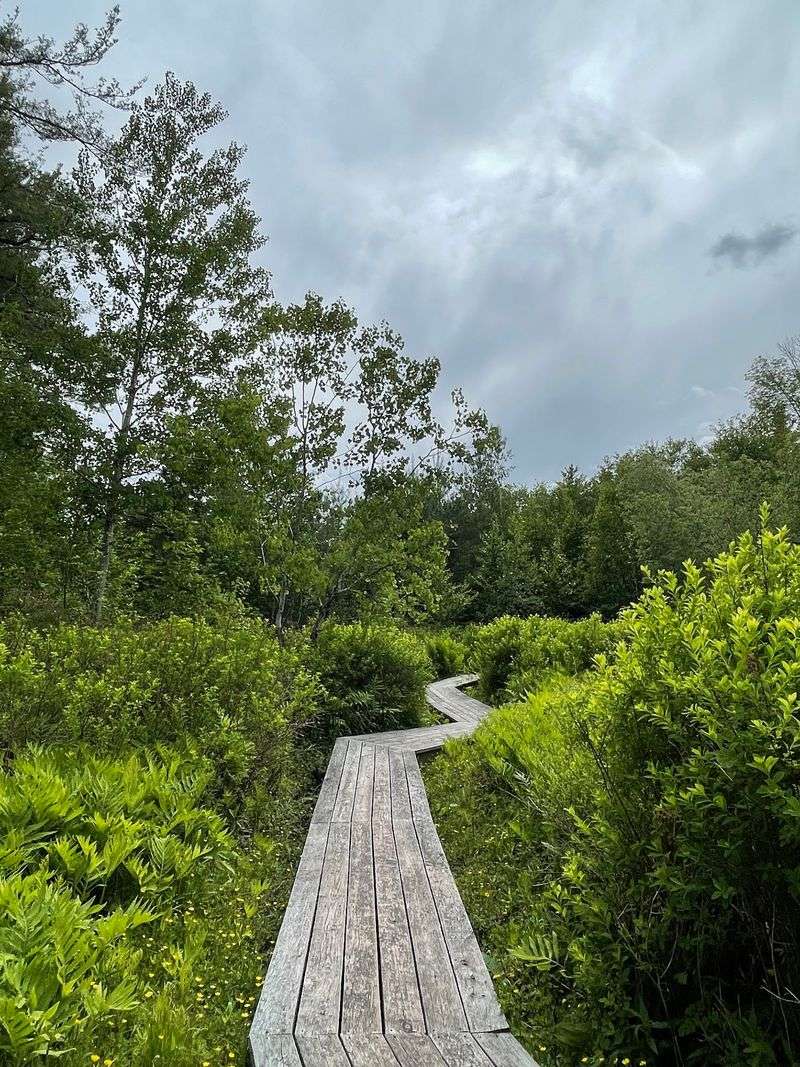
Reaching Hidden Marsh takes a little effort, and that is precisely the point. The trail rolls and dips through woods before opening onto a wetland most visitors never see coming.
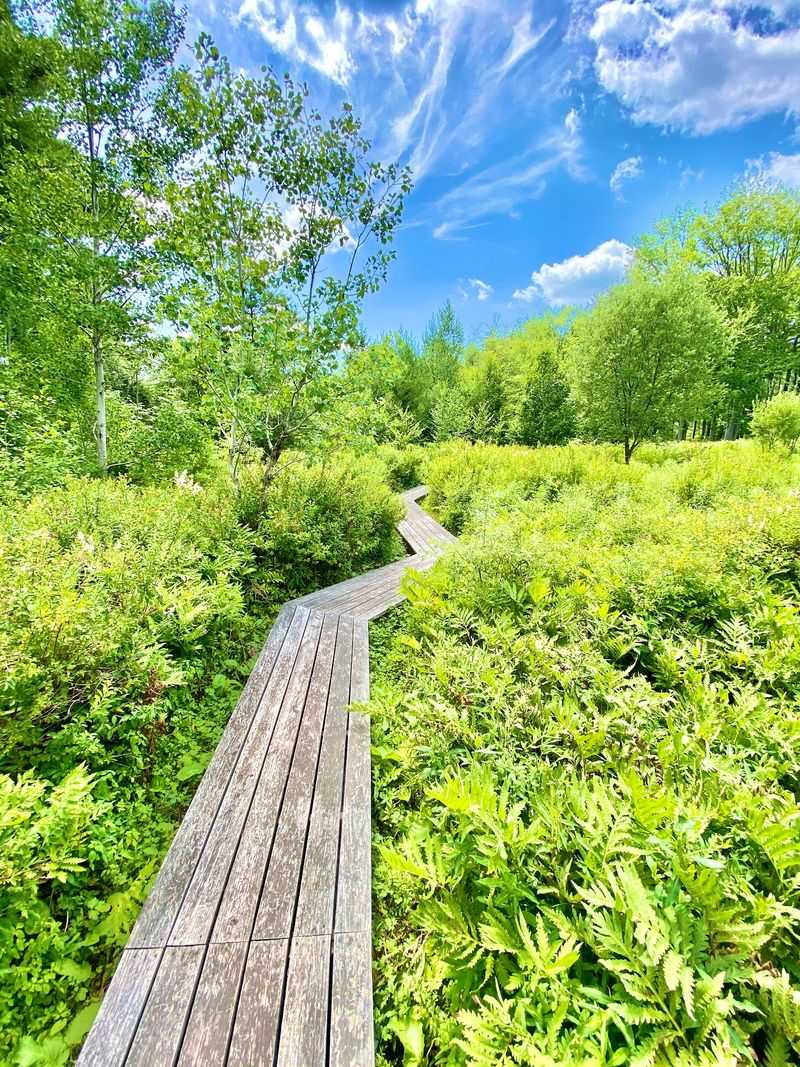
Hidden Marsh is actually a mountain fen reached along the Spruce Glen trail system. Peat-forming wetland habitat spreads between alders, gray birches, grasses, sedges, and rushes, with tiny insect-eating sundews growing close to the ground.
Wetlands like this one store carbon, filter water, and shelter species that live nowhere else on the property. Nature quietly multitasking.
Frogs provide the soundtrack in warmer months, a chorus that starts and stops for no clear reason. Birds work the edges hunting insects.
Footing along the approach trail can be uneven and muddy after storms, so good shoes matter more here than anywhere else on the grounds.
The changing seasons give the wetland a different look throughout the year, with summer blooms and native spirea adding color around the fen.
Stay on the marked trails through Spruce Glen. The arboretum asks visitors to protect its fragile forest and wetland ecosystems by keeping to established routes.
The arboretum considers Hidden Marsh well worth finding, and the secluded wetland gives Spruce Glen one of its most distinctive landscapes.
East Meadow Opens Up The Big Views
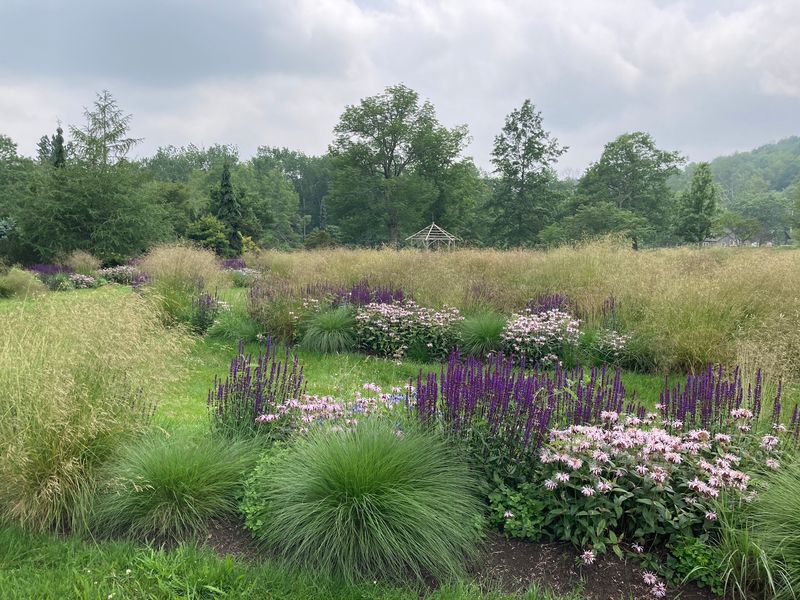
If you came for scenery, this is your section. East Meadow rolls wide and high, with grasses moving in waves and Catskill ridges layered along the horizon.
Wildflowers arrive in staggered shifts through the warm months. Goldenrod and asters take over by late summer, turning whole slopes gold and purple.
Pollinators love it. Bees, butterflies, and beetles work the blooms, and meadows like this one feed far more insect life than a manicured lawn ever could.
Plantings around the edges show off trees and shrubs chosen for exposure and wind. Anything growing well out here has genuinely proven itself.
Mown paths and boardwalks cross the ten-acre East Meadow, but the arboretum warns that strollers can be difficult to push on many of its soft trail surfaces.
Autumn turns this area into a showstopper. Maples flare orange and red against dark evergreens, with the mountains fading blue behind them.
Winter brings a different reward. Snow flattens the color palette to white and grey, and snowshoe tracks become the only decoration.
Sunset here deserves a spot on your list.
Woodland Walk Brings Shade And Surprises
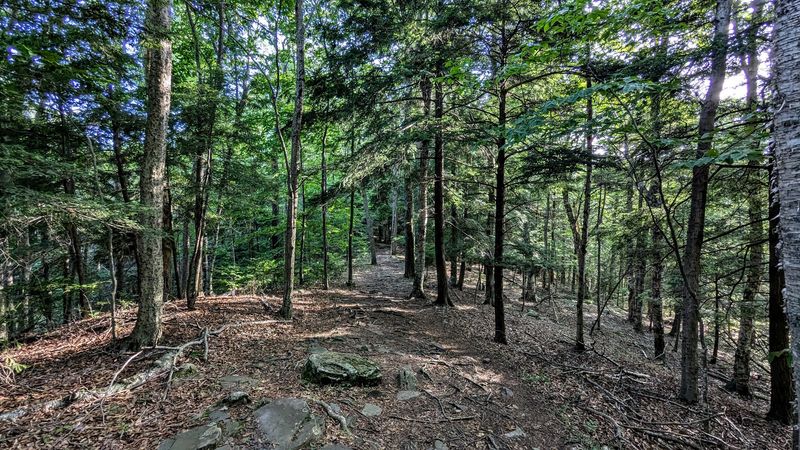
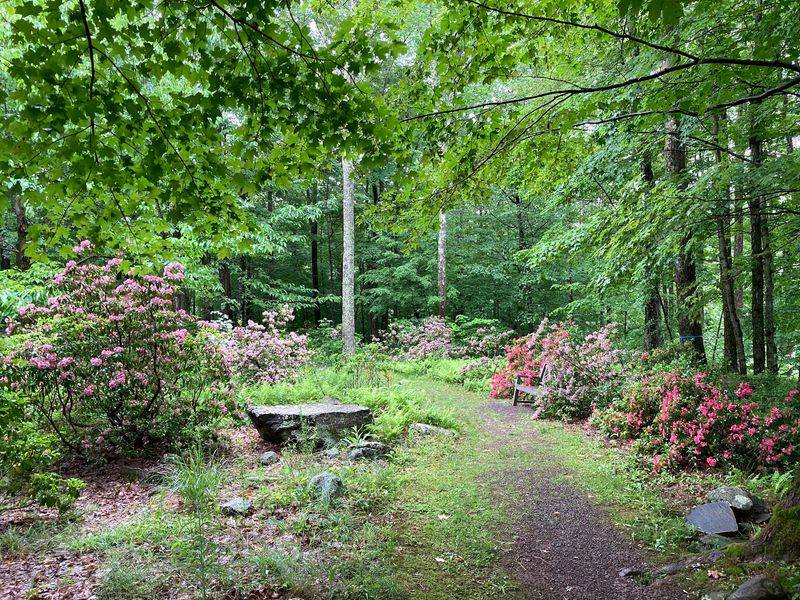
Trees do the decorating on Woodland Walk. The path slips into mixed northeastern forest where ferns, trilliums, and shade-loving perennials fill the understory.
Spring is the showy season down here. Ephemeral wildflowers rush to bloom before the canopy leafs out and cuts off their sunlight.
The self-guided route passes native trees, shrubs, ferns, and wildflowers that represent the plant communities of a Northern Catskills forest.
The Woodland Walk focuses on the native plant communities of the Northern Catskills, with connected paths passing wildflowers, ferns, woodland shrubs, and mature trees. Fitting company for a walk like this.
The route stays relatively gentle, with modest grades and a soft surface of leaf litter and packed earth. Most visitors finish it comfortably.
Gardeners will find plenty to steal, idea-wise. Native combinations that thrive in shade are hard to get right, and here they are working in real conditions.
Bug repellent can be useful during warm-weather walks through the shaded and wetter parts of the property.
Linger a while. Forests reveal detail slowly, and rushing wastes the good parts.
The Fairy Garden Wins Over Young Explorers
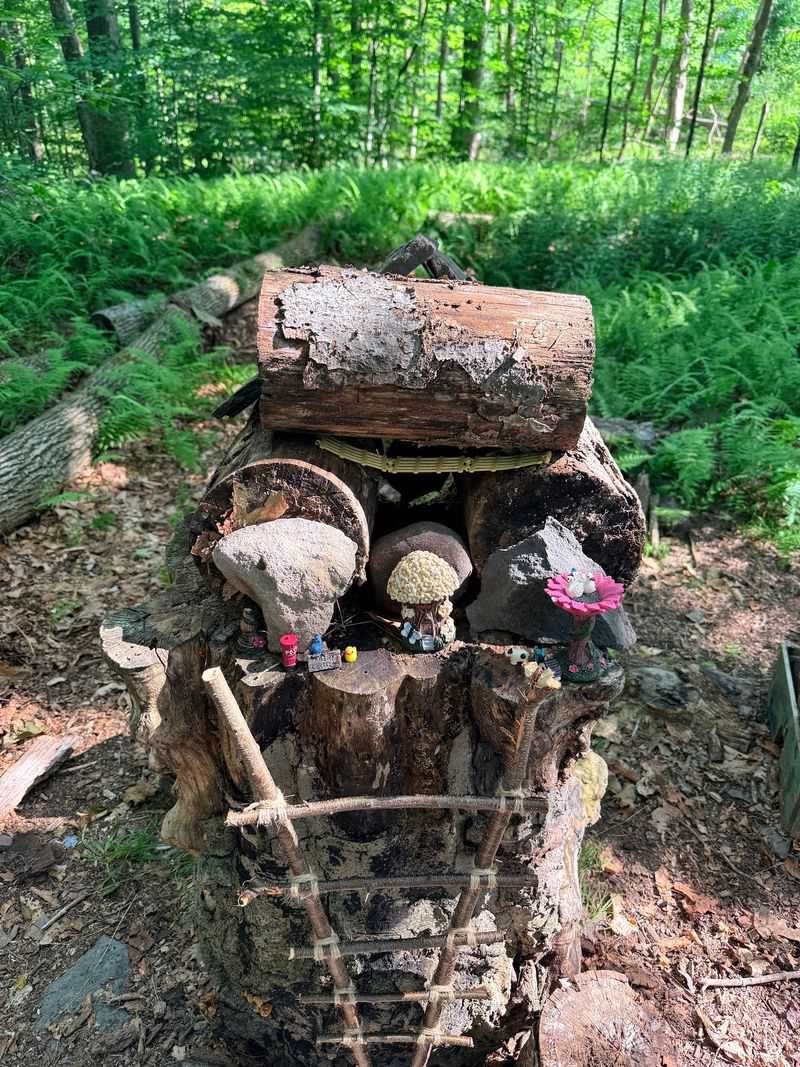
Kids get their own kingdom here, and it works better than any playground. Inside a fenced garden area sits a fairy garden where young visitors build tiny houses from sticks, bark, stones, and fallen leaves.
No instructions are handed out. Children figure it out fast, and the results range from wobbly lean-tos to surprisingly ambitious architecture.
The Fairy Garden sits within the Woodland Walk, close enough to the main garden areas to work naturally into a family visit.
Building with natural materials teaches something sneaky along the way. Kids start noticing textures, seed pods, bark patterns, and how leaves differ from tree to tree.
Each visit looks a little different because the last group left their work behind. Weather rearranges things, and the next crew builds on the ruins.
Families can pair the Fairy Garden with the nearby Woodland Walk, West Meadow, pond, labyrinth, and boulder amphitheater.
One practical note. Food is not permitted on the grounds, so save snacks for the car or a spot in the village.
Imagination gets a real workout in that corner.
Trails Marked Clearly Enough To Relax
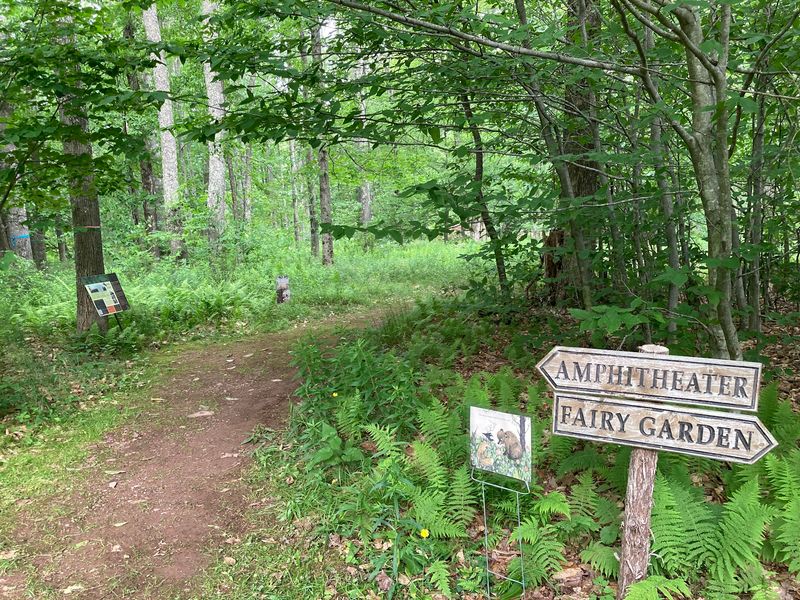
A self-guided map and interactive trail map make it easier to plan a route through the arboretum’s four main areas.
The arboretum suggests allowing roughly 30 to 45 minutes or more for each of its four main areas, depending on how much time you spend with the collections, views, and wildlife.
Surfaces vary by section. Meadow paths are mown and smooth, woodland routes hold roots and rocks, and the marsh approach can turn soggy after rain.
Footwear deserves thought. Sneakers handle the gardens fine, but boots with grip make Spruce Glen and Hidden Marsh much more comfortable.
Places to pause appear around the gardens, including the stone seat at the Spiral Labyrinth and the Outdoor Classroom in Woodland Walk.
Restrooms sit near the main area and stay open daily during posted hours, a genuine luxury on a property this rural.
The arboretum remains open year-round, and snowshoeing is one of the winter activities highlighted on its current visitor information.
Dog rules change by section. Dogs are prohibited in West Meadow and Woodland Walk, allowed on leash along Maude Adams Road and in East Meadow, and permitted off leash on Spruce Glen trails.
Planning A Catskills Day Around It
Smart trip planning makes this stop even better. The village of Tannersville sits just around the corner, so lunch before or after the walk is simple to arrange.
Taking the backroads can add more Catskills scenery to the drive. The drive through the mountains becomes part of the experience rather than a chore.
Nearby attractions stack up nicely. Kaaterskill Falls, Hunter Mountain, and the Thomas Cole National Historic Site in Catskill all sit within easy reach for a full day out.
Programs run throughout the year, with recent 2026 events covering birding, native plants, foraging, forest ecology, outdoor wellness, and seasonal walks. Checking the schedule ahead of time can turn a nice walk into a real education.
Support matters here. The arboretum operates as a nonprofit, with donations and memberships helping sustain its educational programming, horticulture, and stewardship work.
Pack water, sun protection, and bug spray in warm months. Leave the picnic basket behind since food is not allowed on the property.
Give yourself more time than you think you need. Two hours passes quickly in the Catskills, especially with views like these.