
Inside This Nevada State Park Kids Squeeze Through Slot Canyons Just Inches Wide
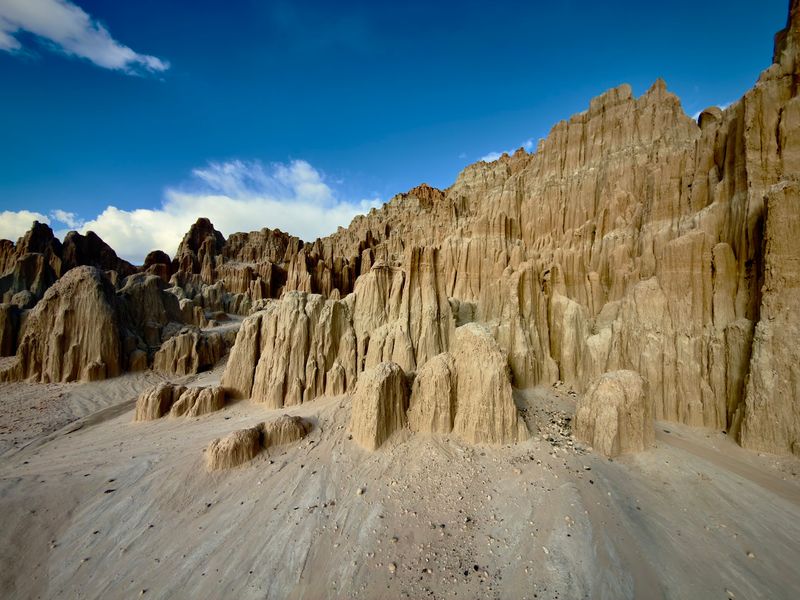
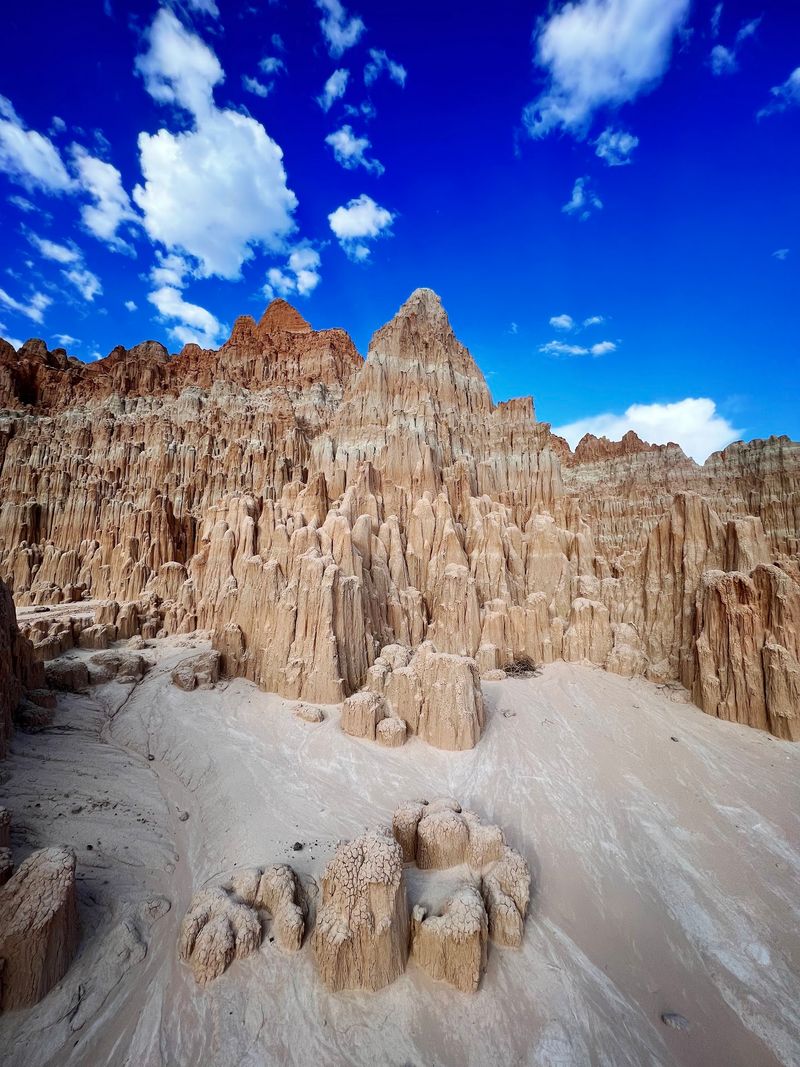
Picture a valley in eastern Nevada where the cliffs look like melted candle wax and the cracks between them are barely wider than a backpack. Kids turn sideways, shuffle a few feet in, and suddenly they are standing inside a natural hallway with walls climbing far above their heads.
It costs five dollars for Nevada plates, and a family can easily burn an entire afternoon wandering the passages without spending another cent. The strange part is how few people outside Lincoln County seem to know it exists.
A Clay Valley in Lincoln County
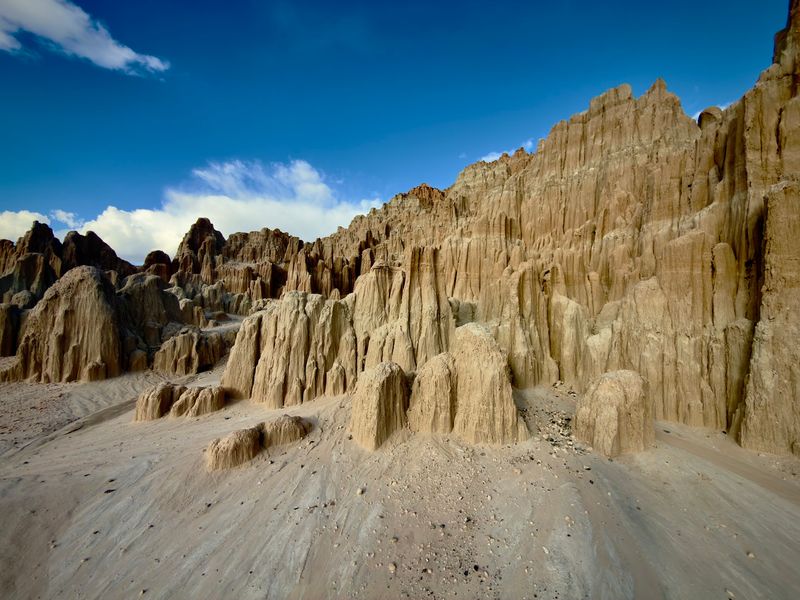
Roughly 2.5 hours north of Las Vegas on Highway 93, the desert opens into a long, narrow valley lined with pale, fluted cliffs. That valley is Cathedral Gorge State Park, about 2,000 acres of eroded clay and siltstone just outside the small town of Panaca.
Nevada named it one of its first state parks back in 1935, and the bones of that era are still visible in the stonework scattered around the grounds, including a water tower built by the Civilian Conservation Corps nearly a century ago.
What makes the place unusual is not size. It is shape.
Millions of years ago the valley held a lake, and the soft bentonite clay and volcanic ash left behind have been carved by rain into spires, fins, and deep vertical cracks.
Visitors often describe the scenery as otherworldly, closer to a film set than a Nevada roadside stop. The park includes walking trails, picnic areas, a campground, and a visitor center with displays explaining how the formations came to be.
For families used to crowded parks, the quiet here can feel almost startling.
How an Ancient Lakebed Became a Maze
Water did all of this, patiently, over an unimaginable stretch of time. When the ancient lake that filled this valley drained away, it left behind thick beds of soft clay and volcanic ash that rain has been cutting into ever since.
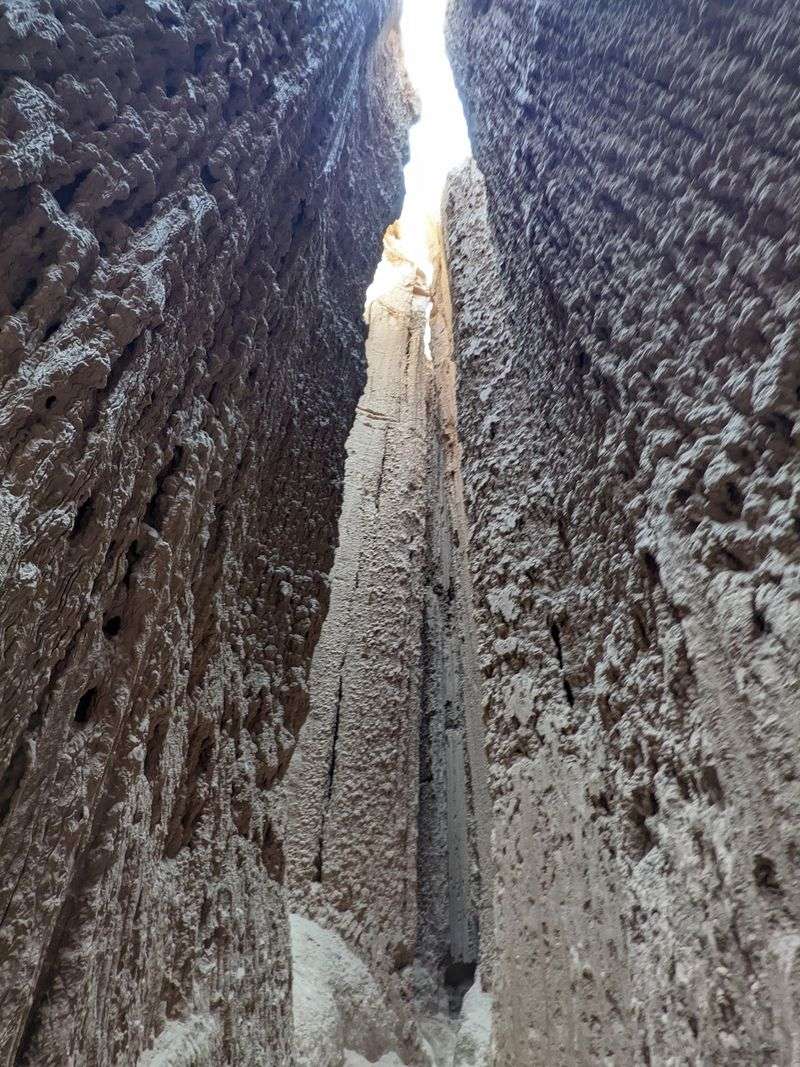
Unlike the sandstone slots found across southern Utah, the walls here are bentonite clay and siltstone. Regulars who know their geology point this out often, because the material behaves differently underfoot and underhand.
One visitor put it plainly after touching a formation: the surface crumbles easily, which is exactly why climbing on the spires is a poor idea. They are essentially hard-packed sand and mud, and they are still eroding today.
Rain changes the character of the park fast. Several people mention that wet bentonite turns remarkably slippery, and that the clay clings stubbornly to shoes and clothing once it gets on there.
Knowing the recipe makes the shapes more interesting. Those cathedral-like spires that gave the park its name are not carved rock so much as compacted sediment sculpted by a few thousand rainstorms.
Moon Caves and the Squeeze Factor
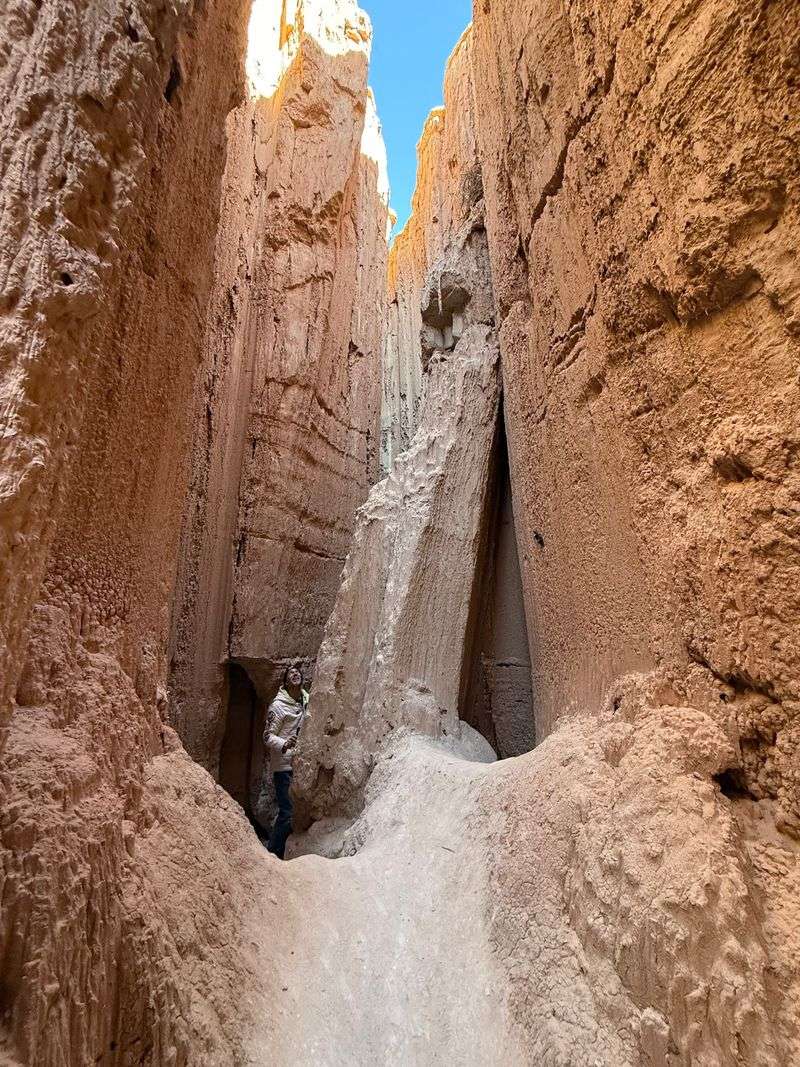
Slot canyons are the single most mentioned feature of this park, and the Moon Caves are where most families start. They are called caves, though they are not caves at all, just deep vertical cracks in the clay that wind back into the cliff face.
Widths vary wildly. Some passages let two people walk side by side.
Others narrow to just inches, tight enough that adults report taking off backpacks to keep going.
Kids usually love this part. There is real scrambling involved, a few dead ends, and the constant question of whether the next gap is passable or not.
One repeat piece of advice from experienced visitors: do not drive straight past Moon Canyon to reach Cathedral Canyon. Moon has the larger and longer network of slots, and skipping it means missing the best part.
Bring a flashlight if you have one. Even at midday the deeper sections dim considerably, and the light that does filter down between the walls is part of the appeal.
Exploration is unguided, self-paced, and free once you are inside the gate.
Cathedral Caves and the Tall Narrow Passages
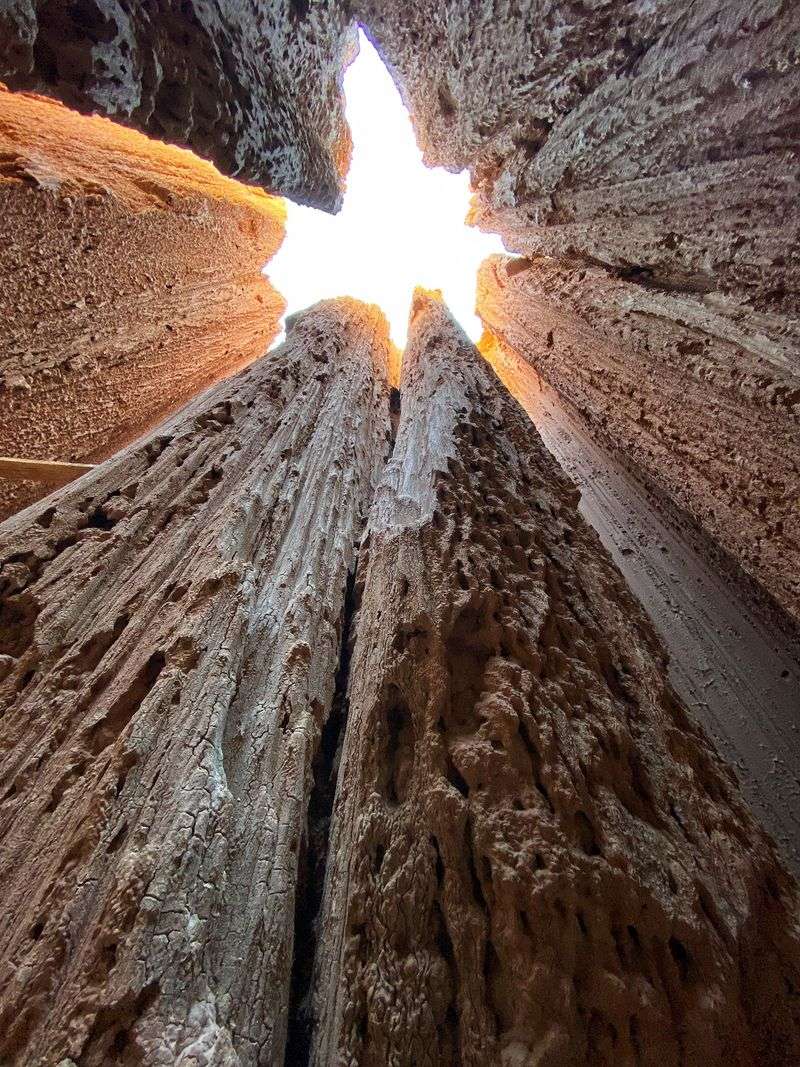
Three distinct slot canyon areas sit within the park: Moon Caves, Canyon Caves, and Cathedral Caves. Each one has its own personality, and skipping any of them means leaving something on the table.
Canyon Caves earn a reputation for being among the tallest and narrowest of the bunch. Walls rise sharply overhead while the floor pinches down, creating that hallway-in-a-cathedral effect the park is named for.
Cathedral Caves sits at the far end of the main park road and gets recommended repeatedly by people who have walked all three. It is smaller in scale than Moon but still delivers the twisting-passage experience.
Photographers tend to linger here. The way afternoon light drops between the spires and bounces off the pale clay produces colors that look invented.
None of these areas require technical skill. There is no rope work, no scrambling above head height, and no long approach hike to reach the openings.
Grandparents with steady footing manage them fine, which is part of why this park works so well for multigenerational groups traveling together from Las Vegas or Cedar City.
Trails, Overlooks, and the Four-Mile Loop
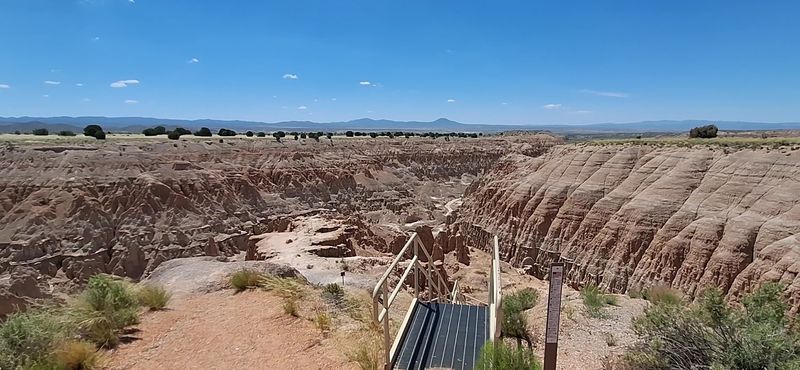
Four miles is the longest walk you will find here, on the Juniper Draw Trail, and nothing else comes close to that distance. For families with short legs, that limitation is a feature rather than a drawback.
A popular route links Cathedral Canyon to Miller Point and back through Juniper, taking in the park’s most interesting features along the way. Visitors who have done it describe the effort as easy to moderate.
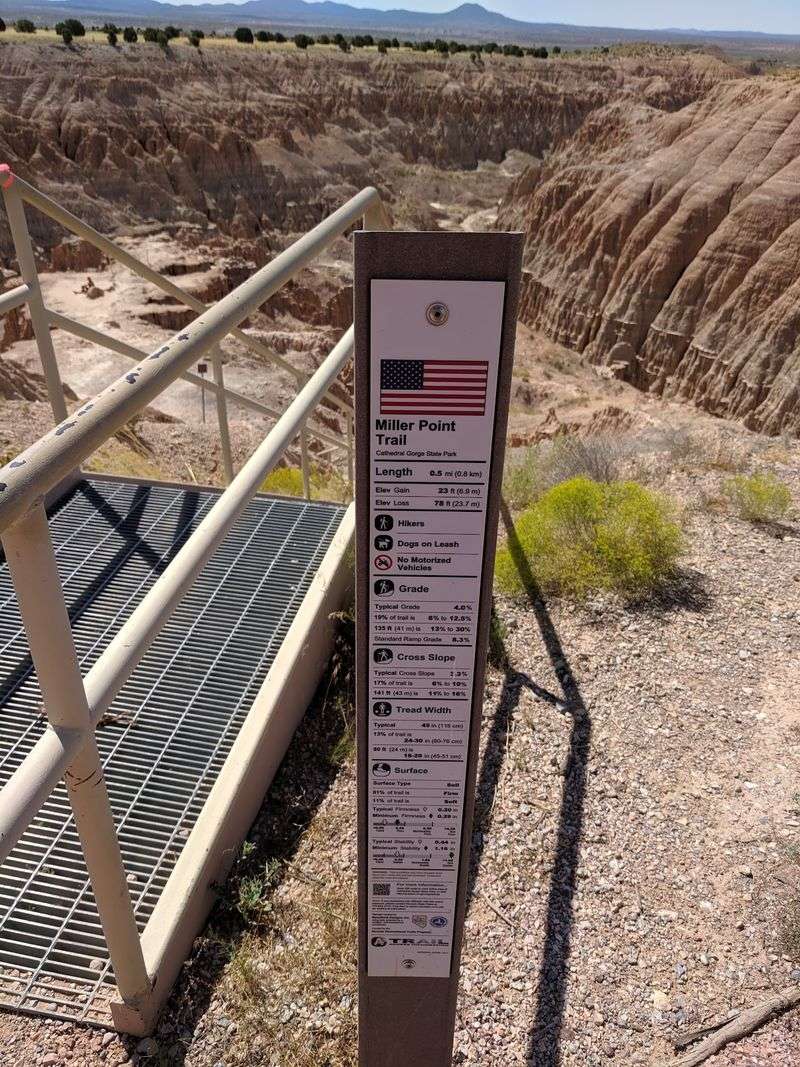
Not up for four miles? You can drive to Miller Point and walk out to the overlook instead, where a staircase descends into the gorge.
Several people call this the prettiest short stretch in the park.
Eagle Point Trail extends from the Miller Point overlook and delivers a sweeping view across most of the valley. It is a good payoff for a modest amount of walking.
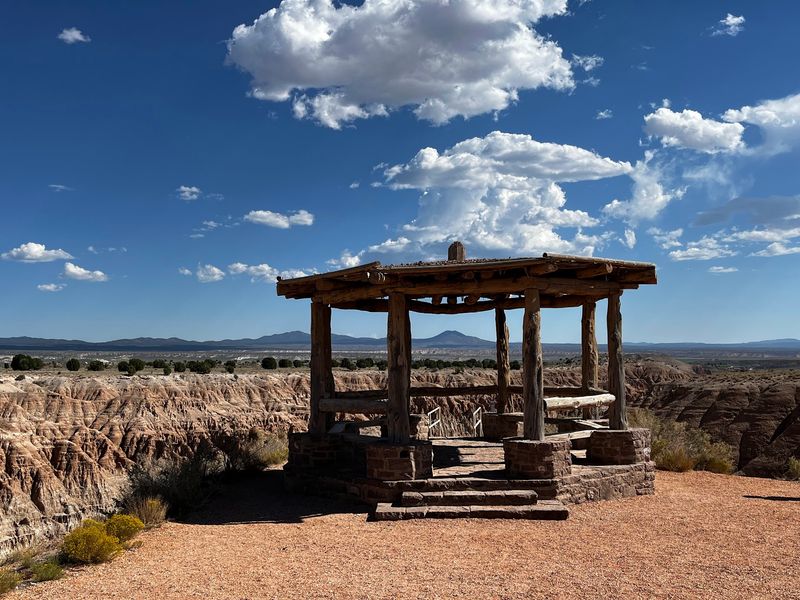
Miller Point also works as a sunset spot with a picnic, which is how plenty of locals end their visit.
Birdwatchers should look down at the valley floor. Western Bluebirds are common, and desert wildlife shows up regularly along the quieter paths.
Camping, Showers, and Spending the Night
Twenty-two to twenty-four sites make up the campground, with some offering electric hookups. It is small by state park standards, and there is overflow camping when the main loop fills.
Cleanliness comes up constantly. Campers mention spotless shower rooms, well-kept restrooms, and facilities that hold up better than expected for a remote desert park.
Showers run on a coin system, roughly five minutes for a quarter, so toss some change in the glovebox before you leave home. Even the pit toilets get compliments, which is not something you hear often.
Picnic areas sit near the formations, making lunch easy without driving anywhere. Electric vehicle charging is available on site as well.
Two nights seems to be the sweet spot for people who want to see everything without rushing. One afternoon covers the slot canyons; a second day opens up nearby stops like Echo Canyon, Spring Valley, and Kershaw-Ryan State Parks, plus Teapot Arch and the Panaca Charcoal Kilns.
Fees and availability can shift, so confirming with the park before loading the car is a smart move.
Costs, Hours, and Getting There Without Surprises
Five dollars gets a Nevada-plated vehicle through the gate. Out-of-state plates pay ten, and payment can be made by cash or card.
The regional visitor center sits at the park entrance off U.S. 93 and generally opens daily from 9 a.m. to 4:30 p.m., closing on winter holidays. Staff there have a reputation for being genuinely helpful with route suggestions.
Drive time runs about 2.5 hours from Las Vegas. Some travelers come from farther afield, and four-hour drives to Lincoln County are not unusual among people who make the trip on purpose.
Remoteness is real. The nearest services amount to a single gas station, so fill the tank and pack water before the final stretch.
Plan on 2.5 hours minimum, with a half day or full day being far more comfortable. Spring and fall suit hiking best, since summer heat is punishing and shade is scarce outside the slots.
Drones are not permitted anywhere in the park. Prices and hours can change, so a quick check before departure saves disappointment.
Who This Nevada Stop Really Suits
Budget math here is refreshingly simple. A family of four in one car pays five dollars total with Nevada plates, and everything inside the gate costs nothing beyond that.
Kids get a genuine adventure without a guided tour or a waiver. Parents get trails short enough that nobody gets carried back to the car.
Retirees get overlooks reachable by vehicle when the legs say no to four miles.
Not everyone falls equally hard for it. One honest take noted that similar scenery exists elsewhere in Nevada and Utah within comparable driving distance, and that the park may not justify a major detour on its own.
Pair it with the other Lincoln County parks, though, and the calculation changes. A weekend built around Cathedral Gorge, Echo Canyon, Spring Valley, and Kershaw-Ryan fills two days for very little money.
Bring closed shoes you do not mind staining, skip the formations as climbing walls, and give the slots more time than you think you need.
Quiet, strange, and cheap is a rare combination in any state. Eastern Nevada happens to have it.