
This Massachusetts Bakery Blends Polish And Portuguese Traditions Under One Roof
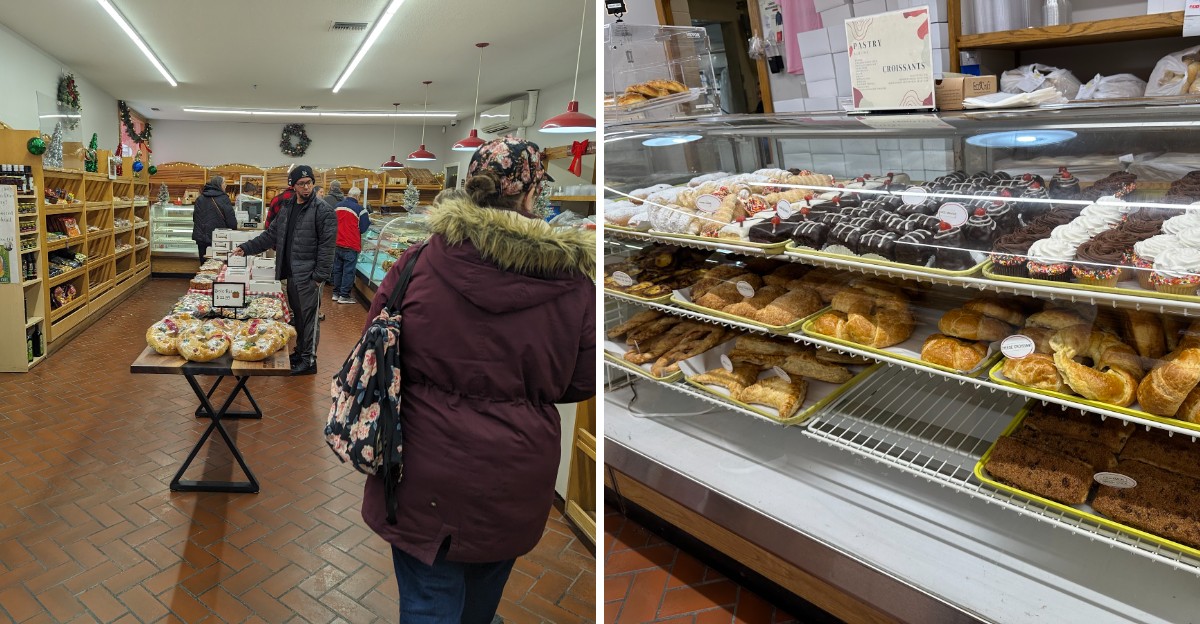
Most bakeries stick to one tradition. This one brings two together under the same roof.
Massachusetts has a bakery where Polish and Portuguese favorites share the counter, creating a lineup that feels familiar without being predictable.
Soft sweet breads, rich pastries, and old-fashioned baked goods all reflect recipes shaped by family history and long-standing traditions.
The Polish side brings hearty classics and a strong sense of comfort, while Portuguese baking adds its own distinct flavors and textures. Somehow, the combination feels natural rather than forced.
Each display case offers a little more variety than you would expect, which makes choosing just one treat surprisingly difficult.
That mix of cultures gives the bakery a personality all its own. For anyone who enjoys traditional baking with a little extra character, this Massachusetts stop has a lot to look forward to before the first bite even lands on the plate.
A Bakeshop With More Than 120 Years Behind The Counter
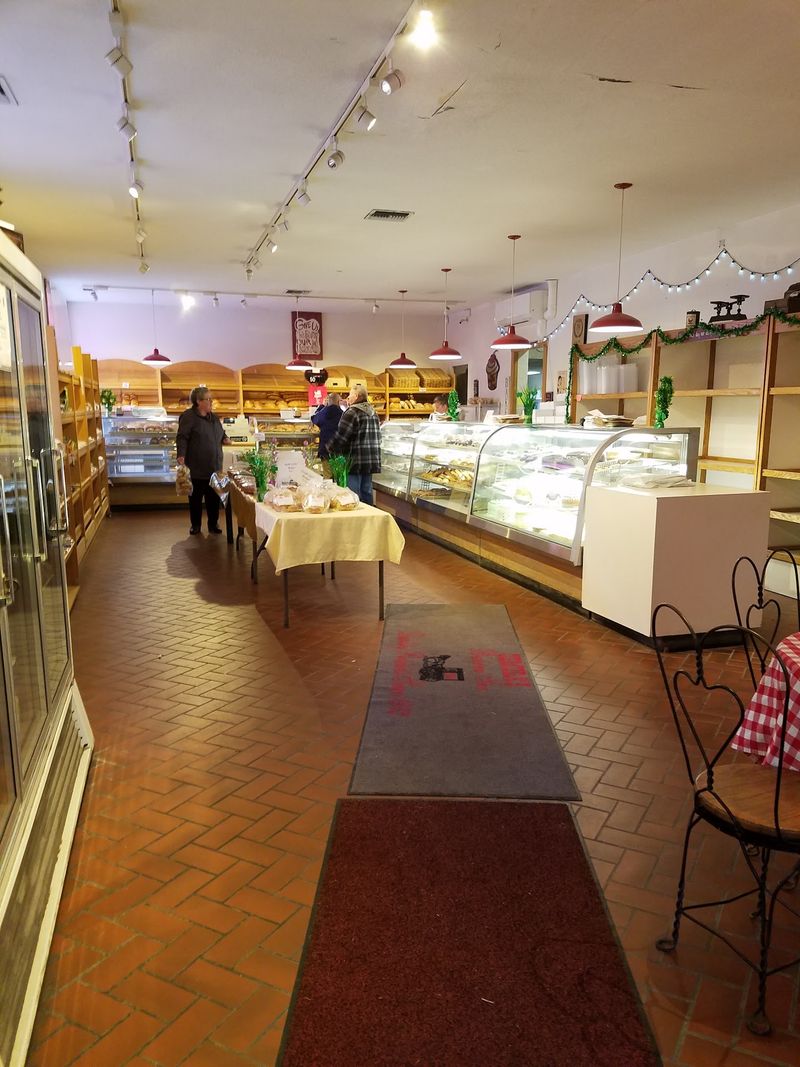
Few small businesses last a decade. Chmura’s Bakery has lasted more than 120 years.
John Chmura opened the doors in 1902, baking for the Polish families who had settled in the mill village of Indian Orchard.
Back then the neighborhood ran on textile work and long shifts. Bread was not a treat, it was fuel.
The bakery filled a practical need, and it did the job well enough to keep going through generation after generation.
The address has stayed the same all along: 14 Pulaski Street, Indian Orchard, MA 01151. The street name itself nods to the Polish heritage that shaped this pocket of Springfield.
In 1988 came the turn that makes the story unusual. Ownership passed to a Portuguese family.
Rather than clear out the old recipes, they added their own alongside them.
That decision is why the shelves look the way they do today. Rye loaves and poppyseed rolls sit near Portuguese rolls and custard tarts.
Two food cultures, one set of ovens.
The Massachusetts House of Representatives has recognized the bakery with a citation naming it the best in the state. Not a bad credential for a shop on a side street.
Longevity like this is rare, and it is earned loaf by loaf. Chmura’s Bakery has simply kept showing up before sunrise.
Why The Rye Bread Has Been A Favorite For Years
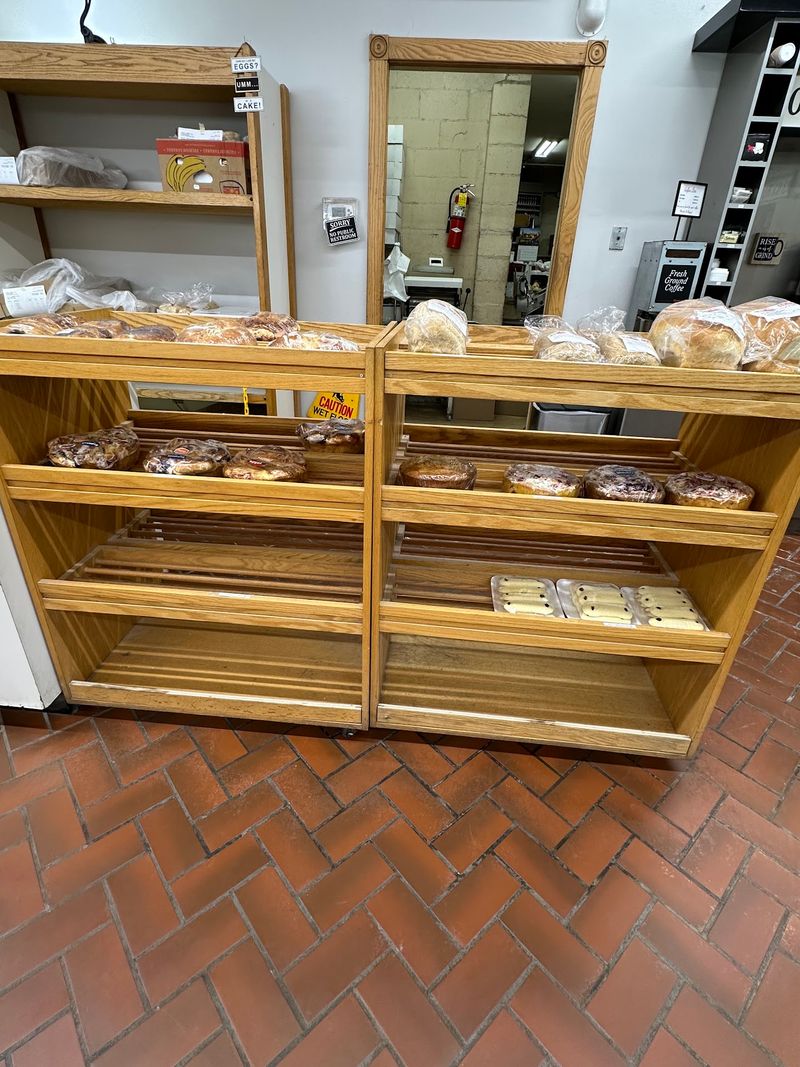
Ask what to order first and the answer comes back fast: rye. Seeded or seedless, it is the single item most tied to this bakery’s name. People drive in from Connecticut for it.
The loaves have a firm crust and a dense, chewy middle. Caraway seeds run through the seeded version, giving it that sharp, slightly peppery bite.
The seedless loaf is milder and works for anyone who finds caraway too bold.
Rye holds a central place in Polish baking. It stands up to cold weather, keeps well for days, and pairs naturally with hearty foods.
That practicality is exactly why immigrant bakers leaned on it.
Here is a tip worth remembering. Rye stays fresh longer than white bread, so buying two loaves is rarely a mistake. Slice what you need and wrap the rest tightly.
It makes an excellent base for sandwiches, but it also shines toasted with nothing more than butter. The flavor does not need help.
Chmura’s Bakery also distributes bread to nearby markets like Village Food Mart and Sapowsky Farms. Still, the freshest loaves come straight from Pulaski Street.
Mornings bring the best selection. Arrive early and the rye is often still warm, which is a small thing that somehow matters enormously.
Polish Sweets Bring Babka, Chrusciki, And Poppyseed Rolls To The Counter
The Polish side of the case reads like a holiday table. Bapka bread, soft and slightly sweet.
Chrusciki, those crisp fried ribbons dusted heavily with powdered sugar.
Chrusciki go by the nickname angel wings, and the shape explains why. Thin dough is twisted, fried quickly, and turns light enough to shatter when you bite it.
Expect sugar on your shirt. Everyone accepts this.
Makowiec is the poppyseed roll, and it deserves attention. Sweet dough wraps around a thick dark poppyseed filling, then bakes into a spiral you can see in every slice.
Strudel comes in a rotation of fillings: apple, cheese, prune, blueberry, and cherry. Prune sounds old fashioned until you try it.
The flavor is deep and jammy rather than plain sweet.
Braided challah rounds out the lineup. Its glossy top and tender crumb make fantastic toast, and leftover slices turn into very good French toast.
These recipes survived an ownership change, which says something. They were kept because families kept asking for them.
For anyone curious about Polish baking, this is a low-pressure introduction. Buy one of each and figure out your favorite at the kitchen table.
Nothing here is fussy or intimidating, just honest baking passed along carefully in western Massachusetts.
Portuguese Rolls And Pasteis De Nata Share The Shelf
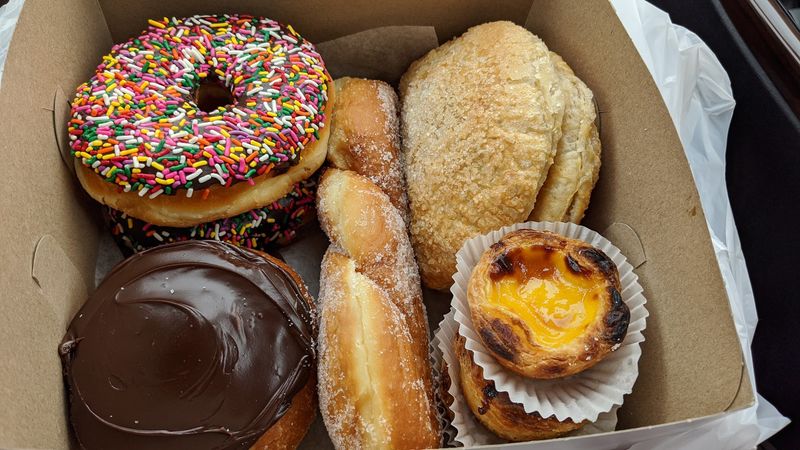
Now for the second half of the story. Portuguese rolls, known for a crackly crust and an airy inside, are one of the most requested items here.
They are small, sturdy, and built for sandwiches.
The scale of production can be impressive. The bakery once supplied 20,000 Portuguese rolls for the OLOF Festa in nearby Ludlow, a town with deep Portuguese roots.
That is a serious order for a neighborhood shop.
Pasteis de nata are the other headline. Flaky pastry shells hold a cinnamon-scented custard, and the tops carry those dark blistered spots that come from a very hot oven.
Eat them the same day if you can. The contrast between crisp pastry and silky custard fades once they sit overnight in the refrigerator.
Folar, a traditional Portuguese bread, also appears on the shelves. So does Bolo Reis, a ring-shaped sweet bread studded with candied fruit that shows up around the holidays.
Having all of this beside Polish strudel is genuinely unusual. Most bakeries pick one lane and stay in it.
Chmura’s Bakery treats both traditions as equals, which reflects the makeup of the wider Springfield area. Two communities, two pantries, one very busy counter on Pulaski Street every single morning.
Apple Fritters That Vanish Before Lunch
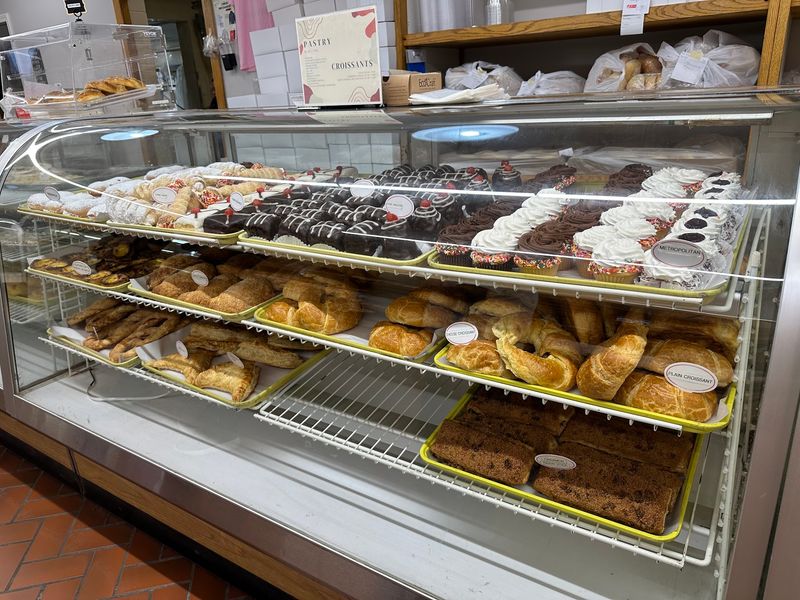
Some items sell out. Then there are the apple fritters, which disappear with a speed that borders on suspicious.
If you want one, morning is not a suggestion, it is the plan.
Fritters here are craggy and generous, with chunks of apple folded through the dough and a glaze that settles into every crevice. They are not tidy.
That is the whole appeal.
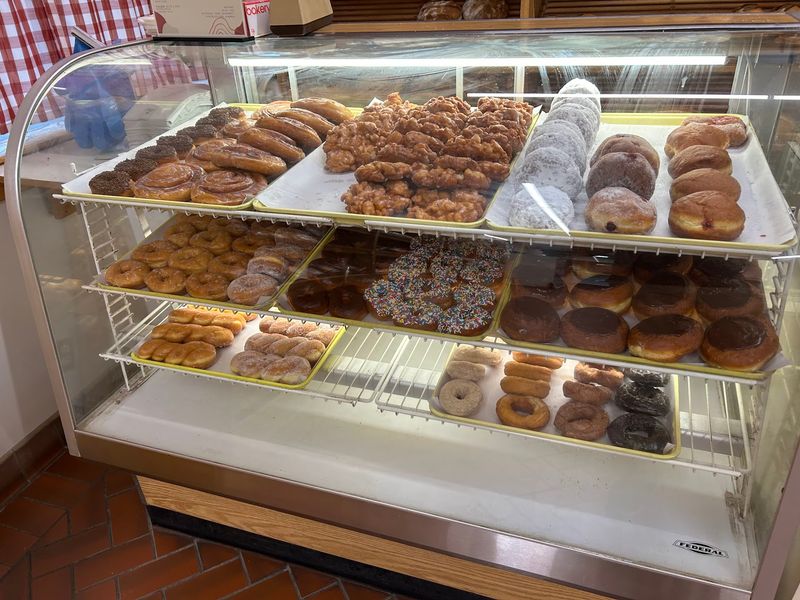
The doughnut case keeps up nicely. Sugar-raised twists, jelly donuts, and Boston cream all have their followers.
Bismarks, filled and finished sweet, round out the selection.
Cinnamon rolls come in a size that makes sharing reasonable. One can easily handle two people and a couple of coffees.
A practical note on timing. The bakery opens at 6 am Tuesday through Sunday and closes Mondays, so early risers get the widest choice by a wide margin.
Weekend mornings bring lines out the door. Move along steadily, and the wait is shorter than it looks.
Danish, muffins, and fruit squares fill out the rest of the case, giving you plenty of backup if the fritters are already gone.
The lesson is simple. Set your alarm, bring cash or card, and grab an extra fritter for whoever stayed home.
Cakes, Custard Cups And Strawberry Shortcake Biscuits
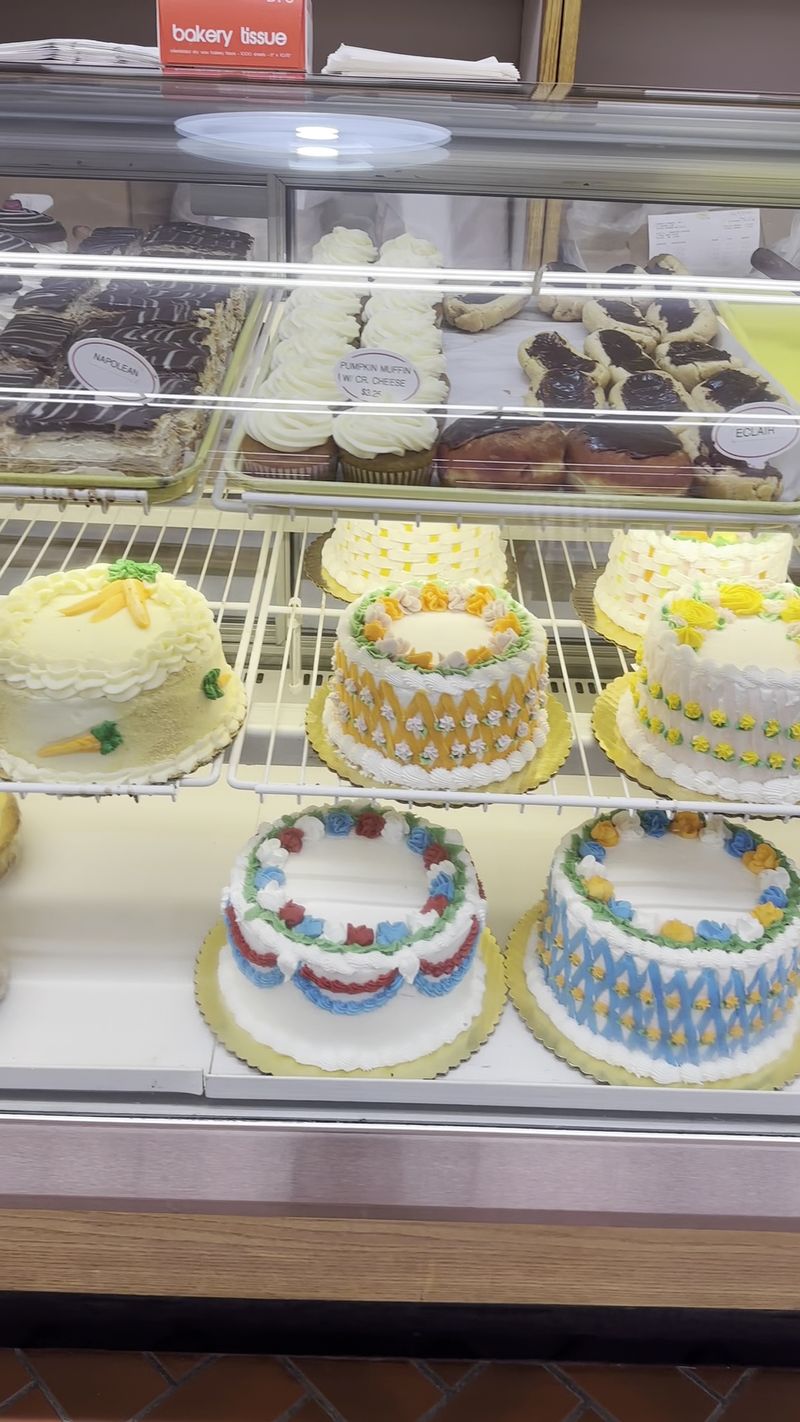
Beyond bread and doughnuts sits a full dessert operation. Layer cakes, pies, and made-to-order cakes all come out of the same kitchen.
Birthdays in this part of Massachusetts have been covered for decades.
Custard cups are a quiet favorite. Simple pastry, smooth filling, nothing flashy. They belong to that category of old-fashioned sweets that never really went away.
Carrot cake and vanilla cupcakes with chocolate frosting are steady presences too. Sugar cookies fill the tray beside them, plain and soft, exactly as they should be.
One small detail says a lot about how this shop operates. They sell the biscuit shells for strawberry shortcake on their own, which is surprisingly hard to find.
That means you can buy the base, add your own berries and cream, and skip the trickiest step. Church suppers and family cookouts benefit enormously.
There is no seating inside, so everything travels. Plan on eating at home, in a park, or standing in the parking lot like plenty of people do.
Speaking of which, the lot is unusually large for a neighborhood bakery, which makes weekend stops far less stressful than expected.
Kielbasa, Milk And Other Neighborhood Necessities
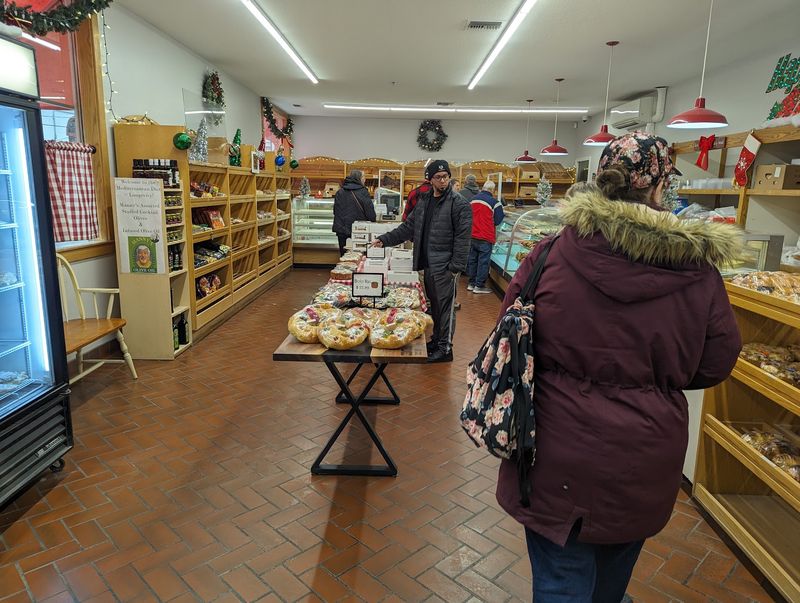
Not everything in the building is baked. Locally made kielbasa sits near the register, along with milk, turning a bread run into a small grocery trip.
That combination is not random. In an old Polish neighborhood, rye bread and kielbasa belong on the same plate, and the shop stocks accordingly.
Supporting nearby producers keeps money circulating close to home. It also means the sausage has not traveled far before reaching the shelf.
The same spirit shows up in other ways. Gift certificates are donated for local raffles, quietly helping community fundraisers across the area.
Products also reach other local markets, so households a few towns over can find familiar loaves without making the drive. Still, the full selection lives at the shop itself.
Staff behind the counter tend to know regular orders before anyone speaks. Bags get filled while people are still reaching for a wallet.
Chmura’s Bakery works less like a specialty destination and more like a neighborhood fixture that outsiders happened to discover.
For a first-timer, this is useful context. Come in with a short list, ask what came out of the oven most recently, and let the answer guide you.
Small shops like this survive on exactly that kind of everyday loyalty, repeated thousands of times.
Exploring Indian Orchard Before Or After Your Bread Run
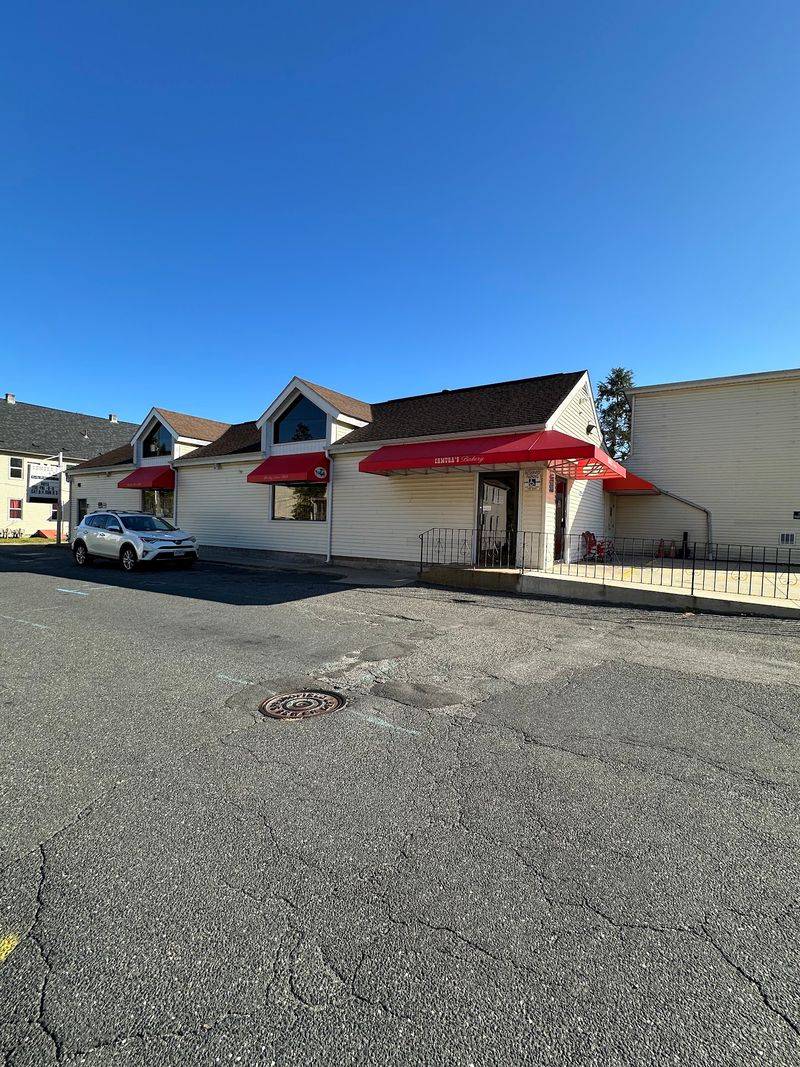
The neighborhood around the bakery rewards a slow look. Indian Orchard sits in the northeast corner of Springfield, along the Chicopee River, and it has held onto its own character.
Its roots go back to the 1840s, when mills drew workers here. Many of the earliest arrivals were French-Canadian, later joined by Polish and other immigrant families.
The name has an older origin. Plum orchards cultivated by Native Americans in the area are believed to be the source.
The Indian Orchard Mills were once the main employer and helped build the village’s early roads and housing. One of those old mill buildings now holds studio space for artists.
That arts scene has grown steadily, giving the neighborhood a creative layer alongside its industrial bones. Hubbard Park offers open space for anyone wanting to stretch their legs.
There is also a Titanic Museum in the neighborhood, which is an unexpected thing to find on a Massachusetts side street.
Pair a stop at Chmura’s Bakery with a walk by the river and you have a genuinely pleasant half day. Sunday hours run 6 am to 2 pm, so plan accordingly.
Massachusetts has plenty of famous food destinations. This corner of Springfield quietly holds one of the most interesting.