Families earning under $200,000 a year can send a kid to one of the world’s top science schools without paying any tuition. Below $100,000, the deal grows even bigger, covering housing, dining, books, and fees too.
I like how this school pairs that generosity with a campus full of wild ideas. A police car once appeared on top of its famous dome, and students measure a nearby bridge in a unit named after a classmate.
Visitors can stroll the grounds for free, admiring a tilted, cartoonish building and a chapel lit by a shimmering sculpture. I can’t imagine a better Massachusetts outing for a curious kid with big dreams.
So how does a place this brilliant also become one of America’s smartest bargains? The answer is a lot more fun than a financial aid form.
Free Tuition For Most Families Is A Real Thing Here
Starting in fall 2025, the Massachusetts Institute of Technology made a promise that turned heads across the country. Undergraduates from families earning less than $200,000 a year pay zero tuition.
That covers a huge share of American households. MIT has said roughly 80 percent of U.S. families fall under that line.
The news gets sweeter for families earning under $100,000. Those students receive aid that covers the full cost of attendance, not just classes.
Housing, dining, fees, and books are part of that package. Even an allowance for personal expenses gets included, which is pretty thoughtful.
Families above these income levels can still qualify for help. Aid is based on each family’s actual situation, so many students receive support even with higher earnings.
Applying for aid starts with standard forms like the CSS Profile and the FAFSA. The financial aid office then builds a package that fits each family.
My favorite part is simple. A teenager in Massachusetts or anywhere else can aim high without starting the dream by staring at a giant bill.
The funding comes largely from the school’s endowment and generous donors. That money gets put to work on students, which feels like a very MIT way to solve a problem.
Getting in is still tough, of course. But money no longer has to be the first obstacle on the path to Cambridge.
Your Bank Account Never Enters The Admissions Room
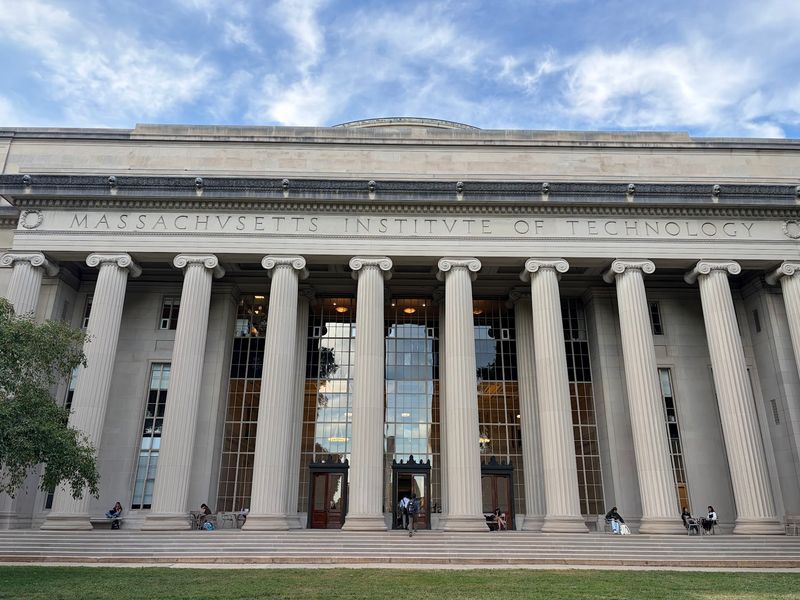
Need-blind admission sounds like jargon, but the meaning is wonderfully simple. MIT decides who gets in without looking at whether a family can pay.
The policy applies to students from the United States and from other countries too. That’s rare among universities, and it opens doors for talented kids worldwide.
After admission, the Massachusetts Institute of Technology promises to meet 100 percent of each student’s demonstrated financial need. Nobody gets accepted and then left to figure out the money alone.
Aid comes mostly as scholarships and grants. Unlike loans, that money never needs to be paid back after graduation.
The result shows up in a big way when students finish. A large majority of MIT graduates walk across the stage with no student loan debt at all.
Think about what that freedom allows. A new graduate can launch a startup, take a public service job, or head to grad school without a mountain of payments.
Many students also earn money through campus jobs and research positions. Those roles build skills while helping cover everyday costs like snacks and movie tickets.
That’s why the school keeps landing on lists of the country’s best-value colleges. Value here means a top education plus a fresh start, not just a lower sticker cost.
Parents tend to exhale when they learn all this. Honestly, so would I.
Mind And Hand Means You Actually Build Stuff
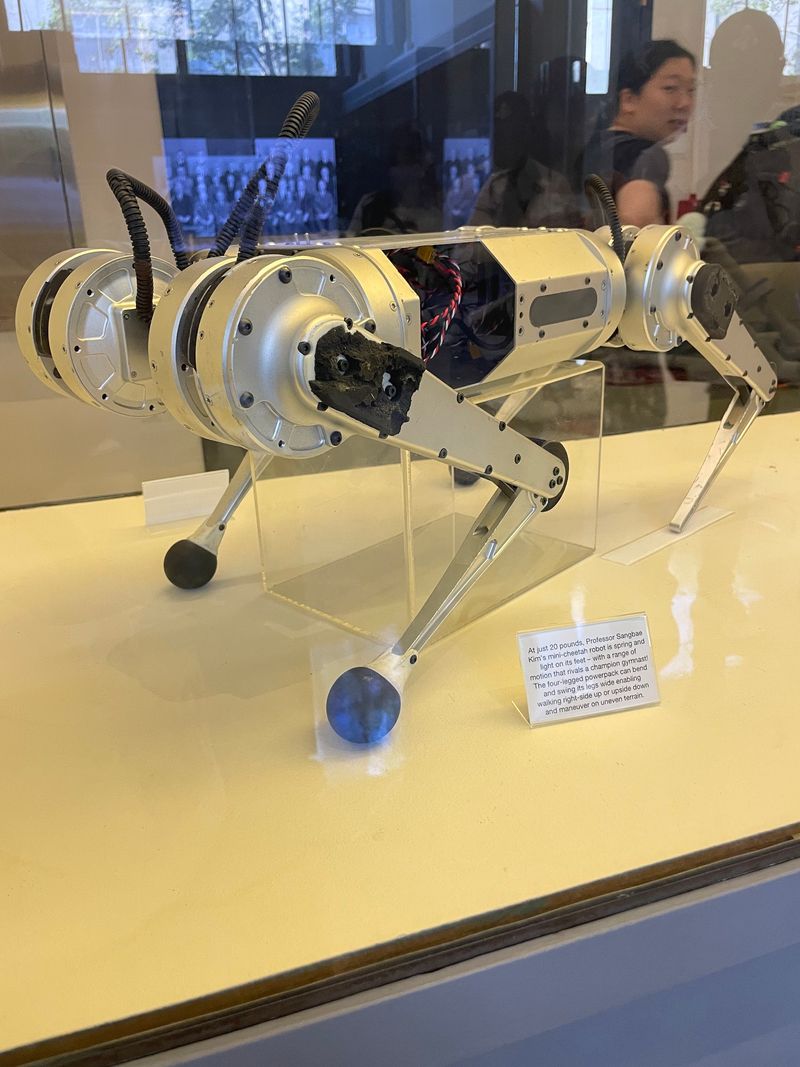
The Latin phrase ‘Mens et Manus’ sits on the school seal, and it translates to ‘Mind and Hand.’ Founded in 1861, MIT has always believed learning should lead to doing.
That motto still shapes daily life on campus. Students don’t just read about robots, rockets, or new medicines; they help create them.
The Undergraduate Research Opportunities Program, known as UROP, is a big reason why. It lets undergrads join real research teams working alongside faculty members.
Students can earn pay or academic credit for that work. Some projects even lead to published papers before graduation, which is a fun line on any resume.
The range of labs is staggering. MIT runs its own nuclear research reactor right on campus, along with major centers for artificial intelligence and computer science.
Cambridge’s Kendall Square, right next door, is packed with tech and biotech companies. Many of them grew from ideas that started in MIT labs.
Hands-on learning shows up in classrooms too. Engineering courses often end with students building and testing their own designs.
For a visiting family, this is the exciting part to picture. A middle schooler who loves taking apart old gadgets might someday tinker here with world-class tools.
Pair that with free tuition for many families, and the math looks pretty good. Think hard, then make something real, which sounds like a great way to spend four years in Massachusetts.
That Famous Dome Looks Even Better From The Lawn Below
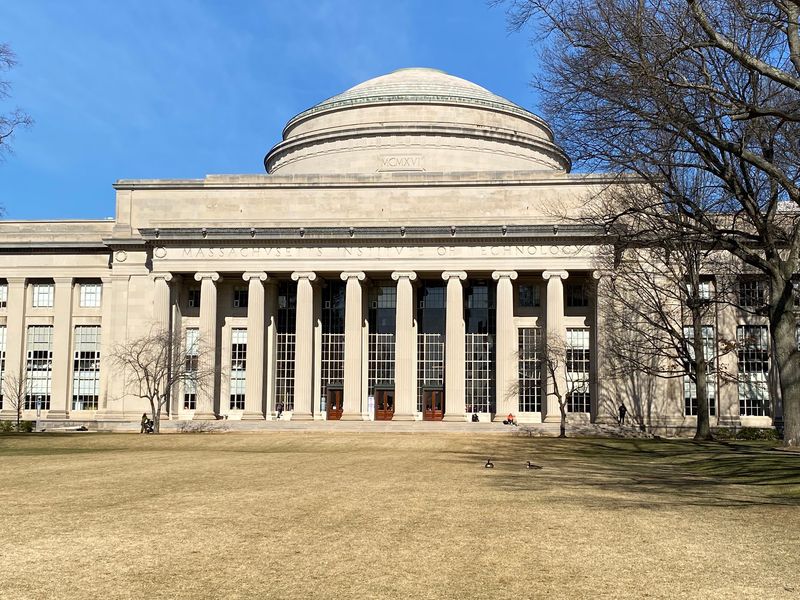
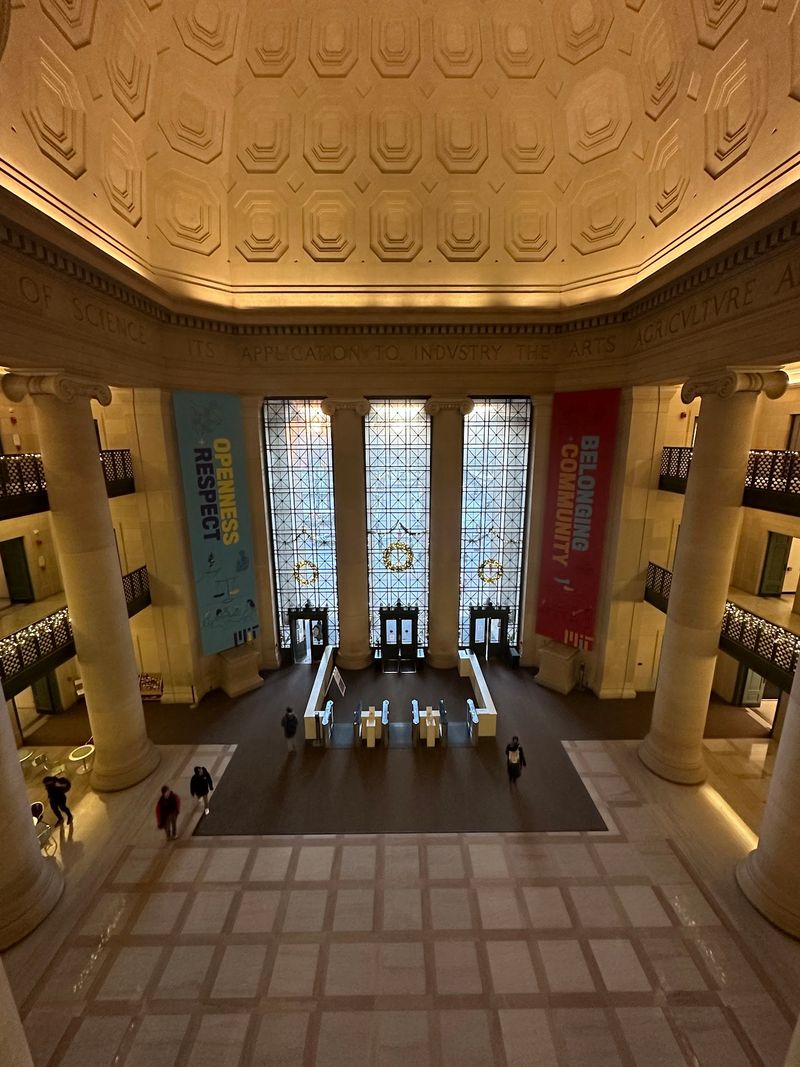
The Great Dome is the image most people link to MIT, and seeing it in person feels like meeting a celebrity. It rises above Building 10, with classical columns stretching across the front.
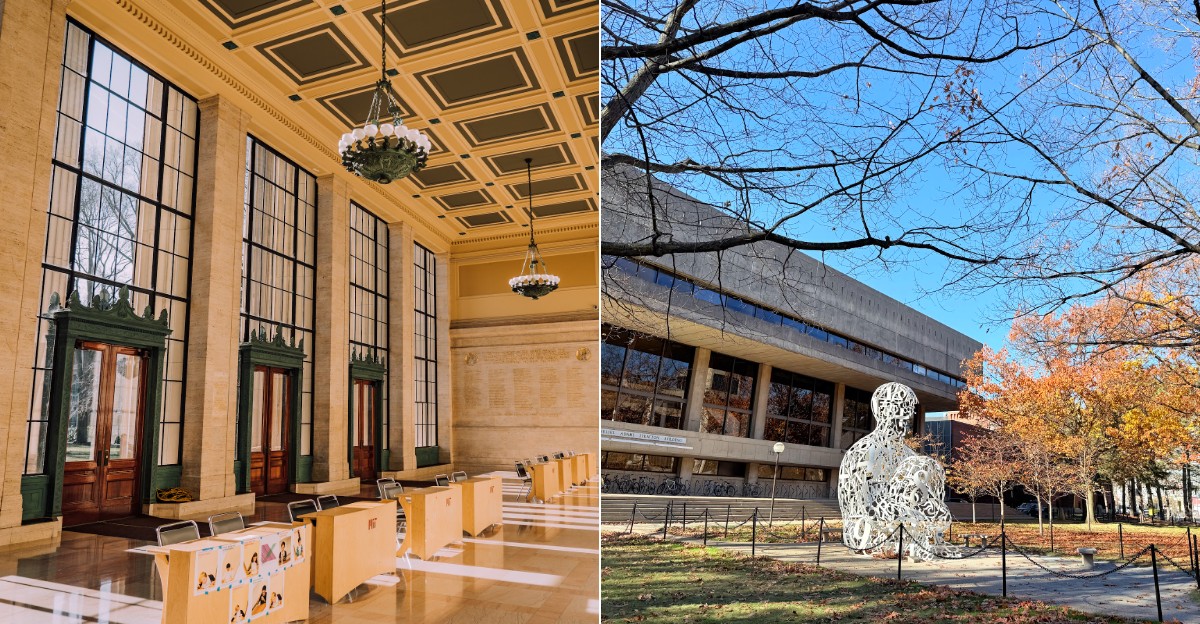
Below it spreads a wide green courtyard framed by stately limestone buildings. Graduation ceremonies take place here, so the space carries plenty of proud moments.
Look closely at the building tops around the court. Names of great thinkers like Newton, Darwin, and Archimedes are carved into the stone.
The court faces Memorial Drive and the Charles River. That means a photo here can include the dome, the water, and the Boston skyline all at once.
Grab a shot from the lawn first, then wander closer. The columns look even more impressive up close.
Then the campus swerves in a totally different direction. Frank Gehry’s Stata Center looks like a set of buildings that decided to lean, tilt, and wobble on purpose.
Shiny metal panels, odd angles, and playful shapes make it a favorite for photographers. It houses computer science and artificial intelligence research, which suits its futuristic look.
Moving between the dome and Stata feels like flipping through architecture history in one afternoon. Classic columns sit just minutes away from shapes that seem to defy gravity.
The campus is open for visitors to explore on foot. Bring comfortable shoes and a fully charged phone, because the camera roll will fill up fast.
A Glowing Chapel And Outdoor Art Make Wandering Worth It
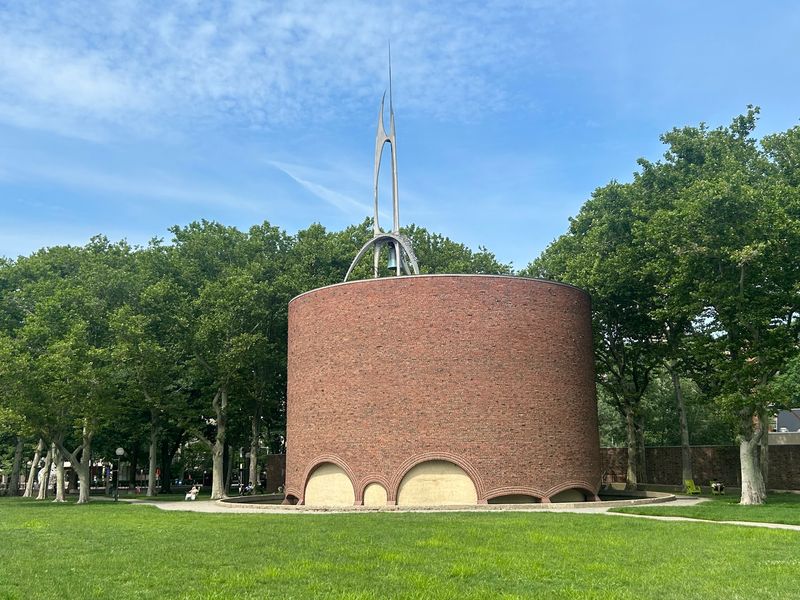
Not every college chapel is a brick cylinder surrounded by a moat. The MIT Chapel, designed by Eero Saarinen and finished in 1955, is exactly that.
Inside, light reflects off the water through low windows and dances across the walls. Above the altar hangs a shimmering metal screen by sculptor Harry Bertoia.
The space is small, calm, and nondenominational. It welcomes people of every background looking for a quiet pause.
Right across the lawn stands Kresge Auditorium, another Saarinen design. Its roof is shaped like one-eighth of a sphere, which sounds like a math problem and looks totally cool.
Art lovers have even more to find outdoors. MIT’s public art collection spreads across campus, so sculptures pop up in courtyards and plazas.
Alexander Calder’s huge black steel piece, La Grande Voile, stands near the Green Building. Its name means ‘The Big Sail,’ and it really does seem ready to catch the wind.
The List Visual Arts Center also hosts contemporary exhibitions on campus. It’s a smart stop for anyone who wants creativity mixed in with all that science.
Families can turn the campus into a self-guided art hunt. Kids can count sculptures while adults admire the bold designs.
Science and art clearly share the stage here. That mix makes a Massachusetts campus walk feel more like a free museum trip.
Somebody Once Put A Police Car On The Roof
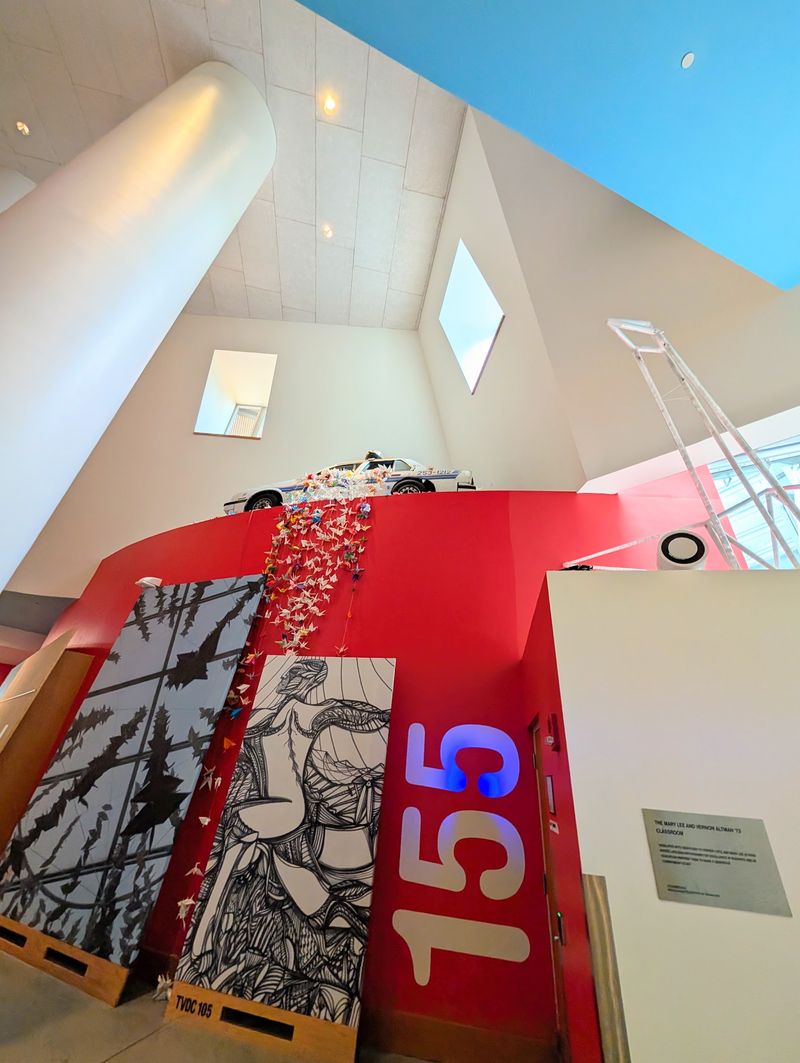
In 1994, a campus police car appeared on top of the Great Dome, lights and all. Nobody drove it up there, of course, which made the mystery even better.
Pranks like this are called hacks at MIT. They’re clever, harmless, and usually involve serious engineering skill.
Students have also turned the dome into R2-D2 and a giant class ring. The hack culture celebrates creativity, teamwork, and a good laugh.
The MIT Museum has even collected artifacts from famous hacks over the years. Seeing the evidence up close makes the stories even more delightful.
Then there’s the smoot. In 1958, fraternity members measured the Harvard Bridge using classmate Oliver Smoot’s body as a ruler.
The bridge came out to 364.4 smoots, plus one ear. Painted markings still appear along the sidewalk today.
January brings the MIT Mystery Hunt, one of the oldest puzzle competitions in the country. Teams spend a whole weekend cracking brain-bending clues to find a hidden coin.
Pi Day on March 14 is extra special here. MIT has traditionally posted admission decisions that day, a fitting nod to math fans.
These traditions show a playful side of a serious school. Visitors can join in a little by walking the smoot markings across the bridge, and counting along is surprisingly fun.
Twice A Year, The Sun Lines Up Down The Hallway
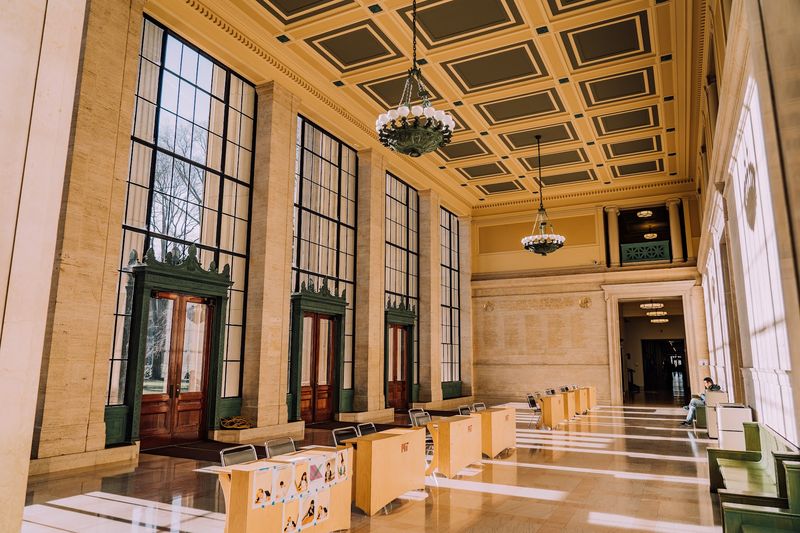
The Infinite Corridor isn’t actually infinite, but it stretches about 825 feet through the main buildings. It links the domed Building 7 entrance on Massachusetts Avenue to the heart of campus.
A few days each year, usually in mid-November and late January, the setting sun lines up with the hallway. Light pours straight down the corridor in an event nicknamed MIThenge.
The name borrows from Stonehenge, the ancient stone circle in England. Students gather to watch, which turns an ordinary hallway into a sunset show.
On regular days, the corridor is a fun walk all by itself. Bulletin boards, posters, and displays give a glimpse of student life and campus events.
Just a short stroll away in Kendall Square sits the MIT Museum. It reopened in a new building in 2022, with galleries about robotics, artificial intelligence, and more.
Hands-on exhibits let visitors explore how scientists think and test ideas. The museum also displays holograms and kinetic sculptures that keep curious kids engaged.
This is a great rainy-day option for a Cambridge trip. Families can learn about MIT’s research without needing an admissions appointment.
Campus tours and information sessions are also offered through the admissions office. They’re a handy way for future applicants to learn about aid and academics in one visit.
Check schedules before heading over. Hours and special programs change, and planning ahead keeps the day smooth.
The Charles River Makes Every Visit Feel Like A Day Off
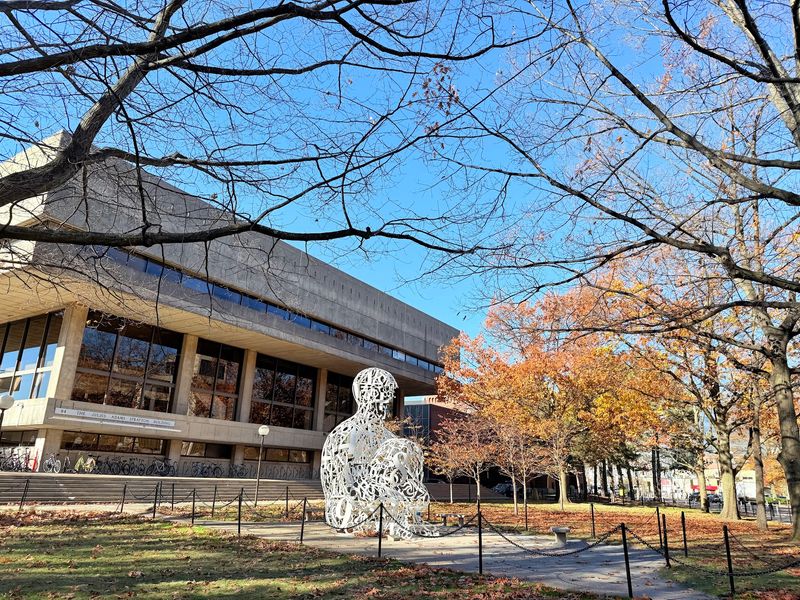
Few campuses get a waterfront this good. The Massachusetts Institute of Technology sits right along the Charles River, with Boston’s skyline across the water.
Memorial Drive runs beside the riverbank, and paths there are perfect for strolling or jogging. Sailboats glide by too, since MIT runs its own sailing pavilion on the river.
The Harvard Bridge connects campus to Boston’s Back Bay neighborhood. Yes, that’s the bridge with the smoot markings, so the walk doubles as a math lesson.
Getting here is simple. The Kendall/MIT stop on the Red Line sits near the east side of campus, and bus routes pass along Massachusetts Avenue.
Harvard University is just a couple of miles up the road in Cambridge. Visiting both in one day makes a fun college-tour adventure for families.
Food spots and shops fill Kendall Square and Central Square nearby. The MIT Coop is a handy place for picking up school souvenirs.
Plan visits during the week if you want to connect with campus offices. Main hours generally run 9 a.m. to 5 p.m. on weekdays.
Sunset along the river is especially lovely here in Massachusetts. Bring a camera and stay a little longer than planned.
You’ll find the main entrance at 77 Massachusetts Ave, Cambridge, MA 02139, under those big stone columns. It’s a fitting doorway to a school that makes big dreams surprisingly affordable.