A steam giant from the golden age of rail fills a quiet warehouse. Its wheels stand nearly as tall as a grown adult.
Only eight engines like it survive anywhere. This one belongs to a Colorado museum that many locals overlook.
A few steps away sits a yellow car once owned by Amelia Earhart. Who expected a famous pilot to leave a car behind?
Farther along, a wooden bicycle from 1817 has no pedals at all. How did riders ever get it moving?
Rare cars, a cable car, and a rotary snowplow fill the rest of the floor. Each one tells a story about how people once traveled.
Hours can slip away without warning in a place like this. So what makes this Colorado collection worth the drive?
The Big Boy Is Bigger Than Your Brain Expects
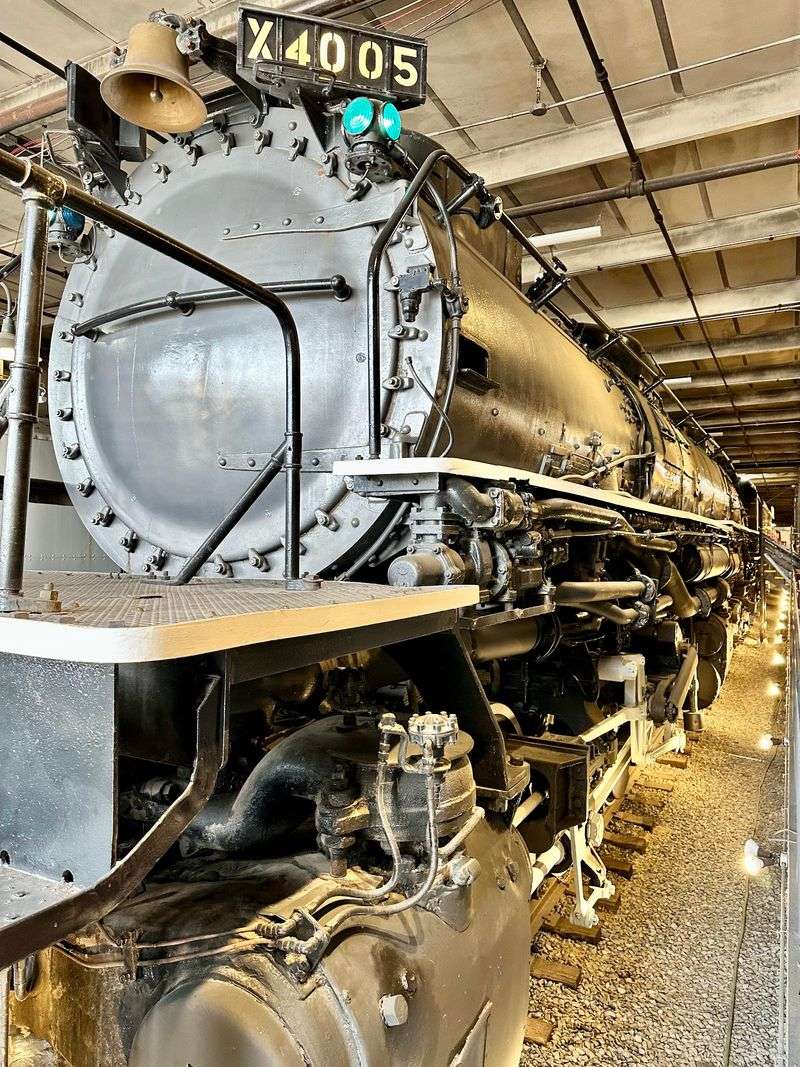
Forney Museum of Transportation has a locomotive that stops people mid-step. Union Pacific Big Boy number 4005 is one of only eight survivors.
It is considered the largest articulated steam locomotive in the world.
Articulated means the engine bends in the middle. That design helped it take curves while pulling very heavy trains.
It is a clever trick for a machine this huge.
Stand near the wheels and you will feel tiny. They are taller than most grown-ups.
Visitors often wonder how such a giant got inside a building at all.
The museum is wheelchair accessible nearly everywhere. The one exception is the entrance to the Big Boy cab.
So plan for that if mobility is a concern.
Take your time with this one. Walk around it slowly and look at the pipes, rods, and rivets.
A good photo needs a few steps back, and then a few more.
The gift shop also carries Big Boy items. That makes it easy to take a little piece of the giant home.
Many families treat the engine as the main event, and the rest of the museum as a bonus round.
Amelia Earhart’s Yellow Ride Has Its Own Spotlight
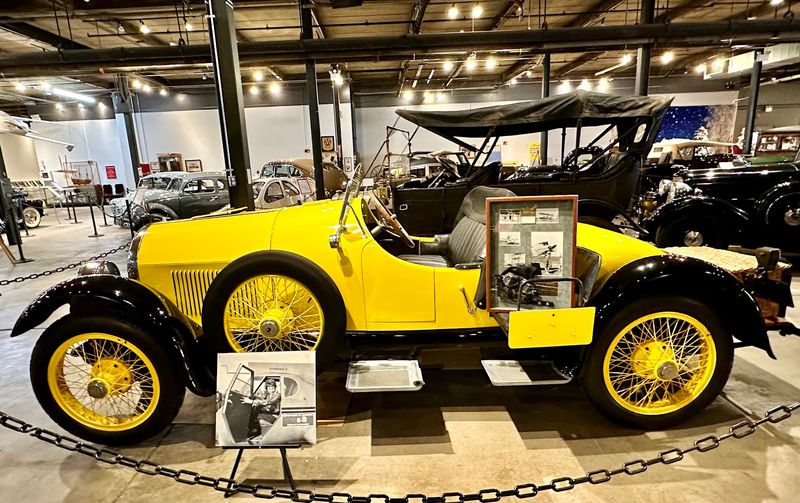
Here is a fun fact for your next trivia night. The famous pilot Amelia Earhart owned a car, and it is on display in Denver.
It is a 1923 Kissel Gold Bug, and its yellow paint is easy to spot.
Kissel was a real American automaker, and the museum shows several Kissel Kars. That is no accident.
The collection began when founder J.D. Forney’s family gave him a 1921 Kissel Tourister.
It was similar to the car he used to court his wife. A sweet start for a huge collection!
One gift turned into a lifelong hobby.
Look closely at the Gold Bug’s open body and classic lines. It looks made for sunny drives and big adventures.
Think of it as the road-going cousin of her airplane career.
Many guests head straight for it after the locomotive. Give yourself a moment to read the nearby information.
Details like these make the car feel like a story, not just a shiny object.
Old Cars With Names You’ve Probably Never Heard Of
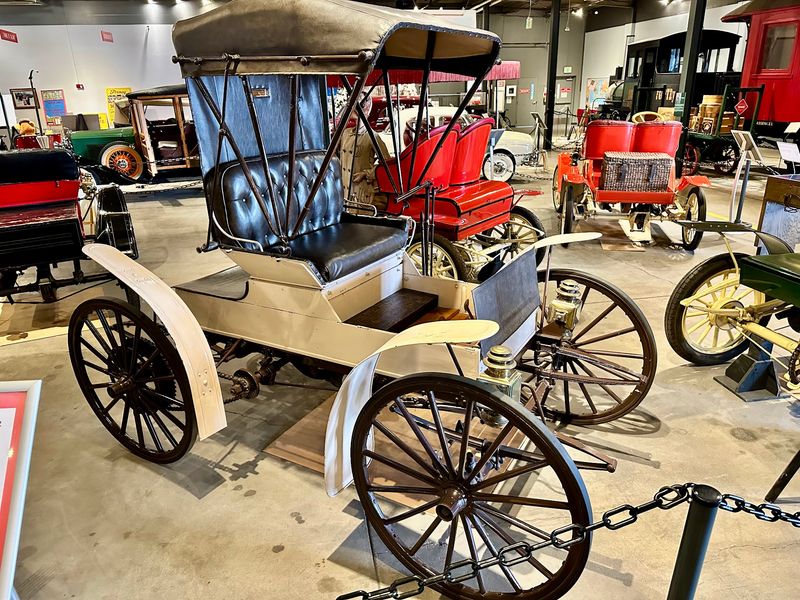
Ford and Chevy get all the attention. This museum shines a light on the forgotten names.
Staver, Winton Six, Metz, Brewster, and Nyberg all share the floor.
The Staver is one of six known. The Nyberg is the only known example.
That makes these cars true rarities, not just old ones.
There is also a six-wheeled Hispano Suiza. Yes, six wheels on a car.
It looks like a puzzle you have to walk around to solve.
The oldest car in the collection is an 1899 Locomobile dos-a-dos. It is steam-powered, which sounds like something from a storybook.
The name means back-to-back, a nod to the seating.
Electric vehicles show up in the story too. One visitor was amazed to learn that electric cars existed way back in the 1880s.
That kind of surprise happens a lot here.
Read the signs as you go. Each car shows a different idea about how we should travel.
Some worked, and some clearly did not.
A Cable Car, A Snowplow, And A Few More Rail Giants
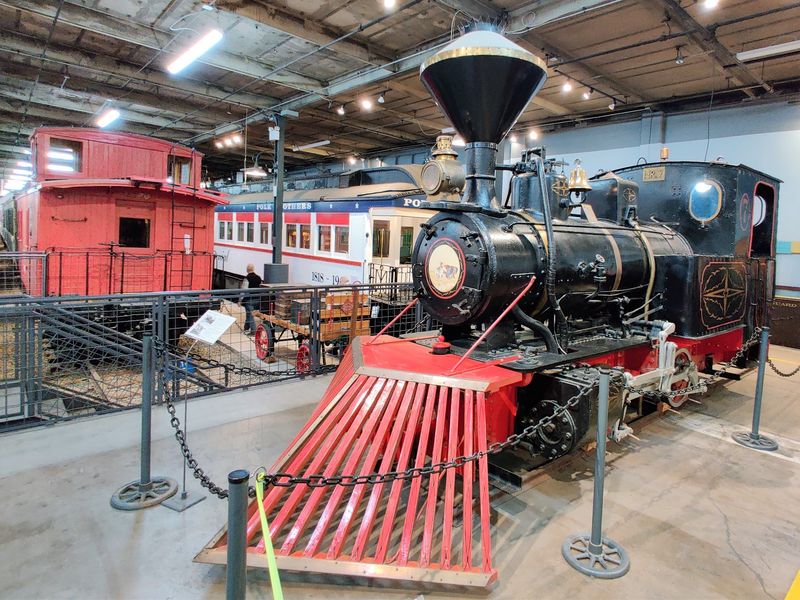
Trains here go well beyond one famous engine. The 1888 Denver Cable Car is the only surviving cable car from the city.
That makes it a real piece of local history.
Then comes a Union Pacific Rotary Snowplow. It was built to spin through deep drifts and clear the tracks.
In snowy Colorado, that job makes perfect sense.
A Chicago and Northwestern 4-6-0 Ten Wheeler is on view as well. It is the only surviving steam engine from that railroad converted to oil.
Rail fans will love that detail.
You can also spot a Denver and Rio Grande Western GP30 diesel. A small Henschel locomotive and a Forney locomotive round out the set.
The Forney type was designed by Matthias N. Forney, a second cousin of the museum’s founder.
One visitor noted that you can see the steam locomotive from right behind where the engineer works. Another said you cannot walk through the rail cars.
So plan to look rather than climb.
Bring a camera, and give each machine a minute. The details are in the gauges and the iron.
Two Wheels, From Wooden Wonders To Roaring Machines
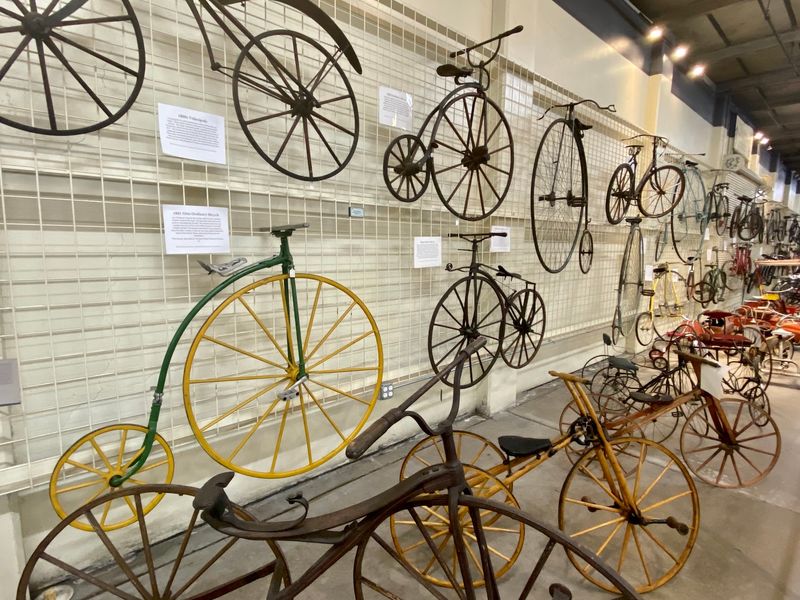
The oldest item in the collection is a bicycle. The 1817 French Draisienne is made entirely of wood.
It has no pedals, so riders pushed along with their feet.
That one object explains how far two wheels have come. From there, the museum rolls forward to motorcycles and more bicycles.
Motorcycles are a big topic for many guests.
The mix is wide, so there is a lot to compare. Look at the seats, the frames, and the handlebars.
Small changes tell the story of speed and comfort.
Kids may enjoy playing a game of spot-the-difference. Which bike would you trust on a bumpy road?
Which would make you laugh to ride?
The museum’s rotating exhibits sometimes shift the spotlight. Past displays have included British cars in miniature and a Corvette story.
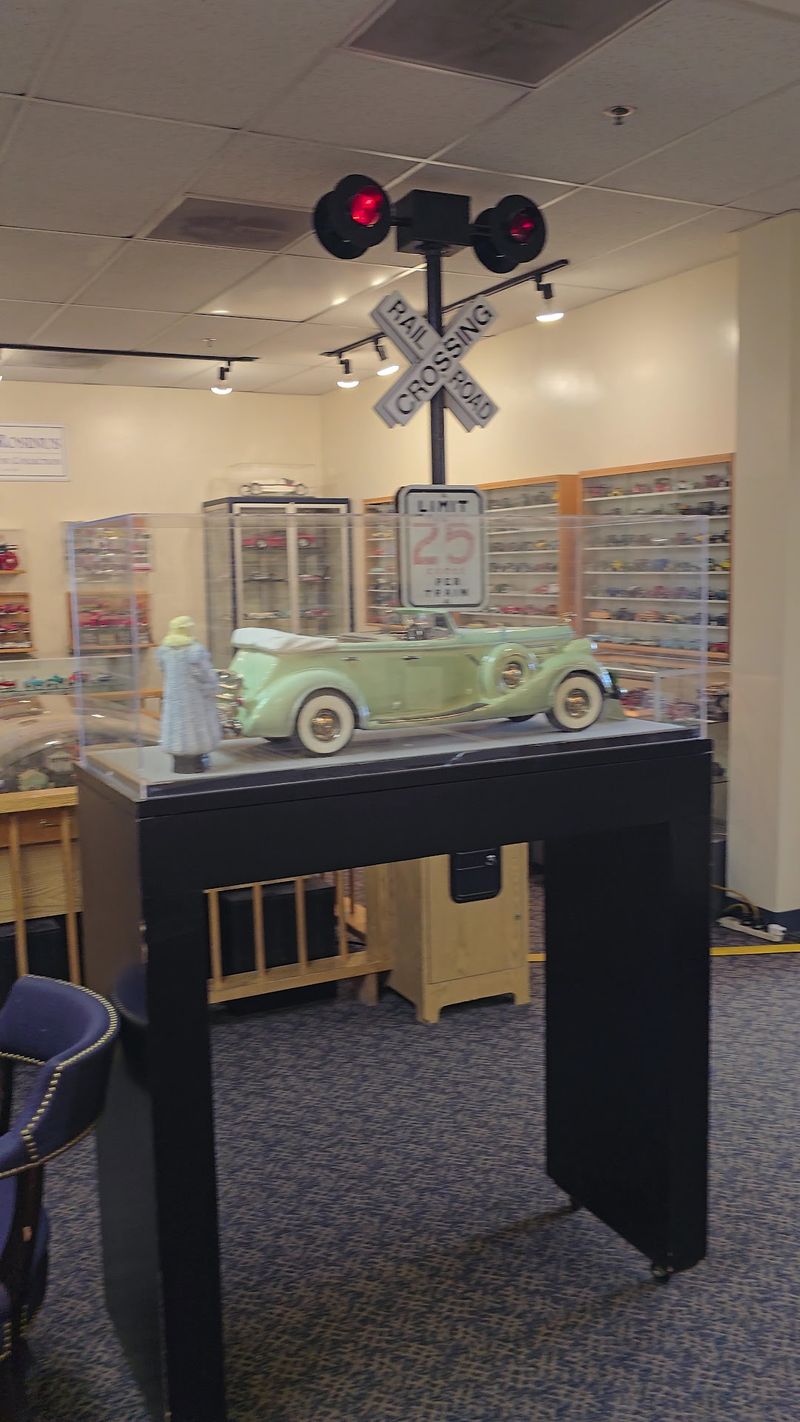
A model collection of 500 Matchbox cars adds a small-scale thrill.
Plan extra time if you love two-wheelers. It is easy to spend longer here than you planned.
Comfortable shoes help.
Meet The Man Who Traded Soldering Irons For Cars
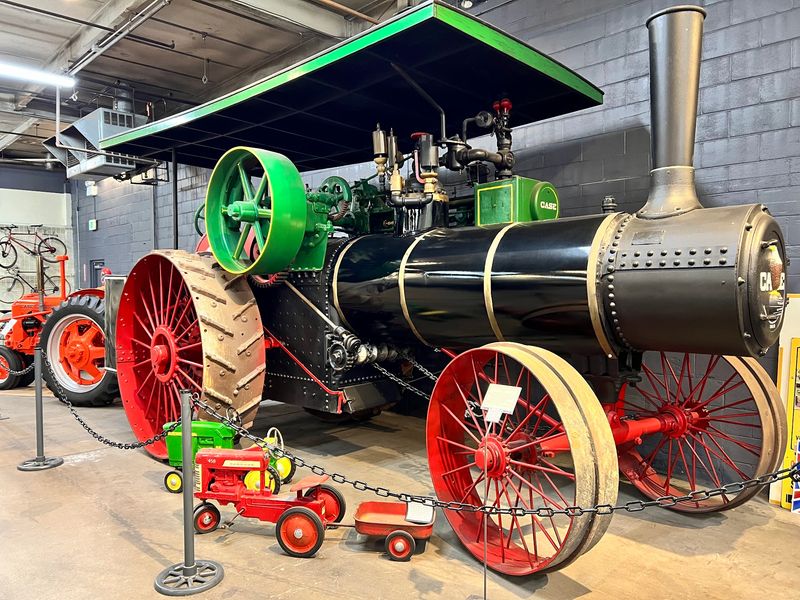
J.D. Forney founded the museum, and he also started Forney Industries.
His collecting method was creative. He often traded his company’s products for vehicles.
Those products included the Instant Heat Soldering Iron and portable farm welders. Imagine swapping a welder for a vintage car.
It sounds like the best deal in town.
The collection grew until it became a non-profit in 1961. It was recognized as a 501(c)(3) in 1964.
The family kept helping, including his son Jack.
The museum has moved a few times. It spent time in a mall, then moved to the historic Denver Tramway Powerhouse in 1968.
The powerhouse was built in 1901.
One visitor shared a lovely story. They visited the original museum in 1972, and Mr. Forney sold them their ticket.
That is a rare kind of connection.
Knowing this history makes the displays feel more personal. The collection is not a corporate project.
It grew from one family’s passion.
The Warehouse That Became A Time Machine
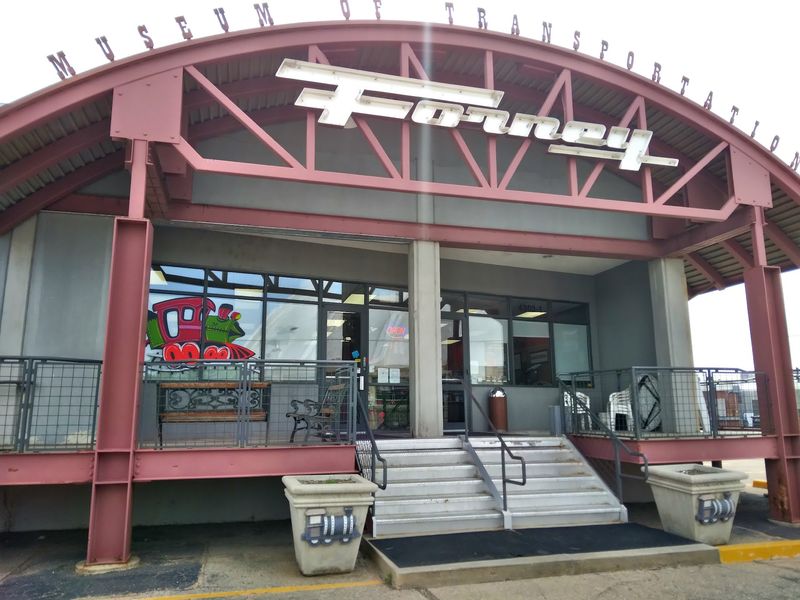
Find the Forney Museum of Transportation at 4303 Brighton Blvd, Denver, CO 80216. It sits near the Denver Coliseum.
One visitor described the entrance as hidden behind some sketchy-looking fences, so look carefully.
The building is a renovated food distribution warehouse. It covers 140,000 square feet.
The whole collection moved there in 2000, and the museum opened to the public in January 2001.
About 70,000 square feet hold exhibits and offices. That is a lot of floor to cover.
Parking is free in front, and there are stairs and a ramp at the door.
Hours are typically Monday and Thursday through Sunday, with Tuesday and Wednesday closed. Sunday starts at noon on the official schedule.
Check the website before you go, since private events can change things.
The museum is quite a find in Colorado. It is not flashy or fancy.
The value is the collection itself.
Bags are not allowed on the exhibit floor. Free lockers are provided, so use them.
Tours, Workshops, And Tiny Trains
Prefer a guide? Both self-guided and guided visits are available.
Guided tours usually run 45 minutes to an hour for adults, and about 30 minutes for kids. They can be tailored to special interests.
Groups may find discounts on self-guided visits. Groups of 10 or more pay extra for a guide.
Ask the museum before you book.
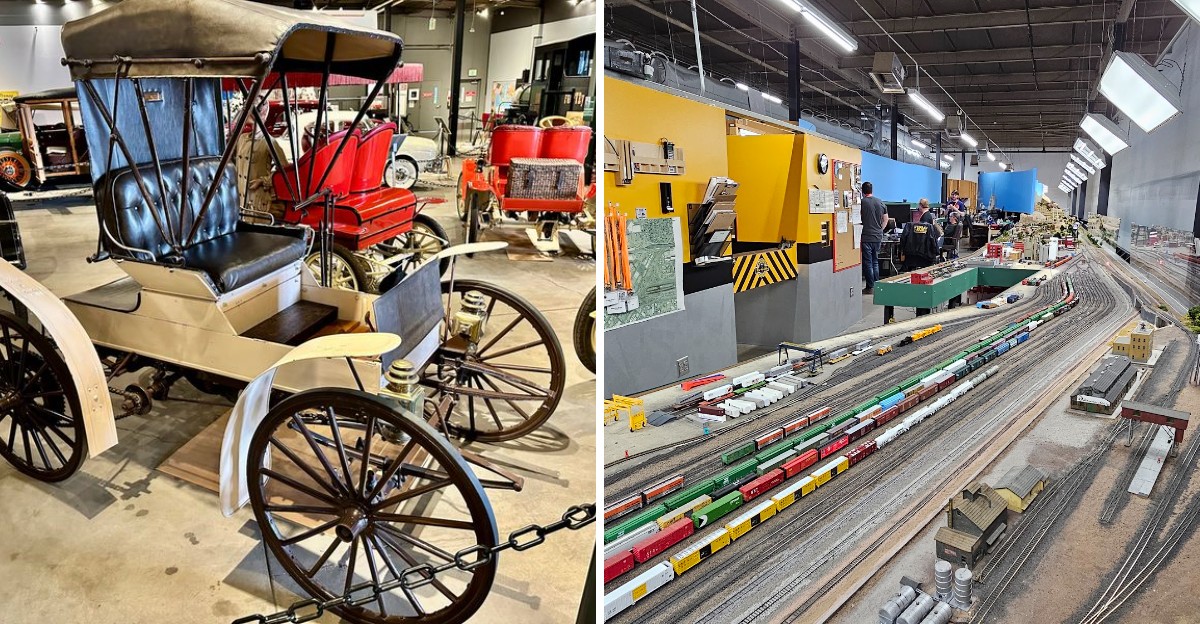
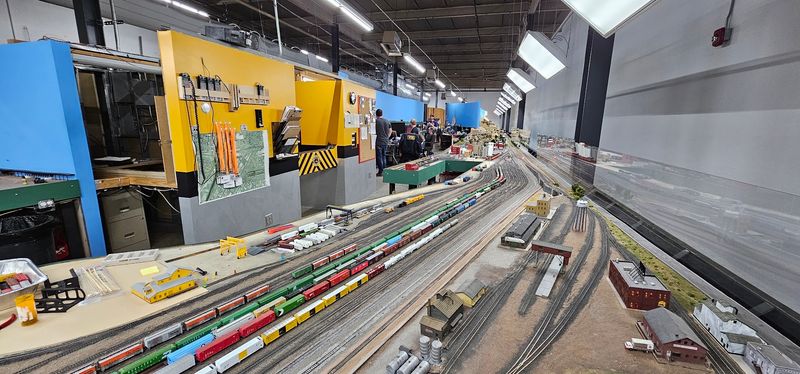
The Moffat Modelers show an N scale model railroad layout. Visitors have called the model trains impressive.
They are a nice break after the big machines.
Young builders can join the Model Car Make and Take workshops. These are for ages 5 to 17.
They are free with admission.
There is also a research library, with Colorado’s largest collection of automotive materials. Books, manuals, brochures, ads, and photos date from the early 1900s onward.
You can set up an appointment with the Auto Archivist for deeper questions.
A monthly cars and coffee gathering has also drawn guests. It adds another reason to come back.
Check the calendar.
How Long To Stay And What To Grab On The Way Out
Time flies in here. Visitors have reported staying about two to three hours.
Enthusiasts could spend half a day.
Energy can run out before interest does. Wear comfy shoes and pace yourself.
Take a break when you need one.
The staff and docents get high marks for knowledge. They share stories about the exhibits.
Ask a question and you may learn something fun.
Before you leave, visit the gift shop. It offers transportation-themed souvenirs, including Big Boy items.
Model collectors may find plenty to browse.
The museum also rents its space. It can host parties, classes, workshops, and meetings.
Free parking and internet are included for events.
Now you know why this place can swallow an afternoon. It mixes giant trains with tiny details.
So when will you go?