
A Hardware Store In Kidron, Ohio, Fills 4 Buildings With Oil Lamps And Penny Candy
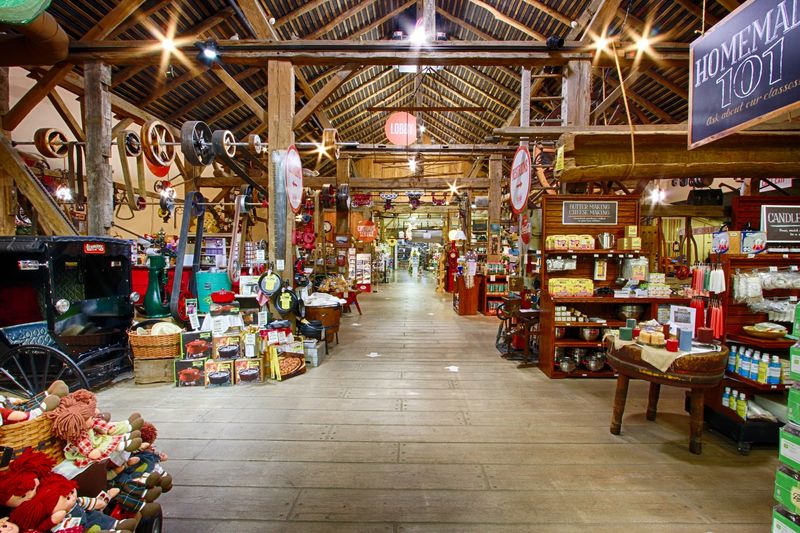
The plan was a quick stop for a soda and maybe a screwdriver. Two and a half hours later, I was still wandering past cast iron skillets, hand-cranked apple peelers, and shelves of glass lamp chimneys stacked like museum pieces.
There is a corner of Ohio’s Amish Country where an old-fashioned hardware store grew into something closer to a small village under one roof, and nobody warns you how easy it is to lose an afternoon inside. Bring comfortable shoes and a little pocket change, because the candy counter alone is worth the detour.
Where Kidron Sits On The Map
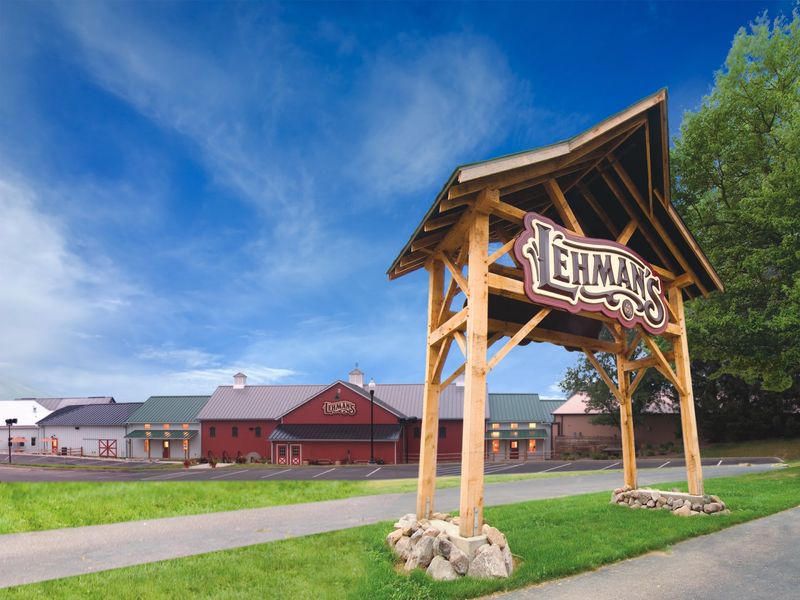
Kidron is not a city, not even a village in the official sense. It is an unincorporated community in Wayne County, northeast Ohio, sitting among rolling farm fields where horse-drawn buggies still share the road with pickup trucks.
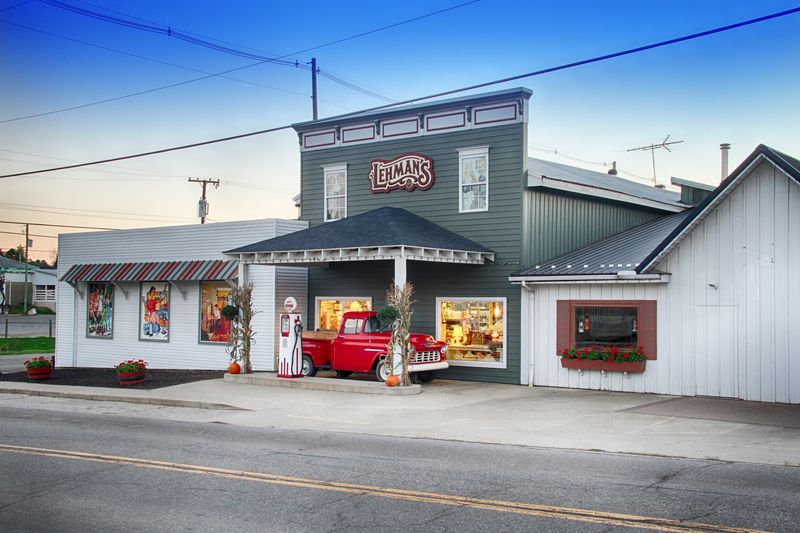
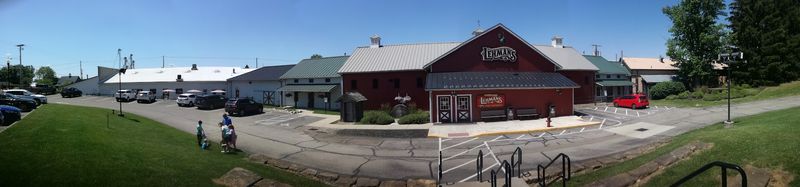
The store itself carries a Dalton mailing address, 4779 Kidron Road, which trips up plenty of first-time visitors typing into their phones. Look for the sprawling complex of connected buildings rather than a tidy storefront.
Getting there is straightforward from U.S. Route 30, the four-lane corridor running between Wooster and Canton.
From Cleveland, figure roughly an hour and fifteen minutes for about 58 miles. Columbus families are looking at close to two hours and 107 miles, while Cincinnati sits nearly four hours out.
What you find at the end of that drive is a home goods and hardware store of about 35,000 square feet, built for people who cook, can, garden, heat with wood, and generally prefer tools that work without being plugged in. It opened in 1955 to serve the surrounding Amish community, and that original mission still shapes the shelves.
A 1955 Idea That Kept Growing
Jay Lehman opened his hardware business in 1955 with a fairly narrow goal: stock the things his Amish neighbors actually needed, meaning goods that run without electricity. Wood cookstoves, hand pumps, oil lamps, non-electric washing machines.
Seventy years on, that inventory has grown in every direction, but the non-electric backbone never left. You can still buy a gas refrigerator or a wood heating stove here, alongside composting toilets and hand-crank grain mills.
Along the way the founder became a serious collector of antique tools and appliances, and rather than keeping them at home, he put them on display throughout the store. That habit is why shoppers keep describing the place as half retail floor, half museum.
Longtime customers will tell you the crowd has shifted over the decades. Plenty of Amish families now shop at smaller local hardware stores, while tour buses and road-trippers fill the aisles on Saturdays.
Some visitors miss the older, plainer version of the place.
Still, the bones are intact. The 2025 season marked the store’s 70th anniversary, and the founding idea remains legible on nearly every shelf.
Four Pre-Civil War Buildings, One Roof
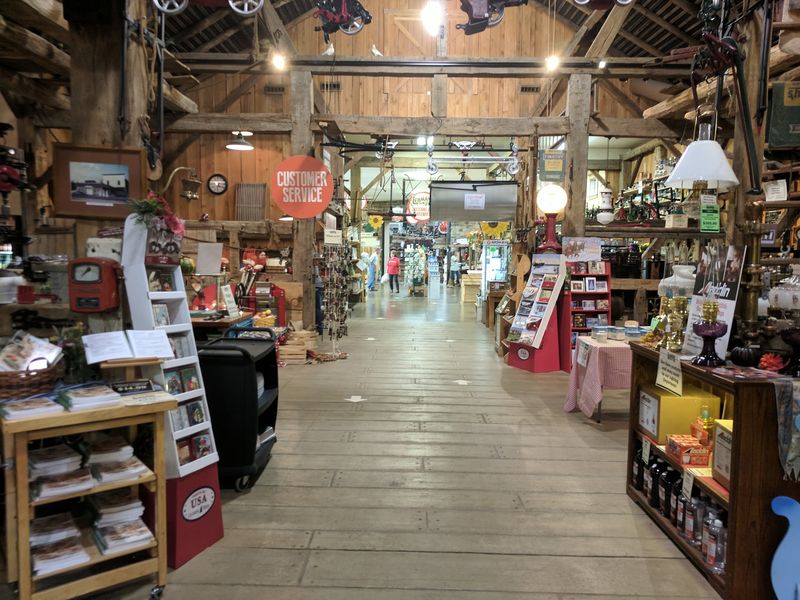
Walk the whole length of the sales floor and you cover close to a quarter of a mile. That figure surprises people who expect a normal hardware store footprint.
The reason is structural. Four separate pre-Civil War era buildings were joined together over the years, including a hand-hewn timber barn hauled over from Orrville, Ohio, and reassembled on site.
Look up and you can trace the old beams, the axe marks, the joints pegged rather than nailed.
Because of that patchwork origin, the layout does not follow a grid. Floors change level slightly, ceilings rise and drop, and each department feels like its own room instead of an aisle marker hanging from a metal truss.
Kids tend to love this part without being told to. Turning a corner and finding a completely different-looking space keeps young legs moving longer than any big-box store ever manages.
Repeat visitors mention spending two hours and still missing whole sections. If you want to see the barn structure properly, slow down in the areas where the ceiling gets tall and the wood goes dark with age.
The Lamp Room And The Aladdin Museum Of Light
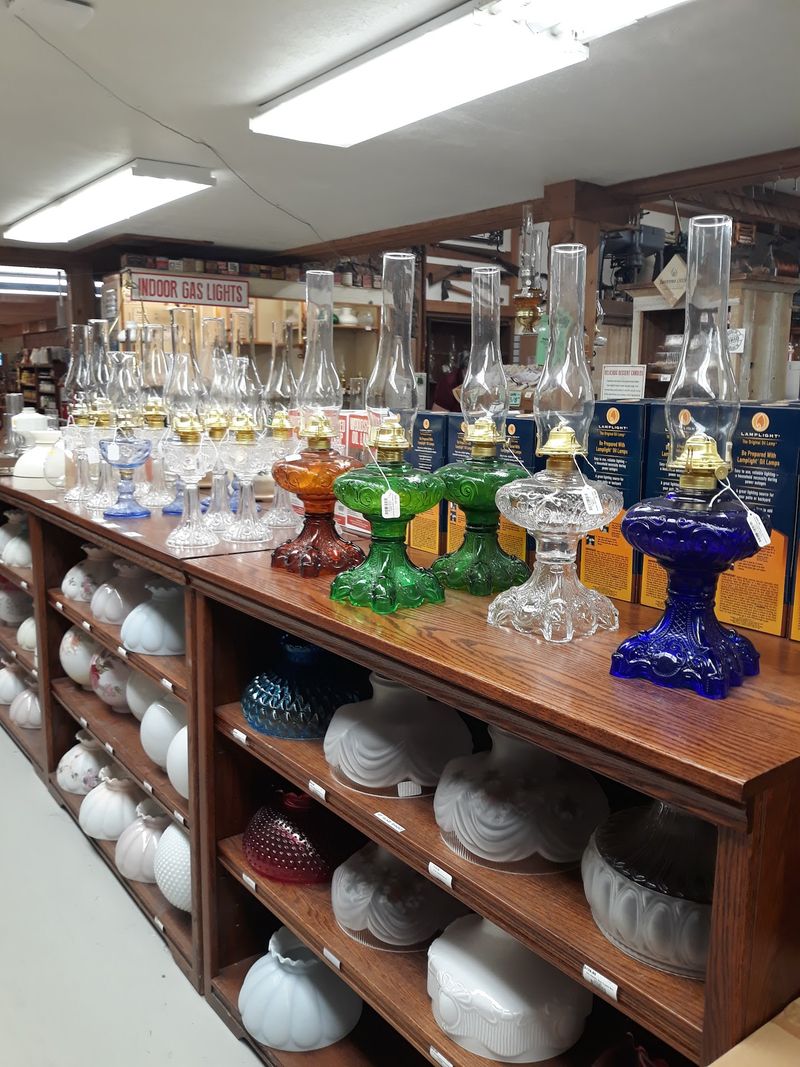
Shelf after shelf of glass chimneys, brass burners, wicks in a dozen widths, and squat kerosene lanterns in colors from cobalt to amber. The lamp department is the thing most first-timers photograph, and oil lamps come up constantly in what visitors talk about afterward.
It is genuinely functional stock, not decoration. Replacement mantles, lamp parts, spare globes, and fuel all live here, which matters to households that rely on flame for light during Ohio power outages.
Right next door sits the Aladdin Museum of Light, free to walk through. Aladdin mantle lamps have a devoted following, and the display traces how lighting evolved before the wall switch took over.
Give it ten or fifteen minutes even if lamps are not your thing. The progression from candle to lantern to mantle lamp is the kind of tidy history lesson that lands better in person than in any classroom.
Parents, a practical note: glass everywhere means this is a good spot to keep smaller hands occupied. Point them toward the colored globes and let them pick a favorite rather than touch.
Penny Candy, Fudge, And Glass-Bottled Soda
Ask a kid what they remember and it will not be the wood stoves. It will be the soda wall.
Glass-bottled pop lines up in flavors that range from familiar root beer and birch beer to oddities that make children dare each other to try them. Some bottles are kept refrigerated, so you can crack one open before you even reach the parking lot.
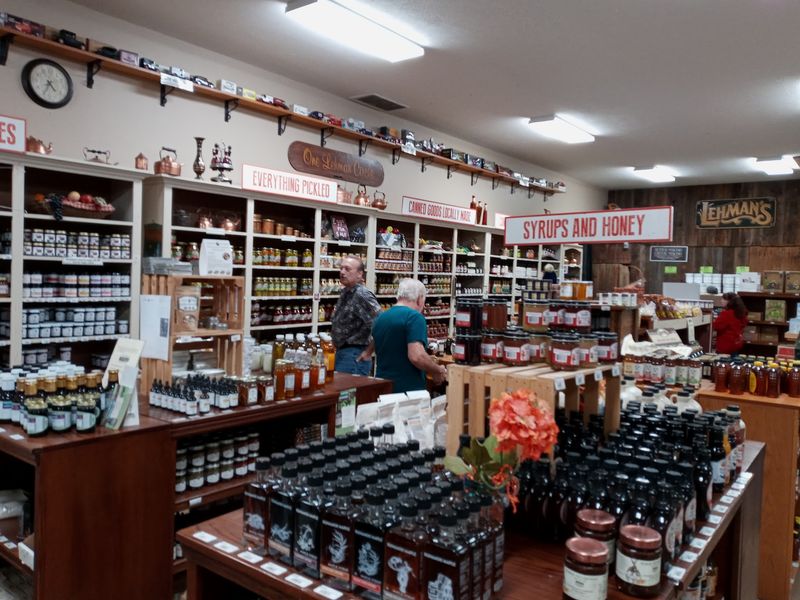
The pantry department leans heavily on Ohio-made goods: snacks, jams, savory staples, sweets, and old-fashioned sodas. Fudge is a repeat favorite among shoppers, sold by the piece from a case near the front of the operation.
Penny candy sits in jars and bins the way it did decades ago, which makes for a cheap, easy reward at the end of a long walk. A dollar or two goes further here than it does almost anywhere else in the building.
Snack samples turn up around the store, chips and dips and the like. Prices across departments run higher than discount retail, something shoppers do mention, so budget accordingly and let the candy counter do the heavy lifting with kids.
Wood Stoves, Water Pumps, And Off-Grid Gear
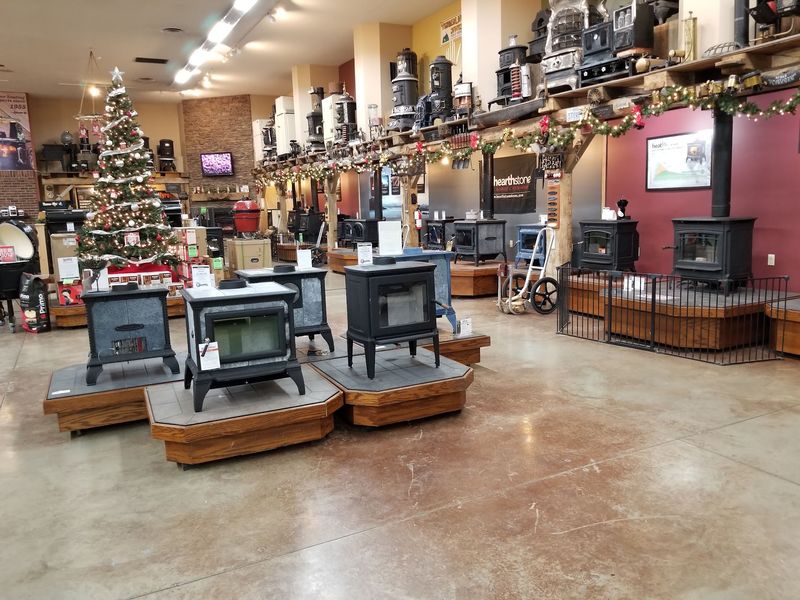
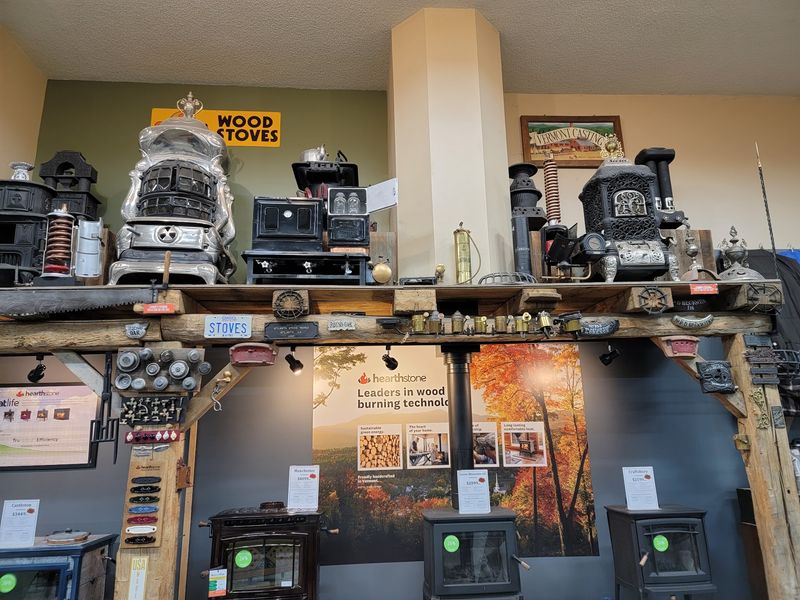
Cast iron wood cookstoves stand in rows, heavy enough that the floor seems to notice. Wood stoves are among the most-mentioned attractions in the whole place, and the collection of old stoves and iceboxes draws people who have no intention of buying one.
Alongside the antiques sits merchandise you can actually take home: gas refrigerators and freezers, hand water pumps, wood heating stoves, composting toilets, hand tools without a cord in sight.
Staff knowledge is a real asset in this department. Shoppers note that employees can explain how the water pumps work, how the canning equipment functions, and what a given stove needs to run properly.
Homesteaders and preppers show up for exactly this. So do people whose rural Ohio property loses power in February ice storms and who would rather not sit in the cold.
Curious kids get something out of it too, mostly the strangeness of a refrigerator that runs on propane or a washing machine you crank by hand. It is a quiet argument that convenience is a fairly recent invention, made entirely out of iron and brass.
Kitchen Tools For People Who Can And Preserve
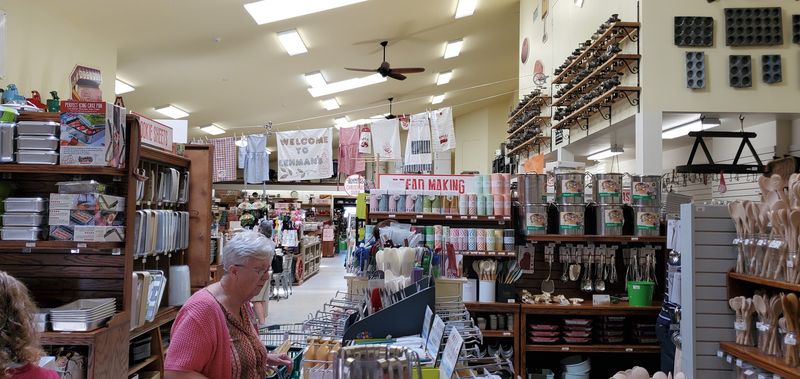
Canning season around here is serious business, and the kitchen department reflects it. Jars, lids, pressure canners, food mills, and every clamp and funnel the process demands.
Cast iron cookware fills whole shelves. So do hand-crank grinders, juicers, baking tools, cookie cutters, and gadgets whose purpose is not obvious until a staff member demonstrates.
One visitor came home with a little rubber mat that peels garlic, having had no idea such a thing existed.
Kitchen items rank among the most talked-about categories in the store, and it shows in the depth of stock. If you grow tomatoes in a Columbus backyard or keep a full garden in Wayne County, the tools for putting that harvest in jars are all in one room.
Ohio pottery turns up here as well, along with dish cloths, enamelware, and aprons.
Fair warning: this department is where budgets quietly expand. The gadgets are well-made and priced accordingly, higher than what you would pay at a discount chain, so decide before you walk in whether you are browsing or buying.
Antiques, Wood Carvings, And The What Is It Tour
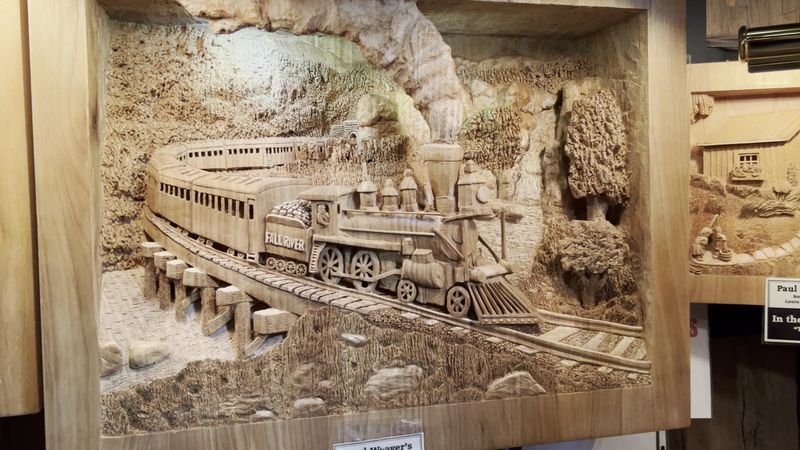
Hanging from walls and rafters throughout the buildings is the founder’s antique collection, thousands of implements whose original jobs are anybody’s guess. The store leans into that with a “What Is It?” tour, turning the mystery objects into a game.
There is also a scavenger hunt element that keeps kids scanning shelves instead of asking how much longer.
A wood carving gallery has become one of the standout stops. Shoppers describe the carved pictures as intricate enough to look alive, and the room comes with comfortable chairs and air conditioning.
If one member of your group wants to sit while everyone else keeps shopping, that is the spot.
Mini museums are scattered through the complex, so the line between merchandise and exhibit blurs constantly. More than one visitor has walked out saying it felt less like a store and more like a heritage collection that happens to sell things.
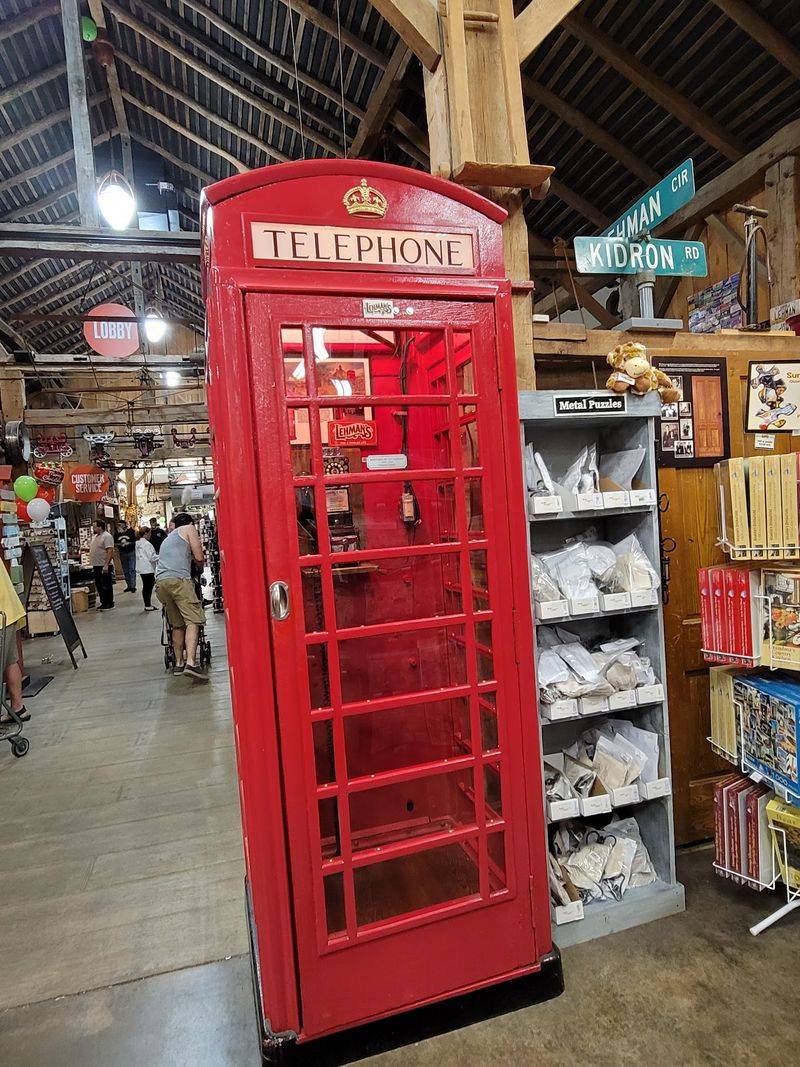
Photo op spots add to it: an authentic Amish buggy, a pre-Civil War era jail, and a classic red phone booth that actually places calls for a dime. A nine-year-old once used it to ring his father.
Old-Time Toys, Books, And Games
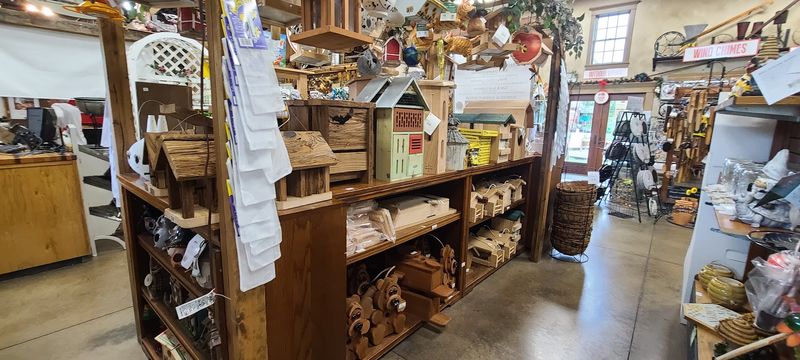
Marbles in mesh bags. Jacks.
Yo-yos with real string. The toy section skips batteries almost entirely, which is either refreshing or baffling depending on the age of your child.
Puzzles, board games, and children’s books share the space, and there is a solid shelf of cookbooks for the adults who wandered over. Handmade wooden items and simple mechanical toys round it out.
Families report that this corner buys them real time. One parent mentioned a nine-year-old staying engaged through a two-and-a-half hour visit and then coming back the next day, which is not the usual outcome at a hardware store.
Pair the toys with the candy counter and you have a reliable bargaining chip for the rest of the walk.
Gift shoppers use the section hard in November and December, since the whole store doubles as a place to find something for the relative who is impossible to buy for. Holiday weekends in Ohio Amish Country get busy, so if crowds bother you, aim for a weekday morning when the toy aisle is quiet and nobody is testing yo-yos next to your elbow.
The Tiny House On A Tiny Homestead
Just outside the main entrance sits a 200-square-foot house you can walk into. Built to demonstrate simple, practical living, it comes complete with a little homestead garden planted around it.
Step inside and the math of small-space living becomes obvious fast. Storage tucked under benches, a compact cooking setup, everything doing at least two jobs.
Kids treat it like a playhouse that happens to be real, and adults tend to linger longer than expected, mentally rearranging their own kitchens. A restroom sits nearby, which is handy if you have already spent an hour inside the store.
The garden shifts with Ohio’s seasons, so a June visit looks nothing like a late-October one. Spring brings seedlings and bare soil, midsummer fills the beds out, and by late fall it has mostly gone quiet.
Pairing the tiny house with the garden department inside makes for a decent lesson in where food comes from. Seeds, container gardening supplies, and hand tools all live in that department, so a curious kid can look at the demonstration beds outside and then go pick out a packet of seeds to try at home.
Lunch At The Cast Iron Cafe
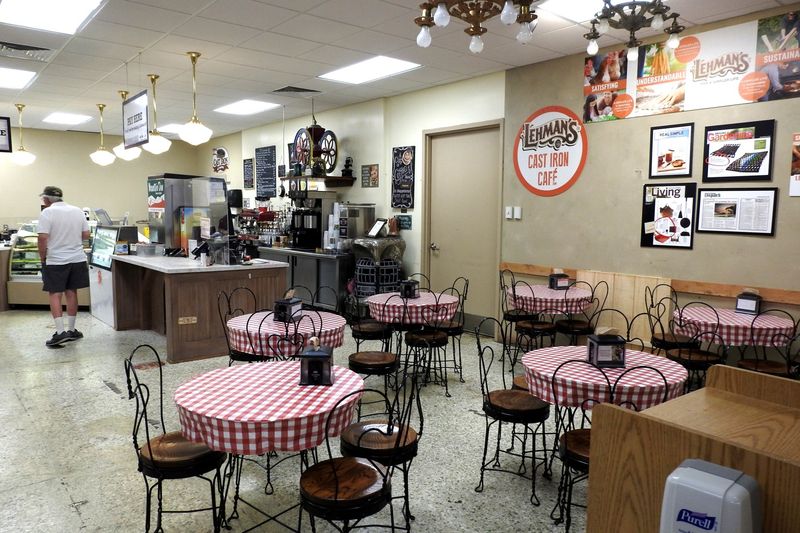
Hunger hits somewhere around the midpoint of the quarter-mile loop, usually right when a child announces it loudly. The Cast Iron Cafe handles that.
Located inside the store, it serves soups, salads, sandwiches, drinks, and desserts, with seating both indoors and out on a patio. Nothing complicated, which works in its favor when you are feeding a mixed group.
Picky eaters generally find a sandwich they can live with, and a cold glass-bottled soda from the pantry department makes a reasonable bribe for continued cooperation. Dessert is easy too, given the fudge case waiting nearby.
Restrooms get consistent praise from visitors for being clean and roomy, which is not a small thing when you are traveling with young kids in Wayne County farm country where the next option might be miles away.
Seating can fill up on Saturdays and during fall foliage season, when Amish Country traffic peaks. Menus and cafe hours may shift with the season, so treat lunch as a nice option rather than a guaranteed plan.
Outdoor tables are pleasant from roughly May through October and considerably less so in a Kidron January.
Hours, Parking, And Planning The Drive
Sundays are out. The store closes every Sunday, plus Thanksgiving, Christmas Day, and New Year’s Day, so build your Ohio weekend around a Saturday or a weekday.
Seasonal hours split the year. From June through December, doors are open Monday through Saturday, 9 AM to 6 PM.
January through May, it is 9 AM to 5 PM Monday through Thursday, then 9 AM to 6 PM on Friday and Saturday. Hours can change, so confirm before a long haul.
Free parking sits on both the west and east sides of the building, with designated bus parking too, since motorcoach tours are common in this part of Wayne County. Lots are paved and level enough for strollers.
Plan on at least two hours inside. Regular visitors routinely spend two and a half and still say they missed sections.
Saturdays and fall leaf season get crowded, and even weekdays can feel busy. From Cleveland it is roughly 58 miles via Route 30, Columbus about 107 miles, and Cincinnati closer to 211 miles, which makes it an overnight for southern Ohio families.
Who Should Make The Trip
Expectations matter here. Shoppers hunting the lowest price on a hammer will be frustrated, and some say so plainly: prices run high, and many items can be found cheaper elsewhere.
Come instead for the things you cannot get at a big-box store. Gas refrigerators, lamp parts, hand-crank kitchen equipment, Ohio pottery, a soda flavor you have never seen, a carved wood panel that took someone months.
Families do well because the building entertains kids without trying to. Between the phone booth, the buggy, the scavenger hunt, the tiny house, and the candy jars, there is enough novelty to stretch a visit past the usual attention span.
Homesteaders, canners, campers, and anyone curious about how households ran before wall switches will find the deepest reward. So will grandparents, who tend to narrate half the antique wall from memory.
It sits close enough to Cleveland and Akron for a day trip and makes an easy anchor for a longer Amish Country drive through Wayne and Holmes counties. Go on a weekday if you can, give yourself more time than seems necessary, and wear shoes built for walking.