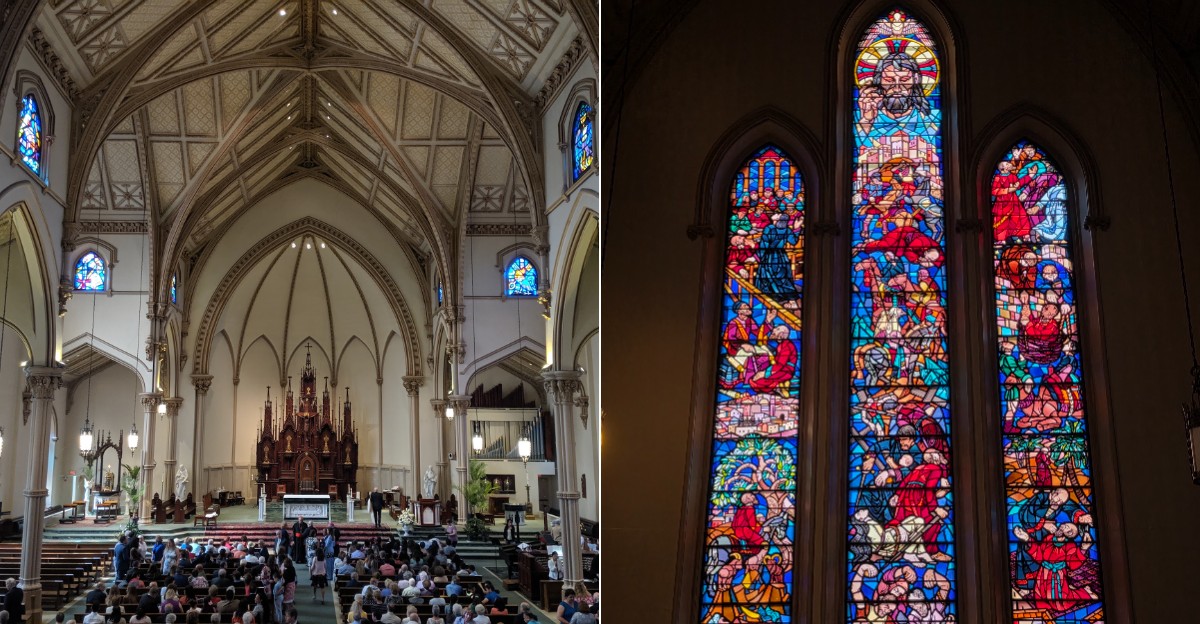
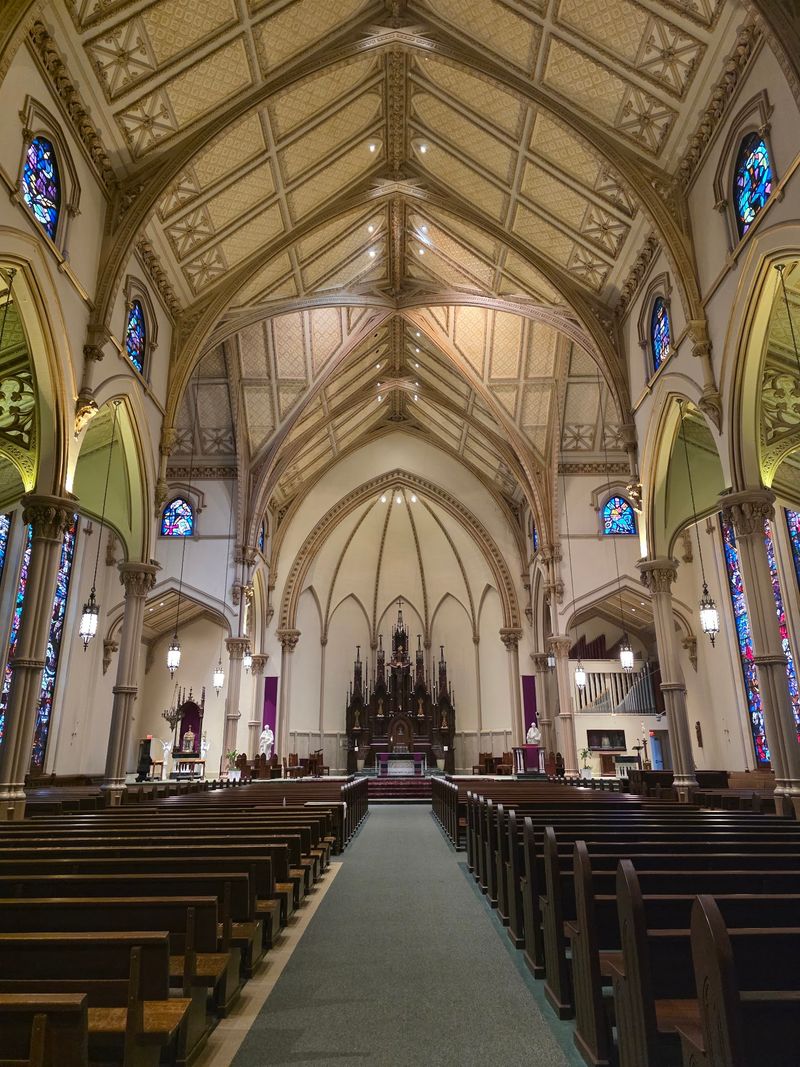
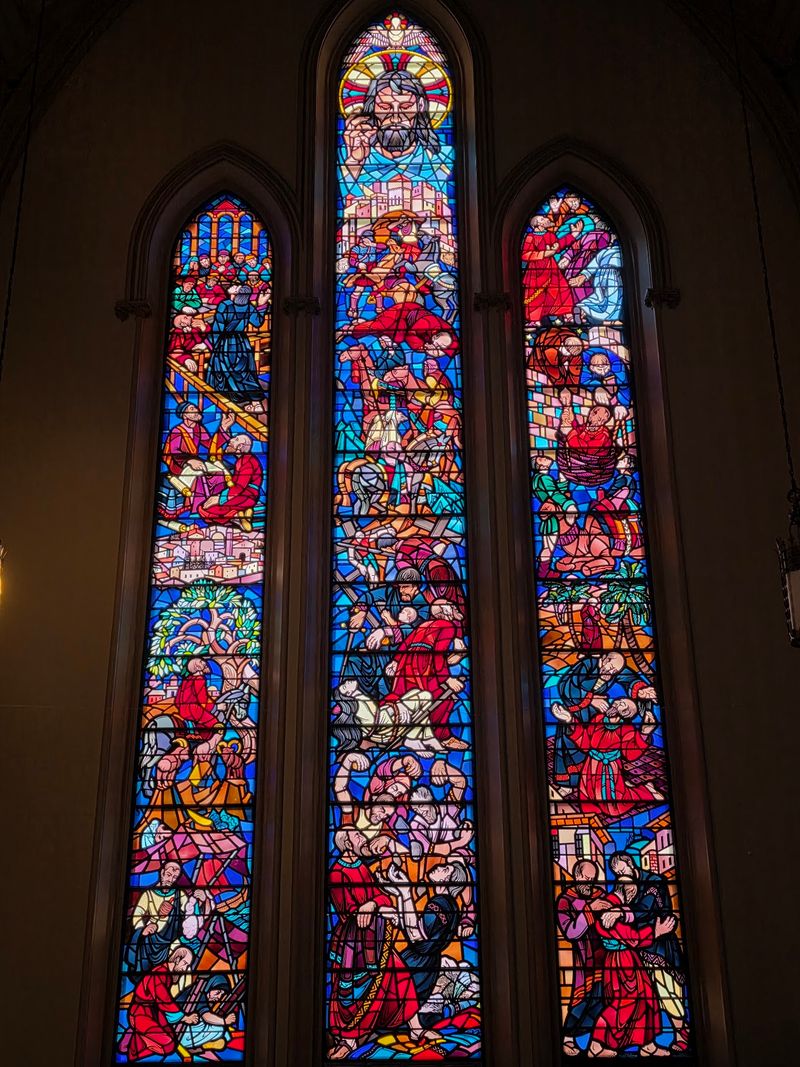
Ten stained glass windows, each a towering fifteen feet tall, tell one man’s life story. In every single scene, he’s dressed in red, like the glass wants you to find him fast.
Then there are two grand transept windows, one showing Paul’s conversion and the other his missionary journeys, plus fourteen more windows glowing high above the nave.
I love that a place this grand doesn’t charge a cent at the door. You simply walk in, tilt your head back, and let the glass do all the storytelling.
This beauty rises from rough granite in the heart of a busy Massachusetts city, and it took more than twenty years to finish. So how many stories in the glass can you spot before you head back outside?
Admission Costs Nothing, But The Colors Feel Priceless
Free is a lovely word, and it fits the Cathedral of Saint Paul perfectly. There’s no ticket booth here, just open doors and a sanctuary glowing with stained glass.
The building became the mother church of the Roman Catholic Diocese of Worcester in 1950. Soon after, the diocese’s first bishop, John J.
Wright, commissioned new windows for almost the entire church.
That 1950s project gave the interior its rich, jewel-toned personality. Nearly every wall seems to hold a story told in colored light.
Your visit can be as short or as long as you like. A ten-minute pause from a busy day works, and so does an hour spent studying details.
Because it’s an active cathedral, a little courtesy goes a long way. Keep your voice low, silence your phone, and remember that people come here to pray.
Sunny days are a smart pick for your trip. Daylight pouring through the glass makes the colors pop in ways a cloudy afternoon can’t match.
Bring a curious mind and a small notebook. Jotting down which scenes you recognize turns the visit into a fun, quiet scavenger hunt.
Kids can join in too, counting colors or picking a favorite window. It’s an easy, low-cost outing that still feels like a real adventure.
Massachusetts has plenty of grand old churches, but few let the glass carry this much of the show. Free entry just makes the deal even sweeter.
Spot The Apostle In Red As His Life Story Unfolds
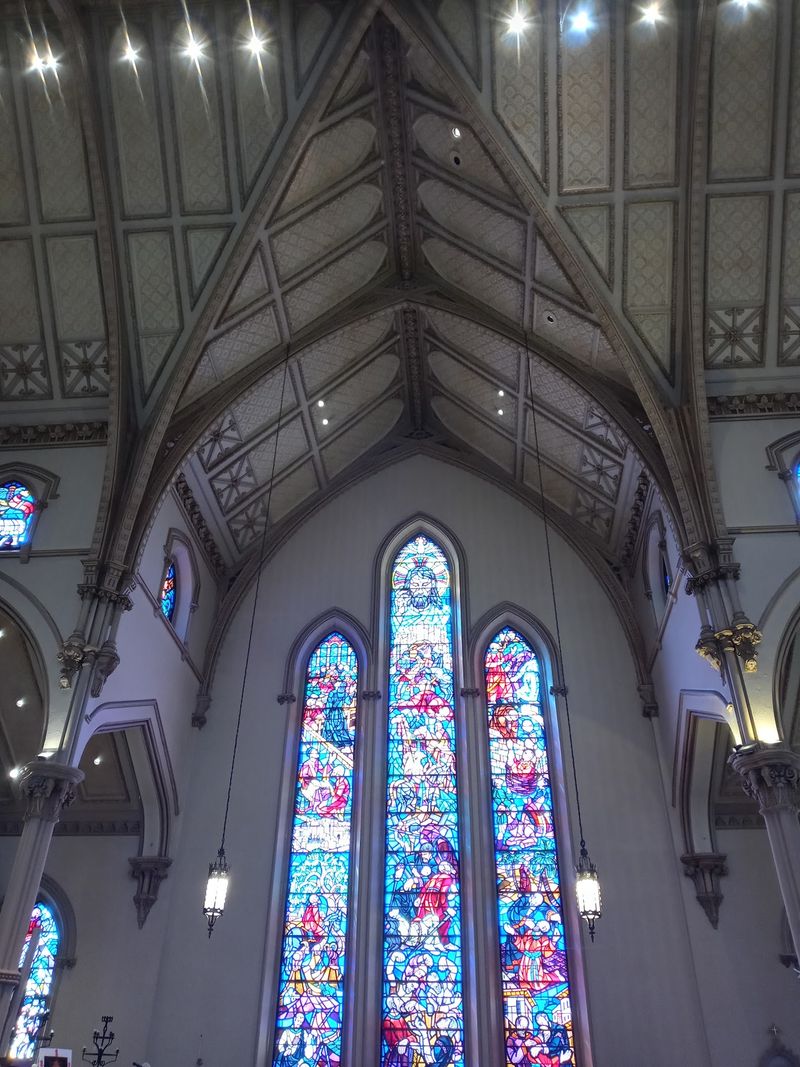
Red is the secret code here. In ten magnificent windows, each fifteen feet tall, Saint Paul appears in red garments every time.
Those windows line the sanctuary and nave of the Cathedral of Saint Paul. Each one captures a different event from the life of the apostle the church is named for.
The steady color choice works like a trail of breadcrumbs. Once you notice it, your eyes start hunting for him in every panel.
Start at one window and move slowly from scene to scene. You’ll feel like you’re paging through a giant illustrated book made of glass.
Paul’s story is full of travel, letters, and big turning points. Seeing those moments in glowing color makes them easier to picture and remember.
A fun challenge works great for families. Whoever spots Paul first in each window gets to choose the next scene.
Want a closer look? Small binoculars can reveal faces, hands, and folds of fabric that are hard to see from the pews.
The windows also make a great lesson in visual storytelling. Artists had to show an entire moment without a single caption, just color, pose, and setting.
Take your time with each panel before moving on. These windows pay back patience, and new details keep showing up.
Afternoon light shifts the mood of each scene as the sun moves. A second lap around the nave can feel like seeing a brand-new show.
Transept Windows Capture Paul’s Biggest Moments
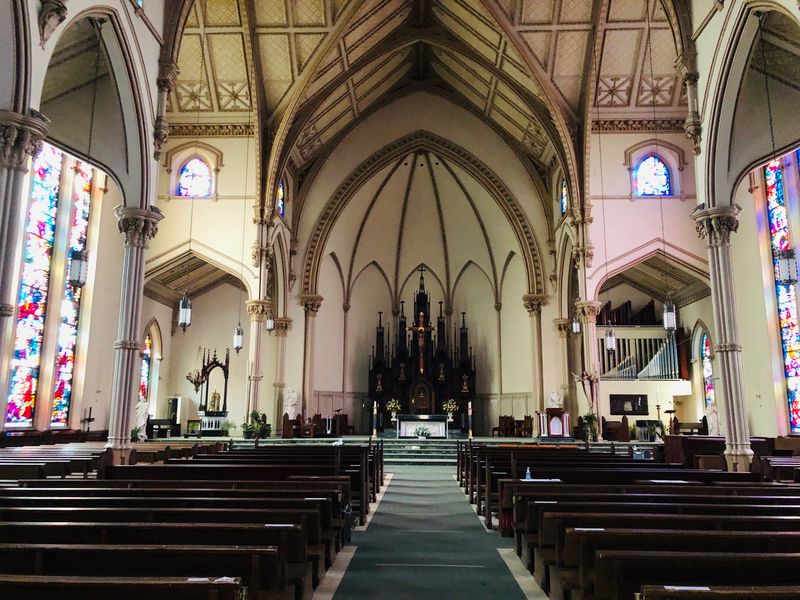
Look toward either transept, and two of the cathedral’s biggest scenes come into view. These large windows focus on the turning points of Paul’s life.
On the right, near the baptismal font, the Conversion Window shows the moment that changed everything for him.
On the left, near the tabernacle, the Missionary Window follows him out into the world to share his message.
True to the rest of the church, Paul wears red here too. Once you spot him, the whole story clicks into place.
The windows were designed by Clare Leighton, a noted artist and wood engraver. Boston’s O’Duggan Glass Studio turned her designs into glowing glass.
Now tilt your head way back. Fourteen clerestory windows, each about six feet tall, run high above the nave.
They show the Twelve Apostles, John the Baptist, and Saint Stephen, each with a classic symbol to help you name them.
John the Baptist is paired with the Lamb of God, while Stephen holds a palm and a censer.
Before you leave, glance toward the choir loft. Windows from 1950 show angels set against deep blue backgrounds.
If photos are allowed during your visit, try a wide shot from the center aisle. Catching a transept window and the high clerestory glass together makes a stunning keepsake from your Massachusetts trip.
Rough Granite Walls Give This Church Serious Castle Energy
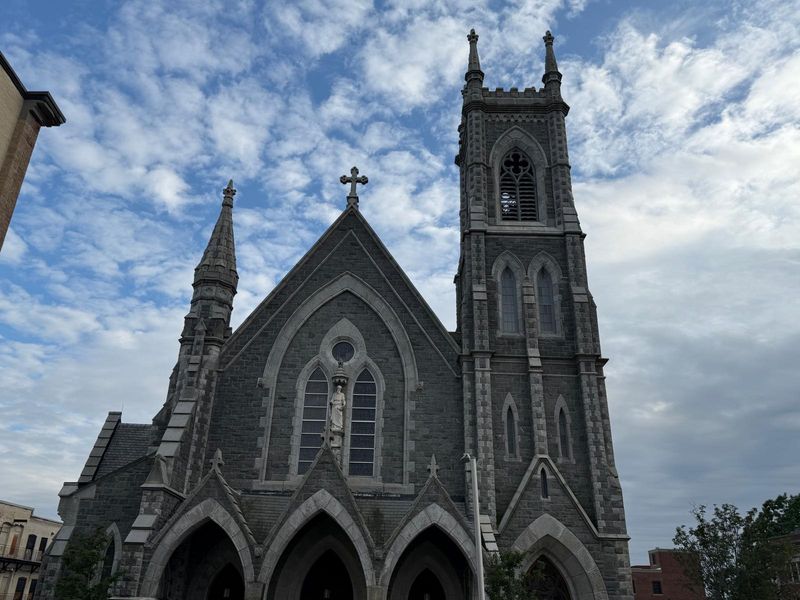
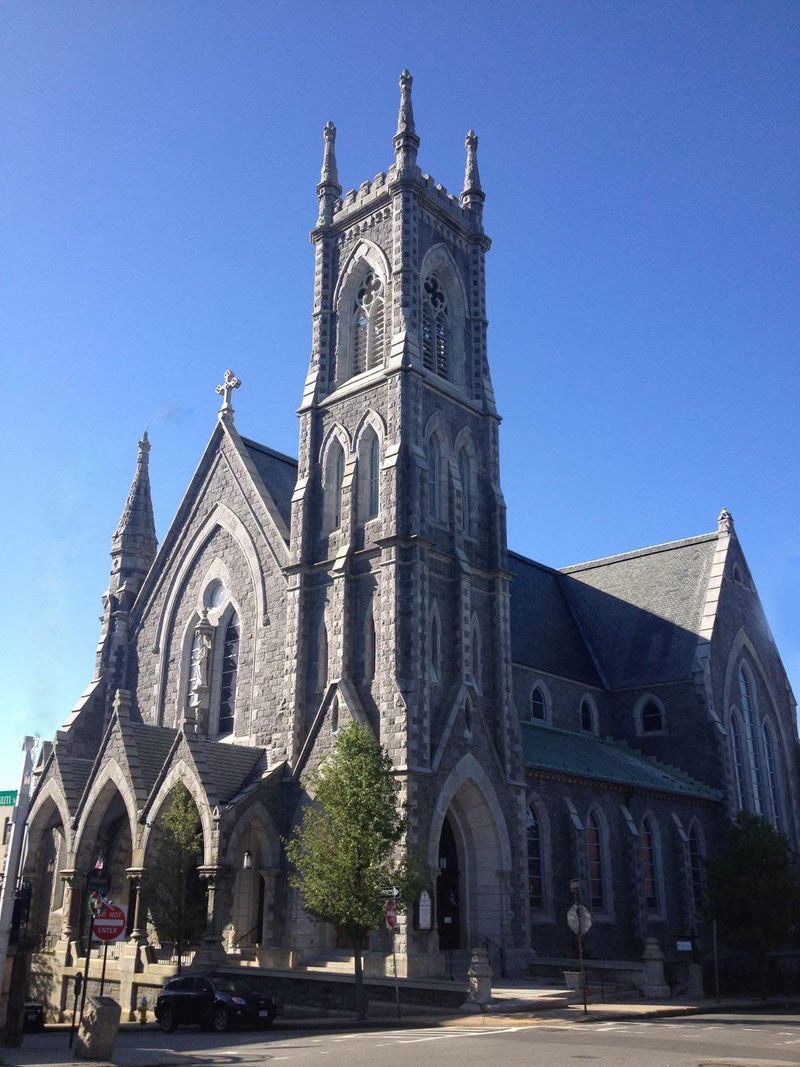
Granite blocks with a rugged, rock-faced finish make up the outer walls. The result looks sturdy enough to stand for centuries, and it’s already well past one.
The Cathedral of Saint Paul is a fine example of Victorian Gothic architecture. Builders worked on it between 1868 and 1889, so patience was clearly part of the plan.
The design came from E. Boyden and Son.
Their plan uses a cruciform layout, meaning the building forms the shape of a cross from above.
Out front, look for pointed Gothic arches over the entrances. A steep roofline pulls your eyes upward, just like the windows inside do.
Two towers frame the facade, and they don’t match. One is a tall square tower, while the other is smaller and topped with a round turret.
That uneven pairing gives the building plenty of character. It feels less like a cookie-cutter design and more like a storybook fortress.
In 1980, the cathedral was listed on the National Register of Historic Places. That’s a big deal for any building, and it helps protect this landmark’s story.
Give yourself a few minutes on the sidewalk before heading inside. The exterior sets the stage, and the contrast with the colorful interior is half the fun.
Snap a photo from across the street to fit both towers in the frame. It makes a great opening shot for your trip album.
Marble, Carvings, And Ten-Foot Saints Guard The Altar
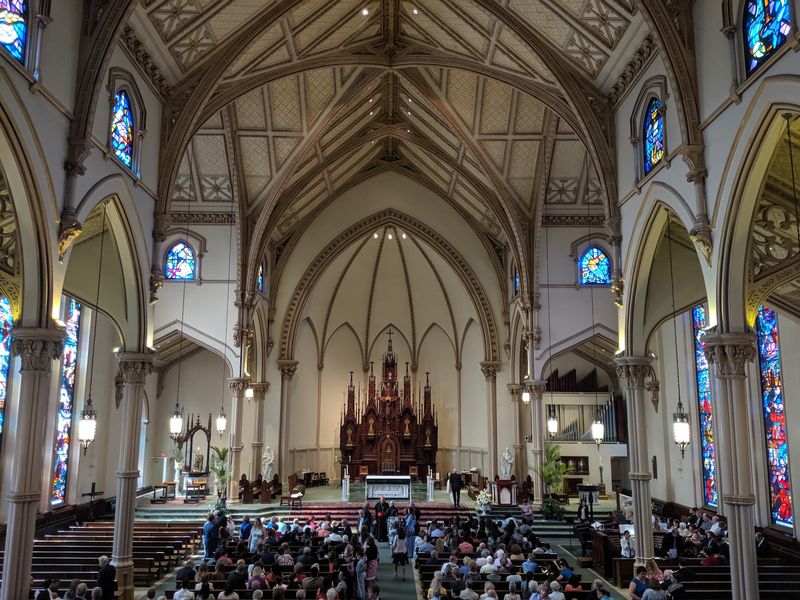
Green and white marble shines at the center of the sanctuary. The altar was installed in 1996, making it one of the newer pieces in this historic space.
Its front holds a white bas relief of the Last Supper. That carving was saved from an earlier altar dating to 1904, so old and new sit side by side.
Above the main altar hangs a grand crucifix with a fascinating backstory. The carved figure of Christ came from Bavaria, while the cross itself was made right in Worcester.
It’s a neat mix of European craftsmanship and local skill. Two places, one powerful centerpiece.
Flanking the sanctuary are two marble statues, each about ten feet tall. Saint Paul stands on the right, holding a sword and a book of his Epistles.
Saint Peter takes the left side with a book and the keys entrusted to him. Together, they look like a pair of very calm guardians.
The sword and keys are classic symbols in Christian art. Paul’s sword is his traditional emblem, and Peter’s keys point to the keys of the kingdom of heaven.
Younger visitors may enjoy comparing the two statues. Ask them to find the sword, the keys, and both books.
Find a seat in a pew and take in the whole scene at once. Marble, carving, and glass all work together from that spot.
Quiet Corners Are Waiting In Every Direction
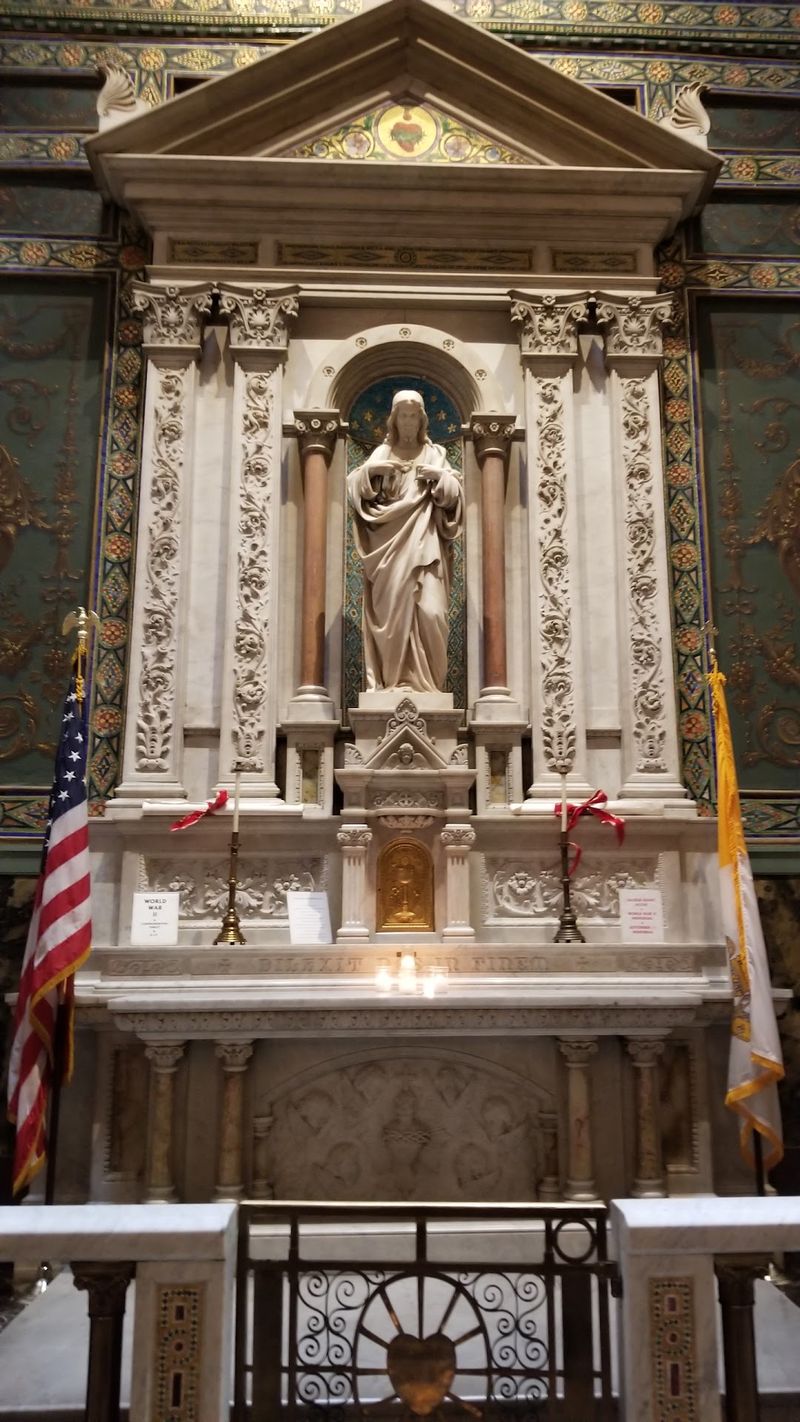
Not every treasure here sits in the main spotlight. Several shrines and side chapels offer smaller, more personal spaces to pause.
Near the front, the Blessed Virgin Mary Shrine features statues of Mary and Saint Joseph. It’s a peaceful spot for anyone who wants a moment of reflection.
Head to the back of the Cathedral of Saint Paul for two more shrines. One honors Our Lady of Guadalupe, a beloved image across Latin America.
The other is dedicated to the Divino Niño and Saint Josephine Bakhita. Saint Josephine Bakhita was born in Sudan and is widely loved for her gentleness.
Those shrines reflect the diverse community that worships here. Masses are offered in both English and Spanish, which fits right in.
Beside the confessional, a Divine Mercy shrine honors Saint Faustina Kowalska, a beloved Polish saint.
To the left of the sanctuary, the tabernacle rests in its own shrine, added in 1996, while the baptistery sits to the right.
With saints from Latin America, Africa, and Europe all honored nearby, a short walk feels like a trip around the world.
Light a candle if that’s part of your tradition, or simply sit for a while. Either way, these corners offer a calm break from the busy city outside.
A Grand Story That Started In A Basement
Back in 1866, Father John Power received permission to buy land for a new church. Two years later, crews broke ground at the corner of Chatham and High Streets.
By 1869, the first services were already happening in the basement. The congregation clearly didn’t want to hold off until the upstairs was finished.
Most of the main structure came together between 1874 and 1875. Still, the job wasn’t truly done until the bell tower was completed in 1889.
That’s more than twenty years from first shovel to final tower. Just think about telling your grandkids you helped build a church that took two decades!
For years, the building served as a parish church called Saint Paul’s. Then, on March 7, 1950, everything changed.
That day, it became the cathedral of the newly created Roman Catholic Diocese of Worcester. In other words, it turned into the mother church for the whole region.
Soon after came the new stained glass windows that visitors admire today. So the glass you see is tied directly to this big promotion.
History buffs will love connecting the dates to what they see. The granite walls speak to the 1860s, while the glass speaks to the 1950s.
Massachusetts is packed with historic sites, but this one still serves its original purpose every week. It’s a living landmark, not a museum piece.
Read up a little before you go. Knowing the timeline makes every arch and window feel richer.
Plan A Colorful Downtown Stop In Worcester
Getting here is easy, especially if you’re already exploring downtown Worcester. The Cathedral of Saint Paul sits at 38 High St, Worcester, MA 01609.
It’s within walking distance of City Hall and the Federal Courthouse. That makes it a simple add-on to a day of wandering the city.
Remember that this is a working cathedral with a full schedule. Masses are offered in English and Spanish, along with times for confession and adoration.
Visiting hours can shift, so check the cathedral’s latest schedule before you go. A quick look ahead helps you arrive when the doors are open and the sanctuary is calm.
Everyone is welcome, whether you’re Catholic or simply curious. Dress comfortably but respectfully, as you would for any house of worship.
Plan for a sunny day if you can. The windows glow brightest with daylight behind them, and the transept windows really come alive.
Give yourself at least an hour so you don’t feel rushed. The windows, chapels, and statues all deserve a proper look.
Pair your visit with a stroll around downtown or a meal nearby. It turns a quick look into a full Massachusetts day trip.
Free entry, granite towers, glowing transept windows, and an apostle dressed in red make quite a lineup.
Before leaving, take one last glance back at the glass. It might just pull you back for a second visit someday.