
10 Massachusetts Day Trips Under Two Hours From Springfield Where You Can Park Once And Explore On Foot
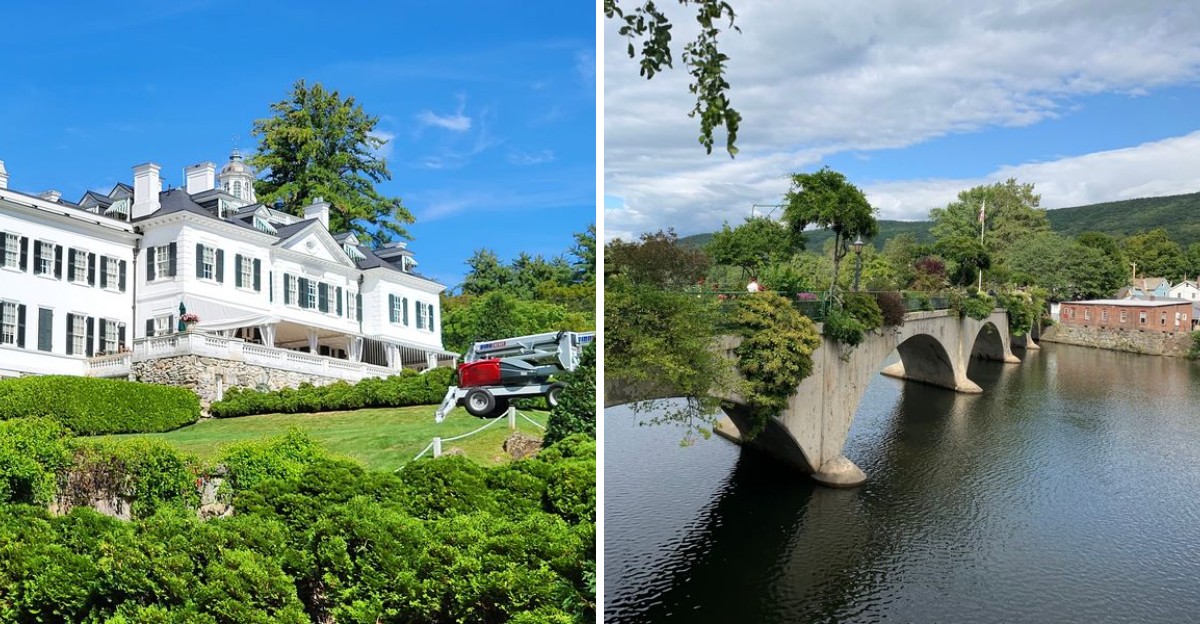
What if a day trip could feel full without spending half of it behind the wheel?
Massachusetts gives Springfield travelers a strong mix of places where the car can stay parked while the exploring keeps going. Historic streets, art museums, old estates, gardens, river paths, and walkable cultural districts all fit within a two hour drive.
That means more time actually seeing things.
You can spend hours wandering museum grounds, following paths beside the water, browsing old town centers, or moving between historic buildings without checking the parking meter every twenty minutes.
The best part is the variety. A trip might center on massive contemporary art galleries, a living history village, a flower filled bridge, or a quiet estate surrounded by gardens and trails.
The car can sit exactly where you left it while the rest of the day gets far more interesting.
1. Old Sturbridge Village
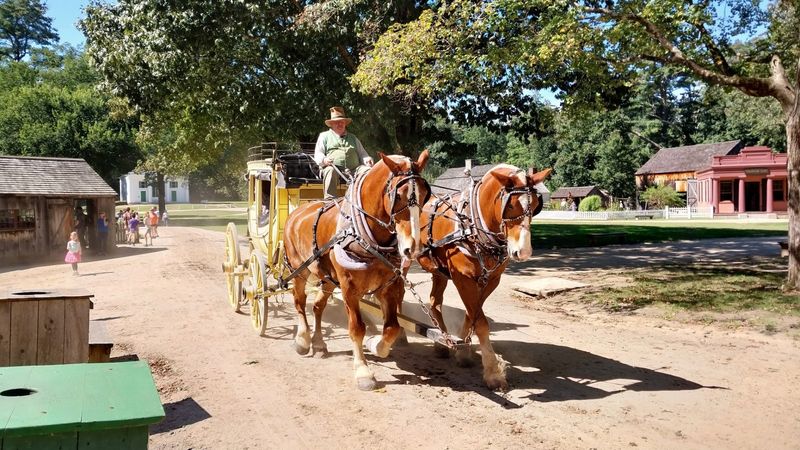
Time travel is usually expensive. Here it costs a half hour of driving from Springfield and a parking spot in Sturbridge.
Old Sturbridge Village is New England’s largest outdoor living history museum, spread across more than 200 acres. The site recreates rural life between 1790 and the 1830s with roughly 40 to 59 antique buildings.
Homes, a meetinghouse, a district school, a country store, and a bank line the common. Three water-powered mills still turn.
Costumed historians handle blacksmithing, pottery, and printing while you watch from a few feet away.
Three marked paths keep your legs busy. The River Walk follows the Quinebaug River past the Wight Family Dam, where great blue herons and mallards often appear.
The Pasture Walk explains how families used their land. The Woodland Walk shows evidence of glaciers that shaped the ground long before anyone farmed it.
Keep an eye out for the Vermont Covered Bridge, the beehive beekeeping hut, and the Clock Gallery. Heritage breed animals wander the working farm.
Hunger arrives eventually. Bullard Tavern serves cafeteria-style hot lunches in a 19th-century room, including clam chowder, chicken pot pie, and macaroni and cheese.
Ox and Yoke Cafe leans lighter with pastries, soups, and salads. The Scoop Shop handles New England ice cream in season.
Open-hearth cooks also prepare dishes from historical receipts, like stewed beans left to simmer overnight.
2. Historic Deerfield
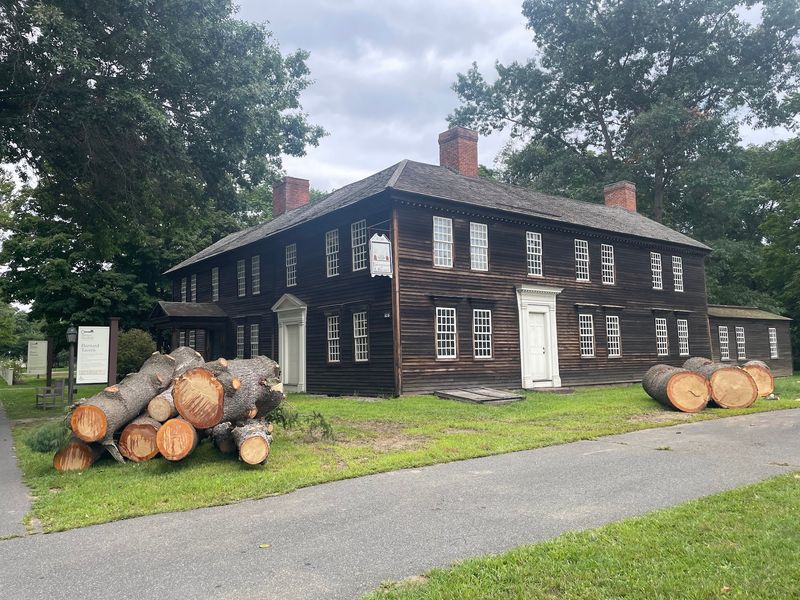
A single street can hold 330 years of stories. Deerfield proves it, about 35 minutes north of Springfield in the Pioneer Valley.
The mile-long Main Street was laid out in 1671 and still runs beside the Deerfield River. Eleven or twelve historic house museums sit mostly on their original sites, dating from 1730 to 1850.
Inside those houses live roughly 28,000 household artifacts. Furniture, textiles, ceramics, silver, and pewter fill room after room without ever feeling like a warehouse.
The Flynt Center of Early New England Life rotates exhibitions of paintings, textiles, and decorative arts. Guided outdoor tours cover architecture, the burying ground, and general town history.
Prefer your own pace? Self-guided maps focus on the Pocumtuck Native homeland, the English settlement, and the 1704 raid.
The Channing Blake Footpath is the quiet favorite. It passes a working farm and crosses meadows toward the river, with panels on geology and local history along the way.
Sheep and cattle often graze within easy view. Cook’s Garden hosts demonstrations on plants and open-hearth methods used in the 18th and 19th centuries.
The First Church of Deerfield, a brick landmark from 1824, anchors the street beautifully.
Champney’s Restaurant and Tavern inside the Deerfield Inn handles lunch and dinner. Yankee pot roast, pan-seared scallops, and butternut squash ravioli lead the menu, with Indian pudding waiting at the end.
3. Shelburne Falls And The Bridge Of Flowers
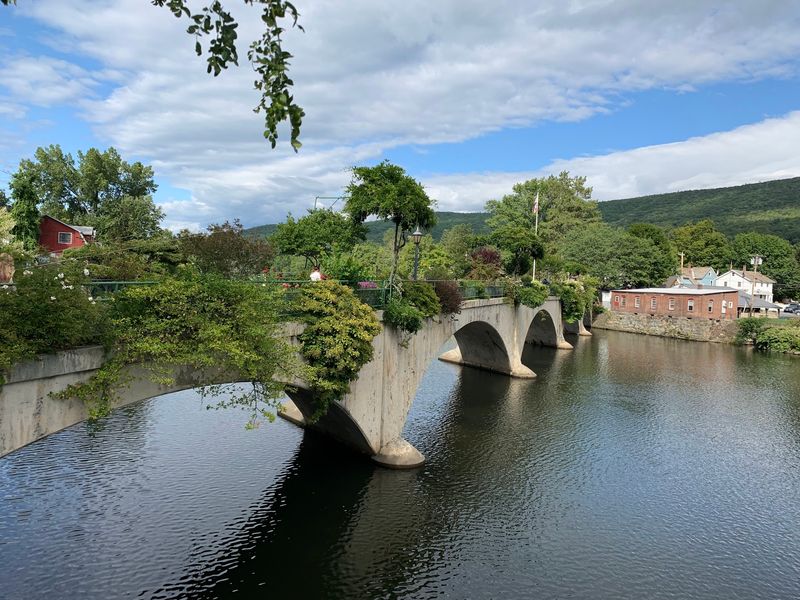
Most retired bridges rust quietly. One in western Massachusetts decided to become a garden instead.
The Bridge of Flowers stretches 400 feet across the Deerfield River, linking the towns of Shelburne and Buckland. Open from April 1 through October 30, it holds hundreds of varieties of trees, shrubs, perennials, vines, and annuals.
Plantings are arranged for continuous bloom, so there is no bad month to visit. Views from the deck take in the river, the mountains, and the village rooftops.
Roughly 50 minutes from Springfield along the Mohawk Trail, the village rewards slow wandering. Brick and stone buildings house galleries, coffee shops, and small stores under Victorian details.
Down by Salmon Falls sit the Glacial Potholes, 50 natural pools carved by meltwater after the last Ice Age. They range from six inches to 39 feet across, and an overlook makes viewing simple.
Mosaic murals turn up in unexpected corners. The Shelburne Falls Trolley Museum runs rides on Trolley 10, the last survivor of the Shelburne Falls and Colrain Street Railway.
Ambitious walkers can climb toward High Ledges Wildlife Sanctuary or Mount Massaemett for three-state views from a historic fire tower.
Eating is easy here. The Blue Rock Restaurant serves New American fusion with river views, Baked handles scratch-made breakfast and pies, and Mocha Maya’s Coffee House displays local art.
4. MASS MoCA And Downtown North Adams
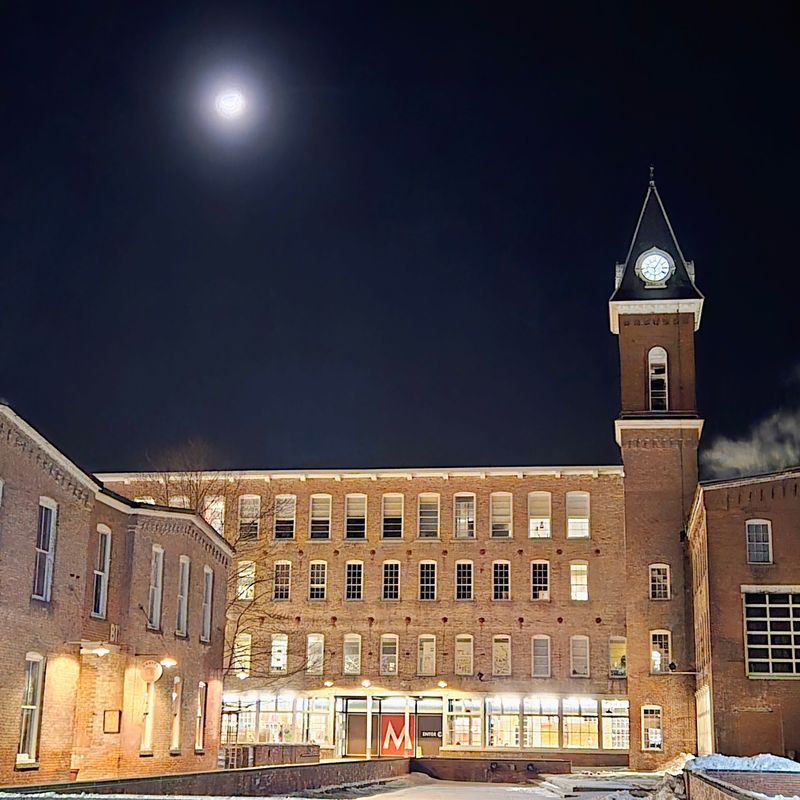
Thirteen acres of old factory, now filled with art big enough to walk through. That is the short version of North Adams.
MASS MoCA occupies the former Arnold Print Works complex, which operated from 1860 to 1942. Renovated 19th-century brick buildings hold well over 200,000 square feet of naturally lit gallery space.
Scale is the point. Immersive installations by James Turrell, a sprawling Sol LeWitt wall drawing retrospective, and works by Laurie Anderson and Louise Bourgeois fill rooms that dwarf ordinary museums.
Guided public tours run daily. Concerts, films, and festivals like FreshGrass and Bang on a Can keep the campus busy all year.
Outdoor sculpture spills across the grounds, and the Northern Berkshire Art Outside tour maps more of it through North Adams and Williamstown.
Beyond the gates, the North Adams Cultural District is compact and easy on foot. Record stores, bookshops, and independent businesses line streets famous for their church steeples.
Natural Bridge State Park sits just outside downtown with a white marble arch and a trail to Cascade Waterfall. Mount Greylock, the state’s highest point, rises nearby for anyone with extra energy.
Lickety Split inside the museum serves sandwiches, soups, and ice cream. Casita handles tacos at lunch and regional Mexican dishes at dinner, while Jack’s Hot Dog Stand has been feeding the city since 1917.
5. The Mount
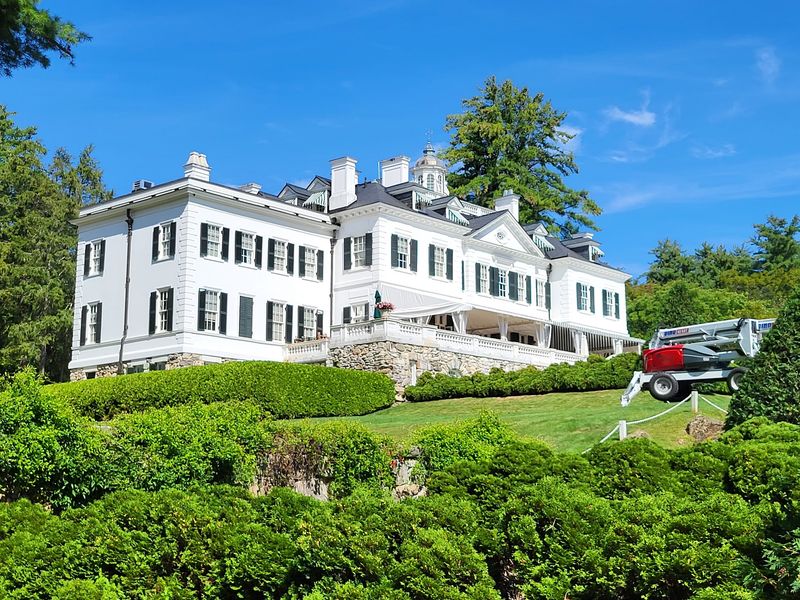
Edith Wharton wrote about houses before she built one. In 1902 she designed her own in Lenox, roughly 55 minutes from Springfield.
The Mount became a National Historic Landmark in 1971 and now runs as a cultural center. Tours cover the mansion and the grounds, and visitors move freely through the restored rooms.
Inside, a grand entrance hall opens toward the drawing room and dining room. Her library still holds many original books and manuscripts.
Every space follows the principles from her book The Decoration of Houses. Symmetry, proportion, restraint, and floods of natural light rule the place, with French and Italian classical influence throughout.
Wharton designed the gardens too, treating them as outdoor rooms. An Italian walled garden, a formal flower garden, a rock garden, a lime walk of pleached lindens, and rolling grass terraces connect in sequence.
Miles of trails run through woods and meadows past rock outcroppings and glacial moraines. Guided In the Footsteps of Edith walks mix readings from her writing into the route.
Contemporary outdoor sculpture rotates across the estate each season. The Backstairs Project kitchen exhibit includes a replica 1905 stove and period items from the household side of life.
The seasonal Terrace Cafe overlooks the gardens with salads, sandwiches, light bites, and fruit and cheese plates. Picnicking anywhere on the lawns is encouraged.
6. Hancock Shaker Village
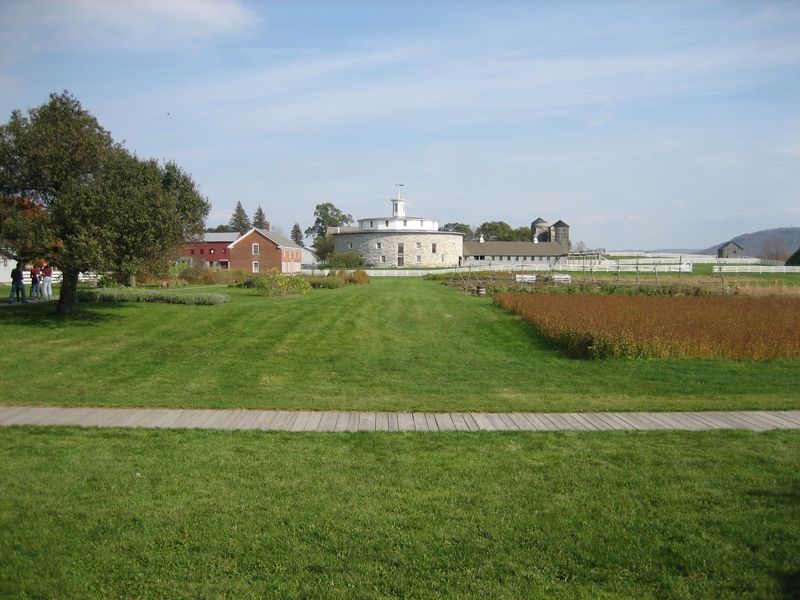
A round barn sounds like a joke until you stand inside one. The 1826 Round Stone Barn here was built for pure efficiency, and it still impresses.
Hancock Shaker Village spans Hancock and Pittsfield on Route 20, about an hour and change from Springfield. The Shaker community formed in the late 1780s and remained active until 1960.
The museum opened in 1961 and now protects 20 authentic buildings across 750 acres of farm, pasture, and woodland. The whole site is a National Historic Landmark District.
Inside the Brick Dwelling, 50 room settings show daily communal life. A reconstructed infirmary sits near a Please Touch Room built for hands-on curiosity.
The working farm keeps heritage breed sheep, pigs, cattle, and poultry. Heirloom medicinal and produce gardens explain what the Shakers grew and why.
Educators demonstrate basket-making, oval box-making, blacksmithing, spinning, weaving, chair-seat weaving, and woodworking. The Discovery Barn from 1910 lets kids spin wool and try a simulated milking.
Outside, the one-mile Farm and Forest Trail loops through pasture and woods with interpretive panels and grazing cows. A longer six-mile trail climbs toward Mount Sinai and Berkshire views.
The Village Cafe opens daily with items like Shaker brown bread, grain salads, a chickpea sandwich called The New Believer, and blueberry pie.
7. The Clark Art Institute
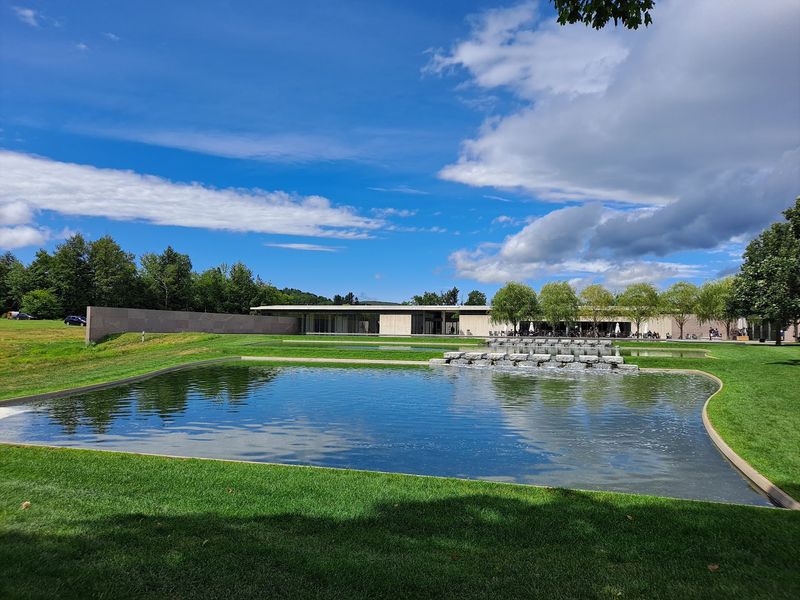
Renoir and a hilltop hike on the same ticket feels like cheating. Williamstown allows it anyway.
The Clark Art Institute sits on South Street, half a mile south of where Routes 2 and 7 meet. The drive from Springfield runs close to an hour.
Collections cover European and American paintings, sculpture, prints, drawings, photographs, and decorative arts from the fourteenth century into the early twentieth. The nineteenth century gets the spotlight.
Impressionist works by Renoir, Degas, and Manet share the galleries with Winslow Homer, Mary Cassatt, George Inness, and John Singer Sargent. Guided tours of the permanent collection run weekly, and twice daily in July and August.
Then there is the land. The campus covers 140 acres of lawns, meadows, and trails that stay open to the public at all hours.
Paths climb historic Stone Hill for panoramic views toward the Green Mountains of Vermont. Seeing every outdoor installation takes roughly two hours and about two miles.
A three-tiered reflecting pool anchors the redesigned campus and doubles as part of a water management system. Tadao Ando designed both the Clark Center and the Lunder Center at Stone Hill.
Cafe 7 serves homemade soups, sandwiches, and salads with local ingredients. Stone Hill Cafe offers grain bowls on a terrace facing the Taconic Range, and picnic tables dot the grounds.
8. Lowell National Historical Park
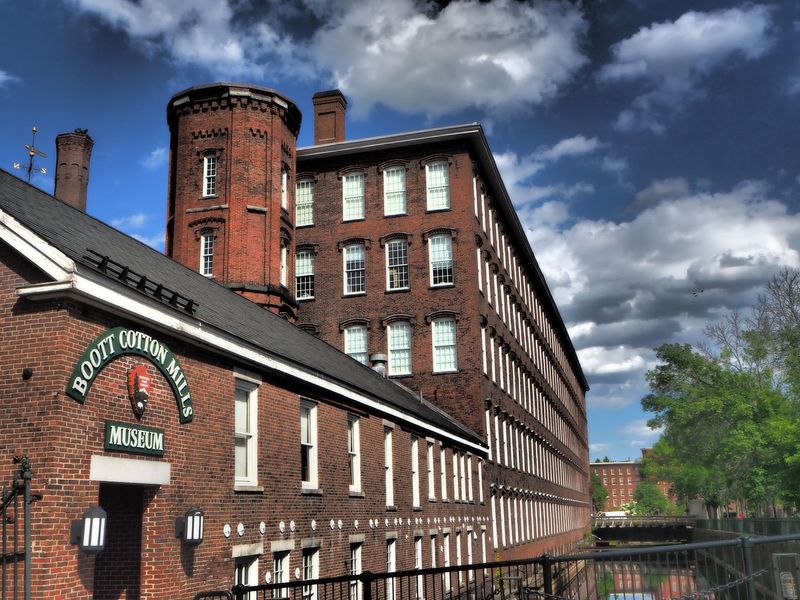
The clatter of 1920s looms is louder than most people expect. Hearing it is the whole reason to visit Lowell.
Lowell National Historical Park threads through the city itself, along the Merrimack River near the New Hampshire border. The drive from Springfield takes roughly an hour and a half.
The park preserves water-powered textile mills and the canal network that made them run. Boott Cotton Mill and Museum keeps a working weave room with operating looms.
Interactive exhibits explain the Industrial Revolution and the city’s civic history. The Mill Girls and Immigrants Boardinghouse recreates 1850s worker housing in plain, honest detail.
Canals, gatehouses, and locks controlled water flow to every mill. Seasonal boat tours cover them from the water, and the banks are walkable year round.
The Northern Canal Walkway runs atop a 36-foot wall with wide river views. A trolley service loops through the park and downtown for anyone saving their feet.
Boarding House Park hosts concerts and festivals outdoors. The Mogan Cultural Center presents One City, Many Cultures, while the Suffolk Mill Powerhouse explains turbines in practical terms.
Guided options include the 45-minute Step into History tour covering about a mile.
Food here is genuinely global. Athenian Corner serves Greek classics, Pho Dalat handles Vietnamese staples, and Fuse Bistro occupies a converted firehouse on cobblestone streets.
9. Concord Center And Its Historic Sites
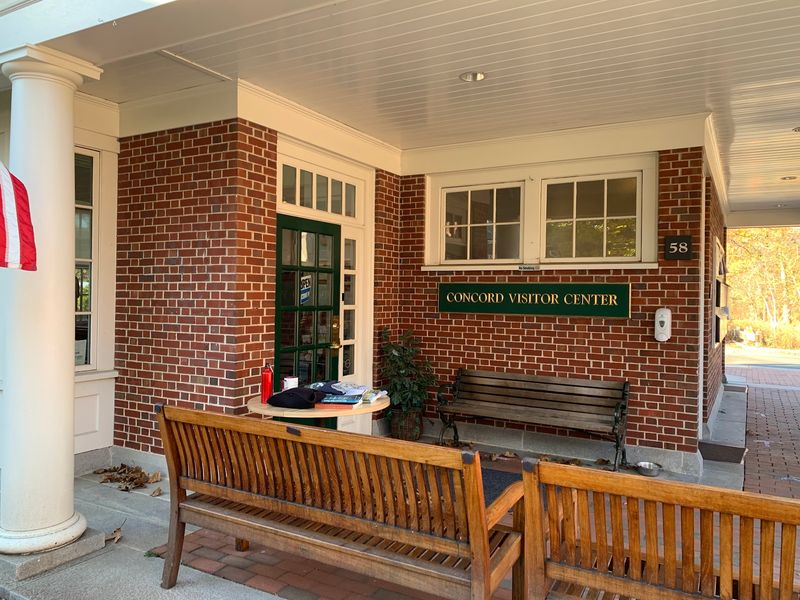
Few square miles in America carry this much weight. Revolution and literature grew up on the same short streets.
Concord Center forms a National Historic District bordered by 18th to 20th century buildings, about an hour and forty minutes from Springfield. Six National Historic Landmarks sit within walking range.
Old North Bridge marks a turning point of the American Revolution. The Old Manse stands close by, famous for its literary connections.
Orchard House was home to Louisa May Alcott. The Wayside housed Nathaniel Hawthorne, Alcott, and Margaret Sidney at different times.
Authors Ridge in Sleepy Hollow Cemetery holds Alcott, Emerson, Hawthorne, and Thoreau. The Ralph Waldo Emerson House and the Concord Museum fill in the rest of the story.
The Robbins House tells of descendants of Caesar Robbins, a Revolutionary War veteran who survived slavery in Concord. Wright Tavern and the 1851 Town House hosted the town’s public life.
Concord’s Colonial Inn dates to 1716 and once stored arms during the Revolution. The Concord Visitor Center at 58 Main Street launches a daily 1 p.m. walking tour covering half a mile in about 75 minutes.
The Milldam area brings boutiques, bookstores, and restaurants together. Concord Cheese Shop builds a famous Italian sandwich called Phil’s Phabulous, and Concord Teacakes handles pastries and coffee.
10. New England Botanic Garden At Tower Hill
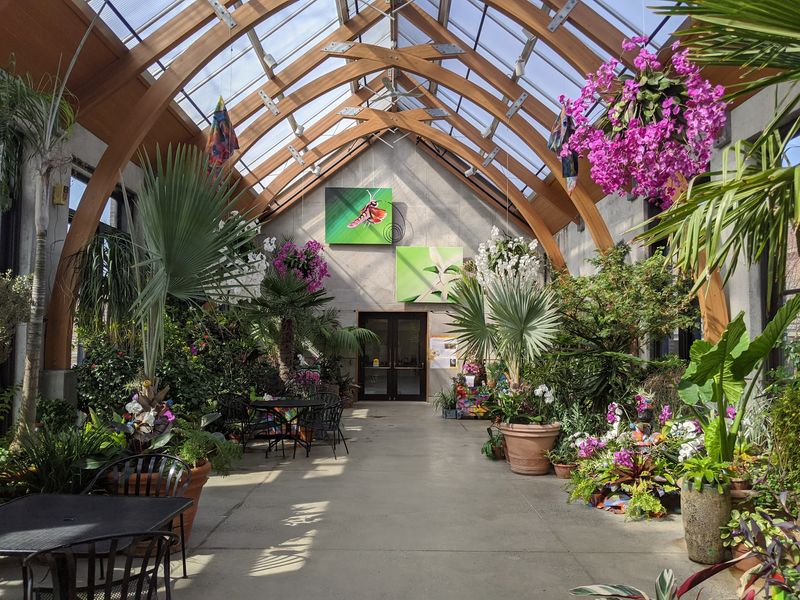
Gardens usually peak for a few weeks. Boylston built one designed to work in all four seasons.
New England Botanic Garden at Tower Hill covers between 171 and 200 acres about ten miles northeast of Worcester. From Springfield the drive runs roughly 63 miles.
Eighteen distinct garden spaces connect through preserved woodlands and miles of trails. Collections include native, ornamental, tropical, rare, and edible plants, plus heirloom apple orchards.
The Ramble is a woodland garden built for families, with interactive play features, hundreds of perennials, and a seasonal pond. During Fairies Aglow it fills with lights and illuminated fairy houses.
The Court: A Garden Within Reach is universally accessible. Raised beds and living walls hold plants chosen for scent, texture, and color.
Conservatories house the Orangerie and Limonaia with subtropical plants, and at least one stays open whenever you visit. Gravel paths wind past benches, sculptures, and wildflower areas.
Scenic vistas open toward the Wachusett Reservoir, and a woodland path leads to Sawyer Bluff. Exhibitions have featured large stained-glass insect sculptures and floral landscapes by regional artists.
Night Lights in winter and Fairy Hollow keep the calendar full.
The Farmer and the Fork Cafe in the Visitors Center opens seven days a week for lunch, with seasonal bowls, sandwiches, and terrace seating above the reservoir.