
Mississippi Is Home To One Of The Most Ornate Stained-Glass Churches In The Entire State, Right In Natchez
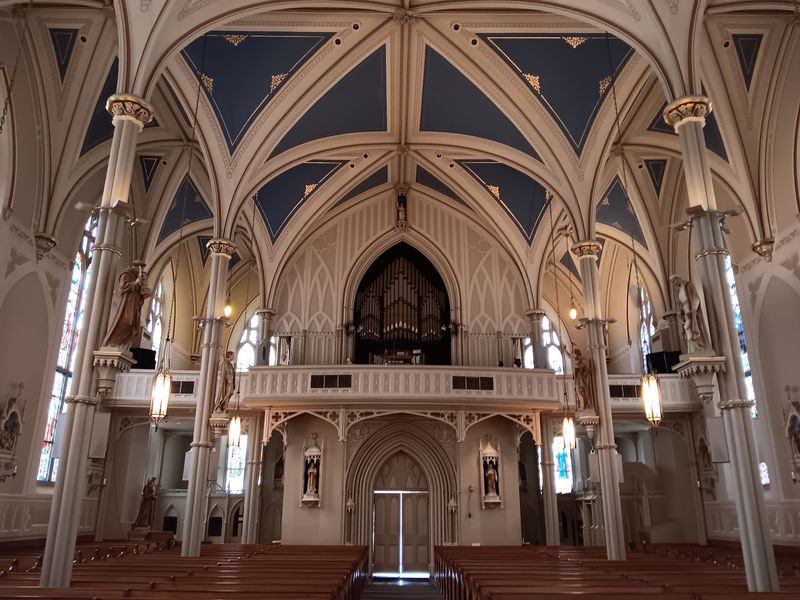
Driving through southwest Mississippi on a bright afternoon, you might catch a tall spire rising over the rooftops and think nothing much of it. Walk through the doors, though, and the whole day changes.
Sunlight pours through sixteen stained-glass windows onto a ceiling painted light blue and trimmed in gold leaf, and the room feels less like a small-town church and more like something shipped over from Europe. Best of all, you can simply walk in, look around, and it costs nothing but your time.
A Gothic Spire On South Union Street
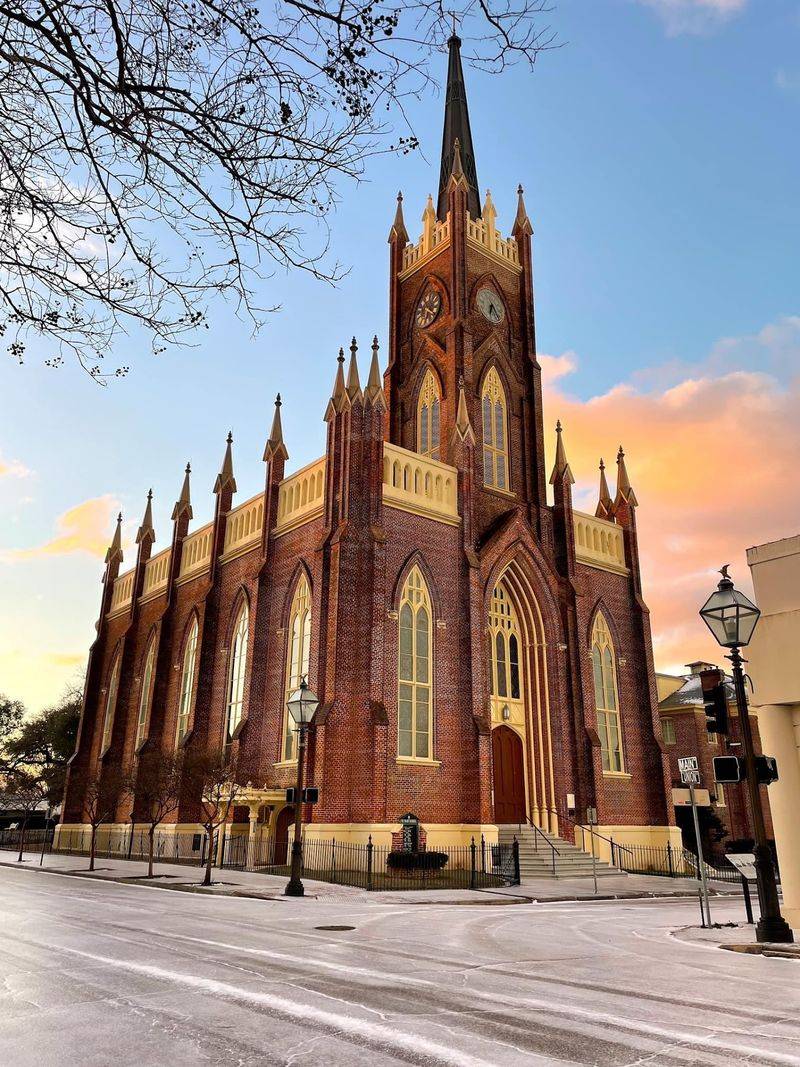
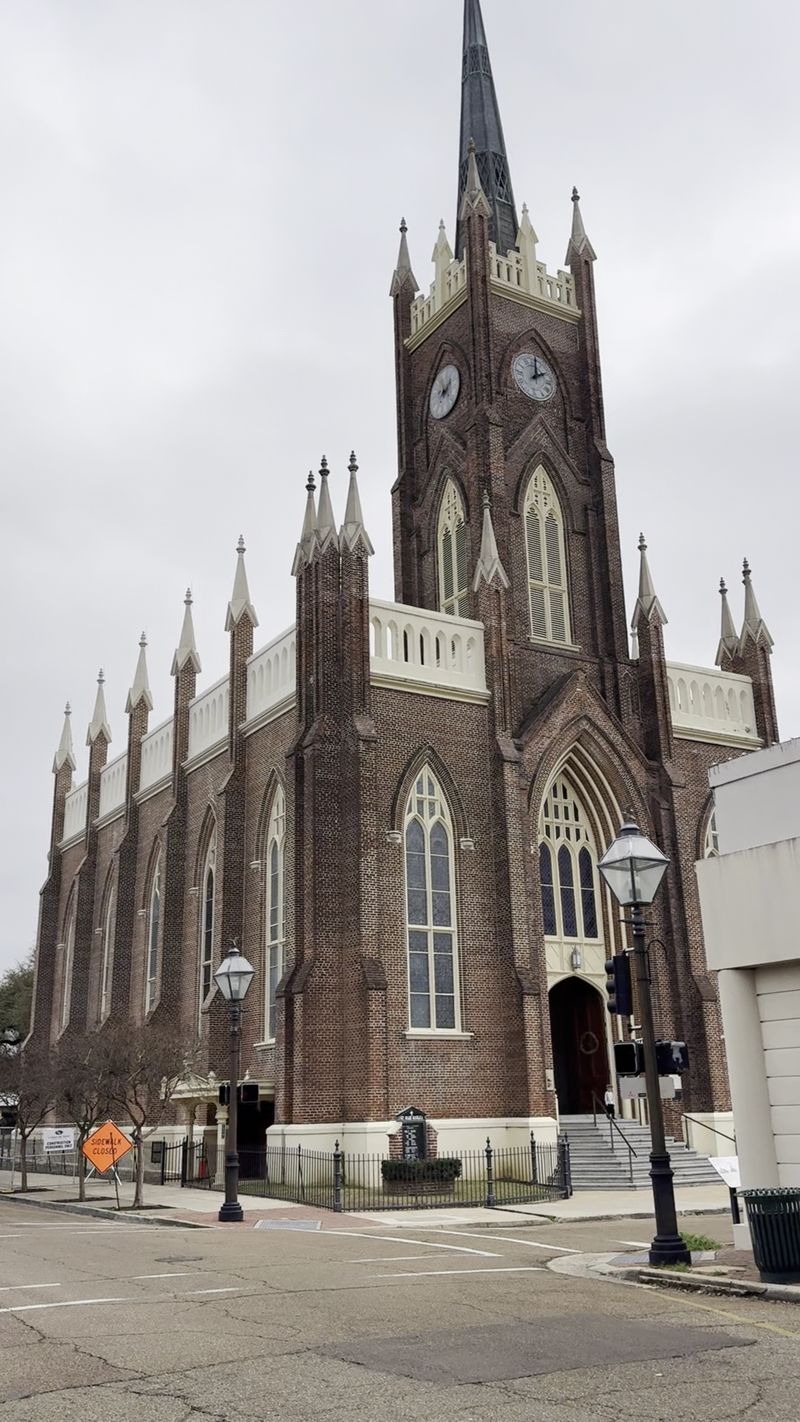
At 105 S Union Street in downtown Natchez, St Mary’s Basilica anchors a quiet corner of Adams County just a few blocks from the Mississippi River bluff. The brick walls and steep pointed spire read Gothic Revival from the sidewalk, and the building stands tall enough that most visitors spot it before they find the street sign.
Natchez sits roughly an hour and a half southwest of Jackson and about two hours from Baton Rouge, which makes it an easy Saturday target for families across the southern half of the state. Street parking runs along Union and the surrounding blocks, and the downtown grid is compact enough that you can reach shops, the bluff, and a nearby city park on foot.
What surprises people most is the contrast. The outside is handsome but restrained, all brick and clean lines, giving little warning about the color waiting inside.
One visitor described the interior as looking like a lavishly decorated cake, and that comparison lands the second the doors open. Nothing about the approach prepares you for it.
Forty Years From Cornerstone To Completion
Construction began in 1842, and the building was dedicated on Christmas Day the following year under the name Our Lady of Sorrows. Supervising architect James Hardie oversaw the design details that still shape the sanctuary today.
Finishing it, however, took considerably longer than anyone likely planned. Forty years passed between the laying of the cornerstone and the church’s completion in 1882, with consecration following in 1886.
Money, materials, and the slow pace of 19th century craftsmanship all played a part in stretching the timeline across two generations of parishioners.
The church was established to serve Mississippi’s first diocese, created in 1837, and it functioned as a cathedral for decades afterward. That role gives it a place in state history that few other buildings can claim.
It also holds the distinction of being the oldest Catholic building in continuous use anywhere in Mississippi.
For families with older kids studying state history, the dates alone make a useful lesson. A structure begun before the Civil War, finished after it, and still holding weekly services says something durable about the town that built it.
Sixteen Windows, Two Continents, Two Centuries
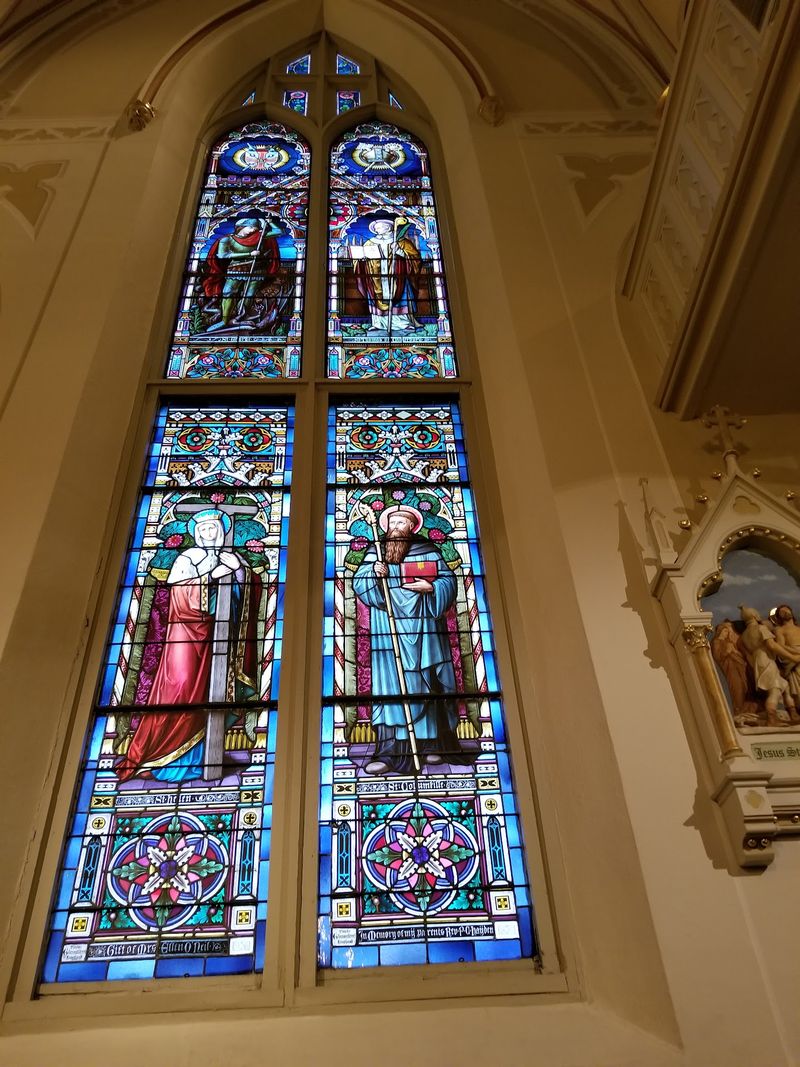
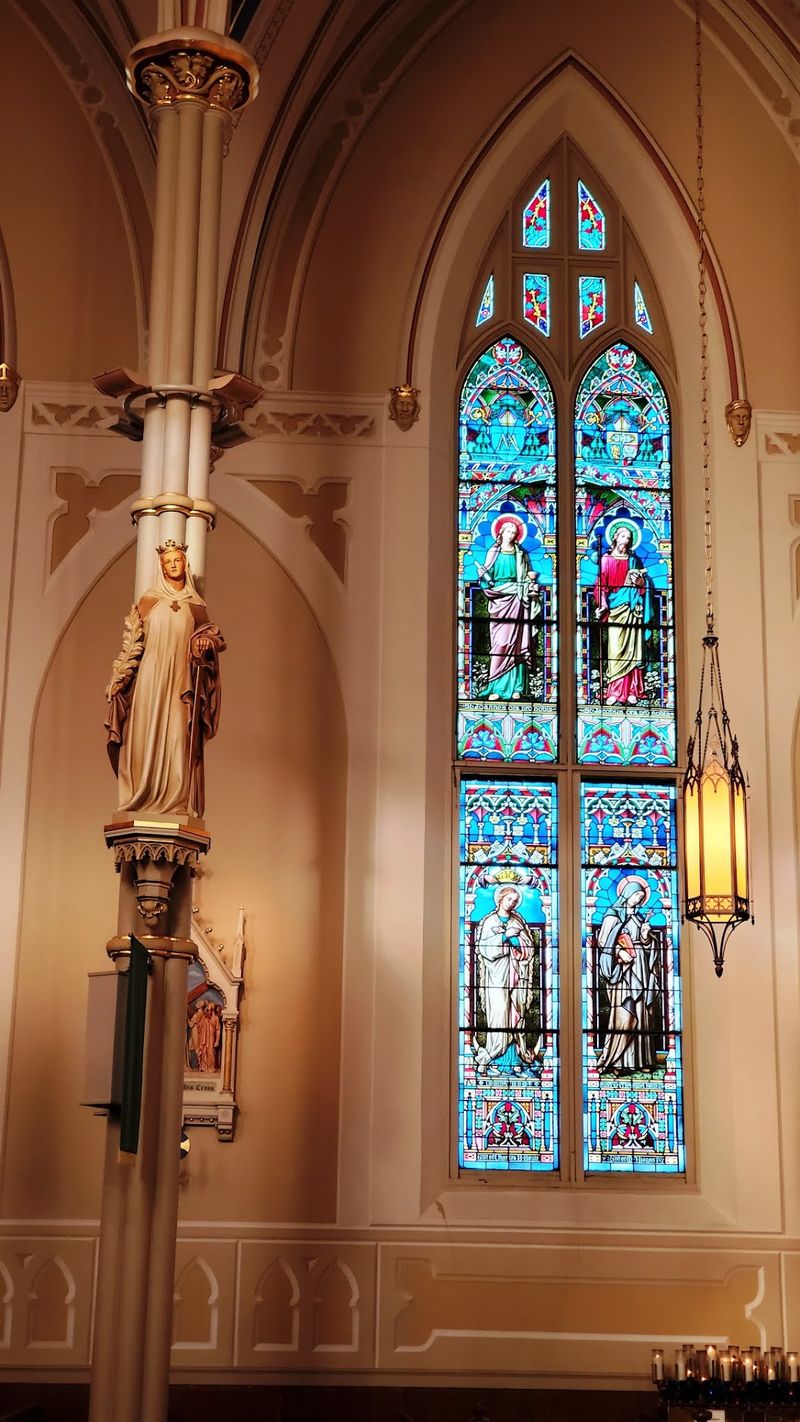
Sixteen stained-glass windows make up the basilica’s signature feature, and they did not all arrive at once. Twelve came from Tyroler Glassmalerie in Innsbruck, Austria, installed in stages between 1884 and 1893.
Nearly seventy years later, four more joined them. Emil Frei of St. Louis, Missouri designed those in 1961, completing the set and filling the last openings along the walls.
The Austrian panels carry that unmistakable alpine workshop style, with deep jewel reds and blues that catch afternoon light in a particular way.
Together the windows walk through the story of Jesus, and visitors often mention tracing the narrative panel by panel as they move down the aisle. Kids who lose interest in dates and architecture tend to perk up here, because each window is essentially a picture story told in colored light.
Timing matters more than you might expect. Bright midday or early afternoon sun sends color across the pews and floor, while overcast weather mutes the whole effect.
Weekday mornings around ten often bring both good light and an empty sanctuary.
Gold Leaf, Blue Sky, And Filigree Like Frosting
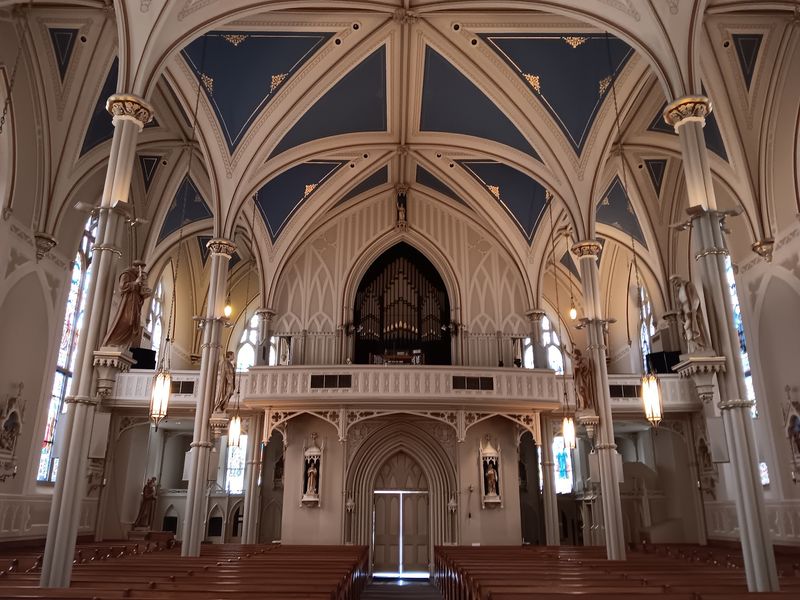
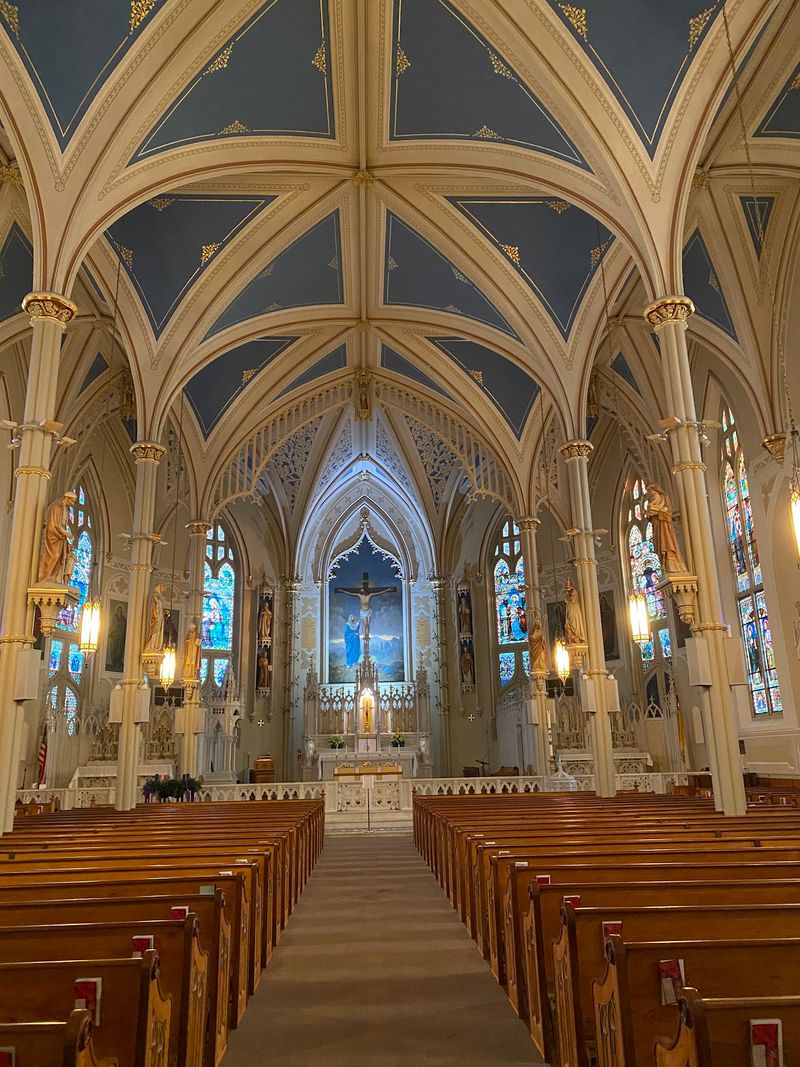
Look up. The ceiling is painted a soft light blue and worked over with 23-karat gold leaf and multi-color stencils, which is not something you expect to find in a Mississippi river town of this size.
White filigree detailing runs across the vaults in delicate ribbons, and more than one visitor has compared it to icing piped onto a wedding cake. The comparison sticks because it is genuinely accurate.
Elaborate glazes, trompe l’oeil effects, and free-hand painting fill in the spaces between, creating depth where the surface is actually flat.
All that pale blue and gold keeps the room feeling bright and airy rather than heavy, which is unusual for Gothic Revival interiors. Many churches of this era lean dark and solemn.
This one does the opposite.
Guests frequently say the ceiling was their favorite part, and it is the detail that photographs never quite capture. Standing underneath, tilting your head back, you start noticing stencil patterns that repeat and shift.
Give yourself a few minutes in a pew just for this.
Carrara Marble And Saints On High Pedestals
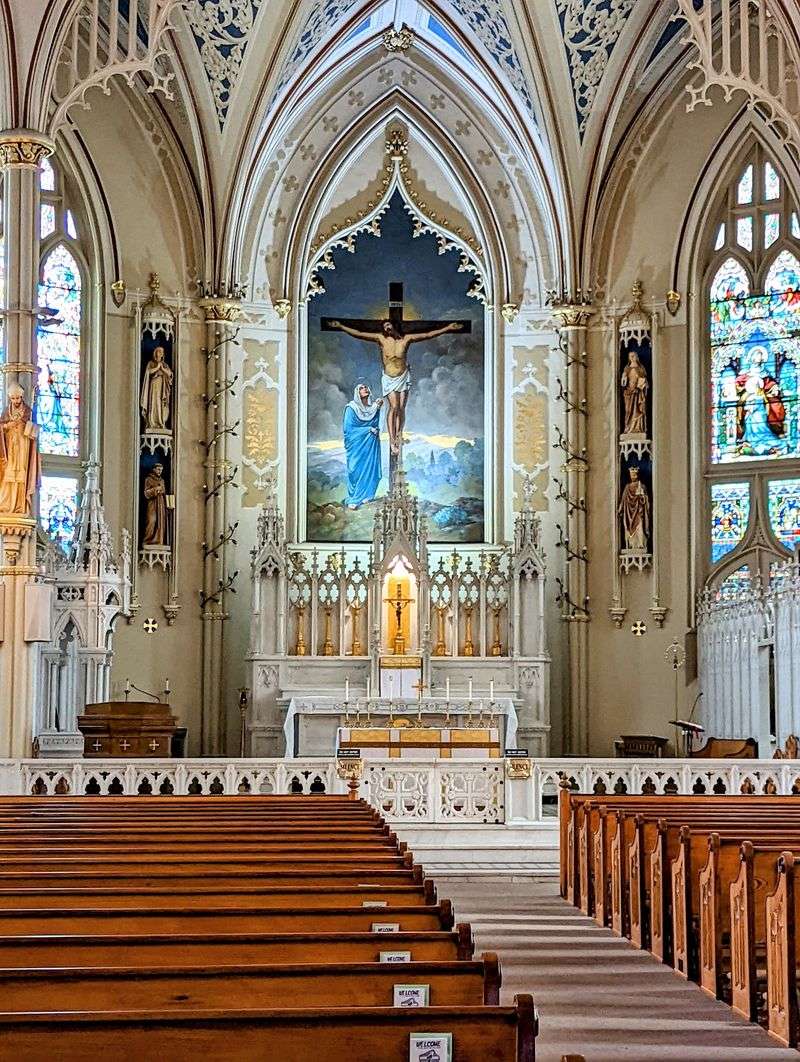
Three Gothic-style altars carved from Carrara marble form the visual center of the sanctuary, and all of them were fashioned in Italy before making the long trip to Mississippi. The communion rail, the Episcopal chair, and the decorative screens came from the same stone.
Carrara marble is the pale, faintly veined stone quarried in Tuscany that sculptors have favored for centuries. Seeing that much of it assembled in a small southern parish church is genuinely unexpected.
Statues fill the spaces between the windows and cluster around the main altar, several perched on tall pedestals well above eye level. Visitors often notice the wooden saints looking down from those heights, along with a reliquary tucked among the furnishings.
One guest who has toured churches across Europe called this one comparable to the basilicas of Italy and France, and the marble work is a large part of why. The craftsmanship holds up under close inspection, with carved edges and tracery that reward a slow walk around the perimeter rather than a quick glance from the back row.
Minor Basilica Status And A Careful Restoration
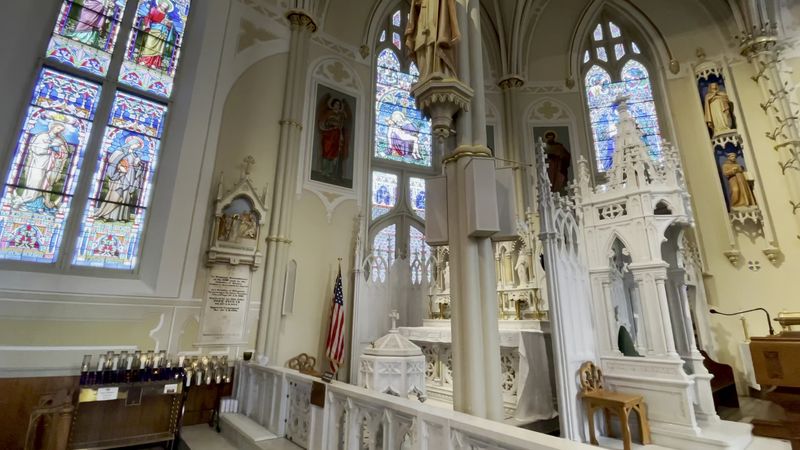
In 1998, Pope John Paul II granted the church the designation of Minor Basilica, a title recognizing both architectural significance and religious importance. It is a rare honor, and it changed the building’s formal name to St Mary’s Basilica.
That same year brought trouble. Severe wind storms damaged the structure, and the parish responded with extensive renovations completed in 2002 to stabilize and preserve what generations had built.
The results are visible in the condition of the interior. Decor and structure remain largely original, and visitors regularly comment on how clean and well maintained everything looks.
Preservation work has continued in phases since, including recent attention to the steeple, so travelers may occasionally encounter scaffolding or fencing outdoors.
Exterior work has not typically closed the inside. Several people who arrived during construction periods found the sanctuary open and welcoming anyway, and one even had a workman offer to snap photos for them.
Calling ahead or checking before a long drive is still sensible if restoration is underway, particularly if the exterior is what you came to photograph.
Quiet Pews, A Side Garden, And The Bishops Garden
Peace is the word that comes up again and again from people who have spent time inside. Arrive on a weekday morning and there is a real chance you will have the entire sanctuary to yourself, with nothing but filtered light and the occasional creak of old wood.
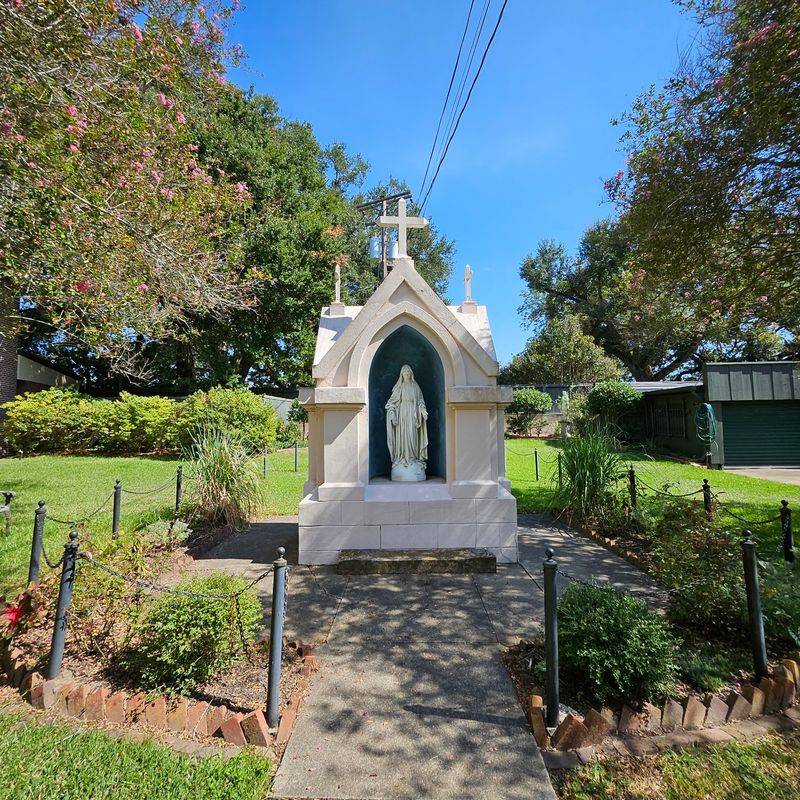
Outside, the grounds hold their own appeal. A small garden wraps around the side of the building, and the Bishops garden nearby draws steady praise for its plantings and upkeep.
Both make good spots to let restless kids stretch before or after going in.
A city park sits close by too, which helps if your group includes younger children who need somewhere to burn energy between downtown stops.
The basilica remains an active parish, so services happen throughout the week. Sitting quietly in a back pew during one is generally accepted, and a visitor once mentioned hearing the pipe organ unexpectedly from that vantage point.
Respectful silence and skipping photos during worship are the unwritten rules.
Planning The Drive, The Hours, And The Cost
Doors open at 7:15 am and close at 4:15 pm, seven days a week, which is unusually generous for a historic church. That wide window means you can fold a stop into almost any Natchez itinerary without careful scheduling.
There is no admission charge. Donations and candle offerings are available for those who want to contribute, but nothing is required, making this one of the more budget-friendly stops in a town where house tours add up quickly.
Getting there from Jackson takes roughly ninety minutes down Highway 61. From Hattiesburg or the Gulf Coast, plan on a longer haul and consider pairing the trip with other downtown attractions to justify the miles.
The sanctuary floor is level once you are inside, though older buildings like this can present a step or two at entry, so wheelchair and stroller users may want to scout the approach.
Summer visitors will appreciate the cool, shaded interior. Bright sunny days deliver the best stained-glass color, and mid-morning often combines good light with thin crowds.
Why This Stop Sticks With People
Few free attractions in Mississippi leave the impression this one does. People who have walked through cathedrals across Europe come out saying the craftsmanship here holds its own, and those who have never thought much about architecture tend to leave talking about the ceiling.
Families get real value from it. A 6-year-old can follow the picture stories in the glass while a grandmother rests in a cool pew, and nobody spends a dollar unless they choose to.
Photographers should know that images rarely do the space justice, a point repeated by visitors who tried. The scale, the light shifting across marble, and the sheer density of detail need to be experienced standing still in the room.
Pair it with the river bluff a few blocks west, the nearby park, and downtown’s antique shops, and you have an inexpensive Saturday that fills several hours.
If you find yourself anywhere near Natchez with an hour to spare, the doors are open early and the welcome has been described by more than one traveler as genuinely warm.