
This Springfield, Ohio, Backyard Holds Dozens Of Handmade Stone Castles And Cathedrals
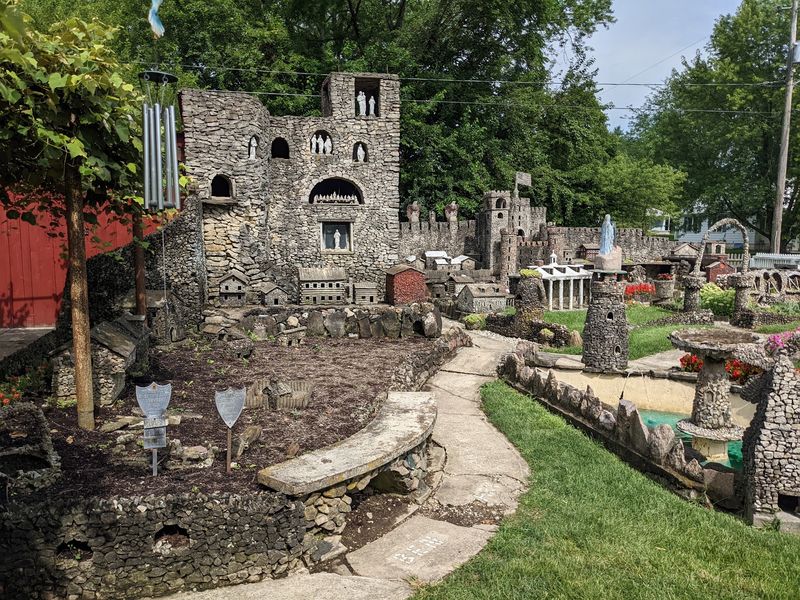
A quiet residential street in western Ohio hides something you would never guess from the sidewalk: a whole miniature world made of creek stones, concrete, and stubborn patience. One man spent twelve years of the Great Depression building castles, cathedrals, and famous American landmarks in his own backyard, all of it small enough to walk around in a single afternoon.
Walking in feels a little like shrinking down and touring a country built at knee height. And the best part for families on a road trip is that it costs nothing to see.
A Folk Art Landmark Behind a House on Russell Avenue
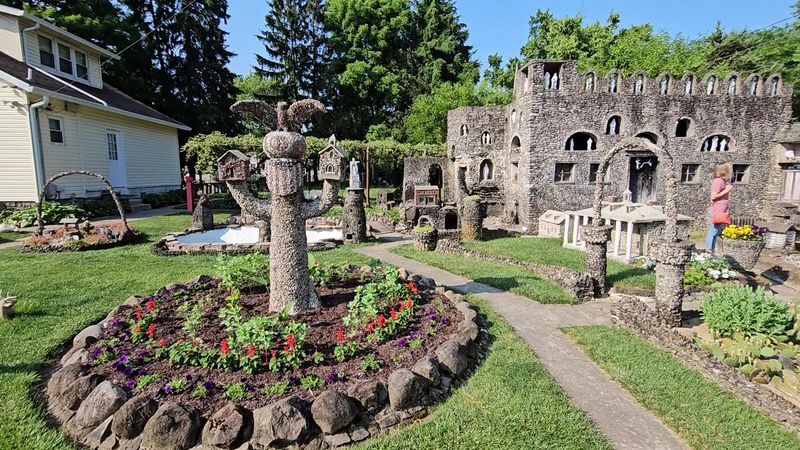
Pull up to 1905 Russell Avenue in Springfield and the first impression is ordinary: a small house, a strip of grass, parked cars along the curb. Then you step toward the back lot and the ground fills with towers, arches, and tiny stone buildings packed shoulder to shoulder.
Hartman Rock Garden sits in Clark County, on the southwest side of town, and it is exactly what the name suggests. More than 50 structures built by hand, using an estimated 250,000 creek stones along with concrete, glass, metal, and scrap wood.
Visitors regularly mention how modest it looks from the street and how quickly that impression flips once they walk the paths. The scale is domestic, not monumental, which is part of what makes it land.
There is no ticket booth, no gift shop, no turnstile. A donation box sits on site, and the whole place runs on self-guided wandering.
For Ohio families, it reads as a short stop rather than a full day out, which suits a drive between cities perfectly.
How a Laid-Off Molder Started Stacking Stones in 1932
In 1932, Harry George Hartman, known to everyone as Ben, lost his job at a local foundry. Work was scarce across Ohio that year, and he had time on his hands and a yard behind the house.
He started with a fish pond. What could have stayed a weekend project instead became a twelve-year obsession, growing structure by structure until the backyard filled up.
Hartman gathered creek stones by the sackful, mixed his own concrete, and worked in materials other people threw away: bottle glass, bits of metal, scraps of wood. He kept at it until 1944.
Consider the arithmetic for a second. Twelve years, over 50 structures, roughly a quarter million stones, all set by one pair of hands without heavy equipment or a budget.
That origin story is the reason the place hits people the way it does. Reviewers often say they came expecting a curiosity and left thinking about what one determined person can build with free materials and time.
It is a Depression-era story told entirely in rock.
The 14-Foot Cathedral and Its Stone Last Supper
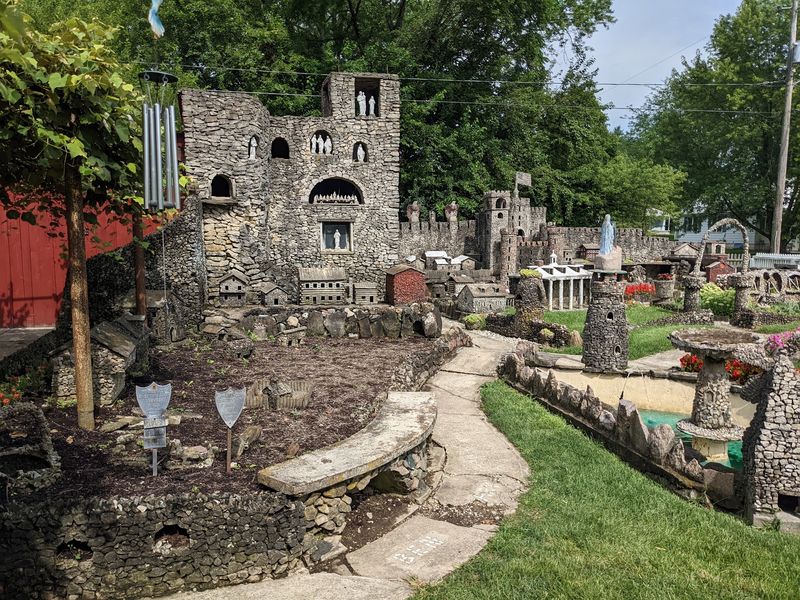
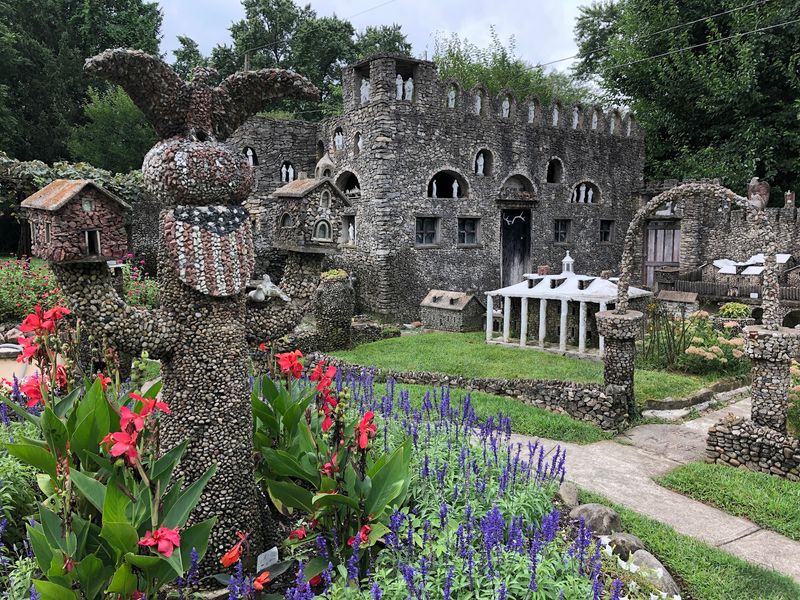
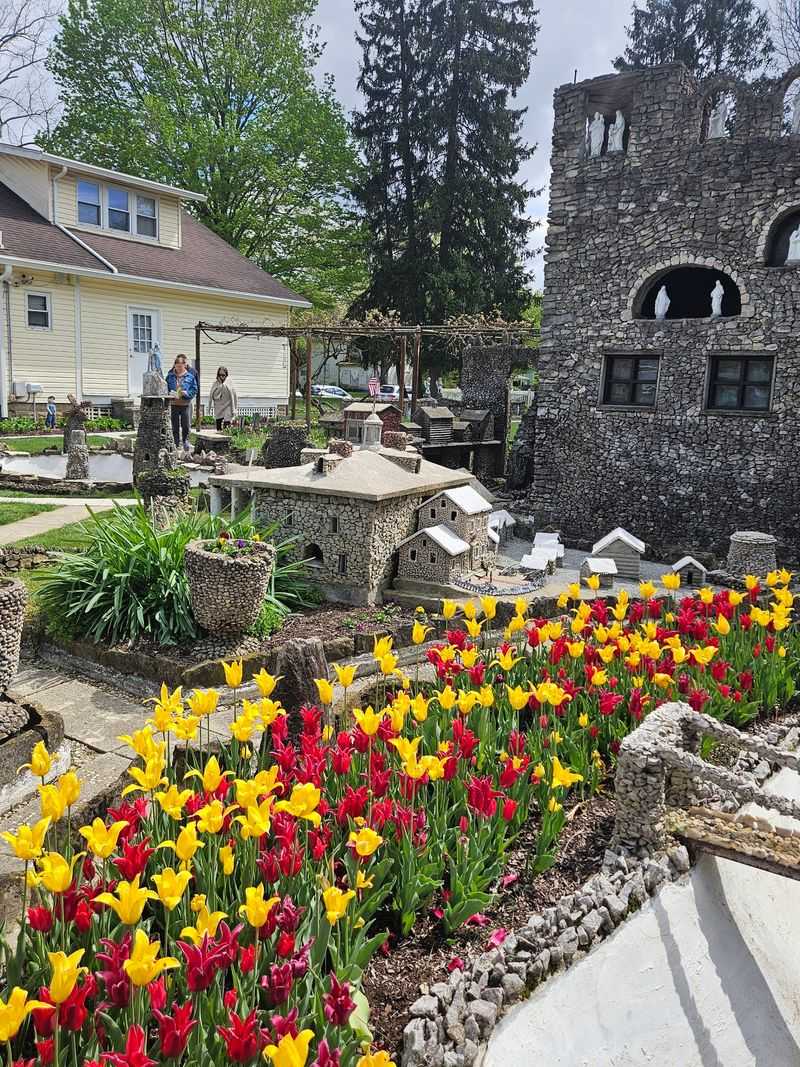
Rising near the center of the garden, the cathedral is the piece most people photograph first. It stands roughly 14 feet tall, its arches and spires echoing the medieval churches of Italy, though Hartman built it from Ohio creek stone and concrete.
Look closely at the niches carved into its face. Small sculpted figures fill them, including a stone version of The Last Supper arranged with careful attention to each seated form.
The detail rewards patience. Step back and it reads as a miniature church; lean in and you start noticing the individual stones, each one placed by hand at an angle that catches light differently.
Kids tend to circle it a few times looking for the tiny people tucked into the openings. Adults tend to stand still and do the math on how long it took.
Weather has worn parts of the surface over the decades, something visitors notice honestly, but the structure still carries its scale and intention.
It is the anchor of the whole property, and everything else arranges itself around it.
A 12-Foot Castle With 107 Windows and a Working Drawbridge
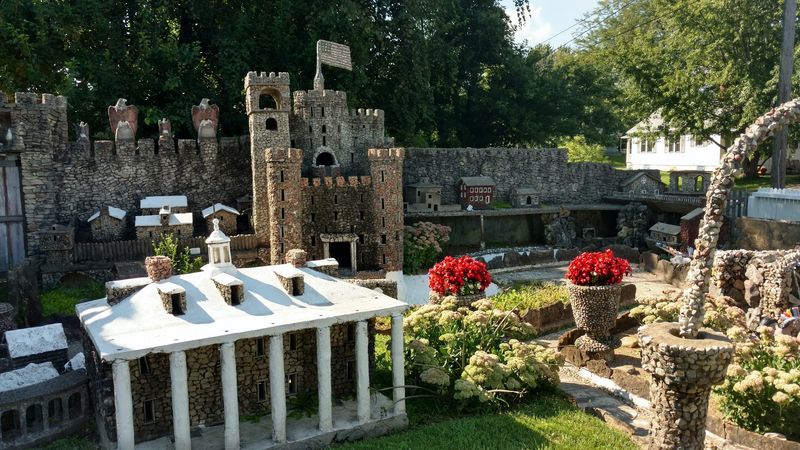
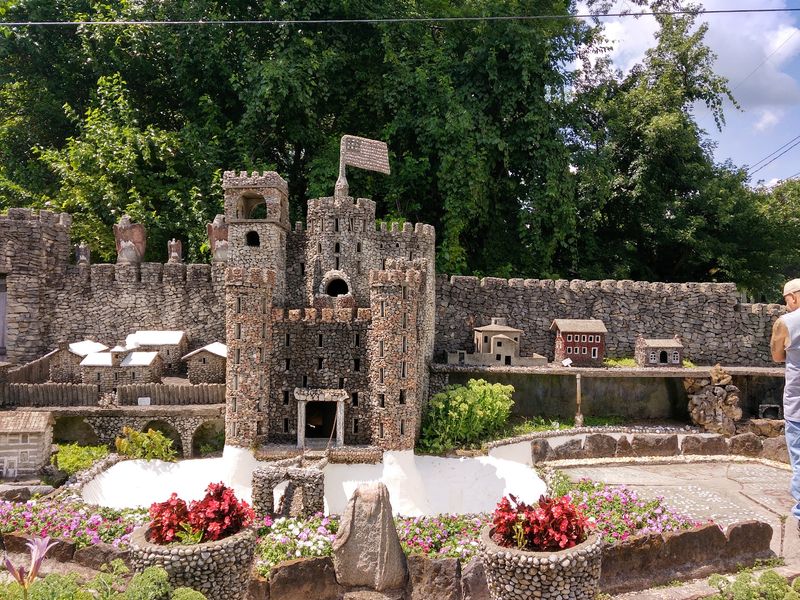
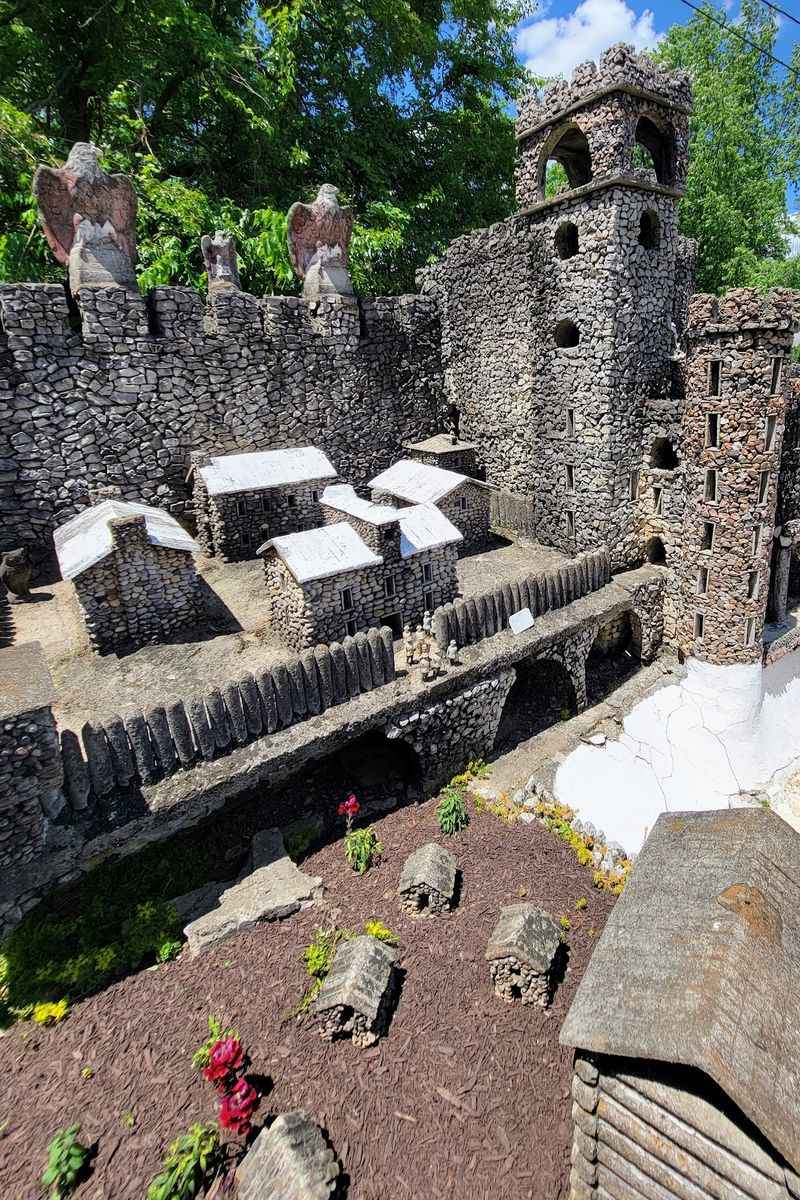
Count the windows if you have the patience: there are 107 of them. The castle stands about 12 feet tall, complete with a moat and a drawbridge that actually works.
Hartman reportedly based the design on a postcard image, which says something about how he worked. He saw a picture, liked it, and decided he could build it out of pebbles.
Little painted soldiers and figures populate the castle grounds, and families with young kids usually find this spot the most immediately fun part of the visit. The windows alone can occupy a curious seven-year-old for a while.
Parents in reviews mention their children gravitating straight to the castle and the small pebble houses nearby, drawn in by the scale more than the history.
What makes it stick is the craftsmanship hiding in plain sight. Thousands of individually placed stones form walls barely wider than a shoebox.
No machinery, no kit, no plan beyond a postcard and a whole lot of evenings in the yard.
Independence Hall, the White House, and Mount Vernon in Miniature
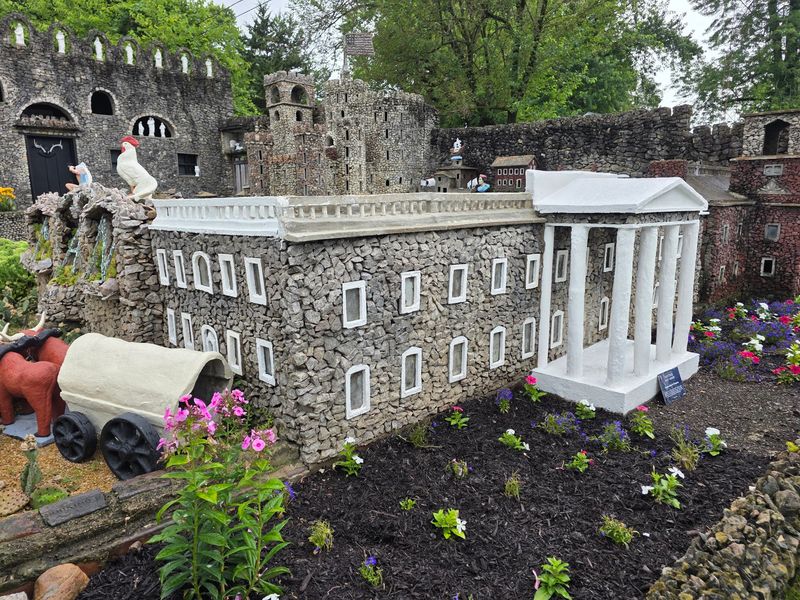
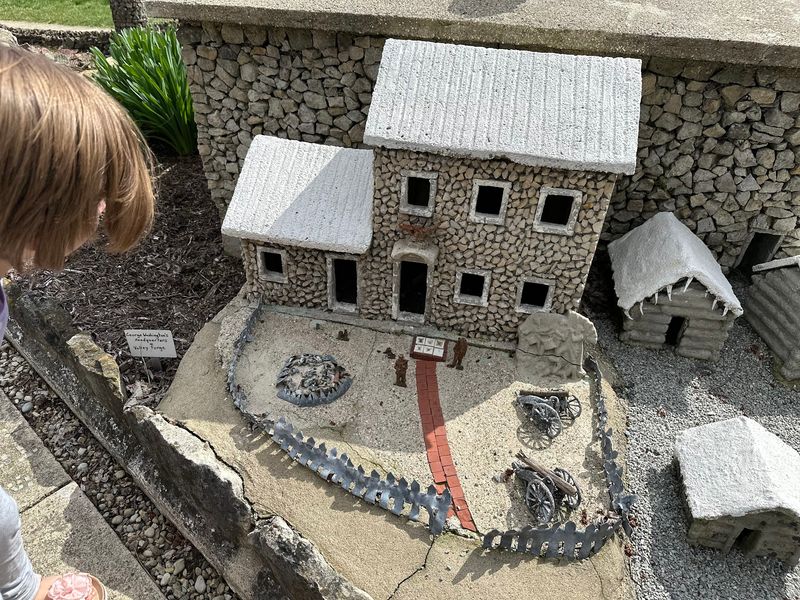
American landmarks show up throughout the garden, shrunk down to waist height and rebuilt in stone. Independence Hall, the White House, and Mount Vernon all appear, along with a tribute to Lincoln’s tomb.
Hartman was clearly proud of his country during a decade when the country was struggling, and the choices reflect that. These are the buildings a 1930s schoolchild would have recognized from a textbook illustration.
For Ohio parents, the history angle is a quiet bonus. Kids studying early American history can walk past the real shapes of places they have only seen in a book, sized so they can look straight into the windows.
Each replica is built from the same small creek stones, which gives the whole collection a unified texture even though the buildings come from different eras and states.
Visitors often note the surprise of finding national monuments rendered in pebbles on a residential lot in Clark County.
Take your time with these. The proportions are more accurate than you expect at first glance.
Noah’s Ark and the Line of Stone Animals
A procession of small stone animals marches toward a miniature ark, two by two, exactly as the story goes. Noah’s Ark is one of several Bible scenes Hartman worked into the garden, and it tends to be the one children spot first without any prompting.
Faith clearly mattered to him. Religious subjects sit comfortably beside patriotic monuments and pop culture references, with no apparent hierarchy between them.
The animals are simple shapes, not fussy sculptures, and that simplicity is part of the charm. You recognize an elephant by its trunk and a giraffe by its neck, nothing more elaborate needed.
Families use this corner as a natural teaching moment, whether the story is familiar or brand new to the kids walking through.
Nearby you will find other narrative displays, including scenes drawn from storybooks. One longtime visitor mentioned the old storybook display bringing back memories of a grandparent, which gives you a sense of the emotional register here.
It is gentle, earnest work, made without irony.
Concrete Paths, Embedded Sayings, and a Fence Made of Stone
Look down while you walk. The concrete pathways threading through the garden carry short adages pressed right into the surface, little bits of advice Hartman wanted visitors to read as they passed.
Even the picket fence around the property is concrete, molded to look like wood. That detail alone tells you how thoroughly he committed to his material.
Flowers and landscaping fill the gaps between structures, maintained by volunteers, and they soften what could otherwise feel like a gray stone maze. Spring and summer bring the most color.
Some of the original walkways are narrow, which is worth knowing if you are pushing a stroller or moving slowly. The main entrance accommodates wheelchairs and walkers, though the interior paths were laid out in the 1930s for foot traffic.
Pace matters here. Rush and it is a ten-minute stop; slow down and you start finding the smaller touches everywhere.
Regulars say the details keep revealing themselves on repeat trips, which is probably the best argument for lingering.
Tchotchke Palooza and the Figurines Kept Indoors
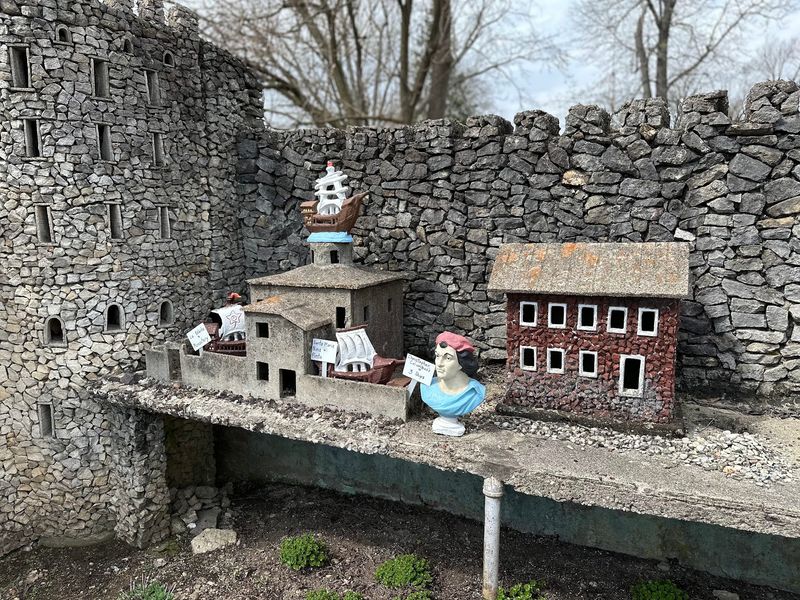
Most of Hartman’s original handmade figurines are not outside when you visit. Decades of Ohio winters would ruin them, so they live indoors under protection for nearly the whole year.
Once annually, on the last Saturday in July, they come out. The event is called Tchotchke Palooza, and it is the single best chance to see the small painted pieces Hartman crafted alongside the larger stone buildings.
Timing a summer trip around that date changes the visit considerably. What you normally see as empty niches and bare platforms fills in with the little figures that were always meant to occupy them.
Details of the event can shift year to year, so checking ahead before making a special drive is sensible.
For families already planning a July road trip through Clark County, it stacks nicely with other stops along Interstate 70.
Outside of that Saturday, the stone structures carry the visit on their own, and nobody seems to leave disappointed.
Rescued by the Kohler Foundation, Kept Alive by Volunteers
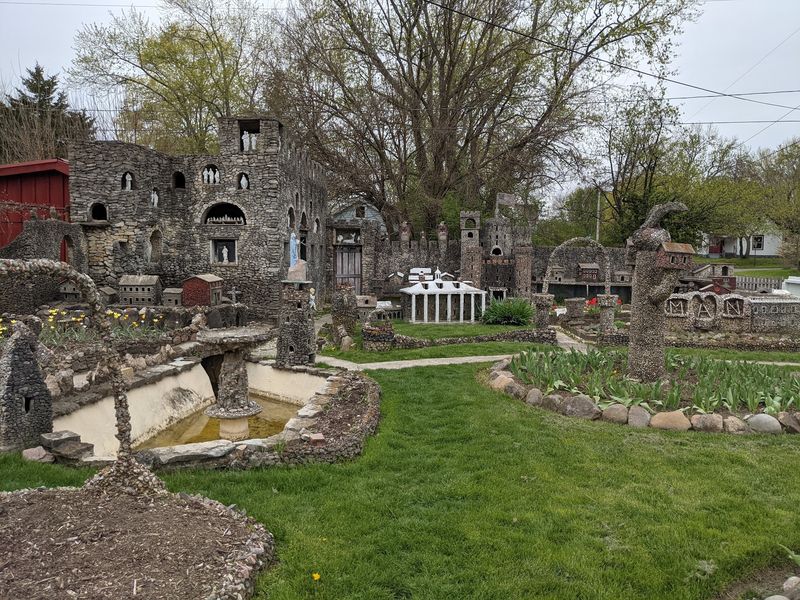
By the 2000s the garden was in trouble. Sixty-plus years of freeze and thaw had taken a toll on concrete that was never engineered to last forever.
The Kohler Foundation stepped in and funded an extensive restoration in 2009, stabilizing structures and repairing damage across the property. Afterward the site passed to the Friends of the Hartman Rock Garden, the volunteer group that maintains it today.
That handoff is the reason you can walk through it at all. Folk art environments like this one disappear regularly when nobody organizes to save them.
Visitors comment on how clean and well tended the grounds feel, and on the signage that provides background without overwhelming the artwork itself.
Wear is still visible in places, and honest reviewers say so. Some surfaces show their age no matter how carefully they are patched.
Your donation in the box near the entrance goes toward that ongoing upkeep, which is a fair trade for a free attraction that requires constant repair.
The Scavenger Hunt That Keeps Kids Looking
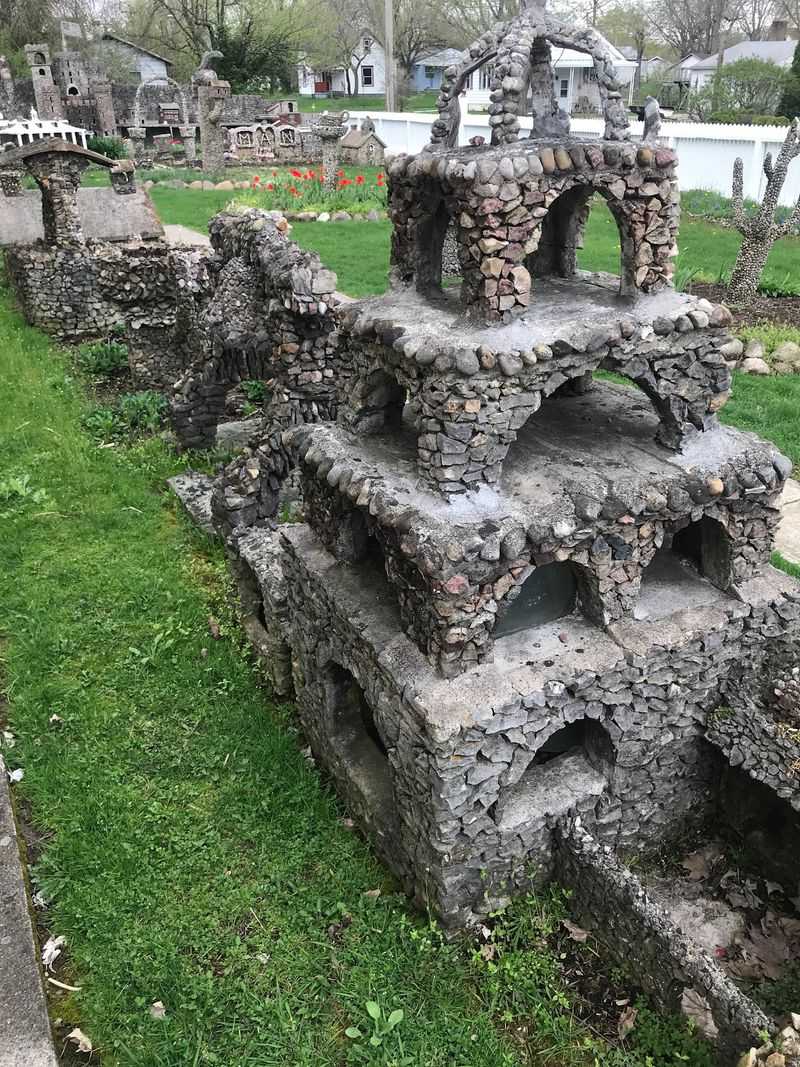
Grab the pamphlet when you arrive. Inside is a scavenger hunt designed to send children hunting through the displays for specific details, and it transforms the visit for anyone under twelve.
Without it, kids might circle the castle twice and be ready to leave. With it, they are scanning niches, counting figures, and asking questions about what they find.
Parents who have used it describe it as a genuinely educational way to move through the sculptures rather than just glancing at them. The brochures also carry background on Hartman and the garden’s history for the adults.
Restroom facilities are not something to count on here, so plan a stop beforehand. Springfield has plenty of options a few minutes away.
The whole property is compact enough that you can keep eyes on children easily, which takes some pressure off.
Bring a phone or camera. Between the castle windows and the animal parade, kids tend to want pictures of what they discovered.
Quiet Streets, Street Parking, and What Arrival Feels Like
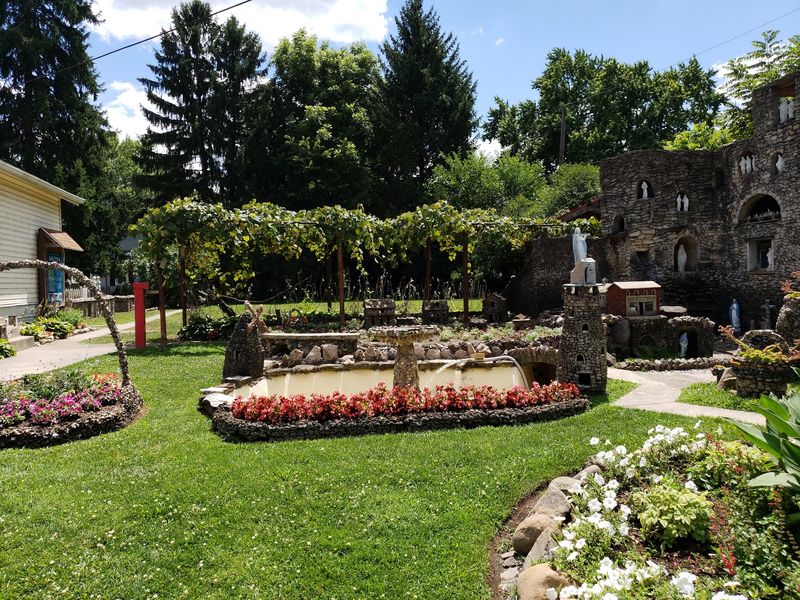
Parking means the curb. There is no lot, so you pull over on Russell Avenue in front of a residence and walk in, which feels slightly odd the first time and completely normal after that.
The surrounding neighborhood is quiet, mostly homes, with little foot traffic. Several visitors have noted how peaceful it is, calling it a good place to slow down for twenty minutes.
Because the garden sits behind a house, first-timers sometimes drive past it. Watch the address numbers and look for the concrete fence.
Be a considerate guest while you are there. People live on this street, and the garden exists inside their neighborhood.
Weekday mornings tend to be the emptiest. Warm Ohio weekends can bring a small crowd, though small here means a handful of families at once rather than a line.
Springfield sits right along Interstate 70, roughly halfway between Columbus and Dayton, making it an easy detour rather than a dedicated expedition.
Free Admission, Daily Hours, and the Donation Box
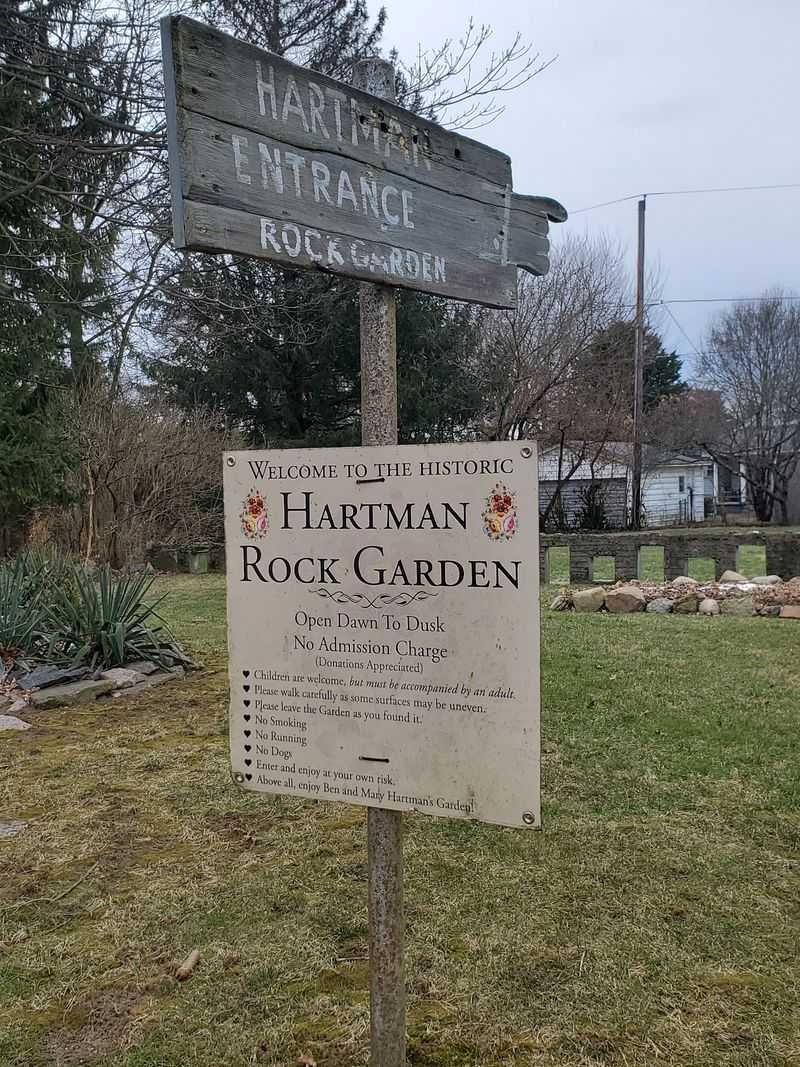
Nothing to pay at the gate. Admission is free, listed hours run 8 AM to 8 PM every day of the week, and many sources describe access as dawn to dusk year round.
Hours can shift with the seasons and with daylight, so a winter visit will naturally be shorter on light than a July evening. Checking before a long drive is never a bad idea.
A donation container sits on the property. Cash is the practical option, and the money supports maintenance handled by the volunteer group that runs the site.
Most people spend somewhere between thirty minutes and two hours depending on how closely they look. It is deep rather than sprawling.
A free guided Touch Tour is available for visitors who are blind or have low vision, arranged with advance registration.
Winter visits are possible since the garden never closes for the season, though snow and ice will change what you can see and how easily you move around the narrow paths.
Pairing the Garden With a Clark County Day Trip
Forty-five minutes from Columbus, about half an hour from Dayton, and roughly an hour and a half from Cincinnati puts Springfield within easy reach for most of central and southwest Ohio. Interstate 70 runs right past town.
Since the garden itself takes an hour or two at most, it works best as one piece of a larger outing rather than the whole plan. Pack it alongside lunch in Springfield or another stop nearby.
Autumn gives the best light for photos, with Clark County foliage adding color behind the gray stone. Spring brings the planted beds back to life.
Summer is when the flowers peak and when Tchotchke Palooza lands at the end of July.
Comfortable shoes help more than you would expect for such a small space, since you will be crouching and stepping carefully along narrow concrete.
Road-trippers heading between Ohio metros often describe it as the detour that made the drive memorable, which is a fair way to frame it.
Why a Backyard Full of Pebbles Still Draws Crowds
Something about the place lands harder than its size suggests. People arrive expecting a novelty, walk the paths for twenty minutes, and come out talking about what one unemployed man managed with creek stones and a wheelbarrow.
There is no corporate design team behind it, no admission revenue, no gift shop funneling you toward the exit. What you see is exactly what Hartman decided to build between 1932 and 1944.
Families with young children get the most immediate payoff, thanks to the castle and the scavenger hunt. History-minded adults get a Depression-era time capsule.
Photographers get textures and shadows that change with the hour.
Expect wear in places. Expect narrow paths.
Expect to park on a residential street and walk past someone’s house to get in.
Also expect to leave slightly inspired, which is the reaction that shows up most often from people who have been.
For the cost of a few dollars in the donation box and an hour off the highway, that is a generous return.