
People Line Up Early For The Homemade Pasta At This Beloved North Carolina Italian Deli
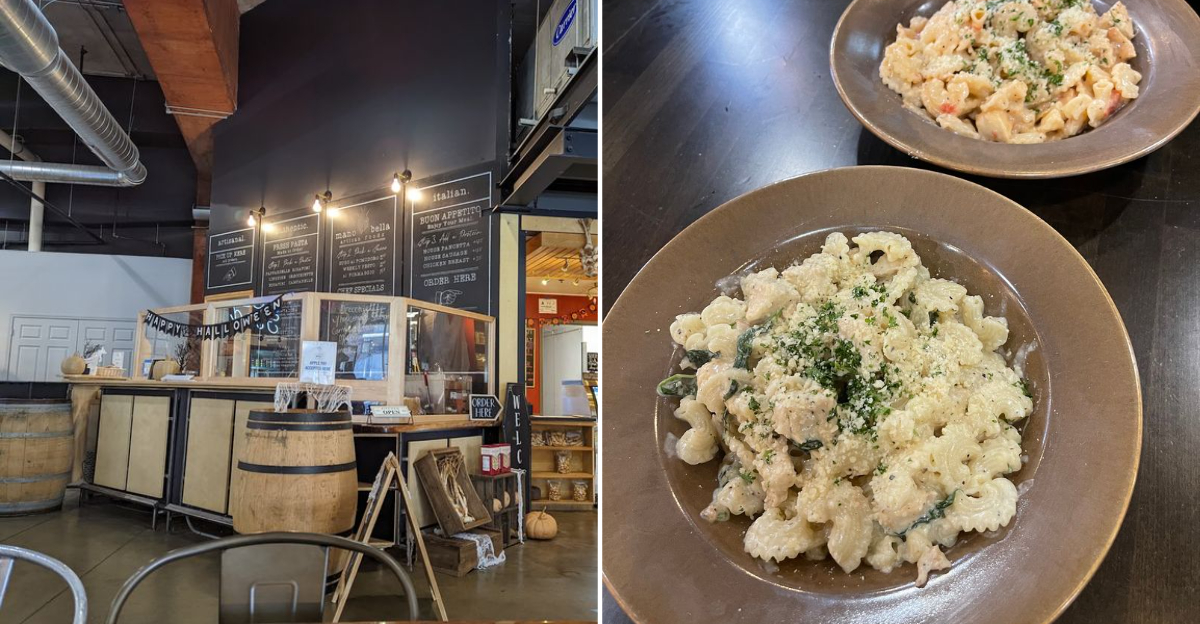
Some people wake up early for work, while others wake up early for good food instead. This North Carolina Italian deli gives people plenty of reason to be the second kind, especially once the homemade pasta comes out.
Shelves stretch floor to ceiling with imported goods most stores nearby simply don’t carry. Regulars know exactly which pasta shapes and sauces to grab before even reaching the counter.
Nothing about the selection feels adapted or simplified for convenience over authenticity. Staff take time explaining pairings instead of rushing customers through the register.
Lines form early some mornings, especially once word spreads about a fresh batch. This deli proved that sometimes the best pasta is worth setting an alarm for.
Fresh Pasta Ingredients And Their Origins
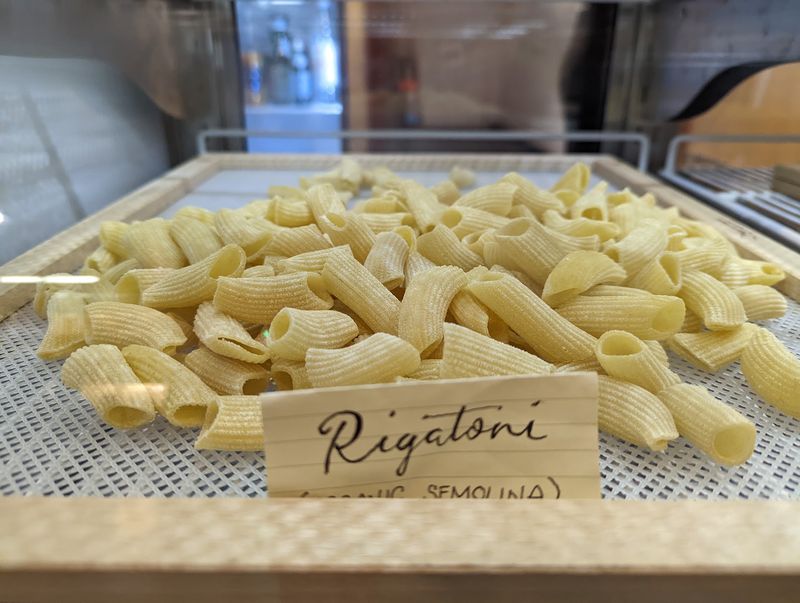
Flour is not a small detail here. Mano Bella works with 100% organic semolina flour imported straight from Italy, and they also stock Molino Paolo Mariani flour, which comes from a family-owned mill known across Italy for its quality.
Here is a fact that surprises a lot of people. The fresh pasta contains no eggs at all, which makes it naturally vegan without anyone making a big announcement about it.
Local farms play a real role too. Garden Window Farm supplies produce to the deli, and portions of that farmland are set aside specifically to grow what the chef wants to cook with.
That mix of imported and homegrown is the whole idea. Italian flour brings the backbone, and North Carolina soil brings the vegetables that end up in the sauces and specials.
Nothing arrives frozen. There are no pre-made sauces hiding in a walk-in, and no shortcuts dressed up as tradition.
When ingredients are this simple, quality shows up immediately. A pasta dish with four components has nowhere to hide, so the flour and the tomatoes have to carry real weight.
If you want to taste the difference for yourself, the counter sits at 224 E 7th St, Charlotte, NC 28202, inside the public market where the light rail drops you off practically at the door.
Traditional Italian Dough Making Techniques
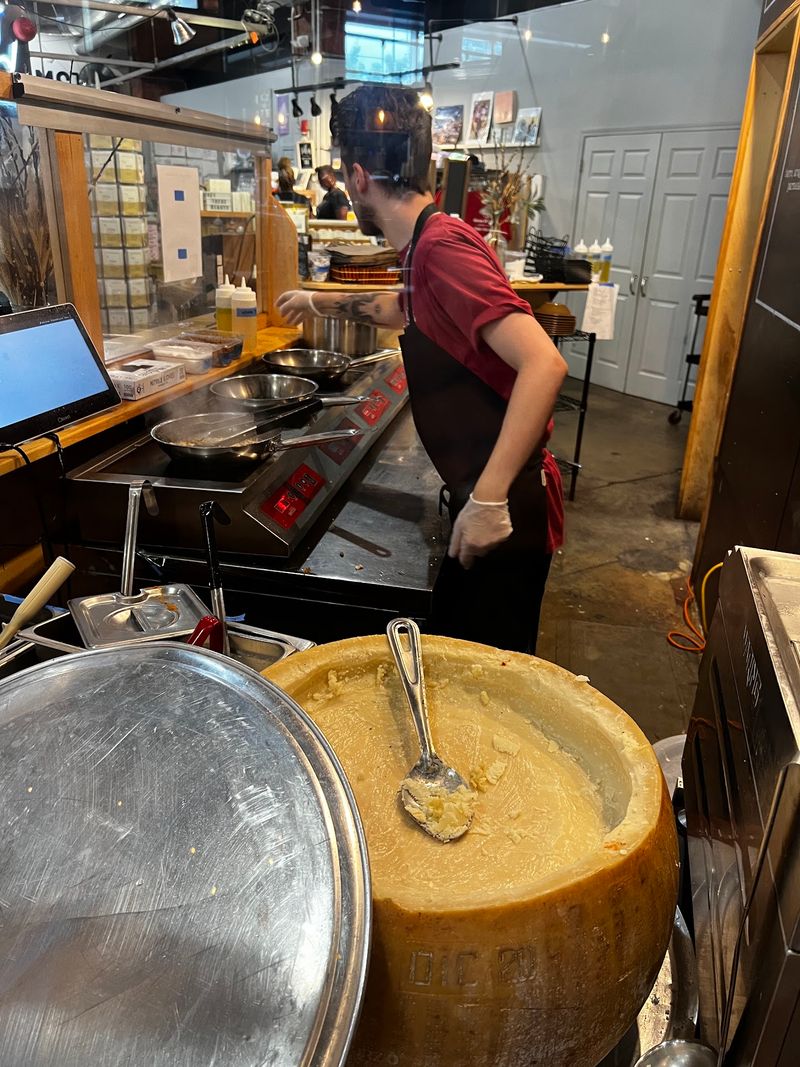
Meet the machine. Mano Bella runs the largest pasta extruder in North Carolina, and the owners personally brought it over from Rome, which is a wild sentence to type but absolutely true.
Bronze dies are the secret weapon. Instead of slick industrial Teflon, bronze scrapes the dough as it passes through, leaving a slightly rough surface and much more complex shapes.
The extruder also does quiet work you cannot see. Pushing the dough through builds the gluten structure, which gives the finished pasta a firmer, more consistent bite.
Chef Raffaele Patrizi co-owns the place and grew up in Rome, so the methods here are not borrowed from a cookbook. He learned them young and carried them across an ocean.
Small batches are the rule, made fresh every single day. Nothing sits around waiting for a slow week.
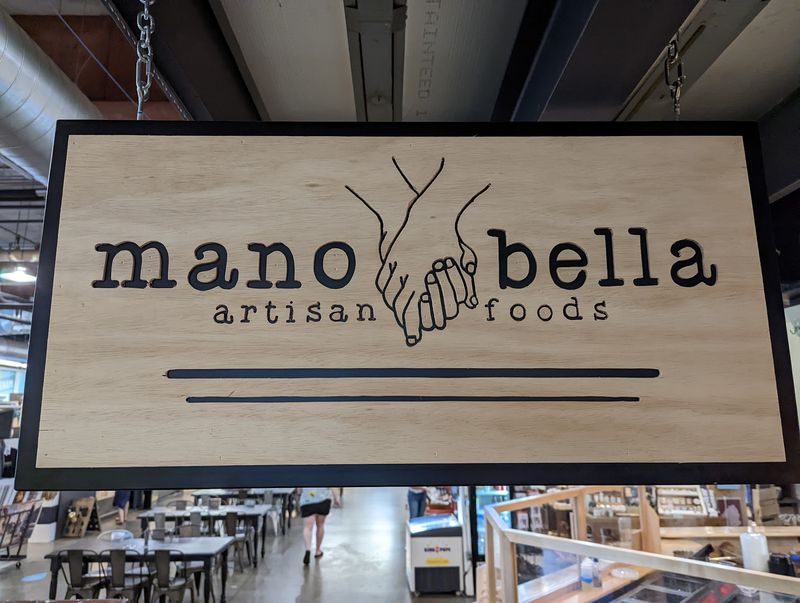
The name explains the attitude better than any sign could. Mano Bella means beautiful hand in Italian, a nod to craftsmanship that goes back generations.
Skip the frozen shelf, skip the jarred shortcuts, skip anything premade. That stubbornness is exactly why the dough behaves the way it does in the pot.
Watching the process happen behind the counter is half the appeal. It turns a quick lunch into a short lesson on how pasta is actually supposed to be made.
Varieties Of Pasta Shapes And Their Uses
Rigatoni and spaghetti are fine, but the shape lineup here goes deeper. Campanelle, bucatini, mafalde, and casarecce all show up in the rotating specials, and each one grabs sauce differently.
Ridges and twists exist for a reason. Casarecce curls hold onto chunky vegetables, while bucatini has a hollow center that pulls sauce inside the strand itself.
The retail side stocks dried shapes you rarely see in a grocery aisle. Orecchiette, radiatore, mafaldine, fusilli, creste di gallo, and campanelle are all available to take home.
Filled pasta gets attention too. Tortelloni and ravioli stuffed with ricotta and arugula have come out of that kitchen, folded by hand rather than stamped by a machine.
The uptown location runs a Build Your Own Pasta setup. You pick the shape, pick the sauce, and it gets cooked to order right in front of you.
Bronze extrusion makes the intricate shapes possible. Those fine ridges and curls would smooth out with faster industrial equipment.
A small tip for first-timers. Choose a textured shape like radiatore or creste di gallo if you love a heavy sauce, since all those nooks trap flavor.
Pasta shape is not decoration. It changes how every single bite tastes.
Sauce Pairings To Complement Different Pasta Styles
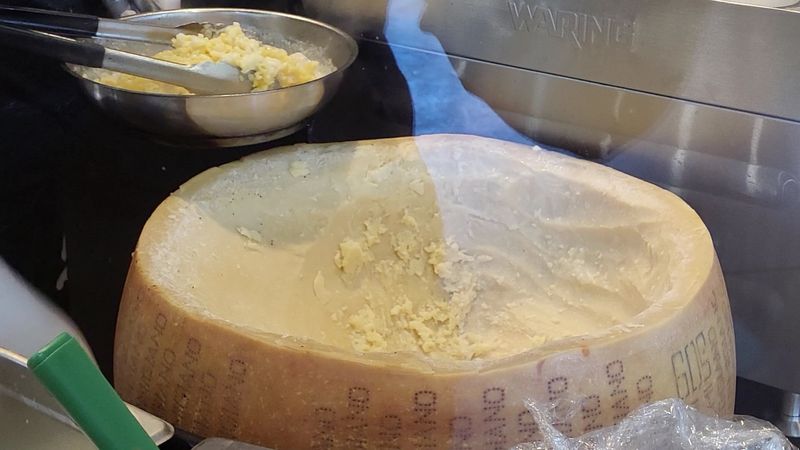
Sauce selection at the pasta bar works like a build-your-own adventure. Guests choose a shape, choose a sauce, and watch it get cooked fresh instead of ladled from a warming tray.
La Burrata leans bright and simple with crushed tomatoes and garlic confit. Garlic confit means the cloves were slow-cooked in oil until sweet, which softens the sharp edge completely.
Heartier appetites go for Ragu di Cinghiale, a wild boar ragu that clings beautifully to hollow bucatini strands.
Alla Boscaiola takes the creamy route with sausage, peas, and mushrooms. Boscaiola roughly translates to woodsman style, which explains the mushrooms.
Alla Vodka brings vodka sauce and pancetta together over casarecce, and the little curls hold every bit of that pink sauce.
A housemade tomato basil sauce covers the classics for anyone who wants something straightforward and clean-tasting.
Butter and sage has shown up with the tortelloni, proving that the simplest pairings often win. Two ingredients, zero noise, all flavor.
The kitchen has also shared recipes for pesto, bolognese, alfredo, and cacio e pepe, which shows just how wide the sauce knowledge runs.
General rule worth remembering. Cream sauces suit flat or ribbed shapes, while chunky ragus need tubes and curls to catch the good stuff.
The Role Of Family Recipes In Pasta Preparation
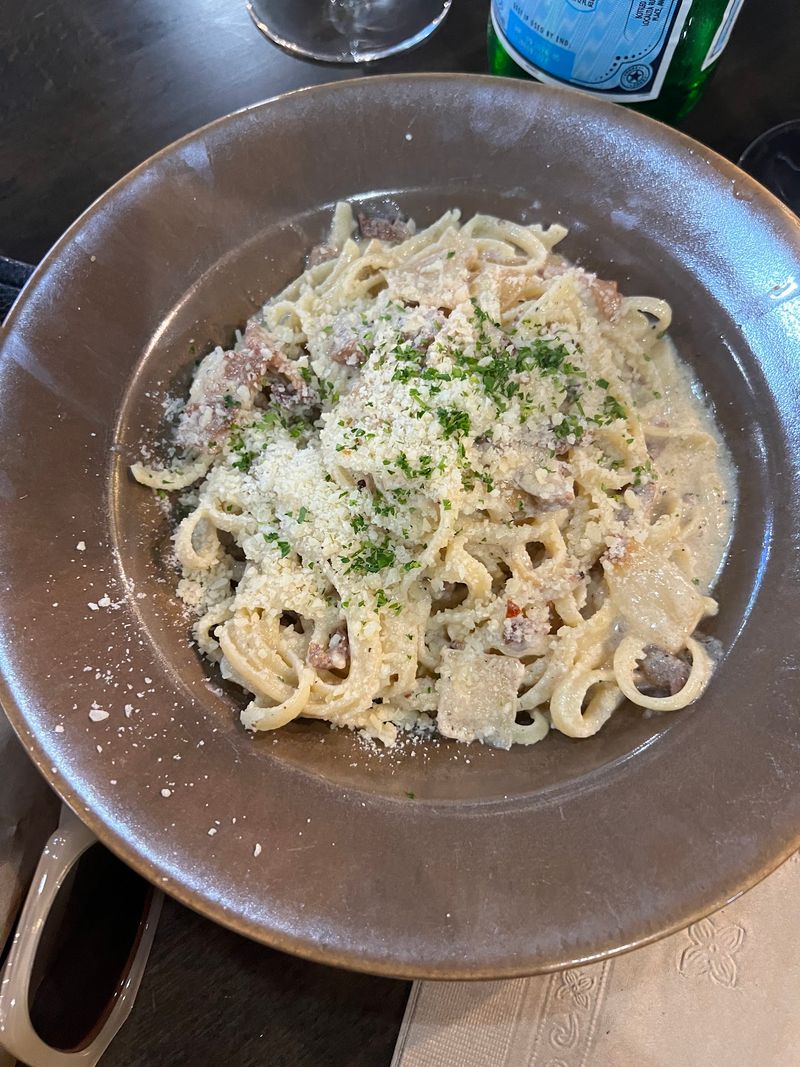
Every good food story starts somewhere small, and this one started in a home kitchen. Raffaele Patrizi and his wife Madison made Italian goods and fresh pasta together, then sold them at local farmers markets around Charlotte.
His family background reads like a culinary resume. Eight generations of butchers from Norcia on one side, and a mother from an agricultural region south of Rome on the other.
Raffaele started cooking as a kid in Italy. That early training explains why the techniques feel automatic rather than studied.
Norcia, by the way, is famous throughout Italy for cured meats. The Italian word for a specialty pork shop, norcineria, literally comes from that town’s name.
The deli’s name carries real weight too. Mano Bella means beautiful hand, and it was what Raffaele called Madison, which quietly turns the whole business into a love story with noodles attached.
Family recipes are not a marketing line here. They are the reason the sauces taste specific instead of generic.
Handmade food built on personal history tends to be less forgiving of shortcuts, and that pressure shows in the finished plate.
What began as weekend market tables turned into a full uptown counter. The recipes never changed much, they just got made in bigger pots.
Seasonal Offerings And Local Produce Integration
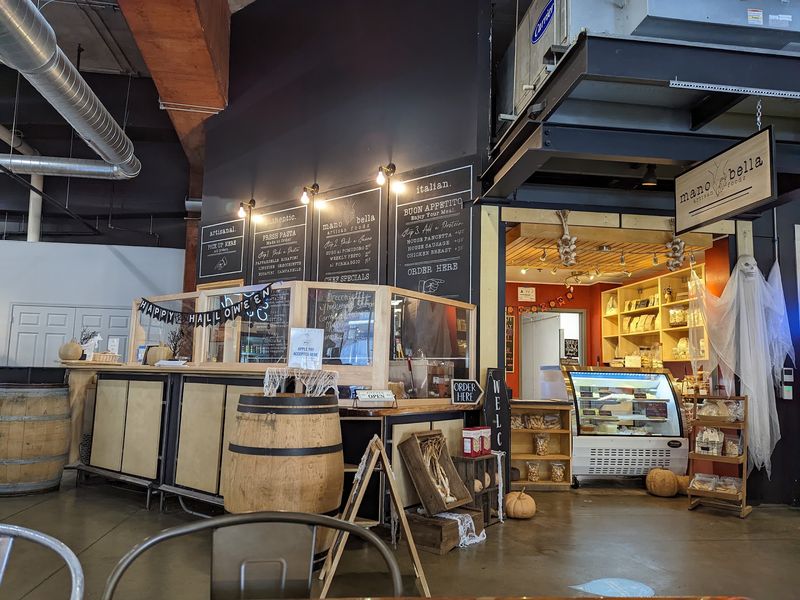
Tomatoes have a season, and Chef Raffaele is not shy about saying so. Real tomato season lasts a short window, which is why menus here shift instead of staying frozen in place year-round.
Local farms feed the specials list. Garden Window Farm grows produce specifically for the deli, with portions of the property set aside for exactly that purpose.
A Primavera dish shows the approach clearly. Casarecce pasta gets tossed with fresh spinach, mushrooms, sweet peas, onions, garlic, and a white sauce, and it happens to be vegan.
Whole ingredients only. No frozen vegetables, no jarred sauces waiting in the back, no compromises made for convenience.
Seasonal cooking has a practical payoff for eaters. Produce picked closer to peak ripeness simply tastes stronger, so the kitchen needs less added to make it work.
There is a health angle too, which the chef points out often. Fresher vegetables carry more of what makes them worth eating in the first place.
Menus that change also keep regulars curious. Showing up in April and showing up in September gets you two different experiences from the same counter.
If you spot a seasonal special on the board, order it. Odds are decent it will not be there next month.
Texture And Consistency Differences In Fresh Pasta
Run a finger along bronze-cut pasta and it feels almost chalky. That roughness is the whole point, because sauce grips a textured surface instead of sliding right off it.
Imported Italian semolina sets the base. Extruding it through bronze dies then adds those tiny surface irregularities that make each bite taste properly coated.
Machine-slick pasta has the opposite problem. Sauce pools at the bottom of the bowl while the noodles stay disappointingly bare.
The Rome-built extruder does more than shape things. Pushing dough through under pressure develops gluten, which is why the pasta holds an al dente bite rather than turning mushy.
Small imperfections are a feature, not a flaw. Perfectly uniform strands usually mean industrial equipment did the work.
Digestion gets easier too. Softer, more natural dough structure in artisanal pasta tends to sit lighter than the heavily processed alternative.
Cooking time drops significantly with fresh pasta. Anyone taking some home should watch the pot closely, since a couple of extra minutes can undo all that careful texture work.
Bite matters as much as flavor. A well-made noodle should push back slightly against your teeth, then give way, and that balance is exactly what this equipment is built to deliver.
Customer Favorites And Signature Dishes
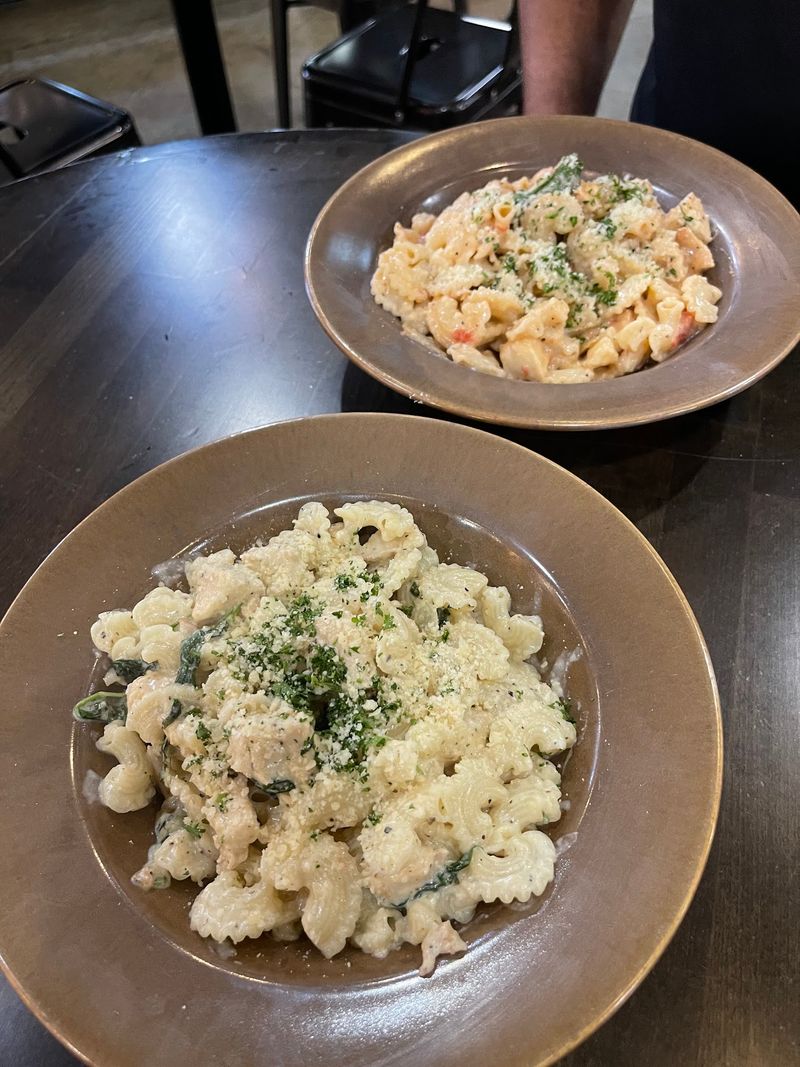
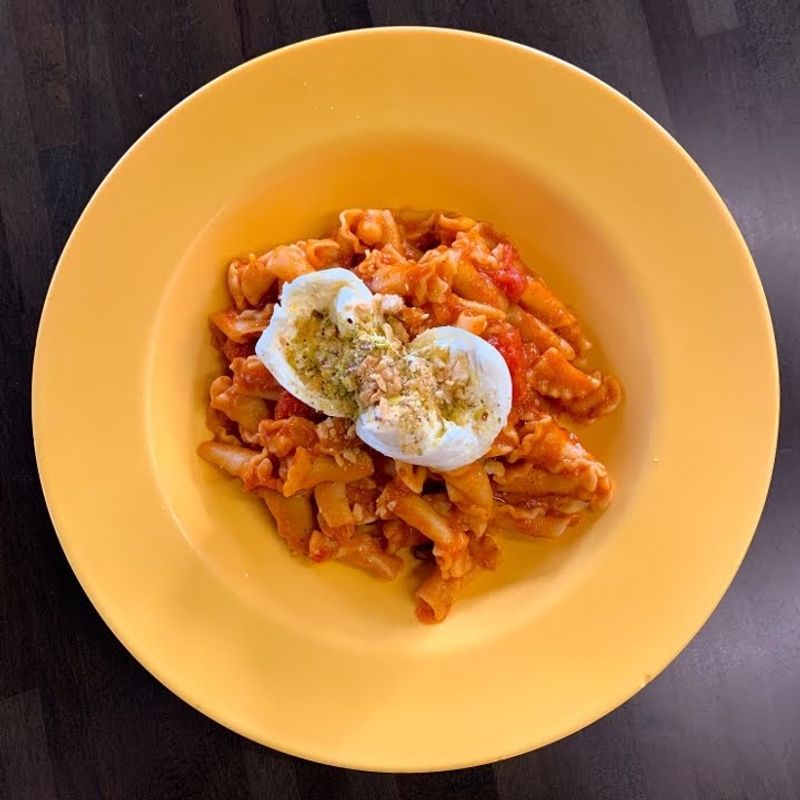
One dish gets ordered more than any other, and it earns the attention. La Burrata layers campanelle with crushed tomatoes, garlic confit, a big spoonful of burrata, pistachios, and crushed taralli crackers on top.
Taralli are small Italian ring-shaped crackers, and crushing them over pasta adds a crunch that most bowls of noodles never get.
Ragu di Cinghiale is the pick for anyone wanting something bolder. Wild boar ragu over bucatini has a deep, slightly gamey richness that regular beef cannot match.
Alla Boscaiola goes creamy with mafalde, sausage, peas, and mushrooms. Alla Vodka keeps things classic using casarecce, vodka sauce, and pancetta.
Fried ravioli deserves its own moment. Housemade ricotta ravioli gets fried, then served with tomato basil sauce and parmesan aioli, which is a dangerous combination to order casually.
Back in the farmers market days, the chef’s special of the week routinely sold out. Habits like that stuck around, and the specials still move fast.
Build Your Own Pasta gives picky eaters full control over shape, sauce, and add-ins.
The counter runs Monday through Saturday from 11 AM, closing at 8 PM most days and 9 PM on weekends. Sunday is off.