
Step Into An Entire Gold Rush Town Left Frozen In Time In The California High Desert
Fire swept through this old mining town in 1932 and left only about 10 percent standing. What survived still stands in the California high desert, and its buildings still hold old belongings.
At its peak, the town packed around 65 saloons onto a mile-long main street. It also had a bank, a jail, churches, and four volunteer fire companies.
How did a place that busy go so quiet? The gold ran thin, the people drifted off, and the wind moved in.
I love that nobody tried to polish it into a museum set. Desks, bottles, and beds sit right where the last residents left them.
Rangers keep the buildings from collapsing but never make them look new. Could any town feel more honest than that?
The road in turns rough before the rooftops appear. So which California ghost town is worth every bump of that dusty ride?
A Town That Refused To Be Tidied Up
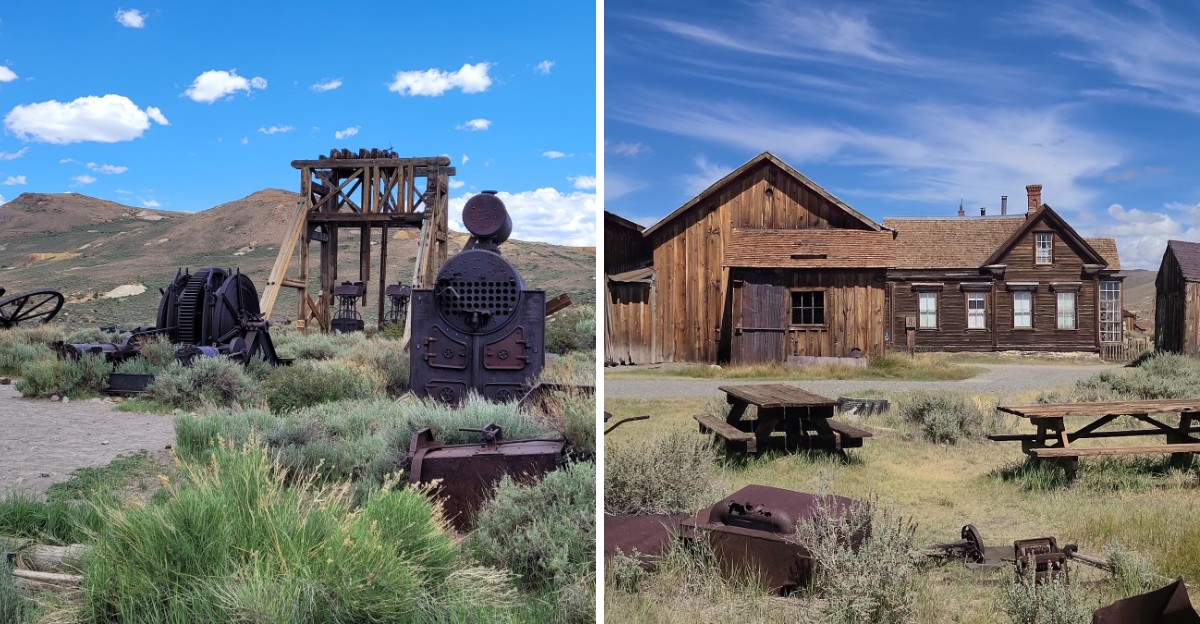
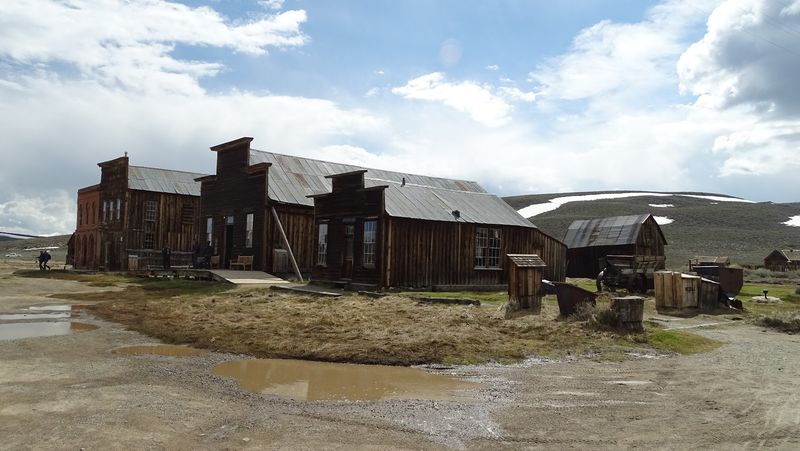
Bodie State Historic Park is preserved in a state called arrested decay. Rangers do not restore the buildings to look new.
They simply keep them from falling apart further.
That choice changes the whole experience. Homes, shops, and a schoolhouse look as if the residents stepped out for the afternoon.
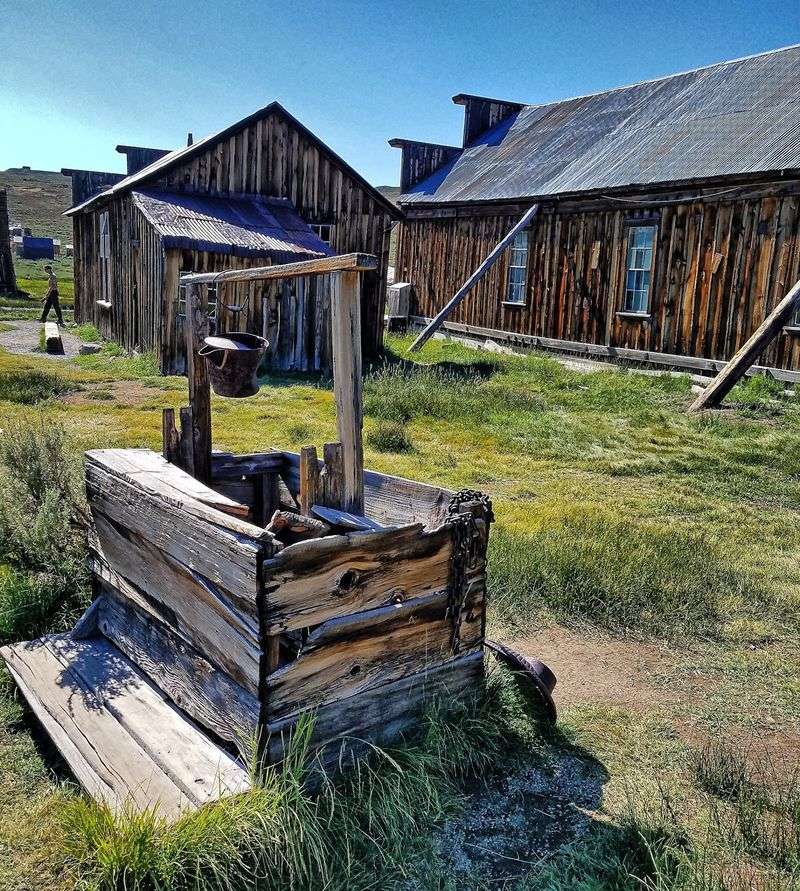
Inside, you can spot bottles, desks, mattresses, jars, and cans through the windows. Some walls even have old newspapers used as insulation.
You will also see old trucks and gas pumps scattered around town. They add a surprising twentieth-century touch to a gold rush scene.
The park sits in Mono County, California, and it was named a National Historic Landmark in 1961 and a State Historic Park in 1962. That recognition helps explain why the place still feels so untouched.
Take your time on the streets. Every building has a different story, and the weathered wood makes every corner a photo waiting to happen.
One Lucky Cave-In Built A Boomtown
Gold was found here in 1859 by W.S. Body, who passed away in a blizzard that same winter.
The town took a slightly different spelling of his name. Nobody could have guessed what came next.
The real boom began in 1875. A mine cave-in uncovered a rich vein of ore, and attention turned to this remote hillside.
In 1877, the Standard Company bought the mine. Bodie quickly became a bustling boomtown.
Between 1877 and 1882, the population reached roughly 8,000 to 10,000 residents. By 1879, the town had grown to around 2,000 buildings.
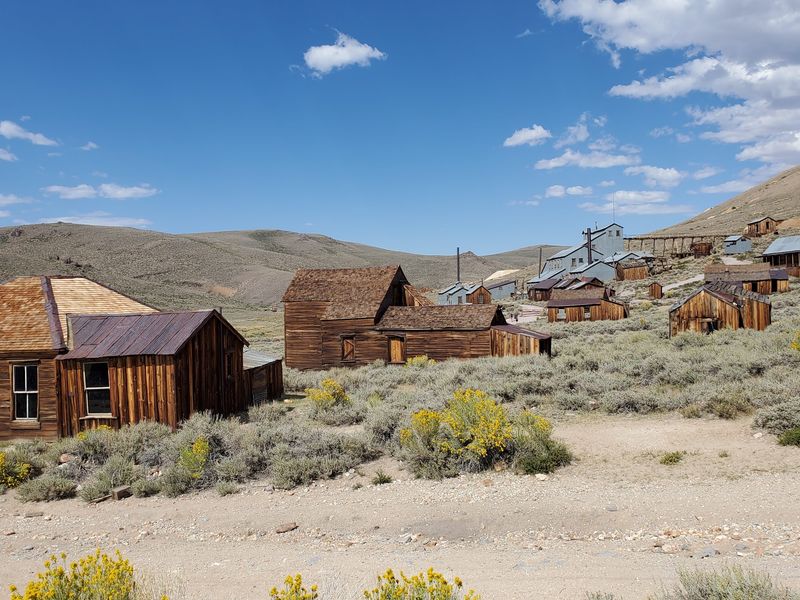
Walking the quiet lanes today makes those numbers feel almost unreal. The empty space between buildings hints at all the homes and shops that are gone.
That contrast is part of the magic. A small collection of survivors tells a huge story.
Sixty-Five Saloons On One Mile Of Street
Try counting the businesses on a mile-long Main Street. In its heyday, Bodie had around 65 saloons, plus a Wells Fargo bank, newspapers, a jail, churches, and a school.
The town also had a mortuary, a red light district, and a Chinatown. It was a full community, not just a mining camp.
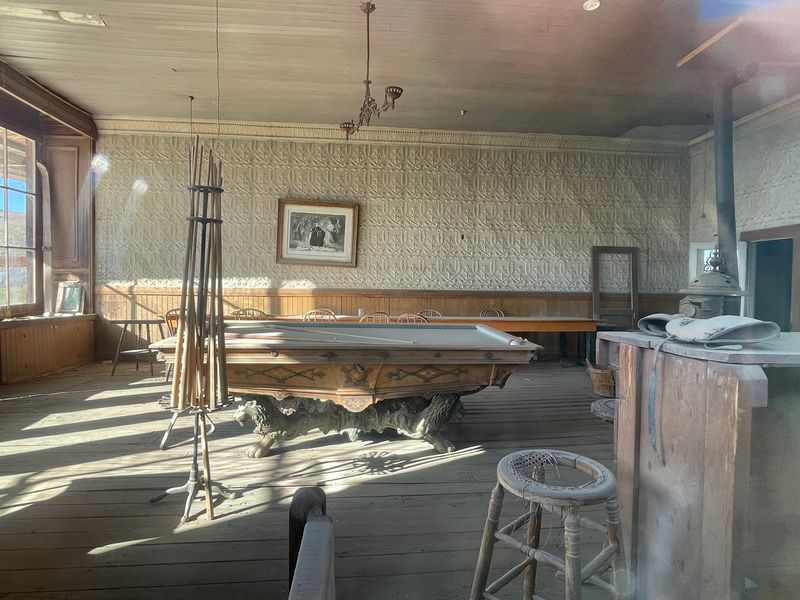
Today the street is quiet, and the wind does most of the talking. You can look into windows at a barbershop, a saloon, and a jail.
Keep your self-guided booklet handy for identifying each building. Booklets are sold at the museum or the kiosk.
Four volunteer fire companies once protected the town. Fire still had the final word, though, because blazes in 1892 and 1932 wiped out large sections.
Walking the street gives you a real sense of scale. Each empty lot was once a doorway.
Hard Hats Not Required, But The Stamp Mill Tour Is Great
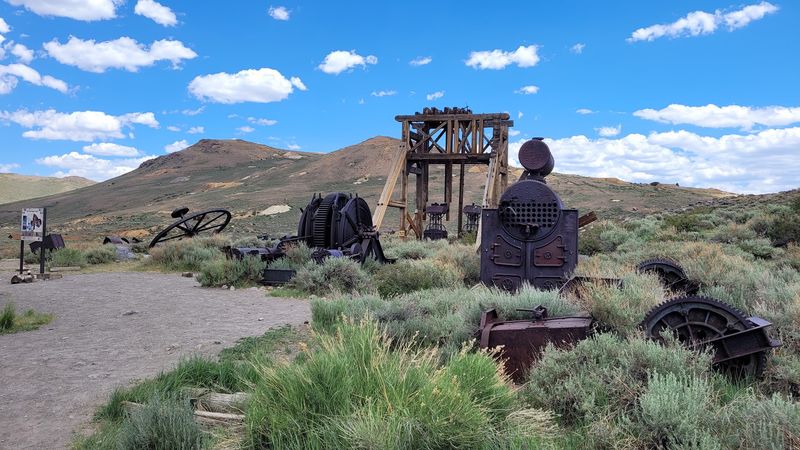
The Standard Stamp Mill is where gold and silver were once processed. Its machinery is still intact, which makes it a rare treat.
Paid tours run seasonally from late May through October. Tickets are sold at the museum, so plan ahead.
The mill is the one building where a guide takes you inside. That makes the tour a nice break from the window-peeking everywhere else.
Arrive early if you can. Ticket sales stop shortly before each tour begins, so cutting it close could leave you out.
Dogs are not allowed on the Stamp Mill tour, so plan around that if you travel with a pet. Free history talks are also offered daily from late May through October.
If you love machines, this stop is the highlight. Seeing the gear that crushed ore makes the boom feel real.
The Museum Is Your Best First Stop
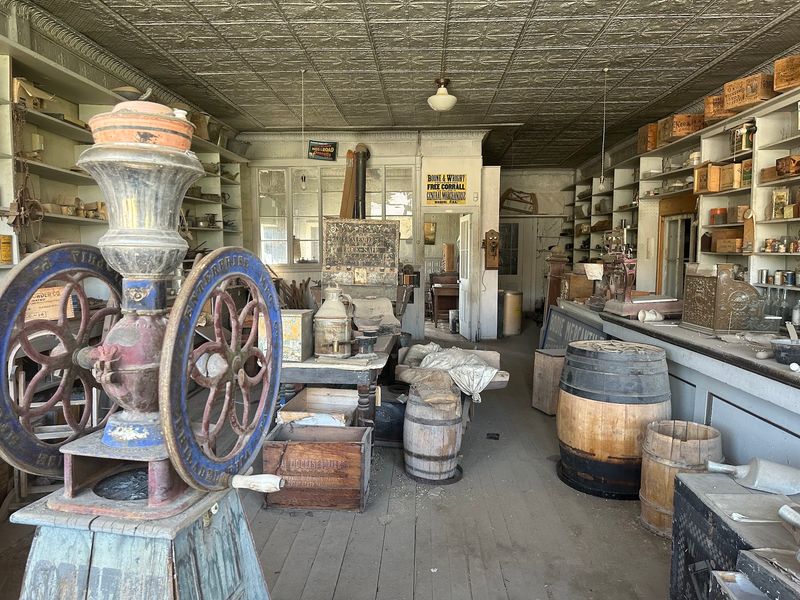
Start at the museum and bookstore, which also serves as the visitor center. It holds historical artifacts and is open during summer hours.
Inside, display cases show items from the town’s past. Tour booklets and a cemetery guide are available there too.
Hours can shift, so check the sign and ask staff about any closures. A quick question can save you from missing the one building you most want to see.
Winter visits are different. Heavy snow and unplowed roads limit access from about November through May, and visitors may need skis, snowshoes, or snowmobiles.
The museum gives context before you wander. Knowing who lived where makes every window more interesting.
Grab a booklet and use it as a map. It turns a casual stroll into a treasure hunt.
Get Ready For The Last Three Miles
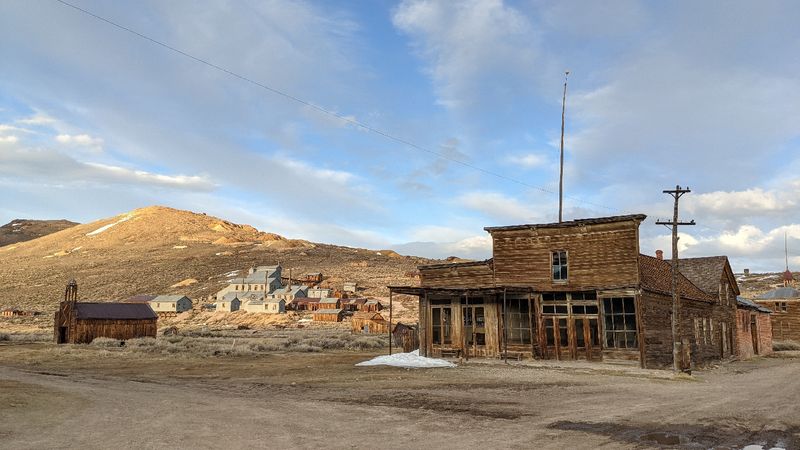
Getting here is part of the adventure. The park is about 13 miles east of Highway 395 on Bodie Road, State Route 270, which leaves the highway roughly seven miles south of Bridgeport.
Fill your tank before the turnoff, since the park sells no gasoline.
Ten miles are paved. The final three are dirt and can be rough, so slow down.
Why rush the last miles when sagebrush hills stretch out this wide?
The address is State Route 270 and Bodie Road, Bridgeport, CA 93517. Your phone’s map should handle the rest.
Download directions before you leave town, though, since cell service can be spotty.
The park sits at about 8,375 feet above sea level. That elevation brings thin air and sudden weather changes.
Dust can be heavy, so using your car’s recirculating air setting helps. Take your time on the washboard stretch.
The remote setting is the point. By the time you park, the modern world feels far away.
Pack Lunch Because Nothing Is For Sale
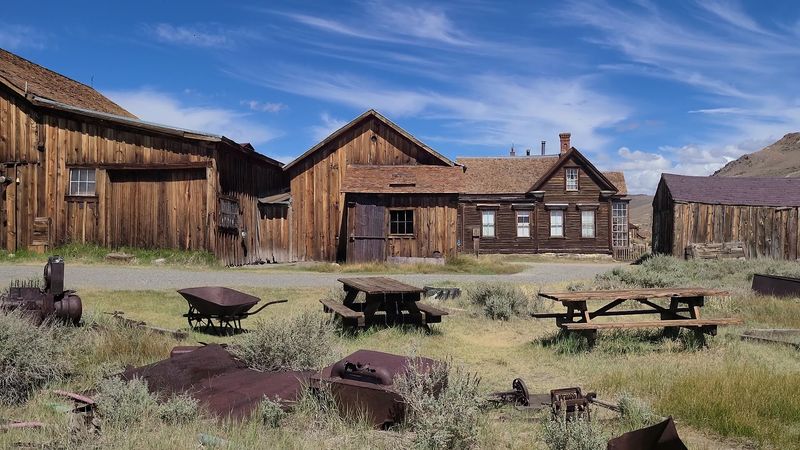
There is no food service inside the park. There are no restaurants, and there is no gasoline either.
Bring your own snacks and water. Potable water is available, which helps on a hot day.
Who wants to cut a visit short because of an empty stomach? A cooler in the trunk lets you linger as long as the daylight allows.
Flush toilets are near the parking lot and picnic area. Additional outhouses sit in the center of town.
A picnic area sits just past the town parking area. It makes a handy lunch spot between building stops.
Carry out your trash so the streets stay as clean as you found them.
Shade is scarce, so sunscreen and a hat are smart. Sturdy shoes also help on uneven ground.
Camping is not allowed in the park. Nearby options are listed through the U.S.
Forest Service and the Bureau of Land Management.
Plan Around The Weather And The Calendar
Summer hours run from Memorial Day weekend through September 30, usually 9 am to 6 pm. Winter hours are generally 9 am to 4 pm.
Spring, summer, and fall are the best times for warm weather and easy access. July and August are the busiest months.
Early fall offers fewer crowds and pleasant temperatures. Summer days can reach the upper 80s, and afternoon thunderstorms happen.
Storms can roll over the hills quickly, so head to your car if lightning appears. Why not check the forecast the morning you go?
Winter is another world. Temperatures can drop below zero, with strong winds and white-out conditions.
Snow can fall almost any month. Dress in layers no matter the season.
Thin air at this elevation makes the sun feel stronger than you might expect.
Entrance is $8 for adults and $5 for youth ages 4 to 17, with kids 3 and under free. Cards are accepted at the kiosk, but cash is preferred.
After-Dark Walks And Wild Neighbors
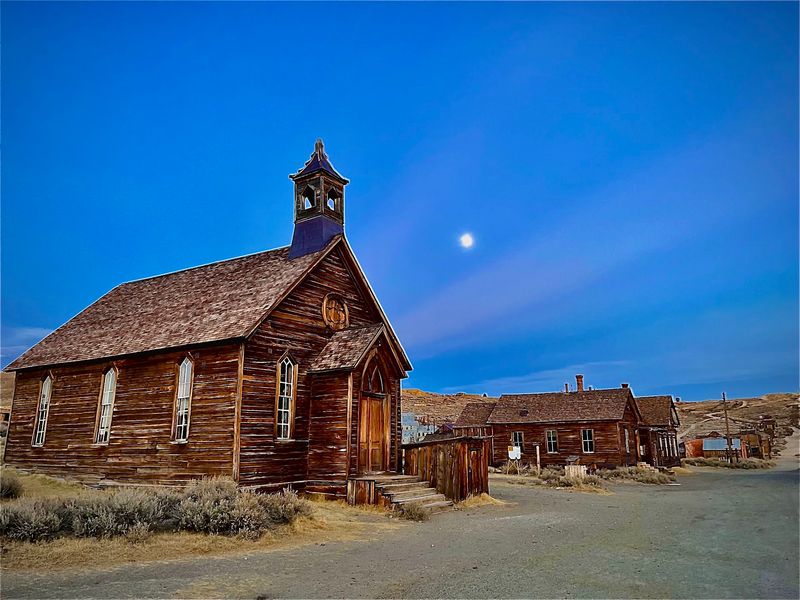
Bodie Ghost Walks happen three or four nights each summer. They allow after-hours access until 10 pm, and they often sell out quickly.
The Bodie Foundation also offers private tours by advance reservation. Options include Town, Stamp Mill, Cemetery, Twilight, and Mining District tours.
Wildlife shares the town too. Jackrabbits, ground squirrels, chipmunks, coyotes, and deer are common sights.
Look up for swallows, ravens, hawks, and peregrine falcons. Sage grouse are also often spotted.
Dogs are welcome on a leash, but not in the museum or on the mill tour. Taking anything from the park is illegal, and metal detectors and drones are prohibited.
Leave everything exactly as you found it. That is how this ghost town stays frozen in time for the next visitor.