
The Family Owned New York Butcher Shop Dry Aging Its Own Steaks
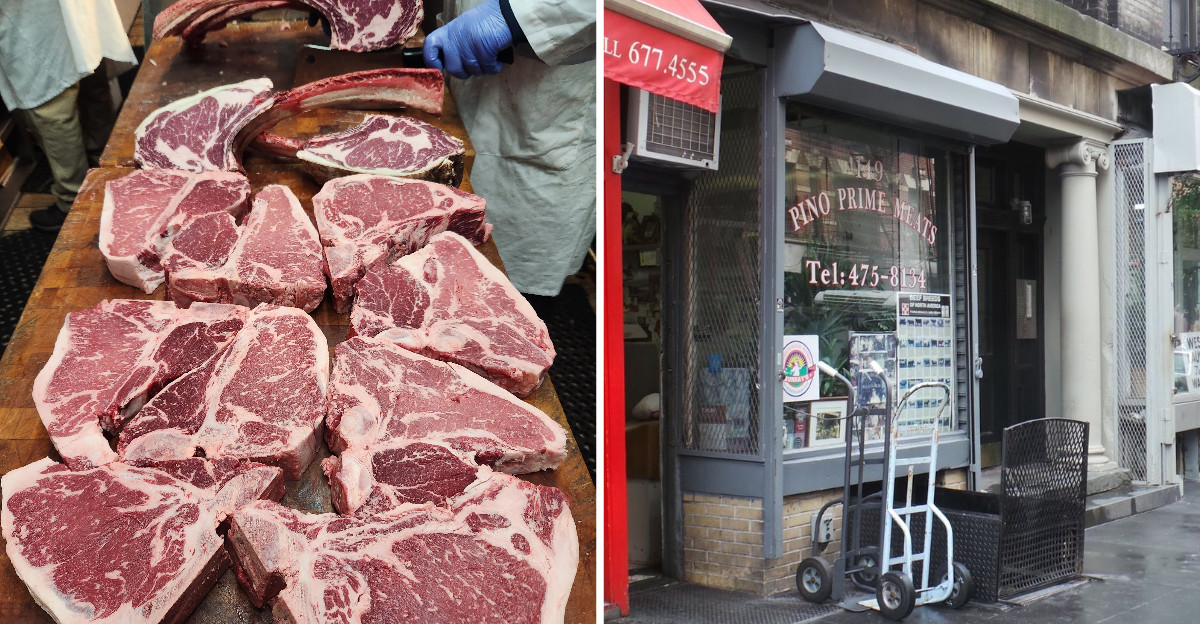
For decades, the butchers have maintained their old wooden chopping block by shaving its surface. The resulting sawdust became one of the shop’s most recognizable old-fashioned details. That’s dedication you can practically smell.
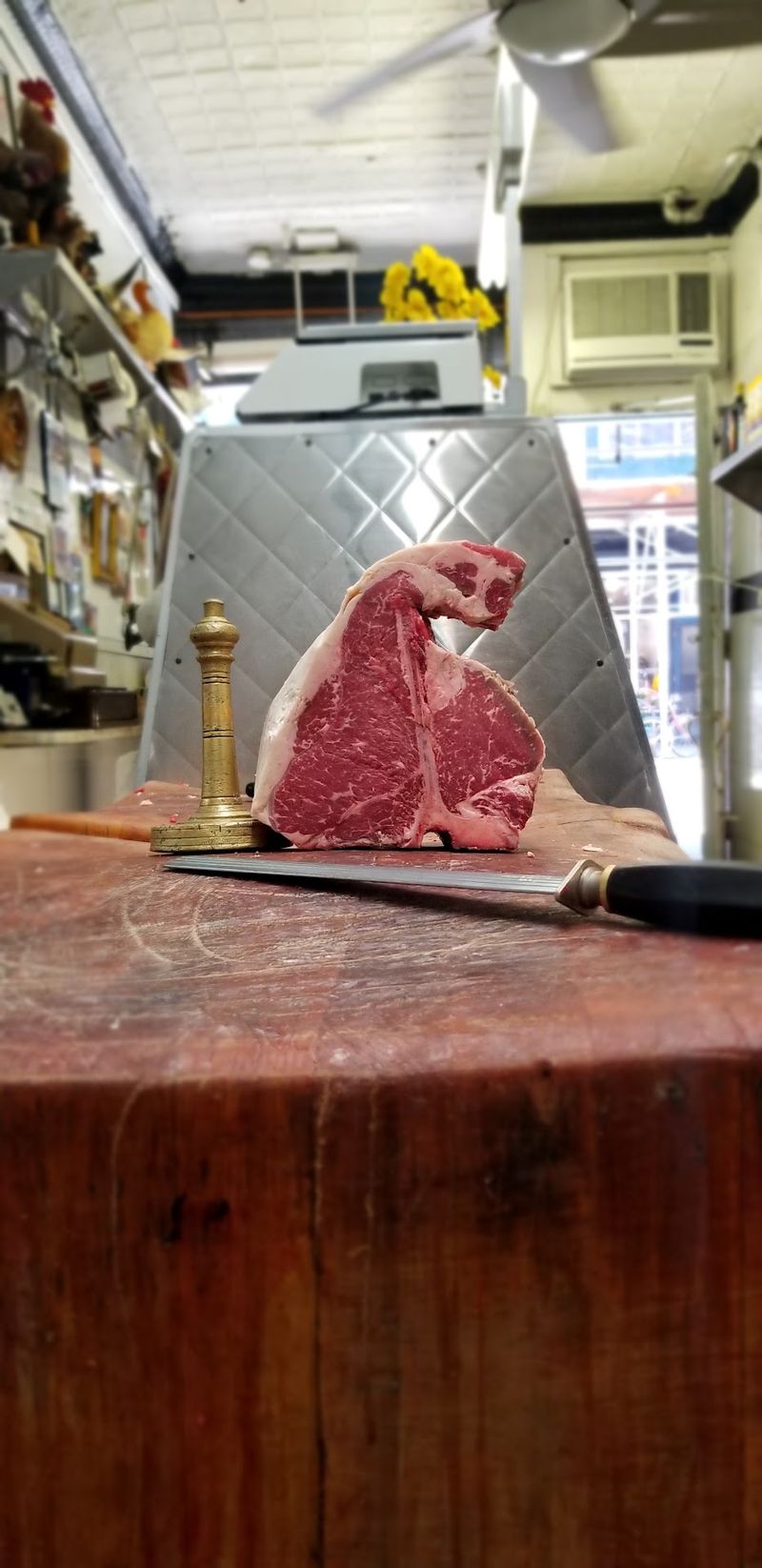
The steaks get the same old-school care. Every prime cut is dry aged in-house for at least 21 days. Nothing leaves the case until somebody slices it to order, right in front of you.
This New York shop has been selling meat since 1904. One Sicilian-born butcher took it over in 1978, and his sons and nephew still work the counter. I appreciate that kind of loyalty, especially in a city that changes its mind daily.
Sausages hang from the ceiling to age. Hand-lettered signs cover the walls. Let’s begin the tale of how a butcher shop ends up in a Godfather movie.
Three Weeks Is the Bare Minimum for These Steaks
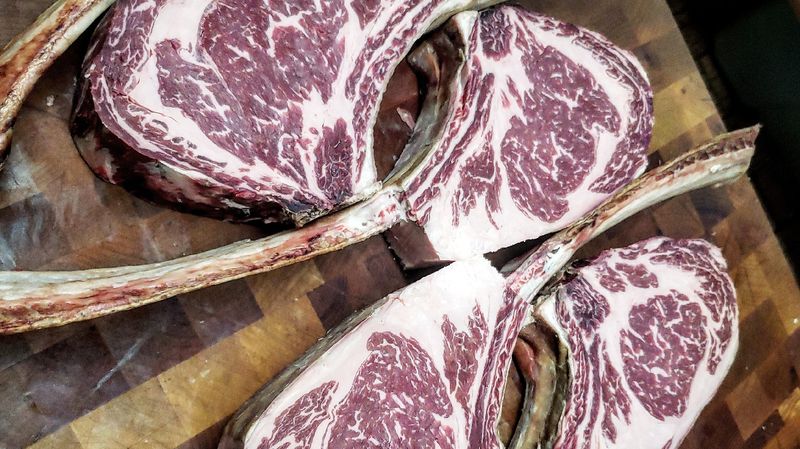
Patience is the secret ingredient at Pino’s Prime Meat Market. Every prime meat in the shop gets dry aged in-house for at least 21 days, and sometimes much longer.
Why does that matter? Dry aging lets natural moisture slowly leave the beef. The flavor gets deeper and more concentrated, almost nutty in the best way.
Most grocery stores skip this step completely. It takes space, time, and real skill to age meat properly. Pino’s has the know-how to do it right, and the results show up in their cases every day.
Tomahawk steaks are one of the showstoppers here. Porterhouse, T-bone, and New York strip also get the aged treatment. Custom requests are welcome too, including extra-long aging for special occasions.
Here’s a smart move for first-timers. Tell the butcher how thick you like your steak, and let them guide you. They cut everything to order, so you’re never stuck with a pre-wrapped slab that’s too thin.
I’d probably start with a dry-aged porterhouse. It gives you two cuts in one, the strip and the tenderloin. That’s basically a sampler platter on a bone, and it’s hard to argue with that kind of math.
A Sicilian Farm Kid Became the Keeper of a 1904 Shop
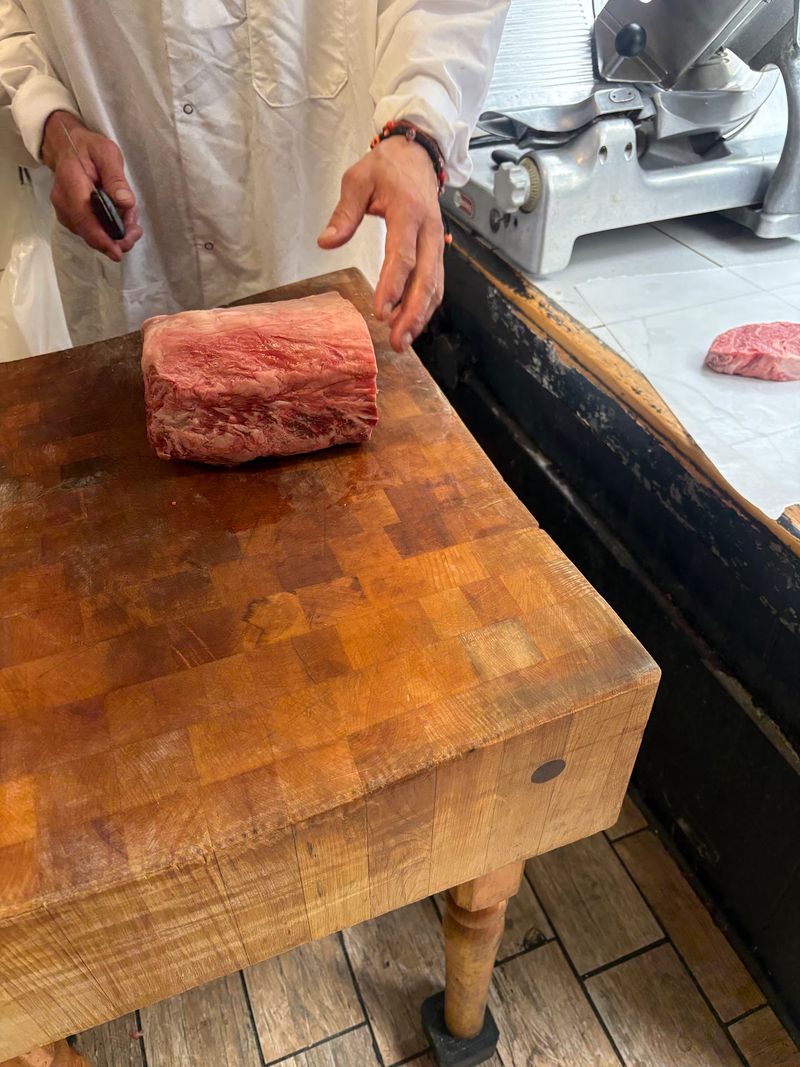
Castrofilippo is a small town in Sicily. That’s where Pino Cinquemani grew up on a farm, and he started carving meat as a teenager.
Butchering isn’t just a job in his family. His grandparents and great-grandparents were butchers too. You could say the craft runs in the family.
In 1978, Pino took over the shop from his friend Mario. The business itself already had deep roots, operating since 1904. That’s over a century of steaks, chops, and Sunday roasts handed across the same counter.
Today the family keeps things moving forward. Pino’s sons, Sal and Leo, work alongside his nephew, who is also named Sal. Yes, two Sals.
Just call out the name and see who turns around.
Family businesses like this are getting rare in New York. Pino’s has been called one of the last old-New York businesses to stay in one family for so long.
I love that the skills here get passed down by hand. Nobody learned this trade from a video. They learned it standing next to a dad, an uncle, or a grandfather, one careful cut at a time.
The Sawdust on the Floor Has a Pretty Cool Backstory
Some shops buy sawdust. Pino’s makes its own, and the method is wonderfully old-fashioned.
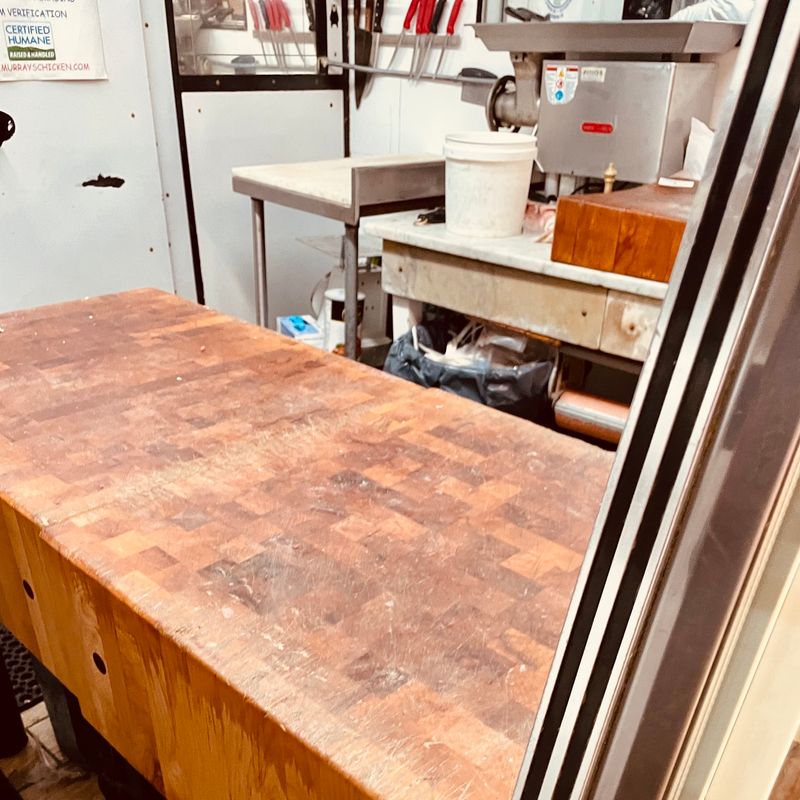
The butchers work on a thick, worn-down wooden cutting board. Historically, they shaved a layer of wood from the block each evening, producing the sawdust that became a familiar feature of the shop.
It’s a tidy little cycle. The practice helped maintain the wooden block while preserving an old-fashioned butcher-shop tradition. Nothing goes to waste, which feels very Sicilian farm in spirit.
That block has clearly seen a lot of action. Decades of cutting have worn it down into something that looks more like a piece of history than a kitchen tool.
Wood has a long tradition in butcher shops for good reason. It’s sturdy, it’s forgiving on knives, and it holds up to heavy daily work.
Look for the old wooden butcher block when you step through the door. It is a small detail, but it tells you a lot about this place. These folks still do things the way butchers did them generations ago, and they clearly aren’t in a hurry to change.
Look Up, Because the Sausages Are Hanging Out Overhead
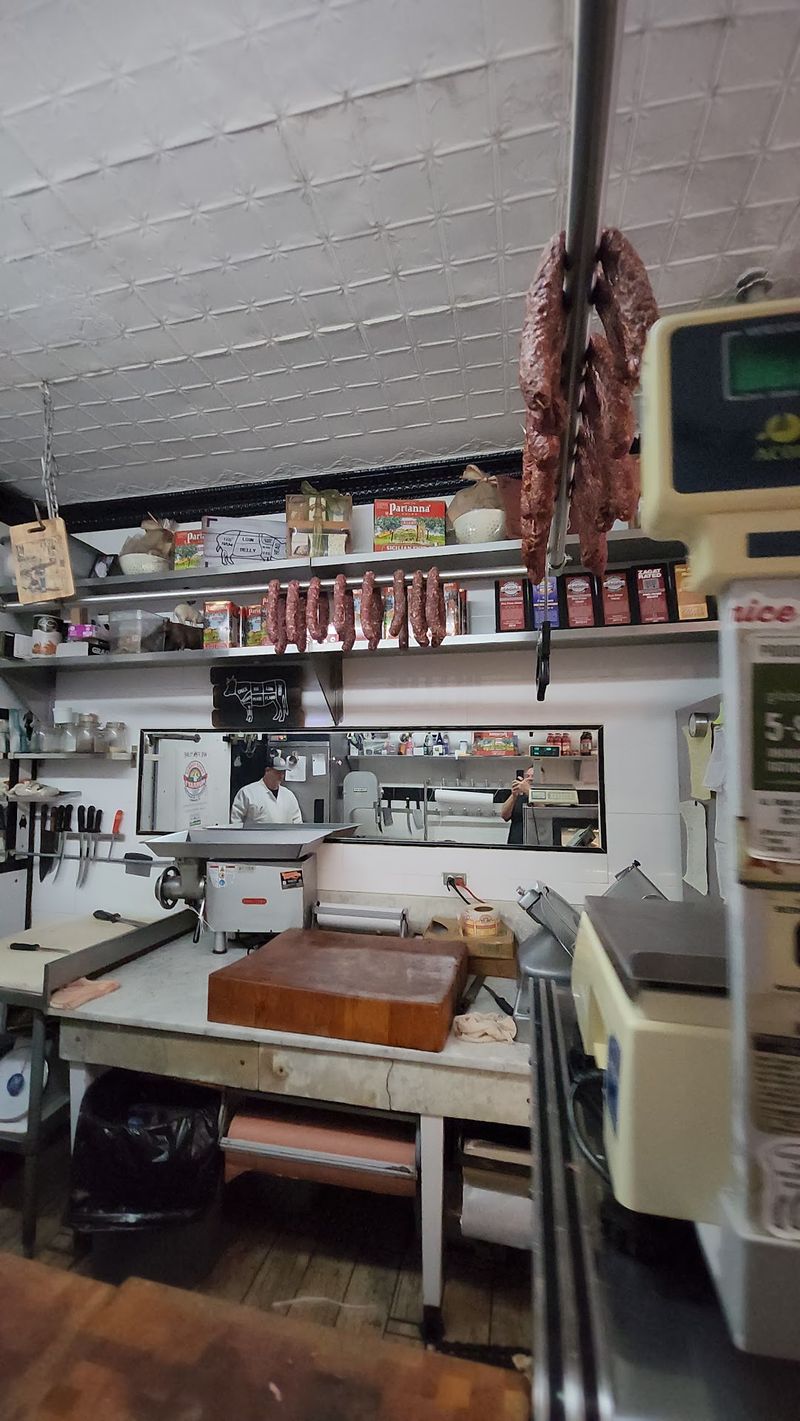
Ceilings usually hold lights. At Pino’s, they also hold sausages.
The shop makes its sausages in the back, fresh every day. Some get hung from the ceiling to age, which makes for one of the most charming views in any New York shop.
Italian specialties are a big part of the lineup here. You’ll find pancetta and thick-cut bacon for breakfast fans. There’s also Sicilian-style braciole made with raisins, a sweet twist that feels straight out of a family recipe book.
The beef roll with cheese and pancetta is another standout. It’s the kind of thing that makes a weeknight dinner feel like a holiday.
Beyond the Italian goods, the cases stay well stocked. Lamb, pork, fresh chickens, and wild game all show up. That variety is handy if you’re cooking for picky eaters or planning a big feast.
My tip? Grab a pound of the house-made sausage on top of whatever you came for. It works in pasta sauce, on the grill, or tucked into a sandwich roll.
I can’t imagine leaving that off my order.
Hand-Lettered Signs Make This Feel Like Old New York
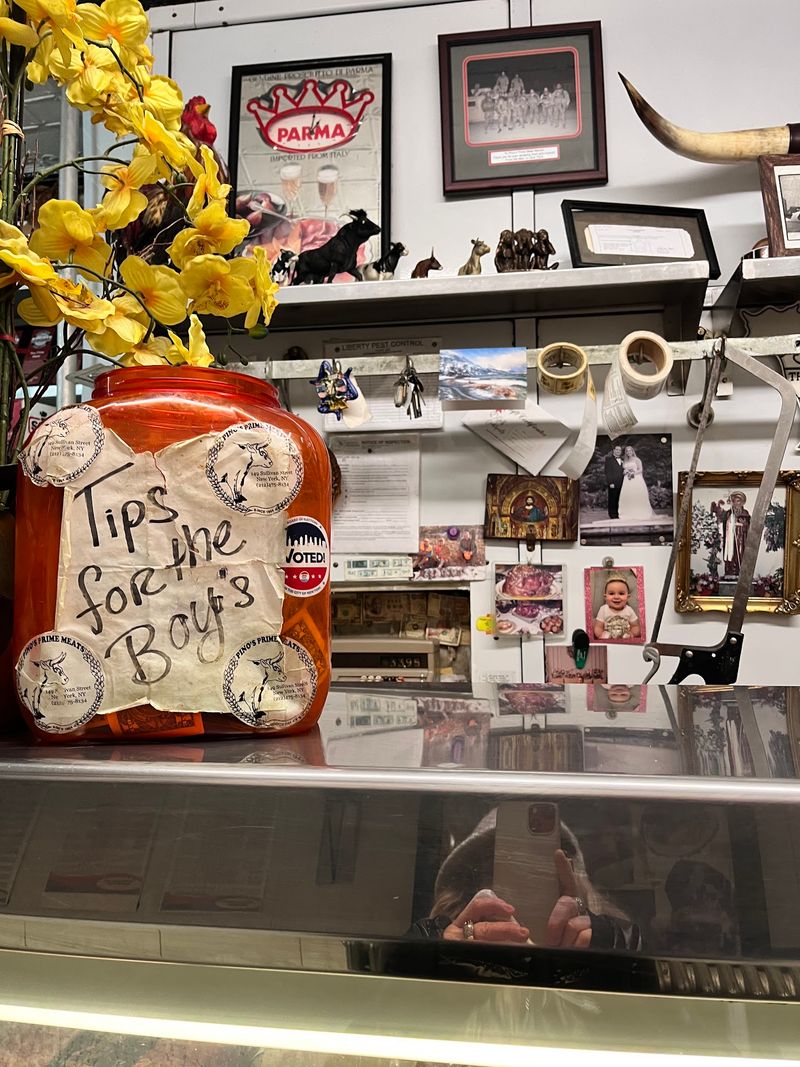
Forget glossy logos and flashy storefronts. Pino’s keeps its look simple, classic, and proudly old school.
Hand-lettered signs dot the space. The fixtures date back to the nineteenth century. Overhead, a pressed tin ceiling finishes the scene like a frame around a vintage photograph.
It’s easy to feel like you’ve slipped back a few decades. In a neighborhood full of trendy boutiques, this shop stands apart by simply staying itself.
That lack of polish is part of the charm. Nobody here is trying to sell you a lifestyle. They’re selling great meat, and the room reflects that honest focus.
The shop also stays clean and well kept. Old doesn’t mean dusty, and the butchers clearly take pride in their workspace.
Photography fans will love this place. The details are rich, from the worn wood to the hanging sausages to the handwritten signs. Just remember that it’s a working shop first, so be polite and let the butchers do their thing.
Honestly, it’s like a museum where you can buy dinner. That’s a pretty great deal for any history buff with an appetite.
Hollywood Came Knocking at This Little Butcher Counter
Movie fans, pay attention. Scenes from The Godfather Part II and The Pope of Greenwich Village were reportedly filmed at Pino’s Prime Meat Market.
That makes sense once you see the place. A shop that looks this authentic barely needs a set designer. The cameras just had to show up.
The celebrity connections don’t stop with film. Former First Lady Jackie Onassis is said to have bought her steaks here. Not a bad customer reference for a neighborhood butcher.
The shop has earned local honors too. In 2014, it received a Village Award, which recognizes businesses that add character to the Greenwich Village area.
Still, nobody here acts like a star. The counter is about service, steaks, and good conversation, not autographs.
If you’re a fan of classic New York cinema, this stop adds a fun layer to your visit. You can browse the cases and picture the scenes that played out nearby. Then you can head home with something far better than a souvenir keychain.
A dry-aged steak beats a movie poster any day. Your dinner guests will agree.
A Whole Neighborhood Showed Up When the Shop Needed Help
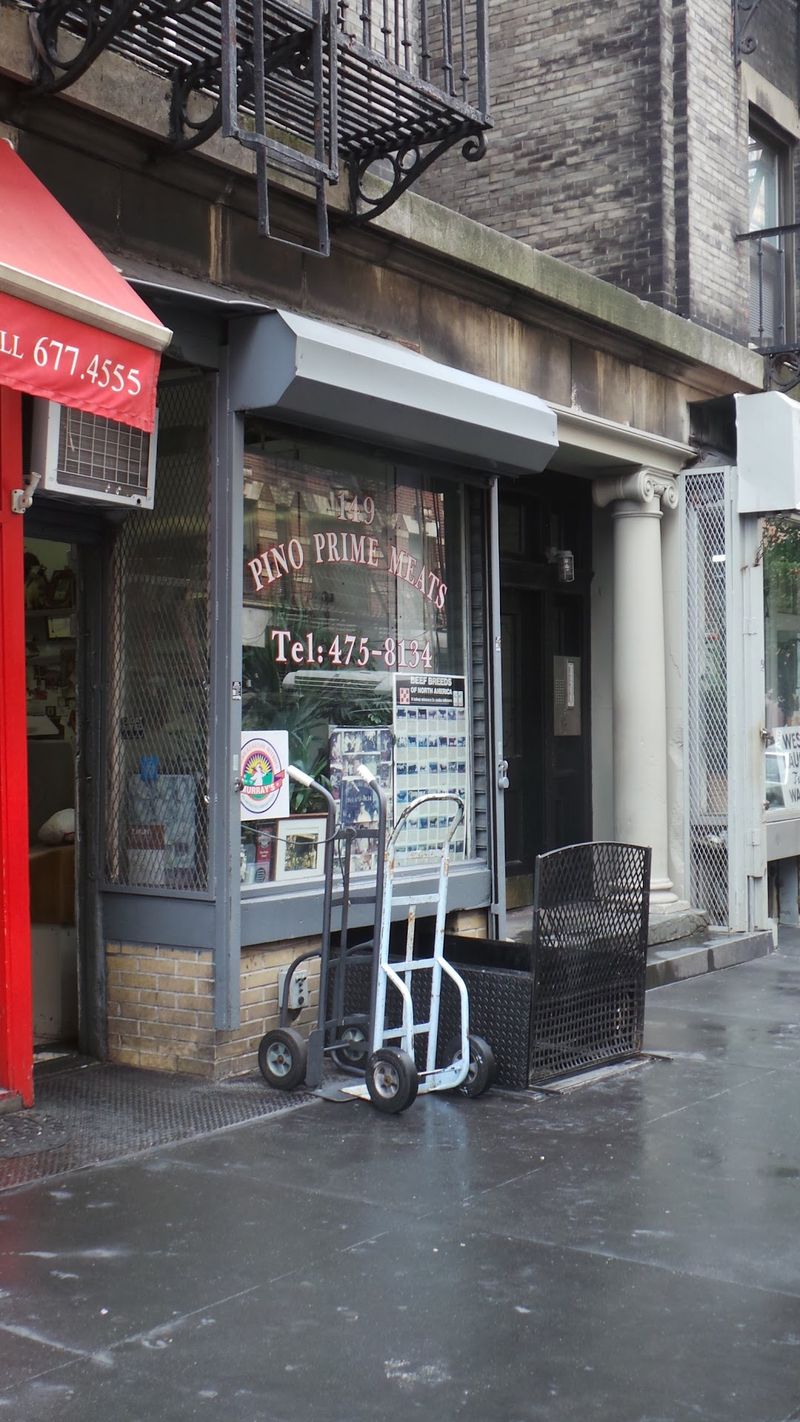
Back in 2013 and 2014, Pino’s hit a rough patch. A landlord dispute put the shop at risk of eviction.
The community didn’t sit quietly. Neighbors rallied behind a petition to save the beloved butcher. Their effort helped the family secure a five-year lease and keep the doors open.
That says a lot about what this place means locally. People don’t sign petitions for just any store. They do it for the spots that feel like part of their own story.
The shop sits in the old Italian South Village. Italian immigrants settled this area over a century ago, and Pino’s remains a living link to those roots.
Plenty of old businesses in New York have faded away over the years. Rents climb, neighborhoods shift, and familiar faces disappear. This shop has managed to hold on.
Supporting a place like this feels good. Every steak you buy helps keep a slice of neighborhood history alive. That’s a pretty meaningful reason to skip the supermarket meat aisle once in a while, don’t you think?
Feeding a Crowd? Ask About a Whole Cow
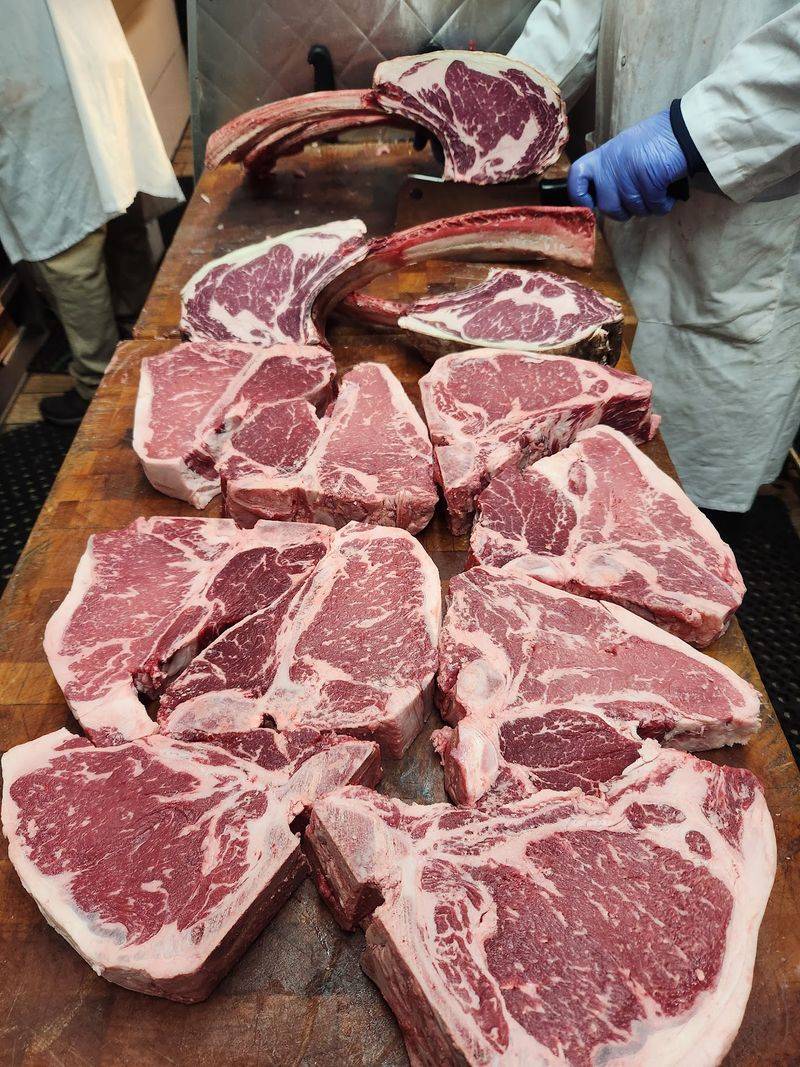
Big appetite? Big freezer? Pino’s can handle that.
The shop sells natural beef by the quarter cow, half cow, or whole cow. That’s a serious option for large families, meal planners, or anyone who wants a long supply of quality beef.
Buying in bulk lets you stock up on a mix of cuts. You’ll get steaks, roasts, and ground beef all at once. It’s like hitting the jackpot for home cooks.
Not ready for that level of commitment? No problem at all. Everything is cut to order, so you can buy one chop or a dozen.
The butchers know their stuff, and they’re happy to share advice. Ask how to cook a cut, how thick to slice it, or what works best for a holiday roast. Lamb legs, turkeys, and tenderloins are all fair game for special meals.
A quick heads-up for planning ahead. If you need a large order or a specialty cut, give the shop some notice. That way the team can prepare everything just the way you want it.
Bring Cash and Show Up Before Six
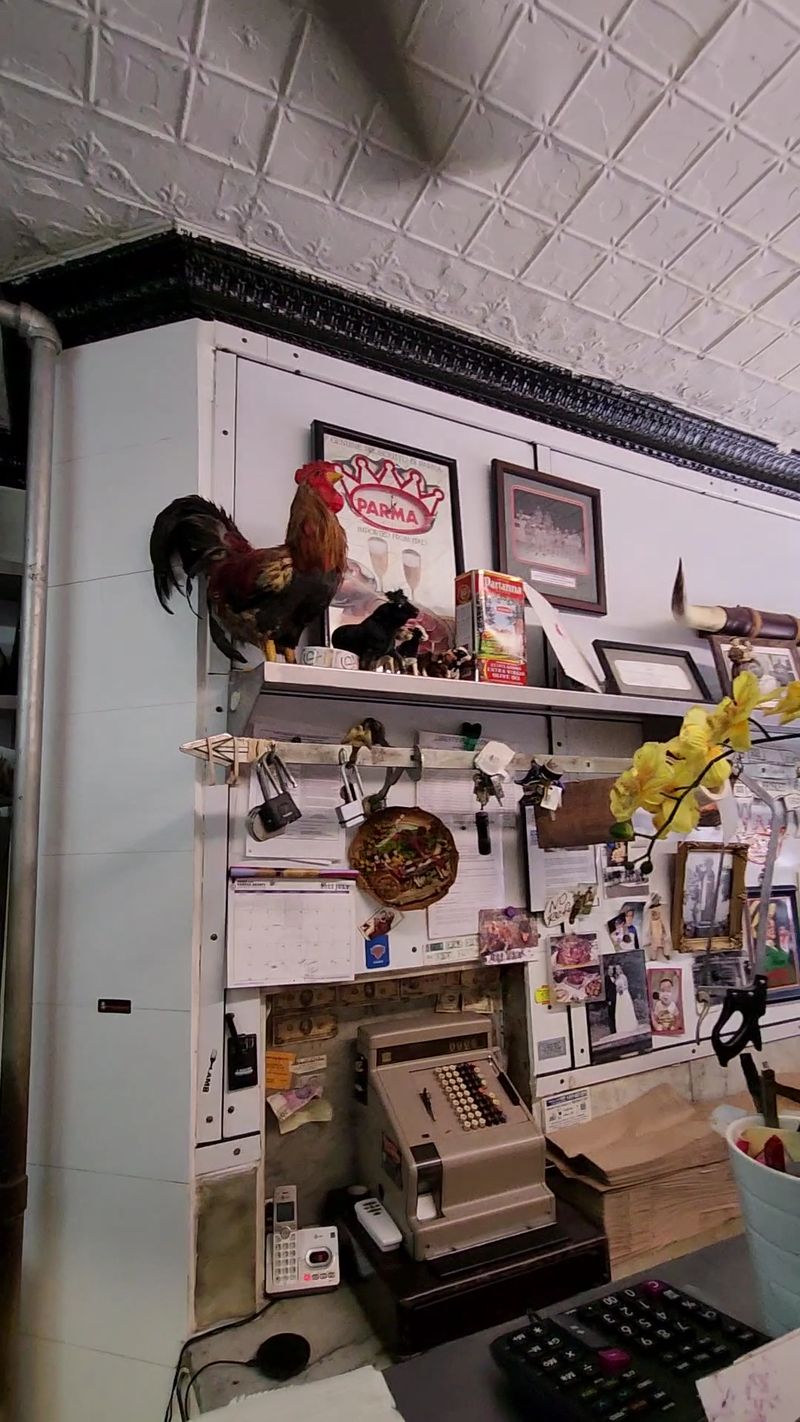
Here’s the most important tip of all. Pino’s Prime Meat Market is cash only, so stop at an ATM before you arrive.
You’ll find the shop at 149 Sullivan St, New York, NY 10012, right in SoHo. It’s a charming stretch of Manhattan where old Italian roots still show through the newer storefronts.
The shop opens Monday through Saturday at 8:30 AM, but published closing times differ, so confirm the hours before visiting. Sunday is closed, so plan your weekend steak dinner accordingly. Saturday shopping makes for an easy Sunday feast.
Because everything is cut to order, weights won’t always land on an exact number. Steaks are sliced by hand, not by machine. A little flexibility goes a long way here.
Arriving earlier in the day gives you the best chance at a relaxed chat with the butchers. You’ll have time to ask questions and explore the cases.
Pair your visit with a stroll around the surrounding streets. New York City is full of great food stops, but few have this much history behind the counter. Grab your steaks, wave goodbye to the hanging sausages, and go cook something wonderful.