
The 9 New York Boardwalk Trails Where You Can Cross Wetlands And Get Huge Views Without A Hard Climb
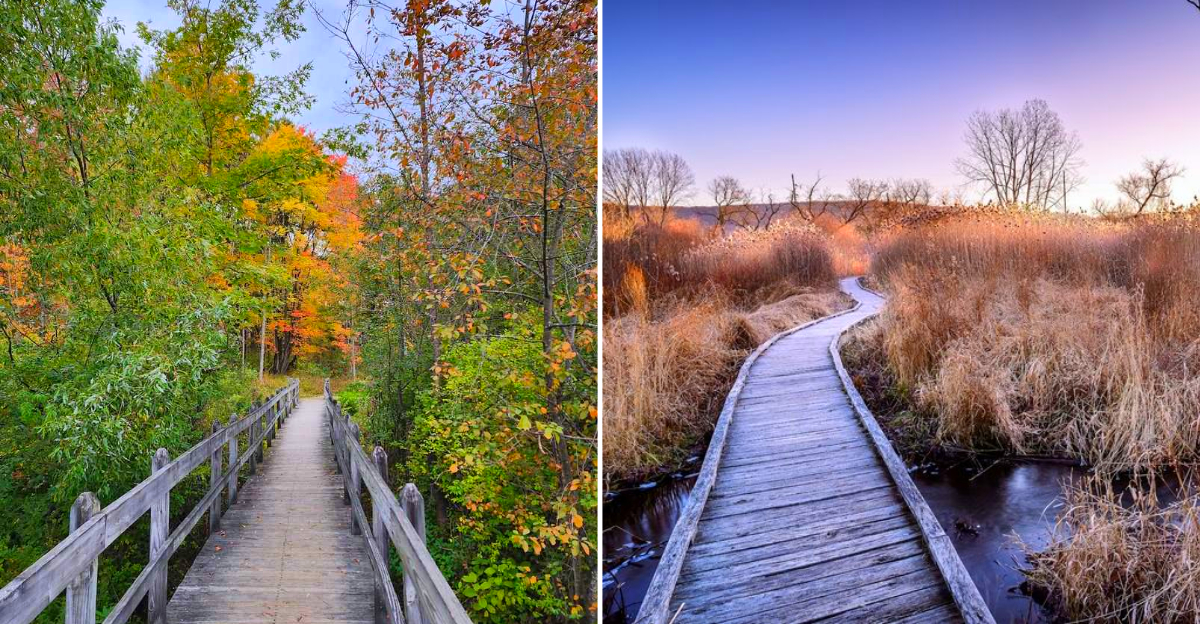
Wooden planks laid straight across a marsh will get you the same horizon that costs other people an hour of climbing. Nine trails in New York work this way, running out over bogs and tidal creeks on boards a few inches above the water.
Nothing about that should feel like cheating, and yet it does a little. Herons stand around close enough to study. Frogs go quiet as you pass and start up again behind you.
Shoes stay clean, calves stay unbothered, heart rate never becomes a topic.
Flat does not mean dull. It means the effort goes somewhere other than your legs, which turns out to be the entire argument for walking on planks instead of dirt.
1. Madam Brett Park – Beacon
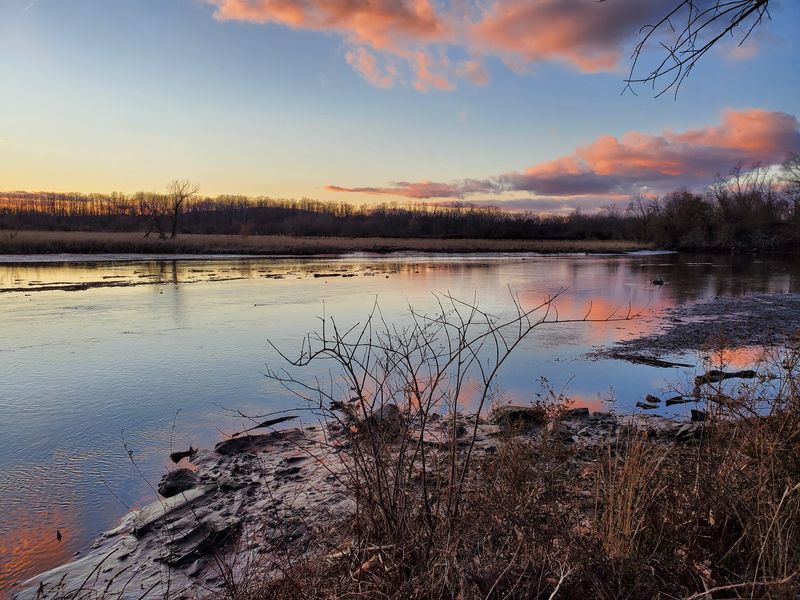
Beacon gets plenty of attention for its art museum and its mountain, but the quiet winner sits down by the water. Madam Brett Park sends a boardwalk out over Fishkill Marsh, and the whole thing feels like a secret passage.
Marsh grasses lean in on both sides. Frogs plop into the shallows as you pass. Muskrats paddle around like they own the deed, which honestly they might.
Look skyward often, because ospreys patrol this stretch and bald eagles show up more than you would expect. The trail sits at 560 South Avenue in Beacon, and drivers plugging in 552 South Ave will land right at the parking area.
Flat planks and easy grades make the route friendly for strollers, wobbly toddlers, and anyone who has had enough of switchbacks. The full walk takes maybe forty minutes if you dawdle, and you should dawdle.
Old mill ruins sit nearby, quiet reminders of the days when this creek powered New York industry. Morning light here turns the water silver. Bring binoculars, bring snacks, and leave the hiking poles in the trunk.
Tidal influence reaches this far up the Hudson, so the marsh shifts through the day. Fishkill Creek once powered mills along this stretch, and the ruins mark where the water did real industrial work.
2. Labrador Hollow Unique Area – Tully
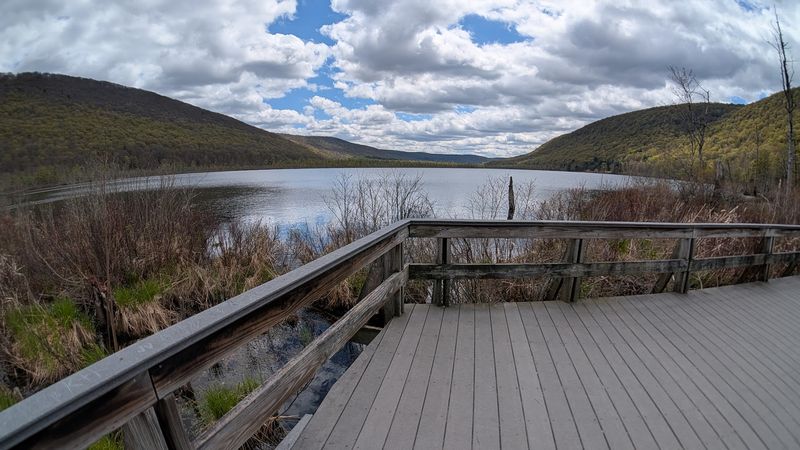
Carnivorous plants live here. That alone should sell the trip, but there is more waiting at the north end of Labrador Pond.
A half mile of boardwalk runs perfectly level through a wetland that scientists get genuinely excited about. Rare sedges grow along the edges. Bog mosses form spongy green mats that look soft enough to nap on, though the planks are the smarter choice.
Views open across the pond toward a forested ridgeline that hang gliders launch from on breezy days. Sunset light turns that ridge amber, and the pond doubles the whole show in reflection.
Find the trailhead off Labrador Road in Tully, roughly twenty minutes south of Syracuse. Parking is simple and free, which is always a pleasant surprise in central New York.
Sundews and pitcher plants trap insects along the wet margins, so slow down and study the low growth. Kids tend to lose their minds over plants that eat bugs.
The path is fully accessible, so wheelchairs and walkers roll along without trouble. Spring peepers make a racket in April. Bring a light jacket, since the hollow holds cool air.
Glaciers carved this hollow, leaving steep walls that trap cool air year round. That microclimate explains why northern bog species survive here, hundreds of miles south of where they usually grow.
3. Constitution Marsh Audubon Center And Sanctuary – Garrison
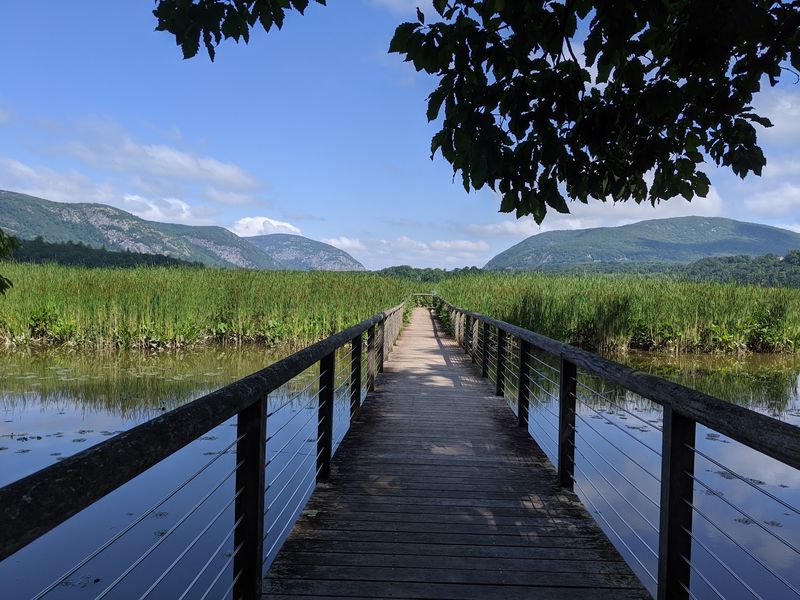
Two hundred seventy acres of tidal marsh sit along the Hudson, and a slim boardwalk carries you right into the middle of it. That is the pitch at Constitution Marsh, and it delivers every time.
Herons stalk the shallows on stilt legs. Marsh wrens buzz from the cattails. Birders show up with lenses the size of small telescopes and nobody judges them.
The sanctuary sits at 127 Warren Landing Road in Garrison, and the walk down from the parking area is short but a bit rocky before the planks begin. Wear real shoes.
Once you reach the boardwalk, the payoff arrives fast. Water spreads out in every direction and the Hudson Highlands rise up like a stage set behind it.
Tides matter here more than at most New York trails. High water floods the marsh into a shimmering sheet, while low tide exposes mudflats where shorebirds go hunting.
Parking is limited, so arrive early on weekends or plan a weekday visit. Check the Audubon center schedule before driving out. Sunrise sessions here are quietly spectacular.
The marsh was once diked for rice farming in the 1830s, a venture that failed quickly. Those old channels still shape the water today, which is why the boardwalk follows the route it does.
4. Sunken Forest At Sailors Haven – Fire Island
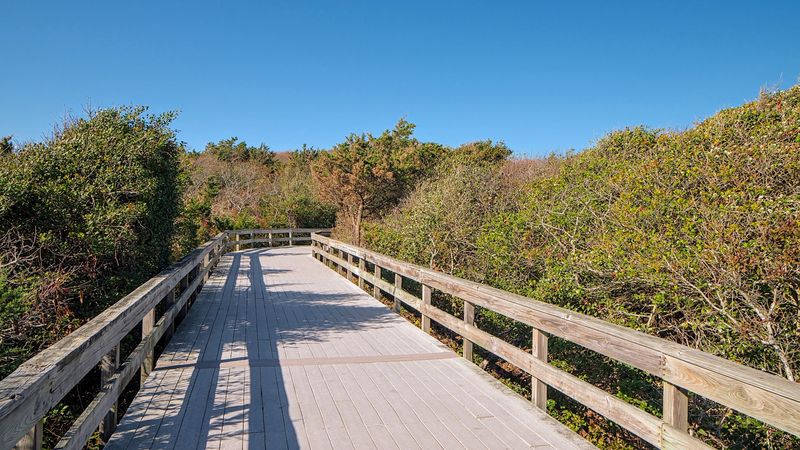
Holly trees three hundred years old grow behind a wall of sand dunes, and a boardwalk floats through the middle of them. The Sunken Forest is one of the strangest and best walks in New York.
The canopy sits low because salt spray trims it flat. Sunlight filters through in green ribbons. Deer wander past close enough to make you freeze mid step.
A 1.5 mile plank trail loops through the maritime forest and out toward the bay, and the whole route is wheelchair accessible. No sand slogging required.
Getting there means a boat ride, which only adds to the fun. Ferries to Sailors Haven leave from the Sayville terminal at 41 River Road in Sayville, and the crossing takes about twenty minutes.
Check the ferry schedule carefully, because the last boat back is not a suggestion. Missing it makes for a very long evening.
Pack water and sunscreen for the beach portion of the day. Swimming is right there when the forest walk ends. Few places on earth feel this cinematic at sea level.
The forest sits below sea level behind the dunes, which is how it earned the name. Salt spray prunes the canopy flat at the height of the dune line, creating that low green ceiling.
5. Paul Smiths College Visitor Interpretive Center – Paul Smiths
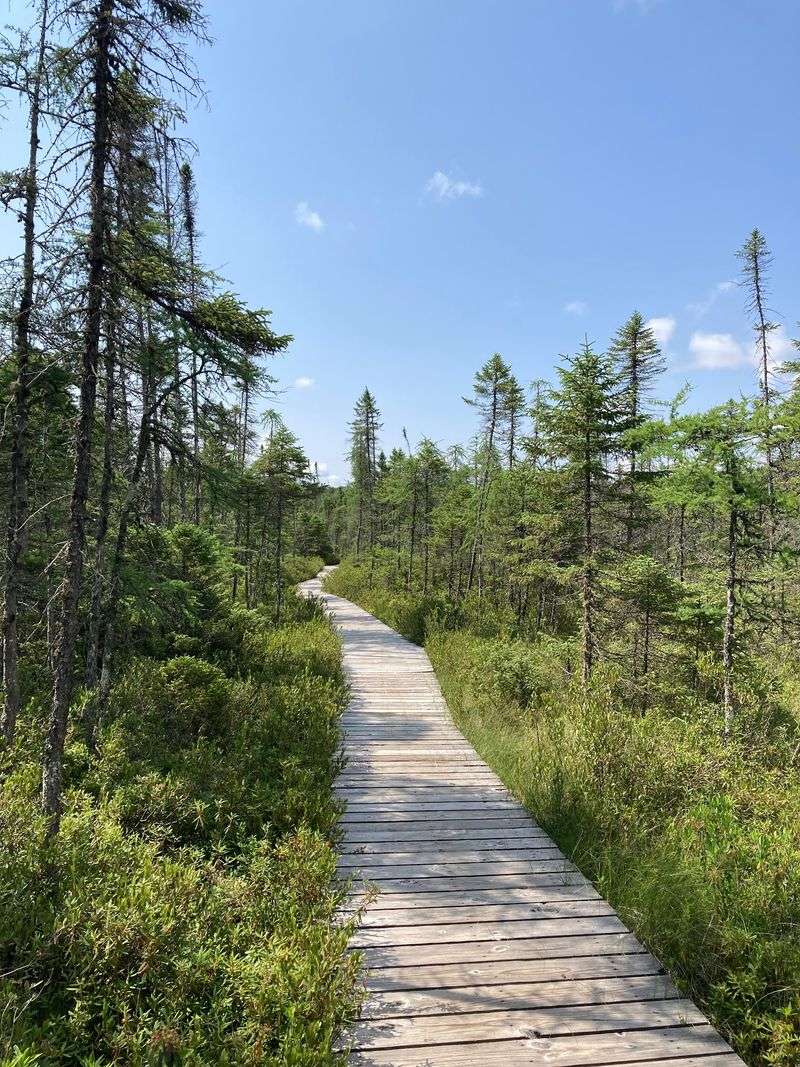
Twenty five miles of trails run through the woods here, and the boardwalks are the crown jewels. The VIC in the Adirondacks keeps its planks in excellent shape, which matters when you are standing over open bog.
Heron Marsh gets the star treatment. A long boardwalk pushes out across the wetland and puts you eye level with pickerelweed, dragonflies, and the occasional great blue heron doing its slow motion fishing routine.
The Boreal Life Trail earns equal praise. An easy one mile loop carries a lengthy boardwalk through a bog habitat that feels transplanted from northern Canada.
You will find the center at 8023 State Route 30 in Paul Smiths, an hour north of Lake Placid. Admission is free, and the interpretive signs actually teach you something.
Tamaracks turn gold here in October, one of the finest color shows in New York. Winter brings snowshoe trails and a completely different silence.
Bug spray belongs in your bag from June through July. Black flies in the Adirondacks are famously unbothered by your feelings. Otherwise, the walking could not be gentler.
Sphagnum moss builds these bogs slowly, accumulating peat over thousands of years. The ground beneath the Boreal Life boardwalk holds a record of Adirondack plant life stretching back to the last glaciers.
6. Sapsucker Woods At The Cornell Lab Of Ornithology – Ithaca
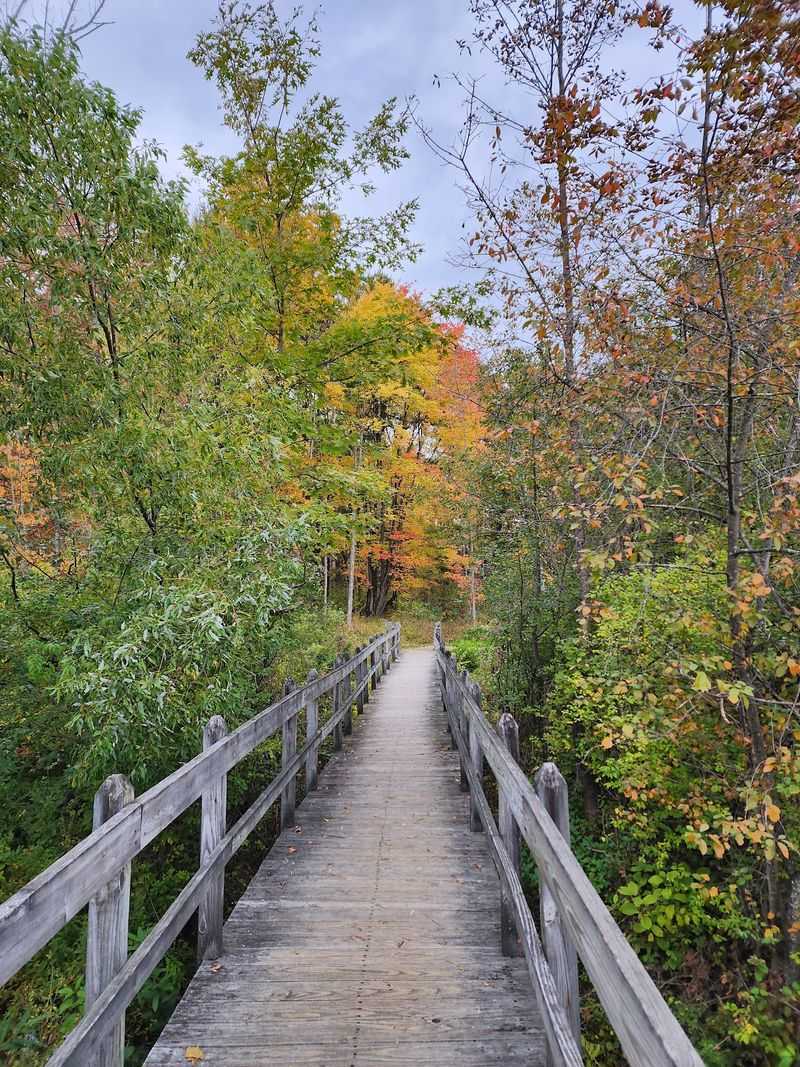
More than 225 bird species have been recorded on this property, which explains why people whisper here. Sapsucker Woods belongs to the Cornell Lab of Ornithology, and the birding pedigree is unmatched.
Four plus miles of easy trails circle the sanctuary. Boardwalks glide over soggy ground and skim the edge of a quiet pond where herons and wood ducks hang around.
Head to 159 Sapsucker Woods Road in Ithaca and start at the visitor center, where floor to ceiling windows look out on feeders swarming with chickadees and finches. Free binoculars are available to borrow.
Spring migration in May turns the woods into a warbler carnival. Tiny flashes of yellow and blue move through the branches faster than you can focus.
Trails stay open dawn to dusk year round, and the boardwalk sections keep your feet dry even after heavy rain. Flat ground the whole way.
Fun detail worth knowing. The name comes from yellow bellied sapsuckers that nest in the area, and yes, that is a genuine bird and not a punchline. The lab runs bird cams broadcast worldwide from these grounds.
Researchers here built eBird, the database millions of birders use, which makes this pond more scientifically documented than most.
7. Great Swamp Appalachian Trail Boardwalk – Pawling
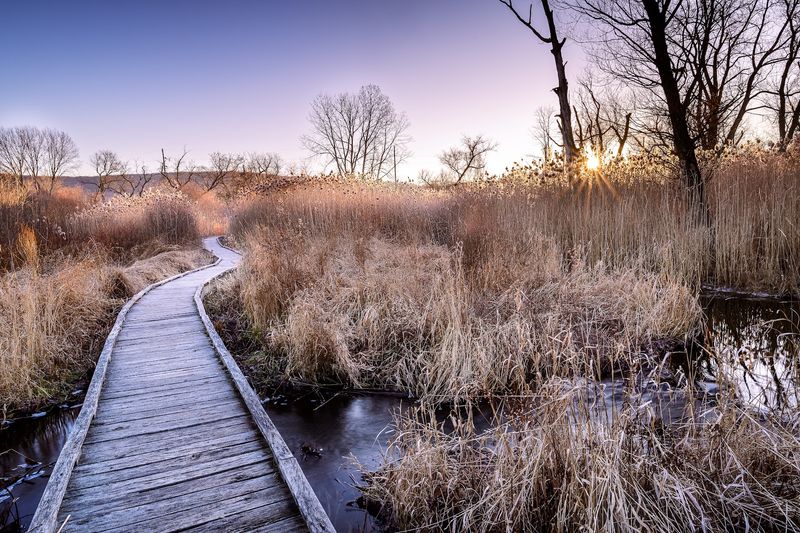
Thru hikers walking from Georgia to Maine cross this exact stretch of planks, and you can join them for about fifteen minutes of effort. The Great Swamp boardwalk near Pawling runs roughly 1,600 feet straight across the marsh.
Cattails press in on both sides. Red winged blackbirds shout from the tops of them, defending territory with all the drama of a tiny opera.
Midway across sits a 34 foot bridge over the Swamp River, a name that wastes zero time on subtlety. Turtles sun themselves on logs below.
Parking sits about two miles north of Pawling along NY 22, just north of the Appalachian Trail crossing. The garden center called Native Landscapes on NY 22 makes a handy landmark while navigating.
Elevation gain on this section is essentially zero, which makes it one of the friendliest slices of the AT in New York. Sneakers are fine.
Morning fog rising off the swamp is worth an early alarm. Come back in autumn and the whole basin glows rust and gold. Simple, flat, and unforgettable.
The Great Swamp covers roughly 6,000 acres, making it one of the largest wetlands in the state. Water here drains in two directions, feeding both the Croton and Housatonic watersheds.
8. Indian Creek Nature Center – Canton
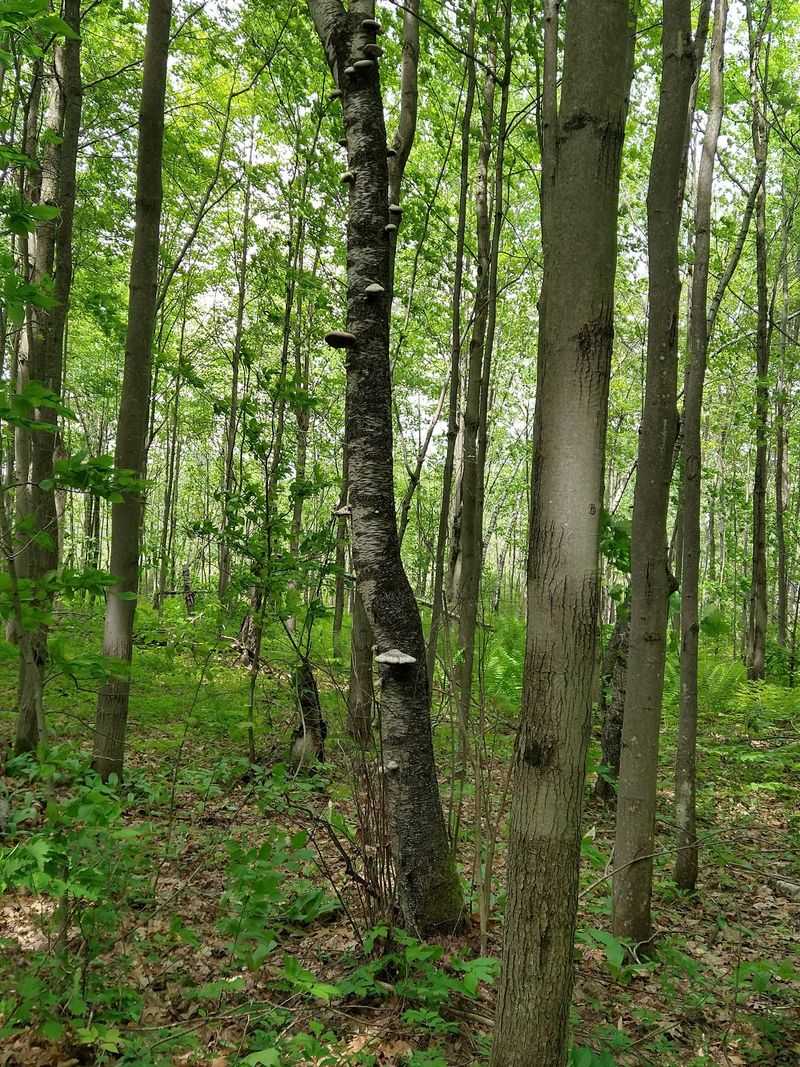
Up in St. Lawrence County, where the crowds thin out and the sky gets enormous, a boardwalk crosses a marsh that hums with life. Indian Creek Nature Center keeps this trail accessible from end to end.
The planks glide over shallow water thick with lily pads. Painted turtles line up on floating logs. Frogs provide the soundtrack, free of charge.
An observation deck waits at the far end, and the view from it is the whole reason to come. Woods and wetlands roll outward across the Upper and Lower Lakes Wildlife Management Area.
The center sits at 770 County Route 14 in Canton, an easy drive from town. Trails are free and open to the public.
Waterfowl gather in serious numbers during spring and fall migration, so bring binoculars and give yourself time on that deck. Ducks, geese, and herons all cycle through.
Northern New York does not get nearly enough credit for this kind of quiet grandeur. Flat walking, huge horizons, and no summit required. Beavers occasionally rearrange the scenery overnight.
9. Beaver Lake Nature Center – Baldwinsville
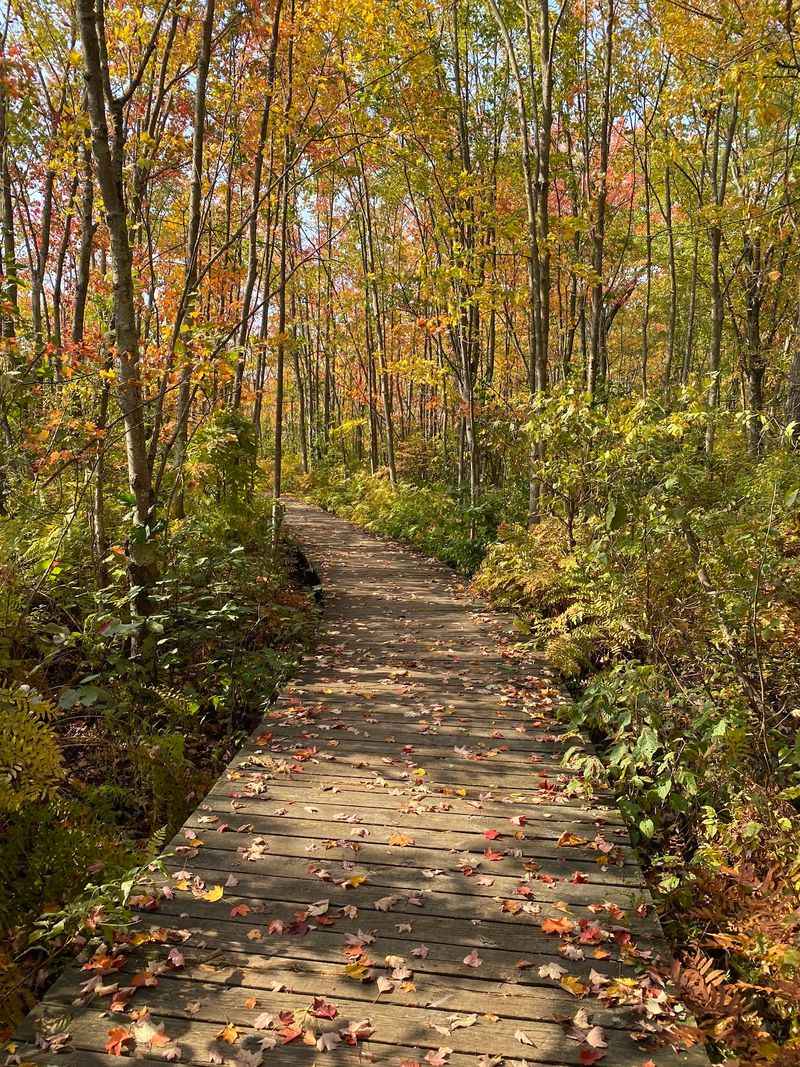
Nine plus miles of trails wrap around a glacial lake, and one boardwalk stretches nearly a full mile. Beaver Lake Nature Center may be the most generous plank collection in central New York.
The Lake Loop is the headliner. Wooden walkways carry you over marsh, swamp, and a rare fen along the southern shore, all without a single muddy sock.
Cranberries grow low along the fen edges. Insectivorous plants lurk nearby, quietly ambushing gnats while you stroll past unaware.
Find the entrance at 8477 East Mud Lake Road in Baldwinsville, about twenty minutes northwest of Syracuse. A modest vehicle fee applies, and the visitor center has maps plus clean restrooms.
Fall migration brings thousands of Canada geese to the lake at dusk, an arrival that sounds like a stadium waking up. October foliage doubles the drama.
Winter transforms the place into a cross country ski hub with rentals available. Summer belongs to dragonflies and turtles.
Benches appear at smart intervals, so resting is easy. Flat, wide, and welcoming, this one suits every pair of legs.