
The Oklahoma Roadside Attraction One Man Spent A Quarter Century Creating
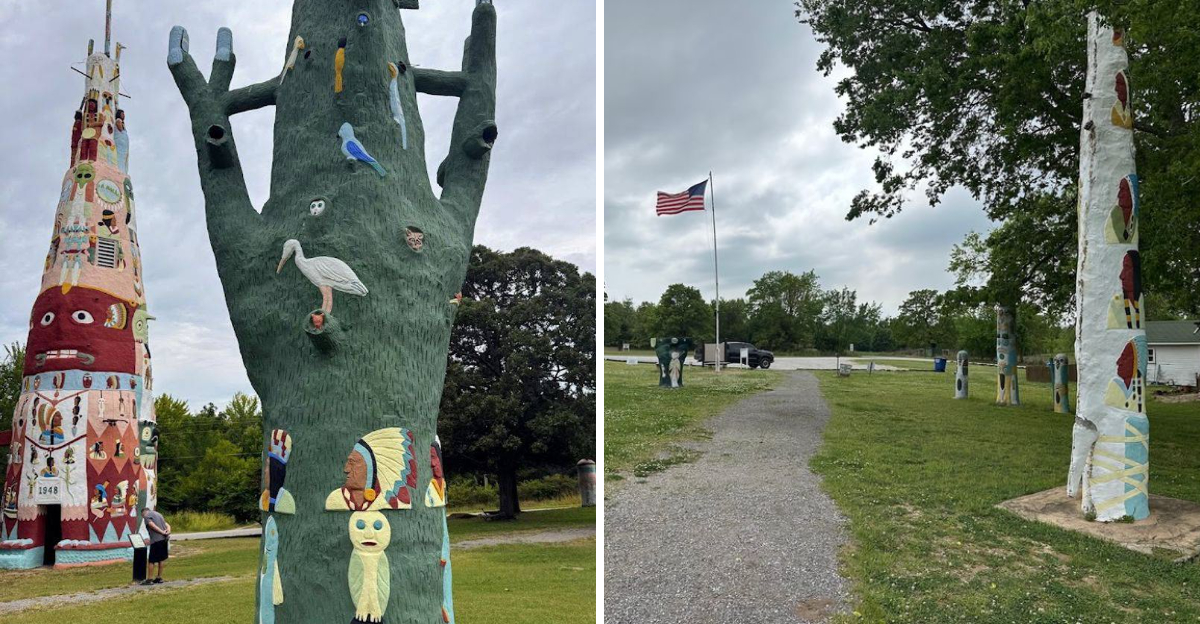
What would you build if you had 25 years, a stubborn imagination, and no interest in doing anything ordinary? One Oklahoma man answered that question with concrete, color, and an idea so unusual that drivers still pull over to stare.
This was never a quick weekend project. He shaped every detail by hand, returning year after year as the creation grew taller, stranger, and far more ambitious. What began as one person’s private vision eventually became a roadside landmark unlike anything else in the state.
You do not need to understand every symbol to appreciate the dedication behind it. The real wonder is knowing one man kept working while decades passed around him.
Oklahoma has many curious roadside stops, but few carry this much personal effort in every surface. By the time you see what he created, you may start wondering what could possibly inspire someone to devote a quarter century to one extraordinary corner of the state.
Retirement Inspired Ed Galloway To Begin His Most Ambitious Project
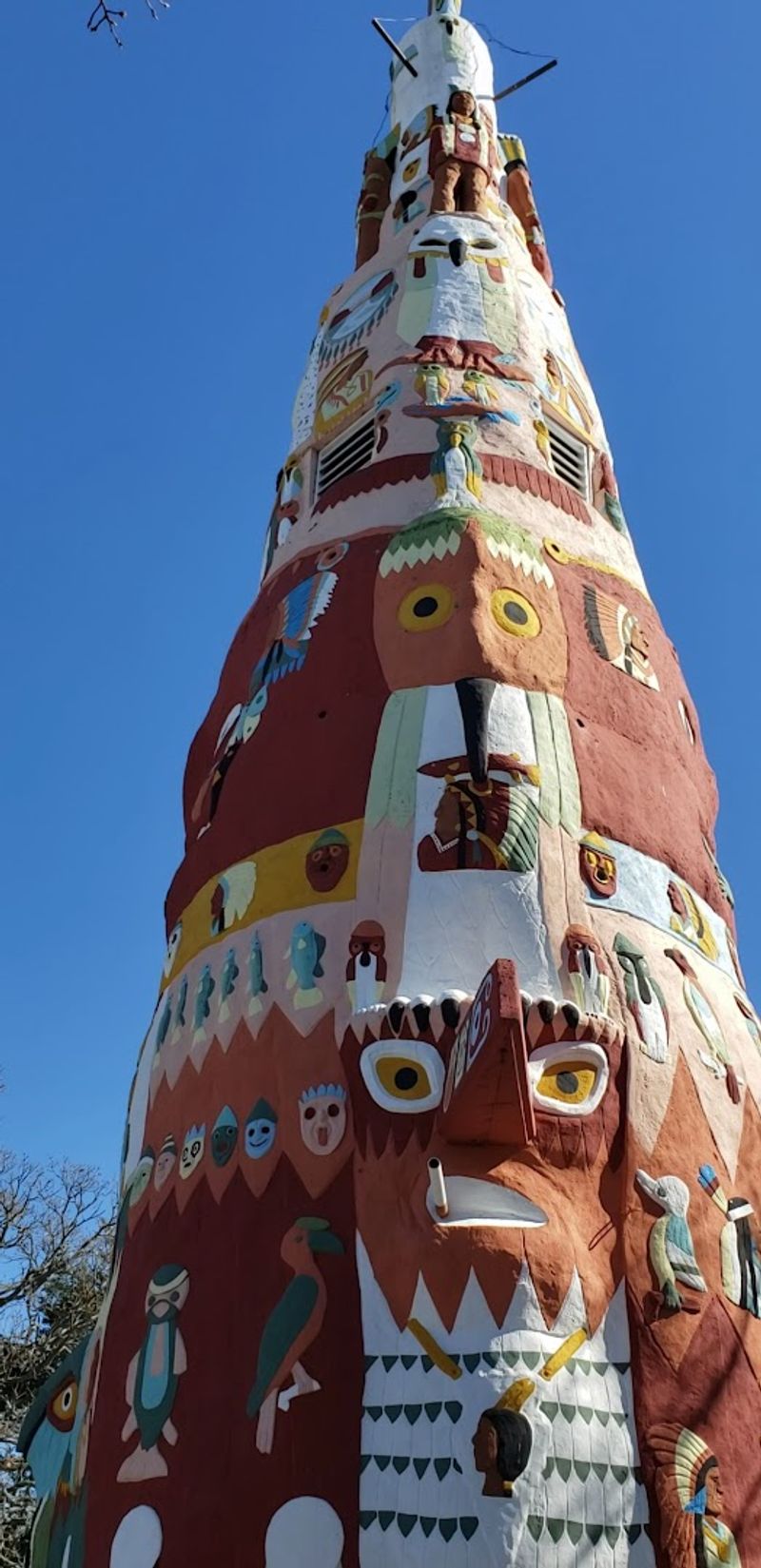
After spending years teaching manual arts to children at the Sand Springs Home in Oklahoma, Ed Galloway finally retired in 1937. He and his wife Villie purchased land near Foyil and built a modest home where they could enjoy their later years together.
Rather than settling into a quiet retirement, Galloway immediately began planning an ambitious art project that would consume the next quarter century of his life.
His background in woodworking and teaching gave him the skills needed to tackle large-scale construction projects. The peaceful rural setting provided the perfect canvas for his creative vision.
Galloway started gathering materials and sketching designs for what would become his masterpiece.
This retirement project wasn’t about filling empty hours but about leaving something meaningful behind. The Oklahoma countryside would soon witness the birth of an extraordinary folk-art park that reflected one man’s determination to create beauty from concrete and imagination.
Nearly 200 Colorful Images Cover Its Concrete Exterior
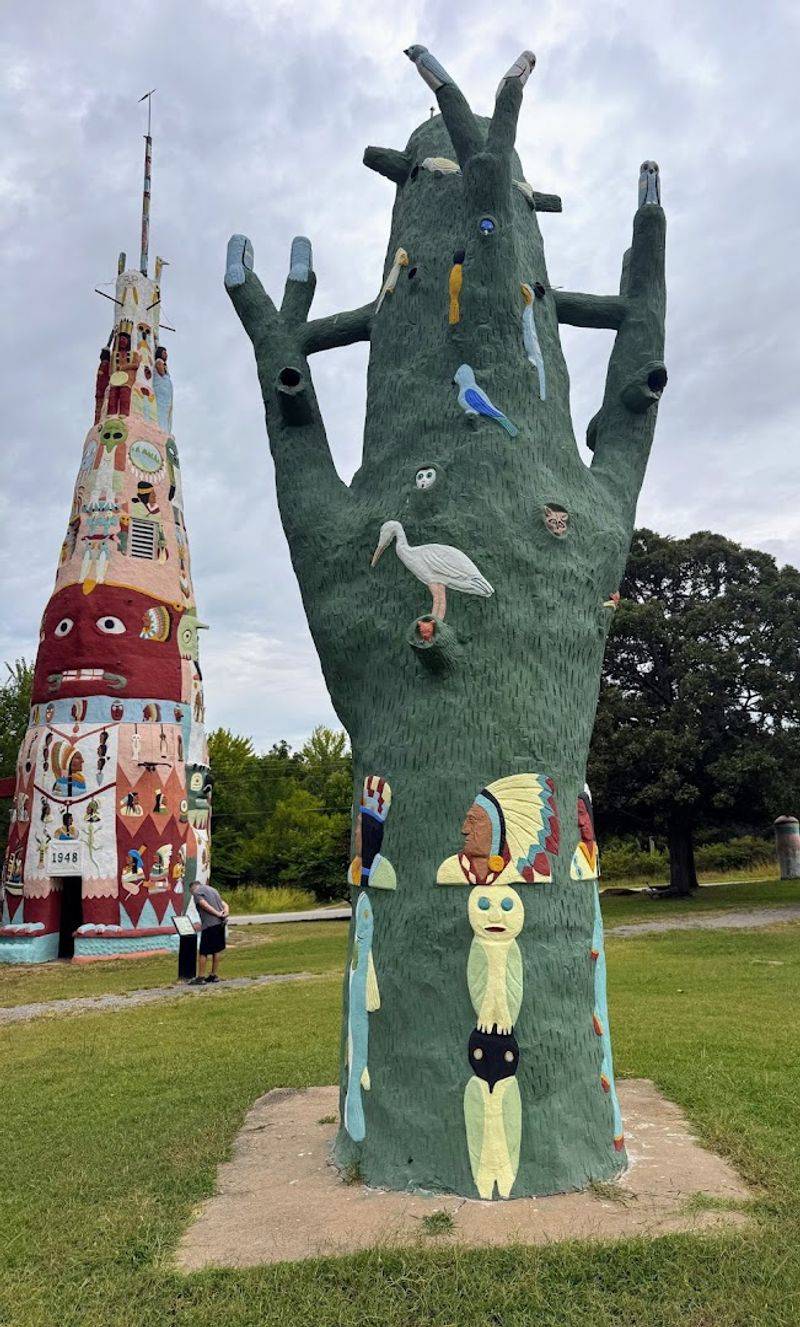
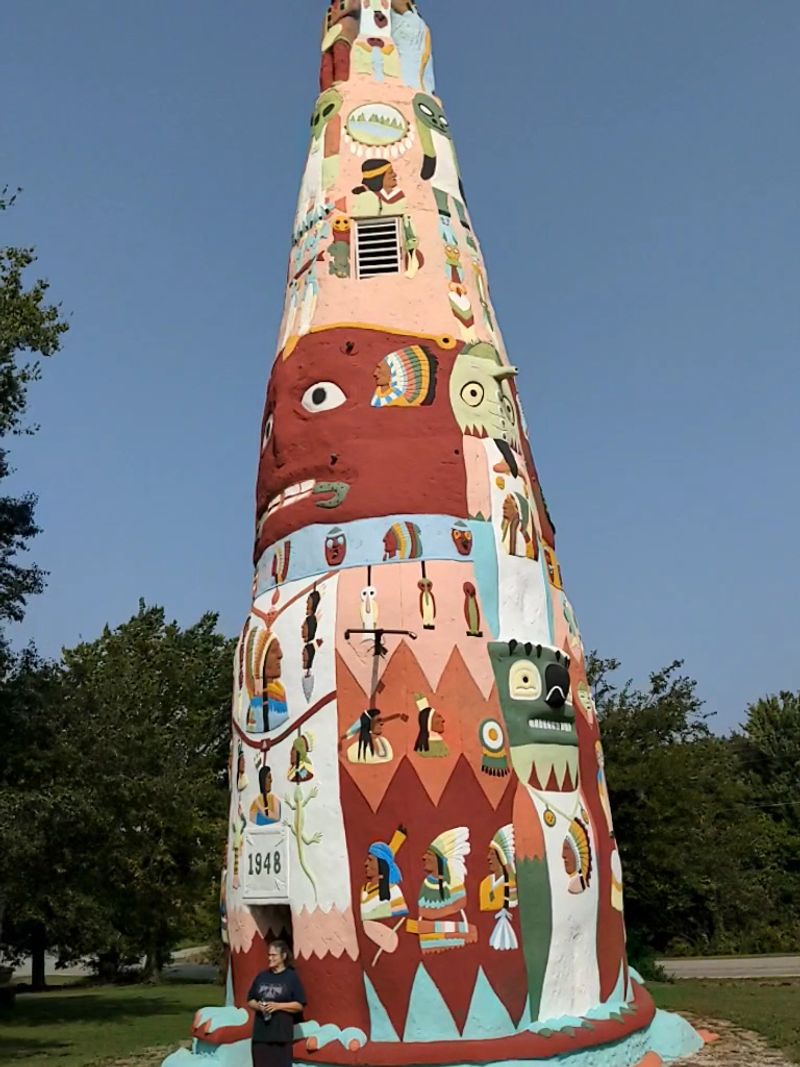
Walking around the main totem pole reveals an astonishing collection of nearly 200 individual images carved into its concrete surface. Galloway filled every available space with faces, animals, geometric patterns, and symbolic figures drawn from Native American traditions and his own creative imagination.
The density of artwork means visitors can circle the structure multiple times and still discover new details they missed before.
Each figure tells part of a larger visual story that wraps around the entire tower. Galloway used whatever house paint neighbors would donate, which meant the color scheme changed as he worked over the years.
This gave the monument its distinctive patchwork appearance with vibrant reds, blues, yellows, and greens competing for attention.
The weathering and repainting over decades created layers of history visible in the surface texture. Recent restoration efforts have worked to preserve these original colors while protecting the concrete from further deterioration.
Standing before this kaleidoscope of folk art in Oklahoma, you can’t help but wonder about the stories behind each carved face.
A Carved Stone Turtle Supports The Entire Tower
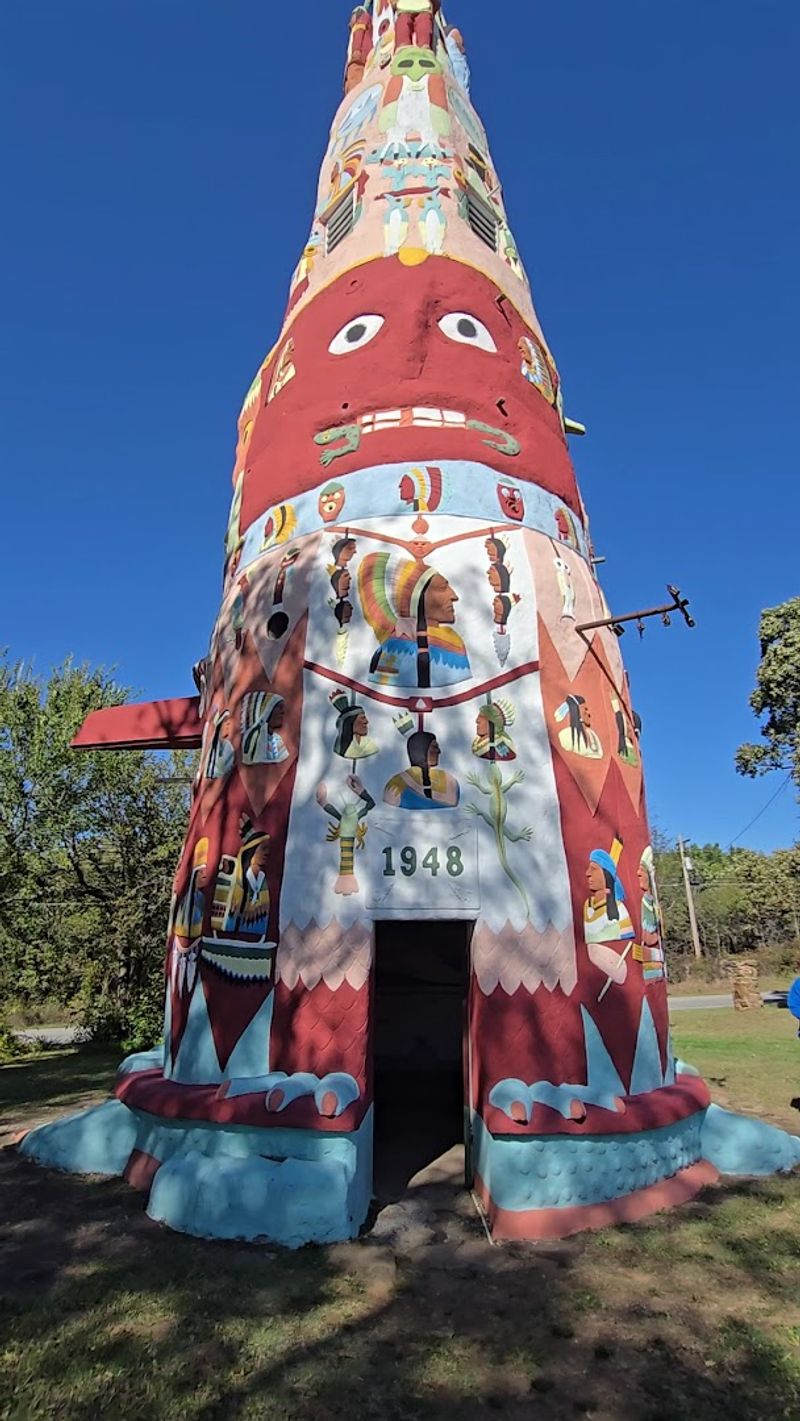
Visitors approaching the main totem pole immediately notice the remarkable foundation upon which it stands. Galloway created an 18-foot diameter base featuring a massive carved turtle that appears to carry the entire weight of the 90-foot tower on its back.
This wasn’t just a decorative choice but reflected deep symbolic meaning in Native American traditions where the turtle represents strength and endurance.
The turtle’s detailed shell and features demonstrate Galloway’s skill with concrete carving techniques. Children especially love climbing on this gentle giant and discovering all the intricate details worked into its surface.
The base serves as an interactive element that makes the park accessible to visitors of all ages.
This foundation has supported the towering structure for decades, proving Galloway’s engineering skills matched his artistic talents. The turtle remains one of the most photographed elements at Ed Galloway’s Totem Pole Park, and its presence reminds us that even the tallest achievements need solid support beneath them.
Nine Hollow Levels Are Concealed Inside The Monument
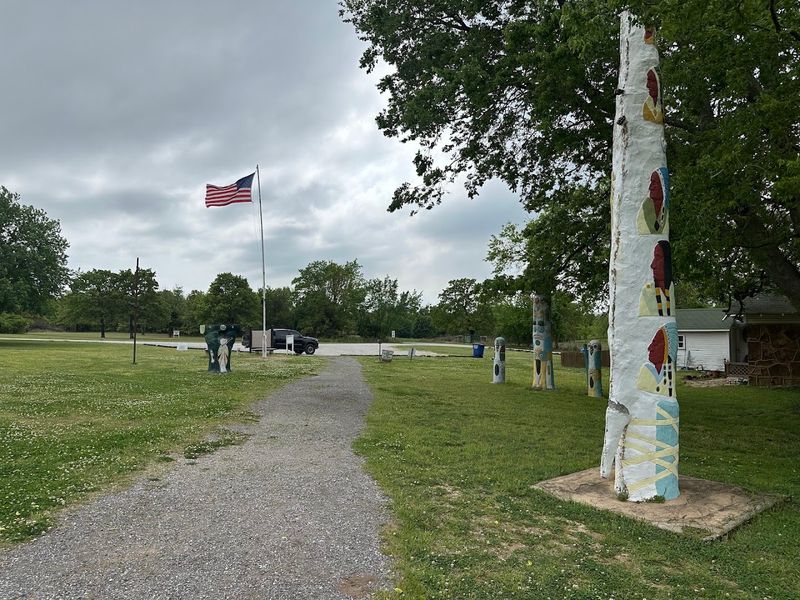
What many visitors don’t realize until they step inside is that the towering totem pole isn’t solid concrete but contains nine hollow levels connected by internal stairs. Galloway designed this interior space to allow visitors to climb up through the structure and experience his creation from within.
The engineering required to build a 90-foot hollow tower using hand-mixed concrete in the 1940s was remarkable for a self-taught artist.
During warmer months when the park is fully open, guests can climb the internal stairway and peek out through small openings at different levels. Each floor offers a new perspective on the surrounding Oklahoma countryside.
The experience of ascending through the monument adds an interactive dimension that sets this attraction apart from typical roadside sculptures.
The interior walls show the rough texture of hand-poured concrete and reveal construction techniques Galloway developed through trial and error. Climbing to the top becomes a physical journey through one man’s twenty-five-year creative process, making visitors appreciate the scale of his ambition even more.
The Fiddle House Preserves Another Side Of Galloway’s Creativity
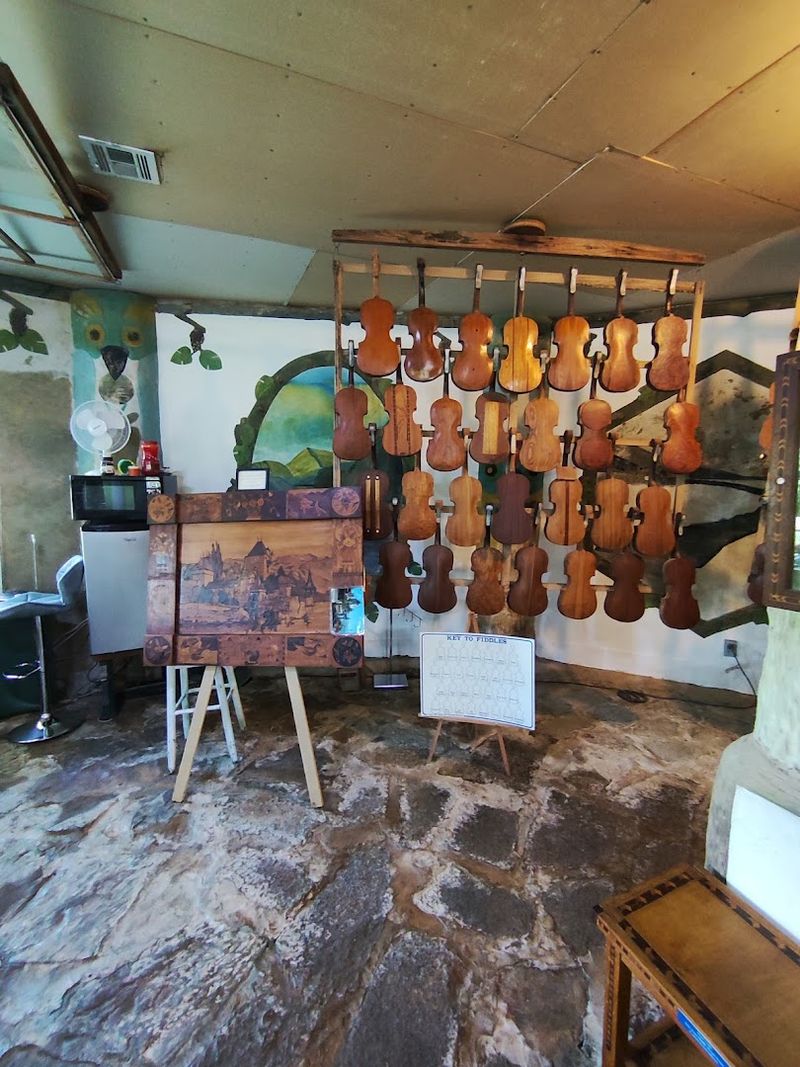
Beyond the towering totem poles stands a smaller building that reveals Ed Galloway’s equally impressive woodworking talents. The Fiddle House serves as both museum and gift shop, preserving hundreds of handmade fiddles and other wooden instruments Galloway crafted throughout his lifetime.
This structure was originally his workshop where he spent countless hours carving, sanding, and assembling these intricate musical instruments.
The building’s interior walls are lined with fiddles of various sizes, each one unique in design and decoration. Galloway applied the same attention to detail here that he brought to his concrete sculptures, carving elaborate patterns into the wooden surfaces.
Visitors often express amazement that one person possessed such diverse artistic abilities.
Knowledgeable staff members share stories about Galloway’s life and creative process with everyone who steps inside. The Fiddle House provides welcome shade during hot Oklahoma summers and offers a quieter, more intimate look at the artist’s work.
It’s the perfect complement to the outdoor sculptures and helps visitors understand the full scope of Galloway’s artistic legacy.
Hundreds Of Handmade Fiddles Once Filled His Unusual Museum
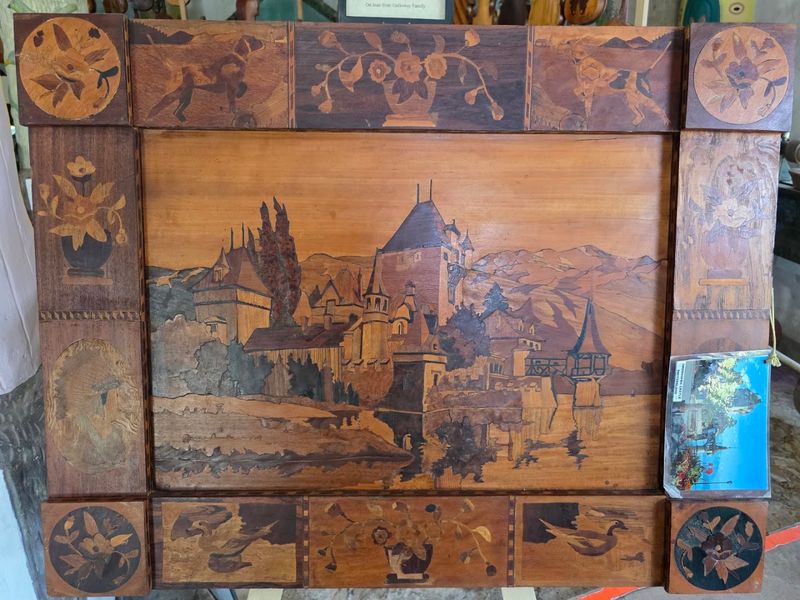
During his most productive years, Ed Galloway created an astounding collection of over 300 handcrafted fiddles, each one a unique work of art. He started making these instruments while still teaching at the Sand Springs Home, using woodworking as both a practical skill and creative outlet.
The fiddles range from tiny miniatures to full-sized playable instruments, all featuring intricate carved details and painted decorations.
Galloway didn’t just build standard fiddles but experimented with shapes, sizes, and decorative elements that reflected his folk-art sensibilities. Some instruments incorporated carved faces or geometric patterns similar to those found on his totem poles.
While many fiddles were functional, others served purely as display pieces showcasing his carving abilities.
Today, the Fiddle House preserves the largest remaining collection of these remarkable instruments. Seeing hundreds of handmade fiddles covering the walls drives home just how prolific and dedicated Galloway was throughout his creative life.
The collection represents thousands of hours of careful handwork and stands as a testament to Oklahoma’s rich tradition of self-taught artists.
Owl Gates And Sculpted Picnic Tables Turned The Grounds Into A Complete Art Park
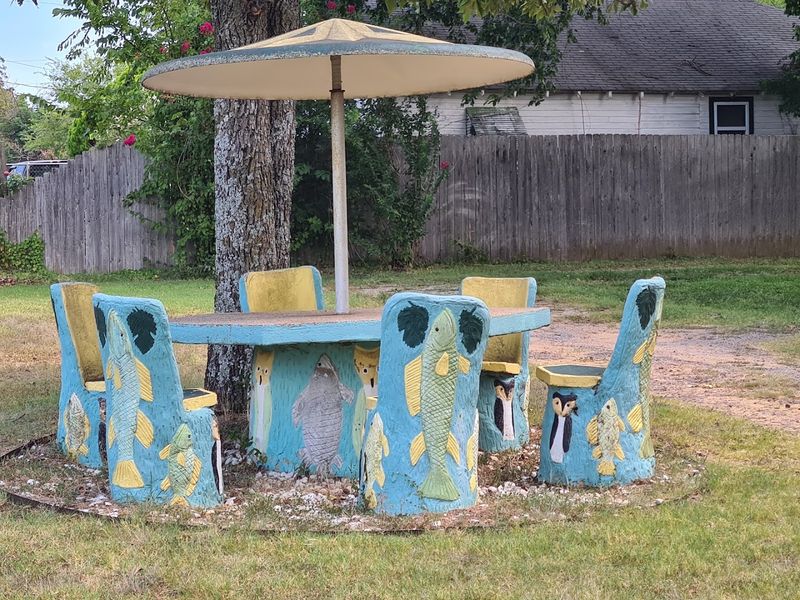
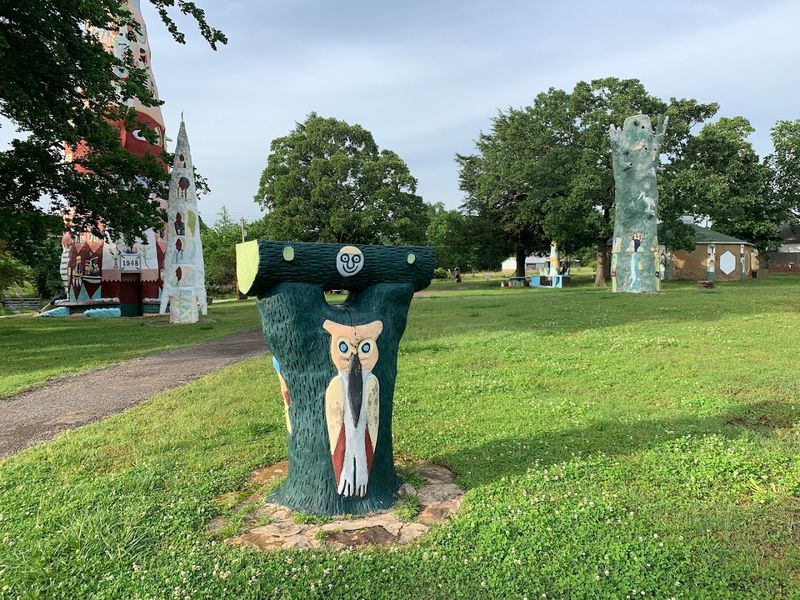
Galloway’s artistic vision extended far beyond the main totem pole to transform the entire property into a cohesive folk-art environment. He created whimsical owl gates that welcome visitors, sculpted picnic tables where families can rest and eat, and smaller totem poles scattered throughout the grounds.
Every functional element received decorative treatment, turning ordinary park furniture into conversation pieces.
The owl sculptures particularly delight children who love to pose for photos with these concrete guardians. Galloway positioned these pieces strategically to guide visitors through the space and create natural gathering spots.
The sculpted picnic tables remain popular with families who stop along Route 66 for lunch breaks in the shade.
This attention to creating a complete environment rather than just a single monument shows Galloway’s understanding of visitor experience. Walking through Ed Galloway’s Totem Pole Park in Oklahoma feels like entering an outdoor gallery where art and nature coexist.
Every corner reveals another handcrafted detail, rewarding those who take time to explore the entire property rather than just snapping quick photos of the main tower.
Restoration Crews Spent Years Bringing The Original Colors Back
By the late 20th century, decades of Oklahoma weather had taken a serious toll on Galloway’s concrete creations. The original paint had faded and peeled, concrete had cracked in places, and the park faced an uncertain future.
Concerned citizens and historical preservation groups recognized the cultural significance of this folk-art landmark and organized extensive restoration efforts beginning in the 1990s.
Restoration teams carefully researched historical photographs to understand the original color schemes Galloway used. They stabilized crumbling concrete, repaired structural damage, and painstakingly repainted the hundreds of carved figures covering the main totem pole.
This work required years of effort and significant funding from grants and donations.
Today’s visitors see the totem poles in colors that closely match how they appeared during Galloway’s lifetime. The ongoing restoration work continues as needed to protect these irreplaceable folk-art treasures.
Thanks to these preservation efforts, future generations will be able to experience the vibrant vision that Ed Galloway spent twenty-five years creating on this Oklahoma property along historic Route 66.
This Route 66 Landmark Earned A Place On The National Register
Recognition of Ed Galloway’s Totem Pole Park’s cultural and historical importance came in 1999 when the site was added to the National Register of Historic Places. This designation acknowledged the park’s significance as an outstanding example of American folk art and its role in Route 66’s roadside attraction heritage.
The listing helps protect the site and makes it eligible for certain preservation grants.
Located at 21300 OK-28A in Chelsea, Oklahoma, the park continues to welcome visitors seven days a week from 9 AM to 4 PM. The site operates on donations rather than charging admission fees, making it accessible to travelers of all budgets.
This approach reflects the welcoming spirit that Ed Galloway embodied when he first opened his creation to curious passersby.
The National Register designation has helped raise awareness of this Oklahoma treasure beyond just Route 66 enthusiasts. Today, Ed Galloway’s Totem Pole Park attracts thousands of visitors annually who come to witness what one determined man accomplished over twenty-five years of dedicated creative work in the heart of Oklahoma.