
This Arkansas Mountain Lake Is So Pure It Supplies An Entire City’s Drinking Water
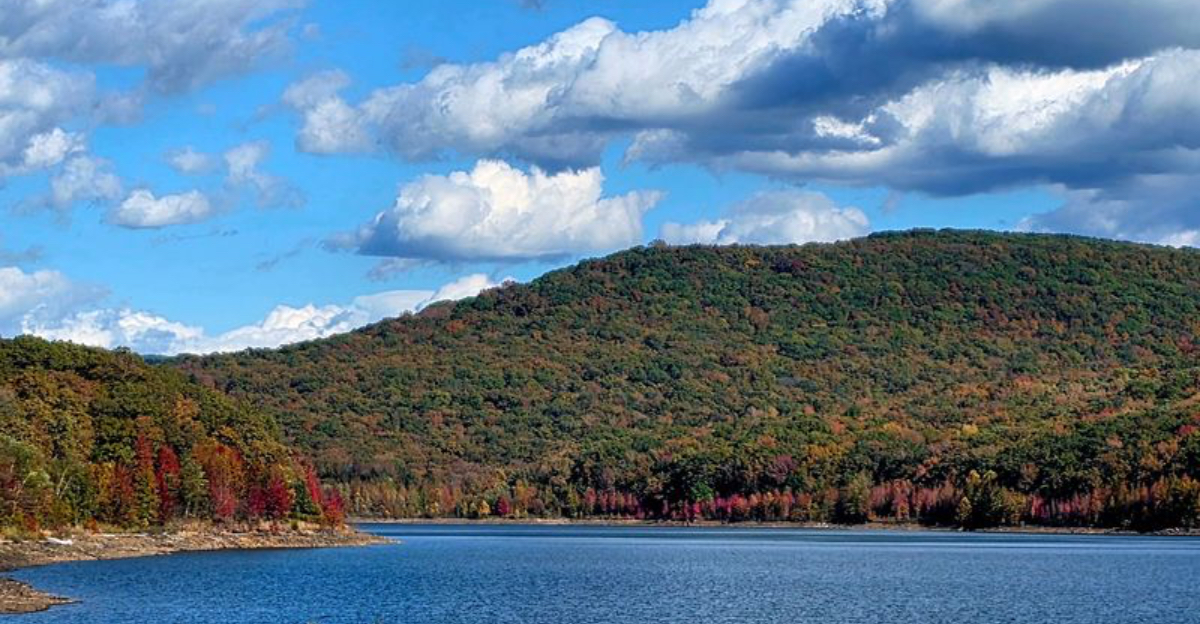
What kind of lake gets trusted to fill an entire city’s water supply? This one, deep in the Arkansas Ozarks.
Steep bluffs press close to the shoreline, blanketed in oak and shortleaf pine. No motorboats disturb the water, so it holds a mirror calm most lakes lose fast.
A famous long distance trail launches from right beside it, drawing backpackers toward the Ozark backcountry for days on end. Kayakers drift into quiet coves while herons work the shallows.
Fireplace cabins and comfort-ready campsites wait past the trailhead, along with a rebuild story most visitors never hear. Arkansas rarely gets this much right in one place.
Ready to see how this whole story holds together? Everything worth knowing is just below.
Water Clean Enough To Fill A City’s Glass
Most lakes get admired. Few get bottled and sent to kitchen faucets.
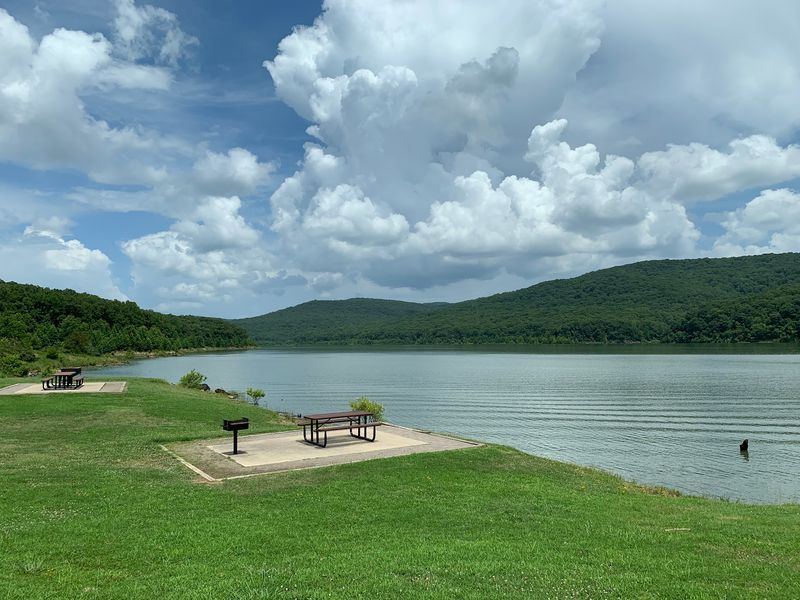
Lake Fort Smith works as a reservoir supplying drinking water to communities across western Arkansas. The Frog Bayou watershed feeds it, draining streams known for exceptional clarity throughout the surrounding highlands.
The lake supplies the raw water that feeds a nearby city’s treatment plant, and its clarity is part of why that source performs so well before treatment.
Protection comes with rules. Swimming, water skiing, and jet skiing are not permitted anywhere on the lake surface.
Sounds strict until the payoff shows up. The surface stays glassy, quiet, and remarkably transparent in the shallows near the marina coves.
Visitors find the state park at 15458 Sheperd Springs Rd, Mountainburg, AR 72946, roughly half an hour north of Fort Smith. Signs off the highway point toward the scenic drive in.
Anyone hoping for a splash should plan around the seasonal pool instead. The lake itself keeps its day job, and that job keeps it pristine.
Boston Mountains Wrap The Shoreline Tight
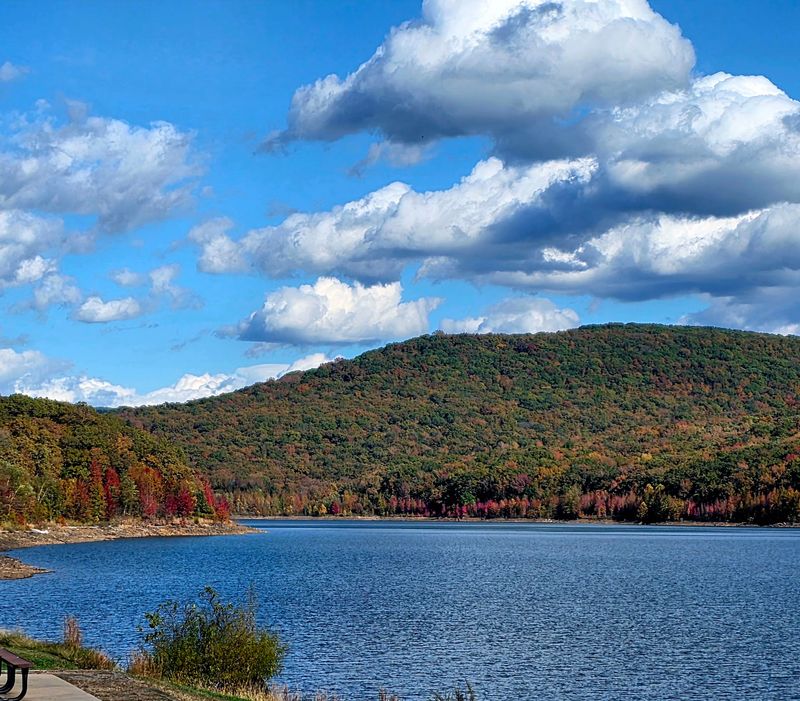
Steep ridges close in fast here. The lake sits in a narrow Ozark valley with forested slopes rising on both sides.
The Boston Mountains form a deeply dissected plateau, part of the broader Ozark Plateaus. Sandstone, shale, and siltstone make up the bedrock beneath the trees.
Harder sandstone resists erosion and forms ledges and low cliffs. Softer shale weathers into gentler, tree-covered inclines below.
The result reads as flat-topped ridges with steep sides, not sharp alpine peaks. Relief in this region ranks among the highest in the Interior Highlands.
Oak, hickory, and shortleaf pine blanket almost everything. Pine tends to favor the drier, south-facing slopes where sun hits hardest.
Those roots hold soil in place during heavy rain. Less runoff means less sediment reaching the reservoir below.
Reviewers often mention the backdrop of green hills more than the water itself. Standing near the visitor center overlook, that reaction makes complete sense.
Geology, forest, and water all pull in the same direction here.
The Ozark Highlands Trail Starts Right Here
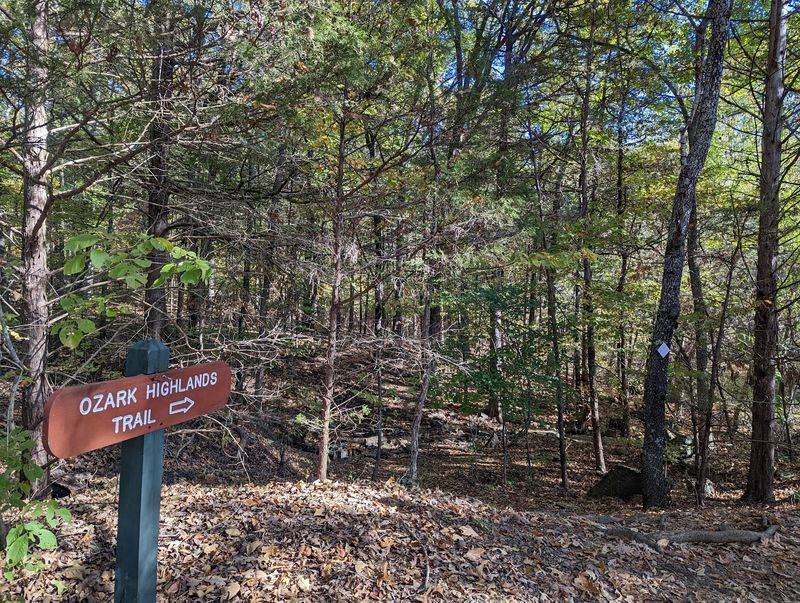
Long-distance hikers know this address well. The western terminus of the Ozark Highlands Trail sits inside the park.
That route runs roughly 240 miles across northern Arkansas. Backpackers load up here and disappear into the forest for days.
Casual walkers get plenty too. Many visitors hike a mile in, enjoy the ridge views, then turn back for lunch.
Shepherd Springs Trail offers a longer loop option, often logged near six miles by trail apps. Footing gets uneven, with tall steps in places, so small children may struggle.
The Boston Mountain Trail adds a semi-loop through varied forest types. Small streams cross several sections after wet weather.
Trails stay well marked and well maintained according to repeat visitors. Blazes and signage make navigation straightforward.
Conditions change, though. Sections can close temporarily, so checking at the visitor center before a long push saves frustration.
Mountain bikers ride here as well, tackling rolling elevation through the woods. Wheels and boots share this landscape comfortably.
Paddling Beats Swimming On These Coves
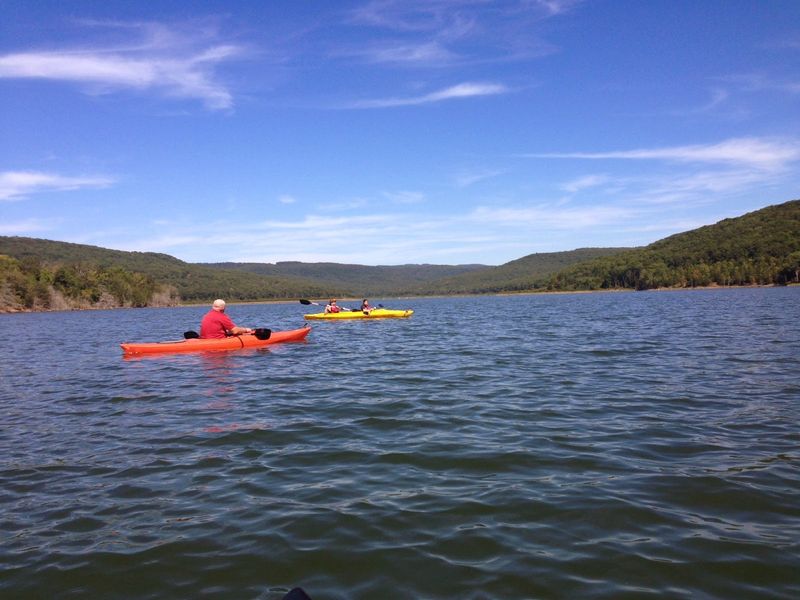
Kayaks rule this water. With no wake boats tearing around, paddling becomes the main event.
The park marina rents kayaks, canoes, and fishing boats during the season. Pontoon rentals give larger groups a slow, comfortable cruise.
Hidden coves reward anyone willing to paddle past the obvious. Mountain reflections stretch across the surface on calm mornings.
Guided lake tours have been offered by park interpreters, and paddlers frequently mention sunset outings as a highlight. Guides share history and ecology along the way.
A boat ramp serves visitors bringing their own craft. Motor rules protect the drinking supply, so checking current regulations first matters.
Fishing runs strong. Anglers target bass, crappie, catfish, and bream in the quieter inlets.
Years when the lake was closed for expansion gave fish populations time to build. Large catfish have been reported since.
An Arkansas fishing license is required before casting a line. Pack snacks, water, and sunscreen, then let the current do the rest of the work.
Cabins That Feel Like A Small Vacation Home
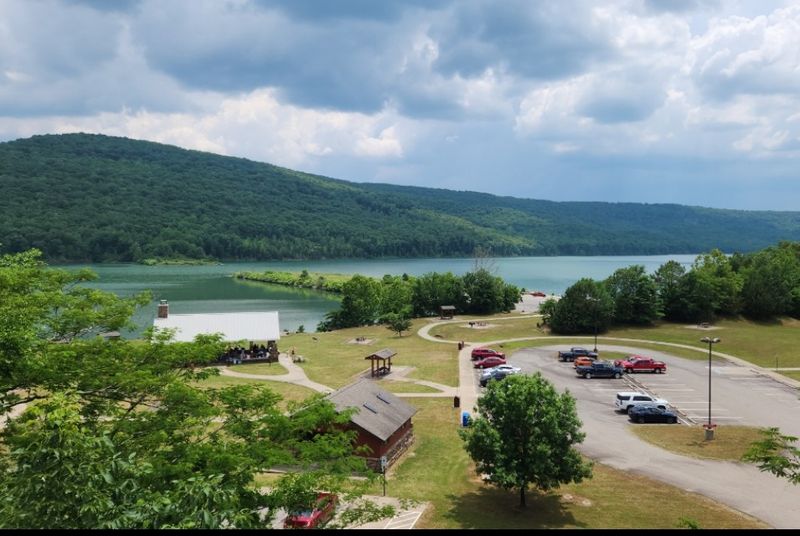
Ten cabins sit above the lake, and guests rave about them constantly. Spacious, spotless, and stocked is the recurring theme.
Kitchens come equipped for real cooking, not just reheating. Coffee makers, cookware, and dishes are typically provided.
Some units include a jacuzzi tub, an indoor fireplace, and firewood on the porch. Outdoor grills and back decks handle the evening meal.
Linens and towels are supplied, which lightens the packing list considerably. Larger two-bedroom cabins can host a whole family.
Lake views vary by cabin, and a few sit screened by trees. Winter thins the canopy and opens things up.
Group lodging exists too, with a great room, kitchenette, and dining hall nearby. Reunions and church retreats use those spaces often.
Reservations move fast during spring and fall weekends. Booking early beats scrambling later.
Deer wander through the cabin loops after dark on a regular basis. Porch sitting turns into wildlife watching without any effort at all.
Campsites Built For Comfort, Not Roughing It
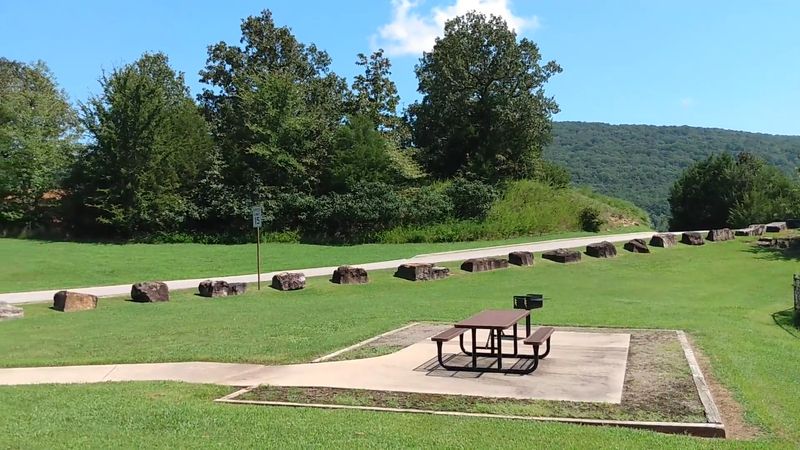
Campers here get spoiled a little. Concrete picnic and grilling pads come standard, plus level tent pads.
The campground holds thirty sites split into two classes. Twenty Class AAA sites offer water, sewer, and 50-amp electric hookups.
Ten Class B sites provide water and 30-amp service. Most of the larger sites accommodate big motorhomes without drama.
Modern bathhouses supply hot showers year-round. Reviews praise the cleanliness, though shower water temperature has drawn a few complaints.
Loops feel well spaced rather than packed shoulder to shoulder. Quiet is the word visitors use most often.
Cell service can be spotty depending on the carrier. Some guests report reliable coverage, others head to the visitor center for wifi.
Check-in and check-out reportedly move quickly. Staff and rangers get consistent compliments for being helpful.
Fall brings cooler nights and thinner crowds, making it a favorite window. Summer stays tranquil too, partly because nobody can cool off in the lake.
A Park Rebuilt When The Lake Grew
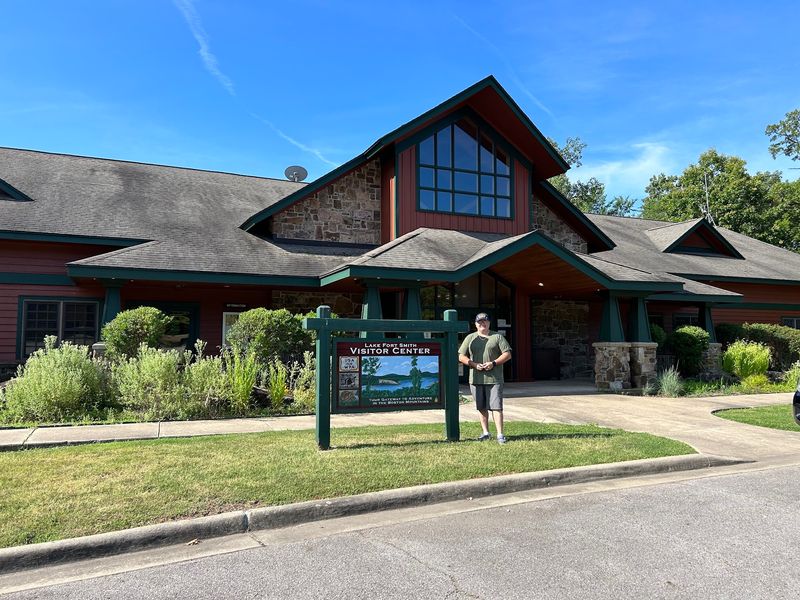
Here’s the twist. The original park lies underwater.
Facilities from the older Lake Fort Smith State Park closed in 2002. Enlarging the reservoir meant flooding those grounds permanently.
The expansion answered growing municipal water demand for the region. It also merged Lake Fort Smith with the former Lake Shepherd Springs.
A brand-new park opened in 2008 on higher ground. The City of Fort Smith and Arkansas State Parks worked together on the redesign.
Everything visitors use today came from that rebuild. Modern cabins, bathhouses, marina, and visitor center all date to the reopening.
Inside the visitor center, exhibits cover the story. A replica pioneer log cabin and a covered wagon nod to early settlement in these hills.
Small critters and reptiles have been displayed there as well, drawing kids straight to the glass. Interpreters lead nature hikes and lake tours through the year.
Recreation and utility rarely coexist this neatly. This park pulled it off.
Deer At Dusk And Birds All Morning
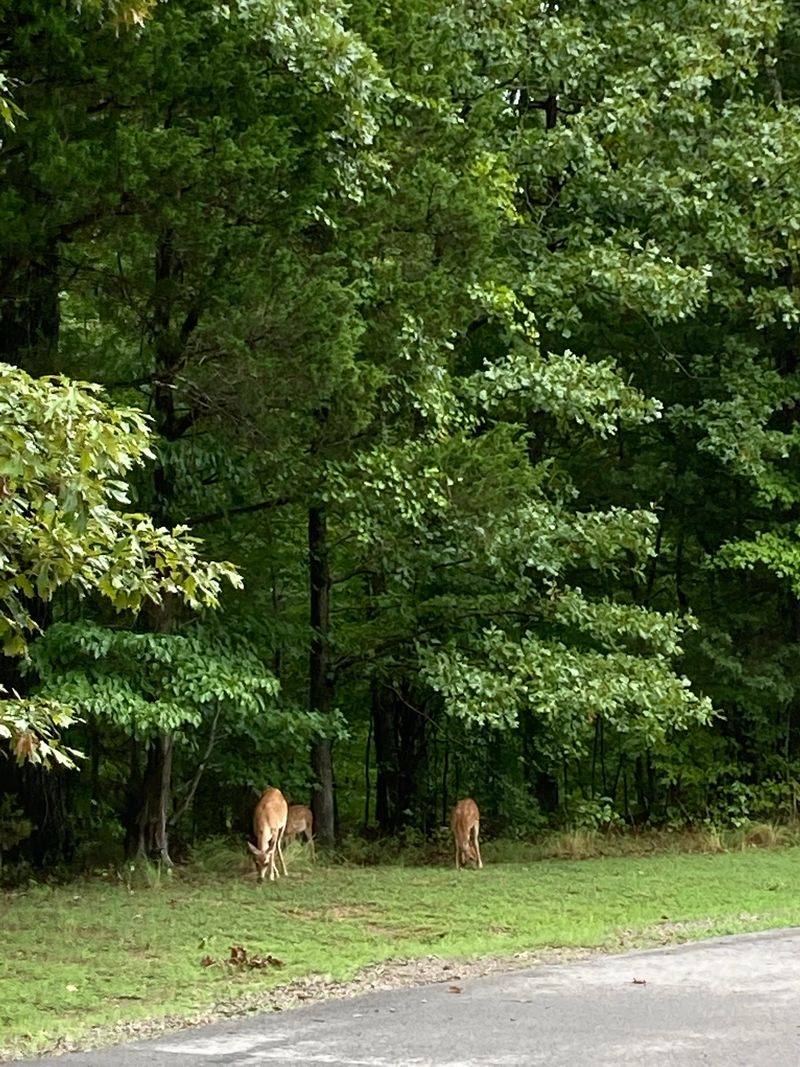
Stay past sunset and the wildlife show begins. Deer turn up around the campground and cabin loops with impressive regularity.
The Boston Mountains ecoregion acts as a transition zone. Eastern and western species overlap, which boosts variety across the forest.
Northern red oak, southern red oak, white oak, and several hickories dominate the canopy. Shortleaf pine fills in the drier slopes.
That mix supports songbirds, woodpeckers, squirrels, and plenty of smaller residents. Mornings deliver the loudest chorus.
Streams in these mountains hold strong water quality, supporting healthy fish and aquatic insect populations. Those creatures serve as living report cards for the watershed.
Conservation work in the region focuses on protecting imperiled species and keeping forest habitat intact. Clean streams and clean drinking water share the same foundation.
Bring binoculars and patience. Sitting still near the shoreline beats hiking fast for spotting anything.
Photographers get the best light early and late, when animals move and the water turns to glass.
Pool, Splash Pad, And Picnic Shade
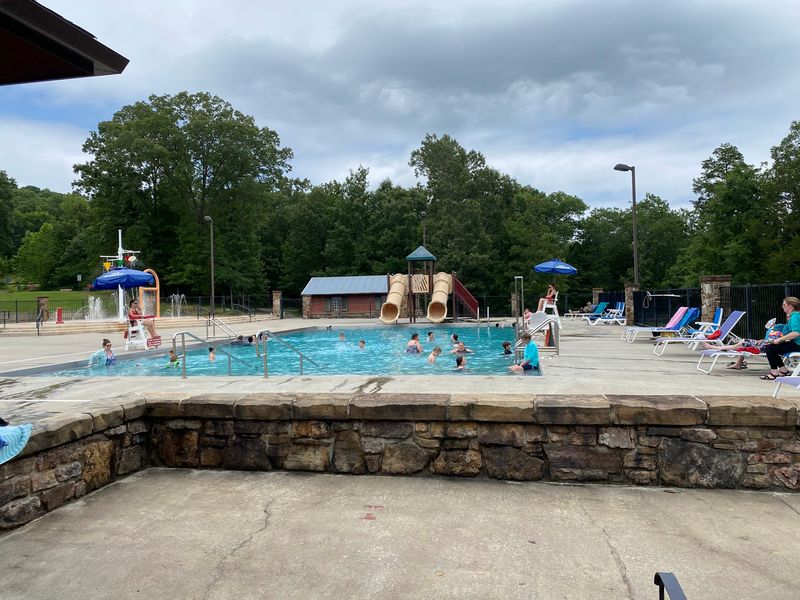
No lake swimming? The park solved that problem with concrete and chlorine.
A seasonal swimming pool operates during the warm months, generally around the Memorial Day through Labor Day window. Slides add to the appeal for older kids.
A wading pool and splash pad handle the youngest visitors. Changing areas and lockers sit nearby for convenience.
A snack bar has served refreshments during pool season. Cold drinks hit differently after a July hike.
Pool schedules can shift year to year, so confirming before driving up avoids disappointment. Days and hours have varied in past seasons.
Picnic areas spread through the park, several with lake views. Pavilions offer shade for larger gatherings and family meals.
A playground keeps children busy between activities. Day-use areas get consistent praise for being clean and organized.
Day use across Arkansas State Parks generally carries no entrance fee, with charges applying to camping, lodging, and rentals. That makes a spontaneous afternoon stop remarkably easy.
Smart Prep For A Mountain Weekend
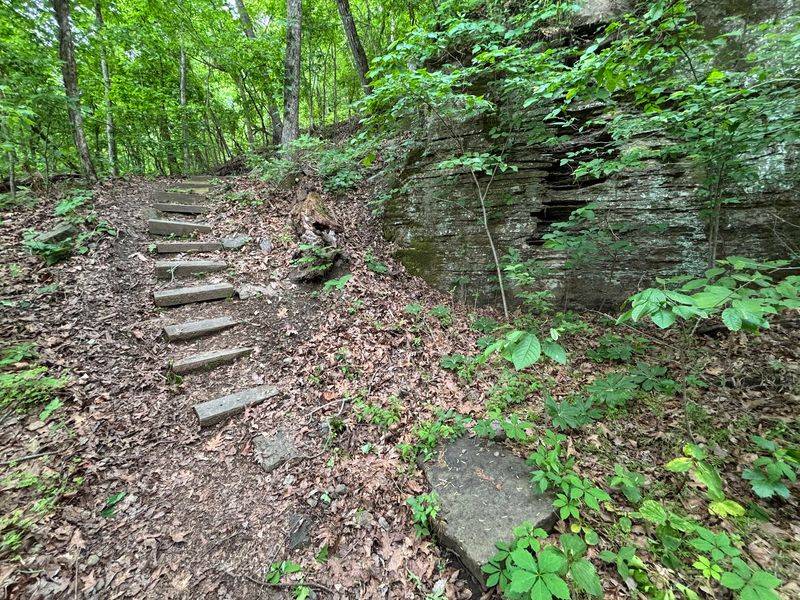
A little planning goes a long way in these hills. Sturdy shoes top the list, since trails cross rock and uneven ground.
Layers help because mountain weather shifts quickly between morning and afternoon. Rain gear earns its space in the pack.
Carry water on every hike, even short ones. The lake is a drinking source, not a refill station for hikers.
Groceries and fuel are limited close by. A discount grocery store sits roughly ten to fifteen minutes away, and gas stations are scarce, so filling up beforehand is wise.
Trail closures happen occasionally after incidents or storms. Asking at the visitor center gives the current picture.
Fall gets recommended often for cooler air and color across the ridges. Spring brings wildflowers and fuller streams.
Pack out trash and stay on marked paths. Protecting the watershed keeps the water worthy of its reputation.
Reliable phone signal cannot be assumed, so downloading maps ahead of time is a smart move.