
This Free Tennessee Museum Brings A 2,000-Year-Old Archaeological Site To Life
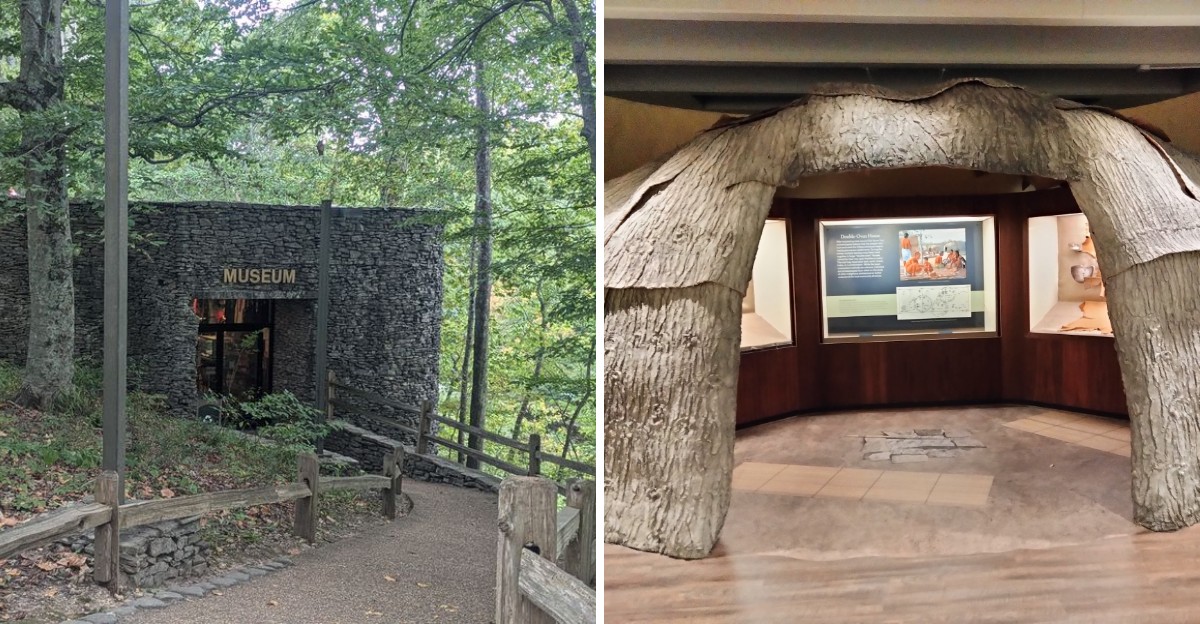
A free museum is already worth noticing. Add an archaeological site nearly 2,000 years old, and the stop becomes much harder to pass up.
This Tennessee museum introduces visitors to an ancient landscape shaped long before modern roads and towns arrived.
Native American builders created a massive ceremonial earthwork here, using the natural setting and nearby rivers as part of a site that still raises fascinating questions. The museum helps make sense of what you are seeing outside.
Exhibits explain the people who built the earthwork, the purpose it may have served, and the artifacts connected to the area. Then the experience continues beyond the building, where trails lead past river views, waterfalls, and the remains of the ancient enclosure itself.
That mix gives the visit real depth.
Tennessee history stretches much farther back than many travelers realize, and this place makes that timeline feel surprisingly close.
A Museum That Solves A Centuries-Old Puzzle
For a long time, nobody knew who stacked those walls. Guesses flew in every direction for centuries. Some were wildly wrong.
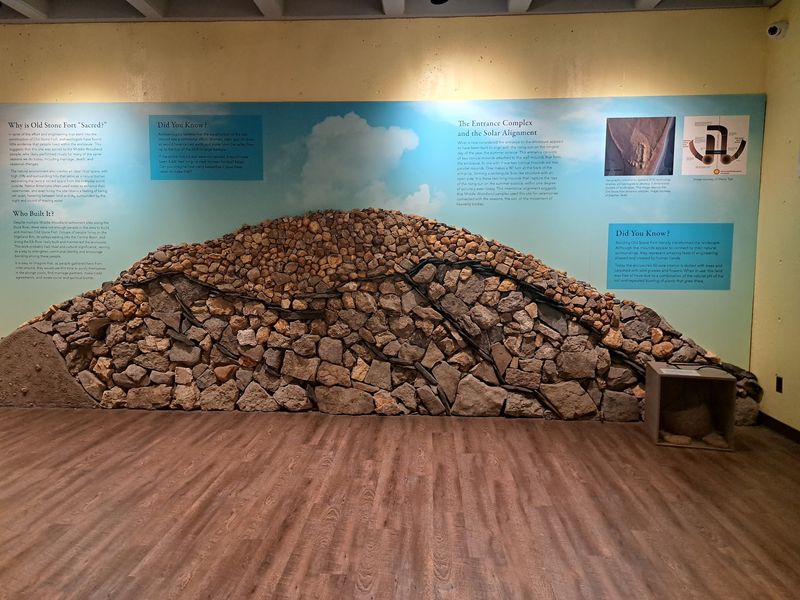
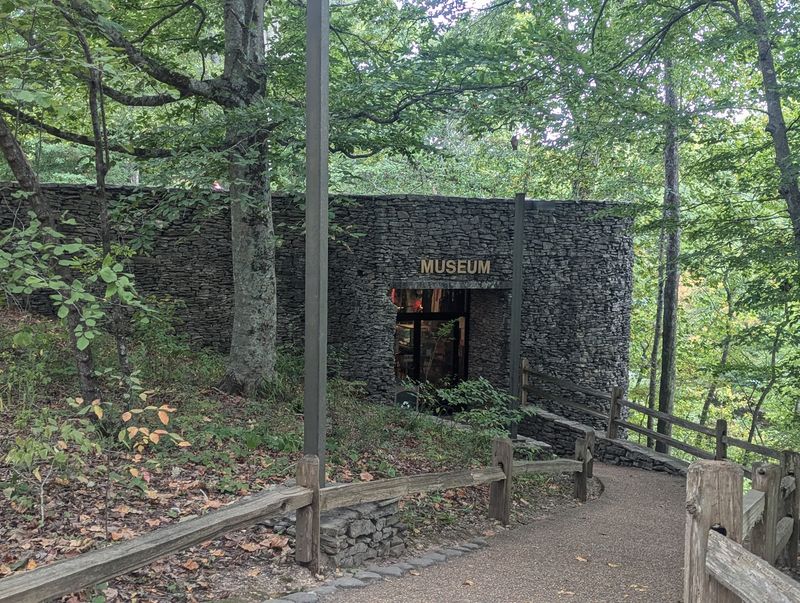
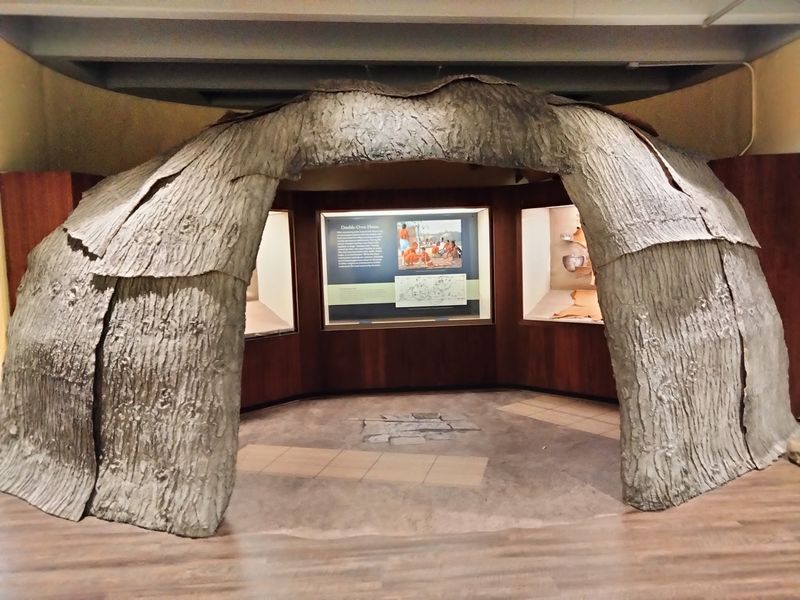
The Old Stone Fort Museum & Visitor Center clears the fog with plain, honest explanations. Exhibits walk through the leading theories, the digging that tested them, and what researchers finally concluded.
Excavations by the University of Tennessee in 1966 were a turning point.
What emerged was a story about the Middle Woodland period, roughly 80 AD to 550 AD. The builders belonged to the Woodland Cultural Tradition, including groups known as McFarland and Owl Hollow.
They shared ideas with the Hopewell people of Ohio and the Pinson Mound builders in West Tennessee.
The displays stay compact, which is a mercy for anyone with restless kids. You can read every panel without your feet complaining.
Artifacts sit in cases nearby, small and quiet but genuinely old.
A short film adds context, and it helps to watch it before heading outside. The story sticks better when you see the maps first.
Then the walls out there stop looking like random dirt.
Staff behind the desk know the site well and answer questions without rushing. Ask about trail conditions while you are there. It saves time later.
Not A Fort At All, Despite The Name
Here is the twist that surprises almost everyone. The Old Stone Fort was never built for defense. Early European settlers saw big walls and assumed soldiers, and the nickname stuck for good.
Archaeological evidence points somewhere far more interesting. The enclosure appears to have been a ceremonial gathering place, a ritual space rather than a battlefield. People did not live inside those walls.
That single fact changes how the whole place feels. Instead of picturing guards and weapons, picture crowds arriving for something important.
The walls marked sacred ground, not a shelter.
The museum explains this carefully, because the old assumption is stubborn. Signs and displays lay out why researchers reached this conclusion.
Once you understand it, the name becomes a historical joke that nobody bothered to fix.
Native people used the site for roughly 500 years before leaving it behind. Five centuries of steady use is remarkable for any structure.
Few modern buildings will manage half that run.
Understanding the purpose also explains the layout you will notice outside. Nothing about the design suits fighting.
Everything about it suits ceremony, procession, and gathering. Learn the story indoors first. The walk afterward becomes something closer to time travel.
Walls Built To Catch The Solstice Sunrise
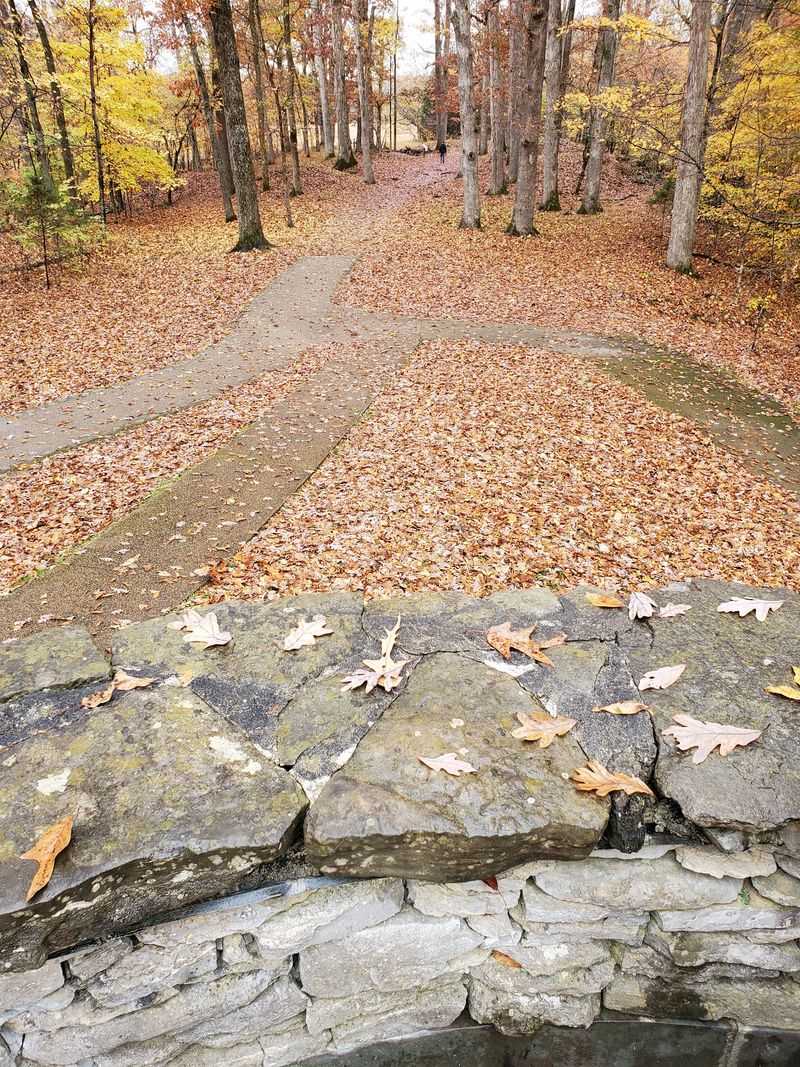
Ancient builders paid close attention to the sky. The main entrance of the enclosure aligns with sunrise on the summer solstice. That is not luck, that is planning.
Think about what that alignment required. No compasses, no surveying tools, no maps. Just years of watching the horizon and remembering exactly where the sun appeared.
The entranceway itself is elaborate. It includes a ditch, pedestal mounds, and interior parallel walls that create a cul-de-sac shape. Anyone entering had to follow a set path.
Museum exhibits break this down with diagrams that make the geometry easy to follow. Once you have seen the layout on paper, the outdoor version snaps into focus.
You start noticing shapes you would have walked right past.
Around the longest day of the year, the alignment becomes especially meaningful. Even outside solstice season, the design still impresses.
The intent is baked into the ground.
Astronomy plus engineering plus ceremony, all built without metal tools. Tennessee holds plenty of history, but few sites show ancient science this clearly. It rewards slow observation.
Bring curiosity and take your time at the entrance. Standing there, the alignment feels less like trivia and more like a message left behind.
An Observation Deck With A Waterfall View
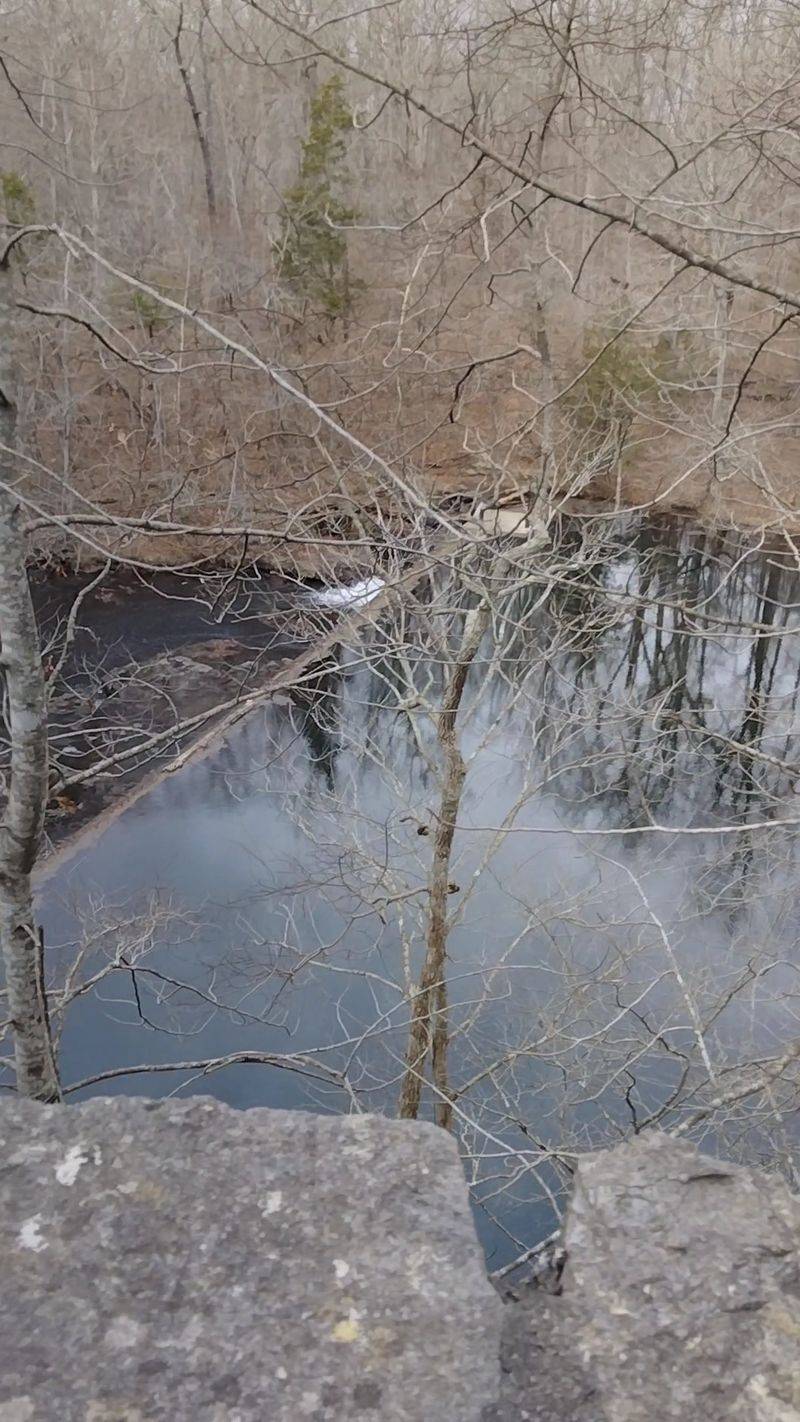
Climb to the top of the building and the payoff is immediate. An observation deck sits atop the museum, and the view stretches over the site and the rivers below.
Blue Hole Falls shows up from there too.
Elevation helps the imagination. From ground level, the ancient walls blend into the landscape. From above, the scale of the 50-acre plateau starts making sense.
Morning light tends to be soft and generous up there. Photographers will find plenty to work with. So will anyone who simply wants to sit and look.
The deck also functions as a planning station. You can spot where the trails head, where the water drops, and roughly how far things sit from each other.
That beats guessing at a trailhead.
Sound carries too, and moving water is usually part of the soundtrack. It is a calm spot even when the parking area is busy. A few minutes there resets the pace of the day.
The Old Stone Fort Museum & Visitor Center keeps regular hours from 8 AM to 4:30 PM daily. Arriving early means cooler air and better light.
Late afternoon works nicely too, just watch the clock.
The Enclosure Trail Follows The Ancient Earthworks
Reading about walls is one thing. Walking beside them is another entirely.
The 1.4-mile Enclosure Trail traces the ancient earthworks and turns the exhibits into something you can touch with your eyes.
Interpretive signs appear along the way, explaining what you are passing. They are short and readable, so nobody stalls out. The pacing keeps kids moving.
The full enclosure runs about 1.5 miles in circumference. Wall heights originally ranged from four to six feet, though some sections reach up to 20 feet high and 30 feet wide.
Those larger stretches are genuinely striking.
Footing deserves respect. Tree roots cross the path in places, and some sections run near steep slopes and drop-offs.
Sturdy shoes solve most of that.
Families with young children should stay on the upper route and hold hands near edges. The trail is friendly, but the terrain is real.
Common sense goes a long way here.
Allow more time than the distance suggests. Between the signs, the views, and the urge to stop and stare, an hour disappears fast.
By the end, the walls stop feeling abstract. They feel like the work of people who knew exactly what they were doing.
Waterfalls Roaring Where Two Rivers Meet
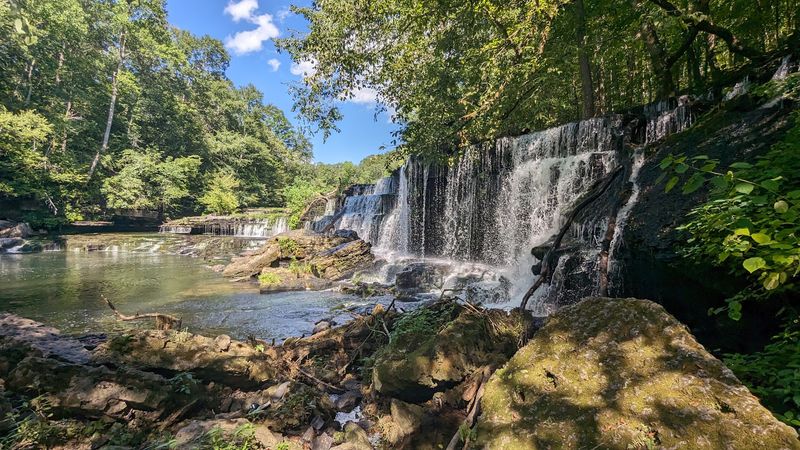
Water does the loudest talking at this park. The site sits on a peninsula formed where the Duck River and the Little Duck River meet.
That geography created cliffs, gorges, and a run of waterfalls.
Big Falls, Blue Hole Falls, Step Falls, and Little Falls each have their own personality. Some spread wide across ledges. Others drop in tidy steps.
Spring brings the biggest flow, when rain keeps the rivers full. Summer turns the pools into cool, clear mirrors. Fall adds color to every frame you shoot.
Getting close requires care. Rocks near the water stay slick, and currents can be stronger than they look.
Keep small children well back from the edges.
Sound alone is worth the walk. Standing near a falls, the noise drowns out everything else, including whatever was cluttering your head that morning.
It is honest quiet, the useful kind.
Fish are often visible in the clearer stretches. Bird life is active too, with eastern meadowlarks, northern parula, red-eyed vireo, and wood ducks among the residents.
Squirrels handle the comedy.
Tennessee has famous waterfalls elsewhere, but few sit beside 2,000-year-old walls. That combination is the real draw.
Old Mill Foundations Hiding In The Woods
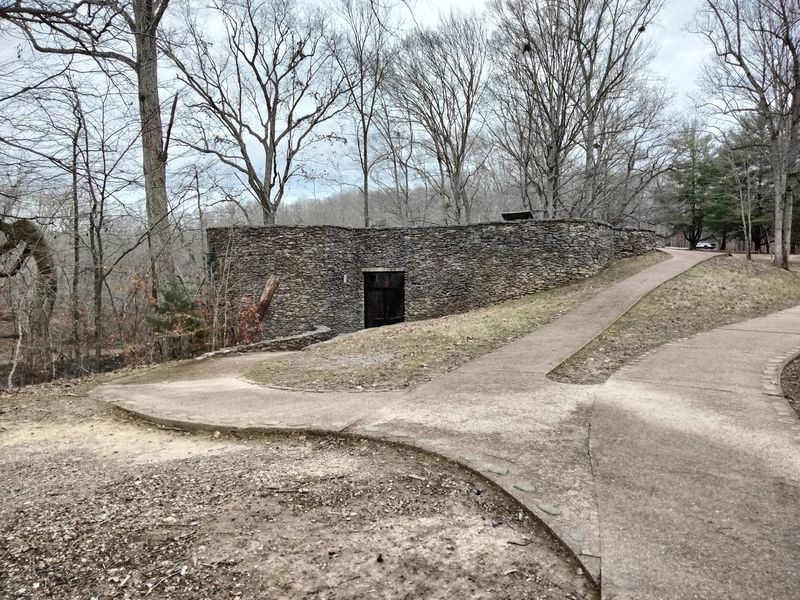
Ancient history is not the only layer here. The 19th century left its own fingerprints across the park.
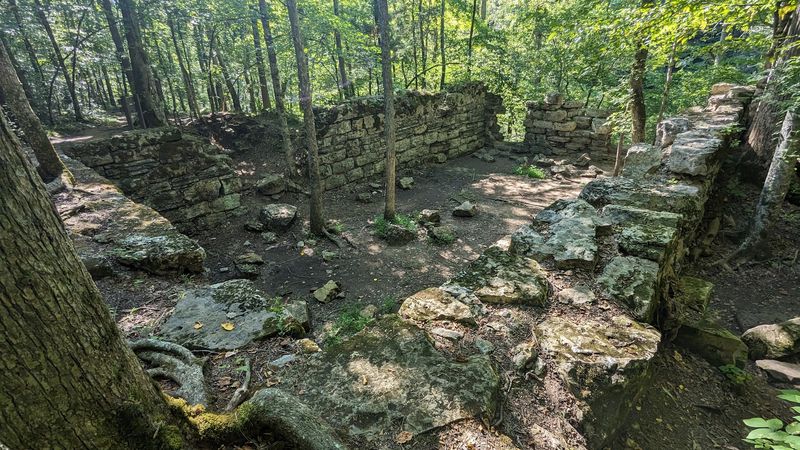
Old mill foundations still sit among the trees.
Industry once used this river power seriously. Remains connected to paper, gunpowder, rope, and grist mills are scattered through the grounds.
Stone bases and worn walls are what survive.
Civil War era campsites are part of the record too. That period brought people through this landscape for very different reasons.
The park preserves those traces alongside everything older.
The stacking of eras is what makes exploring here so satisfying. Woodland builders, then frontier settlers, then industry, then a state park. Same ground, four different chapters.
The Backbone Trail and Moat Trail offer quieter walking away from the busier routes. Wildlife viewing improves when foot traffic thins out. Patience pays off on both.
Over 10 miles of trails wind through the property, so you can pick your effort level. Some paths are smooth and easy. Others get rugged and rocky.
Ask at the desk which route suits your group before setting out. Staff know current conditions. That short conversation often makes the difference between a good walk and a great one.
Planning A Visit That Costs Absolutely Nothing
Free admission is rare for a site this significant, yet here it is. Entry to the park and the museum costs nothing. Bring money only if the gift shop tempts you.
The address is 732 Stone Fort Dr, Manchester, TN 37355, and the building sits near the park entrance. Doors open at 8 AM and close at 4:30 PM every day.
Restrooms, picnic areas, and drinking water are available on site. Camping is an option too, with 50 campsites offering water and electric hookups, picnic tables, and fire rings.
That makes an overnight stay simple.
Tennessee purchased the land in 1966, creating one of only two state archaeological parks in the state. The property covers roughly 782 acres under the Tennessee Department of Environment and Conservation.
Preservation is the whole point. Pack water, wear real shoes, and start with the indoor exhibits. Context first, trails second. The order matters more than you would expect.
Half a day covers the highlights comfortably. A full day lets you slow down and wander. Either way, the Old Stone Fort Museum & Visitor Center sends you home knowing something you did not know before.