
This Massachusetts Tibetan Buddhist Center Has A Golden Shrine Room Most People Never Expect
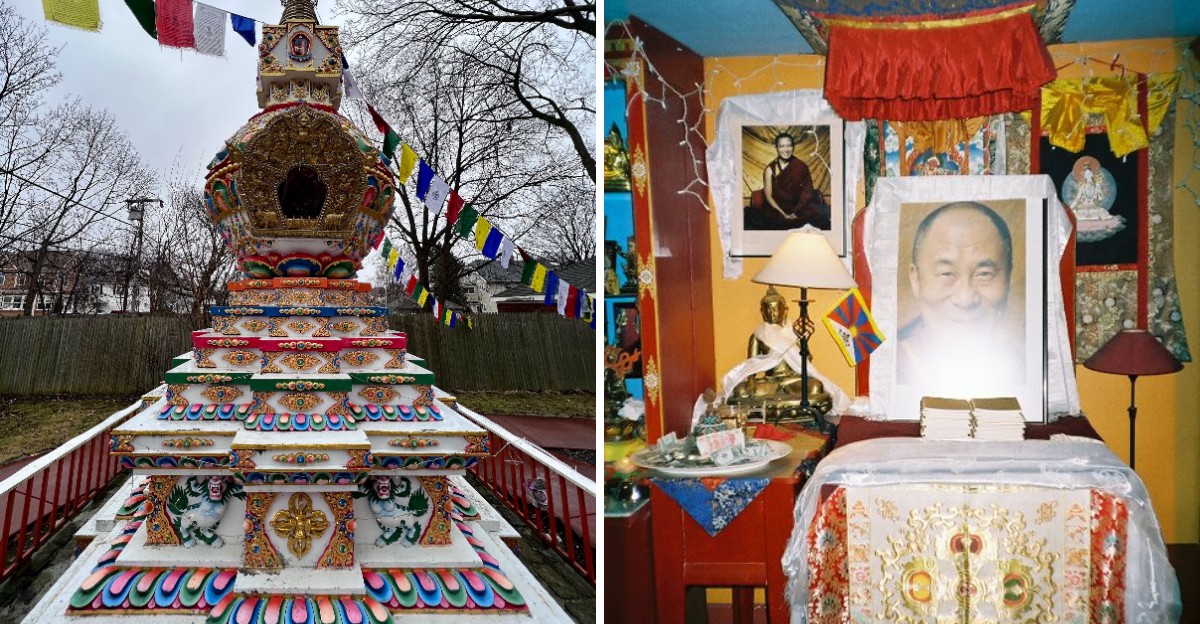
You would never guess what is waiting beyond the doors of this quiet Massachusetts building. Inside, a golden shrine room glows with statues, intricate details, and colors that make the space feel completely removed from the busy streets outside.
The center follows Tibetan Buddhist traditions and welcomes visitors who want to learn more about meditation, teachings, and spiritual practice.
Even people with no background in Buddhism may find themselves slowing down once they see the shrine room for the first time.
How often do you come across a place like this so close to everyday neighborhoods?
Prayer objects, sacred artwork, and carefully arranged statues give the room a strong sense of purpose without making it feel intimidating. The atmosphere is calm, but there is plenty to notice if you take your time.
It is an unexpected cultural stop that offers a very different side of Massachusetts life.
A Sunny Yellow Building That Stops Traffic
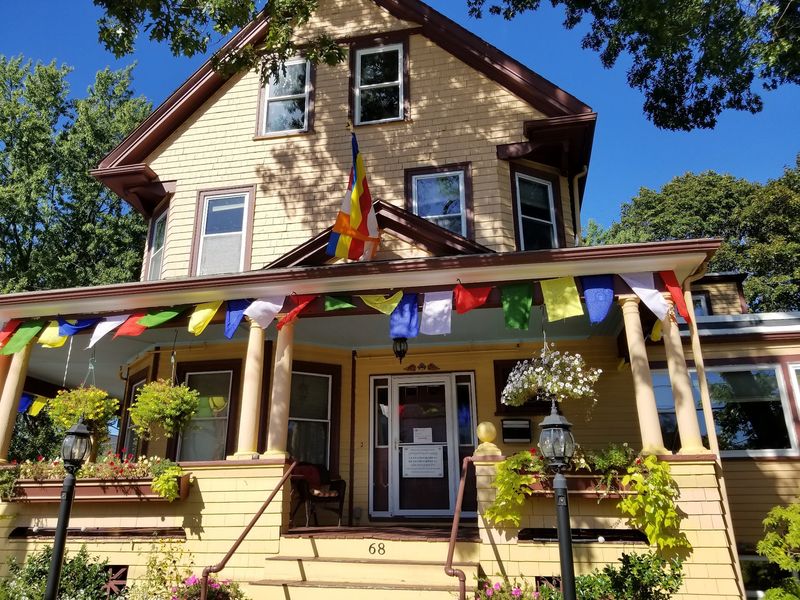
Yellow is a bold choice for a house in New England. Most neighbors stick to white clapboard or gray shingles.
Kurukulla Center went the other way entirely.
The building wears a cheerful golden-yellow coat with deep red accents around the windows and trim. Those two colors are not random decorating choices.
Red and gold run through Tibetan religious life, showing up on monk robes, temple doors, and painted pillars.
The effect from the sidewalk is immediate. One second you are in a normal residential pocket of Massachusetts.
The next, you are looking at something that feels borrowed from a mountain village thousands of miles away.
Prayer flags add to the picture. Strings of small colored cloth squares catch the wind above the property, each one printed with prayers meant to scatter on the breeze.
Practical tip for anyone planning a trip: the exterior alone is worth slowing down for, but the real story sits indoors. Do not judge the place by its modest footprint.
Kurukulla Center was founded in 1989, but it moved into its current building on Magoun Avenue in January 2002. It formed under the spiritual direction of Lama Zopa Rinpoche, a teacher known worldwide within the Tibetan Buddhist tradition.
Three and a half decades later, the paint still turns heads on the block.
The Golden Shrine Room Nobody Sees Coming
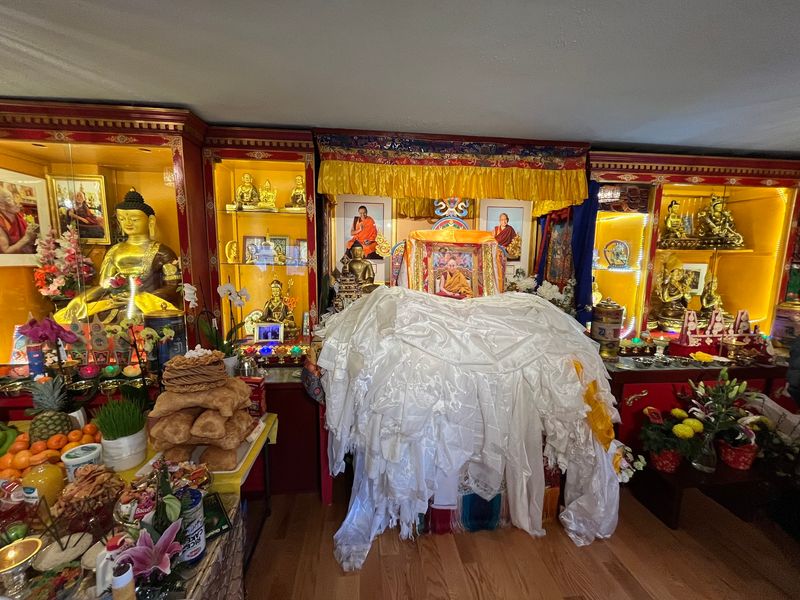
Here is the moment that surprises almost everyone. You step through an ordinary door, leave your shoes by the entry, and the room ahead glows.
The main meditation hall serves as the heart of the whole building. Gold leaf, deep crimson fabric, and warm lamplight fill the space from floor to ceiling.
It reads less like a room in a house and more like a chapel built for color.
Statues line the altar in rows. Fresh flowers sit among them, along with sacred texts wrapped in cloth and candles that flicker through the whole hall.
The centerpiece is an altar dedicated to His Holiness the Dalai Lama. Everything in the room points toward it, which gives the space a clear sense of direction and focus.
Sean Gonzalez, the center’s director, once described the decorative style of Tibetan Buddhist temples as Baroque. The comparison fits.
Nothing here is plain, and every carved detail carries meaning rather than just decoration.
Sound matters too. When chanting begins, the low voices bounce off the painted walls and fill the hall in a way that plain drywall never could.
For a house on a Medford side street, the contrast between outside and inside is genuinely hard to believe.
An Altar Loaded With Meaning, Not Just Sparkle
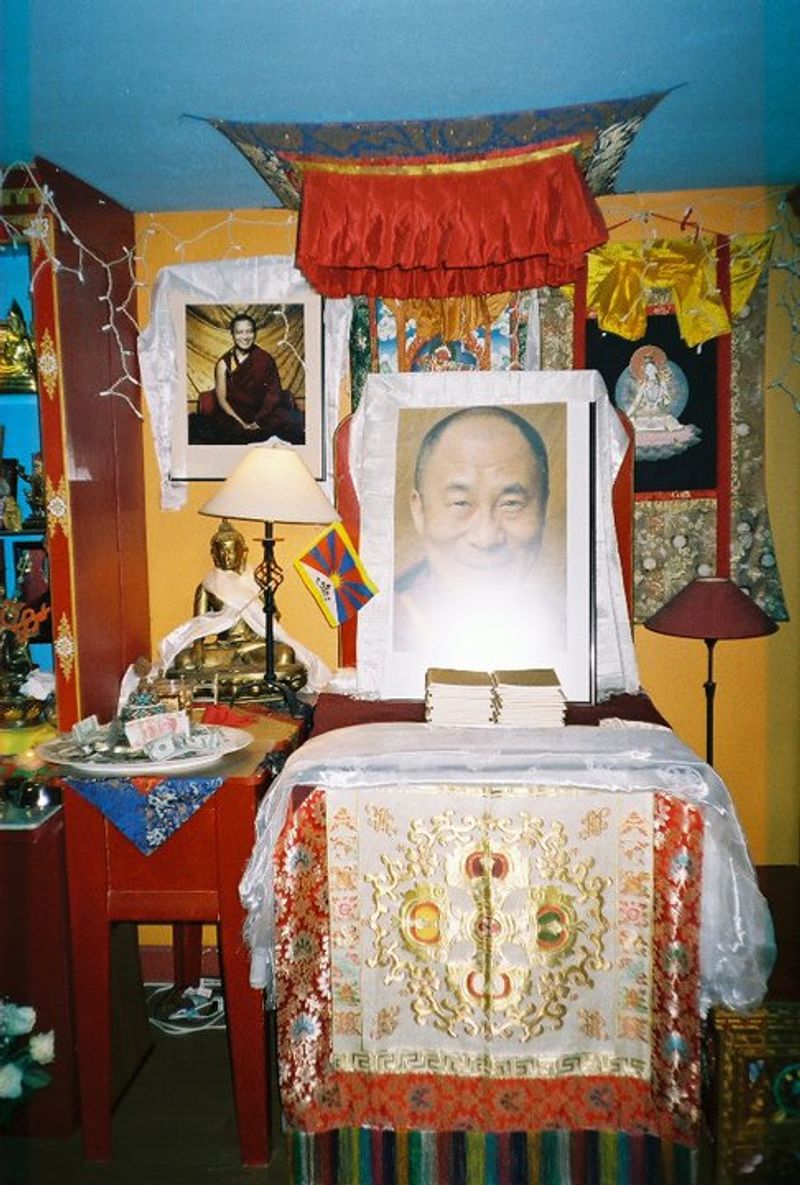
Look closely and the altar stops being one big glittering blur. It becomes a collection of separate objects, each placed on purpose.
Buddha statues sit in a cluster, some larger, some small enough to hold in a palm. Around them you will notice offering bowls, flowers, folded scriptures, and candles burning low.
Red and gold dominate the palette, the same pairing repeated outside on the building. The repetition ties the whole property together visually.
Offerings are not left there and forgotten. Flowers get changed, candles get replaced, and the arrangement shifts with different ceremonies through the year.
Here is a detail worth knowing before arriving. Sacred texts in Tibetan tradition are treated with real care, never placed on the floor and never stepped over.
Small gestures like that matter inside the shrine hall.
Photography rules vary by occasion, so asking first is simply good manners. Quiet voices go a long way as well.
What strikes most people is the density. There is barely an empty inch, yet the arrangement never feels messy.
Every item has a spot and a reason for sitting there.
That thoughtful clutter is exactly what the Baroque comparison was pointing at, elaborate on the surface and deeply organized underneath.
Blessed Twice By The Dalai Lama
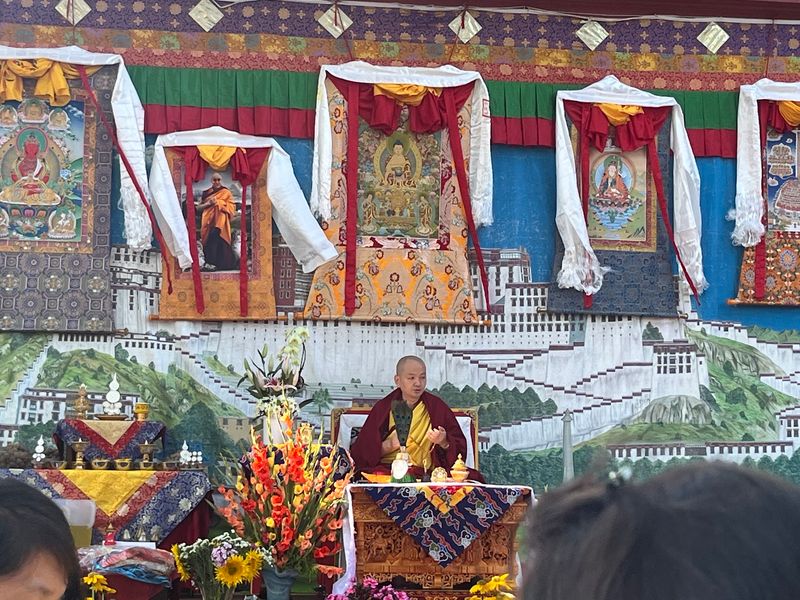
Not many buildings in Massachusetts can claim this. The shrine room at Kurukulla Center has been blessed by His Holiness the Dalai Lama, and not once but twice.
Those blessings came in 2003 and again in 2012. Nine years apart, the same small house on the same quiet street welcomed one of the most recognized spiritual figures alive.
For the community that gathers here, those dates carry real weight. A blessed space is treated differently, entered with more care and used with more attention.
Practitioners describe the hall as unusually calm, and the blessings are part of why. Whether or not you share the belief, the reverence in the room is easy to sense.
There is also a practical side to the story. Hosting a figure of that stature in a converted residential building takes enormous coordination, and the center managed it twice.
Seating in the hall is mostly floor cushions, with chairs available for anyone who needs them. The setup keeps everyone at roughly the same level, which suits the atmosphere.
Newcomers sometimes worry about doing the wrong thing. The honest answer is that quiet attention covers almost everything.
Watch what others do, follow along, and you will fit in fine.
A Backyard Stupa Built For World Peace
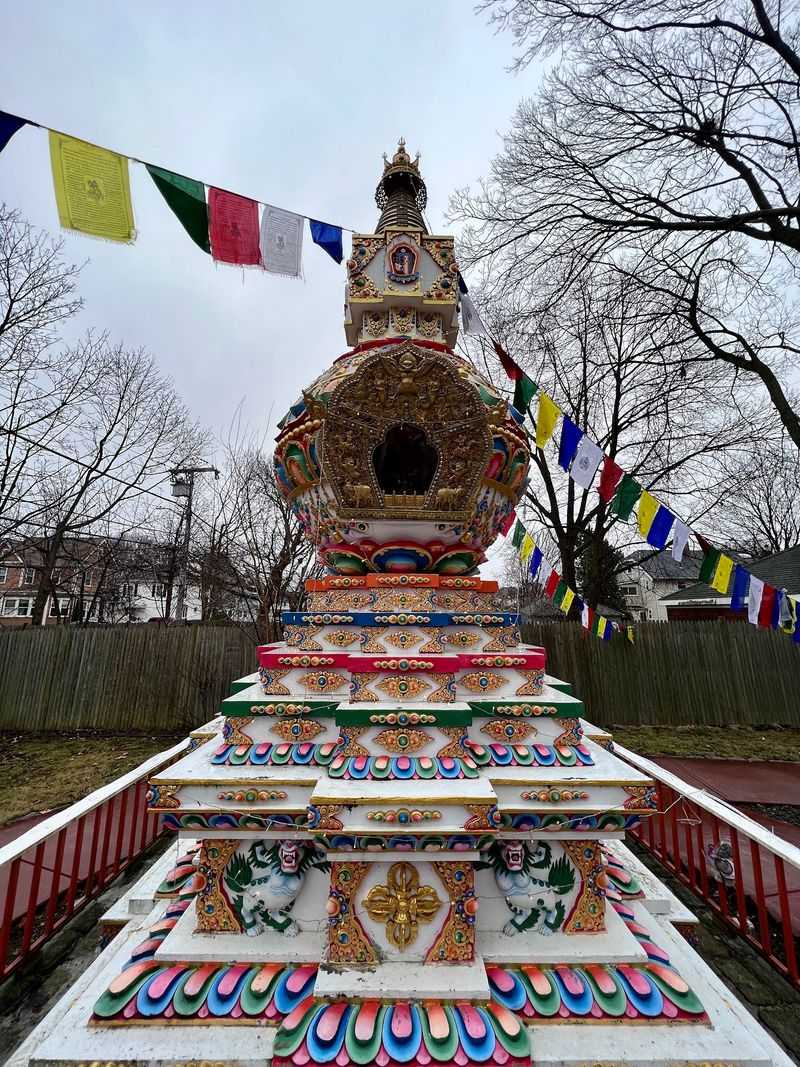
Most backyards in the area hold a grill and maybe a swing set. This one holds a stupa.
The Kalachakra stupa for World Peace rises in the open space behind the building, finished in the summer of 2010. It is an ornately decorated structure featuring colorful Tibetan artwork, intricate painted details, and golden accents, an unexpected sight in a suburban yard.
A stupa is a sacred Buddhist monument that can house religious relics, commemorate important events, or symbolize the Buddha’s enlightened mind.
In Tibetan tradition it represents the Buddha’s enlightened mind, built in specific proportions that carry symbolic meaning from base to spire.
Inside, the structure was filled with sacred texts and fragrant incense before being sealed. That filling is what gives a stupa its purpose, and it is believed to protect against negative energy while encouraging enlightenment.
The exterior deserves a slow look. Artists flown in from Tibet carved and painted the symbols by hand, layering detail across every level.
Seasons change the whole scene. Snow softens the outline in winter, while summer surrounds it with green and the sound of birds.
If you go, give yourself time outdoors as well as in. The yard is surprisingly roomy for its neighborhood, and the stupa anchors it completely.
Few structures like it exist anywhere in Massachusetts, which makes this one genuinely rare.
Tara, A Pond, And A Red Walking Path
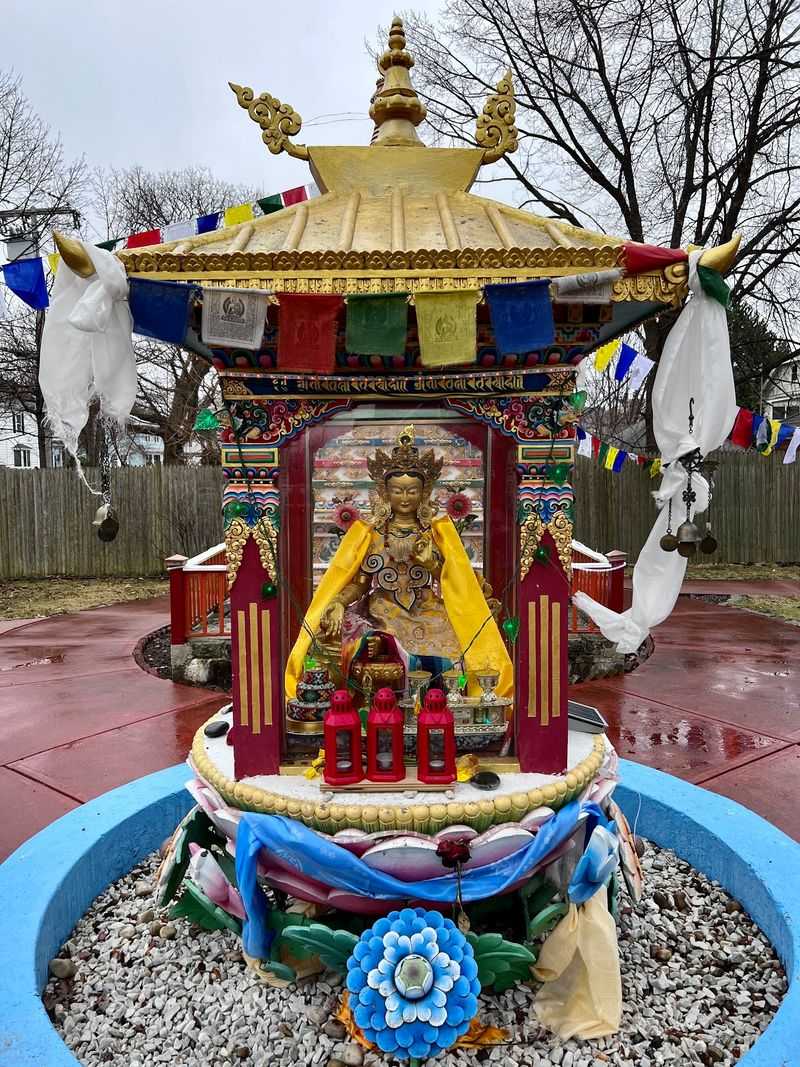
In front of the stupa sits a quieter figure. Tara, the female Buddhist deity, rests gracefully above a small pond.
She is smaller than the stupa and easy to miss at first glance. Once you spot her, the whole garden arrangement makes more sense.
A distinctive red pavement loops around both the statue and the stupa. It continues outward, tracing the full perimeter of the property.
That path exists for circumambulation, the practice of walking clockwise around a sacred object. The slow loop is treated as a moving meditation, a walking version of the journey toward enlightenment.
You do not need special training to try it. Walk clockwise, keep an unhurried pace, and let your thoughts settle.
The pond adds a soft sound to the mix, and the red pavement makes the route impossible to lose. Even a few laps leave most people noticeably calmer.
Nearby stands a row of bright red prayer wheels. Spinning them clockwise is another traditional practice, and the wheels are built to be used rather than admired from a distance.
Small children tend to love this part of the yard. The colors, the water, and the spinning wheels make it the most hands-on corner of the entire grounds.
Free Weekly Teachings On Magoun Avenue
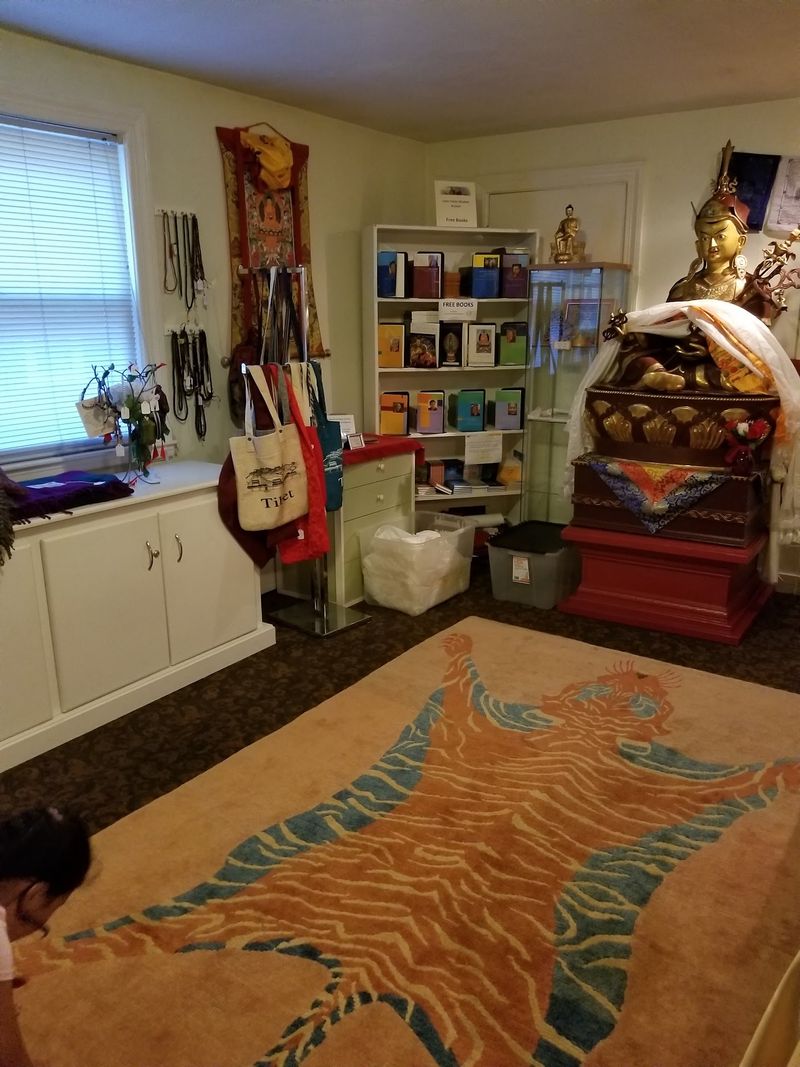
Here is the part that surprises people almost as much as the gold. Much of what happens here is open to the public and free of charge.
Kurukulla Center sits at 68 Magoun Avenue in Medford, Massachusetts, and its weekly schedule runs year round. Classes cover study and practice within the Tibetan Buddhist tradition.
Geshe Ngawang Tenley serves as resident teacher. The title Geshe reflects many years of formal monastic study, roughly comparable to an advanced academic degree.
Teachings are offered in English, which removes the biggest barrier for newcomers. Questions are welcome, and sessions tend to include time for discussion.
Nobody expects you to arrive with background knowledge. Curiosity is the only real requirement, and the format is built with beginners in mind.
The center also honors the legacy of the late Geshe Tsulga, whose teaching shaped the community for years. That continuity is part of what holds the place together.
Practical notes help. Shoes come off at the entrance, comfortable clothing beats anything stiff, and arriving a few minutes early gives you time to settle.
The building has wheelchair access, and the community makes room for people with different physical needs. Calling ahead can be tricky, so the website is usually the faster route.
Where Tibetan Grandparents And Boston Students Share A Room
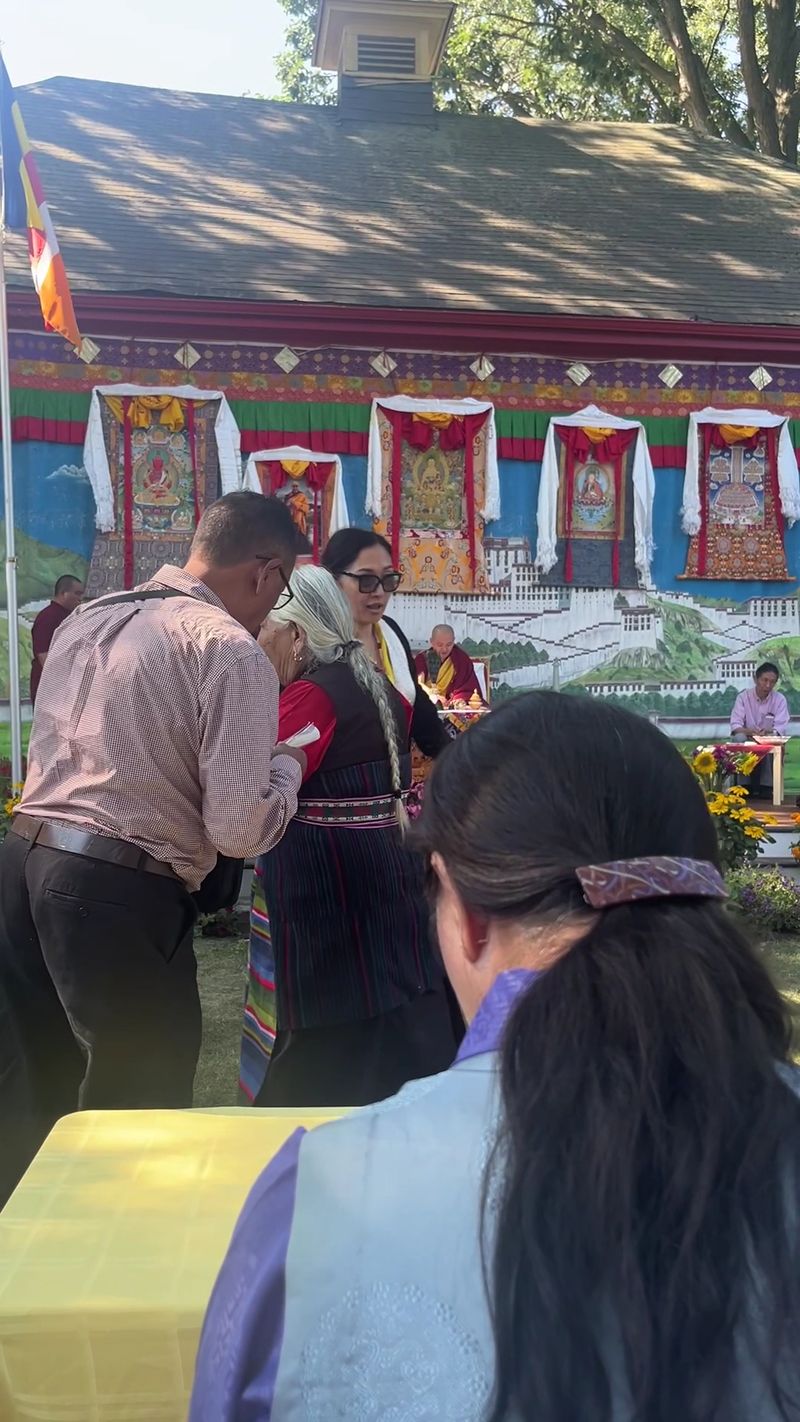
The mix of people here might be the best thing about it. On a given afternoon the room holds university students from the Boston area and Tibetan elders who grew up with these practices.
Retired Tibetan grandparents come regularly. They pray, they walk the circumambulation path, and they stay to socialize.
American students arrive with questions and notebooks. The two groups share the same hall, and the blend gives the center a texture most spiritual spaces in the region simply do not have.
That combination also means traditions stay living rather than preserved. Chants are sung by people who learned them as children, alongside people learning them now.
Conversation spills into the hallways and the backyard after sessions. Tea gets poured, news gets traded, and the atmosphere shifts from formal to friendly in about a minute.
Kurukulla Center functions as a community anchor as much as a place of worship. Both roles seem to strengthen each other.
For anyone exploring Buddhism in Massachusetts, that welcome matters more than any decoration. A golden shrine room is memorable, but the people are the reason many keep coming back.
Drive down Magoun Avenue and you will find all of it behind one cheerful yellow door.