
This Massive Massachusetts State Forest Has Nearly 100 Miles Of Trails And Wild Mountain Terrain
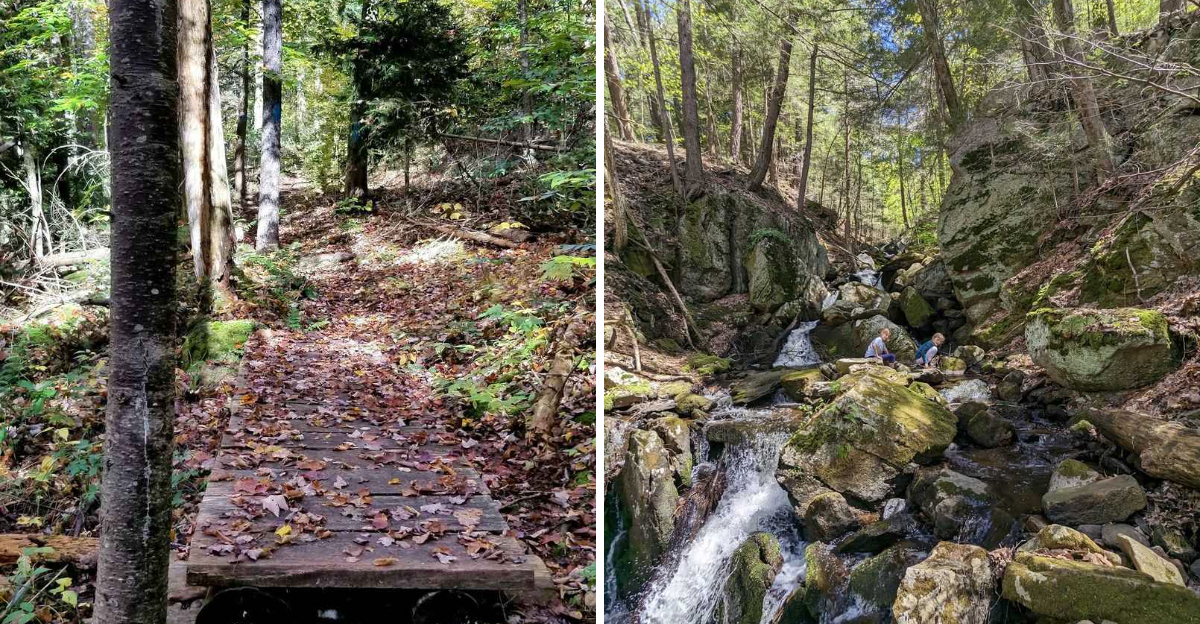
Think you’ve explored every corner of Massachusetts? This forest will prove you wrong.
Spanning thousands of acres across rugged mountain terrain, it ranks as the state’s largest protected forest land. Trail mileage here stretches close to a hundred miles, weaving through steep climbs, dense forest, and open ridgelines.
Streams cut through the landscape, feeding small ponds tucked into the woods. Camping is available for those wanting to extend the adventure overnight.
Wildlife thrives in this environment, making sightings a regular part of any visit. Every season transforms the scenery completely.
Spring brings wildflowers, and fall lights up in blazing color. Winter brings snow deep enough for serious backcountry skiing and quiet snowshoe treks.
This forest delivers real mountain terrain and an experience that feels far from ordinary.
Massachusetts’ Largest State Forest Is Bigger Than You Think
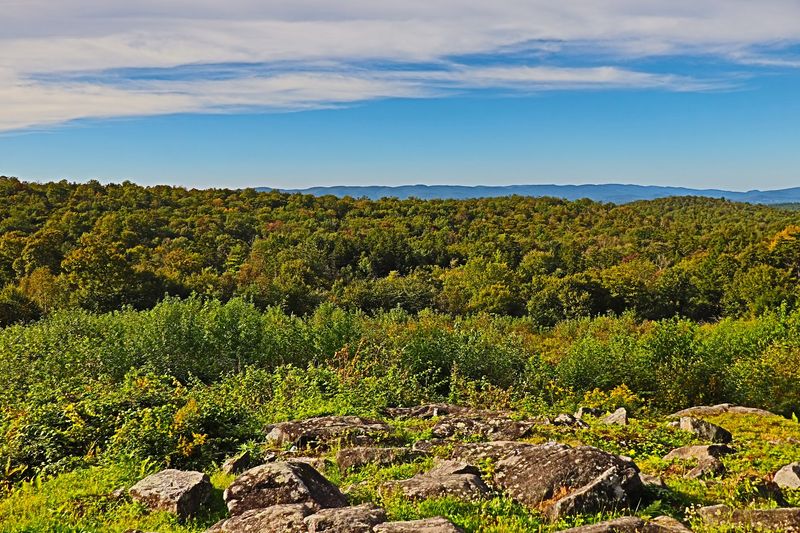
Size matters when you want elbow room, and this forest delivers it in acres. Estimates place the property between 16,460 and 17,000 acres, which makes it the biggest state forest in Massachusetts.
The land stretches across four towns: Washington, Becket, Lee, and Lenox. That means you can enter from several different directions and get a completely different feel each time.
Ownership traces back to 1915, when the state purchased the property from the estate of William C. Whitney. Before that, it was private land in the heart of the Berkshire Hills.
What makes the scale useful is how it spreads people out. Trails rarely feel crowded, and quiet weekday mornings can feel almost private.
Terrain shifts as you move through it. Hardwood ridges give way to reservoirs, marshland, and remote backcountry pockets that see little foot traffic.
Stone walls still run through parts of the woods, leftovers from farming days long past. Spotting them mid-hike is a small thrill. Bring a paper map along with your phone. Coverage can be spotty out in the middle of that much forest.
Nearly 100 Miles Of Trails To Choose From
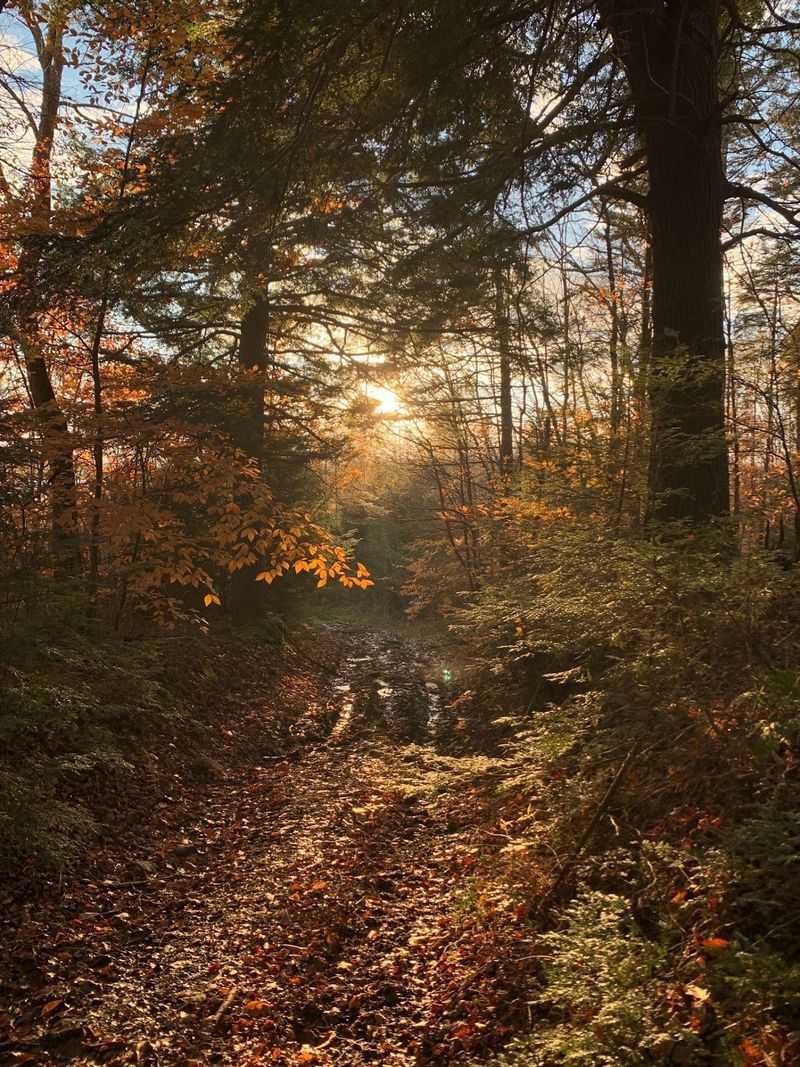
Trail networks this large tend to spoil people, and that is exactly what happens here. Paths wander for miles, serving hikers, mountain bikers, cross-country skiers, and off-road vehicle riders.
Some routes are short and gentle. Others climb, twist, and stretch far enough to eat up an entire day.
Blazes tell you what you are on. White marks the Appalachian Trail, orange or yellow signal multi-use routes, and blue means foot traffic only.
Learning that color code before you set out saves confusion later. Junctions come often, and one wrong turn adds unwanted miles.
Easier options include the Washington Marsh Trail series, which works well for families and casual walkers. Tougher choices include the October Mountain State Forest Loop and the Gorge Trail.
Mountain bikers get plenty of room to play, with forest roads and singletrack mixed together. Winter turns many of those same corridors into cross-country ski routes.
Download an offline map before arrival. Signage varies from spot to spot, and having a backup makes the day smoother. Solid boots help too. Rocks and roots show up constantly.
A Stretch Of The Appalachian Trail Runs Right Through
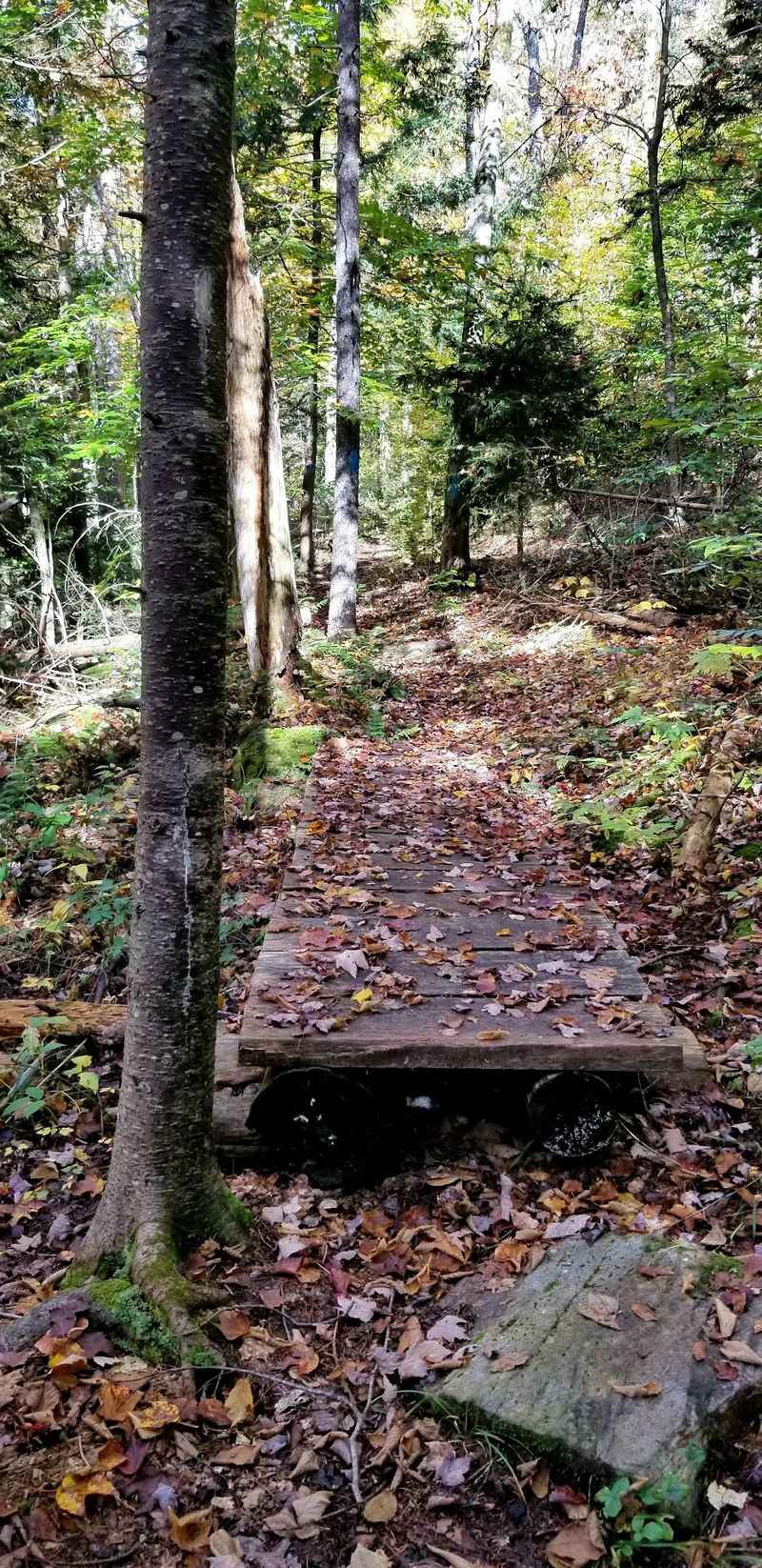
Few footpaths carry as much legend as the Appalachian Trail, and a segment of it crosses this forest. That means you can walk the same corridor used by thru-hikers heading from Georgia to Maine.
Day hikers get the best of both worlds here. You can sample a few miles of the famous route without committing to five months of walking.
The white blazes are easy to follow once you spot the first one. They appear on tree trunks and occasional rocks at regular intervals.
Upper Goose Pond Cabin sits about half a mile off the trail and has long served as a welcome stop for long-distance hikers. The pond itself is calm and framed by thick woods.
Late spring through early fall brings the heaviest thru-hiker traffic through the Berkshires. Passing them on the path is part of the fun.
Terrain along this section rolls rather than spikes. Expect steady climbs, rocky footing, and shaded stretches under hardwoods. Carry water and snacks. Resupply points sit outside the forest boundaries.
Wild Mountain Terrain And High Plateau Country
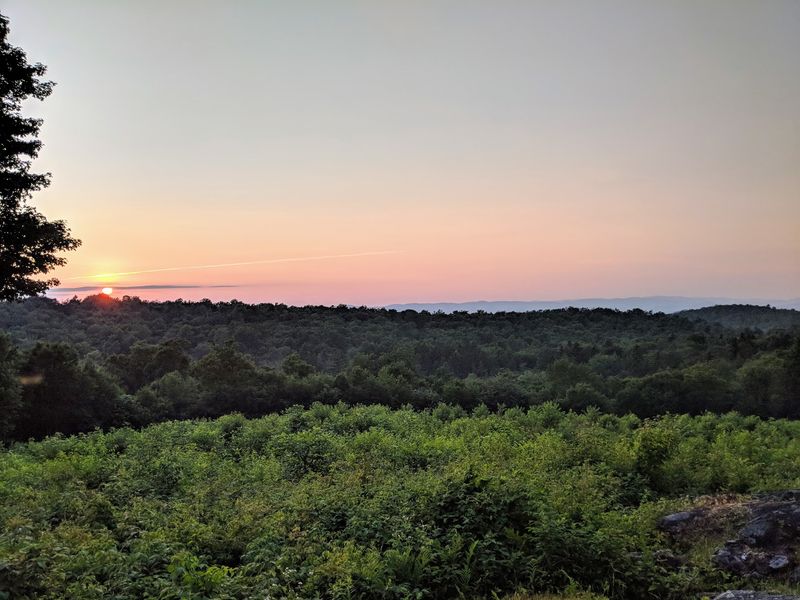
Massachusetts is not famous for towering peaks, yet the landscape here feels genuinely rugged. The forest includes a section of the Hoosac Range, and October Mountain itself rises steeply above the Housatonic River valley.
That summit marks the highest point in the forest. Elevations across the property reach roughly 2,000 feet.
The central portion sits as an uplands region, closer to a high plateau than a series of sharp peaks. Reservoirs and wetlands are scattered across it.
Washington Mountain forms a lower ridge along the eastern edge. Together, these features create a landscape that changes character as you move east to west. Climbs tend to be steady rather than brutal. Still, the rocky footing keeps things honest.
Vistas open up in select spots, especially where the tree cover thins along ridgelines. They reward the effort of getting there.
Trekking poles are worth packing on the steeper descents. The ground here loves to shift underfoot. Weather can differ from the valley below. A jacket in the pack is never a bad call.
Schermerhorn Gorge, A Geological Standout
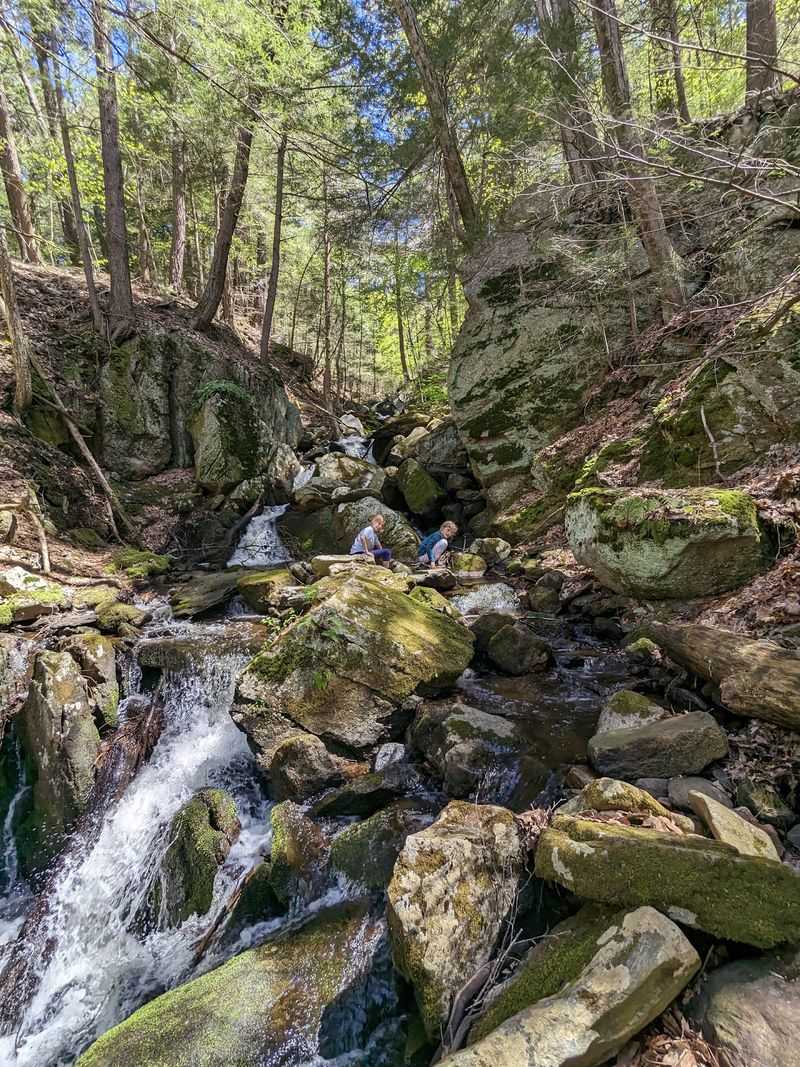
Water has been carving away at this spot for a very long time, and the result is worth the walk. Schermerhorn Gorge counts as one of the most striking natural features on the entire property.
Steep rock walls, mossy boulders, and moving water make the setting feel far removed from the surrounding hardwoods. The Gorge Trail leads hikers into it. Rate this one as a tougher outing. Footing gets uneven, and the descent asks for careful steps.
Spring runoff makes the water especially lively. Rain-soaked rocks turn slick, so shoes with real grip matter.
Photographers tend to linger here. Light filtering through the canopy onto wet stone creates scenes that are hard to leave.
Generations of Berkshire wanderers have made the trip out to see it. The gorge has held its reputation for a long time.
Give yourself extra time. Rushing through a place like this defeats the purpose. Pack out whatever you carry in. Fragile spots stay beautiful only when people treat them well.
Rocktober Delivers 27 Miles Of Off Highway Vehicle Trails
Riders gave this place a nickname, and it fits perfectly. Locals in the off-road community call it Rocktober, thanks to trails paved in nothing but stone.
The forest maintains 27 miles of off-highway vehicle routes. Legal riding areas like this are not common in the region, which makes the network valuable.
Difficulty runs high. Intermediate to expert riders get the most out of these trails, and beginners may find the terrain overwhelming.
Rocks, roots, and mud all make appearances. Wet weather turns the challenge up several notches.
Dual-sport and adventure motorcycle riders show up regularly. Small groups tend to fare better than solo trips out here.
Streams, dams, and ponds appear along the way, giving riders scenery between the technical sections. It is not just a slog through the woods.
Check the state website for current trail status and rules before loading up. Seasonal closures and permit requirements apply.
Helmets and protective gear are non-negotiable. The rocks earned that nickname honestly.
Camping, Yurts, And A Berkshire Base Camp
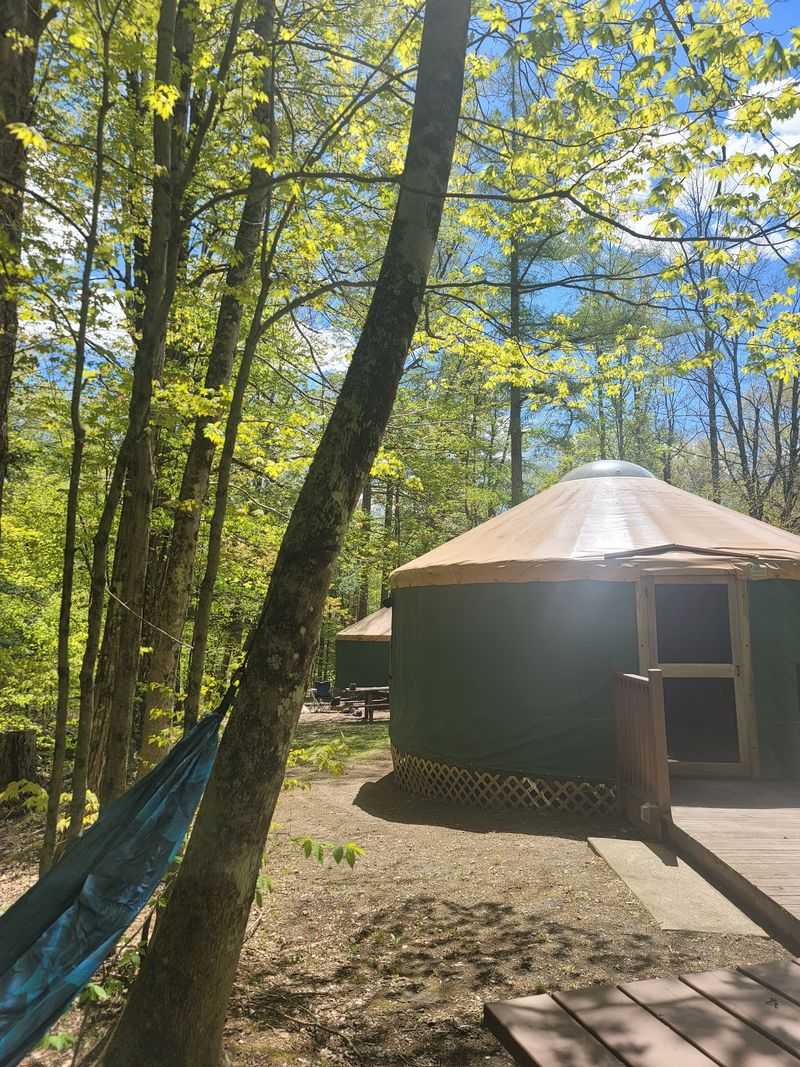
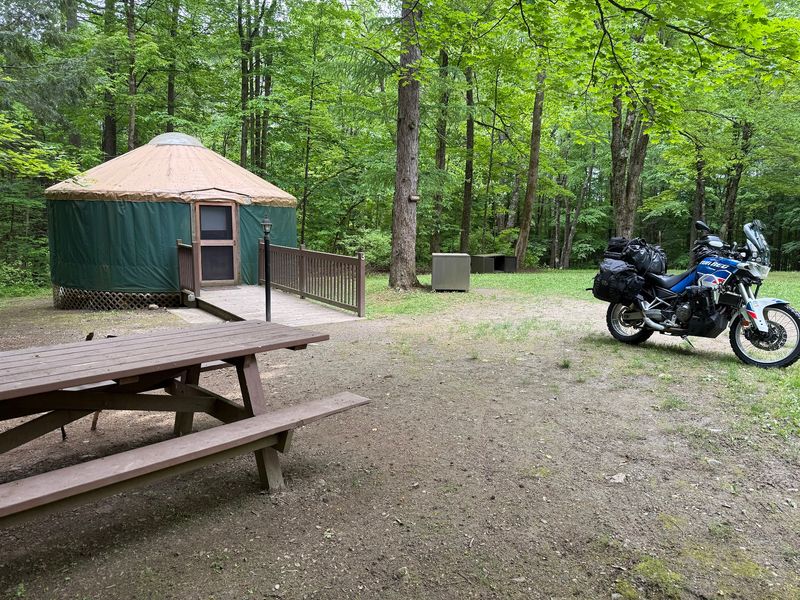
Sleeping in the woods beats driving home after a long hike, and the campground here makes that easy. Between 44 and 47 campsites are available, along with three yurts for reservation.
Yurts appeal to people who want a roof without hauling gear. They book quickly during peak Berkshire weekends.
The main entrance and campground sit at 256 Woodland Road in Lee, with the park address listed as 317 Woodland Rd, Lee, MA 01238. Downtown Lee is only a few minutes away.
Facilities include restrooms and a dish washing station with hot and cold water. Sites are roomy, though the main area does not offer RV hookups.
Trails leave directly from the campground, which is handy for early morning walks. No driving required.
Tanglewood concerts draw plenty of overnight guests during summer. Reserving well ahead is the smart move.
Grocery stores and breakfast spots in town cover any forgotten supplies. Convenience like that is rare near wilderness this large. Book through the state reservation system online.
Ponds, Paddling, And Fishing Spots
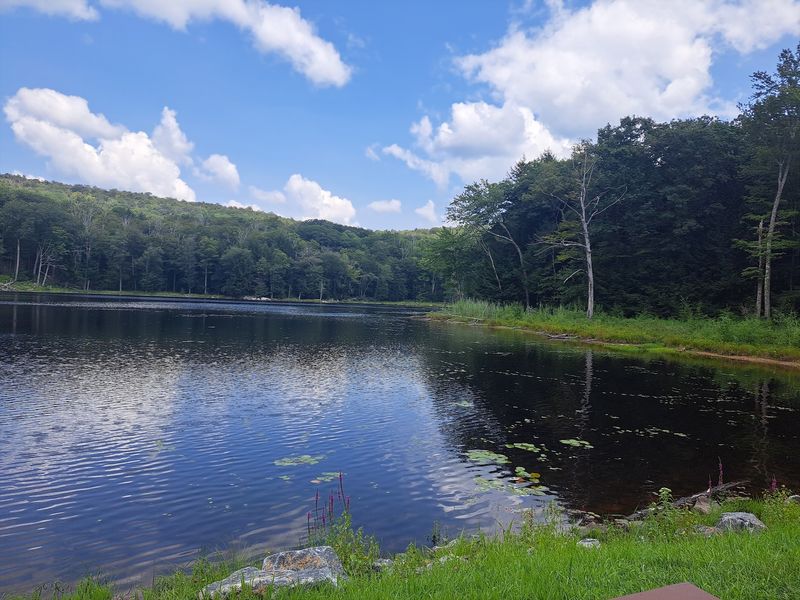
Still water shows up throughout this forest, and it changes the whole experience. Several reservoirs and ponds dot the uplands, along with the wide expanse of Washington Mountain Marsh.
Anglers come for largemouth bass. Quiet shorelines and early mornings make for productive outings.
Non-motorized boating is permitted, so canoes and kayaks are welcome. Paddling across a glassy pond surrounded by hardwoods is a fine way to spend a morning.
The Housatonic River runs along the western side, offering another option for paddlers. Access varies by season and water level.
Marsh areas serve as prime spots for watching wildlife. Beavers have been busy shaping these wetlands for generations.
Bring a valid Massachusetts fishing license if you plan to cast a line. Regulations are posted and enforced. Water levels shift through the year, so check conditions before hauling a boat in. Spring tends to be highest.
Insect repellent belongs in your pack from late spring through summer. Marshes attract more than just birds.
Wildlife Watching And A Legendary Autumn Show
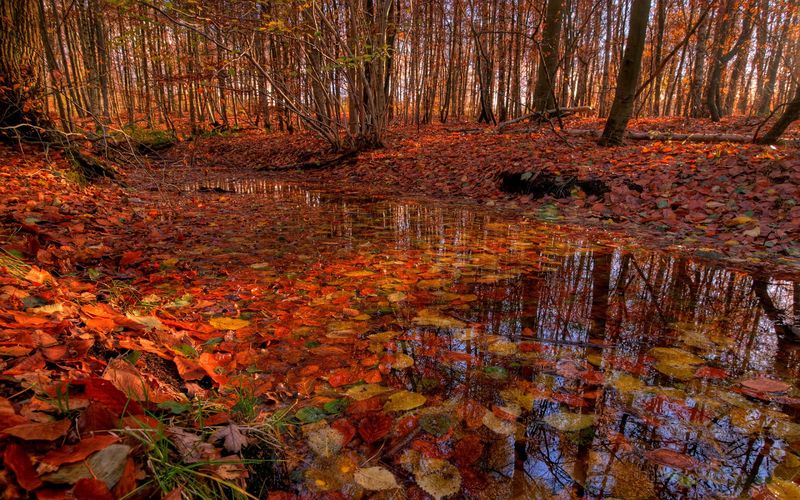
Herman Melville is credited with naming this place October Mountain, and anyone who shows up in autumn understands why. Maples, oaks, and birches turn the ridges into layers of red, orange, and gold.
Driving the forest roads during peak color is a favorite Berkshire tradition. Pull-offs let you stop and take it in.
Wildlife keeps things interesting the rest of the year. White-tailed deer, foxes, raccoons, beavers, and songbirds all live within the forest boundaries.
Bald eagles have been spotted here too. Watching one cross open sky above a pond is a memory that sticks.
Dawn and dusk offer the best odds for sightings. Move slowly and keep conversation low. Hunting is permitted during designated seasons, particularly for deer. Wearing blaze orange during those months is a sensible precaution.
Binoculars turn a good walk into a great one. The marsh areas reward patient observers.
October Mountain State Forest gets busiest during foliage season, so weekday trips mean fewer cars. Early arrival secures the better parking spots.