
This Remote Idaho Ghost Town Is A Remarkably Preserved Mining Camp Hidden Beyond A Rough Dirt Road
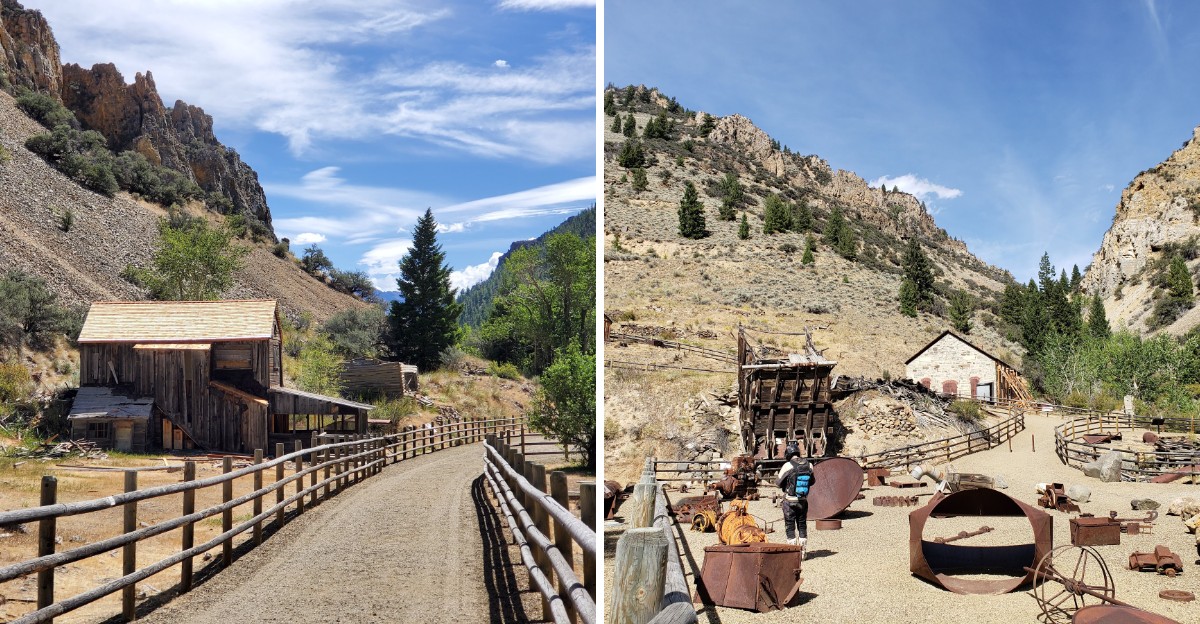
Within two weeks in November 1889, an entire mining town basically emptied out. A government ruling shut down the smelter, and more than 300 men lost their jobs almost overnight.
The buildings they left behind are still standing in a narrow canyon. A multi-story stamp mill from the 1880s still towers over the creek. Old beehive charcoal kilns still sit in a row like giant stone thimbles.
Getting there takes a little grit. The last stretch is a dirt road that winds into the mountains of central Idaho. I appreciate that the trip feels like part of the story.
I’d probably spend way too long staring at that mill. Who wouldn’t want to walk a main street where hundreds of miners once lived and worked?
A Silver Boomtown Froze In Place, And You Can Still Walk Its Street
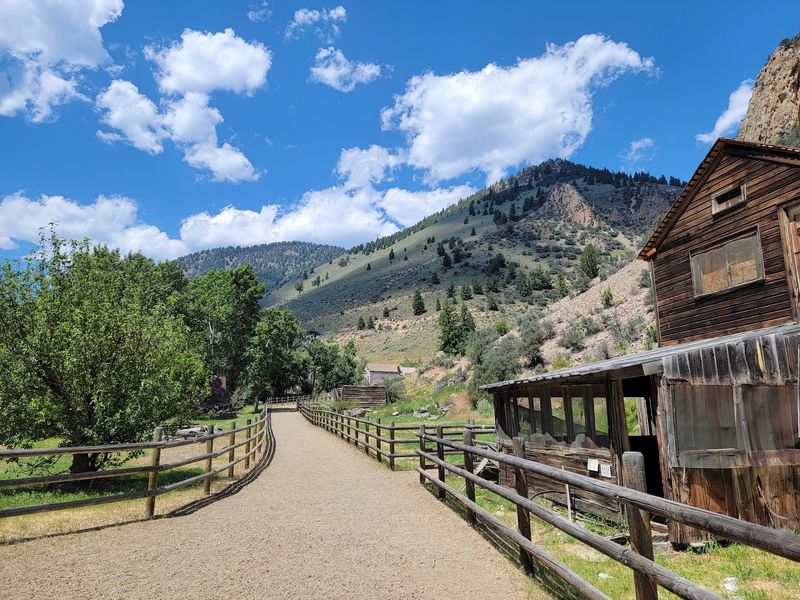
Silver built this place fast, and silver left it just as quickly. Bayhorse Ghost Town sits in a deep canyon beside Bayhorse Creek in Custer County, Idaho. It’s known as one of the state’s better-preserved 19th-century mining camps.
Active development started in March 1877 after miners found a lead-silver deposit. The mining district was organized that October. After 1880, the town really took off.
At its peak in the 1880s and 1890s, somewhere between 300 and 500 people lived here. That’s a lot of folks squeezed into one skinny canyon. By 1885, the town had three stores, a hotel, a restaurant, a meat market, and a lodging house.
There was even a refinery that turned out silver bars. Not bad for a camp miles from anywhere. By 1898, the district had produced an estimated 10 million dollars in silver, lead, and copper.
Today, about 14 decaying buildings remain visible. You can stroll the main dirt street past ruins of old homes and rusty mining equipment. It’s one of those rare spots where history isn’t behind glass.
It’s right there beside the path, slowly settling into the hillside.
That Towering Stamp Mill Steals The Whole Show
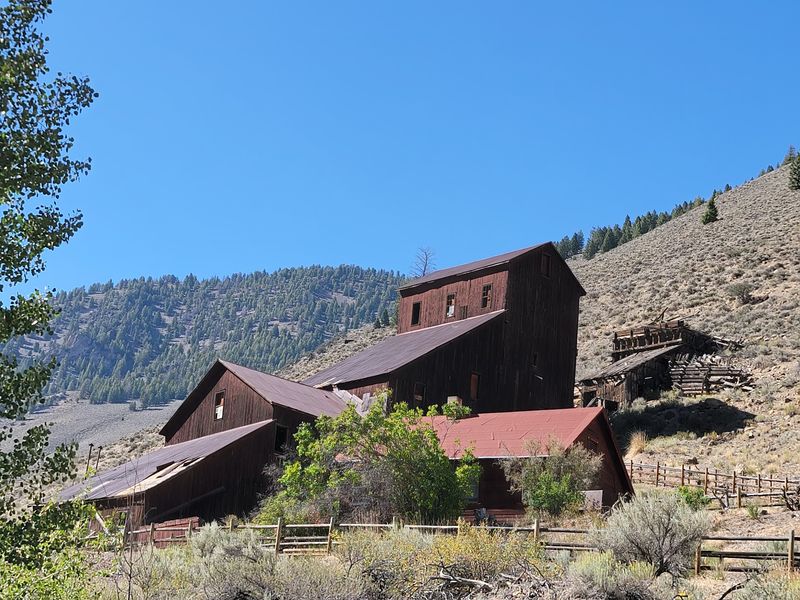
Some buildings whisper their history. The Gilmer and Salisbury Stamp Mill pretty much shouts it from several stories up.
Built in the early 1880s, the mill processed most of the silver ore pulled from these hills. Sources list both 1880 and 1882 for its construction. Either way, it has been standing for well over a century.
A stamp mill crushed rock so the valuable metal could be separated out. Picture the noise of that, and you start to understand why mining towns were never quiet. Okay, you don’t have to picture it.
Just know it was loud.
The mill is easily the most eye-catching structure at Bayhorse. Its height makes the surrounding cabins look tiny by comparison. Photographers tend to angle for it first, and it’s easy to see why.
Interpretive signs nearby explain how the mill fit into the larger operation. Early Bayhorse also had a water-powered smelter, an aerial tramway, and a sawmill. Together, they turned raw rock into real money.
Give yourself time here. The mill rewards a slow look, especially once you notice how much work went into building it by hand.
Those Beehive Kilns Look Like Something From Another Planet
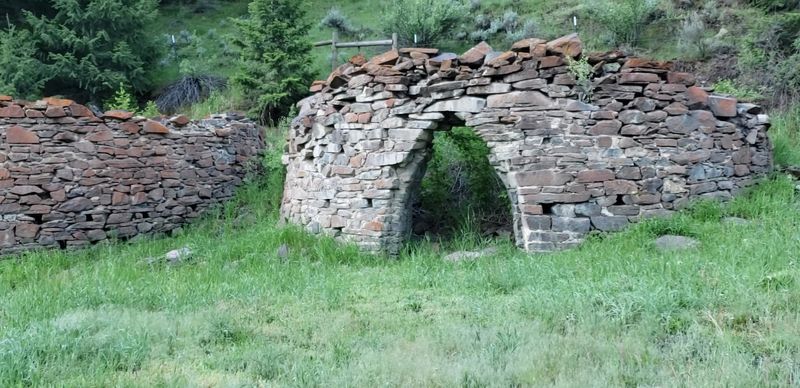
Giant stone domes in the middle of the mountains? Yep, and they had a very practical job.
Bayhorse still has intact beehive charcoal kilns. Workers used them to make charcoal for the smelter. The smelter needed serious heat to separate metal from ore, and charcoal delivered it.
The kilns got their nickname from their rounded shape. They really do resemble old-fashioned beehives, just a lot bigger and made of stone. Kids usually catch the resemblance right away.
Here’s a fun way to look at them. Every bar of silver that left Bayhorse depended on these humble domes doing their part. They weren’t glamorous, but the whole operation leaned on them.
Charcoal kilns like these are a favorite stop for anyone curious about how mining camps actually worked. They show that a boomtown needed far more than shovels and lucky prospectors. It needed fuel, timber, labor, and plenty of planning.
Take a minute to walk around them and read the signs. The kilns are a great reminder that history is often built on the unflashy stuff. Plus, they make for some seriously unusual photos.
Is That Stone Building Really A Wells Fargo Office? Nobody Knows For Sure
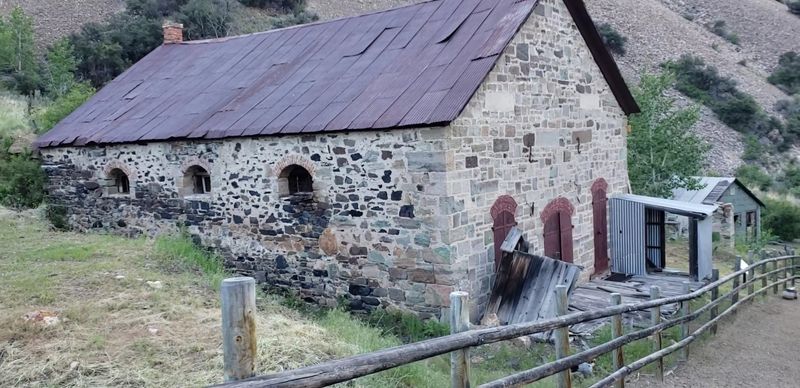
Every ghost town needs a good mystery. At Bayhorse, it comes in the shape of a sturdy stone building.
Folks often call it the Wells Fargo building. The catch is that nobody has confirmed Wells Fargo ever used it. So it holds onto its name while keeping its true story a secret.
Whatever its purpose, it was clearly built to last. Stone construction stands out in a camp where many structures were made of logs. Some of those wooden buildings have crumbled, while the stone ones hang on stubbornly.
You’ll also spot other stone block buildings around the site. There are remnants of an old foundry too. Mixed in with all of it are original log cabins that once housed working families and miners.
I love that the town still has unanswered questions. It keeps the visit from feeling like a textbook. You get to wonder, guess, and maybe argue a little with whoever came along.
The contrast between rough logs and solid stone tells its own story. Some people expected to stay a long time. Others built quickly, hoping the silver would hold out.
The Rough Road In Is Half The Adventure
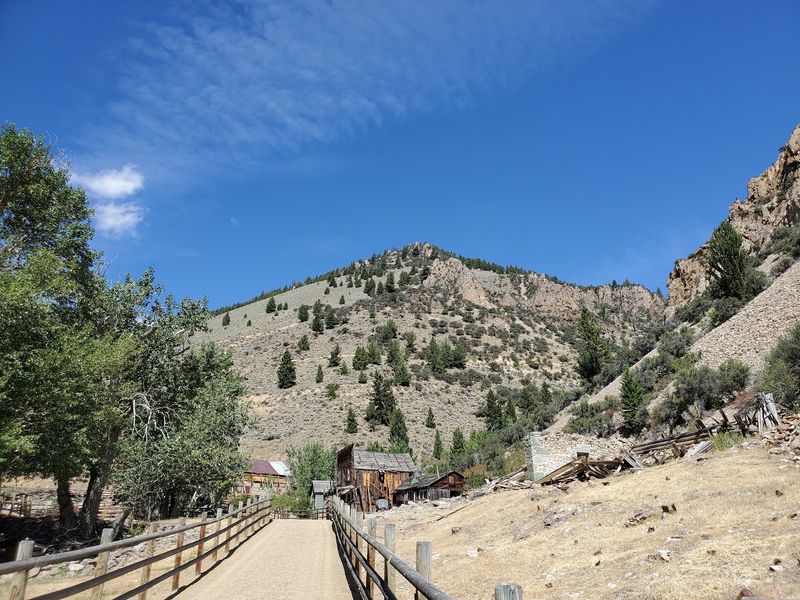
Smooth highways are nice. They just don’t make you feel like you’ve earned your destination.
Bayhorse is about 25 minutes from Challis, Idaho, high in the central Idaho mountains. The town sits above 6,000 feet. Officially, its address is listed simply as Challis, ID 83226.
The final stretch is a dirt road off the Salmon River Highway, roughly four miles long. Some describe it as rough, while others call it reasonably well-maintained gravel. Both can be true, depending on the day and your vehicle.
Drive slowly and keep an eye out for rocks. A little patience goes a long way on canyon roads. Your tires will thank you later.
Plan your timing carefully too. The site is typically open daily from 9 a.m. to 5 p.m. A gate blocks access after hours, so showing up at sunset is a no-go.
Bayhorse also closes for winter. The site shut down for the season on October 15, 2025. Check with Land of the Yankee Fork State Park before you go, so you don’t drive all that way to a locked gate.
Lace Up For An Easy Loop Packed With Stories
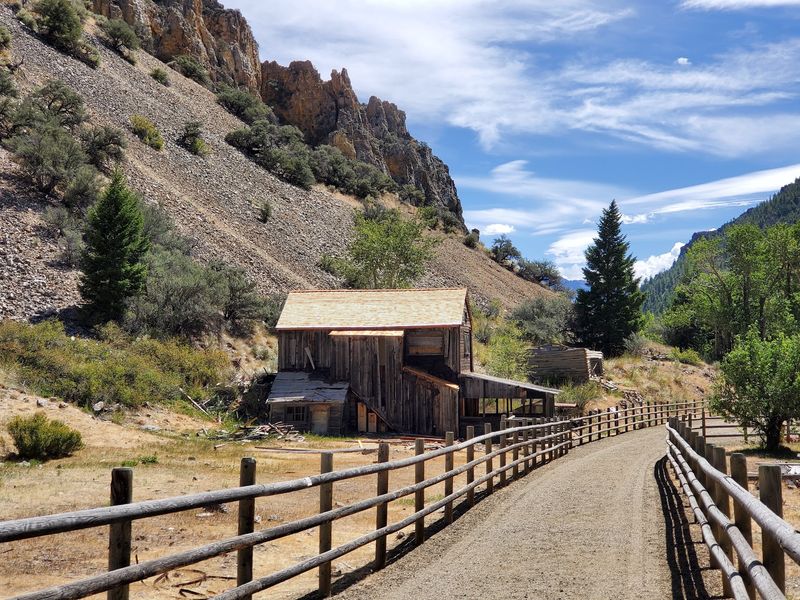
Good news for anyone who isn’t a hardcore hiker. You can see most of Bayhorse on a loop trail that’s close to one mile long.
The Idaho state park service added smooth pathways through the site. They help guide foot traffic and protect the fragile old structures. That means less wear on the buildings and easier walking for you.
Informative signs pop up all along the way. Each one explains what a building was used for and how it fit into town life. It’s like having a history teacher who never asks for homework.
Wear comfortable shoes and bring water. You’re above 6,000 feet, so the air is thinner than many people expect. A slower pace makes the visit more enjoyable anyway.
Bring a sun hat too, since the canyon can feel bright in summer. A camera is a smart idea as well. The weathered wood and stone look fantastic against mountain skies.
Most importantly, stay on the paths. These buildings have survived more than a century of weather. A little respect helps them stick around for the next group of curious explorers.
A Fire And A Ruling Sent Everyone Packing In 1889
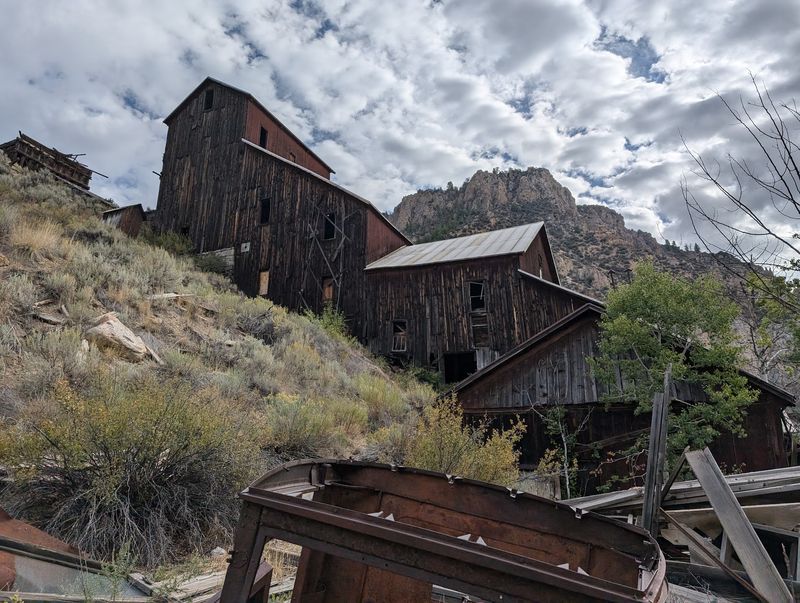
May 1889 was a rough month for Bayhorse. A devastating fire tore through town and destroyed several buildings.
Then things got worse. In November 1889, an unfavorable government ruling on silver-lead ores forced the smelter to close. Within two weeks, the town was described as practically deserted.
More than 300 men lost their jobs. Imagine a busy town going quiet that fast. It’s hard to wrap your head around.
Some mining continued afterward, but the good times never fully returned. Falling silver prices and high shipping costs kept chipping away. All mining operations stopped by 1915.
Even the town’s name has a colorful backstory. One tale says a nearby creek was named after a horse that fell into it during a prospecting trip. Another says prospectors met a miner with two bay horses who shared news of rich ground nearby.
Bayhorse joined the National Register of Historic Places in 1976. The Idaho Department of Parks and Recreation bought the property in 2006. It opened to the public in 2009, giving everyone a chance to see this boom-and-bust story up close.
Camp Nearby And Chase Down Two Mountain Lakes
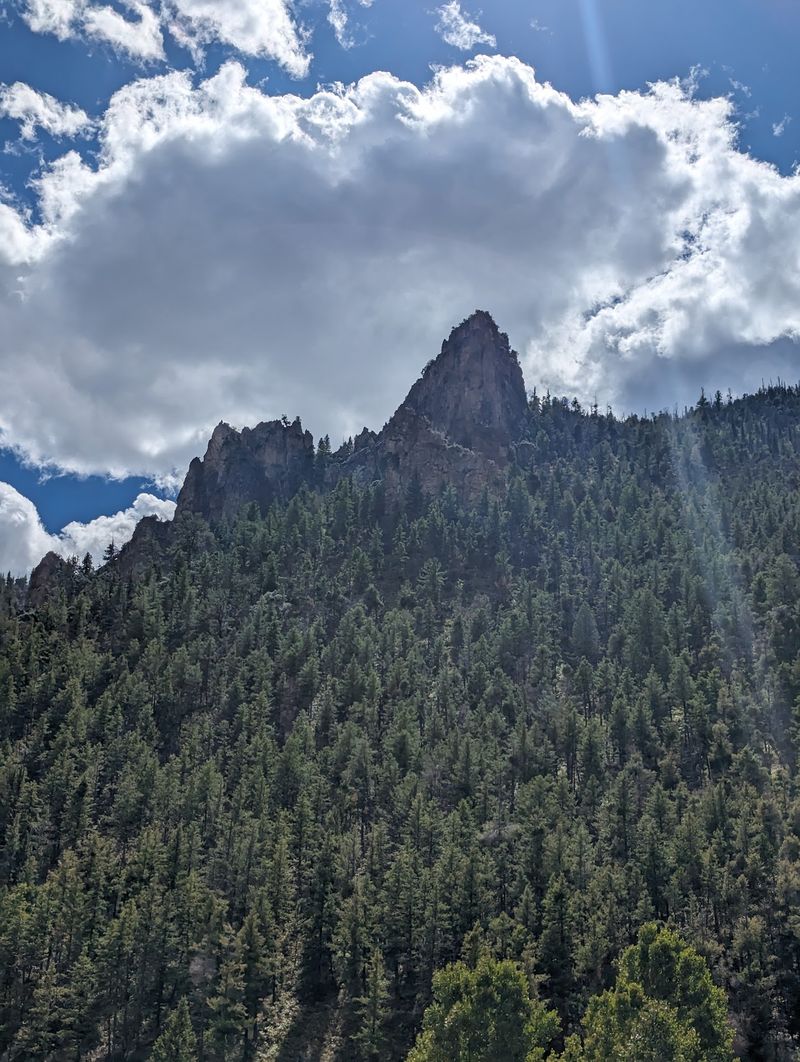
Leaving right after the ghost town tour would be a missed chance. The area around Bayhorse is full of outdoor options.
Bayhorse Recreation Site sits at about 5,400 feet on the Salmon River. It’s a handy campground, and the river makes it a solid pick for fishing. Waking up beside moving water is hard to beat.
Head higher and you’ll find Big Bayhorse Lake Campground and Little Bayhorse Lake Campground. Wildflowers brighten the road up to Big Bayhorse Lake in the right season. A 2.6-mile trail connects the two lakes.
That trail is a great add-on if your legs still have some energy after exploring town. Pack snacks and enjoy the quiet. Mountain lakes have a talent for making people slow down.
Land of the Yankee Fork State Park also offers hiking and ATV trails in the area. That gives families plenty of ways to fill a long summer weekend. Adventure seekers won’t run out of things to try.
Spending a night or two lets you see the region at its own pace. You’ll also avoid cramming everything into one rushed afternoon.
Turn One Ghost Town Into A Full History Road Trip
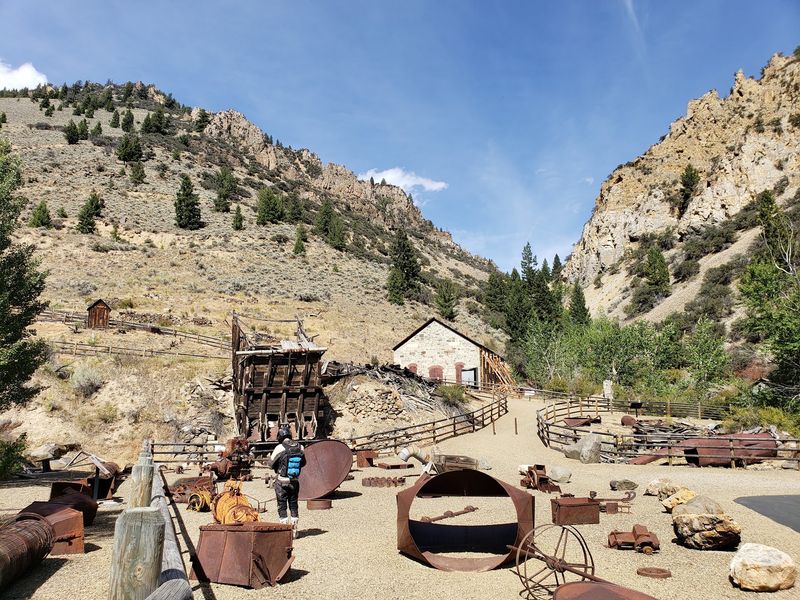
One ghost town is fun. Two ghost towns and a gold dredge? Now that’s a proper road trip.
Bayhorse is part of Land of the Yankee Fork State Park, which covers several historic spots. Custer Ghost Town is another mining camp worth a stop. The Yankee Fork Gold Dredge is also nearby and adds a totally different chapter to the story.
The park also includes a Native American Buffalo Jump. It’s fenced off, but it shows that people lived here long before miners showed up. That deeper history adds real weight to the trip.
Start or finish at the Land of the Yankee Fork Interpretive Center in Challis, Idaho. It offers information and artifacts about the region. It’s typically open Wednesday through Sunday, from 8:30 a.m. to 4:30 p.m.
Stopping there first can give you helpful background before you hit the dirt roads. You’ll recognize names and places once you reach the sites. It makes everything click.
Bayhorse Ghost Town may be the star, but the whole area plays a great supporting role. Pack a cooler, grab a map, and give yourself plenty of daylight.