
This Tennessee Aviation Museum Houses Rare Airplanes, Historic Artifacts, And A Few Big Surprises
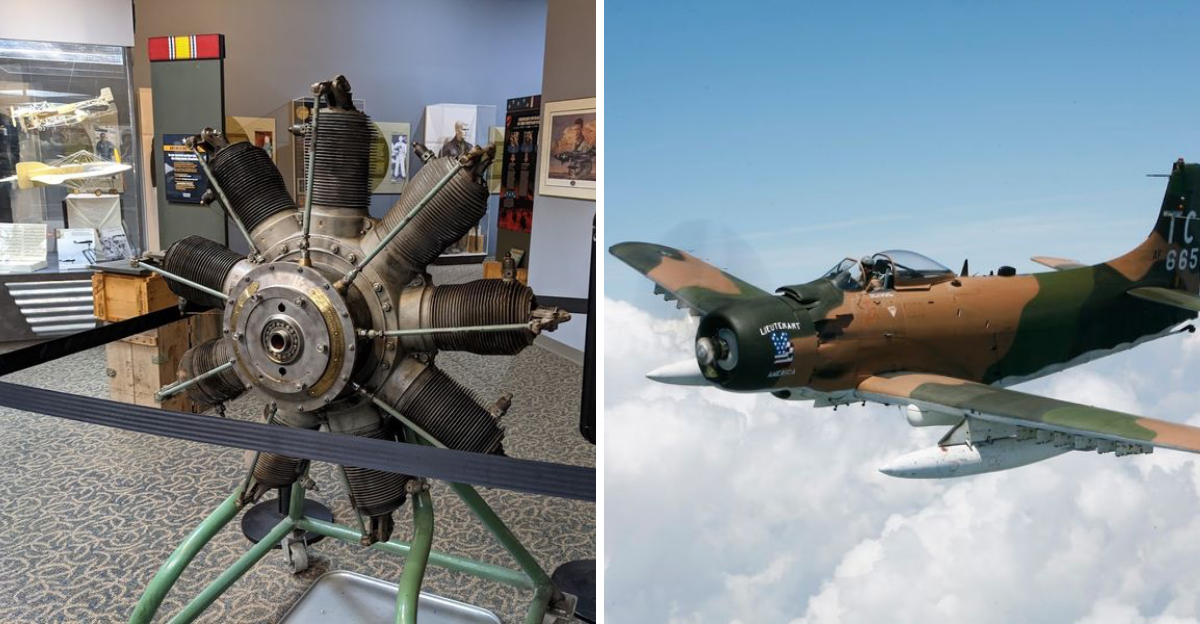
Two of the rarest fighter planes from World War Two share a single hangar roof in Tennessee. Fewer than a dozen fly anywhere on the planet, and only one place has two of them.
Cold War rivals sit wingtip to wingtip inside, built for opposite sides of history. The contrast catches almost everyone off guard.
Climb into a real cockpit and grip the controls like a pilot once did. Engines sit sliced open nearby, revealing exactly how these machines roared to life.
Veterans still walk the hangar floor, trading stories no plaque could capture. Ask one a question and the whole visit changes.
A runway sits right outside those doors, and these Warbirds are not just for looking. Tennessee built something here worth planning an entire day around.
Where History Takes Flight In Tennessee
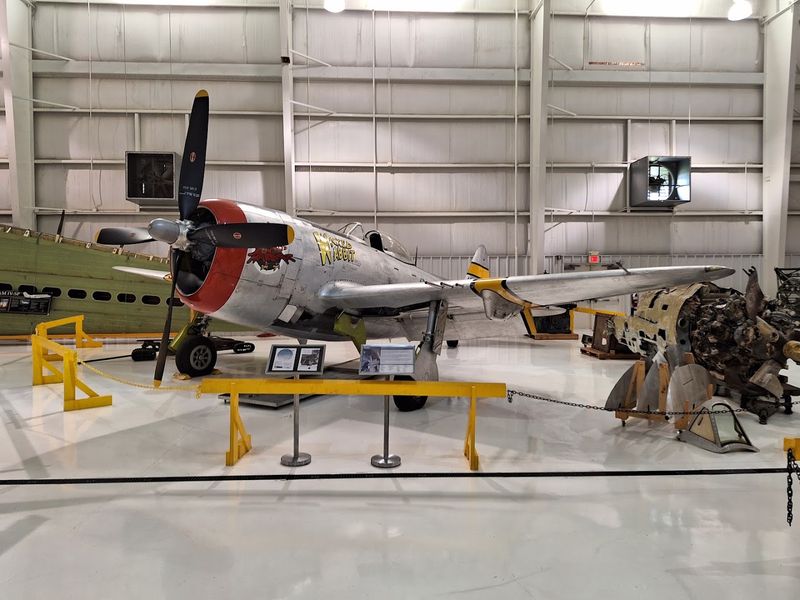
Few museums anywhere in the American South pack this much aviation firepower into one building. The Tennessee Museum of Aviation, located at 135 Air Museum Way in Sevierville, Tennessee, serves as the state’s official repository and archive of aviation history.
That title is not just ceremonial.
The facility spans roughly 50,000 square feet, giving its remarkable collection the space it truly deserves. Visitors move through a professionally designed exhibit gallery before stepping into a cavernous hangar packed with aircraft of every era.
The transition feels like crossing a threshold into another world.
What separates this museum from others is motion. Many of the airplanes here are not just preserved relics.
They are airworthy, maintained, and occasionally flown. Hearing a vintage engine fire up just outside the hangar doors is an experience no photograph can fully capture.
Tennessee has a proud aviation heritage, and this museum honors it with serious dedication and genuine passion.
Two P-47 Thunderbolts Under One Roof
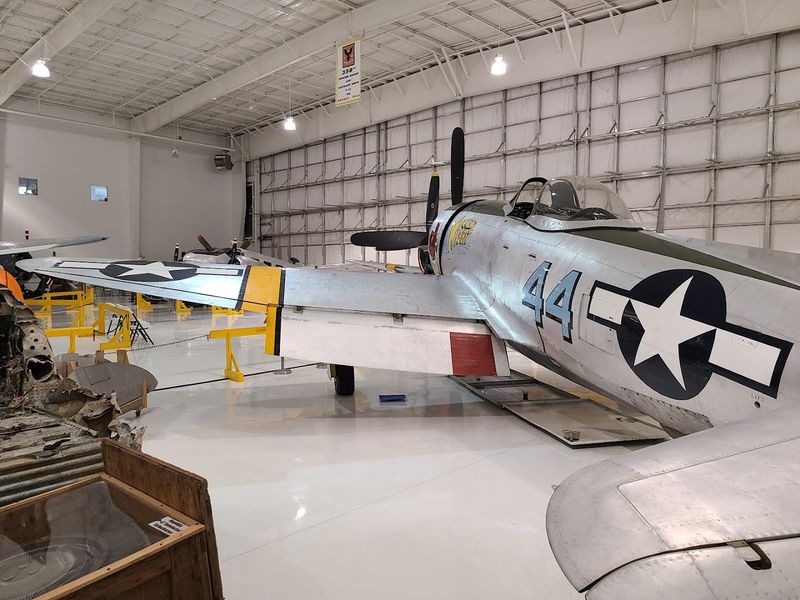
Fewer than a dozen P-47 Thunderbolts remain in flyable condition anywhere on the planet. This museum has two of them.
That single fact is enough to make serious aviation enthusiasts plan a road trip to eastern Tennessee.
The P-47 was one of the most powerful and rugged fighters of World War II. Pilots trusted it in the most dangerous missions, from escorting bombers deep into enemy territory to ground attack runs at treetop level.
Its sheer size and firepower made it a force that opponents took very seriously.
Standing beneath one of these aircraft, the scale becomes immediately clear. The massive radial engine and broad wings are genuinely impressive up close.
Seeing two of them side by side in the same hangar is something that aviation historians would consider almost miraculous. This collection piece alone sets the museum apart from nearly every other aviation institution in the southeastern United States.
It is a true rarity.
Cold War Rivals On Display
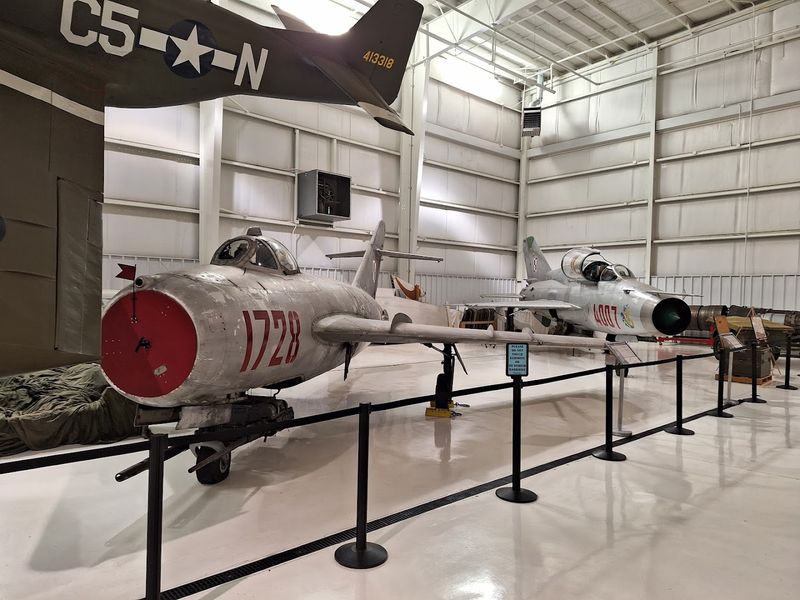
Right next to American airplanes, visitors encounter something unexpected. MiG jet fighters, designed in the Soviet Union during the Cold War era, stand in the same hangar as the machines they were built to oppose.
The contrast is striking and thought-provoking in equal measure.
These Soviet-designed aircraft represent engineering from a completely different philosophy. Seeing them alongside American fighters gives visitors a rare, side-by-side comparison of rival aviation programs that shaped decades of global tension.
It is the kind of display that textbooks describe but rarely deliver visually.
The MiGs carry a certain mystique. For many visitors, especially veterans who remember the Cold War firsthand, these aircraft represent something deeply personal.
The museum treats them with the same respect given to every other aircraft in the collection. No aircraft here is just filler.
Each one was chosen because it tells a story worth telling, and the MiGs tell one of the most compelling stories of the entire twentieth century.
Climb Into The Cockpit
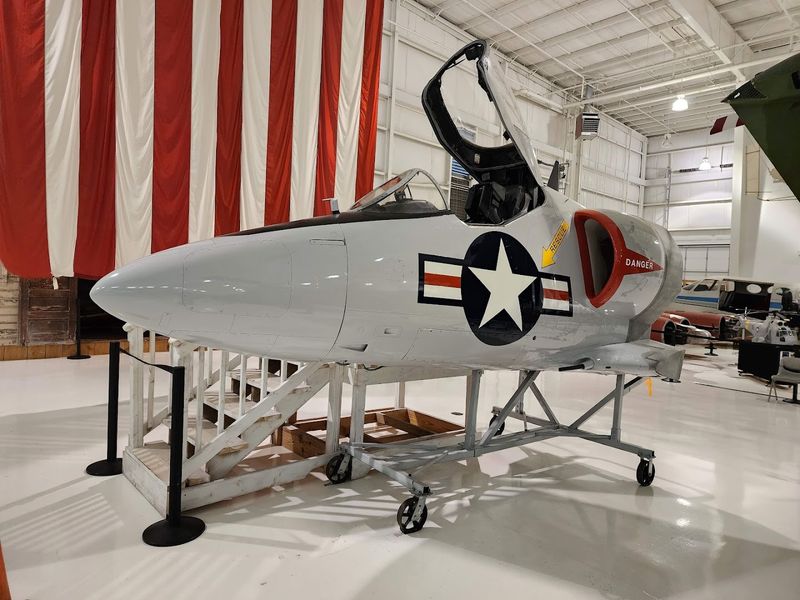
Most museums keep their aircraft behind barriers. This one hands visitors an invitation to climb inside.
The A-4 Skyhawk cockpit experience is one of the most popular features at the Tennessee Museum of Aviation, and it is easy to understand why.
Settling into the seat of a real military jet, gripping the controls, and looking out over the nose of the aircraft is something that sticks with people long after they leave. It sparks questions, conversations, and a genuine appreciation for what pilots actually endure in those tight, instrument-filled spaces.
Volunteer staff members are often nearby, ready to explain what each instrument does and share context about the aircraft’s service history. The forward fuselage of a North American B-25 Mitchell bomber and a Beechcraft Model 18 fuselage also allow close inspection.
These hands-on moments transform a passive museum visit into something far more memorable and engaging, especially for younger visitors who might otherwise struggle to connect with static displays.
The Artifact Gallery That Tells The Human Story
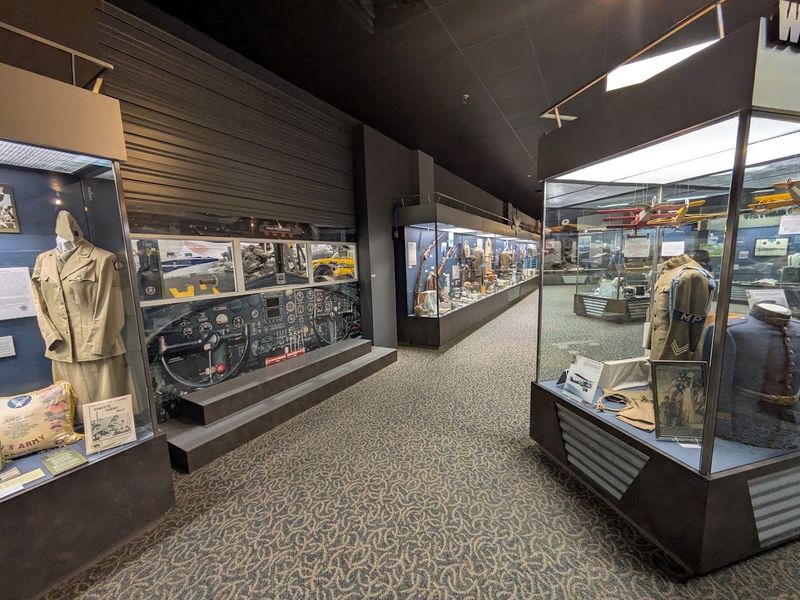
Before stepping into the hangar, visitors pass through an exhibit gallery that sets the tone for everything that follows. Display cases hold original pilot gear, military uniforms, mission documents, and personal effects from conflicts spanning more than a century.
Each item carries a story.
The collection illustrates how rapidly aviation technology evolved. Comparing a World War I leather flight cap to a Vietnam-era helmet side by side shows decades of innovation compressed into a single glance.
Original photographs and personal letters add emotional depth that statistics and timelines simply cannot match.
What makes this gallery particularly effective is its organization. Artifacts are grouped thoughtfully, creating a narrative flow that feels more like reading a well-written book than walking through a storage room.
Visitors leave with a clearer sense of how aviation shaped military strategy, changed global politics, and demanded extraordinary courage from the people who flew. The gallery reminds everyone that behind every aircraft is a person who trusted it with their life.
The Faith And Courage Exhibit
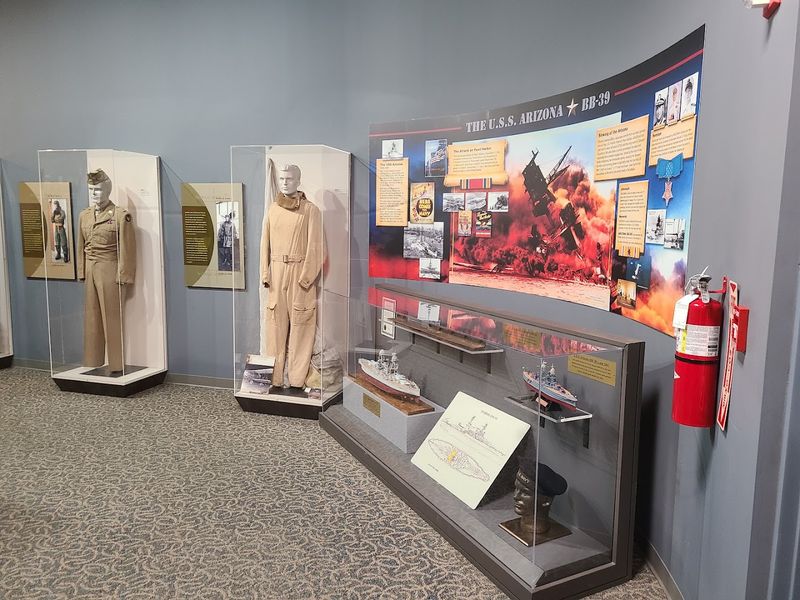
Tucked within the exhibit gallery is a display that catches many visitors off guard. The Faith and Courage exhibit pays tribute to U.S.
Military Chaplains who served from World War II through present-day conflicts. It is quiet, moving, and unlike anything found in most aviation museums.
A field communion kit sits in one of the cases, small enough to carry into combat, yet representing something enormous. Hymnals used by troops in the field, chaplain insignia, and photographs of these often-overlooked figures fill the display with genuine humanity.
It honors the spiritual backbone of military service.
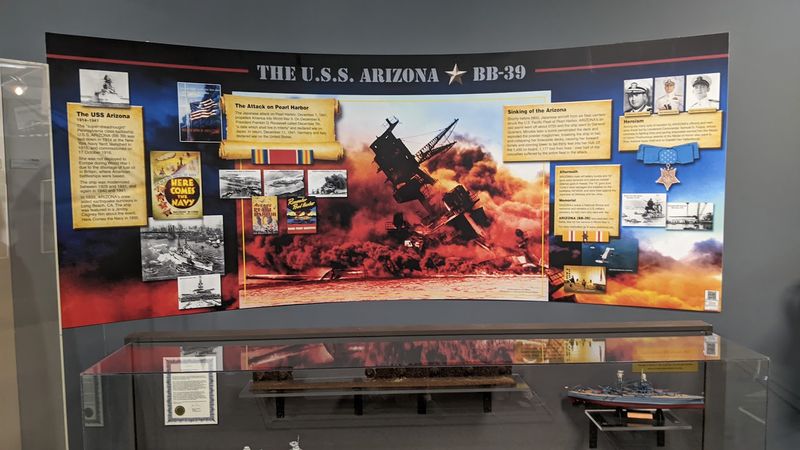
Also within the gallery rests a piece of the USS Arizona’s deckhouse. This artifact connects directly to the attack on Pearl Harbor, the event that pulled the United States into World War II.
Seeing a physical fragment of that ship is a sobering experience. The museum handles this relic with appropriate gravity, surrounding it with context that helps visitors fully understand its place in history.
The 52-Foot Wave Wall Timeline
One of the most visually dramatic features in the building stretches across an entire wall. The 52-foot Wave Wall traces the complete history of aviation, beginning before the Wright Brothers and continuing through the modern era.
It is ambitious in scope and genuinely impressive in execution.
Each section highlights key developments in aircraft design, military strategy, and technological breakthroughs. Tennessee’s own contributions to aviation history receive well-deserved recognition along the timeline.
Visitors who pause to read every panel will find themselves surprised by how much they did not know.
The wall works as both an educational tool and a visual centerpiece. Groups tend to gather in front of it, pointing out familiar aircraft and debating which era produced the most dramatic advances.
It sparks conversation naturally, which is exactly what the best museum displays do. For anyone who wants a structured overview of how humanity conquered the skies, this single exhibit delivers more information than most half-day courses on aviation history could cover.
Engines Exposed, Mechanics Revealed
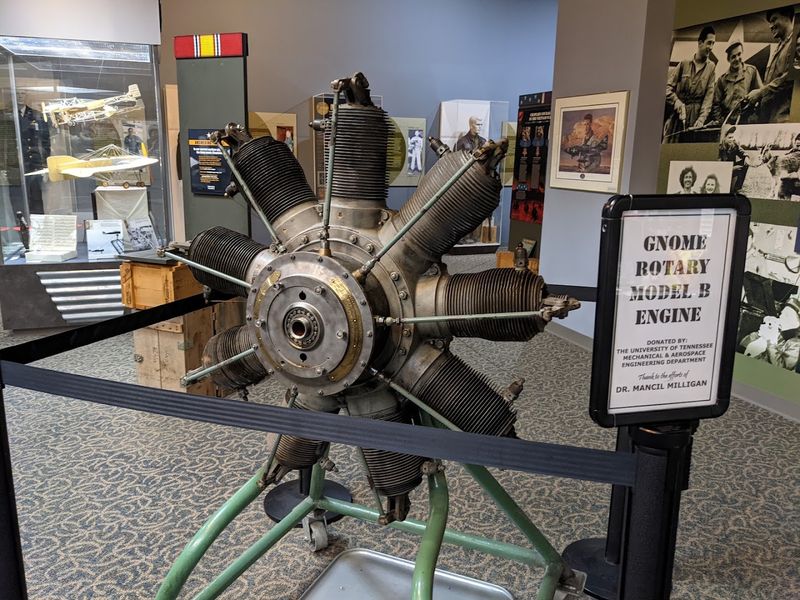
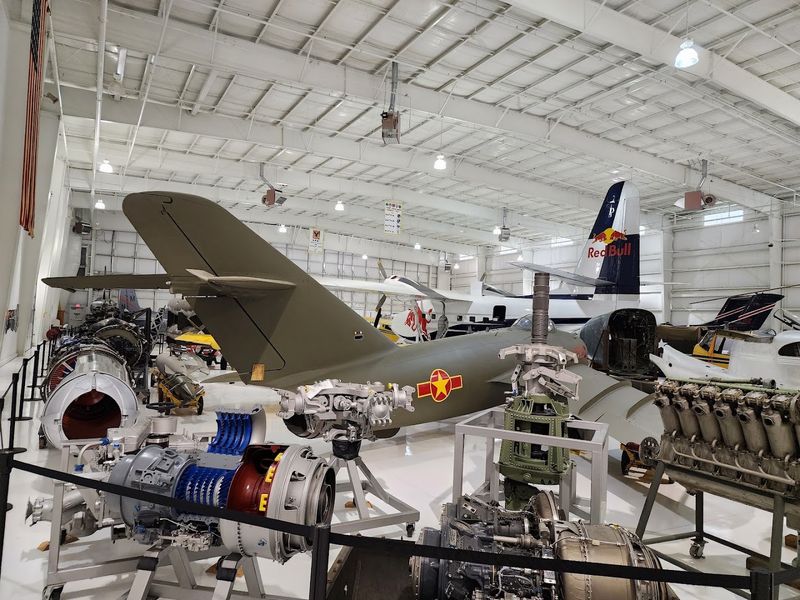
Engines are the soul of any aircraft, and this museum treats them as stars in their own right. Sectioned jet engines sit on display with their internal components fully visible, offering a look inside machinery that normally stays hidden beneath cowlings and fairings.
It is engineering made tangible.
Radial engines from World War II-era aircraft stand nearby, their cylinder arrangements fanning outward in a pattern that feels almost organic. Each engine represents a specific chapter in propulsion history, from the early days of air-cooled piston power to the dawn of the jet age.
The progression is fascinating to trace.
For anyone who has ever wondered how these machines actually work, this section answers questions in the most direct way possible. No animation or simulation competes with standing next to a real, sectioned engine and seeing exactly how fuel, air, and mechanical precision combine to produce flight.
Engineering students, mechanics, and curious first-timers all find this section equally rewarding and surprisingly accessible.
Veterans Who Bring The Aircraft To Life
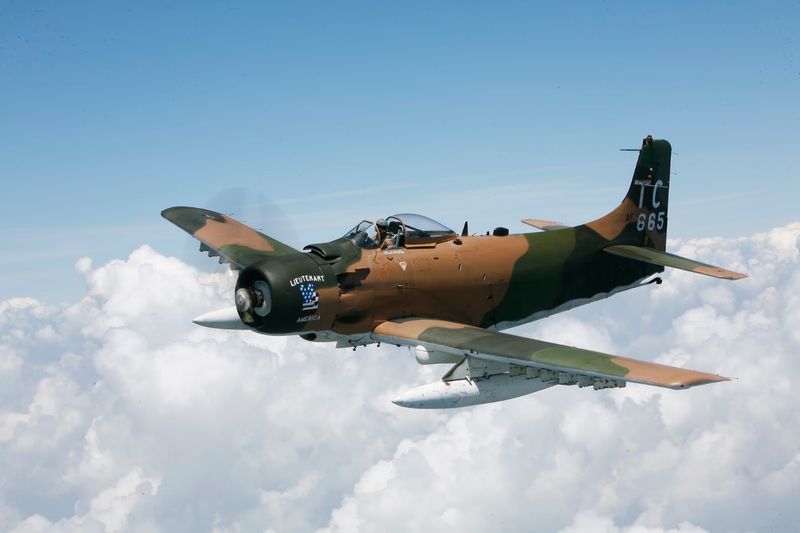
Placards and exhibits do a fine job of conveying facts. The volunteer docents at this museum do something entirely different.
Many are military veterans with direct connections to aviation, and their stories fill in gaps that no written description can fully address.
Ask one of these volunteers about a specific aircraft, and the conversation that follows often stretches well beyond what any placard contains. They recall details about maintenance quirks, cockpit procedures, and the personalities of pilots who flew these machines.
That living knowledge is irreplaceable.
On select occasions, the museum hosts special programs featuring veterans who have firsthand experience with aircraft in the collection. These events transform the hangar into something closer to a reunion than a lecture.
The human element here is one of the museum’s most underrated strengths. Visitors who take the time to engage with the staff and volunteers consistently report that those conversations become the most memorable part of their entire visit to this Tennessee institution.
Live Aircraft Next To An Active Runway
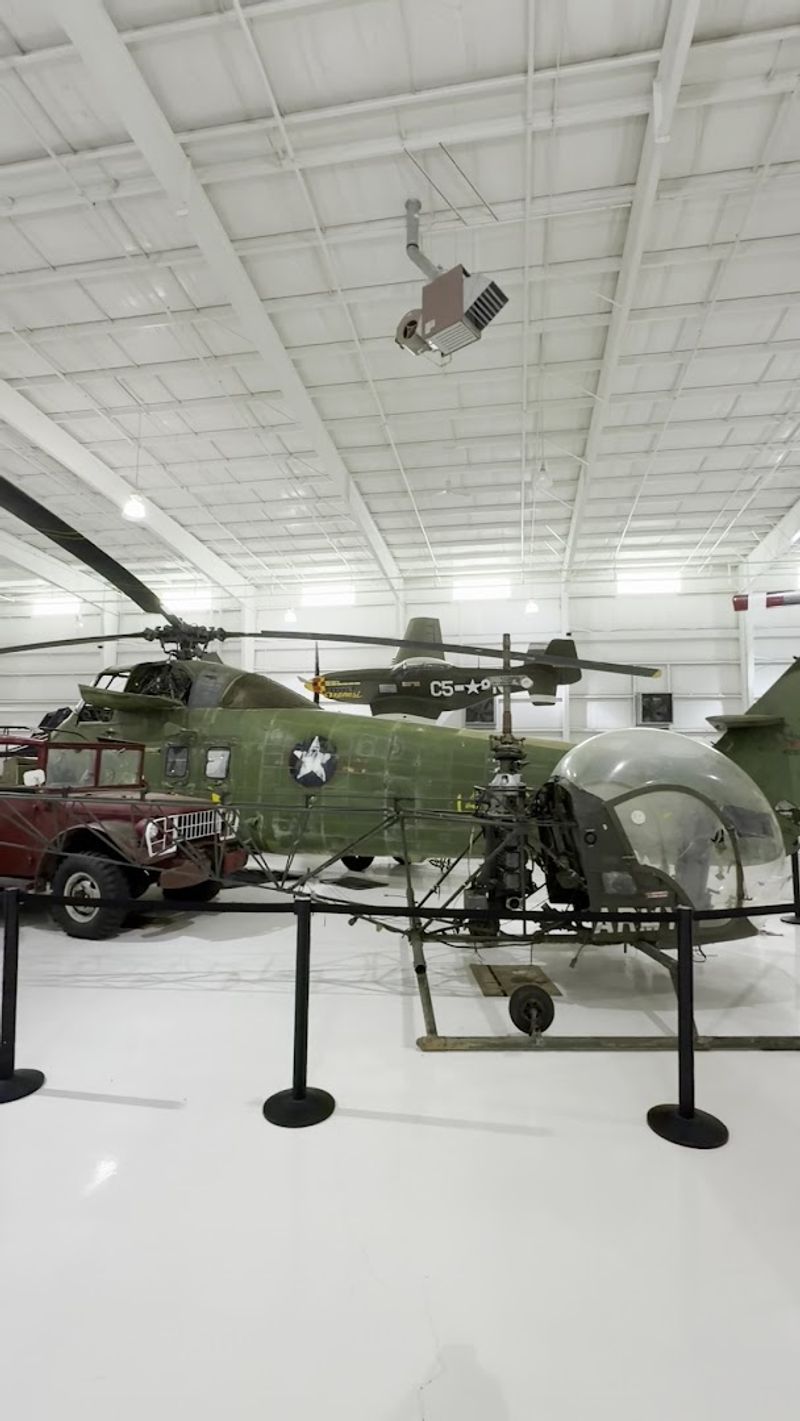
Most museums keep their aircraft permanently grounded. The Tennessee Museum of Aviation sits directly beside the Gatlinburg-Pigeon Forge Airport runway, and that location changes everything about the experience.
Airworthy airplanes here do not just sit. They occasionally move, taxi, and fly.
The sound of a vintage radial engine starting up near the hangar doors is something visitors remember long after they drive home. It is raw, loud, and unmistakably alive.
No recording or video clip replicates the feeling of standing close enough to feel the vibration in your chest.
Because the museum’s collection includes genuinely airworthy aircraft, flight demonstrations can happen with relatively little warning. No two visits to this Tennessee destination are guaranteed to be identical.
That unpredictability adds a layer of excitement that polished permanent exhibitions often lack. Watching a World War II-era fighter roll down a runway in the shadow of the Smoky Mountains is the kind of moment that reminds visitors why aviation captured human imagination in the first place.
Beyond Airplanes, A Broader Collection
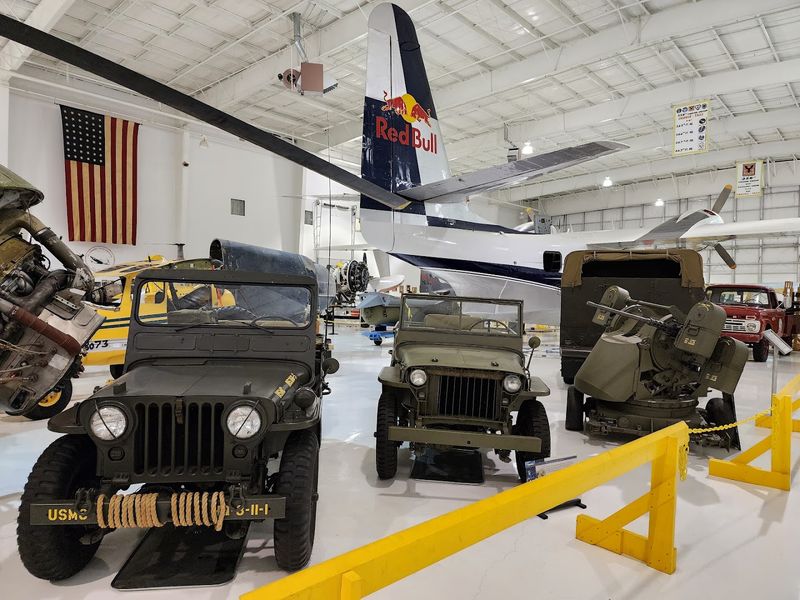
Airplanes grab the headlines, but the full collection at this museum covers far more ground than most visitors expect. The 35,000-square-foot hangar holds trainers, helicopters, amphibious aircraft, and jet fighters from multiple eras and nations.
There is genuine variety here.
Military vehicles share floor space with aircraft, adding a ground-level dimension to the military history narrative. A full-scale replica of the 1902 Wright Glider sits among the more powerful machines, serving as a humbling reminder of how recently humans figured out flight at all.
The contrast between that fragile glider and a Cold War jet fighter tells the entire story of aviation in a single glance.
The museum balances reverence for history with an awareness that entertainment and engagement keep audiences connected. That balance is harder to achieve than it looks, and this collection pulls it off well.
The Gift Gallery And Planning Your Visit
Before heading out, the Flying Spirit Gift Gallery offers one final reason to linger. Stocked with aviation books, model aircraft, framed art, and a wide range of souvenirs, it is considered one of the largest aviation gift selections in the entire Southeast.
Prices are notably reasonable compared to other tourist destinations in the region.
Planning a visit is straightforward. The museum suggests allowing at least an hour and a half for a thorough walkthrough, though dedicated enthusiasts routinely spend much longer.
The exhibit gallery is fully air-conditioned, making summer visits comfortable. The hangar is heated during winter months, so no season is a bad time to visit this corner of Tennessee.
Parking is plentiful and free, and the facility is easy to locate. The staff creates an atmosphere that feels welcoming rather than transactional.
Families, solo travelers, veterans, and first-time aviation fans all seem to leave with the same impression: this museum delivers far more than its modest profile might suggest, and it absolutely rewards the trip.