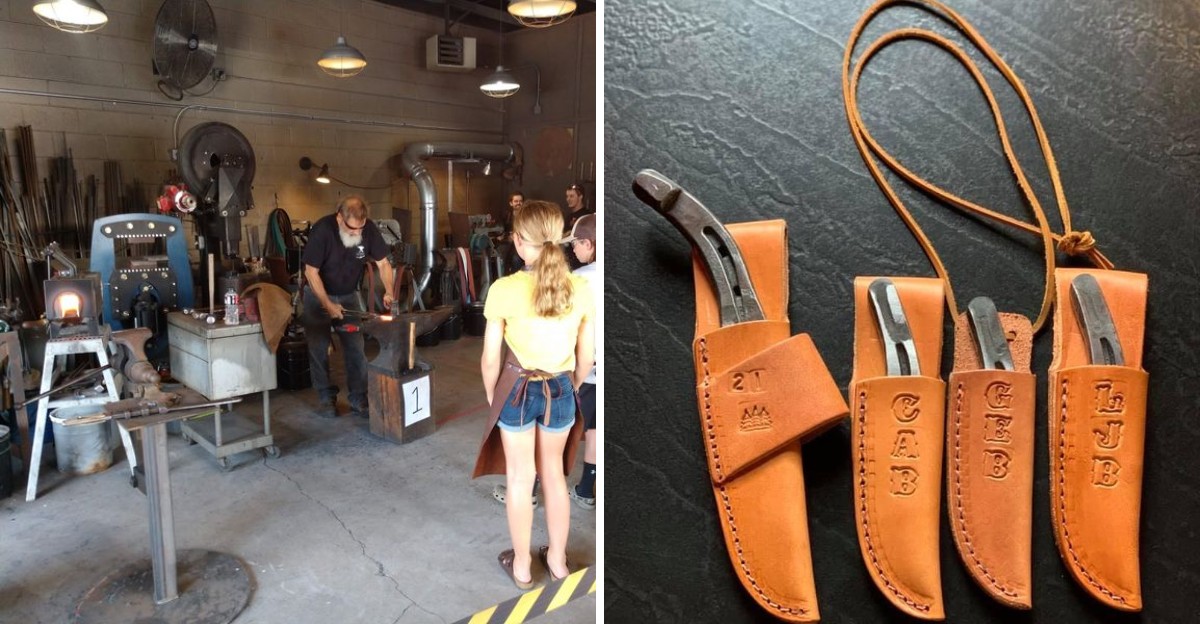
Forget souvenir shops filled with magnets and postcards. One blacksmith shop in the Smoky Mountains of Tennessee offers something far more memorable: the chance to create your own knife under the guidance of experienced metalworkers.
The sound of ringing anvils, glowing metal, and the warmth of a working forge make this experience unlike your typical vacation activity.
Visitors can choose from several projects suited to different ages and experience levels, making it an exciting stop for families and curious travelers.
Even better, the shop is owned by a familiar face from the television series Forged in Fire.
You don’t need previous blacksmithing experience to participate. Best of all, you’ll leave with a personalized keepsake and a story worth sharing long after your vacation ends.
A Forge With A Famous Neighbor And A Famous Owner
Some towns are named after a waterfall or a railroad. Pigeon Forge got its name from an actual iron forge, and history still hums in this corner of town.
Iron Mountain Metal Craft sits kitty-corner to the spot where that original forge once stood.
You will find the shop at 172 Old Mill Ave, Pigeon Forge, TN 37863. It sits right behind the famous Old Mill, in the oldest part of town.
That means you can pair your forging lesson with a stroll past the water wheel and old shops.
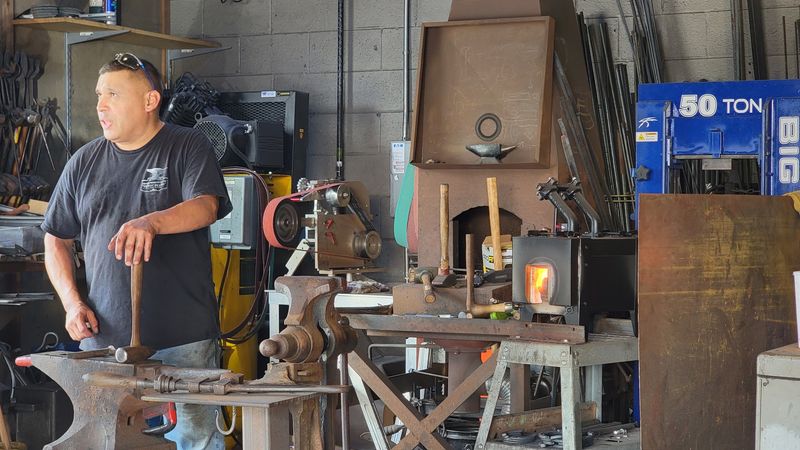
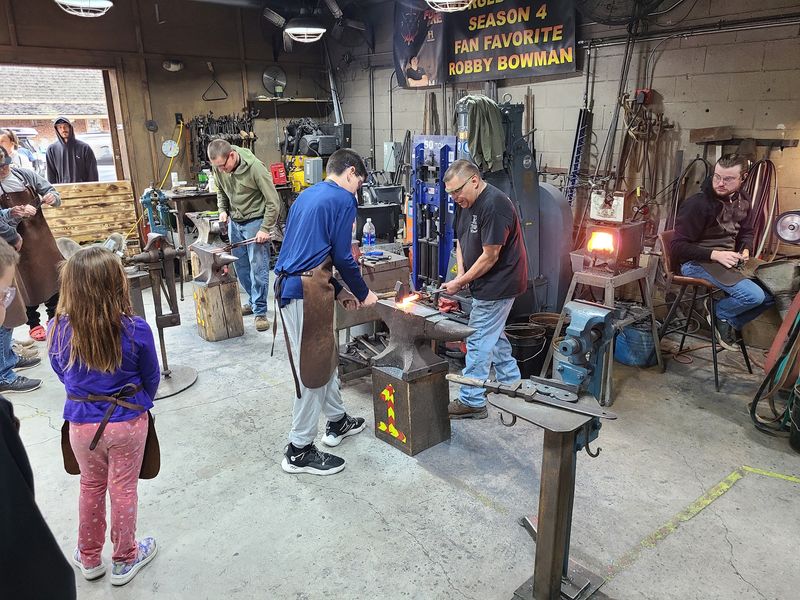
Now meet the man behind the hammer. Robby Bowman owns the place, and many folks know him as the Smoky Mountain Cowboy.
He became a fan favorite on the History Channel show Forged in Fire.
Robby first showed up in Season 3, Episode 6. He came back for seasons 4 and 5, too.
His loud, happy shout of “Woooo!” is something of a trademark around here.
His big idea was simple and smart. He wanted people to understand blacksmithing better, not just watch it on TV.
He also wanted travelers in Pigeon Forge to leave with something real in their hands.
So instead of a T-shirt, you get a blade. Instead of a photo booth, you get an anvil.
That is a trade most people are happy to make.
Heat, Hammer, Repeat: How The Lesson Works
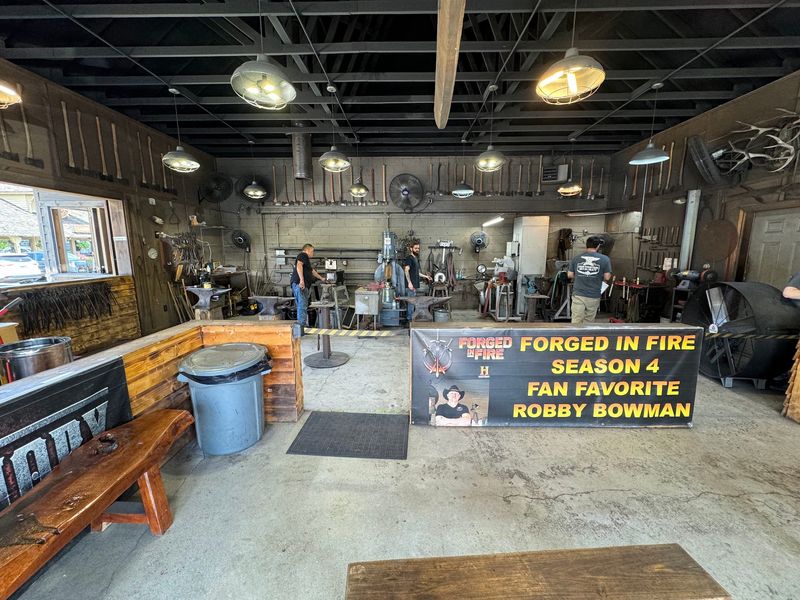
Picture a glowing strip of metal the color of a sunset. Your job is to smack it flat, and yes, it feels as good as it sounds.
That is the heart of the knife forging experience here.
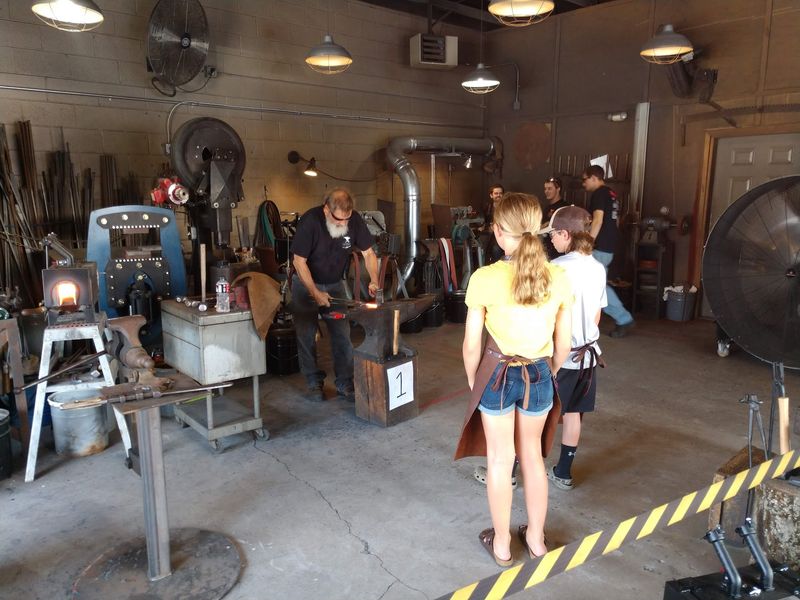
An instructor heats the metal in the forge for you. Then it goes on the anvil, and they show you exactly where to strike.
You swing, the steel moves, and sparks tell you it is working.
After a few strikes, the metal cools and heads back into the fire. The cycle repeats a few times.
Slowly, a plain piece of steel starts to look like a blade.
Along the way, you pick up real metalworking basics. Instructors explain what the heat does and why each hit matters.
You leave knowing more than just how to swing hard.
For nail and railroad spike knives, you also twist the handle yourself. That twist gives the knife its classic look.
It is often the moment people feel most like true smiths.
The final shaping and sharpening are done by a staff member. This keeps the edge clean, safe, and sharp.
You do the fun, sweaty part, and they handle the fine finish.
The whole lesson usually runs about an hour. Some groups wrap up in closer to 45 minutes.
Either way, time flies when the hammer is ringing.
Nail Knives Made For Little Hands
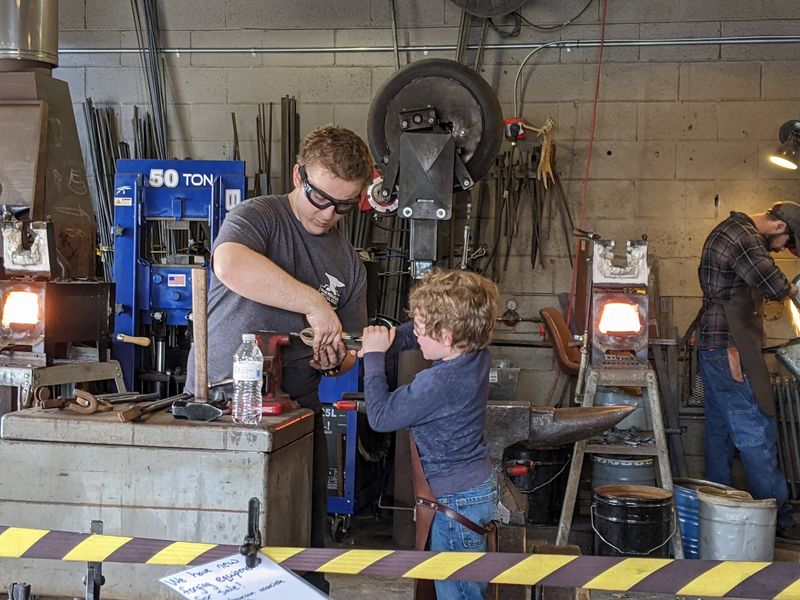
Kids love to bang on things. Here, that habit finally pays off with a real prize.
The nail knife was built with young blacksmiths in mind.
This option is designed for ages 5 to 12. It starts with a large nail, which is a friendly size for smaller hands.
The project is short, doable, and full of that exciting forge action.
Instructors hold and heat the metal, so kids can focus on the hammering. They point to the right spot and cheer each strike.
Little arms get a workout, and confidence grows with every swing.
The nail knife also includes that fun handle twist. Watching a straight piece of metal curl into a spiral feels a bit like magic.
Many children grin the whole way through.
Parents often appreciate the safety focus in the shop. Hot metal is serious business, and the team treats it that way.
Rules are clear, and guidance stays close.
When it is done, your child gets a finished knife with a leather sheath. That is a big deal for a kid.
It is not a toy from a vending machine, and they know it.
One helpful tip for families: talk about knife care before heading home. A new blade is a great chance to teach respect for tools.
It turns a fun afternoon into a lasting lesson.
Horseshoes And Pony Shoes Get A Sharp New Life
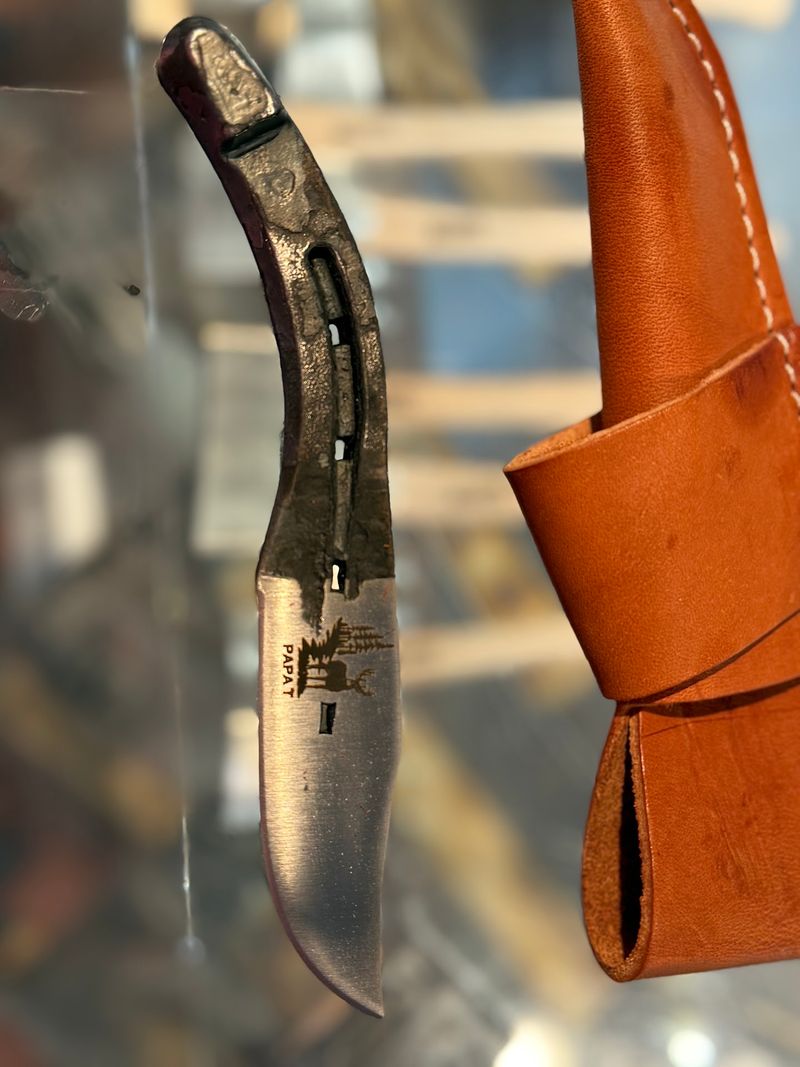
Horseshoes are supposed to bring good luck. Turn one into a knife, and you get luck with an edge.
That is exactly what the horseshoe and pony shoe options offer.
The horseshoe lesson is designed for ages 9 and up, while the pony shoe lesson has no listed minimum age.
The pony shoe knife uses a smaller shoe. It works well for younger teens or anyone wanting a lighter project.
The horseshoe knife is a bit bigger and has a bold, rugged look.
Part of the charm is how the knife keeps its horseshoe roots. The curved end often becomes a natural handle.
It looks country, handmade, and full of character.
You flatten and shape the blade section with help from your instructor. They can smooth out any wobbly spots you leave behind.
Then the piece gets finished, polished, and sharpened.
These knives make a strong choice for anyone who loves farm life or horses. They also look great hanging on a wall or sitting on a desk.
Each one comes out a little different.
Not sure which to pick? Think about who will use it.
A pony shoe is sweet and compact, while a horseshoe feels hearty and classic. Either way, the story behind it is half the fun.
Railroad Spikes For Teens And Grown-Up Smiths
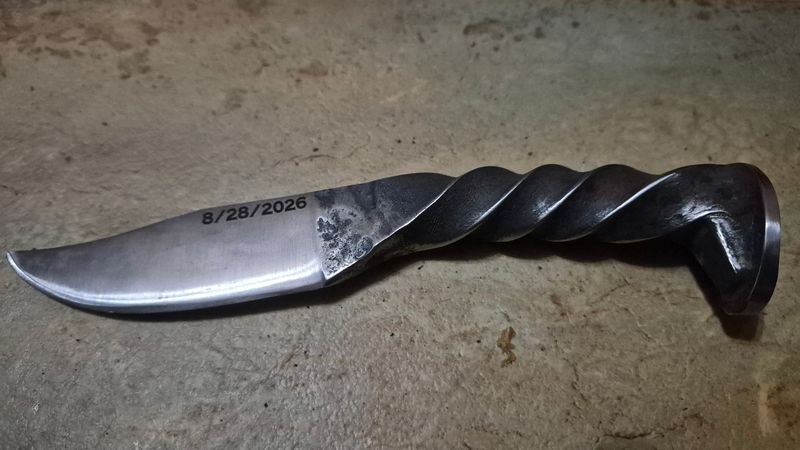
Railroad spikes have long been used to secure rails to wooden railroad ties across America. Today, one of them could hold a spot on your mantel as a handsome knife.
This option has serious old-school appeal.
The railroad spike knife has a minimum age of 13. Previous blacksmithing experience may be needed for anyone under 18.
It is the tougher project, so it suits teens and adults who want more challenge.
Spikes are thick and heavy. That means more hammering and more heating cycles.
Your arms will know they did real work by the end.
The payoff is a knife with a bold, chunky feel. The head of the spike often forms the end of the handle.
A twisted grip adds that famous spiral style.
You get to do that twist yourself, which is a highlight. The instructor keeps the metal hot and steady.
You turn it, and the steel spins into shape.
After your forging is done, the staff grind, sand, and sharpen the blade. That finish makes the rough spike look polished and sharp.
The contrast between rustic and refined is striking.
This option is a favorite for fans of history and trains. It also makes a thoughtful gift for a dad or grandfather.
Few presents come with a story this good.
The Dream Knife Class And Longer Lessons
Quick lessons are fun, but some folks catch the forging bug fast. For them, the shop offers bigger adventures.
The Dream Knife Class is the top of the list.
This advanced session gives you one-on-one time with Robby Bowman himself. The focus is on building real skills that stick.
It is less about a souvenir and more about learning the craft.
Iron Mountain Metal Craft also runs custom classes lasting four to six hours. These are shaped around your skill level and interests.
Beginners and seasoned hobbyists can both find a fit.
Project-based blacksmithing workshops are offered too. These help people build knowledge one step at a time.
You learn by making, which is how smiths have always learned.
Education is a main goal here. The shop wants to keep both blacksmithing and blade-smithing alive.
Every class passes old knowledge to new hands.
Fun fact: blacksmithing is one of the oldest trades around. Villages once depended on smiths for tools, hinges, and horseshoes.
Taking a longer class links you to that long chain of makers.
If you want more than an hour at the anvil, ask about these options when you book. Longer sessions need planning.
Give yourself time, and give your arms a little rest the night before.
Finishing Touches: Sheaths, Engraving, And Damascus Steel
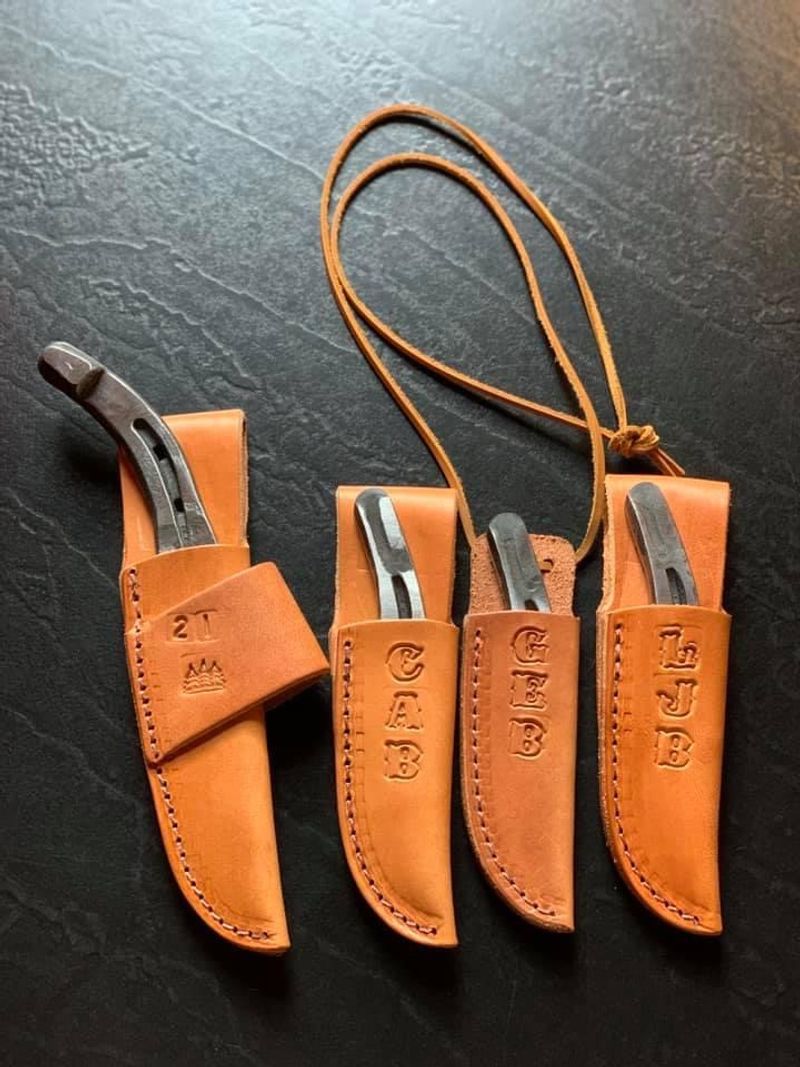
A great knife deserves a great home. Every forged blade here leaves with its own custom leather sheath.
No wrapping it in a sock for the ride back.
The sheaths are made by Laying J Leather. That company also has a shop on Old Mill Avenue in Pigeon Forge.
So your souvenir supports more than one local craft business.
Want to make it extra personal? For an added fee, the shop offers laser engraving.
You can add initials, a name, or even an image to the blade.
Engraving turns a cool knife into a true heirloom. Think of a date, a family name, or a small design.
It is a smart touch for birthdays, holidays, or anniversaries.
You are not stuck with the standard choices, either. Guests can forge knives from other metal items, such as wrenches.
A wrench knife is a clever gift for a mechanic.
The shop also works with Alabama Damascus. That supplier provides custom Damascus steel and knife patterns.
Damascus steel is known for its wavy, layered look, almost like wood grain.
Even if you do not forge, the retail side is worth a browse. Finished blades line the displays with plenty of style.
It is a good place to find a gift for the knife lover who has everything.
Smart Tips For Booking Your Spot
Good plans make hot metal cooler. A little prep now saves disappointment later.
Here is how to make your forging day go smoothly.
Appointments are required for lessons. Each session usually fits up to four people.
That small size keeps teaching personal and the shop safe.
Pigeon Forge gets busy, especially in peak travel seasons. Booking about a month ahead is a wise move.
Summer and holiday weeks fill up fast.
Iron Mountain Metal Craft is open Monday through Saturday, from 9 AM to 6 PM. The shop is closed on Sundays.
Plan your week around that so you do not show up to a locked door.
Wear closed-toe shoes and clothes you do not mind getting a bit smoky. The forge is loud, so listen closely to instructions.
Staying focused keeps everyone safe.
Keep an eye out for special events, too. The shop hosts a yearly grudge match with past Forged in Fire contestants.
These days often include vendors, axe throwing, and food.
Tennessee has plenty of fun stops, but few let you build your own souvenir. Book early, swing hard, and bring home a blade with your name on its story.