
This Tiny Massachusetts College Offers Free Tuition To Families Earning Up To $200K And Ranks Among The Best In America
What if one of America’s most respected small colleges suddenly became far more affordable than you expected?
Massachusetts is home to a tiny liberal arts school where most families earning up to $200,000 a year pay no tuition. For many students receiving aid, room and board can be covered too.
That is a remarkable promise at a college where tuition alone costs more than $70,000 a year.
The campus is small, but its academic reputation reaches far beyond the Berkshires. Students study in close knit classes, work directly with professors, and have access to opportunities usually associated with much larger universities.
Money can make college decisions stressful fast, which is what makes this financial aid approach so interesting. Instead of relying on loans or required work programs, aid comes largely through grants that do not need to be repaid.
For families comparing elite colleges, this Massachusetts school may be far more attainable than its reputation suggests.
Free Tuition For Families Earning Up To $200,000
Most people assume a $200,000 household income disqualifies a family from aid. Williams College flipped that assumption on its head.
Students whose families earn $200,000 or less, with typical assets, pay no tuition at all. That single sentence changes the math for thousands of households every year.
Even better, many families in that income range receive aid that goes beyond tuition alone. Room and board can be covered too, depending on a family’s situation.
The policy exists because the college wants cost to stop being the deciding factor. Talented students should be able to say yes without a calculator in hand.
There is no secret handshake involved. Families submit financial information, and the college determines need from there.
What makes the approach stand out is its honesty. Williams commits to meeting 100 percent of demonstrated financial need, not a percentage of it.
For a school that sits among the most selective in America, that generosity is remarkable. Selectivity and affordability rarely travel together.
Parents often describe the relief as immediate. A letter arrives, and suddenly a top-ranked education becomes realistic.
If you are a high schooler in Massachusetts or anywhere else, this is worth knowing early. Financial aid policies like this one can reshape your entire list of college options.
The All-Grant Program That Erased Loans Entirely
Starting in the fall of 2022, something quietly radical happened here. Loans and work-study requirements disappeared from financial aid packages.
The program is called All-Grant, and the name says it plainly. Aid arrives as grant money, which means it never has to be paid back.
Compare that to the national picture, where borrowing is treated as normal. Graduating without debt gives young adults a very different start.
Removing work-study also matters more than it sounds. Students get their hours back for labs, rehearsals, practices, and sleep.
The Princeton Review has ranked Williams College first among private schools for financial aid. That recognition reflects real policy, not marketing language.
Aid here also stretches into corners most schools ignore. Health insurance, travel costs, summer storage, study abroad, and academic supplies can all be included.
Students receive funds for personal expenses as well. The idea is that nobody should skip a trip, a book, or a program because of money.
The college calls this goal true affordability. It means full participation in campus life, not just access to classrooms.
For families comparing offers, the difference shows up over decades. Four years without borrowing can mean a first home years earlier. It is a practical promise, delivered in plain terms, and it deserves attention.
Twenty Straight Years At The Top Of The Rankings
Rankings come and go, but this streak is hard to argue with. U.S. News and World Report has placed Williams first among National Liberal Arts Colleges every year since 2004.
Even more impressive, the school has never dropped out of the top three since those rankings began in 1984. Four decades of consistency is rare in higher education.
Other lists agree in their own ways. Forbes ranked the college seventh in 2022 and seventeenth in 2024.
College Factual’s 2026 Best Colleges list places it nineteenth nationally for overall quality, out of 1,569 schools. That includes giant research universities with far bigger budgets.
U.S. News also classifies the college as most selective. Admission is genuinely competitive, and applicants take it seriously.
Why does one small school in the Berkshires keep landing on top? Small classes, deep faculty attention, and a stubborn focus on undergraduate teaching all play a part.
There are no graduate students competing for professors’ time. Undergraduates are the main event here.
Rankings should never be the only reason to choose a college. Still, a twenty-year run at number one says something about steady quality.
Combine that record with the tuition policy, and the value becomes obvious. Excellence and affordability rarely overlap this neatly anywhere in Massachusetts or beyond.
Oxford-Style Tutorials With Just One Or Two Students
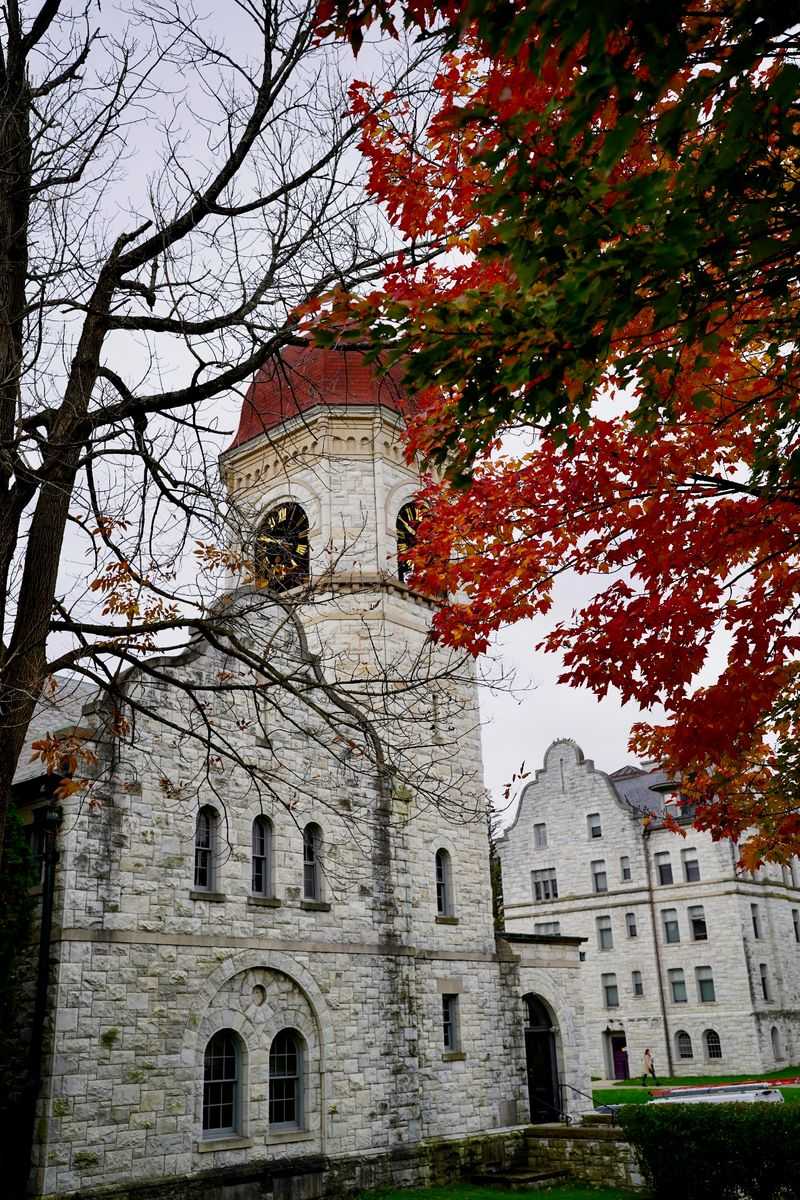
Picture a class with two students and one professor. That is not a fantasy here, it is a scheduled course format.
Williams College runs an Oxford-style tutorial program, borrowed from the British university tradition. One or two students meet regularly with a faculty member for extended discussion.
Each week, students write papers and then defend them out loud. The other student responds, critiques, and pushes back. Nobody hides in the back row. There is no back row to hide in.
The format builds skills that outlast any single subject. Reading closely, arguing clearly, and thinking on your feet all get sharpened.
The overall student-to-professor ratio sits at 7:1, which keeps regular classes small too. Many courses enroll a dozen students or fewer.
Faculty here know their students by name and by writing style. That familiarity often turns into research collaborations and long-term mentorship.
Tutorials span many departments, from philosophy to economics to the sciences. Students frequently name them as the most demanding and most rewarding part of their time on campus.
Is it intense? Absolutely, and that is the point.
For a student who loves discussion more than lecture halls, this structure is a genuine draw. Few American colleges offer anything comparable at this scale.
A 450-Acre Campus In The Berkshire Hills
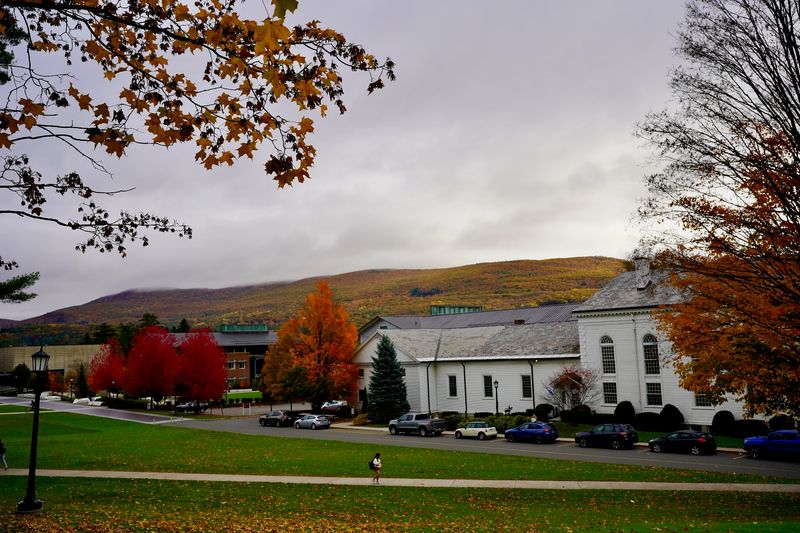
The address is 880 Main Street, Williamstown, MA 01267, and the setting does most of the talking. Rolling hills, thick forests, and mountain ridges frame the whole campus.
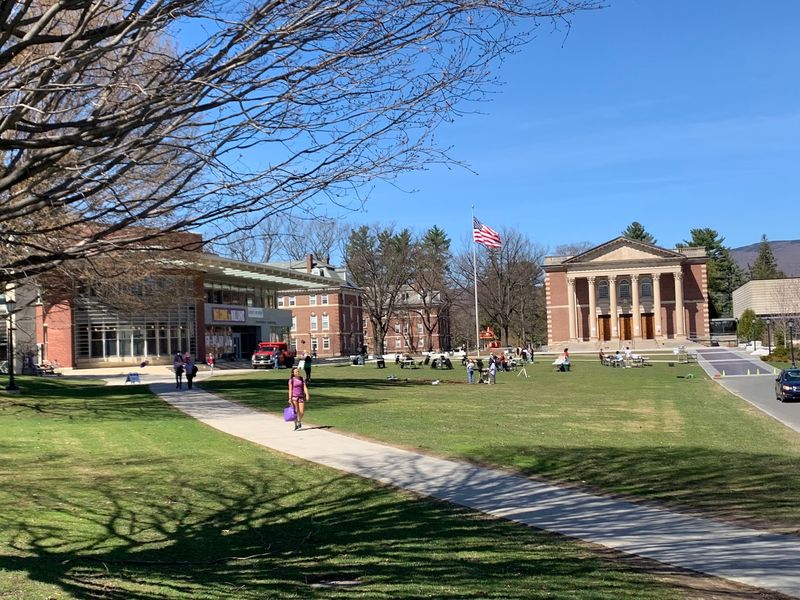
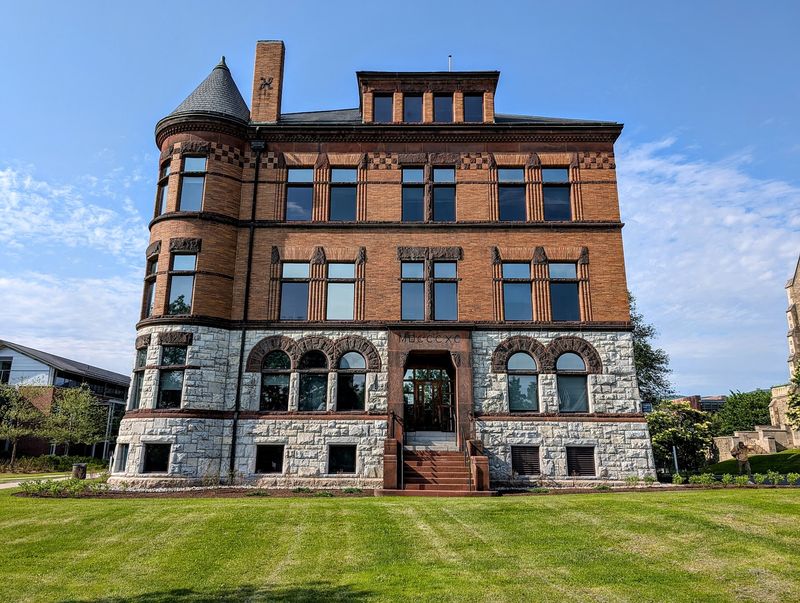
The grounds cover 450 acres and hold more than 100 academic, athletic, and residential buildings. Stone and brick facades stand out against the green and gold hillsides.
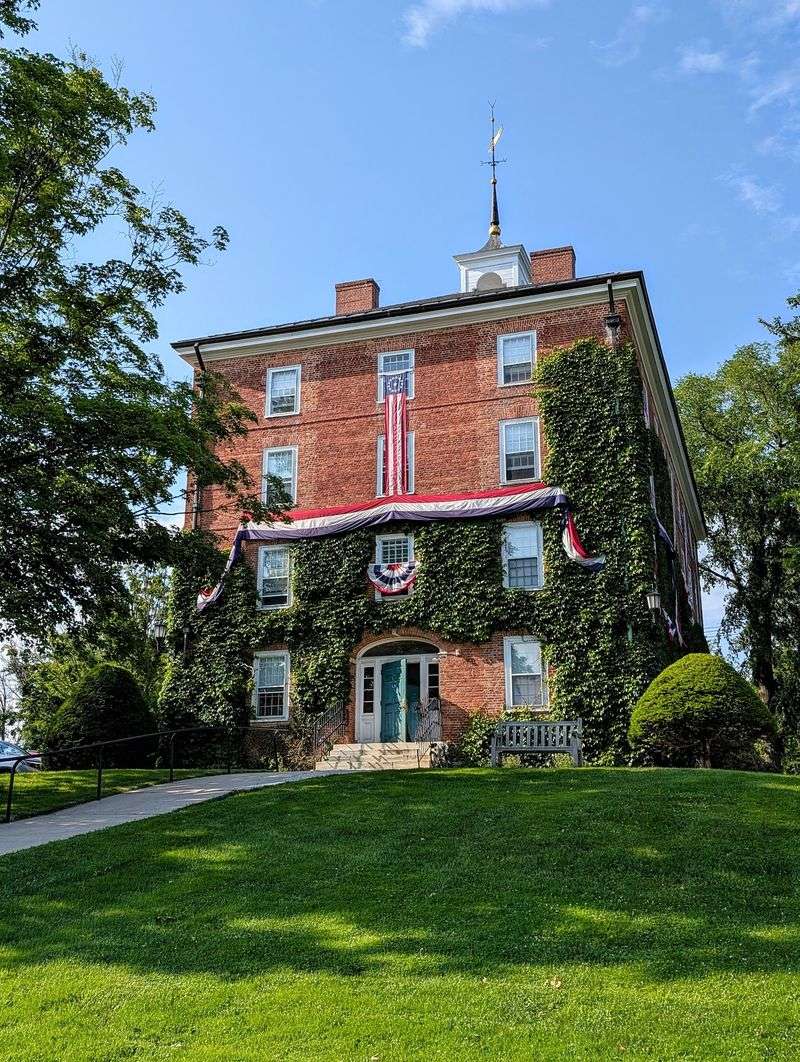
Founded in 1793, the college is one of the oldest in Massachusetts. That history shows up in the architecture, which spans centuries of styles.
Four libraries serve the campus, including one dedicated to rare books. Nationally known architects designed them, and it shows.
Hopkins Observatory sits here too, and it is the oldest surviving astronomical observatory in the United States. Students still use the space for learning about the night sky.
Newer facilities balance the old. The ’62 Center for Theatre and Dance and the Paresky Center, the campus student hub, both get heavy daily use.
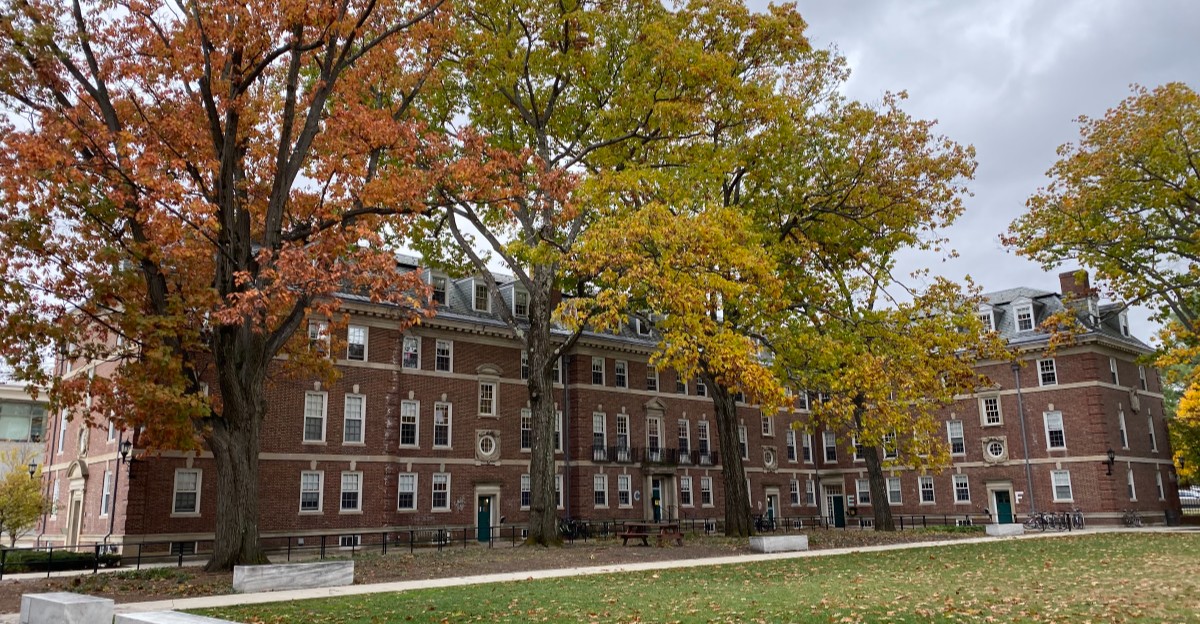
Seasons transform the place completely. Autumn brings blazing color, winter brings snow-covered rooftops, and spring turns the lawns bright green.
Walking paths connect nearly everything, so the campus feels compact despite its acreage. Classes, dining, and dorms are usually minutes apart.
Beauty alone does not earn rankings, but it certainly makes studying here more pleasant. Women were first admitted in 1970, opening the campus to a fuller community.
Art History Programs Backed By World-Class Museums
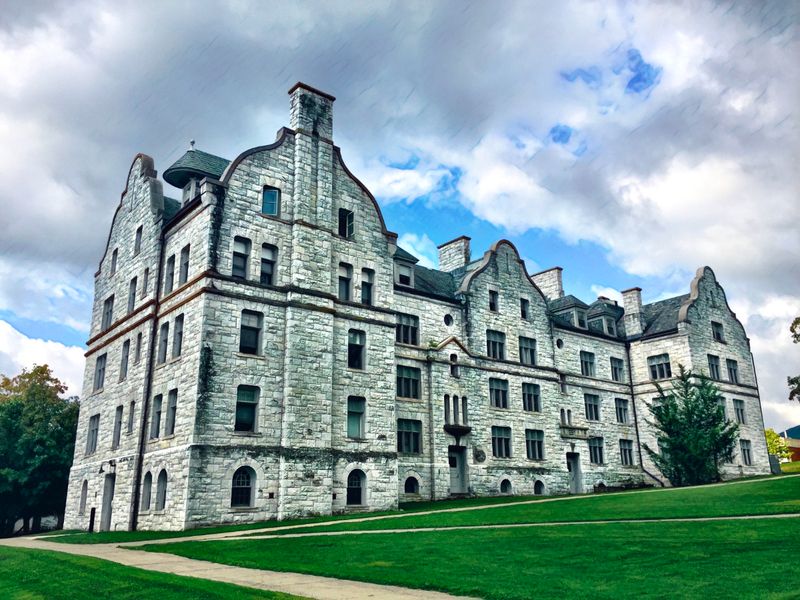
Here is a fun bit of trivia for art lovers. This small college has produced an outsized share of American museum directors and curators.
The art history program is a major reason why. Students learn from original works, not just slides and textbooks.
The college operates its own museum right on campus. Nearby sits the Clark Art Institute, one of the most respected art institutions in the region.
Add the Massachusetts Museum of Contemporary Art, known as MASS MoCA, a short drive away in North Adams. Few rural areas anywhere offer this concentration of serious art.
The art library is another quiet treasure. Researchers travel specifically to use its collections.
Art history is far from the only strength. Economics, political science, biology, environmental studies, and the humanities all have strong reputations.
Overall, Williams College offers instruction across 25 academic departments and interdisciplinary programs, with 36 majors available. That is a wide menu for a school of this size.
Undergraduate research opportunities are plentiful too. Students join faculty projects rather than waiting until graduate school.
The combination creates an unusual academic culture. A physics major might spend a semester studying Renaissance painting and take it seriously.
For curious students who refuse to pick just one interest, the setup fits beautifully.
Mountains, Trails, And Slopes Right Outside The Door
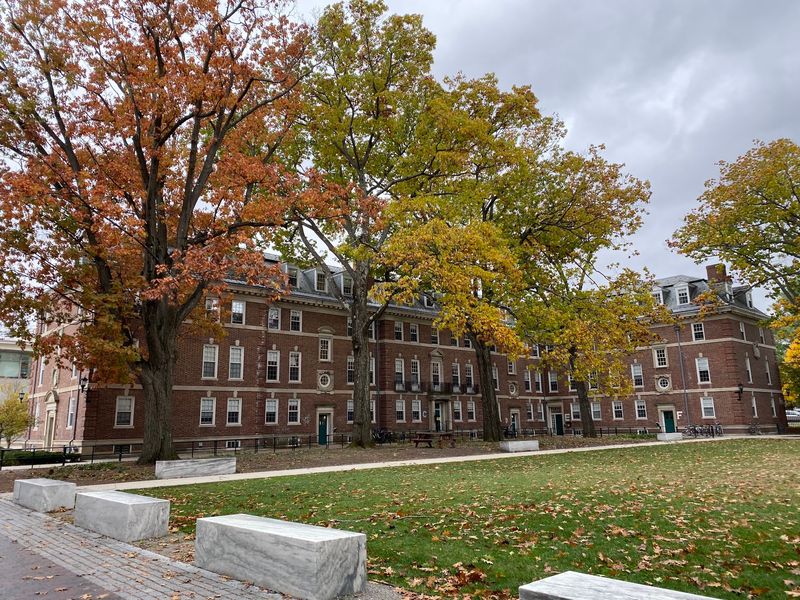
Some campuses have a climbing wall. This one has actual mountains.
The rural location in the Berkshire Mountains puts hiking, camping, and skiing within easy reach. Trailheads are minutes from the residence halls.
Students take advantage constantly. A free afternoon can turn into a summit hike or a snowy descent.
Outdoor life shapes the rhythm of the year here. Fall means foliage, winter means snow, and spring means muddy boots by the door.
Athletics thrive in this environment too. The teams compete in NCAA Division III as the Ephs, part of the New England Small College Athletic Conference.
The athletic program has a long record of success across many sports. Facilities are well maintained and widely used, including strong track and field grounds.
Participation is broad rather than exclusive. Plenty of students play on varsity, club, or intramural teams.
Mountain Day is the tradition people remember most fondly. Classes are canceled on a surprise autumn morning so the community can head up a nearby peak.
Nobody knows the exact date in advance, which makes the announcement genuinely exciting. Music, doughnuts, and cider wait at the top.
For students who think best after fresh air and exercise, this corner of Massachusetts delivers. The landscape functions almost like a second campus.
A Close-Knit Community Where Professors Know Your Name
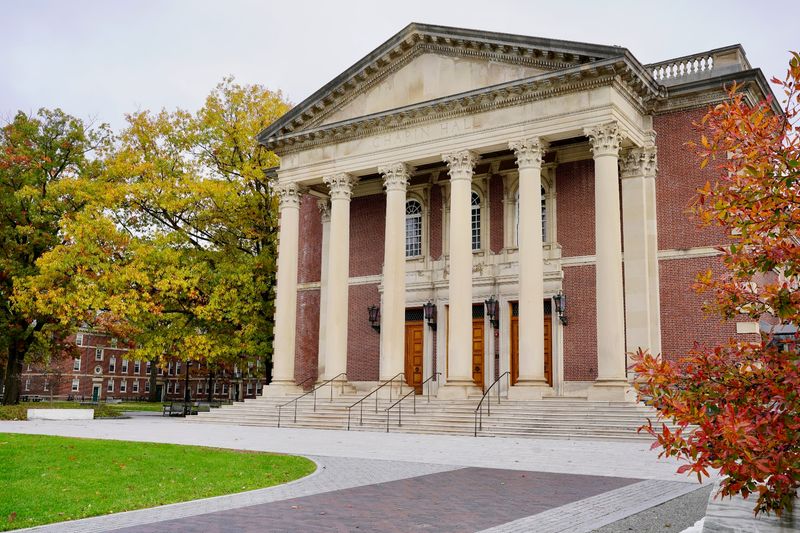
Small does not mean sleepy. With roughly two thousand undergraduates, the community here runs on familiarity.
Faculty and students interact constantly, in classrooms, labs, and dining halls. Office hours often turn into long conversations about ideas.
Clubs and organizations cover an enormous range of interests. Music groups, publications, service projects, and athletic teams all draw steady participation.
Dining halls serve as social anchors. Meals stretch on because everyone keeps stopping by the table.
The college maintains a firm commitment to diversity and inclusion. Students arrive from across the country and around the world.
Academic expectations are genuinely high. Workloads are heavy, and students learn quickly how to manage their time.
Many graduates say the training in writing, research, and argument served them long after commencement. Medical school, law school, and graduate programs feel manageable afterward.
Support systems help balance the intensity. Advisors, mentors, and internship programs are built into the experience.
Put everything together and the picture sharpens. A top-ranked education, no tuition for many families, no loans, mountains outside, and world-class art nearby.
For a college of this size in Massachusetts, that combination is genuinely hard to beat.