
This West Virginia History Museum Keeps Locals Coming Back For Endless Local Secrets
What happens when a hometown mystery refuses to stay buried?
A winged legend born from strange sightings decades ago still pulls curious travelers off the highway and into a small storefront packed with proof nobody can fully explain.
Handwritten witness statements sit under glass beside newspaper clippings and movie props.
Every room reveals another layer, another photograph, another theory waiting to be argued over. Families wander in expecting a quick stop and lose an hour without noticing.
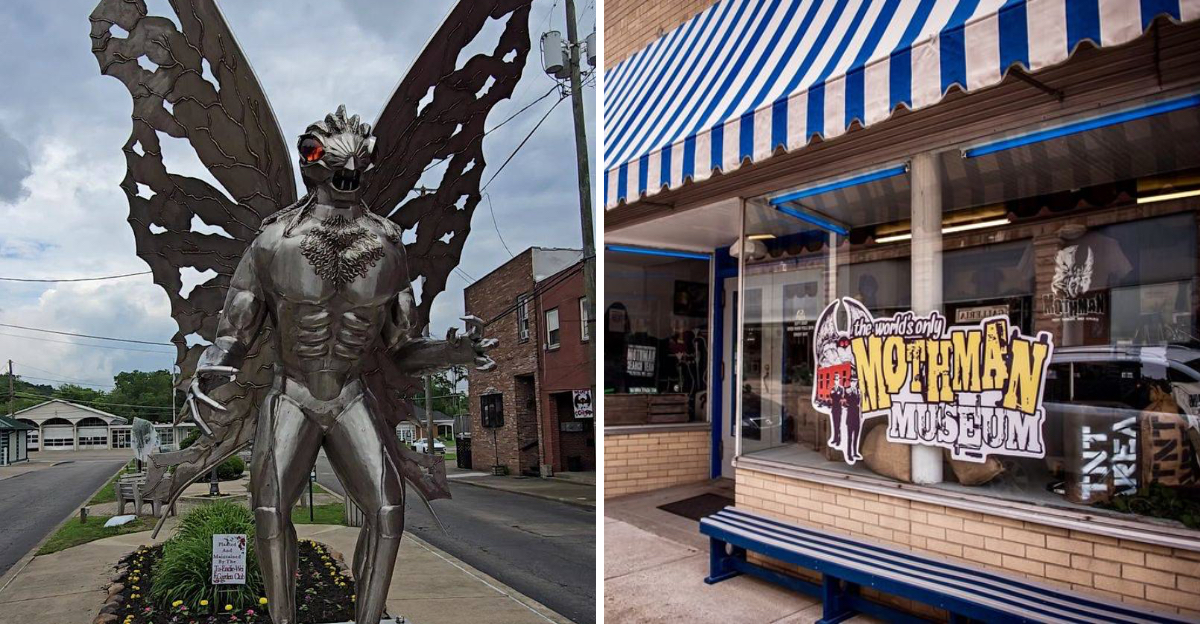
A towering metallic statue outside dares you to snap a photo before you even step through the door.
West Virginia guards plenty of strange stories, but few feel this alive. One West Virginia town turned an unsolved mystery into something you can walk through, and curiosity rarely lets go once it kicks in.
The Museum That Grew Out Of A Rumor
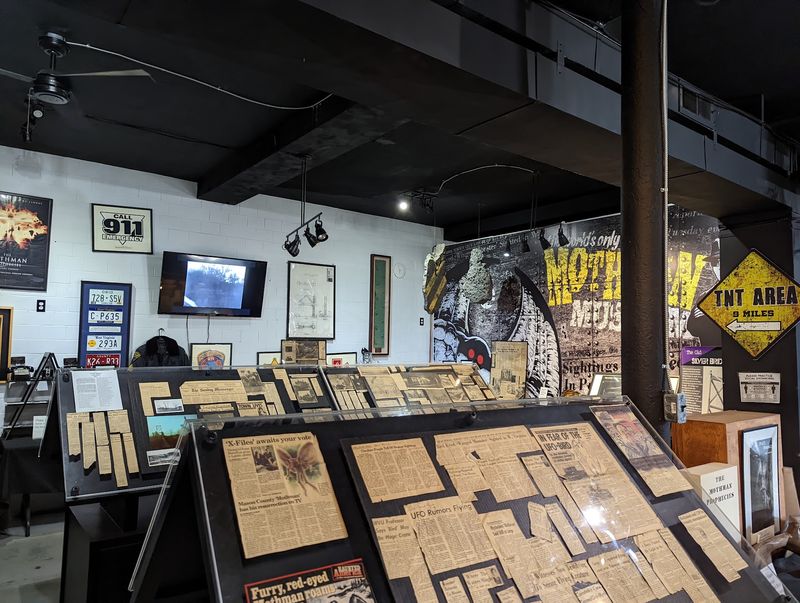
One winged creature, one small town, one museum unlike any other. The Mothman Museum claims the title of the world’s only museum devoted to this particular cryptid.
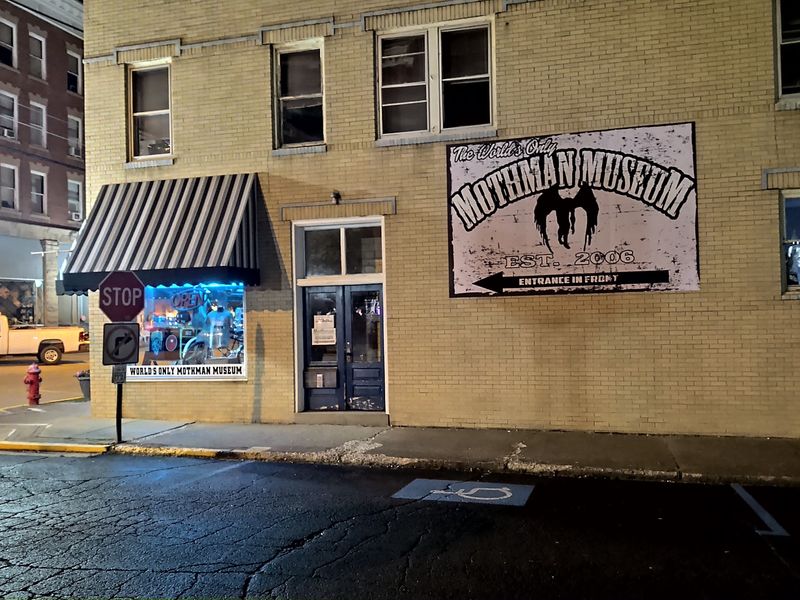
You will find it at 400 Main St, Point Pleasant, WV 25550, right in the heart of the downtown strip. The building blends into the row of storefronts until the signage gives it away.
Admission stays modest, which explains the steady trickle of families and road-trippers. Reviewers frequently mention how much material fits inside a fairly compact space.
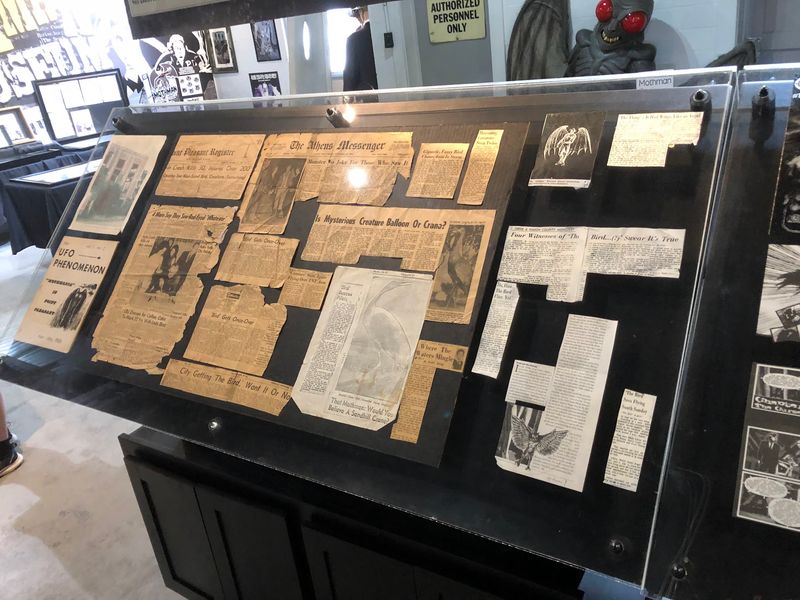
Rooms open into more rooms, each packed with framed clippings and display cases. Longtime visitors say the collection has grown noticeably over the past decade.
Staff members here know the lore cold and seem happy to talk cryptids with anyone who asks. That conversational streak turns a quick stop into an hour-long detour.
West Virginia has plenty of history museums, but few built entirely around something nobody can prove. The place treats the mystery seriously without losing its sense of fun.
Curiosity, it turns out, makes an excellent souvenir.
November 1966 And The First Sightings
It started with a drive past an abandoned munitions area. In November 1966, witnesses near the old TNT Area outside Point Pleasant described a tall winged figure with glowing red eyes.
Reports spread fast through the community. More sightings followed over the next thirteen months, and the story reached newspapers well beyond West Virginia.
The Mothman Museum documents that opening chapter with original accounts and period reporting. Visitors read the descriptions in the witnesses’ own words rather than a summary written decades later.
Some accounts match closely. Others contradict each other, which the exhibits present without smoothing over the differences.
Explanations offered over the years range from a large misidentified bird to something far stranger. The museum lays out the competing theories and lets guests pick a side.
What makes the displays stick is the ordinariness of the people involved. These were drivers, neighbors, and workers describing something they could not explain.
Sixty years later, the questions have not been answered. That unresolved feeling is exactly what keeps people walking back through the door.
Handwritten Statements Under Glass
Forget flashy exhibits. The single most talked-about item at the Mothman Museum is a stack of handwritten witness statements.
Guests lean in close to read the cursive. The shaky letters and crossed-out words say as much as the sentences themselves.
Police reports and depositions sit alongside them in protected cases. Reading them feels closer to research than sightseeing.
Reviewers routinely name these papers their favorite part of the visit. They carry a weight that no replica or costume can match.
Old press clippings fill out the story around them. Local headlines from the period show how quickly the reports moved through the region.
Vintage video footage plays in one area, and a short documentary gives visitors a place to sit and absorb it all. Families often park there for a while.
Artifacts from the former TNT Area also appear in the collection. Physical objects from the place where sightings happened add a grounded layer to the folklore.
Paper beats spectacle here, and the museum knows it.
When A Bridge Changed Everything
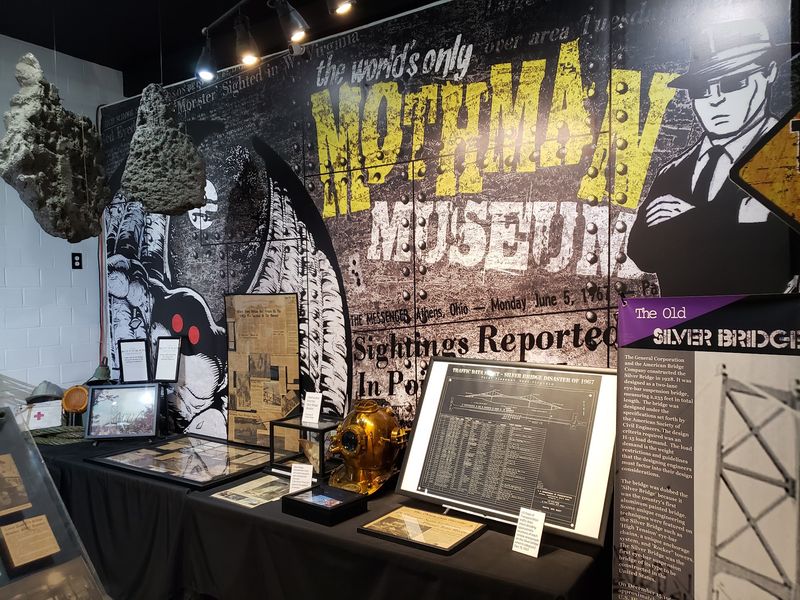
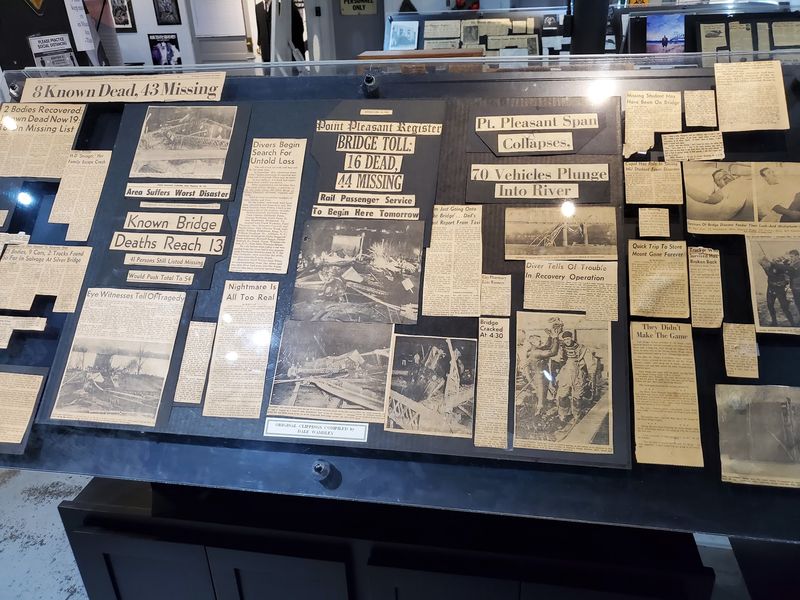
December 15, 1967 turned a strange local story into something far heavier. The Silver Bridge, spanning the Ohio River at Point Pleasant, gave way during evening traffic.
Forty-six people were lost. The town has never forgotten it.
Many residents and researchers connected the winged sightings to that event, treating them as a warning. The Mothman Museum presents that connection carefully, letting the documents speak.
Exhibits cover the engineering investigation as well as the folklore. Both threads matter to understanding the town.
Visitors often note the shift in mood in this section. The playful cryptid energy quiets down, replaced by genuine local history.
That balance is part of why the museum earns respect from people who normally roll their eyes at monster stories. It handles a real community tragedy with care.
A memorial nearby honors those affected, and the museum points guests toward it. The legend and the loss remain intertwined in this corner of West Virginia.
Understanding one without the other misses the point entirely.
Hollywood Props And Movie Memorabilia
Hollywood came calling in 2002. A Sony Pictures thriller titled The Mothman Prophecies brought the West Virginia legend to theaters worldwide.
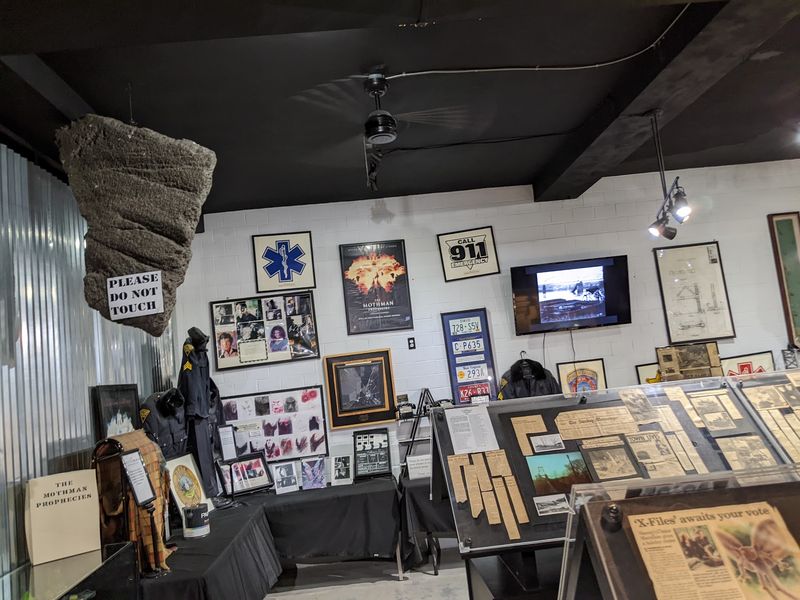
The Mothman Museum holds the largest collection of props and memorabilia from that production. Costumes, set pieces, and screen-used items fill several displays.
Film fans tend to linger here longest. Recognizing an object from a favorite scene lands differently in person.
The exhibit also traces how the movie reshaped the town’s visibility. Interest in Point Pleasant climbed sharply after release.
Placards explain the gap between the script and the recorded accounts. That comparison is one of the smarter touches in the building.
Photos and posters line the walls, showing production stills next to real 1960s reporting. The contrast is striking.
Even guests who have never seen the film find the section entertaining. Movie history has a way of pulling people in.
Folklore went to the multiplex, and the receipts are on display.
The Investigators And Reporters Behind The Story
Behind every legend sits someone taking notes. Biographical displays at the Mothman Museum honor the writers and reporters who chased the story first.
A well-known paranormal investigator published an influential 1975 book linking the sightings to the bridge collapse. Typed letters he sent to various people appear in the collection.
A local newspaper reporter covered the earliest accounts as they came in. Her articles kept the story documented in real time.
Exhibits also cover reports of shadowy figures in dark suits around town during the sighting period. Those accounts added another layer of unease.
Interactive panels lay out competing investigator theories side by side. Visitors compare interpretations instead of receiving one official version.
Reading the correspondence reveals how much legwork went into the research. Letters, phone calls, and long drives filled the files.
The human side of the story surprises a lot of guests. People, not monsters, built this archive.
Curiosity did the heavy lifting, and the paperwork proves it.
That Twelve-Foot Statue Across The Street
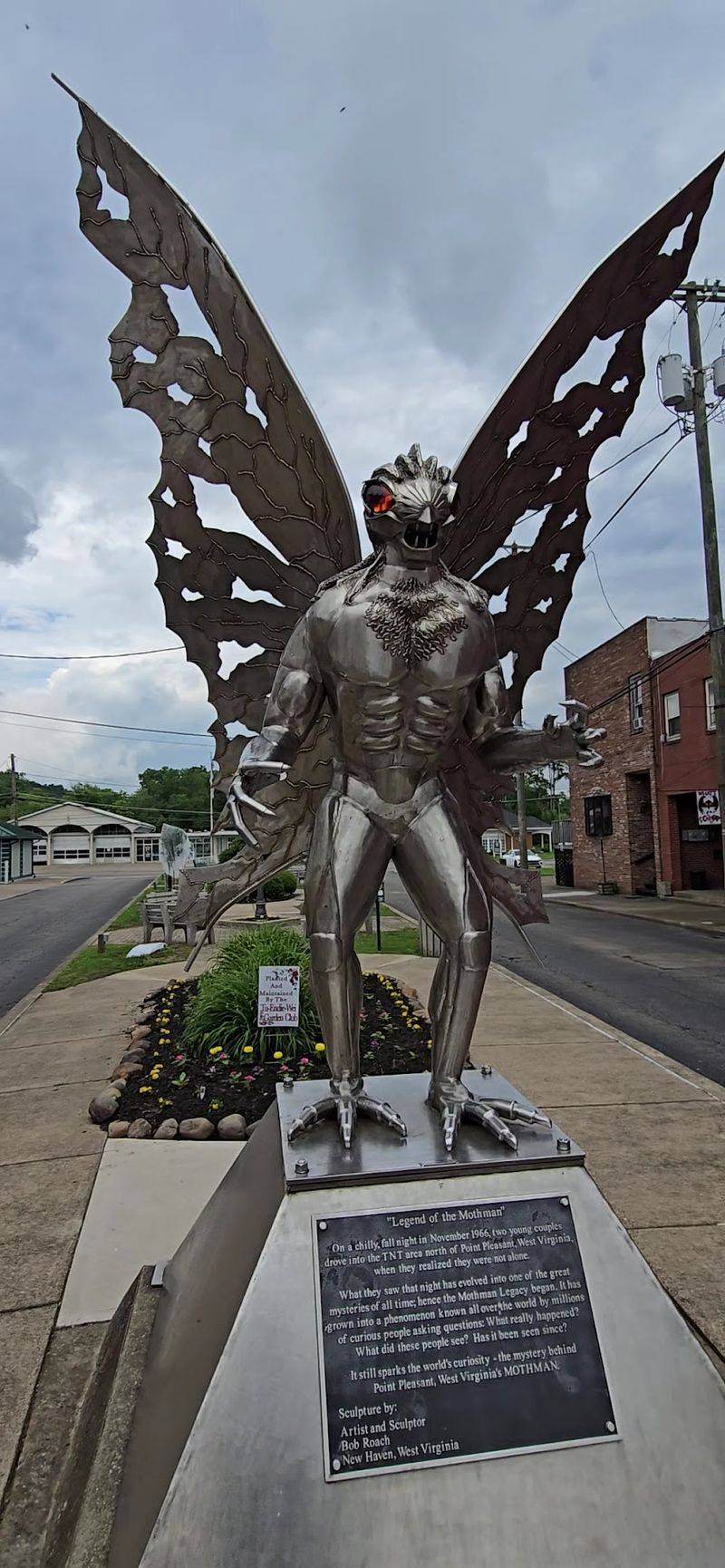
Photo op alert. A gleaming stainless steel Mothman statue stands just steps from the museum in downtown Point Pleasant.
The sculpture rises roughly twelve feet, complete with metallic wings and red eyes. It has become the town’s unofficial mascot.
Lines form for pictures on busy weekends. Nobody seems to mind waiting a few minutes.
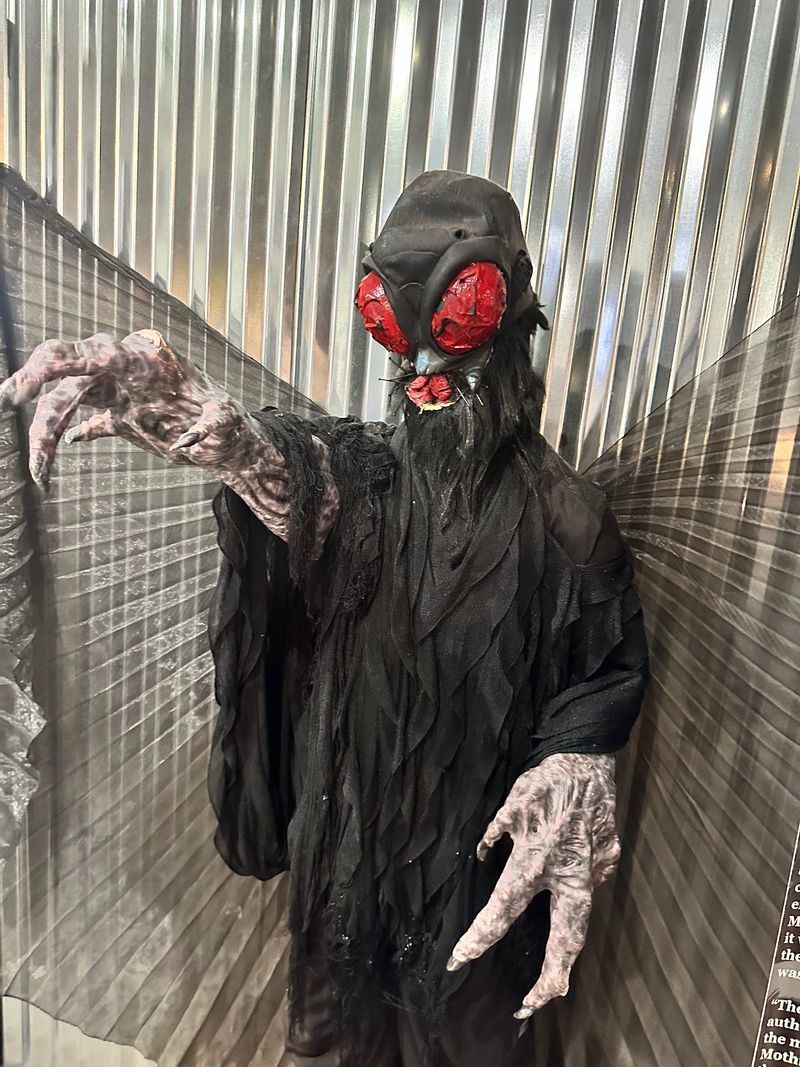
Inside the museum, lifelike costume replicas offer more chances to pose. Families work their way through several backdrops.
Reviewers mention how photo-friendly the whole layout feels. Displays are arranged with cameras in mind.
The statue also makes finding the museum simple. Spot the wings, then look across the street.
Evening light hits the polished metal nicely, giving the sculpture an entirely different mood after sunset. Photographers appreciate the change.
Between the statue outside and the replicas indoors, visitors leave with plenty of proof they stopped in West Virginia’s strangest small town.
Cameras rarely stay in pockets for long here.
A Gift Shop With Serious Range
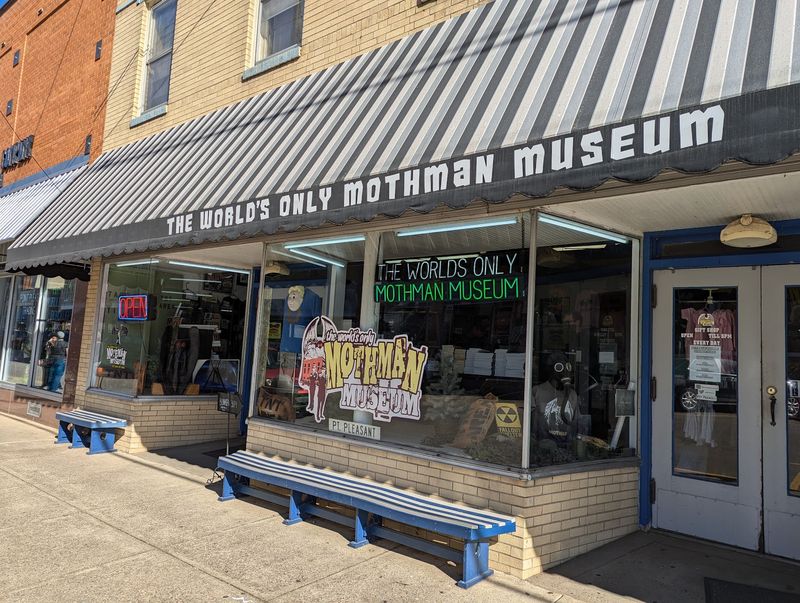
Nearly three hundred reviewers mention the same thing. The gift shop at the Mothman Museum genuinely competes with the exhibits for attention.
Shelves hold T-shirts, hoodies, books, stickers, buttons, plush toys, and tote bags. Sizes run generously, which shoppers appreciate.
Prices stay reasonable according to repeat visitors. That keeps souvenirs from feeling like a splurge.
The shop sits at the front, so browsing happens before and after the museum portion. Plenty of people wander in just to look.
Quality gets called out often, particularly the shirt fabric. Well-made merchandise beats flimsy tourist junk every time.
Plush versions of the creature seem to be a favorite with younger guests. Several reviews mention kids leaving delighted.
Purchases help support the museum and the preservation of Point Pleasant’s unusual archive. Shopping doubles as a small contribution.
A cryptid on a hoodie has surprising staying power back home. Conversations start whenever you wear it.
Blacklight Mini Golf Right Next Door
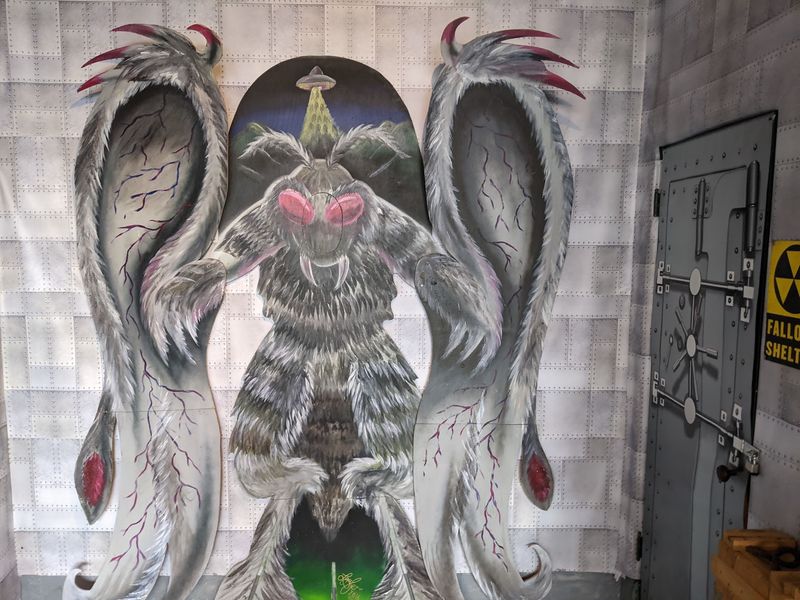
Putt-putt with glowing wings? A blacklight Mothman mini golf course operates next to the museum, and reviewers rave about it.
Neon murals glow along the walls while players work through the holes. One visitor called it the best blacklight course they had encountered.
Pricing stays friendly, which makes it easy to add on after the museum. Families often do both in one afternoon.
Kids especially love the switch from reading exhibits to swinging clubs. The pairing keeps everyone happy.
Cryptid themes run through the course design. Painted creatures peer out from every corner under the ultraviolet light.
Several reviews suggest budgeting time for it rather than treating it as an afterthought. People who skipped it mention regret.
Indoor play also means weather stops being a factor. Rainy river-town days stay fun.
Between the museum and the glowing greens, downtown Point Pleasant fills an afternoon faster than expected.
Nobody plans a golf game around folklore, yet here it works.
Festival Season Turns The Town Upside Down
Roughly four thousand people live in Point Pleasant. The annual Mothman Festival has drawn crowds reported near twenty thousand.
Main Street fills with vendors, artists, costumed attendees, and speakers. The museum sits right in the middle of the activity.
Local businesses feel the surge immediately. Restaurants, shops, and lodging all benefit from the weekend.
Guides recommend arriving early if you want parking anywhere near downtown. The streets tighten up quickly.
Museum staff stay busy through the festival, and lines can stretch outside. Patience pays off.
Costumes range from homemade wings to elaborate builds. Photographers have a field day.
Folklore turned into a real economic engine for this stretch of West Virginia. That transformation is remarkable for a town this size.
Visitors who prefer quiet should plan a different weekend. Off-season days offer the same exhibits with room to breathe.
Either way, the museum anchors the celebration.
River Town Sights Within Easy Walking Distance
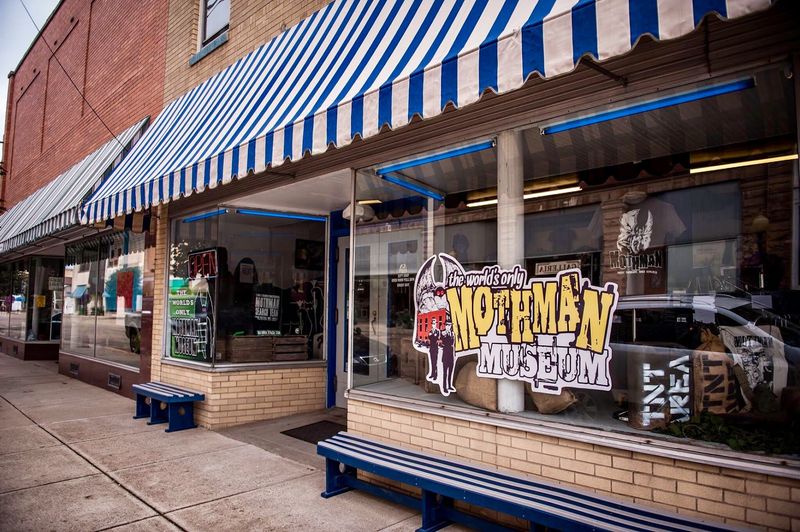
Two blocks in any direction and the history keeps coming. Point Pleasant packs several attractions within a short stroll of the museum.
Tu-Endie-Wei State Park marks the site of the Battle of Point Pleasant at the meeting of two rivers. The grounds stay peaceful and shaded.
A river museum and learning center covers life along the Ohio. Boats, floods, and commerce all get their turn.
Riverfront Park features large floodwall murals painted with scenes from local history. Walking the length takes only minutes.
A historic hotel dating to 1901 stands nearby, known for its ghost stories, though it is currently undergoing renovation.
The old TNT Area now falls within the McClintic Wildlife Management Area. Trails and ponds replace the munitions bunkers.
Shops and small restaurants fill the surrounding blocks. Lunch is never far.
Stack these stops together and the museum becomes the anchor of a full day rather than a quick photo stop.
Planning A Smooth Visit
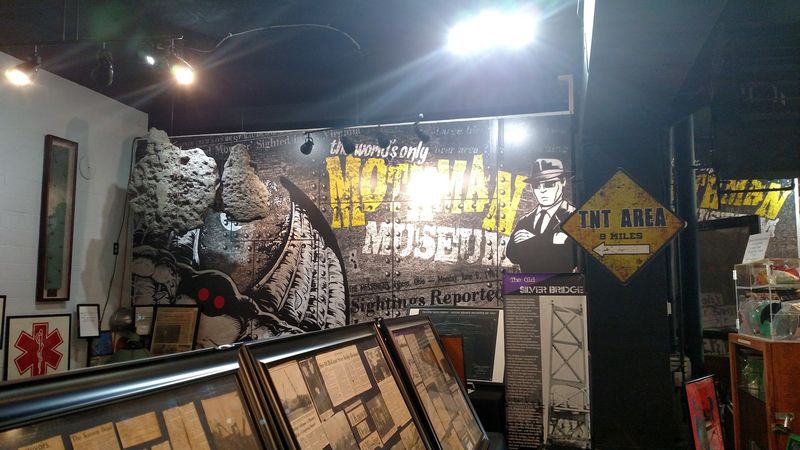
Small building, big crowds. The Mothman Museum measures compact, so timing your visit makes a real difference.
Weekday mornings tend to run calmer than weekend afternoons. Reviewers who arrived at busy hours mention tight walkways.
Admission stays inexpensive, and a military discount has been noted by guests. Bringing cash is never a bad idea in small towns.
Reading everything takes about an hour, longer if the documentary catches your attention. Rushing wastes the best material.
Parking exists along Main Street and nearby side streets. Festival weekends are the obvious exception.
Staff friendliness comes up in hundreds of reviews, so asking questions is encouraged. They fill in details the placards leave out.
Kids handle the visit well, and the mood stays more curious than frightening. Families report easy afternoons here.
Repeat guests say the collection has expanded significantly over the years. A return trip after a decade feels like a new museum.
Point Pleasant rewards anyone willing to slow down and read the fine print.