
This Wisconsin Museum Takes Visitors Back To A Time When Jellyfish Swam Over The State
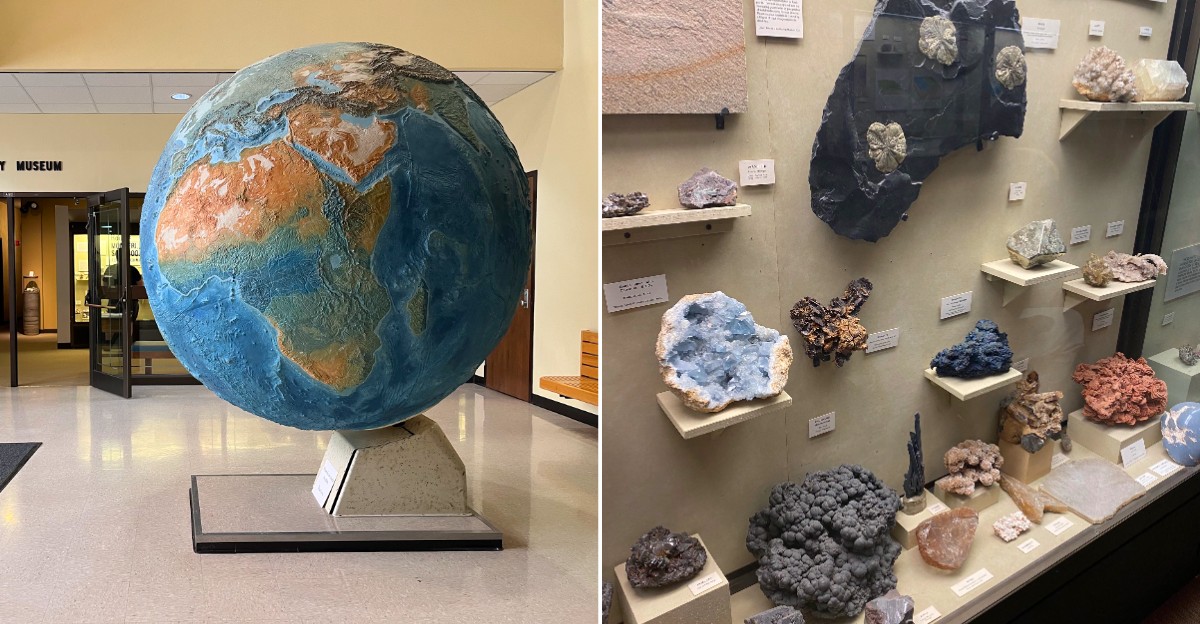
Jellyfish once drifted over the land where Wisconsin farms and cities sit today. Their soft bodies somehow left fossils behind, and you can see them for free.
Those fossils come from a rare deposit that preserved squishy sea creatures from about 430 million years ago. Most soft animals vanish without a trace. These ones stuck around, which feels like a small miracle in rock form.
I love the idea of standing in the middle of Wisconsin and looking at an ancient seafloor. The same building also holds a mastodon skeleton, glowing minerals, and a walk-through cave. That’s a lot of planet history packed under one roof.
And somehow, those ancient jellyfish might be the biggest surprise of all. Who knew something so delicate could leave a mark that lasts millions of years?
The Jellyfish Fossils That Should Not Exist, But Do
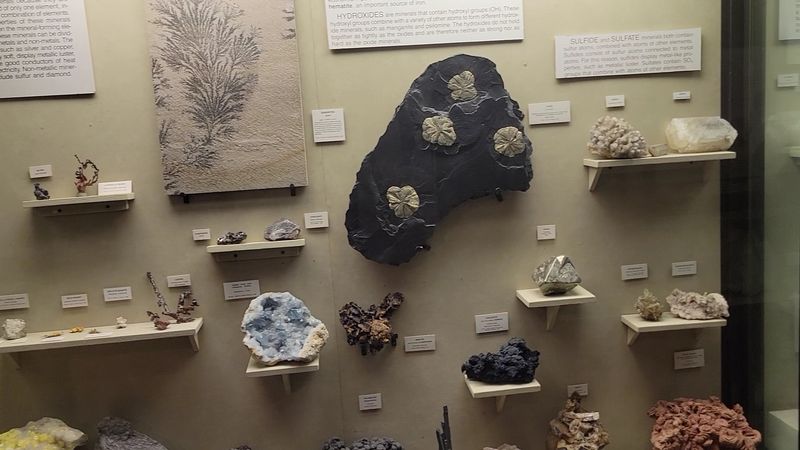
Soft animals almost never become fossils. The UW-Madison Geology Museum shows off some that pulled it off anyway.
The museum’s ancient sea exhibit features fossils from the Waukesha Lagerstätte. That’s a Wisconsin deposit famous for preserving soft-bodied creatures from the Early Silurian Period.
Those animals lived roughly 428 to 436 million years ago. Back then, a warm shallow sea covered the area that would someday become Wisconsin.
A lagerstätte is a fancy German term for a site with unusually good preservation. Scientists get excited about these places because they reveal life that usually rots away unseen.
Jellyfish are mostly water, so finding one in stone is like finding a bubble in a brick. You can see that kind of rare evidence up close here.
Corals and other sea creatures share the spotlight too. Together, they help paint a picture of a busy underwater world beneath your future snow boots.
Take your time reading the labels in this section. The details help you understand why these faint shapes matter so much to researchers. It’s a quiet exhibit with a big message. Wisconsin once had a seafloor, and the evidence sits right in front of you.
A Mastodon Dug Up Right Here In The Badger State
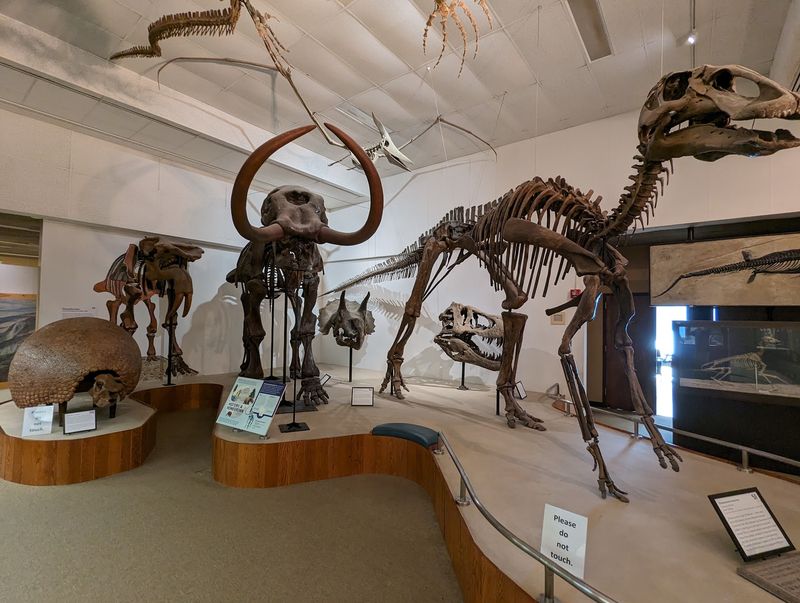
Tusks first, questions later. The Boaz Mastodon is one of the biggest showstoppers inside the museum.
This skeleton was assembled using bones from two mastodons discovered in Wisconsin, near Boaz and Anderson Mills. That local connection makes it extra fun to stand beside.
Mastodons were hefty, elephant-like animals that roamed North America long after the ancient seas disappeared. Seeing one assembled helps your brain understand just how large they really were.
Kids usually love comparing their own height to a skeleton this size. Adults tend to do the same thing, just a little more quietly.
The mastodon also connects nicely to the jellyfish story. Both show that Wisconsin has changed wildly over time, from ocean floor to icy landscape.
Walking from one exhibit to the next feels like flipping through chapters of the same giant book. Each chapter just happens to be millions of years long.
Bring a phone or sketchbook if you like capturing big shapes. The curving tusks and massive bones make a great subject for a drawing. Try spotting how the skull, ribs, and legs fit together. It’s a hands-off anatomy lesson with very impressive teeth.
You Will Want To Say Hello To The Duck-Billed Dinosaur
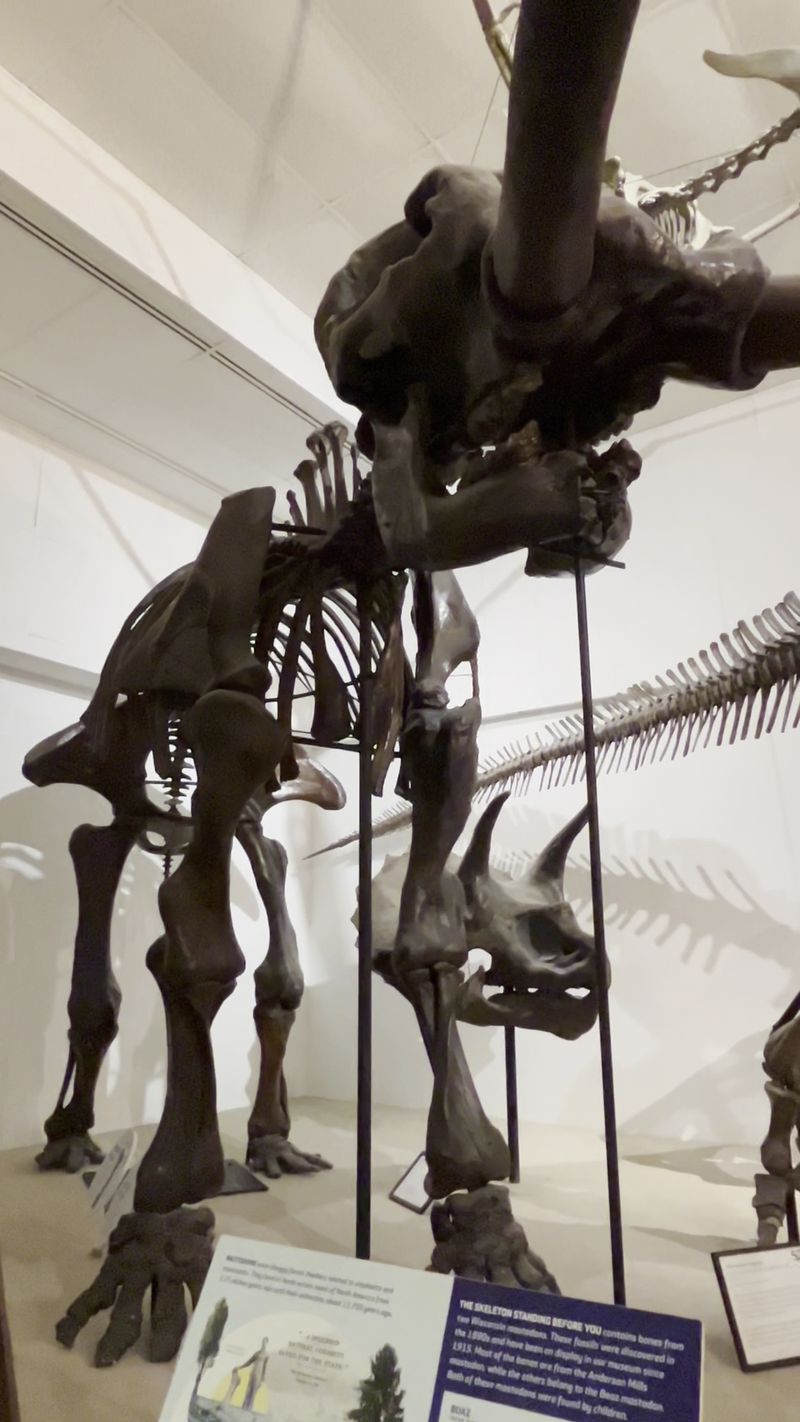
Every museum needs a dinosaur, and this one delivers a full-sized star. The Edmontosaurus skeleton stretches out in the vertebrate fossil area.
Edmontosaurus was a plant-eating, duck-billed dinosaur. It may not have the scary reputation of a T. rex, but its size still makes an impression. Nearby, you’ll find more fossil vertebrate displays to explore. Skulls and bones give you a closer look at how ancient animals were built.
Here’s a fun way to view it. Look at the mouth area and think about how many plants it needed to munch every day. Dinosaur fans of all ages can spend real time in this part of the museum. Younger visitors often head here first, and nobody can blame them.
The skeleton also shows that science is a team effort. Fossils must be dug up, cleaned, studied, and carefully mounted before anyone can admire them.
Wisconsin didn’t have this dinosaur roaming its land, but the display still fits the museum’s mission. It helps tell the larger story of life on Earth. Say hello, snap a picture, and keep moving. More giants are waiting nearby.
Rocks That Glow Like A Secret Party
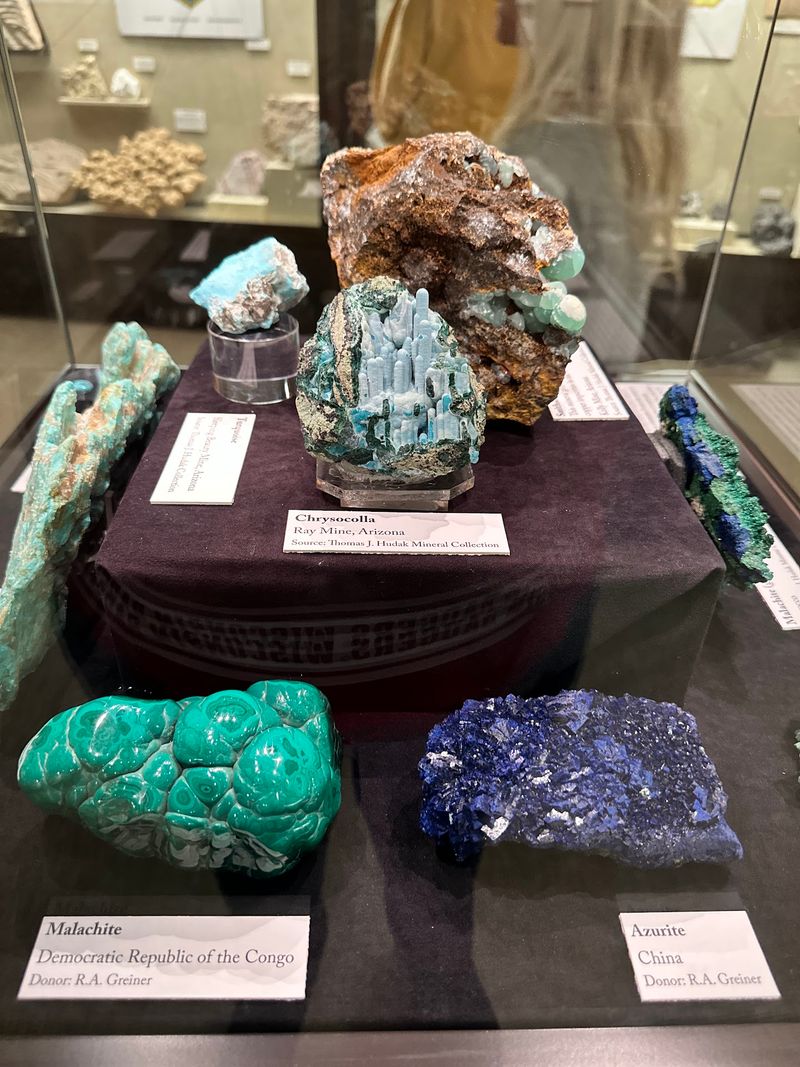
Turn off the regular lights and ordinary rocks suddenly turn neon. The fluorescent mineral display might be the most colorful surprise at the UW-Madison Geology Museum.
Under ultraviolet light, certain minerals glow in bright shades. Some look almost too vivid to be natural, yet they are completely real. The glow happens because some minerals absorb invisible UV light. Then they give off light we can actually see.
It’s science that feels a little like magic. That combo makes it a favorite stop for curious kids and grown-ups alike. Photographers should try a few shots here, though dim lighting can be tricky. Holding your phone steady makes a big difference.
This exhibit also teaches a sneaky lesson. Rocks are not just gray lumps, and many hold hidden properties waiting to be discovered.
After seeing this display, you might look at gravel driveways differently. Who knows what might light up under the right lamp? Pause long enough to compare the colors. Each mineral reacts in its own way, which keeps the display interesting even after the first wow fades.
Crystals So Big They Need Their Own Zip Code
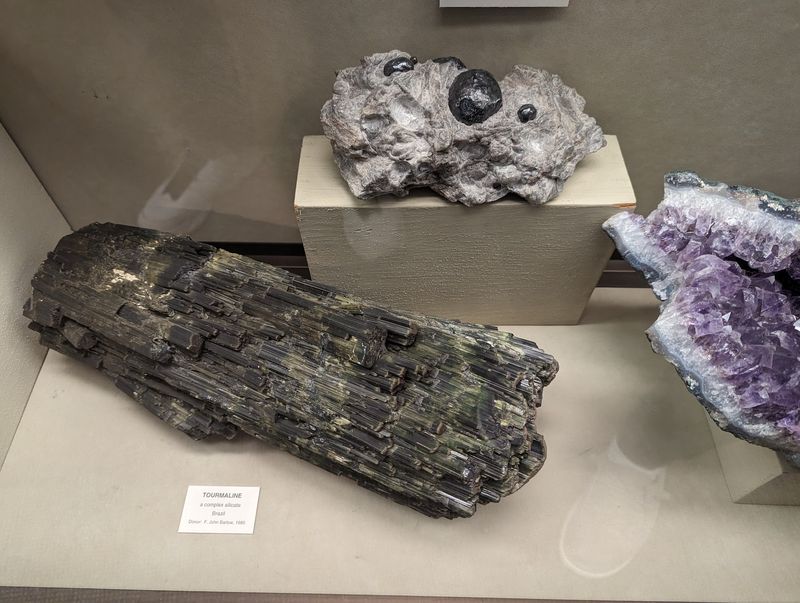
An enormous quartz specimen is among the museum’s impressive mineral displays. That’s heavier than many small cars, and far sparklier. The mineral collection doesn’t stop there. A massive amethyst geode adds rich purple color to the gallery.
Geodes form when minerals slowly grow inside hollow spaces in rock. Over long stretches of time, those crystals fill the space with glittering points. Standing near a geode this large makes rock shop finds seem pretty tiny. You may start wondering how anyone moved it.
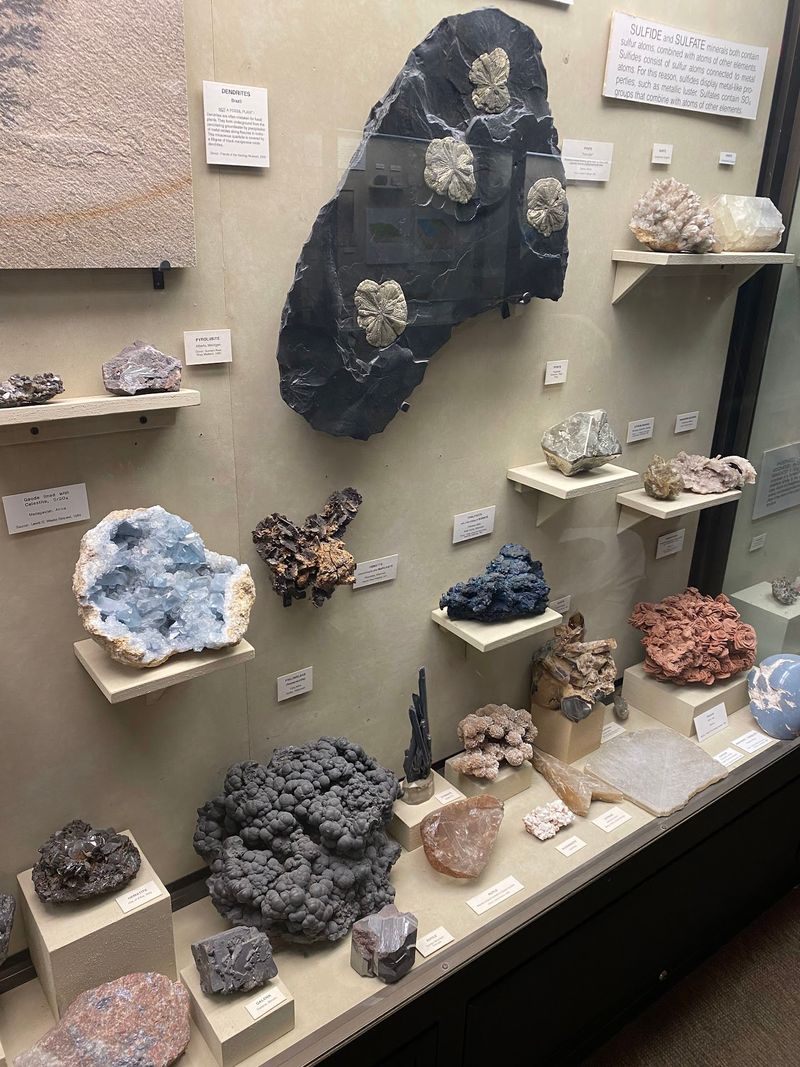
The museum’s broader collection includes all kinds of rocks and minerals. Cases show off shapes, colors, and textures you might never expect from the ground.
This is a great section for slowing down. Reading the labels helps you learn where minerals come from and why they look so different. Budding rock collectors will find plenty of inspiration here. It’s a fun place to learn names before your next hike or beach walk.
Even if you’ve never cared about minerals, these giants make a strong case. Earth clearly knows how to make jewelry on a ridiculous scale.
Go Ahead And Touch A Piece Of Outer Space
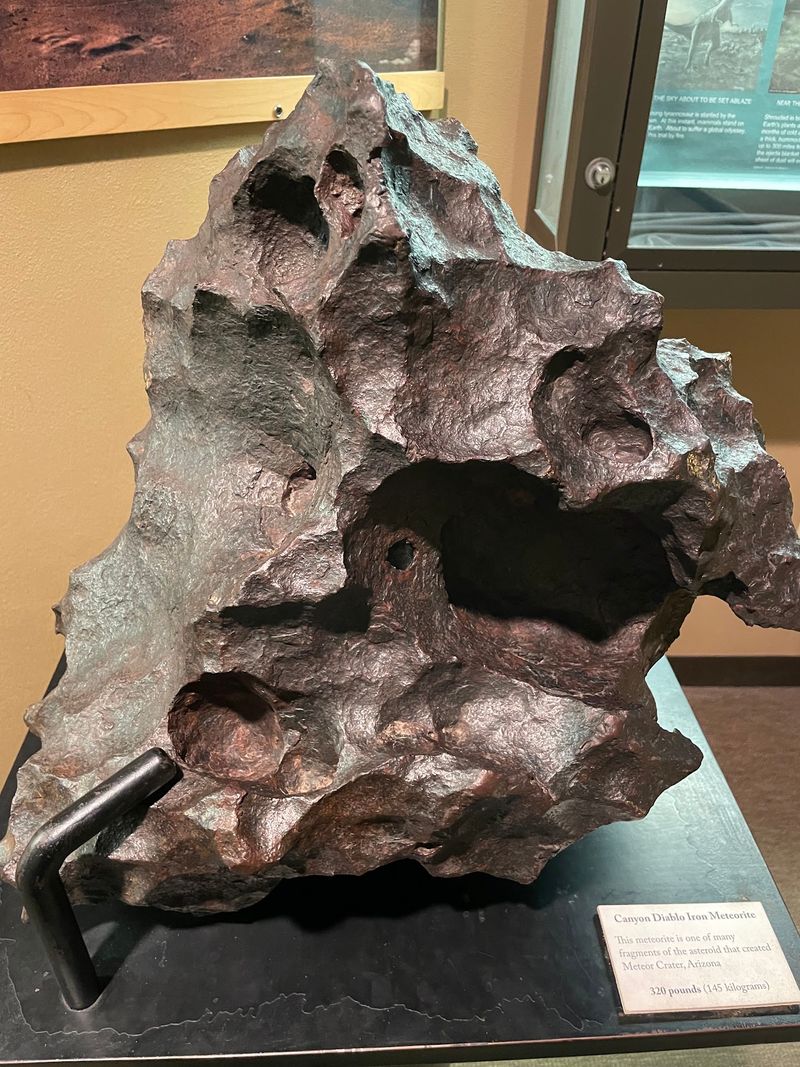
Most museums ask you to keep your hands to yourself. Here, you can actually touch a real meteorite. That means your fingers can rest on something that traveled through space before landing on Earth. It’s a pretty wild thing to cross off a list.
The museum also offers rocks you can touch. Feeling the weight and texture helps make geology more real than just reading about it. Meteorite displays add an out-of-this-world twist to the visit. You can learn about space rocks, including ones connected to Wisconsin.
Kids who love planets will probably gravitate here fast. Adults who once dreamed of being astronauts might too.
Ask yourself a fun question while you look around. How far did these rocks travel before ending up behind glass in Madison? Touchable exhibits are also great for younger visitors who learn by doing. A quick touch can spark a whole afternoon of questions.
Just remember to be gentle with anything marked for hands-on use. These pieces need to stay in good shape for the next curious visitor.
A Cave Walk Without The Mud On Your Shoes
Caving usually means helmets, flashlights, and muddy knees. The museum skips the mess with a walk-through model of a Wisconsin cave. Sound effects help bring the experience to life. You get a sense of what a cave might feel like without needing a guide or special gear.
Wisconsin has real caves shaped by water and rock over long periods of time. The model gives you a peek at that underground world. It’s a small space, so it feels cozy and fun rather than overwhelming. Younger kids often treat it like an adventure tunnel.
Look closely at the shapes along the walls. Cave formations grow slowly as minerals drip and build up over many years. This exhibit pairs nicely with the ancient sea fossils. Much of Wisconsin’s limestone came from those old marine environments.
So the cave isn’t random at all. It’s part of the same long story that started with sea creatures swimming over the state. Walk through more than once if you like. The second trip often reveals details you missed while listening to those echoing sounds.
Peek Behind The Glass Where Fossils Get Their Makeover
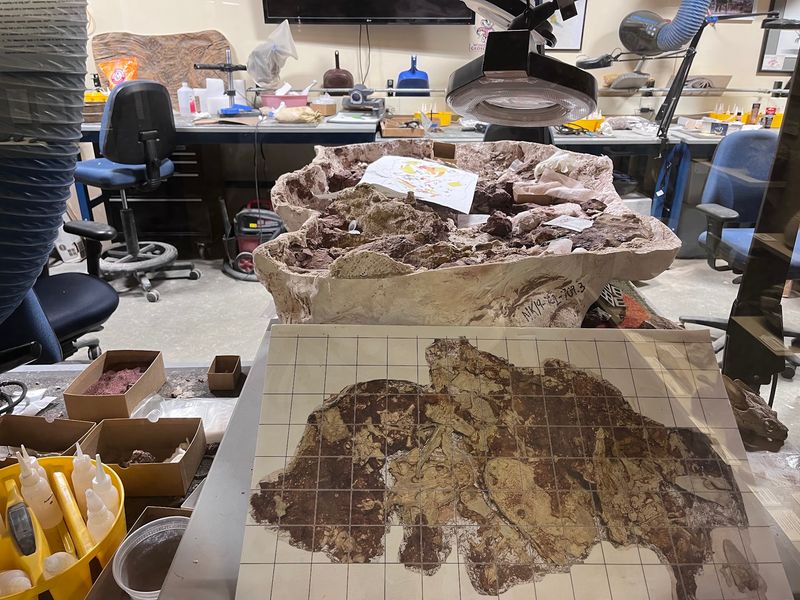
Fossils don’t come out of the ground ready for display. At the Fossil Preparation Lab, visitors can watch staff do the careful work. This behind-the-scenes view is one of the coolest parts of the museum. It shows that the collection is active, not frozen in time.
The museum’s collection includes more than 250,000 geological and paleontological specimens. They support both public learning and scientific research. Watching someone clean a fossil requires patience, and so does the job itself. Tiny tools and steady hands do most of the work.
Not every visit will look the same, since lab work depends on the day. That unpredictability makes each glimpse feel a little special. Kids who dream of becoming paleontologists may find real inspiration here. It’s proof that science careers happen in real rooms with real people.
Also nearby is the full-sized skeleton of a giant ground sloth called Megalonyx. Yes, sloths were once huge, and that fact never gets old. Between the lab and the sloth, this area mixes science and surprise nicely. It’s a reminder that discovery is still happening right now.
Free Admission Makes Planning Your Visit Easy
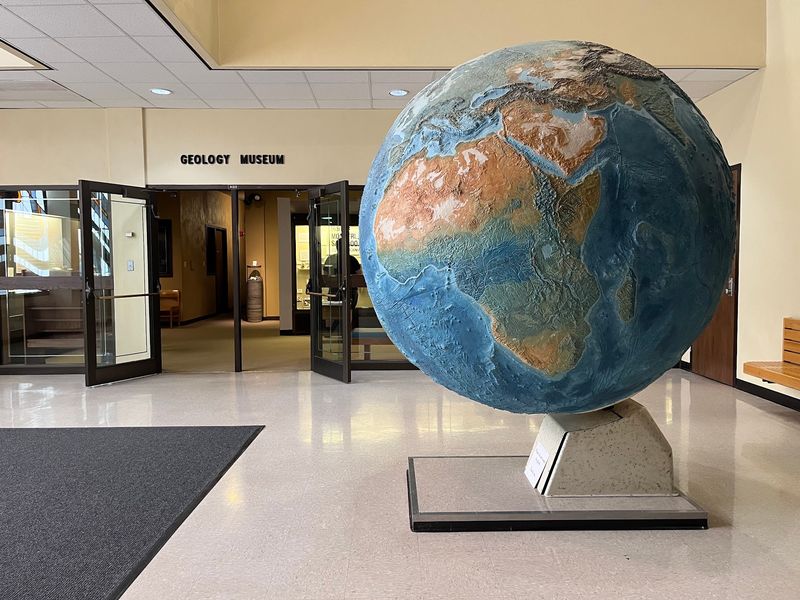
Free is a great price for 430 million years of history. The UW-Madison Geology Museum doesn’t charge admission. You’ll find it inside Weeks Hall at 1215 W Dayton St, Madison, WI 53706. The museum has been in this building since 1981.
Hours run Monday through Friday from 8:30 a.m. to 4:30 p.m. Saturday hours are shorter, from 9 a.m. to 1 p.m., and Sundays are closed. The museum’s roots stretch back to the founding of UW-Madison in 1848. Sadly, much of the early collection was lost in an 1884 fire at Science Hall.
Today, the collection has grown far beyond those beginnings. It’s a proud part of campus life and Wisconsin science education. Since the museum sits on a busy campus, plan your parking or transit ahead of time. Giving yourself extra time keeps the visit relaxed.
Many visitors spend about an hour exploring, though rock lovers could stay longer. Weekday mornings could suit anyone who prefers a calmer pace. Once you leave, the ancient sea may follow you around Madison. Every limestone wall suddenly becomes a clue.