
This Wisconsin State Park Offers Guided Fossil Hunts That Bring Ancient History To Life
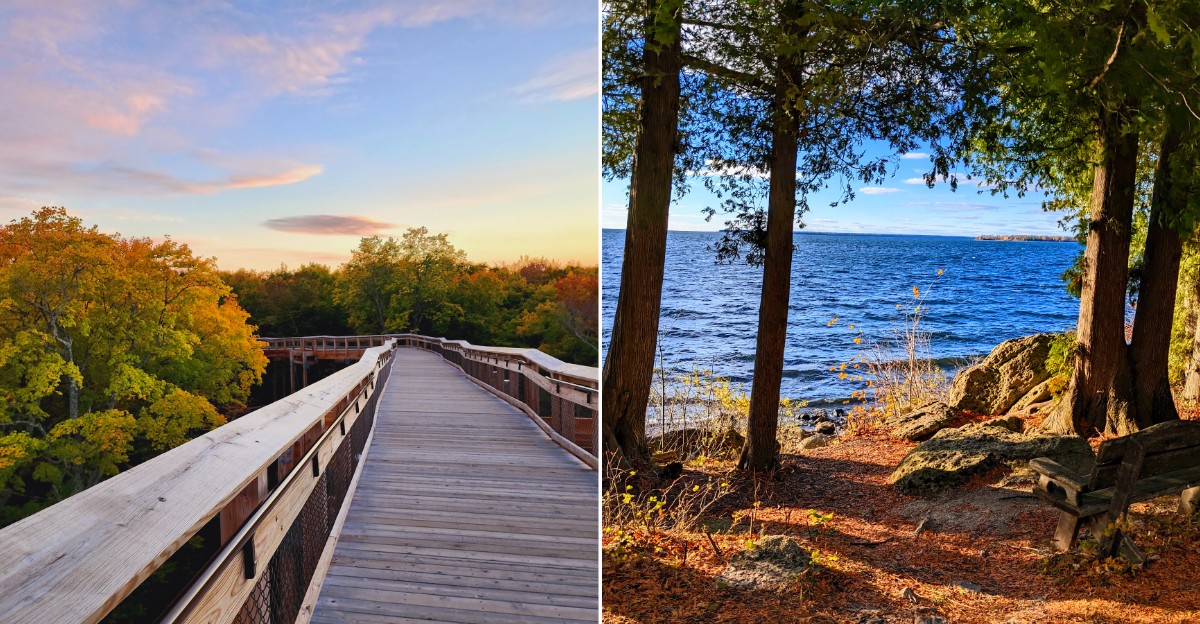
The rock under your sneakers here started as mud on the floor of a shallow saltwater sea. That happened about 430 million years ago, when the world looked nothing like it does today.
Now a naturalist can help visitors hunt for traces of that ancient world. The bluffs nearby even hold fossils from an old coral reef. A coral reef in Wisconsin sounds like a typo, but it’s real.
I love how this park can turn an ordinary fall afternoon into a trip millions of years into the past. Kids get to search for fossils, while grown-ups pick up a few surprising geology facts along the way.
And the adventure doesn’t end with the rocks. Cliffs, a lighthouse, a beach, and a tower with sweeping views give you plenty more to explore. Even the colorful fall foliage adds something special to the scenery.
Who knew a little fossil hunting could turn into such a memorable day outdoors?
Kids Turn Into Fossil Detectives On These Naturalist-Led Hunts
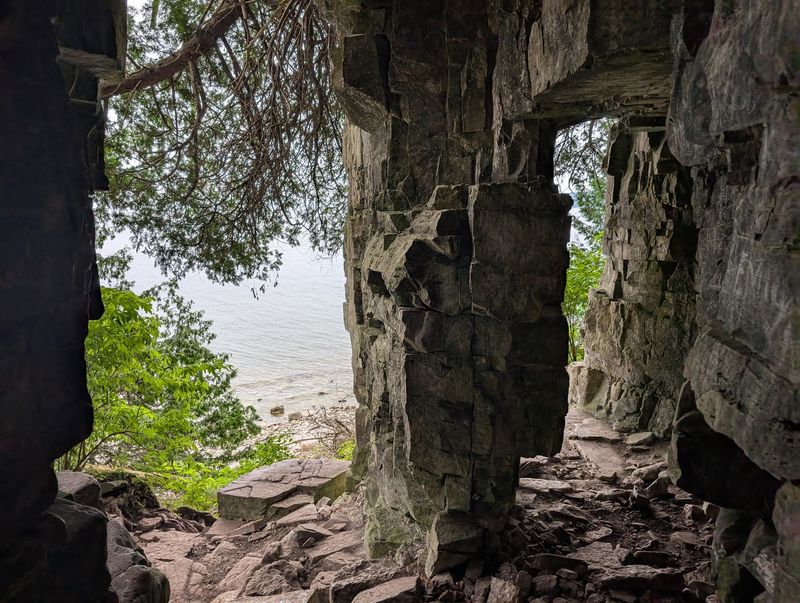
Treasure hunts usually end with candy. At Peninsula State Park, the prize is a peek at life from hundreds of millions of years ago. The park runs guided Fossil Hunt events for curious kids and families. A naturalist leads each one, so nobody has to guess what a fossil looks like.
First, the group learns how fossils actually form. Then everyone gets hands-on and searches for hidden treasures together. The hunts are short and sweet, which works well for younger explorers. The park offered several naturalist-led fossil hunts during the summer season.
Check the park’s current event calendar for upcoming sessions, since dates and availability can change. Hunts usually meet at the Tennison Bay playground inside the park. That’s handy, since the swings can keep little ones busy while you wait.
Weather can change plans, so keep an eye on the forecast. Events depend on conditions, and a rainy day might mean a reschedule. My tip is simple. Show up a few minutes early, bring water, and let your kids ask every question rattling around in their heads.
Your Picnic Spot Used To Be The Bottom Of A Tropical Sea
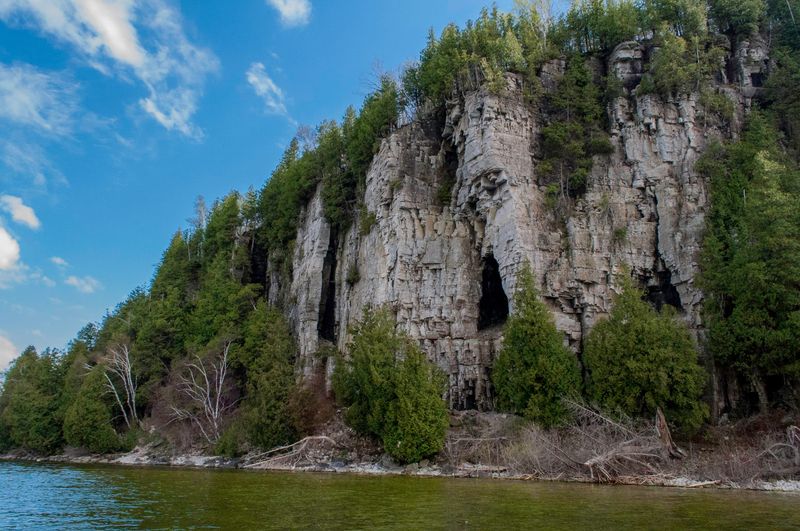
Some history is written in books. Here, it’s written in stone, and the stone is enormous. The park sits on the Niagara Escarpment, a giant geological formation. It’s made of Silurian-age dolostone, a tough rock similar to limestone.
That bedrock formed about 430 million years ago. Back then, mud settled on the bottom of a shallow saltwater sea and slowly hardened. Fast-forward a few hundred million years. Glaciers and changing lake levels helped shape the dramatic bluffs you see today.
Those bluffs range from 76 to 150 feet high. They also hold fossils from an ancient coral reef, which is a pretty wild thing to find in Wisconsin. Knowing this changes how a simple hike feels. Every cliff face becomes a giant page from Earth’s diary.
Kids especially love connecting the dots between tiny fossils and towering cliffs. It helps them see how small creatures built something so big over time.
Here’s a fun trick for families. Before your visit, look up pictures of modern coral reefs, then compare them with the rocks you spot in the park. The similarities make a great conversation starter.
Climb Sixty Feet Up Without A Single Stair If You Want
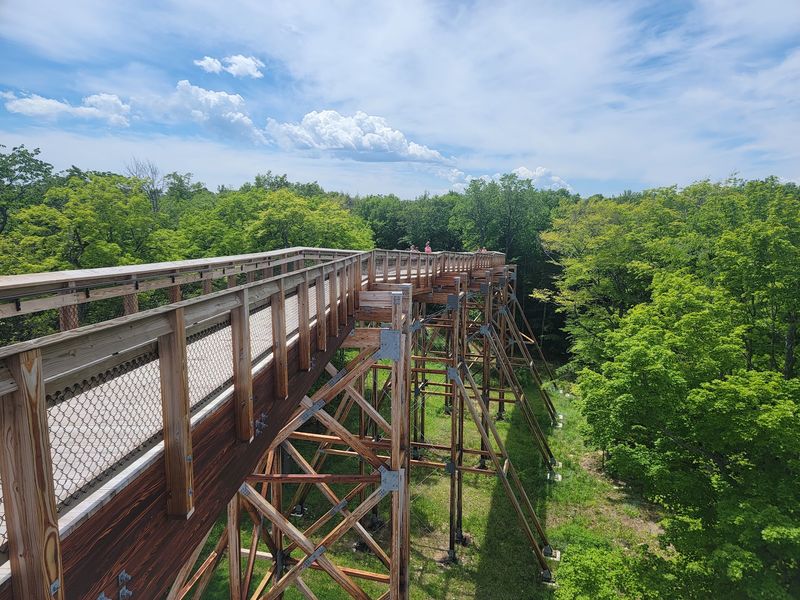
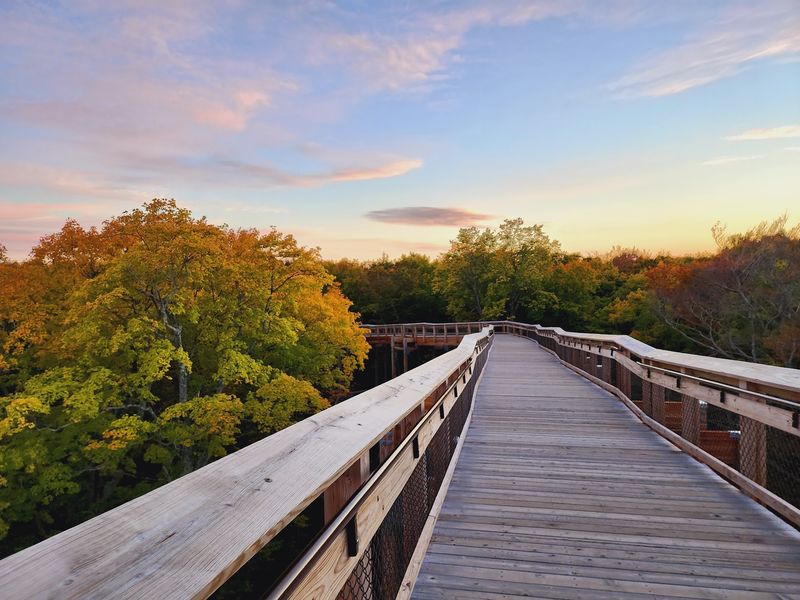
A ramp that winds through the treetops sounds like something from a storybook. Eagle Tower makes it real. Rebuilt in 2021, the tower features an accessible ramp system. Strollers, wheelchairs, and tired legs can all make the trip upward.
The view from the top sits 60 feet above the ground. Even better, that’s 253 feet above Green Bay. From up there, you can scan the park, nearby islands, and even the Upper Michigan shoreline. It’s a lot of scenery packed into one glance.
For fossil-hunting families, the tower adds a perfect bonus lesson. You can look down on the same escarpment that formed in that ancient sea. Point out the cliffs and the water to your kids. Then explain that glaciers helped shape everything they see.
Windy days can feel a bit breezy on the deck, so pack a light jacket. A hat that ties on won’t hurt either. I believe this is the spot for your best family photo of the trip. Few backdrops can compete with a bay, a forest, and a horizon stretching into another state.
An 1868 Lighthouse Adds Another Chapter To The Story
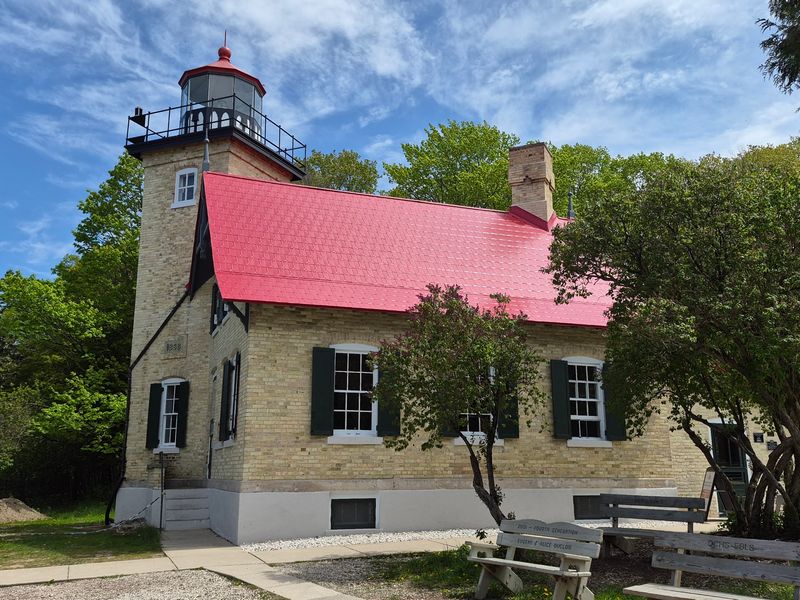
Fossils cover the really old history. The Eagle Bluff Lighthouse handles the more recent stuff, and it’s still plenty old. Built in 1868, the lighthouse now serves as a museum. Lighthouse tours are available, giving you a look at life along the water long ago.
It’s a nice change of pace after a fossil hunt. Your timeline jumps from 430 million years ago to the 1800s in one afternoon.
Kids might enjoy guessing how lighthouse keepers spent their days. Ask them what chores they’d hate most, then compare notes after the tour. The lighthouse also sits within easy reach of other park highlights. That makes it simple to combine with a scenic drive or short hike.
Plan for some flexibility with your schedule. Tour times can vary by season, so check before heading over.
I like how this stop rounds out the park’s history lesson. One place tells the story of ancient seas, while another tells the story of ships that sailed modern waters. Together, they make Peninsula State Park feel like an outdoor museum with endless exhibits. No velvet ropes required.
Twenty Miles Of Trails Put Those Cliffs Right Beside You
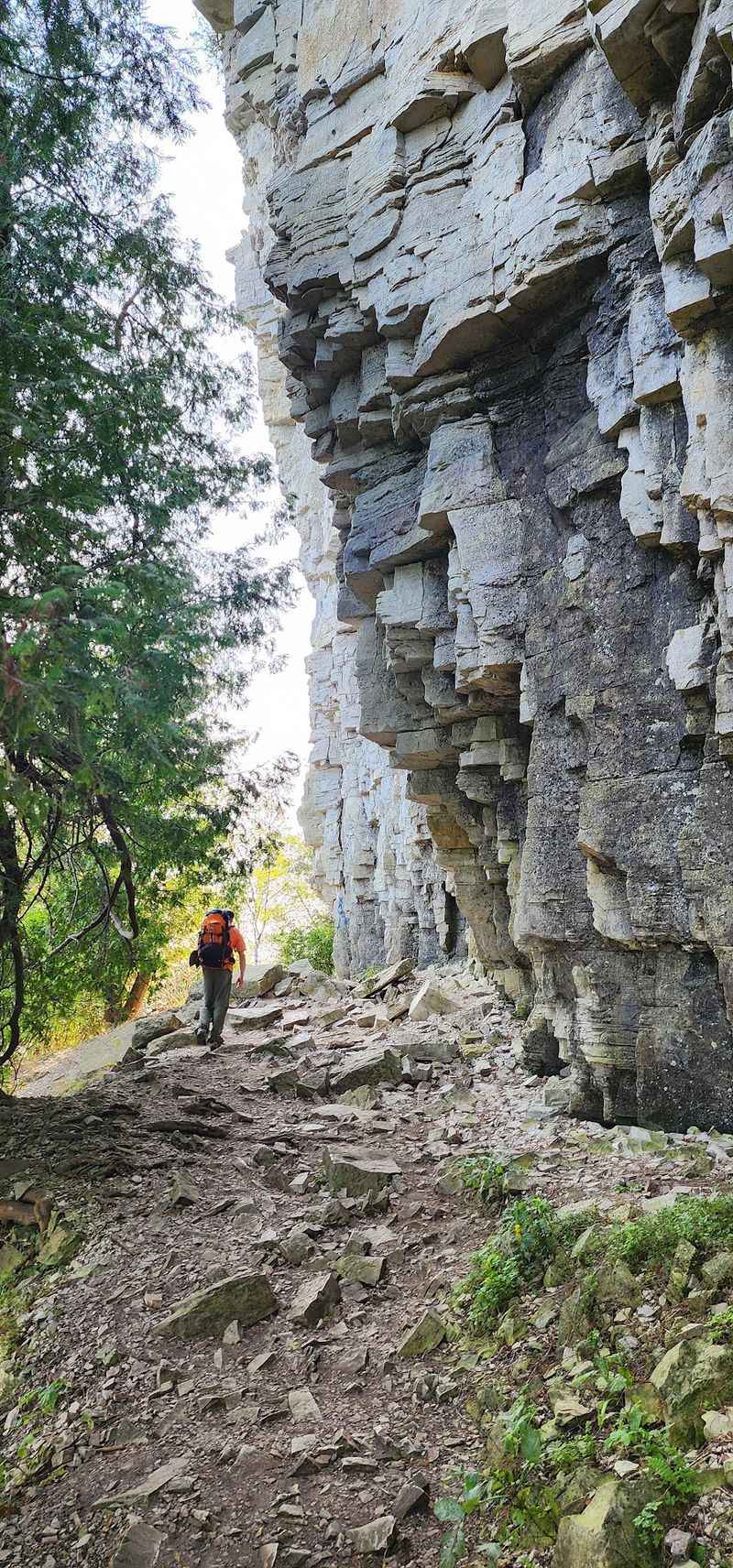
Reading about cliffs is one thing. Walking right beneath them is another level entirely. Peninsula State Park has 20 miles of hiking trails. Each one shows off the landscape in a slightly different way.
The Eagle Trail winds along the shoreline with views of 150-foot cliffs. It’s rated difficult, so sturdy shoes and patience are smart.
Need something gentler? The Sentinel Trail is a 2-mile loop with a 0.6-mile universally accessible gravel portion. The Skyline Trail is a 3-mile loop that climbs to Sven’s Bluff. Other choices include the Nicolet Bay, Hemlock, and White Cedar trails.
My favorite name might be Trail Tramper’s Delight. It sounds like a dessert, but it’s a hike. For fossil fans, these trails bring the escarpment up close. Just remember to look and leave rocks where they belong in a state park.
Watch your step on rooty sections too. Tree roots love to surprise distracted hikers staring up at cliffs. Pack snacks, water, and a trail map. You’ll want to stop often, and nobody enjoys hiking hungry.
Cedars Older Than The Printing Press Shade The Shoreline
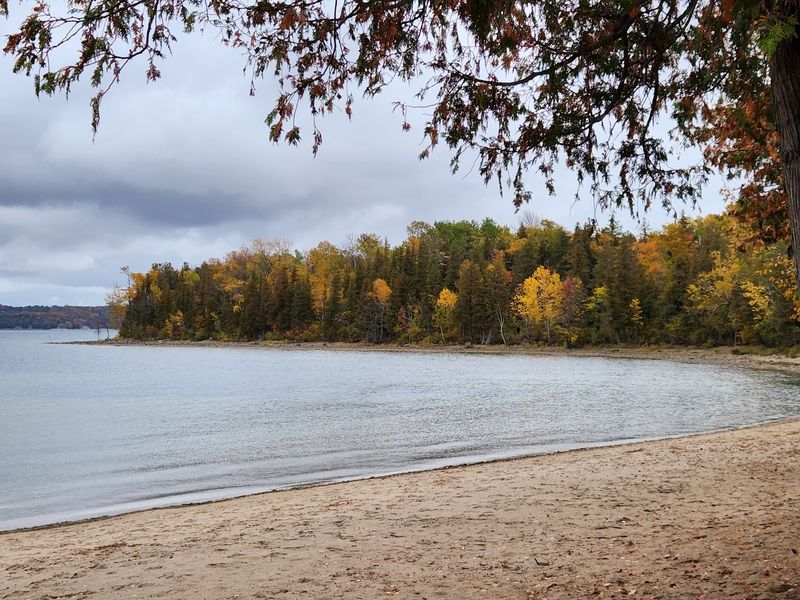
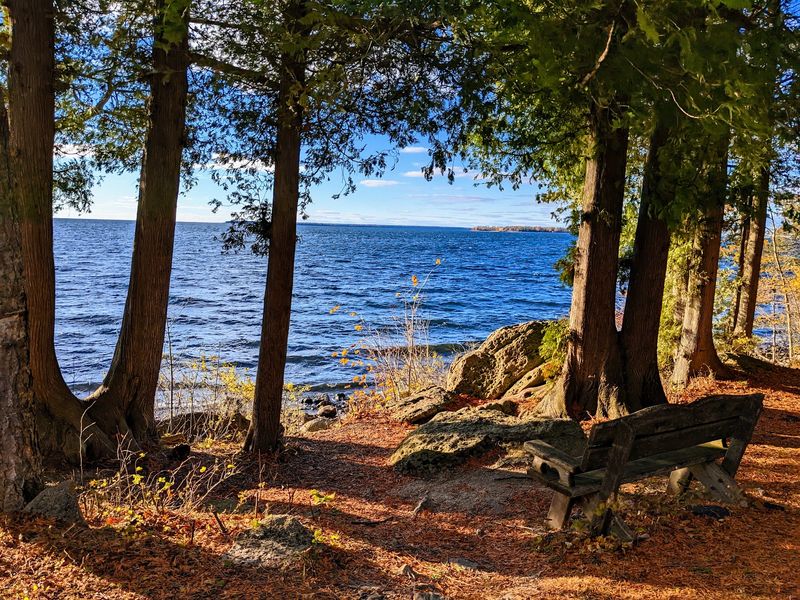
Some northern white-cedar trees here are more than 500 years old. That’s a seriously long time to stand in one spot. The park includes the White Cedar Forest and Beech Maple Forest State Natural Areas. These protected spaces hold an impressive mix of plant life.
Cliff-dwelling plants and ferns grow in rocky nooks. White pine and red pine also tower over the trails. Wildlife adds plenty of action. Deer, wild turkeys, and pileated woodpeckers all call the park home.
Look toward the water for bufflehead ducks and mergansers. If you’re lucky, a bald eagle might cruise overhead.
This makes a fun follow-up to a fossil hunt. Kids can compare ancient sea life with the living creatures around them today. Bring binoculars if you have them. A simple bird guide or app can turn a walk into a scavenger hunt.
I can’t imagine a better reminder that nature keeps changing. Corals once ruled this spot, and now cedars and eagles have taken over. Pretty good upgrade for a former seafloor, if you ask me.
Sandy Toes And Paddles Wait At Nicolet Beach
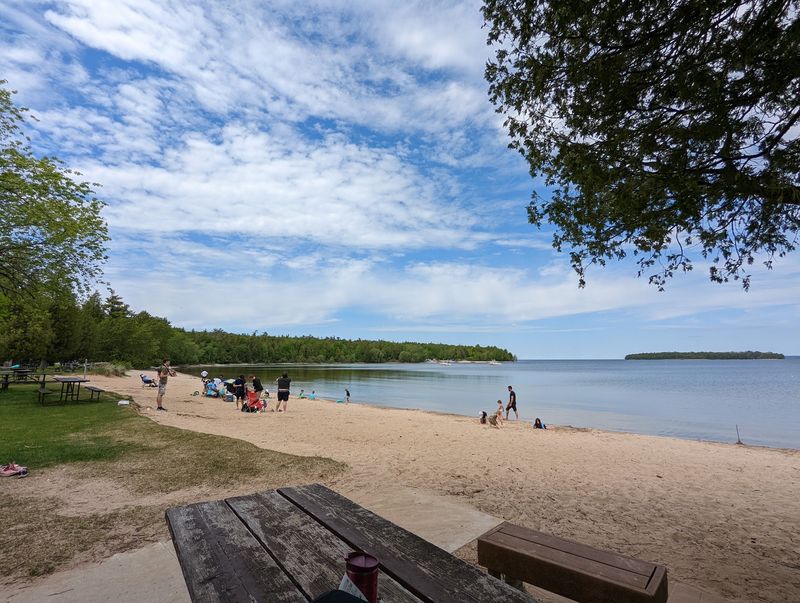
After a morning of science, splashing feels like the right reward. Nicolet Beach is the park’s most popular swimming spot. It offers a sandy shoreline and picnic areas close by. That setup makes lunch and a swim easy to combine.
Boating, canoeing, kayaking, and swimming all happen in designated areas. Rentals are available, so you don’t have to haul gear from home. Fishing is another option for patient folks. Kids who can’t sit still might prefer the water instead.
Nicolet Bay also carries deep human history. Evidence of an ancient village at Nicolet Bay dates back to around 500 BC. Indigenous peoples lived on the Door Peninsula for about 11,000 years. Archaeological digs in 1994 confirmed artifacts from several Native American cultures.
That adds another layer to your family’s history day. Fossils show ancient seas, while the beach area reminds you of the people who came long after.
Bring sunscreen, towels, and a change of clothes. Wet kids in a car can turn a happy day into a soggy ride home fast. Trust me, the backseat will thank you.
Golf, Bikes, And Summer Shows Fill In Any Gaps
Peninsula State Park is often called Wisconsin’s most complete park. After looking at the activity list, that title seems fair. The Sunset Bike Trail offers a scenic, fairly easy ride along the western shoreline. Green Bay views keep riders company the whole way.
Mountain biking is also available for riders who like more bumps. Choose your adventure based on your legs. Golfers get an 18-hole course that opened in 1917. Families can try a 6-hole, par 3 course that’s friendlier for beginners.
The golf area also holds an important piece of history. Chief Simon Kahquados, the last hereditary chief of the Potawatomi nation, was buried near the Memorial Pole there in 1931.
Evenings can bring entertainment too. The Northern Sky Theater offers summer performances inside the park. Playgrounds and picnic spots round things out for younger visitors. Nobody gets bored here unless they really try.
Winter visitors aren’t left out. Cross-country skiing, snowshoeing, sledding, tubing, ice fishing, and snowmobiling keep things lively when the beach is buried in snow.
Plan Smart So Your Fossil Day Goes Smoothly
Good news for early birds and night owls. The park is open daily from 6 a.m. to 11 p.m., all year long. You’ll find Peninsula State Park at 9462 Shore Road, Fish Creek, WI 54212. A vehicle admission sticker is required to enter.
The park office stays open daily year-round. From Memorial Day weekend through Labor Day weekend, hours run 9 a.m. to 8 p.m.
Want to stay close to the fossil hunt meeting spot? Tennison Bay is one of the park’s campgrounds. In total, there are 469 family campsites and three group camps. Other campgrounds include Weborg, Welcker’s Point, North Nicolet, and South Nicolet.
The park itself has deep roots. Established in 1909, it officially opened in 1910 and ranks among Wisconsin’s oldest state parks. A Nature Center adds another learning stop for curious minds. It pairs nicely with a guided fossil hunt.
Summer camping spots fill quickly, so book ahead when you can. Then pack the bug spray, grab a magnifying glass, and get ready to meet a few 430-million-year-old neighbors.