
8 Mississippi Counties Seeing A Massive Spike In Black Bear Sightings This Fall, According To Recent Reports
Bears rarely show up where people expect them, which is exactly what makes this fall’s numbers so unusual. These Mississippi counties have recorded a sharp rise in sightings, according to recent reports.
Wildlife officials tracked the increase across these specific areas compared to previous seasons. Expanding bear populations combined with shrinking natural habitat likely explain part of the trend.
Cooler months tend to push sightings higher anyway, as bears search for food before winter sets in. Residents near these counties report more frequent encounters, sometimes within neighborhoods rather than just deep forest areas.
Officials recommend basic precautions like securing trash and avoiding leaving food outside unattended. These counties remain worth watching closely as the trend continues through the rest of the season.
1. Hinds County

The Hinds County Sheriff’s Office does not usually put out bear bulletins. In May 2026, it did exactly that, warning residents about a noticeable uptick in black bear sightings across several parts of the county.
Utica saw the most attention. At least two separate bears turned up around the Memorial Day weekend, moving through the kind of mixed farmland and hardwood bottoms that bears absolutely love.
Clinton got its own moment back in April 2026, when a bear was spotted inside city limits. That one made the rounds fast on local social media, as these things do.
Geography explains a lot here. Hinds County sits where the Big Black River bottomlands, thick creek corridors, and stretches of timber all connect, giving a wandering bear a shaded highway with plenty of acorns along the way.
Wildlife officials point out that most of these animals are young males. They leave their mother’s home range, get pushed around by bigger bears, and end up traveling farther than anyone expects.
For residents, the advice is refreshingly simple. Bring in pet food at night, secure garbage cans, and stop filling bird feeders when a bear has been reported nearby.
Nobody in Mississippi has ever been injured by a black bear, which is worth remembering before anyone panics. Trouble starts when bears learn that neighborhoods mean easy calories.
Feeding a bear, even by accident, teaches it that people are a food source. That is how a shy animal turns into a problem animal, and it rarely ends well for the bear.
The MDWFP asks folks to report sightings online so the agency can keep updating its interactive bear map, which has tracked reports since 2016.
2. Rankin County
A camera caught it clean. On July 28, 2026, a black bear was photographed on private property near Fannin, and another sighting came from the very same area just one day earlier.
Odds are good it was the same bear making a slow loop through the neighborhood, checking for anything edible and finding the accommodations acceptable.
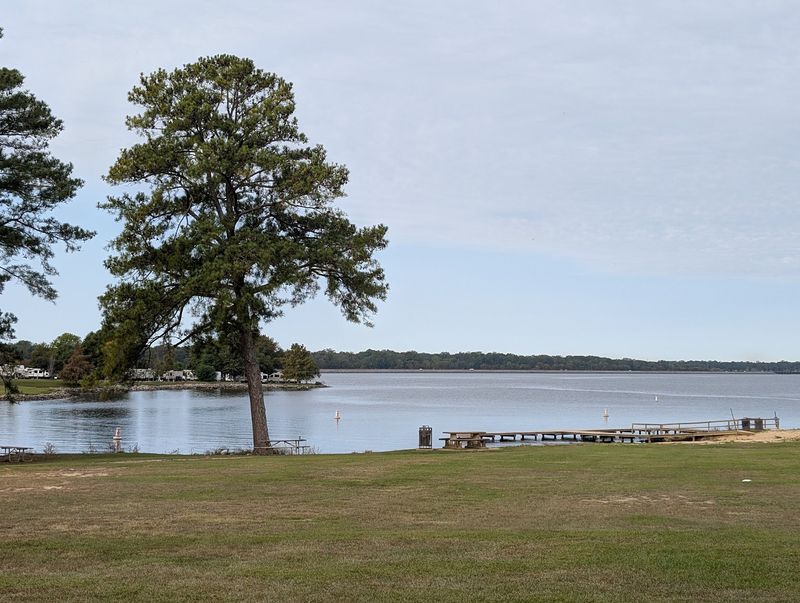
Location matters enormously in Rankin County. Fannin sits east of the Ross Barnett Reservoir, and that shoreline works like a natural travel corridor stitched together with timber, brush, and water.
Bears follow those green ribbons the way people follow interstates. Cover on both sides, water nearby, and very little reason to cross open ground where they might be seen.
What makes Rankin interesting is the mix. Subdivisions with tidy lawns sit right up against boat ramps, hunting land, and thick pine stands, so a bear can pass from wilderness to backyard in a matter of minutes.
Trash day tends to be the flashpoint. Cans left at the curb overnight are basically a buffet, and a bear only needs one easy meal to start checking back regularly.
Deer feeders create the same problem year-round. Corn piles draw bears just as reliably as they draw deer, and that habit is hard to break once it starts.
Anyone who spots one should keep a comfortable distance and let it move along on its own. Bears in Mississippi generally want nothing to do with humans and will leave once they realize the area is occupied.
Photos help wildlife biologists confirm reports, so snapping one from inside a house or vehicle is genuinely useful. Just do not chase the shot on foot.
3. Harrison County
Gulfport had a strange June in 2026. Multiple black bears turned up in neighborhoods around the city, and one of them wandered straight through an apartment complex like a resident who forgot the gate code.
Even a Harrison County Sheriff’s deputy got in on it, filming a bear in his own front yard. When law enforcement is the one recording the video, the story tends to travel.
Coastal counties have been flagged specifically for a spike in bear activity, and Harrison County sits at the center of that pattern. Heavy rainfall seems to push bears out of low-lying swamp habitat and toward higher, drier ground where people happen to live.
The habitat down here is a patchwork. Pine savanna, wetlands, drainage canals, and dense scrub run right up to shopping centers and apartment parking lots.
Bears use those canals and wooded strips as quiet routes. A bear can cover several miles overnight without ever crossing a busy road in daylight.
Grills are the coastal specialty problem. Grease trays hold enough scent to pull a bear from a long way off, so a quick cleaning after cooking matters more than most people think.
Apartment dumpsters are the other magnet. Lids that do not latch turn into an all-night snack station, and once bears find one, they remember the address.
Pet owners should keep dogs leashed during early morning and evening walks. A startled dog barking at close range is the fastest way to turn a calm encounter into a tense one.
Making noise, standing tall, and backing away slowly works. Running does not, and it never has.
4. Lamar County
Picture a quiet holiday weekend in Purvis. On July 3, 2026, a black bear ambled through the Beaver Lake neighborhood, crossing yards and strolling right across a golf course without much concern for anyone’s tee time.
Another sighting came in along Highway 11 near Purvis around the same stretch of days. Whether that was the same animal or a second one, Lamar County residents got a memorable summer.
South Mississippi’s Piney Woods make excellent bear country. Thick pine plantations, hardwood creek bottoms, and swampy edges give a bear cover, water, and food all within a short walk.
Golf courses, oddly enough, are attractive stops. Mowed grass, water hazards, and wooded borders create easy travel routes with snacks like insects, berries, and grubs along the way.
Fall changes bear behavior in a big way. Animals shift into a heavy feeding mode ahead of winter, spending far more hours each day searching for calories.
Acorns drive much of that. A strong oak mast year keeps bears deep in the woods, while a weak one sends them hunting closer to towns and roadsides.
Highway sightings deserve extra caution from drivers. Bears crossing two-lane roads at dusk are hard to see, and hitting one is dangerous for everybody involved.
Homeowners near wooded lots can help by storing garbage in a garage or shed until pickup morning. Small habits prevent big headaches.
Fruit trees are another overlooked draw. Fallen pears, figs, and persimmons rotting in the yard smell like an open invitation to a hungry bear.
Rake them up, and the bear moves on to the next yard.
5. DeSoto County
Here is the strangest bear story Mississippi has produced lately. Beginning in late May 2026, wildlife officials started tracking reports of a young male black bear in southwestern DeSoto County.
He did not stay put. Over roughly seven weeks, that single bear traveled across northern Mississippi, generating sighting after sighting in county after county.
Biologists with the MDWFP pieced the trip together from photos, trail cameras, and public reports. The timeline matched a classic dispersal, which is what young males do when they leave home.
DeSoto County is not a place most people associate with bears. It is close to Memphis, heavily developed in spots, and full of subdivisions and shopping centers.
But the western edge tells a different story. River bottoms, agricultural fields, and wooded corridors along waterways create exactly the kind of route a traveling bear can use.
Dispersal is rough on young bears. Pushed out by larger males and by their own mothers, they sometimes walk a hundred miles or more looking for unclaimed territory.
That is why one bear can generate dozens of sightings in a single summer. People assume there is a population explosion happening when it is often one very tired animal.
Residents in fast-growing suburbs should know the basics anyway. Do not approach, do not feed, and give the animal an open path to leave.
Reporting sightings through the MDWFP website helps enormously. That data feeds the state’s interactive bear map, which has collected reports since 2016 and helps biologists track movement.
North Mississippi may see more of this as bear numbers keep climbing.
6. Tishomingo County
That traveling bear from DeSoto County kept going. By mid-July 2026, biologists had followed his reported path all the way into Tishomingo County, in the far northeast corner of the state.
Then he crossed into Alabama. Mississippi’s most well-documented bear road trip ended at the state line, which is a fairly dramatic finish for an animal nobody ever collared.
Tishomingo County is genuinely different from the rest of Mississippi. Rocky bluffs, hardwood ridges, clear streams, and Appalachian-style terrain make it look more like Tennessee than the Delta.
For a bear searching out new territory, that landscape is close to ideal. Oaks, hickories, dense cover, and very few people across large stretches of land.
Hikers and campers in the area should keep food stored properly. Coolers left out overnight and food scraps near tents are the classic mistakes that create bold bears.
Hanging food from a tree limb or locking it in a vehicle solves most of it. Bears follow their noses, and a well-sealed container is a boring target.
Encounters on a trail call for calm. Speak in a normal voice, make yourself look larger, and back away without turning your back or breaking into a run.
Black bears bluff far more often than they charge. Huffing, jaw popping, and stomping are warnings, not attacks, and usually mean the animal wants space.
Mississippi has recorded zero bear attacks causing injury or death, which says plenty about how these animals behave when left alone.
Anyone lucky enough to see one in these hills should enjoy it from a distance and report it.
7. Hancock County
Bay St. Louis landed on the list of coastal counties reporting a spike in bear activity, and the timing followed a pattern. Sightings tended to jump after heavy rainfall soaked the area.
Flooded lowlands push bears uphill. When their usual bottomland habitat turns into standing water, they relocate to drier ground, and drier ground often means neighborhoods.
Hancock County has a lot of wild real estate. Pine flatwoods, marsh edges, bayous, and undeveloped tracts stretch across much of the county, giving bears room to roam mostly unseen.
The Pearl River basin runs nearby and acts as a major wildlife corridor. Bears, deer, and just about everything else use it to move between larger habitat blocks.
Storm season complicates things further. Big rain events change food availability, flood dens and bedding areas, and generally shuffle animals around unpredictably.
Homeowners near the marsh should think about scent control. Fish scraps, crab traps, and pet bowls on the porch all carry smells that travel a long way in humid air.
Compost piles deserve a mention too. Food waste breaking down in a backyard bin is a strong attractant, especially in warm coastal weather.
Chickens have become a growing draw as more people keep backyard flocks. Electric fencing around a coop is the most reliable fix, and it protects against plenty of other predators.
Should a bear settle in and refuse to leave, the right move is calling wildlife officials rather than handling it personally.
Most bears pass through within a day or two once easy food disappears. Patience usually wins.
8. Jackson County
The Mississippi Gulf Coast has quietly become bear country again, and Jackson County is part of that shift. The Biloxi area was named among coastal counties seeing increased black bear activity.
A century ago, bears here were nearly wiped out. Fewer than 50 remained statewide as recently as 2002, which makes today’s estimate of 150 to 300 a real comeback story.
Coastal Jackson County offers a lot of what bears need. The Pascagoula River system, wet pine savanna, and large undeveloped tracts give them cover, water, and seasonal food.
Live oaks and palmettos might not look like classic bear habitat, but acorns are acorns. Berries, insects, and palmetto fruit round out the menu nicely.
Fall brings the heaviest feeding of the year. A bear preparing for winter can spend most of its waking hours doing nothing but eating.
That single fact explains almost every neighborhood sighting. Hungry animals take the easiest calories available, and unsecured trash is about as easy as it gets.
Neighborhood-wide effort works better than one careful household. If four houses secure their garbage and one does not, the bear still learns the street is worth visiting.
Motion-activated lights and simple noisemakers can discourage a curious bear from settling in. Nothing fancy required.
Teaching kids the basics matters too. No approaching, no feeding, no chasing for a photo, and always tell an adult right away.
Reporting every sighting to the MDWFP builds a better picture of where bears are moving statewide, which helps everyone.