
8 Mississippi Nature Trails That Feel Like A Secret 2026 Getaway
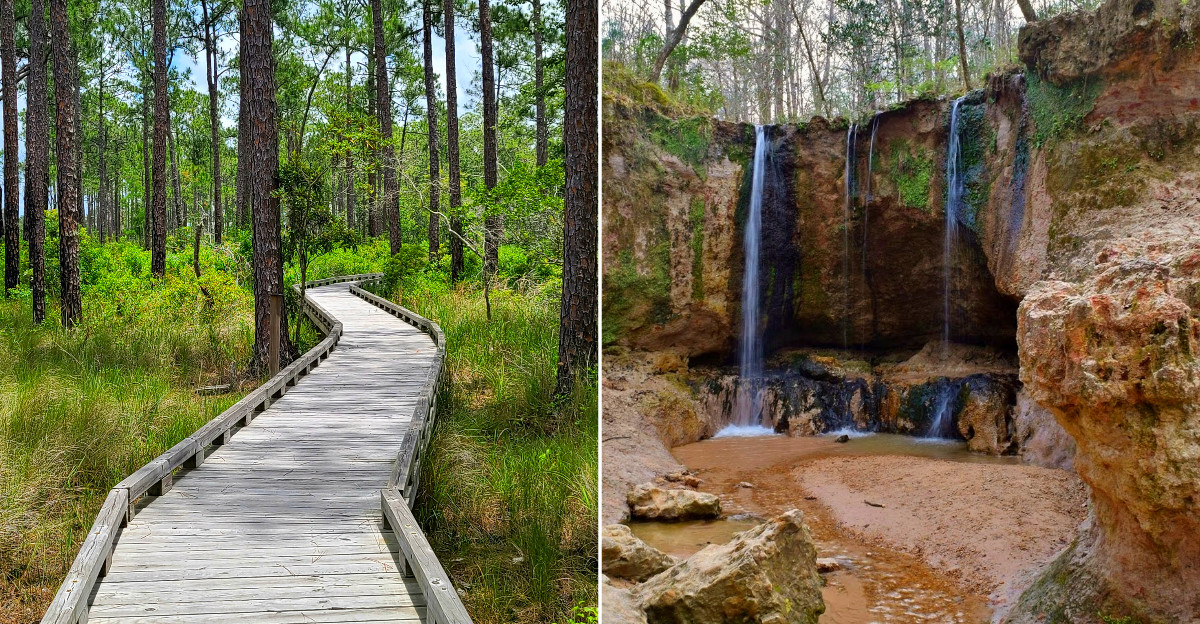
Quiet gets interesting when the trail starts showing off. A bend in the path might reveal a pitcher plant bog, while another stretch opens onto pine woods that smell sharp after rain.
Mississippi gets wonderfully wild here. Cranes, wetlands, and small waterfalls give these walks far more personality than their low key reputations suggest.
Better yet, many of the paths feel removed without demanding a heroic hike. You can spend a morning watching for wildlife, following boardwalks, or simply enjoying the rare pleasure of hearing more birds than traffic.
Many of these places keep a low-key feel, with trails that put wetlands, forests, wildlife, and waterfalls ahead of big attractions. For a 2026 getaway, that quieter pace may be exactly what makes these trails memorable.
1. Tuxachanie Trail – Saucier
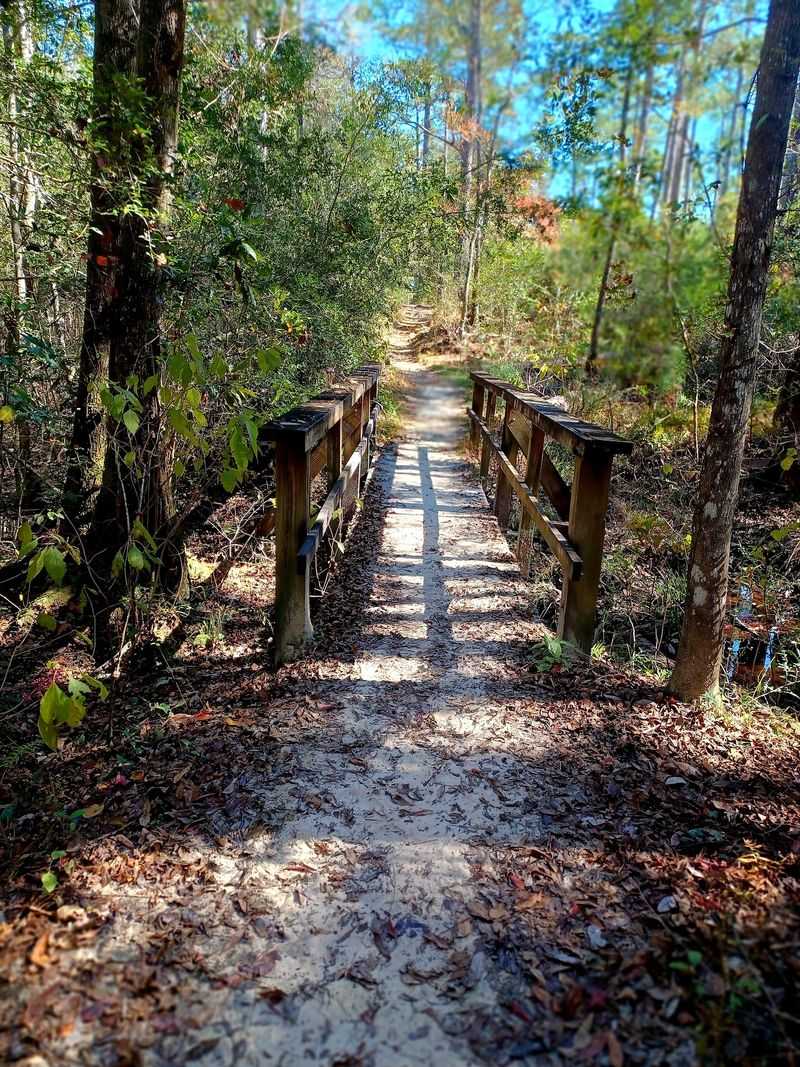
Old railroad beds make excellent hiking paths, and this one proves the point. Part of the route follows an abandoned rail line that once hauled timber for the Dantzler Lumber Company sawmill.
The Forest Service lists the Tuxachanie Trail at 11.9 miles, with the first five miles following an old narrow-gauge railroad route through De Soto National Forest. A row of live oaks planted back in 1935 greets you near the entrance like a welcome committee with very good posture.
Scenery shifts as you walk. Longleaf pine savannas give way to cypress swamps, then hardwood forest. Pitcher plants, palmettos, and the rare wild orchid show up for anyone who looks down instead of ahead.
Terrain stays mostly flat, which makes it friendly for newer hikers. Heavy rain turns sections muddy or flooded, so check the forecast before you commit.
Access comes from several trailheads, including one off US 49 north of Saucier at 26170 Highway 49, Saucier, MS 39574, plus Airey Lake and P.O.W. Lake Recreation Areas. Both lakes allow fishing if you would rather sit than stride.
Primitive camping is available along the trail, making an overnight trip possible for hikers who want more time in the forest. Dogs are welcome on the trail and at the campgrounds.
Carry enough drinking water for the hike. Natural water is available along the route, but the Forest Service says it should be filtered before drinking.
The changing habitats keep longer walks interesting. One stretch feels open and sunny, while the next disappears beneath hardwood shade.
2. Strawberry Plains Audubon Center – Holly Springs
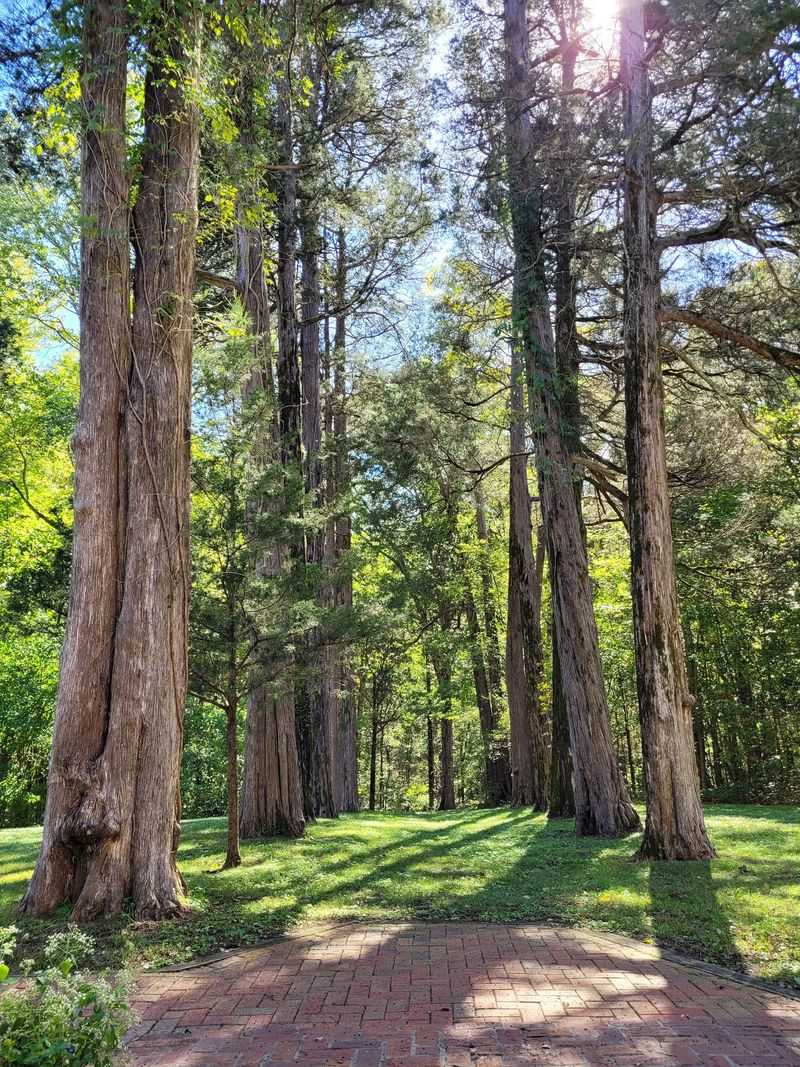
Ruby-throated Hummingbirds have long been closely associated with this property, especially during their fall migration through north Mississippi.
The center now manages about 3,000 acres of restored and conserved hardwood forests, wetlands, and native grasslands. Hardwood forests, wetlands, and native grasslands share the property, so bird viewing stays strong in every season.
Trails wander past a pollinator garden, a wildlife observation deck, and a boardwalk that keeps your shoes cleaner than they deserve to be. Benches and slow corners reward anyone who likes to linger rather than log miles.
The historic Davis House buildings sit closed to the public right now, but the paths remain wide open. Plan around that and you will not feel shortchanged one bit.
Hours run Monday through Friday, 9:00 a.m. to 4:00 p.m., so this one calls for a weekday escape. Trail admission is currently $3, while the center buildings remain closed to public access.
You will find it at 285 Plains Road, Holly Springs, MS 38635, an easy detour for anyone rolling through the northern part of the state.
Bring binoculars and patience. Warblers, woodpeckers, and butterflies all keep their own schedules, and none of them consult yours.
This is an easy place to slow down. The trails reward stopping often, especially when movement in the trees signals a nearby bird.
3. Sam D. Hamilton Noxubee National Wildlife Refuge – Brooksville
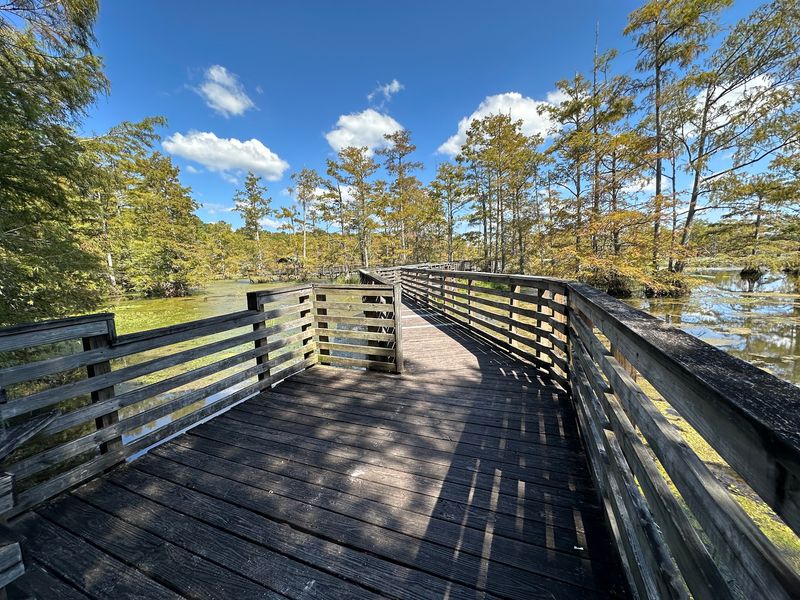
Forty-eight thousand acres is a lot of ground to hide in, and the wildlife here takes full advantage. The refuge started in 1940 with a clear job: protect migratory birds.
Red-cockaded woodpeckers live in the refuge’s mature pine forest, and the half-mile Woodpecker Trail gives visitors one of the most dependable places here to look for them.
The National Audubon Society named the place an Important Bird Area, which is the birding equivalent of a gold star.
Bottomland hardwoods, upland forest, and broad wetlands all overlap. Bluff Lake covers about 800 acres while Loakfoma Lake spans about 400 acres, and both host wood storks, alligators, bald eagles, and wintering waterfowl.
Several trails and short boardwalks divide up the scenery. Beaver Dam Trail runs about 1.7 miles through bottomland hardwood habitat, and the shorter Woodpecker Trail threads loblolly pines with signs explaining what you are looking at.
Scattertown Trail loops 1.75 miles across upland hardwood hills with views worth the climb. Morgan Hill Overlook and the Prairie Trail put the refuge prairie on display.
Stop by the Office and Visitor Center first for current conditions and sightings. Staff there know where the good stuff is hiding this week.
The address is 13723 Bluff Lake Road, Brooksville, MS 39739. Go early, because dawn belongs to the birds. With so much habitat packed into one refuge, choosing a single trail hardly tells the whole story.
Leave room for an extra loop.
4. Grand Bay National Estuarine Research Reserve – Moss Point
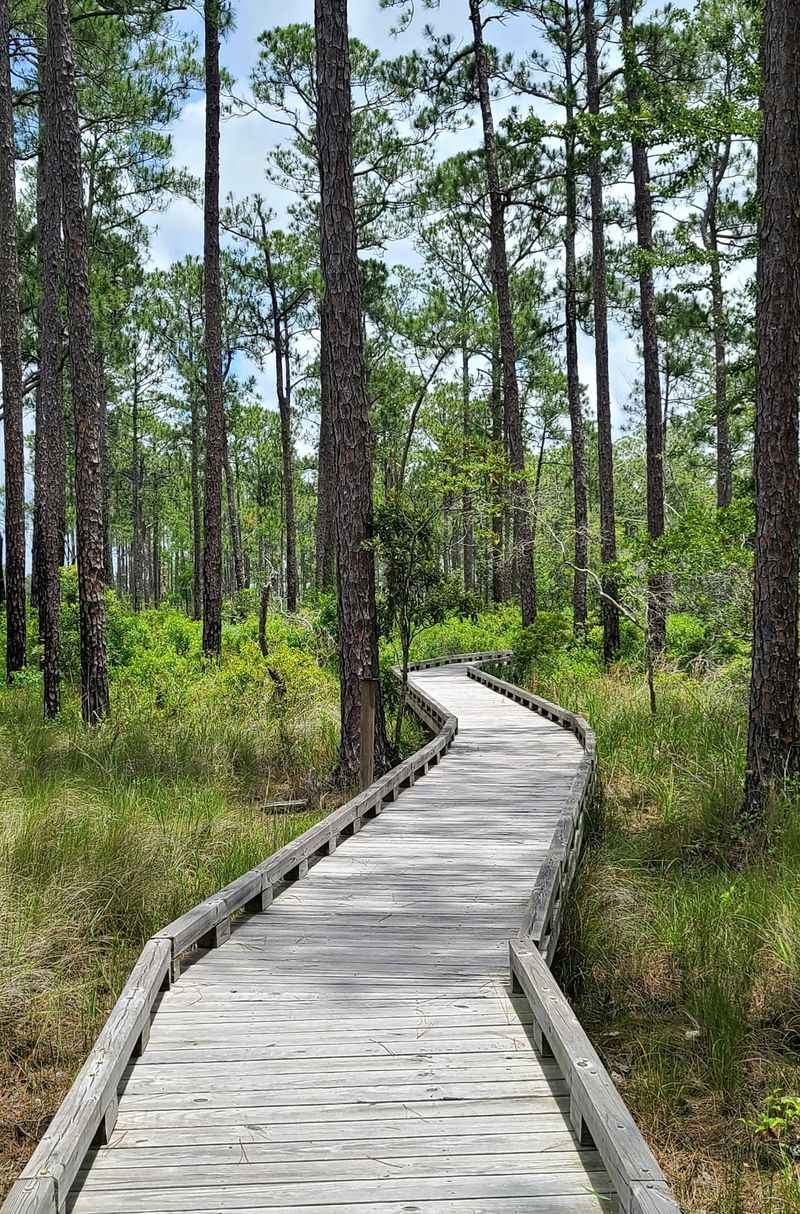
Salt air, pitcher plants, and dolphins all in one address sounds made up. It is not. This reserve, designated in 1999, protects roughly 18,049 to 18,400 acres along the Mississippi coast.
Part of the larger Grand Bay Savanna Complex, it holds the most extensive area of intact coastal habitat in the state. NOAA describes Grand Bay as part of one of the most biologically productive ecosystems in the northern Gulf.
Habitats change fast as you move. Black needle rush marshes, maritime pine forests, calm pine savannas, salt pannes, and pitcher plant bogs all share the same neighborhood.
Deeper waters shelter sea turtles, bottlenose dolphins, and even manatees passing through. Oyster reefs and seagrass beds act as nurseries for shrimp, blue crab, speckled trout, and red fish.
Carnivorous plants and orchids thrive here, which means the ground deserves as much attention as the horizon. Step carefully and photograph generously.
Research, water quality monitoring, education, and coastal stewardship drive everything on site. The reserve sits alongside the Grand Bay National Wildlife Refuge, so the protected acreage stretches even further.
The Grand Bay Coastal Resources Center sits at 6005 Bayou Heron Road in Moss Point. It is currently open Monday through Friday from 9 a.m. to 3 p.m., while outdoor trails can also be accessed separately.
Bring bug spray and a hat, because coastal sun plays no favorites.
The contrast is what sticks with you. Marsh, pine savanna, wetland plants, and coastal wildlife can all appear during the same outing.
5. Mississippi Sandhill Crane National Wildlife Refuge – Gautier
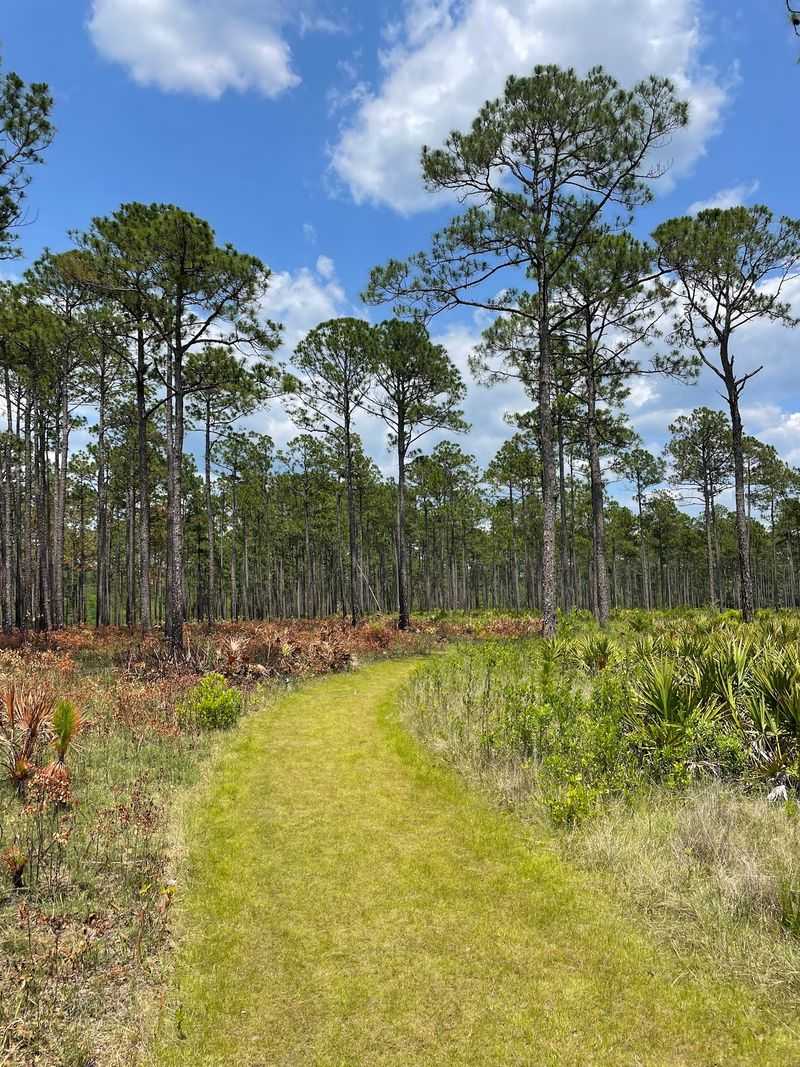
A comeback story stands about four feet tall and struts through wet pine savanna. Mississippi sandhill cranes numbered only 30 to 35 birds when the refuge opened in 1975. Today the population sits near 200.
Protecting the cranes meant protecting their home, and that home happens to be one of the rarest ecosystems around. Wet pine savanna can pack more than 30 plant species into a single square meter, which is botanical showing off at its finest.
Two public trails give visitors a taste of the habitat. Dees Trail begins near the visitor center, while the Fontainebleau Trail runs through the refuge’s Ocean Springs unit.
Start at the visitor center, where interactive exhibits explain how fire, water, and time keep the savanna alive. Kids usually leave knowing more about cranes than their parents do.
Fall and winter offer the strongest chance of seeing Mississippi sandhill cranes, since the birds become more secretive during the spring and summer nesting season.
You will find the entrance at 7200 Crane Lane, Gautier, MS 39553, just off the coast and worth the turn.
Keep voices low and lenses ready. Cranes are cautious birds, and a patient hiker sees far more than a noisy one ever will in Mississippi.
Even without a crane sighting, the wet pine savanna makes the trip worthwhile. The plant life alone gives the landscape unusual character.
6. The Crosby Arboretum – Picayune
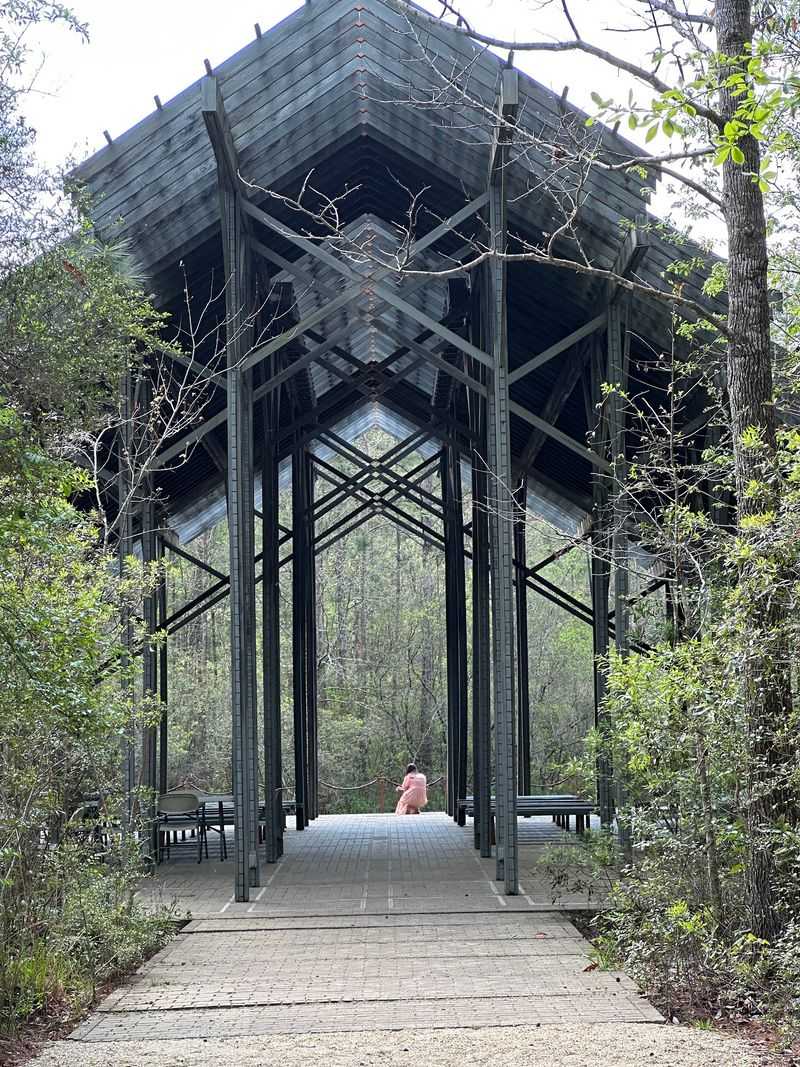
Architecture and botany rarely share top billing, but here they split it evenly. The Pinecote Pavilion, designed by award winning architect Fay Jones, is a Mississippi Landmark that seems to grow out of the pines around it.
Built as a living memorial to L.O. Crosby, Jr., this is the premier native plant conservatory in the Southeast. The 104 acre Native Plant Center anchors everything, while the arboretum manages 700 acres across seven associated natural areas.
Its mission centers on plants native to the Pearl River Drainage Basin of Mississippi and Louisiana. That focus makes the collection feel honest rather than decorative.
Piney Woods Lake shows off native water plants in their true setting, reflections included at no extra charge. Savanna, Woodland, and Aquatic exhibits each carry their own mood.
The South Savanna Exhibit steals attention with carnivorous pitcher plants doing what they do best. Staff also protect and manage several delicate pitcher plant bogs on site.
Educational programs and community events run throughout the year, including native plant sales, seasonal festivals, art exhibits, and hands-on programs, so check the calendar before you go.
Hours are Tuesday through Saturday, 9:00 a.m. to 5:00 p.m., with last admission at 4:00 p.m., and fees apply. The address is 370 Ridge Road, Picayune, MS 39466.
The trails feel carefully designed without losing their natural character. Water, pine woods, and native gardens flow together surprisingly well.
7. Clinton Community Nature Center – Clinton
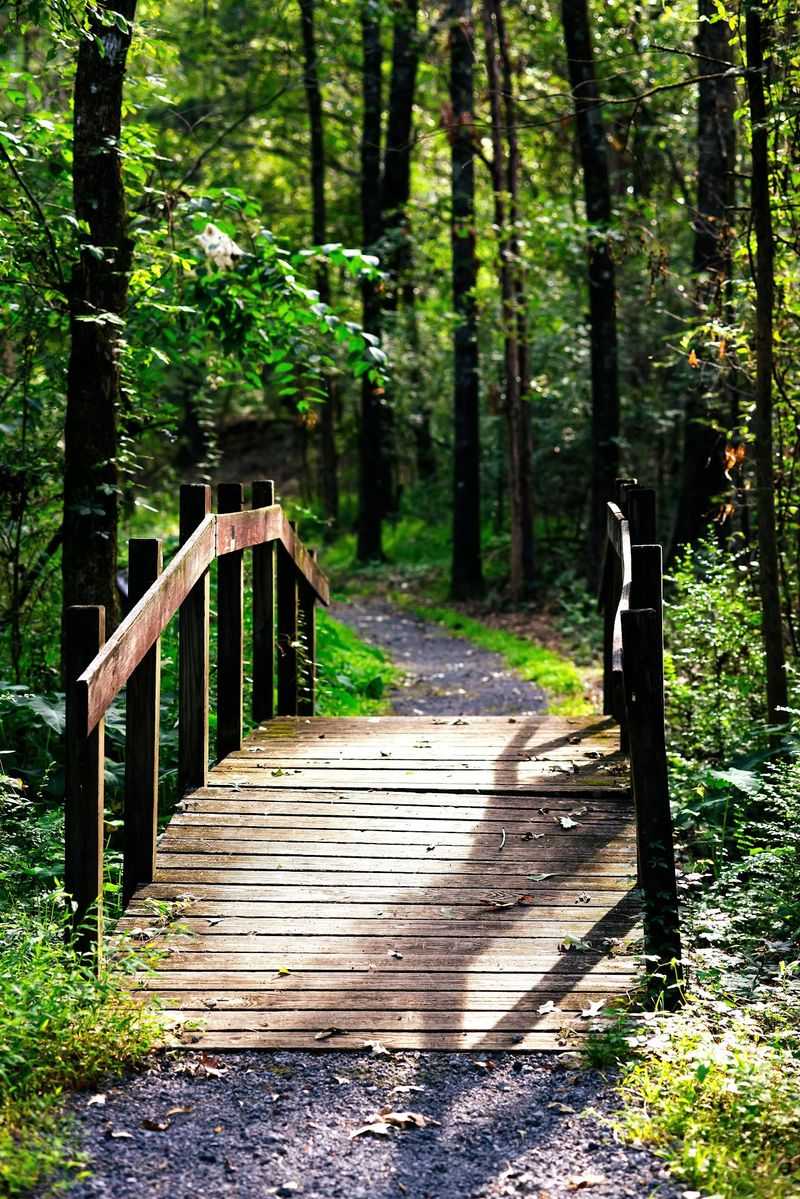
History and mud pies share a property line here, which is a delightfully strange combination. About 0.4 miles of the historic Natchez Trace run straight through these 32 to 33 acres of native forest.
Also on the grounds sits the site of the 1872 Sumner Hill School, the first public school for African Americans in Hinds County. Walking past it adds weight to an otherwise breezy stroll.
About 2.5 miles of hardwood forest trails cross the property, including roughly 0.4 miles of the historic Natchez Trace. Most surfaces are gravel, joined by wooden bridges and boardwalks, and some sections are wheelchair accessible.
Families get the good stuff too. A Play Forest, a Mud Kitchen, and a Splashing Frog Water Feature keep younger legs moving long after the grown ups want to sit.
Native plants, a butterfly garden, and a quiet pond round out the property. Pollinators treat the place like a favorite diner.
Trails connect with paths at the Quisenberry Library, giving you extra access points and a nice excuse to borrow a book afterward.
Trails are open daily from 7 a.m. until sunset, with parking and center facilities near the main entrance. Dogs are not allowed, so leave the pup home. Find it at 617 Dunton Road, Clinton, MS 39056.
8. Clark Creek Natural Area – Woodville
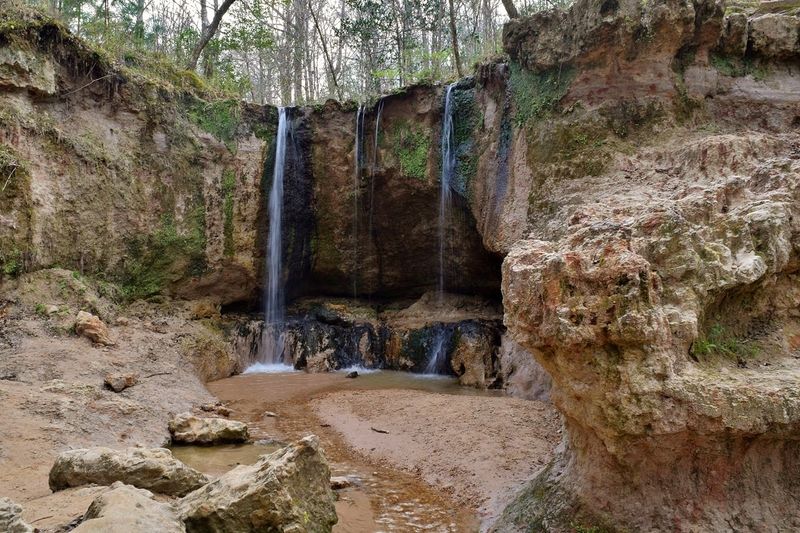
Around 50 waterfalls hide inside 700 acres of southwestern Mississippi, and some drop as far as 30 feet. Nobody expects that from this state, which is exactly why it feels like a secret.
The Tunica Hills region gives the place its personality. Steep ravines and clear spring fed creeks cut through a forest of hardwood and pine, with beech and magnolia towering overhead.
Uncommon trees fill the slopes, including Southern sugar maple, serviceberry, umbrella tree, pyramid magnolia, chinquapin oak, bigleaf snowbell, and witch-hazel.
Clark Creek even holds world records for Mexican plum and bigleaf snowbell, plus a state record hophornbeam.
Rare wildlife shares the ground. The Federally endangered Carolina magnolia vine grows here, along with habitat for the Mississippi black bear.
The official trail network includes about 1.78 miles of improved trails and roughly 2.6 miles of primitive trails, with routes branching toward several waterfalls and scenic overlooks.
Rain can make the steep trails slippery, so sturdy shoes and extra caution matter around the ravines and waterfalls. Cell service disappears in the deep ravines.
Clark Creek is a day-use area with no camping. Admission is currently $2 per person, with children age five and younger admitted free. Parking, restrooms, and water sit at the trailhead at 366 Fort Adams Pond Road, Woodville, MS 39669.
Leashed dogs welcome.