
The Forgotten Arizona Ghost Town With Ruins So Massive You Can See Them From The Highway
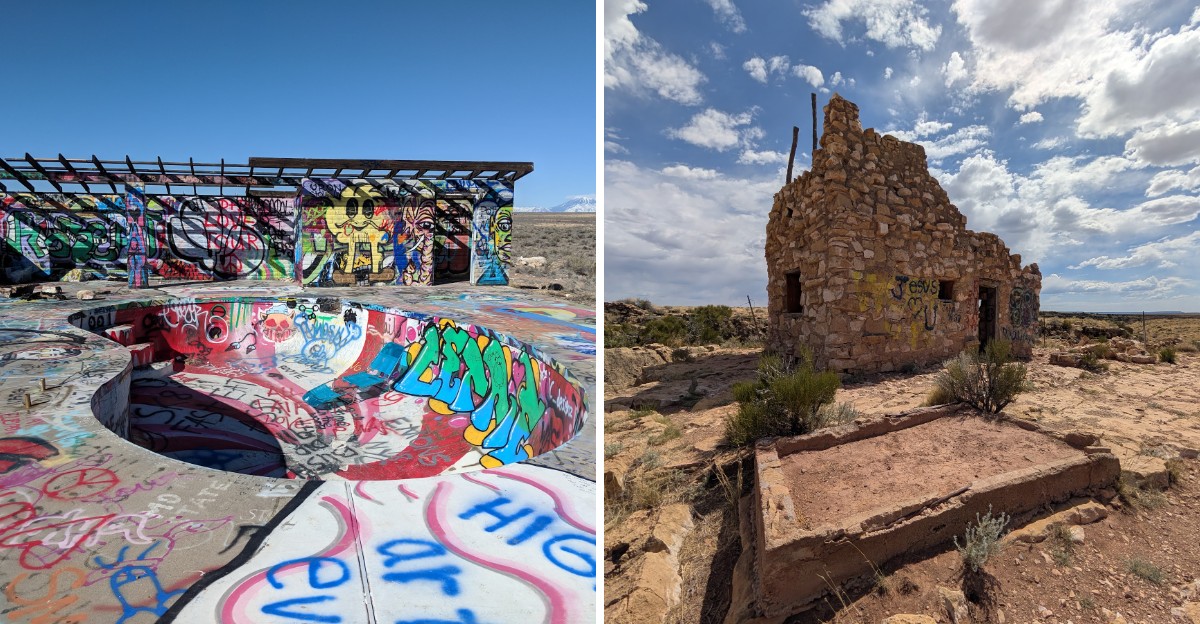
Ruins this massive should not be a secret. Yet drivers cutting across Arizona spot crumbling stone walls and rusted animal cages right from the highway, no detour required.
Empty doorways lead nowhere. Graffiti covers concrete that once held mountain lions and Gila monsters.
A dark legend clings to a narrow cave nearby, one wrapped in smoke, sagebrush and stories nobody can fully confirm.
Wind rushes through hollow buildings like the whole place is still breathing. Arizona roadside history rarely gets this strange, or this abandoned.
Photographers pull over before their engines even cool.
Curious what really happened here, and whether the legend holds up? Slow down next time you’re cruising past, because this ghost town rewards those bold enough to wander in.
Ruins Big Enough To Spot At 75 Miles Per Hour
Most ghost towns hide. Two Guns does the opposite.
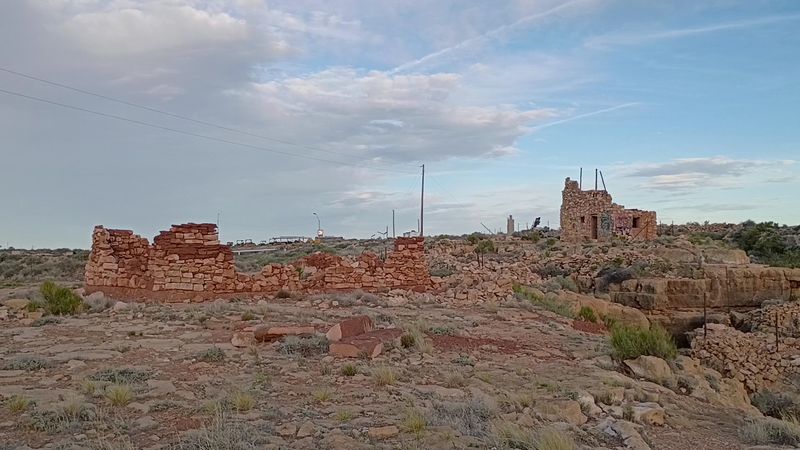
The stone walls sit on the east rim of Canyon Diablo in Coconino County, high enough and wide enough to catch your eye from Interstate 40. Drivers heading west from Winslow or east from Flagstaff often see the old zoo signage first, then the pale rock buildings spread across the flats.
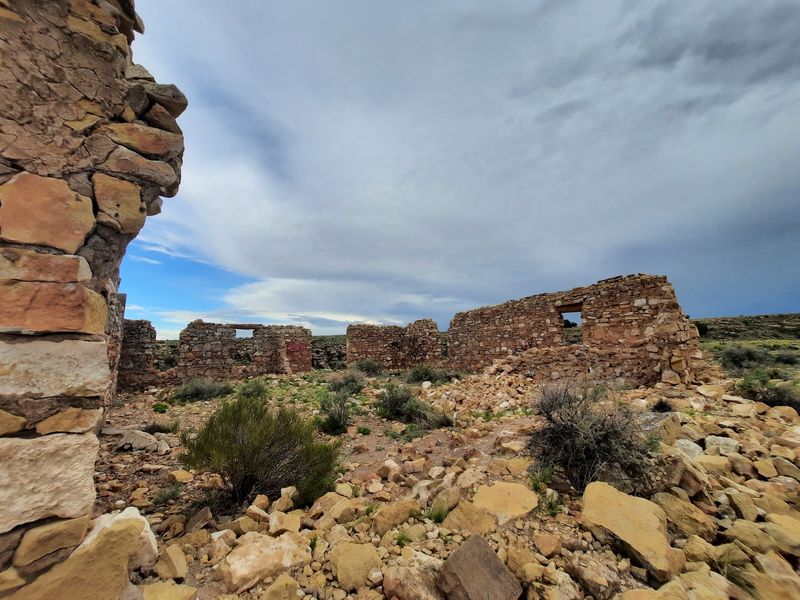
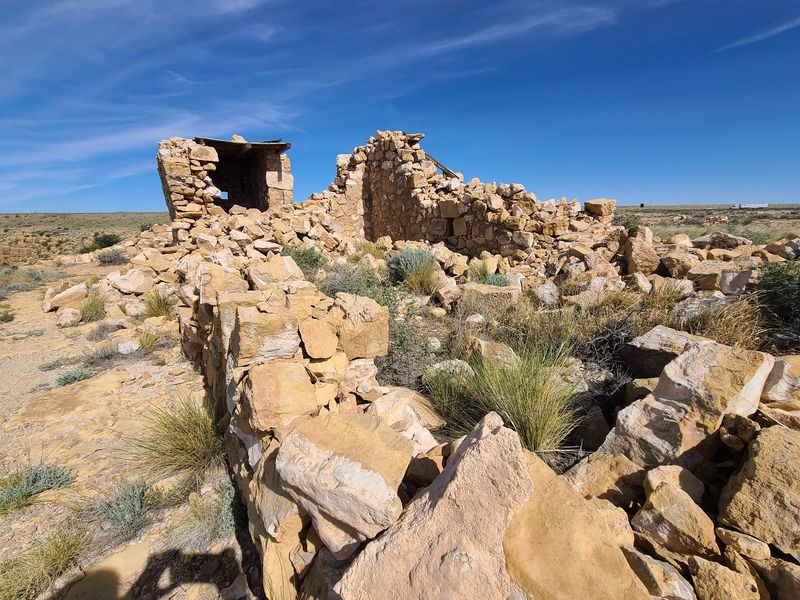
The scale surprises people. Instead of one lonely shack, there are foundations, arches, walls, and animal enclosures scattered over a wide patch of desert.
Exit 230 is the turnoff, and the ghost town sits at 2 Guns, Winslow, AZ 86047. The access roads are dirt, rutted in spots, and best taken slowly.
Distance plays tricks out here. What looks like a five minute stroll from the parking area often turns into a longer walk across loose stone.
Nothing is polished or restored. There are no ticket booths, no gift shops, and no guides waiting to greet arrivals.
That rawness is exactly why photographers keep pulling off the interstate, cameras already out before the engine cools.
How A Quiet Trading Stop Became Fort Two Guns
Every odd name has a backstory. This one has several.
The spot first went by Canyon Lodge, a modest stop for travelers crossing Canyon Diablo. In the 1920s an entrepreneur known as Harry E.
Miller leased land here from homesteaders and rebranded the place Fort Two Guns.
Historians still argue over the name. Some tie it to a silent film actor nicknamed Two Guns, while others suspect Miller simply liked calling himself Two Gun Miller.
Miller leaned hard into theater. He presented himself as a full-blooded Apache and went by the persona Chief Crazy Thunder, hoping to turn the stop into a major attraction.
The word Fort quietly disappeared from the name during the 1930s, leaving just Two Guns behind.
What followed was a boom decade. Tourists rolling along Route 66 pulled in for fuel, food, souvenirs, and a peek at the cave.
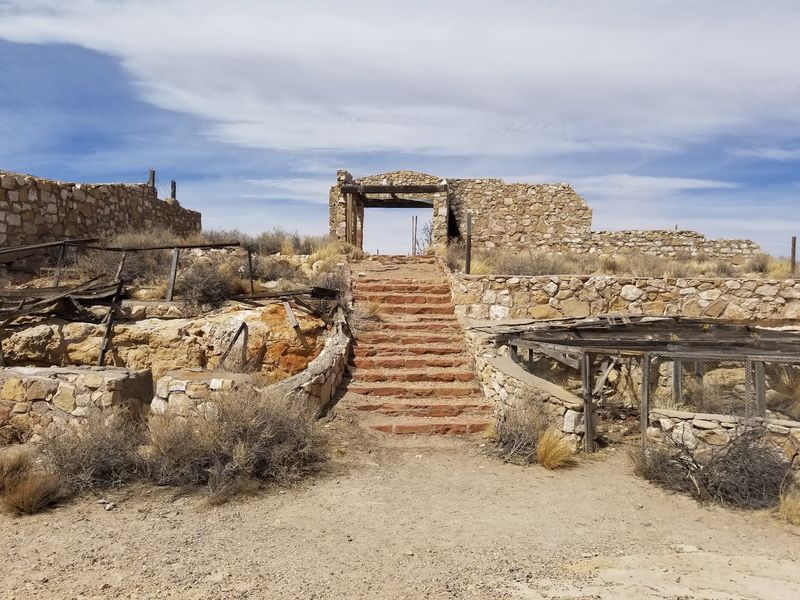
Standing among the walls today, that showmanship still feels present in the fake ruins and staged details built purely for paying visitors.
Arizona roadside history rarely gets stranger than a man inventing an entire identity to sell tickets.
The Apache Death Cave Story And Why People Question It
A hole in the ground built this town’s reputation.
The legend points to 1878, when Navajo warriors reportedly tracked a group of Apache raiders to a cave near Canyon Diablo.
According to the tale, 42 Apaches were trapped inside as the chamber filled with smoke, and none made it out.
Miller turned the story into a business. He led tours, wired the cave with electric lights, added a concession stand, and reportedly sold cave relics as souvenirs.
Many visitors now approach the account with real skepticism. Some point out the story appears in brochures far more often than in history books, with no confirmed archaeological or tribal record backing it.
The cave itself is also small, which makes the dramatic numbers hard to picture.
Treat the narrative as folklore with disputed roots rather than settled fact. The uncertainty honestly makes the site more interesting, not less.
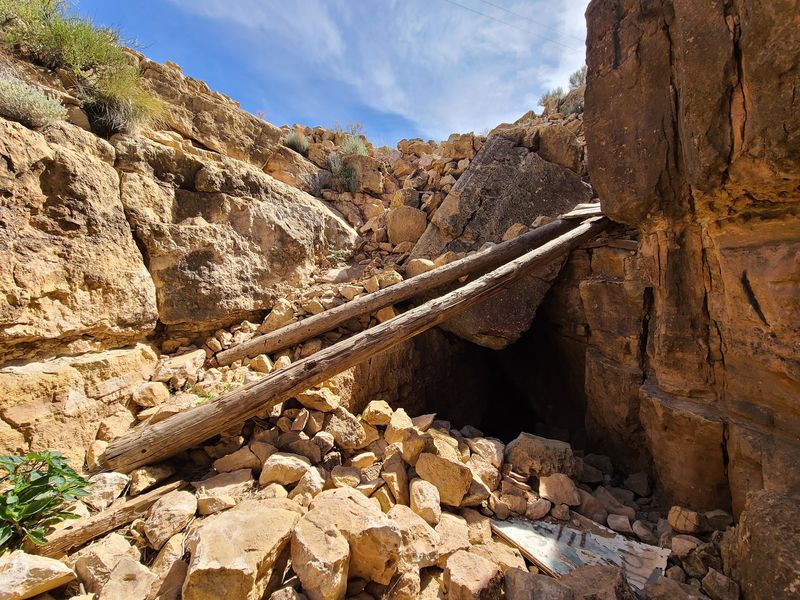
Finding the entrance takes patience. It reads as little more than a crevice near the canyon rim, easy to walk past twice.
Bring a flashlight if you plan to peer inside, and expect a chilly draft rolling out of the rock.
Empty Cages Where Mountain Lions Once Paced
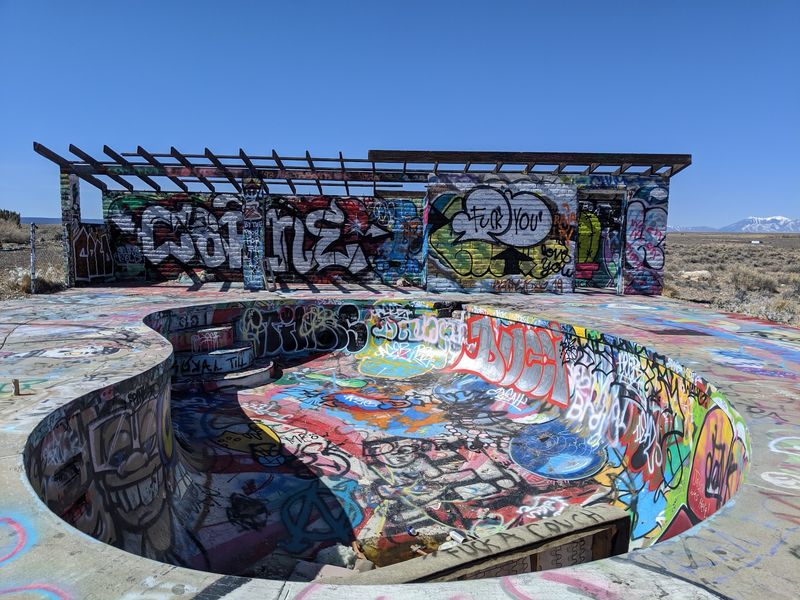
Roadside zoos were once a Route 66 staple. Two Guns had one of the strangest.
Miller kept wild animals in wire enclosures to pull families off the highway. Mountain lions, cougars, snakes, and Gila monsters were part of the lineup.
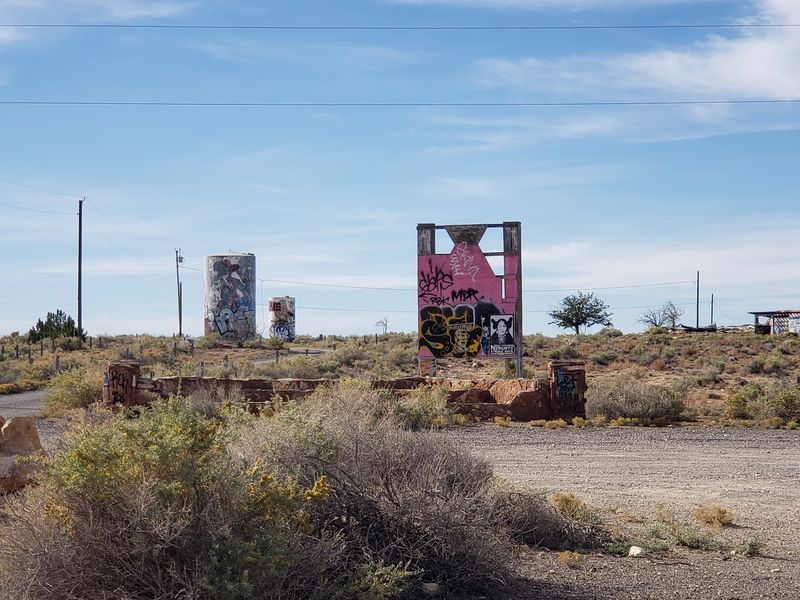
Fragments of that attraction survive. Concrete pens, rusted mesh, and faded lettering still sit on the flats, with some signage visible from the interstate.
Walking through the old zoo area feels odd in the best way. Doorways lead nowhere, and painted words peel off walls that once advertised live animals.
Modern visitors sometimes wander the zoo section first, then struggle to locate the cave afterward. Giving yourself an hour or more helps you cover both areas without rushing.
There is a twist in the tale worth mentioning. Miller reportedly suffered attacks from his own mountain lions and a bite from a Gila monster before he left Arizona for good.
Photographers love this corner of the ghost town because the geometry stays sharp even as the paint fades.
Look closely and you can still read the ambition behind every crumbling cage.
A 1915 Bridge Still Arching Over Canyon Diablo
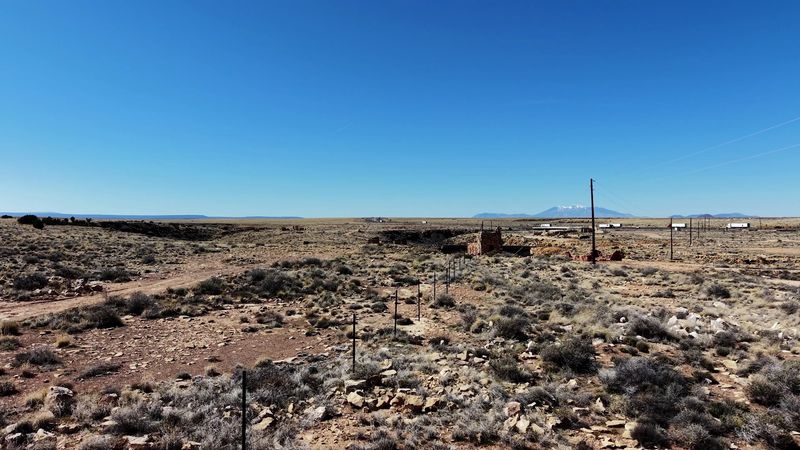
Concrete rarely counts as a highlight. Here it does.
A 1915 concrete arch bridge spans Canyon Diablo beside the ghost town, and it once carried early Route 66 traffic across the gorge. Vehicles no longer use it, but the structure remains one of the most recognizable pieces of the original road.
The engineering feels bold for its era. Before the bridge, wagons and early automobiles relied on the canyon’s more manageable crossing points.
Canyon Diablo shaped everything about this location. The gorge was known for centuries as a practical place to get from one side to the other.
Railroad history runs alongside it too. Building the Santa Fe Railway bridge over the canyon brought a temporary settlement of workers to the area.
Standing near the arch, the layers stack up fast. Footpaths, wagon routes, rail lines, and a legendary highway all converged within walking distance.
Watch your footing near the rim, since the edges are uneven and the gravel shifts underfoot.
Few stops along Arizona’s stretch of Route 66 pack this much transportation history into one short walk.
The Fire And The Freeway That Emptied The Town
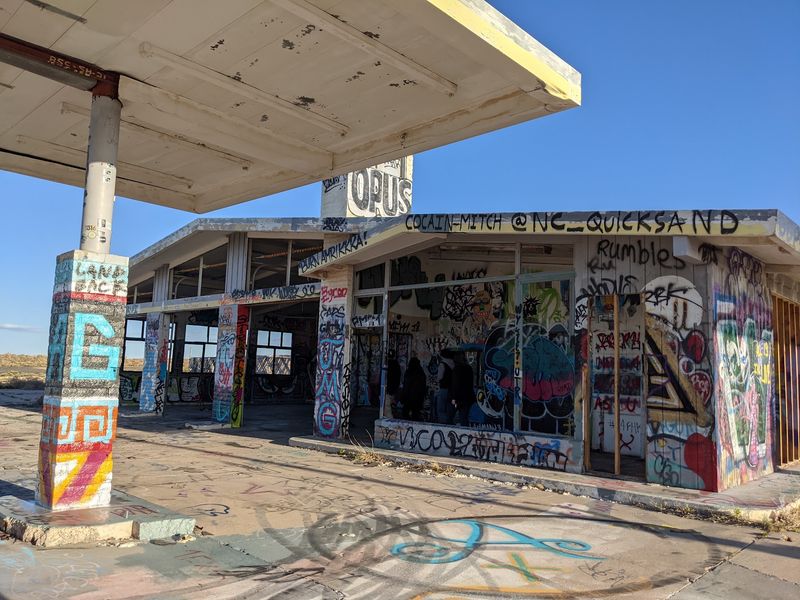
Two events drained the life out of this place.
First came Interstate 40 in the 1960s. The new highway pulled traffic away from Route 66, and businesses that depended on slow rolling tourists lost their customers.
Then came the fire. A major blaze in 1971 destroyed many structures and pushed the site toward full abandonment.
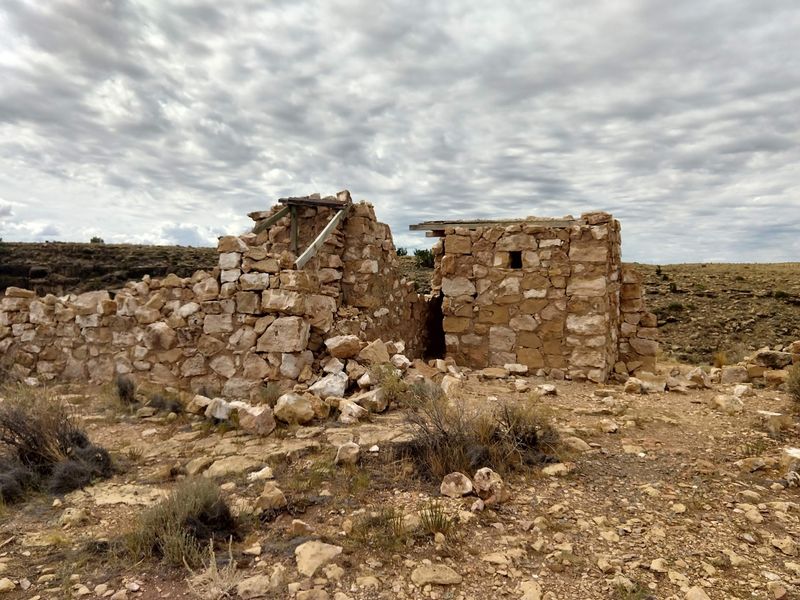
What remains tells that story clearly. Collapsed roofs, hollow shells, and blackened stone sit exactly where the flames left them.
Locals also talk about a so-called curse of Two Guns. The legend grew from a string of misfortunes, including fires, failed businesses, and a bitter falling out in 1926 between Miller and the homesteader who leased him the land.
Miller was later acquitted, and his run of bad luck with animals became part of the folklore.
None of that needs to be believed to feel the weight of the ruins. Abandonment has its own atmosphere, and this one hums with it.
Consider how quickly a thriving roadside stop can fade once the traffic pattern shifts a single mile north.
Graffiti, Concrete, And A Post-Apocalyptic Mood
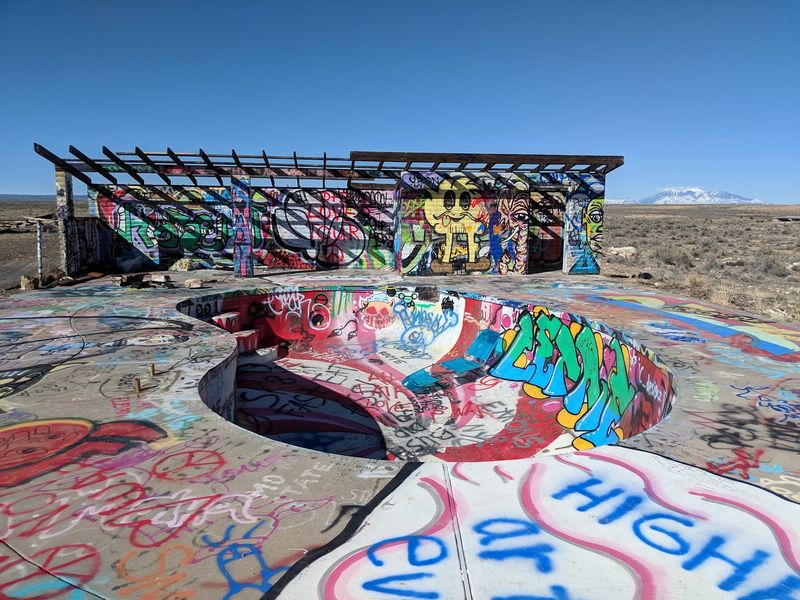
Spray paint covers nearly everything here now.
An abandoned gas station and the remains of a former KOA campground carry thick layers of graffiti, some artistic and plenty of it not. Visitors have mixed feelings about the tagging, and both reactions make sense.
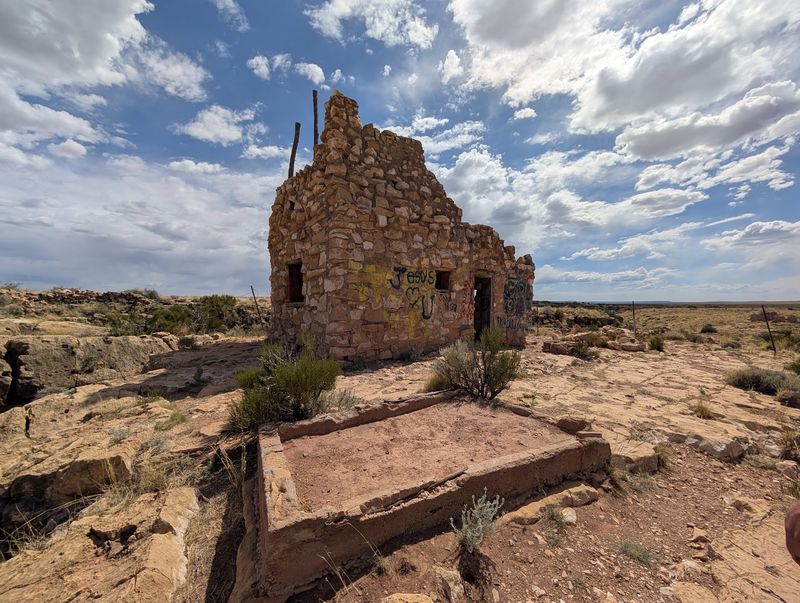
Underneath the color, the construction holds up surprisingly well. Several stone buildings at Two Guns remain solid enough to frame beautiful photographs.
The overall mood lands somewhere between eerie and captivating. Empty pool decks, crumbling walls, and desert scrub create a scene that feels lifted from a movie set.
Wind does the soundtrack work. It rushes through doorways and empty window frames almost constantly.
Photographers should plan around light rather than crowds, since visitor numbers here stay low even on busy travel days.
Bring out your own trash, and avoid adding to the paint. The site survives on the goodwill of whoever maintains it.
Reports suggest the land is privately held and looked after seasonally by a caretaker, so respect matters more than usual.
Leaving it slightly better than you found it keeps the door open for the next curious traveler.
Ancient Roots Beneath The Route 66 Souvenirs
Long before neon signs, people lived here.
The Canyon Diablo region holds a deep record of Native American occupation. Archaeological findings such as tools and artifacts point to human presence roughly between 1050 and 1600 AD.
That timeline dwarfs the Route 66 era by centuries. Visitors sometimes assume every wall at Two Guns is ancient, which is where things get complicated.
Miller built artificial ruins near the cave entrance purely for tourists. Telling the genuine old stonework apart from the staged version confuses people to this day.
European contact came surprisingly early. A Spanish explorer is documented as crossing Canyon Diablo during an expedition in the late 16th century.
The outlaw legends arrive later. Reports place a famous young gunman and his associates sheltering near the area during the winter of 1879-80.
Layer all of that together and the ghost town becomes something bigger than a photo stop.
Read a little history before arriving, because there are no interpretive signs waiting to explain anything once you park.
Knowing which stones are ancient and which are showbiz changes the whole walk.
Getting There Without Beating Up Your Car
Exit 230 is your friend. Cruise control is not.
The turnoff sits directly off Interstate 40, roughly between Flagstaff and Winslow. Pavement ends quickly, and dirt tracks take over from there.
Most passenger cars manage the main routes in dry weather, though the surface is uneven and rutted in places. Slow, steady driving beats confidence every time.
Rain changes the equation. Wet dirt in this part of Arizona turns slick and sticky fast.
Access can vary. Some accounts describe fencing and a caretaker discouraging entry, while others report open wandering, so read the situation when you arrive and respect any barriers or posted notices.
Sturdy shoes matter more than you might expect. The ground is littered with jagged rock that punishes thin soles.
Pack water even for a short visit, because shade at Two Guns is essentially nonexistent.
Cell service can be patchy out here, so download directions before leaving town.
Plan an hour minimum if you want to see both the ruins and the canyon rim.
Treat the drive in as part of the experience rather than an obstacle.
Scorpions, Loose Rock, And Other Reasons To Slow Down
The desert here does not hand out safety rails.
Loose gravel, unsteady stones, and sudden drop-offs surround the canyon rim. Families with young kids should keep hands held near the edges.
Wildlife deserves attention too. Scorpions and snakes live in this landscape, so avoid reaching blindly into crevices or under rocks.
Cave exploration raises the stakes considerably. Visitors report a damaged ladder, tight passages, and bats inside the chamber.
Going alone is a poor idea. If you enter, bring a partner, a reliable light, and the willingness to turn back early.
Some travelers reach the opening, peer in, and decide that is plenty. That choice is completely reasonable.
Broken glass and rusted metal appear throughout the ruins at Two Guns, another reason closed-toe shoes win.
Heat builds fast in summer, and the open flats offer nowhere to escape the sun.
Tell someone your plans before heading out, since spotty phone coverage limits your options if something goes wrong.
Caution here is not about fear. It simply lets you enjoy an unusual place and still drive away comfortable.
Golden Hour Turns The Ruins Into Pure Magic
Timing separates a decent visit from a memorable one.
Early morning and the hour before sunset bring the best conditions. Low light rakes across the stonework and turns plain walls into something dramatic.
Midday sun does the opposite. Harsh overhead glare flattens the ruins and bakes anyone walking between them.
Sunset also cools the air considerably, which makes exploring the flats far more pleasant.
Wildlife gets more active around dusk. Small birds move through the valley while red-tailed hawks circle overhead, hunting.
Photographers with drones have found the area rewarding, and reports mention distant views toward Meteor Crater from higher ground near the old campground.
Bring a headlamp if you linger past sundown. The site has no lighting whatsoever, and those dirt roads get confusing in the dark.
Stars put on a strong show out here thanks to minimal light pollution across this stretch of Arizona.
Cooler months tend to be more comfortable than the deep heat of summer afternoons.
Give yourself permission to sit still for a few minutes and just listen to the wind work its way through Two Guns.
Where This Stop Fits In A Bigger Road Trip
Nobody drives across the country just for this. Plenty are glad they stopped.
The location sits conveniently between Flagstaff and Winslow, making it an easy break on a long interstate haul. Legs get stretched, cameras get used, and the day suddenly has a story attached.
Meteor Crater lies nearby, which pairs neatly with a ghost town visit. Winslow’s Route 66 landmarks work well in the same loop.
Visiting costs nothing. There is no gate fee, no staff, and no formal parking lot.
That freedom comes with responsibility. Pack out everything you bring, skip the spray paint, and leave artifacts untouched.
Curiosity is the main requirement. Reading up on the site’s history beforehand transforms a pile of stone into a layered narrative.
Two Guns rewards travelers who slow down and look closely, which describes the best parts of Route 66 generally.
The interstate will still be there humming when you pull back on.
Somewhere between the empty cages, the arched bridge, and that narrow crack in the rock, this forgotten corner of Arizona quietly earns its reputation.