
Built From 51,000 Bottles, This Rhyolite House Still Stands In The Nevada Desert
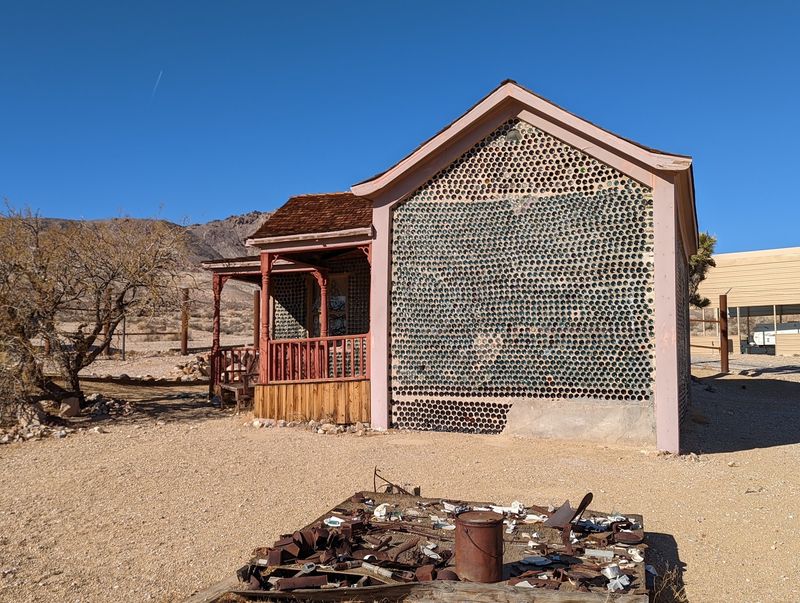
Roughly 51,000 glass bottles hold up the walls of one small desert house, and it has stood since 1906. The man who built it never moved in, because he raffled the whole place off instead.
I love that a gold rush town ran short on lumber and one stonemason looked at a pile of empties differently. Local kids hauled bottles in by the wheelbarrow load, and the walls still glow amber and green under the Nevada sun.
Today the house sits among crumbling ruins, tiny glass sculptures, and a huge stretch of open sky. Best of all, seeing it costs your family exactly nothing.
I can’t imagine a cheaper history lesson for a carload of curious kids. So how did a mountain of discarded glass become one of the oldest bottle houses in America?
A Glass House Hiding In A Famous Desert Ghost Town
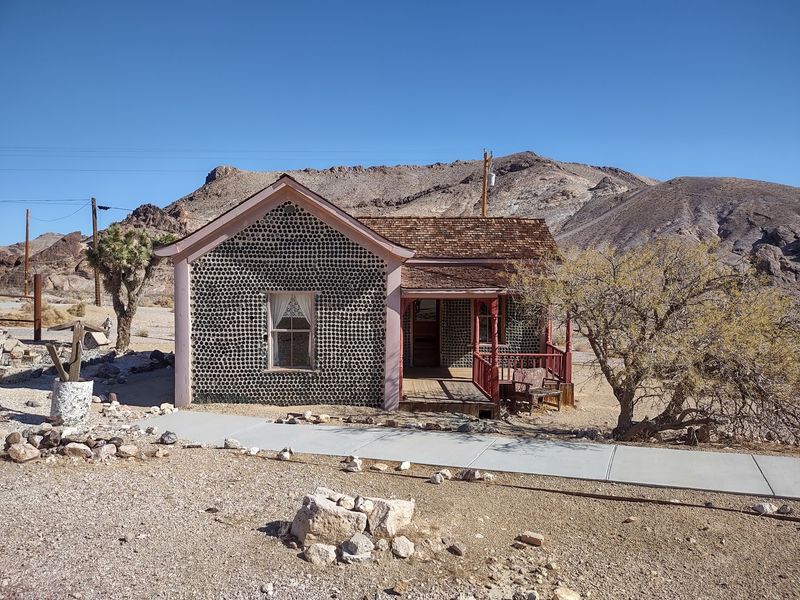
Out past the edge of Beatty, a quiet dirt-and-paved road climbs toward the remains of Rhyolite, one of Nevada’s best-known ghost towns. Among the broken walls and lonely foundations, one building still looks ready for a family dinner.
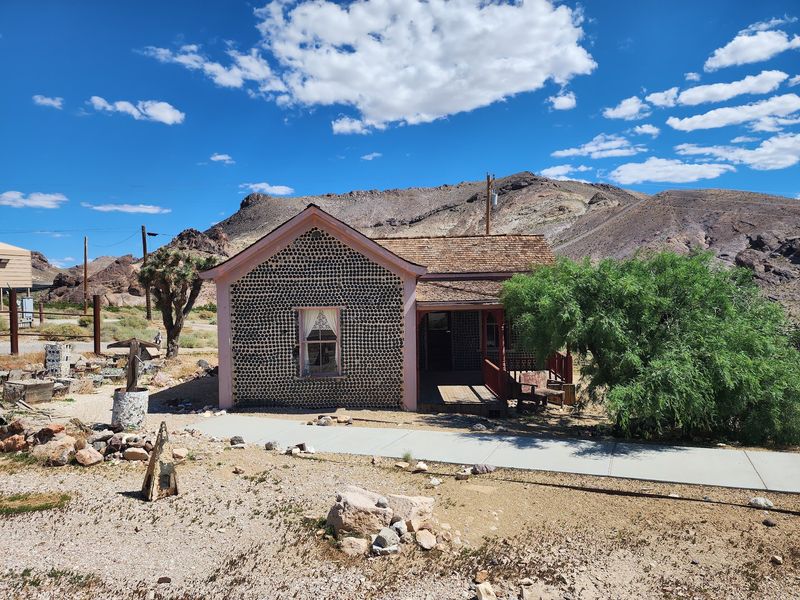
That building is Tom Kelly’s Bottle House, also called the Rhyolite Bottle House. Its walls are made from an estimated 51,000 glass bottles set in adobe mud.
The house has three rooms arranged in an L shape. Cheerful gingerbread trim runs along the roofline, which feels almost silly next to all that rugged desert.
Historians count it among the oldest and largest known bottle houses in the United States. That’s a big title for a home built from leftovers.
The Bureau of Land Management looks after the site today, and visiting is free. A caretaker watches over the property, so the house stays in remarkably good shape.
For families, the appeal is instant. Kids don’t need a long explanation to get excited about a house made of bottles, and grown-ups get a genuine slice of Nevada’s gold rush story.
It’s the kind of stop that turns a desert drive into a story everyone retells at home. And it hardly takes any planning.
The Stonemason Who Ran Out Of Lumber And Got Creative
Lumber was scarce and expensive in 1905 Rhyolite, and Joshua trees made terrible building material. So Tom Kelly, an Australian-born stonemason and miner, needed another plan.
He found it in the town’s endless supply of empty bottles. During the gold rush boom, Rhyolite’s busy businesses tossed out glass faster than anyone could haul it away.
Kelly started building around 1905 or 1906. Accounts differ on how long it took, with some saying about a year and a half and others claiming just five or six months.
Either way, the bottles cost him next to nothing. Most of his money went toward the wood trim and fixtures instead.
Here’s the part kids usually love most. Kelly reportedly paid local children a few cents for every wheelbarrow full of bottles they rounded up.
Picture a whole crew of young bottle hunters scouring the streets for pocket money. It turned a messy town problem into a neighborhood job.
That clever thinking is a great conversation starter for families. Ask your kids what they would build with something everyone else throws away, and watch the ideas pour in.
Recycling, it turns out, was cool long before it was trendy.
Raffled Off Instead Of Lived In
After all that work, Kelly never actually lived in his creation. When the house was finished in February 1906, he raffled it off to the town.
Tickets went on sale to anyone hoping to win a one-of-a-kind home. It’s a little like a modern giveaway, only the prize was made of glass and mud.
The lucky winners were the Bennett family. They moved in and called the bottle house home from 1906 until 1914.
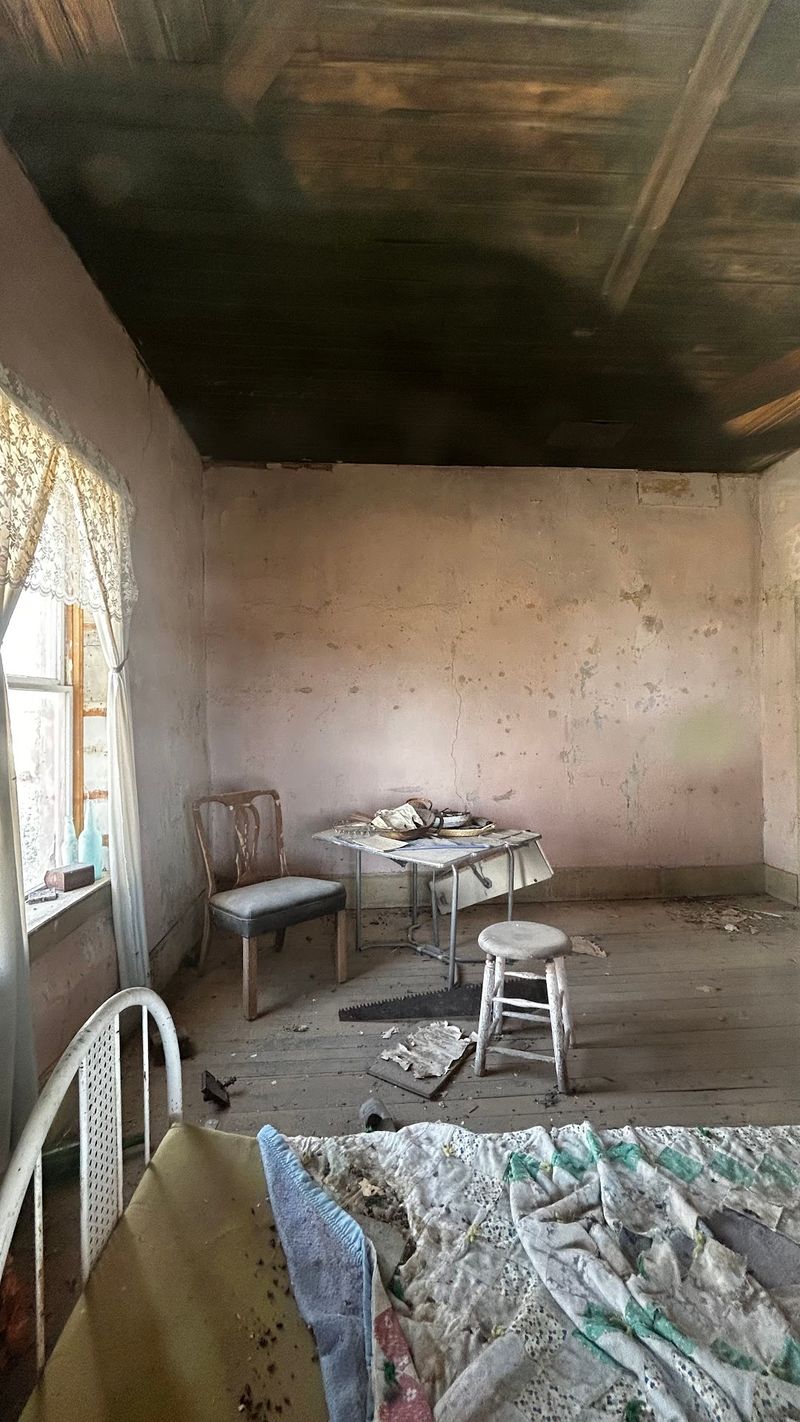
That means real children grew up inside those shimmering walls. Somewhere in those rooms, kids did chores, ate meals, and probably argued over whose turn it was to sweep the dust.
Think about how strange that must have felt at the time. Your friends lived in tents or wooden shacks, and you lived in a house that sparkled in the afternoon light.
The Bennetts stayed even as Rhyolite started to fade. The town’s boom years ended quickly, and many residents packed up and moved on.
Their years there give the house a warm, family-sized story. It wasn’t just a curiosity built for show, since a family truly made a life inside it.
Movie Star Years, Caretakers, And A Century Of Repairs
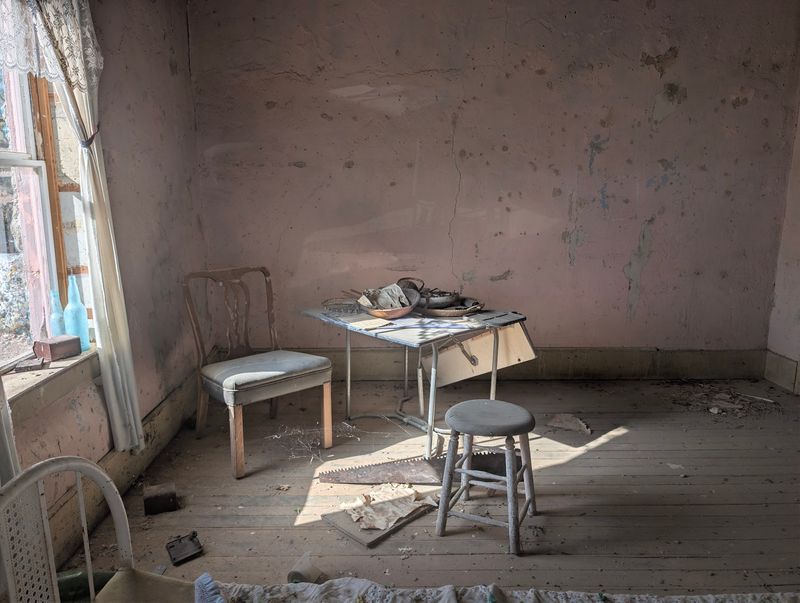
Hollywood came calling in the 1920s. Paramount Pictures restored the house and gave it a new roof around 1925 so it could appear as a film set.
The house showed up in movies such as The Air Mail and Wanderers in the Wasteland. Not bad for a building made from cast-off glass.
Later, the bottle house spent time working as a small museum. Lewis Murphey lived there as caretaker from 1936 into the mid-1950s and led tours for curious travelers.
The final residents arrived in 1954. Tommy Thompson moved in with his eight children, and they stayed until 1969.
Eight kids in three rooms sounds like a lively household. Thompson also gets credit for the tiny glass sculptures still sitting on the property today.
Over the decades, the house has needed plenty of care. A fresh roof went on in 2005 to celebrate its 100th birthday.
Those layers of history make the stop richer than it first appears. Families can trace a full timeline here, from gold rush builders to movie crews to a big family that kept the place alive.
Amber Bottoms, Thick Walls, And Windows Worth A Peek
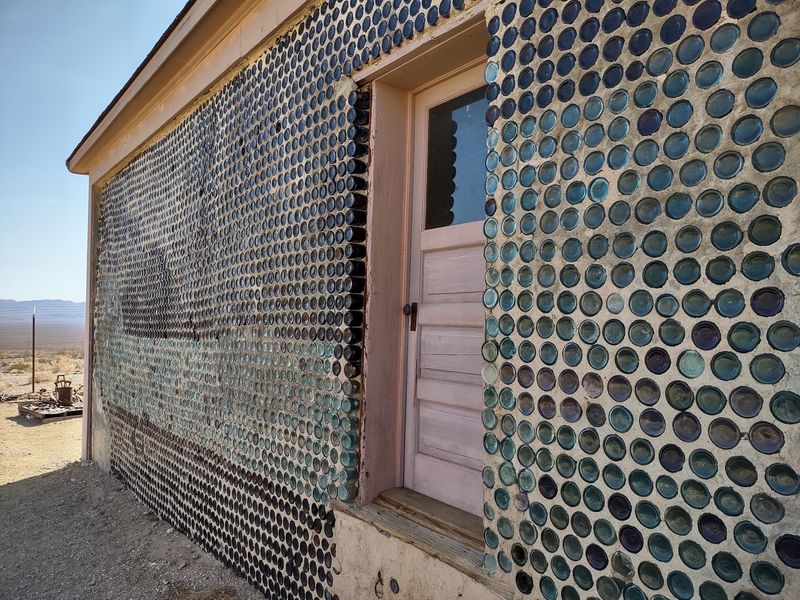
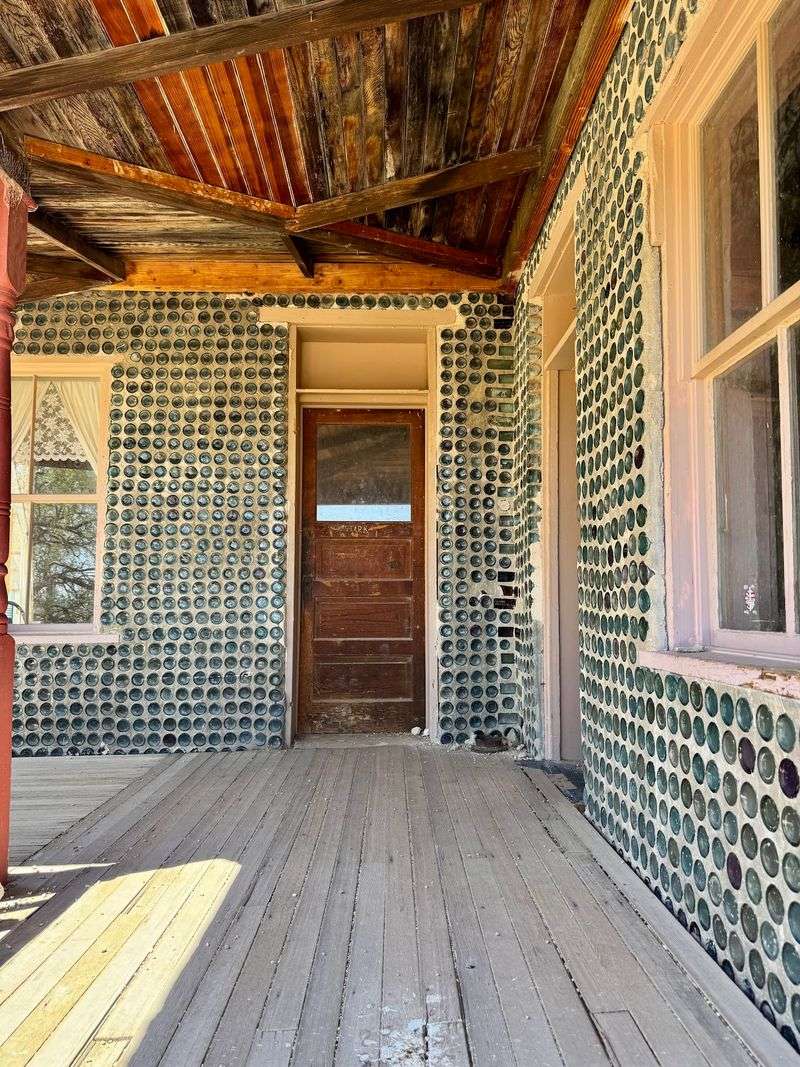
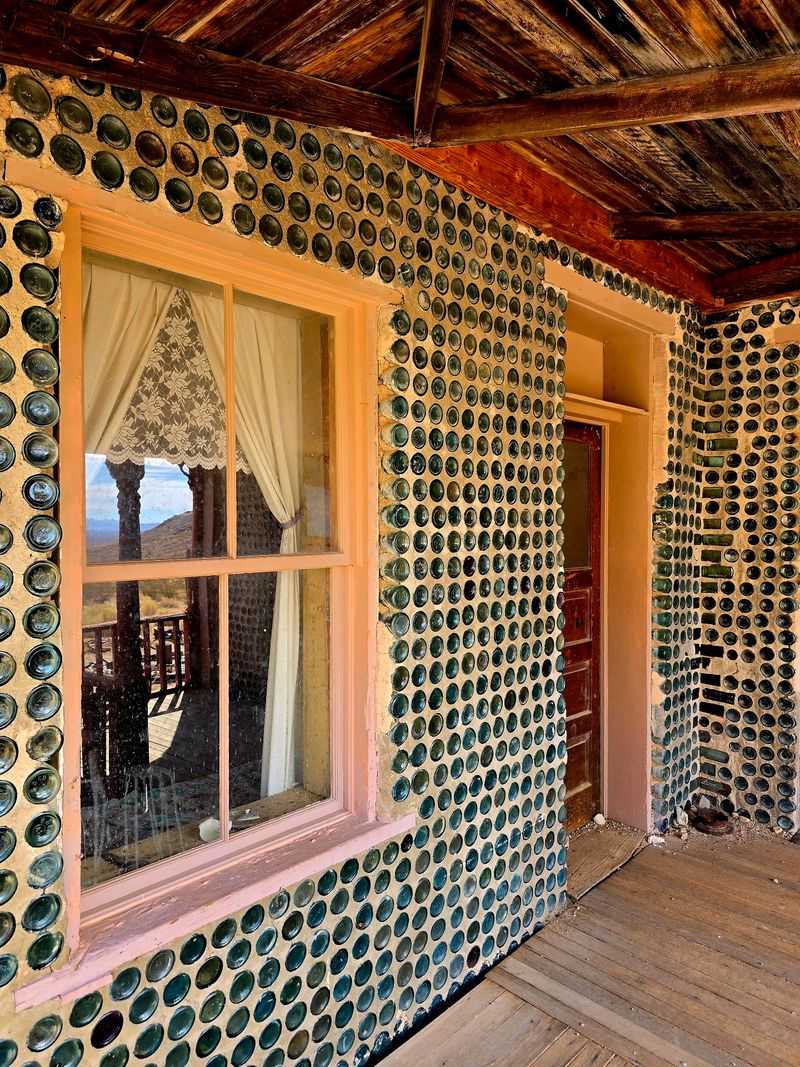
Get close to the walls and the pattern jumps out. Bottles sit in neat, regular rows, with the bottle bottoms facing outward like thousands of little glass coins.
Darker amber bottles form the lower part of the structure near the foundation. Lighter shades show up higher, and the color changes hint at which bottles were easiest to find at different times.
Everything is held together with adobe mud. The thick walls helped bottle houses handle desert heat, which made them a smart choice in a place like Nevada.
Visitors usually can’t walk inside the house itself. The interior is generally viewed through the windows, though the on-site caretaker may unlock the gate to the grounds when possible.
Peeking through the glass still pays off. You can get a real sense of how thick those bottle walls are from the window frames alone.
For kids, turn it into a game. Have them count bottle colors in one section of wall, or search for the oddest shape they can spot.
Bring a camera, too. When the sun hits the glass just right, the whole wall glows.
A Tiny Village Made Of Glass And Bottlecaps
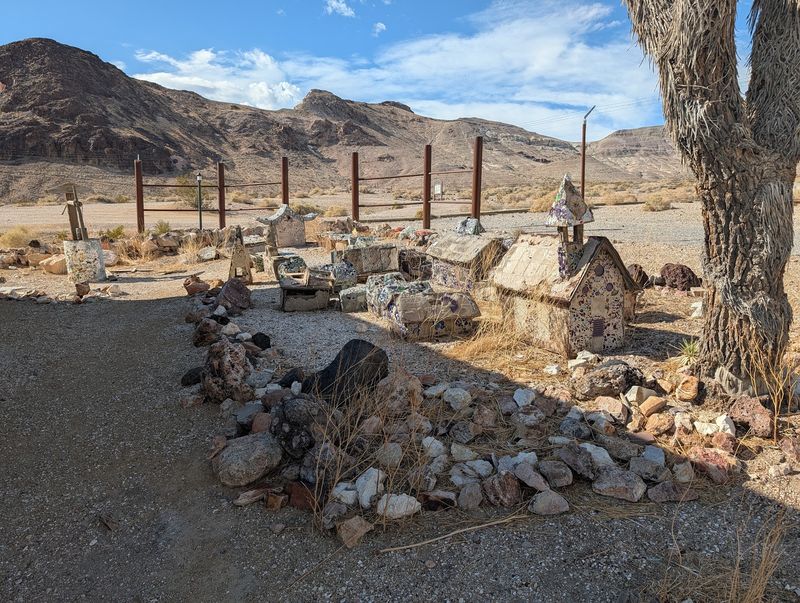
Small details steal the show beside the main house. A miniature village of sculptures sits on the grounds, built from glass, ceramic fragments, and bottlecaps.
Tommy Thompson, the last resident, is credited with creating these little structures. He clearly shared Tom Kelly’s talent for seeing treasure in scraps.
Younger children often connect with this part most. Everything is at their eye level, like a dollhouse town that wandered out into the desert.
Take a few minutes to look closely at the materials. Bits of broken dishes and colored glass turn into walls, roofs, and tiny doorways.
The miniature village also makes a fun bridge between the past and today. Kids can see that people kept adding creativity to this spot long after the gold rush ended.
Remind little ones to look with their eyes rather than their hands. These pieces are old and delicate, and they’ve survived decades of desert weather already.
Back home, it can spark a weekend craft project. A few clean bottlecaps and some glue might be all your family needs to build its own pint-sized town.
Bank Ruins, An Old Jail, And Giant Desert Art Nearby
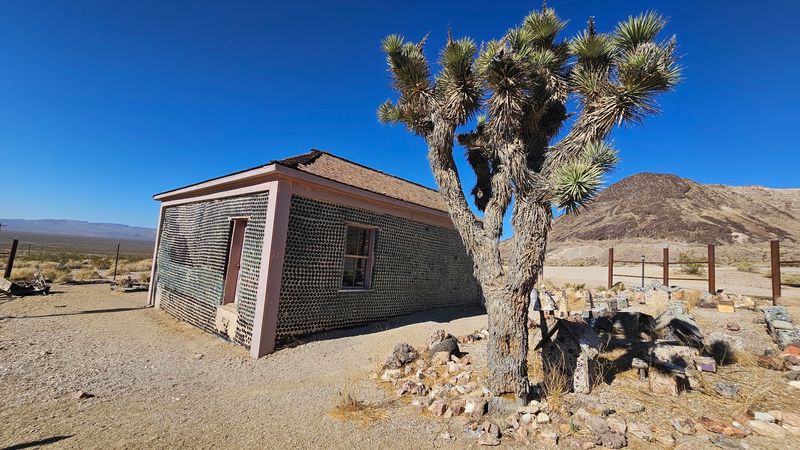
One bottle house could easily fill a short stop, but Rhyolite offers much more. The surrounding ghost town turns the visit into a longer, free afternoon outing.
The ruins of the Cook Bank Building are the most dramatic sight. Its broken stone walls rise against the hills and hint at how grand the town once looked.
An old jail also stands among the remains. Kids tend to be fascinated by how small and plain the space looks compared to anything modern.
Rhyolite’s train depot is privately owned, so admire it from outside. Restrooms are located near the depot, which is handy information for any parent.
Just before you reach town, the Goldwell Open Air Museum adds a surprising twist. Large outdoor sculptures stand right in the desert, including a ghostly version of The Last Supper.
Stopping at both spots stretches the day without stretching the budget. Wandering the ruins and sculptures can easily keep a family busy well beyond a quick photo stop.
Pack snacks and plenty of water. Services are limited out here, and the desert sun doesn’t take breaks.
Free Entry, Sunrise Hours, And Easy Directions From Beatty
Good news for anyone watching the family budget. There’s no admission fee for Tom Kelly’s Bottle House or the rest of the Rhyolite ghost town.
The ghost town is open daily from sunrise to sunset. Hours and access in remote parts of Nevada can change, so confirm before you make the drive.
Getting there is fairly simple. From Beatty, head about 4 miles west on Nevada Route 374, then turn onto Rhyolite Road.
The bottle house sits about 1.4 miles north from that turn. Its general location is listed as Amargosa Street, Rhyolite, near Beatty, NV 89003.
Cell service can be spotty, so download a map before leaving town. That small step can save a lot of backseat stress.
Pets are allowed, and so are drones. Restrooms are near the train depot, which helps families with little ones plan a comfortable visit.
Desert weather deserves respect, especially in summer. Hats, sunscreen, sturdy shoes, and extra water make the outing far more pleasant for every age.
Beatty makes a natural base for gas and supplies. Fill up there before heading into the hills.
A Free Family Stop That Turns Trash Into Treasure
Few places teach this much history for zero dollars. Tom Kelly’s Bottle House packs gold rush grit, Hollywood trivia, and real family stories into one small glittering building.
It suits curious kids, grandparents who love old Nevada, and anyone who enjoys quirky roadside history. Photographers will find plenty to frame, too.
Set expectations before you arrive. You’ll mostly admire the house from outside and through its windows, so think of it as an outdoor museum rather than a walk-through tour.
Pair it with the bank ruins, the old jail, and the Goldwell sculptures. Together they can fill a good chunk of a day without costing a cent in admission.
I believe the real gift here is the lesson behind the glass. A stonemason with no lumber built something that has outlasted almost everything around it.
That idea sticks with kids long after the car ride home. Maybe it even makes them look twice at the recycling bin.
If your family is planning a budget-friendly Nevada road trip, this sparkling little house deserves a spot on the route. Just bring water, sunscreen, and plenty of curiosity.