
10 Massachusetts Beaches Where The Coast Still Feels Untouched
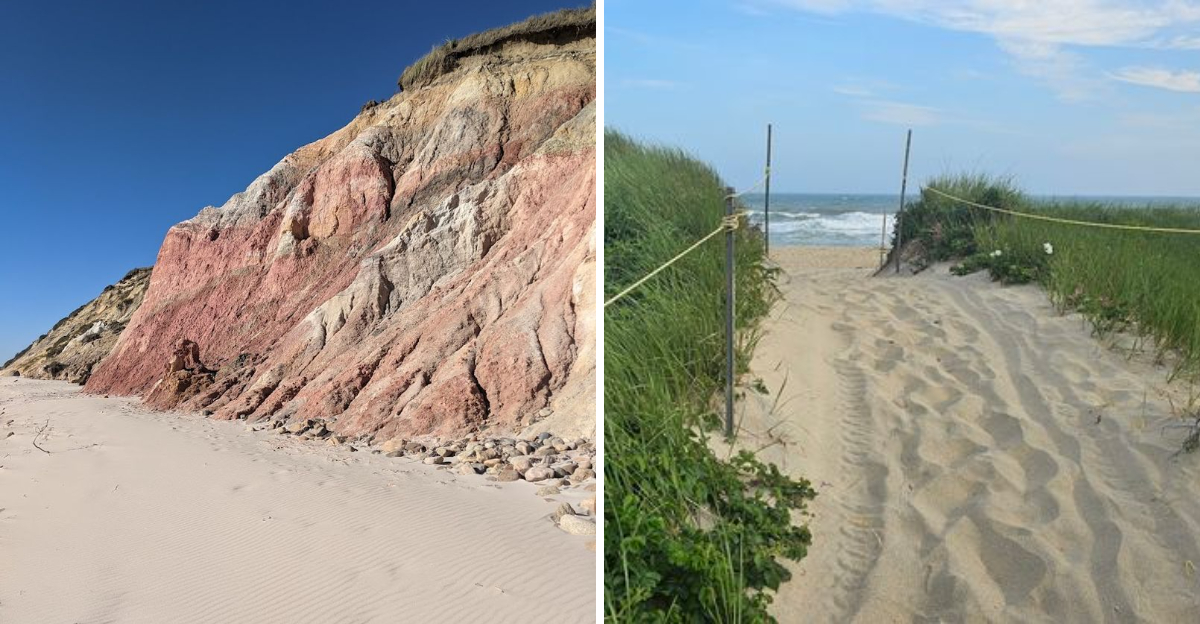
The loudest beach is not always the one worth chasing. Sometimes the better day begins where parking feels calmer, gulls do most of the talking, and your footprints disappear before lunch.
Massachusetts still has stretches of coast where the scene feels simple, almost old fashioned, and wonderfully removed from the usual summer rush. These are the beaches that reward patience.
You may need to drive a little farther, walk over sand, or plan around the tides, but that is part of the charm. What is better than finding a shoreline that still feels like nature got the final say?
On these Massachusetts beaches, the coast has not lost its quiet magic yet.
Bring sunscreen, snacks, and a little curiosity, because the best seaside moments often happen where the crowd thins out.
1. Race Point Beach, Provincetown
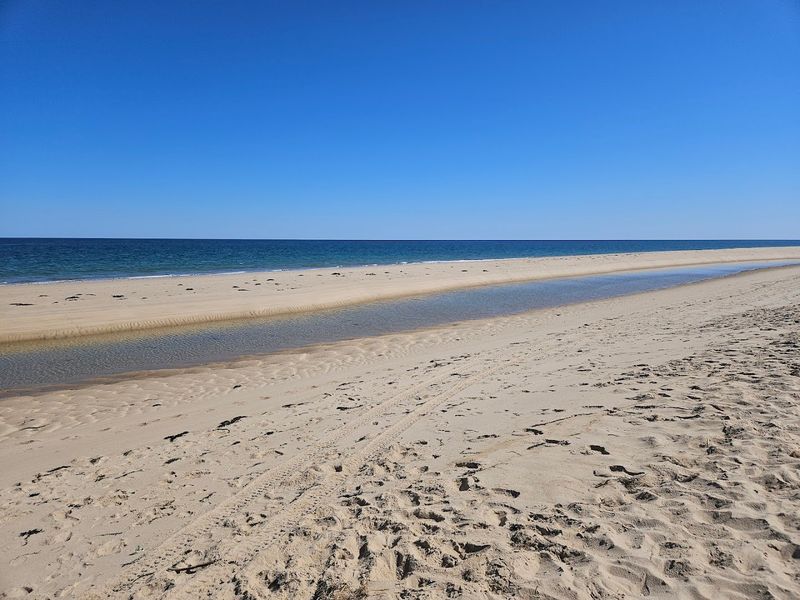
Standing at Race Point Beach feels like standing at the very edge of the world. This beach is one of the most dramatic stretches of coastline in all of New England.
The sand here is soft and white, shaped into rolling dunes by constant ocean winds. Behind the beach, the dunes stretch inland for what seems like forever, covered in patches of beach grass that ripple and sway.
The historic Race Point Lighthouse stands nearby, adding a timeless quality to the landscape.
Because this beach sits within the Cape Cod National Seashore, development is strictly limited, which is exactly why it still looks so wild and untouched.
Seals are a common sight just offshore, especially in cooler months, and whale-watching boats sometimes pass in the distance. Sunrise here is something photographers travel hundreds of miles to capture.
The parking lot is about a mile from the waterline, which naturally keeps casual visitors away and rewards those willing to make the walk.
Pack a good pair of shoes, bring plenty of water, and plan to spend the full day, because once you arrive, leaving feels almost impossible.
2. Head Of The Meadow Beach, Truro
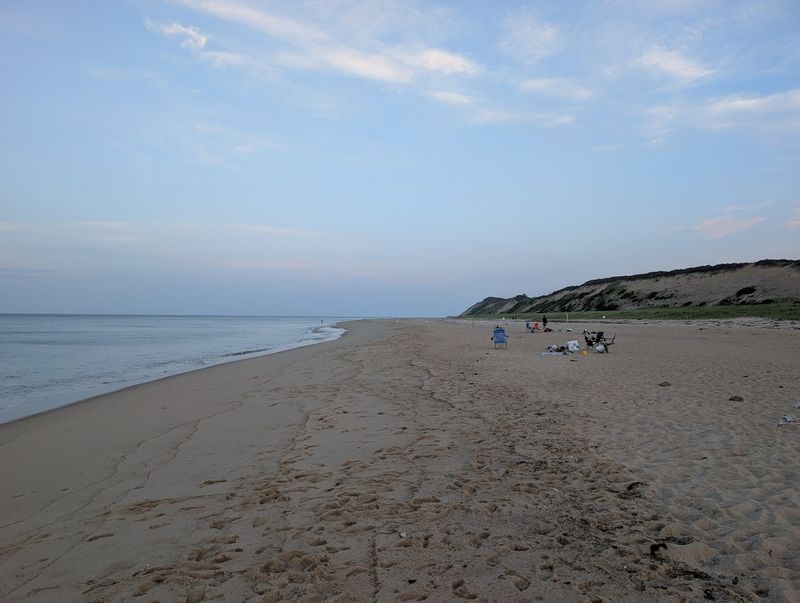
Some beaches earn their reputation through crowds and convenience. Head of the Meadow Beach in Truro earns its reputation through something far rarer: genuine solitude.
This Atlantic-facing beach offers a wide, open shoreline where the waves roll in strong and steady.
The dunes behind the beach are tall and sculpted, giving the whole area a raw, prehistoric quality that is hard to find anywhere else on the Cape.
Truro itself is one of the smallest towns in Massachusetts by population, which means this beach rarely sees the kind of overcrowding that plagues spots further south. Even on a summer weekend, you can find a quiet patch of sand without much trouble.
The water here is brisk and invigorating, perfect for swimming if you enjoy a little chill in your ocean dip. Surfers also appreciate the consistent wave action that builds along this exposed stretch of coastline.
Parking is available on-site, and the beach has basic facilities during the summer season. There are no restaurants, shops, or distractions nearby, which is precisely the point.
Head of the Meadow is the kind of place that reminds you how good it feels to simply sit and watch the ocean do its thing.
3. Marconi Beach, Wellfleet
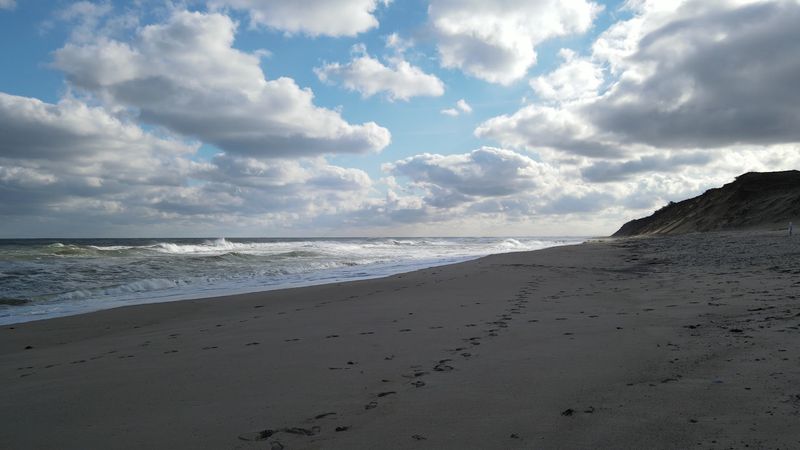
Named after the inventor Guglielmo Marconi, who built the first transatlantic wireless station on this very bluff in 1903, Marconi Beach in Wellfleet carries a quiet piece of history in every grain of sand.
The cliffs above the beach are made of layered clay and sand, and they are slowly eroding into the ocean, creating a constantly changing landscape that feels both dramatic and fragile.
Standing on the beach and looking up at those towering walls of earth puts the scale of nature into sharp perspective.
Located within the Cape Cod National Seashore, Marconi Beach faces the open Atlantic, meaning the waves can be powerful and the wind can be relentless. Swimmers should pay attention to posted flags, as conditions shift quickly here.
A short boardwalk leads visitors down from the parking area to the sand below the cliffs.
Along the way, you can stop at a small exhibit that explains the history of Marconi’s wireless station, the remnants of which are nearby.
Wellfleet itself is a charming town known for its oysters and art galleries, so pairing a beach visit with a stroll through town makes for a perfect day on the Outer Cape.
The combination of history, scenery, and raw coastal beauty makes Marconi Beach genuinely unforgettable.
4. Sandy Neck Beach, Barnstable
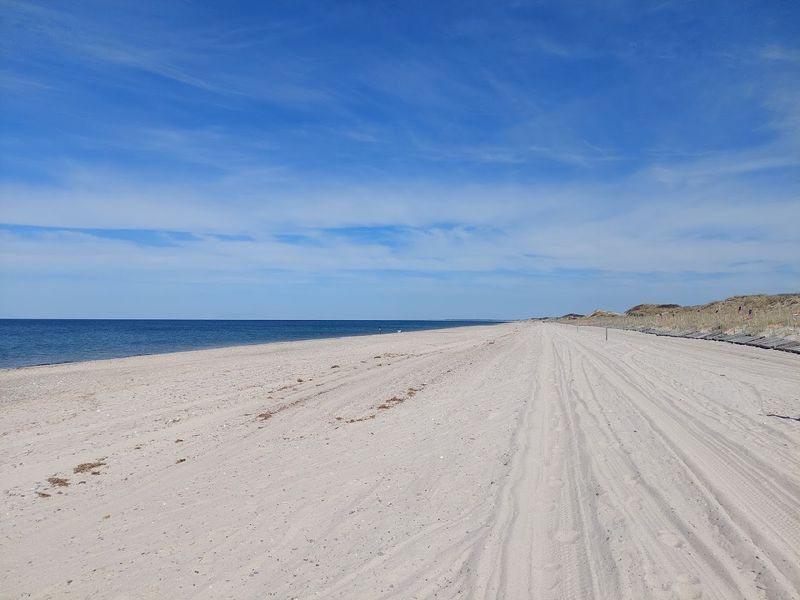
Six miles long and lined with dunes that rise as high as fifty feet, Sandy Neck Beach in Barnstable is one of the most impressive barrier beaches in all of Massachusetts.
It faces calm Cape Cod Bay rather than the open Atlantic, which gives the water a gentler, warmer character that families tend to love.
The beach is part of a larger conservation area that includes over four thousand acres of dunes, marshes, and upland habitat.
This protected status is what keeps it feeling so undeveloped and wild, even though it sits within one of the most visited regions of New England.
Off-road vehicle permits are available for those who want to explore the full length of the beach, and the dune trails attract hikers and naturalists throughout the warmer months.
Piping plovers and other shorebirds nest here, so certain areas may be temporarily closed during breeding season to protect the wildlife.
The salt marshes on the inland side of the beach support a remarkable variety of plant and animal life, making Sandy Neck as interesting to explore on foot as it is to simply sit and enjoy.
Sunset over Cape Cod Bay from this beach is the kind of view that stays with you long after you have driven home. Arrive early in summer to secure a parking spot before the lot fills up.
5. Crane Beach, Ipswich
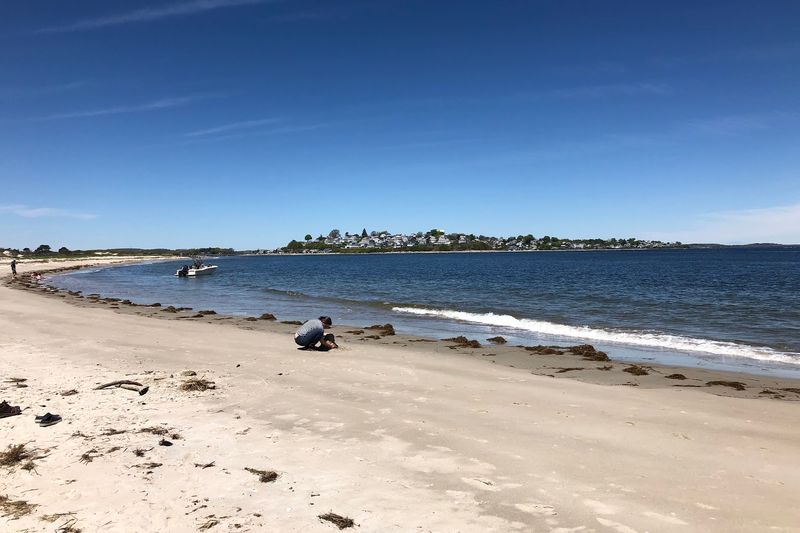
Four miles of white sand, a backdrop of rolling dunes, and a historic mansion perched on the hill above it all. Crane Beach in Ipswich is the kind of place that makes you wonder why anyone ever leaves.
Managed by the Trustees of Reservations, this beach is part of a 2,100-acre reservation that includes forests, marshes, and the famous Crane Estate, built by plumbing magnate Richard T. Crane Jr. in the early twentieth century.
The estate’s grand Italian-style villa looks out over the beach from a ridge above, giving the whole scene an almost cinematic quality.
The water here is cleaner and clearer than many New England beaches, and the dune system behind the shoreline is one of the most extensive on the North Shore.
Trails wind through the dunes and upland areas, giving hikers a chance to explore beyond the sand.
One thing to know before you visit: greenhead flies can be a real nuisance in July, typically for a few weeks around mid-month.
Timing your visit for late June or August makes for a much more comfortable experience.
Parking fees apply and can be steep in peak season, but the sheer scale and beauty of the beach more than justify the cost. Crane Beach is the kind of place that earns its own mythology among North Shore locals.
6. Parker River National Wildlife Refuge, Plum Island
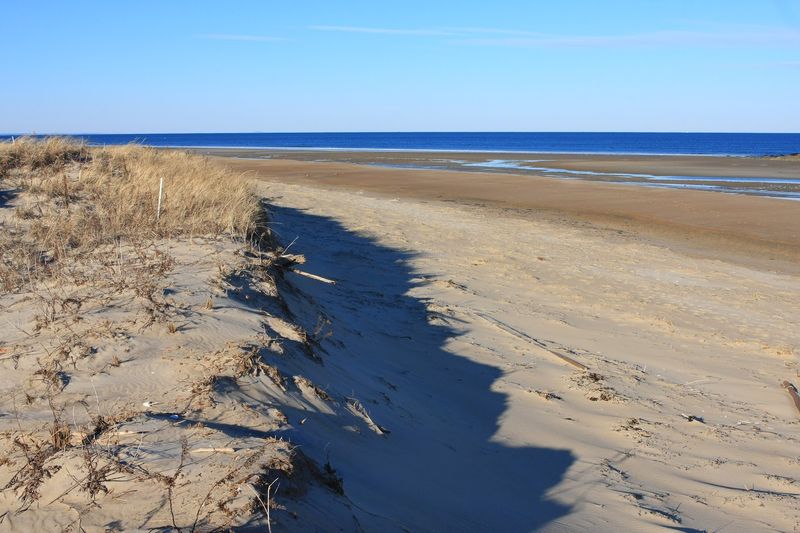
Plum Island has a name that sounds almost too charming to be real, and the beach along its Parker River National Wildlife Refuge shoreline lives up to that promise in every possible way.
This barrier island stretches nearly eleven miles and protects one of the most biodiverse ecosystems on the East Coast.
The refuge was established in 1942 and now provides critical habitat for hundreds of bird species, including rare and endangered shorebirds that stop here during their annual migrations.
Birdwatchers come from across the country to spot snowy owls in winter and piping plovers in summer, and the refuge does not disappoint them.
Beach access is managed carefully to protect nesting wildlife, so portions of the shoreline may be closed during certain seasons. This is not a drawback.
It is actually what keeps the place feeling so pristine and alive with natural activity.
The dune system here is extraordinary, with beach grass and wild roses covering the sandy ridges that separate the ocean from the marshes behind the island.
Walking the trails through this landscape feels more like a nature documentary than a beach trip.
Parking passes fill up fast on summer mornings, so arriving early is essential. The reward for that early alarm is a stretch of coastline that feels genuinely wild, even on a busy weekend.
7. Long Point Wildlife Refuge, Martha’s Vineyard
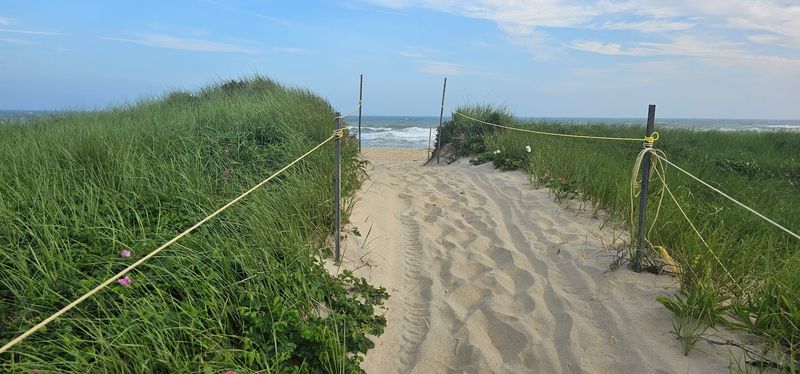
Getting to Long Point Wildlife Refuge on Martha’s Vineyard requires a little effort, and that effort is precisely what makes it so worthwhile.
This 633-acre refuge is managed by the Trustees of Reservations and offers some of the most peaceful beach walking on the entire island.
The landscape here shifts between sandy beach, coastal heathland, and freshwater ponds, creating a patchwork of habitats that feels nothing like a typical beach destination.
Tisbury Great Pond, which sits just behind the shoreline, is a beautiful brackish lagoon that adds an extra layer of natural interest to the visit.
Access is limited to a set number of vehicles per day during the summer season, which keeps crowds genuinely manageable.
Visitors who arrive on foot or by bicycle can enter without the same restrictions, making this a great destination for those staying nearby.
The beach itself is wide and sandy, with calm water that is generally good for swimming. Because it faces south rather than east, the surf here is typically gentler than on the more exposed Vineyard beaches.
Wildlife sightings are common, from osprey circling overhead to deer moving through the heath. Long Point is the kind of refuge that reminds you nature does not need to be dramatic to be deeply impressive.
8. Cape Poge Wildlife Refuge, Chappaquiddick Island
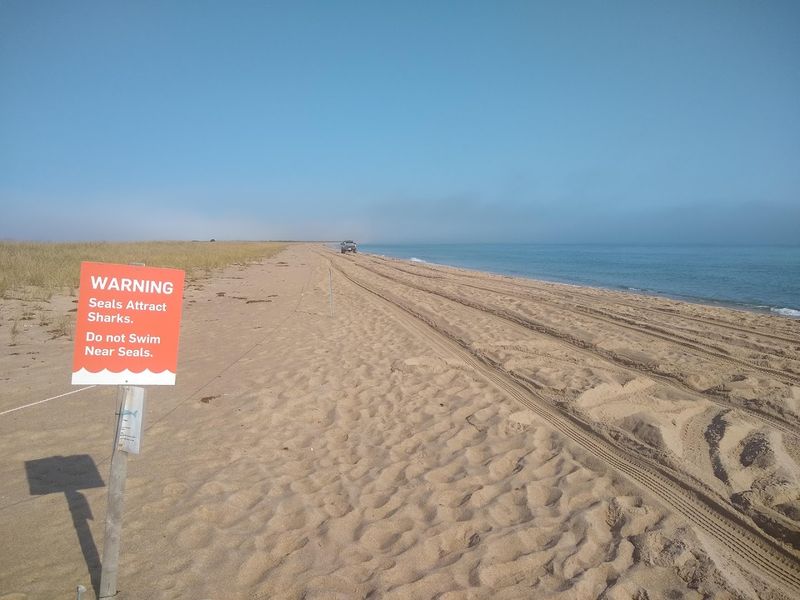
Chappaquiddick Island sits just off the eastern edge of Martha’s Vineyard, connected to Edgartown by a tiny ferry that carries only three cars at a time.
That small ferry is the first sign that Cape Poge Wildlife Refuge, located at the island’s northern tip, is not the kind of place you stumble upon accidentally.
The refuge covers over 516 acres and includes barrier beach, dunes, salt marsh, and tidal flats that stretch along the outer edge of Edgartown Harbor.
The Cape Poge Lighthouse, first built in 1801, stands at the very tip of the refuge and can be reached by a guided off-road vehicle tour during the summer season.
Because vehicle access requires a permit and the refuge has no developed facilities, the crowds here are naturally thin.
Most visitors who make the effort are birdwatchers, fishermen, or people who simply want a beach that feels genuinely remote.
The fishing along the outer beach is considered some of the best on Martha’s Vineyard, with striped bass and bluefish running strong through the warmer months.
Horseshoe crabs come ashore to spawn in late spring, drawing birds and curious onlookers alike.
Kayaking into the refuge from Edgartown is another popular approach, gliding through the harbor and into the calm waters behind the barrier beach. Cape Poge rewards the curious and the patient in equal measure.
9. Coskata-Coatue Wildlife Refuge, Nantucket
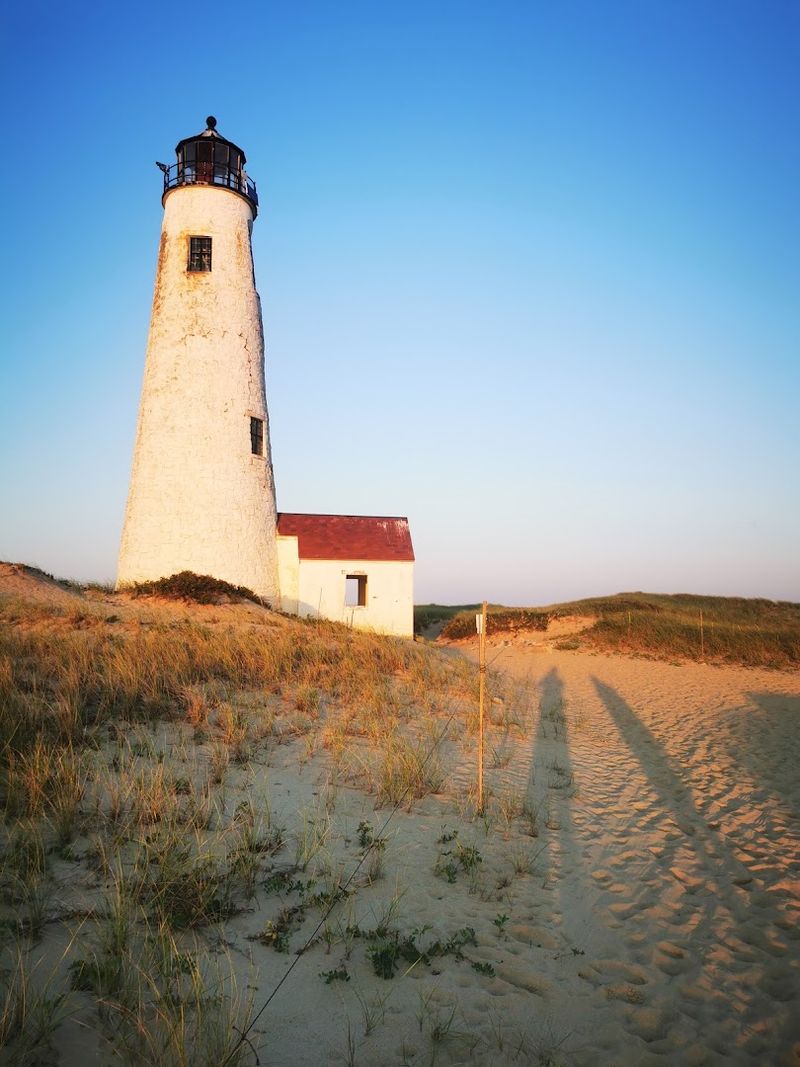
On an island already known for its beauty, Coskata-Coatue Wildlife Refuge still manages to stand apart.
This 1,117-acre refuge stretches along the northern edge of Nantucket, Massachusetts, forming a long curved arm of barrier beach that wraps around the calm waters of Nantucket Harbor.
Access requires either a four-wheel-drive vehicle with a permit or a guided tour operated by the Trustees of Reservations. The lack of easy access is, of course, the whole point.
Once you are inside the refuge, the landscape is almost entirely free of human development, and the silence is remarkable.
The Great Point Lighthouse, standing at the very tip of the refuge, is one of the most photographed structures on Nantucket.
Built in 1784 and rebuilt after a storm in 1986, it marks the convergence of Nantucket Sound and the open Atlantic, where the currents swirl and the fishing is legendary.
Harbor seals haul out on the sandbars near Great Point during winter months, and ospreys nest throughout the refuge in summer. The variety of wildlife here is genuinely impressive for such a relatively small area.
The beach itself is clean, wide, and almost always uncrowded. Walking from the refuge entrance to Great Point and back covers about eight miles of pure, undeveloped coastline.
For anyone who loves wild places, Coskata-Coatue is as good as it gets on the East Coast.
10. Moshup Beach, Aquinnah
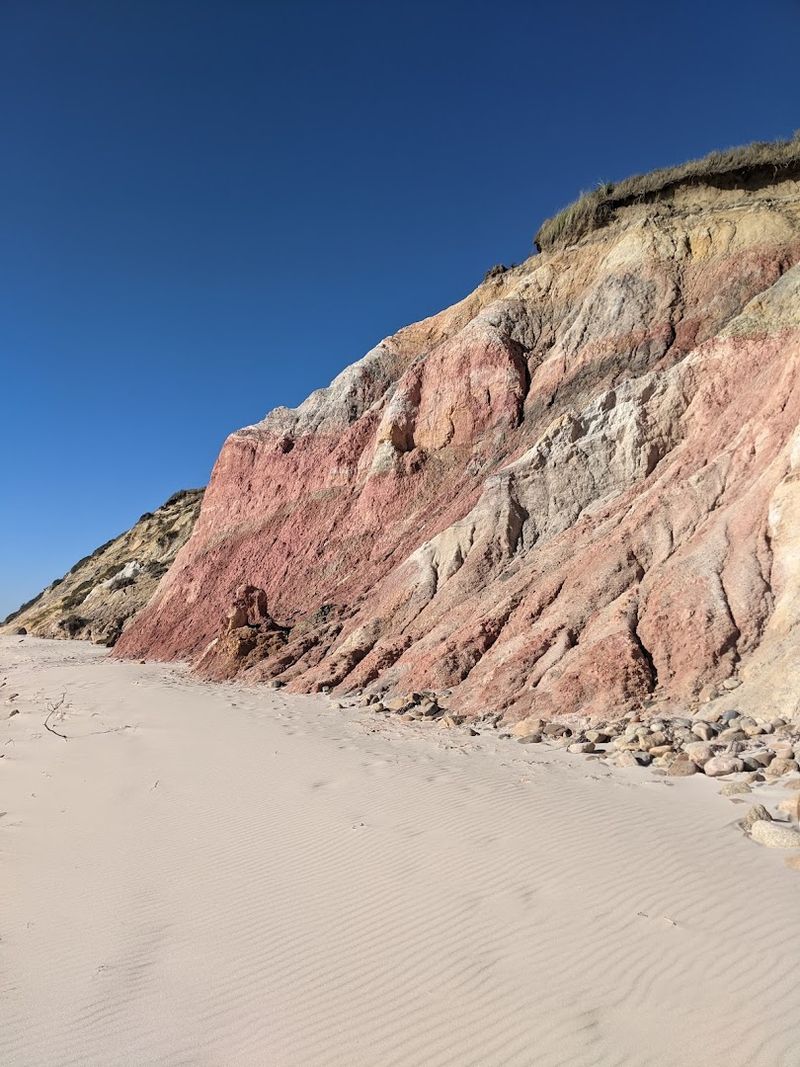
Few beaches in Massachusetts arrive with a legend attached, but Moshup Beach in Aquinnah does.
Named after Moshup, the giant figure from Wampanoag tradition who is said to have shaped the island of Martha’s Vineyard itself, this beach sits at the base of the famous Gay Head Cliffs in the town of Aquinnah.
The cliffs are the real showstopper. Rising up to 150 feet above the shoreline, they are made of layered clay in shades of red, orange, white, and gray, formed over millions of years of geological activity.
The Gay Head Light, first lit in 1799, stands at the top of the cliffs and is one of the most visited landmarks in all of New England.
Both the cliffs and the surrounding land are sacred to the Wampanoag Tribe of Gay Head, which holds federal recognition as a sovereign tribe.
Visitors are asked not to climb the cliffs or remove clay, a rule that helps preserve both the landscape and its cultural significance.
The beach below is sandy and generally calm, with views stretching toward the Elizabeth Islands and Rhode Island on clear days.
Parking requires a fee during the summer season, and the lot is a short walk from the sand.
Moshup Beach is the kind of place where geography and culture meet in a way that makes every visit feel meaningful, not just scenic.