
Most Missouri Residents Have Never Heard Of This Waterfall Hiding Close To Home
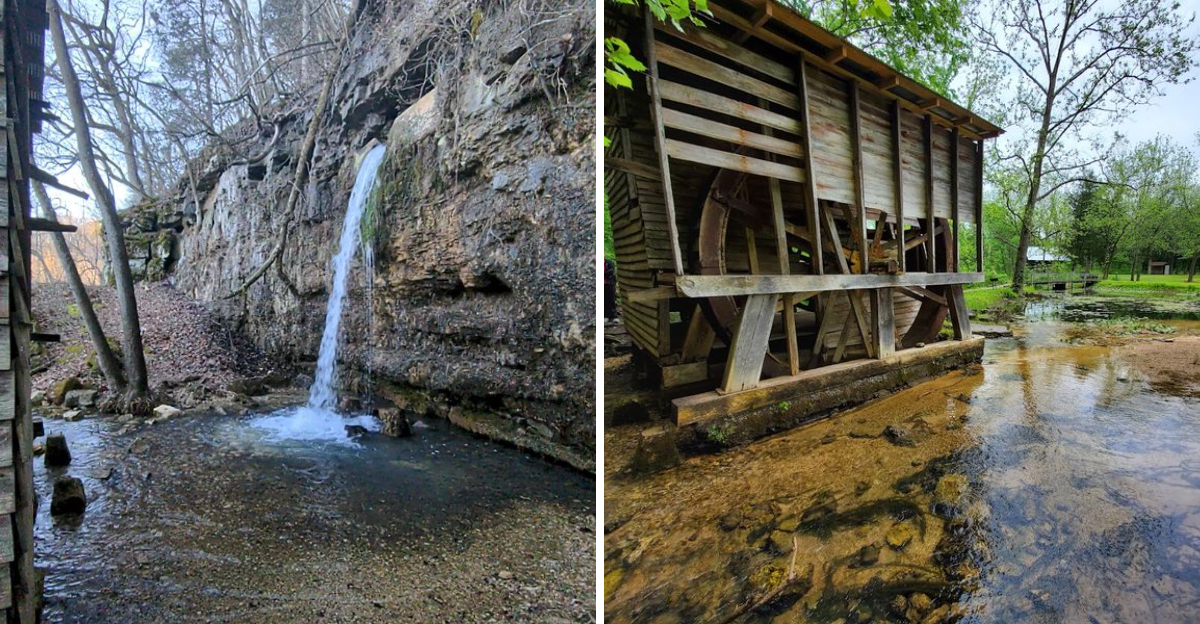
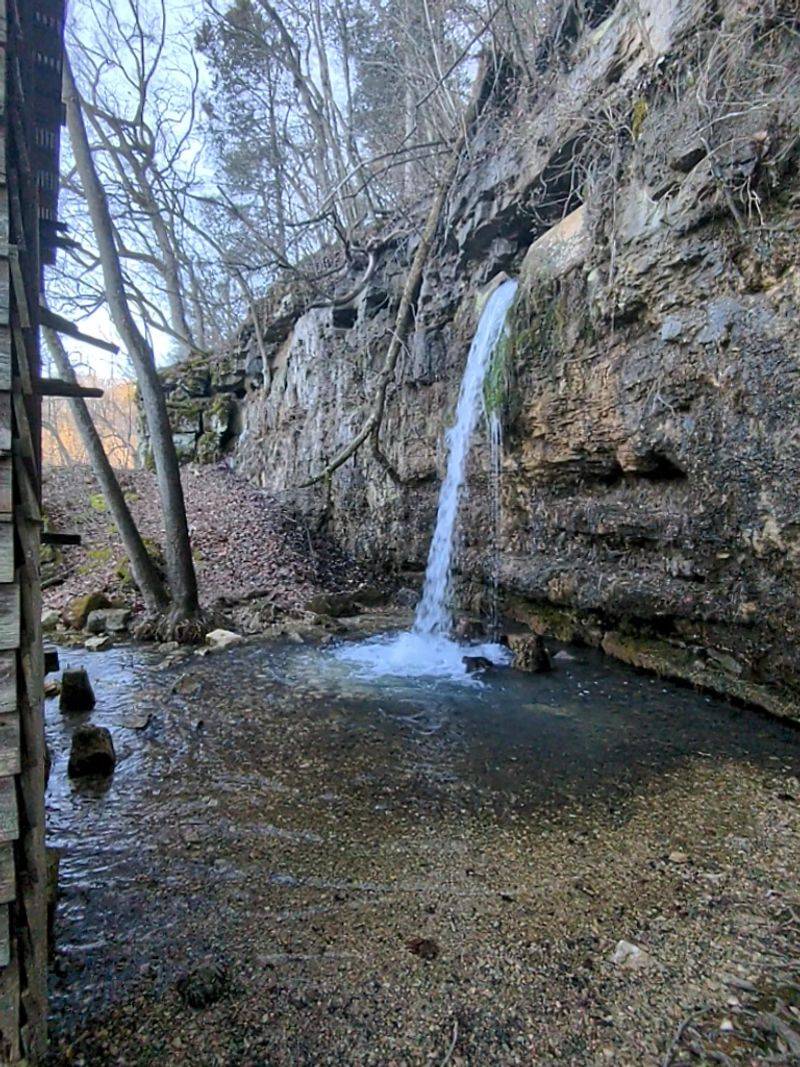
Missouri has an old mill where spring water bursts straight through a rocky bluff and drops into a bright blue pond. Somehow, many people still drive past the turn without realizing what sits nearby.
The setting does not build up slowly. The mill appears beside the road, the waterfall is already moving, and the sound reaches you before you have time to take in the full scene.
No trail or overlook separates visitors from it. The weathered building stands only a few feet from the water, which makes the spring feel even more unusual.
Clear water keeps pouring from the bluff while the pond catches every ripple below. This is not the kind of Missouri attraction that announces itself with signs and crowds. It simply appears along a quiet Ozark road and gives visitors a reason to stop the car.
The Waterfall Appears To Pour Straight Out Of The Bluff
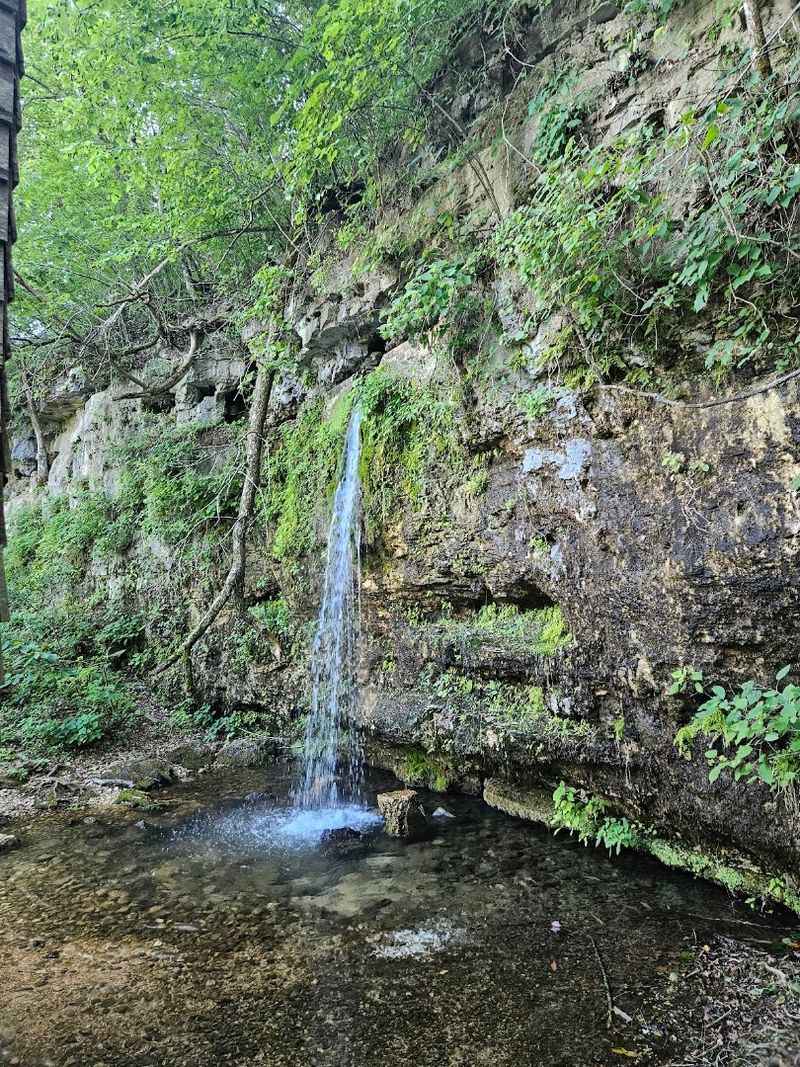
How does a waterfall appear to pour straight out of a wall of rock? At Falling Spring, that is exactly what seems to happen.
Water slips through a small opening in the bluff before dropping roughly 13 to 15 feet into the pond below. The steady cascade gives the scene a sense of motion, while the old mill and rugged rock face make it feel like a place built for lingering.
Then there is the water itself. The pond often shows a striking blue color that looks almost tropical against the surrounding Ozark greenery.
It is an unexpected sight in Missouri and one that makes the spring feel even more unusual.
The bluff, waterfall, and bright pond create a memorable setting for photos or a quiet pause beside the water. Listen closely, and the constant rush of the falls becomes part of the experience.
Falling Spring proves that nature does not need a towering drop to make a lasting impression.
About Half A Million Gallons Flow Through The Spring Each Day
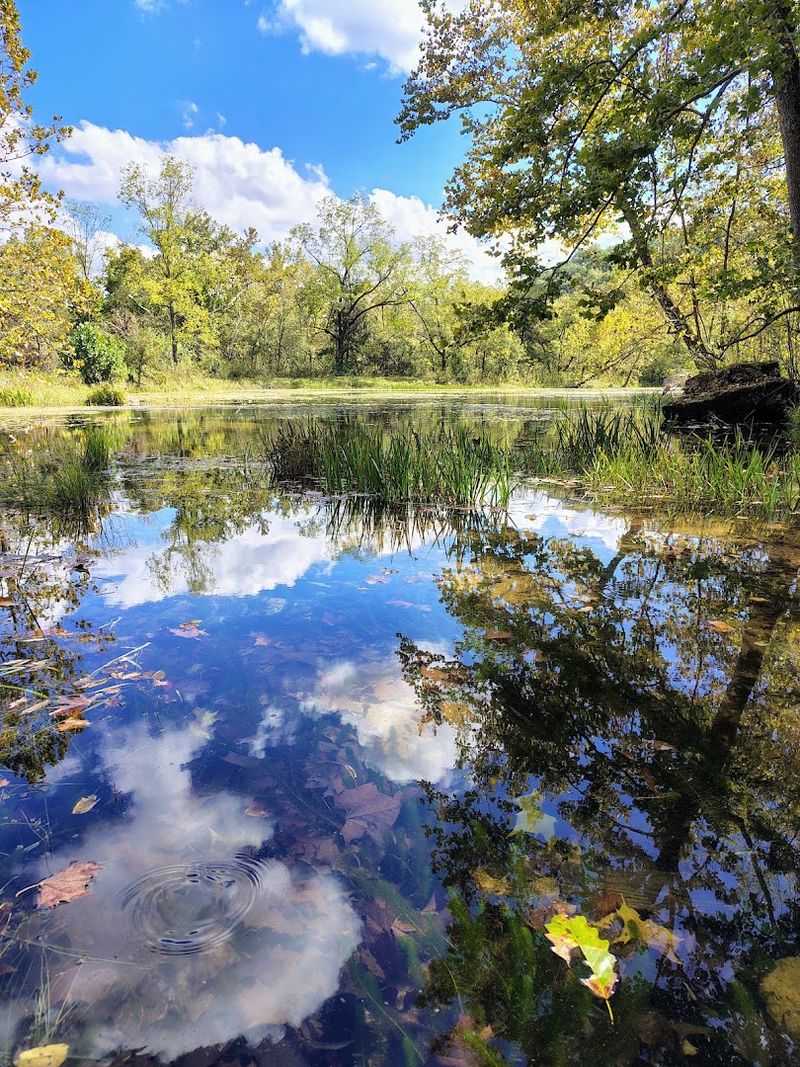
Falling Spring is not a modest trickle. Approximately half a million gallons of water emerge from the bluff every single day, ensuring the pond stays full and the waterfall remains active year-round.
This impressive volume speaks to the powerful underground systems at work beneath the Ozark terrain.
The continuous flow creates a rhythmic, peaceful sound that fills the air and helps you forget about daily stress. It is a natural white noise machine that never needs batteries.
The steady movement of so much water also keeps the pond fresh and vibrant.
This generous outpouring highlights the hidden forces shaping Missouri’s landscape. The spring has maintained this reliable flow for generations, supporting mills, homesteads, and now providing a serene escape for modern visitors.
Can you imagine relying on this spring for your livelihood?
A 1920s Mill Still Stands Beside The Falling Water
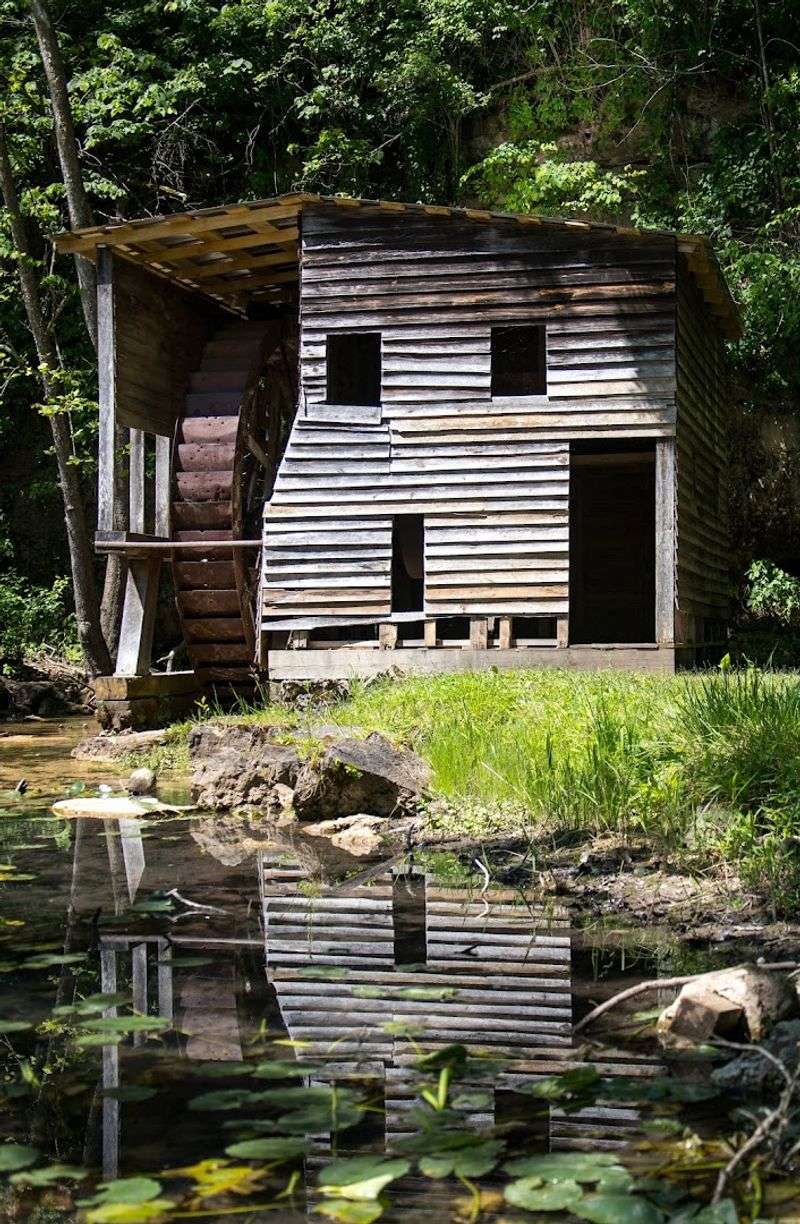
Built between 1927 and 1929, the Falling Spring Mill stands as a charming testament to Ozark ingenuity. This small, two-story wooden structure features sawboard siding that has weathered decades of Missouri seasons.
Its placement right beside the cascading water was deliberate and essential.
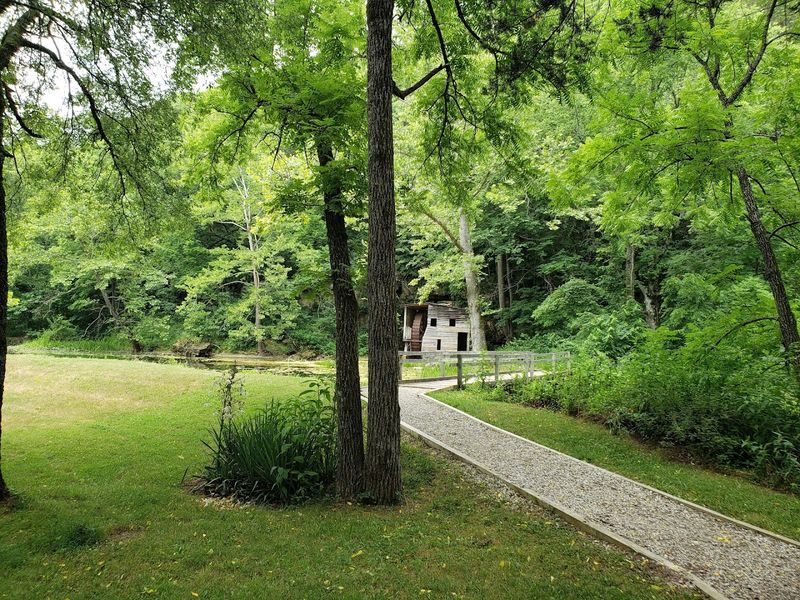
A wooden walkway leads visitors directly to the mill, inviting you to step closer and peek inside. The building’s rustic appearance and enduring presence create a tangible connection to the past.
You can almost hear the echoes of work that once filled this space.
The mill serves as the centerpiece of this historic site, quietly narrating stories through its aged wood and sturdy construction. It has survived storms, floods, and the passage of time.
This structure offers a window into a period when natural power drove daily life in rural Missouri.
The Pond’s Color Shifts With The Season And The Light
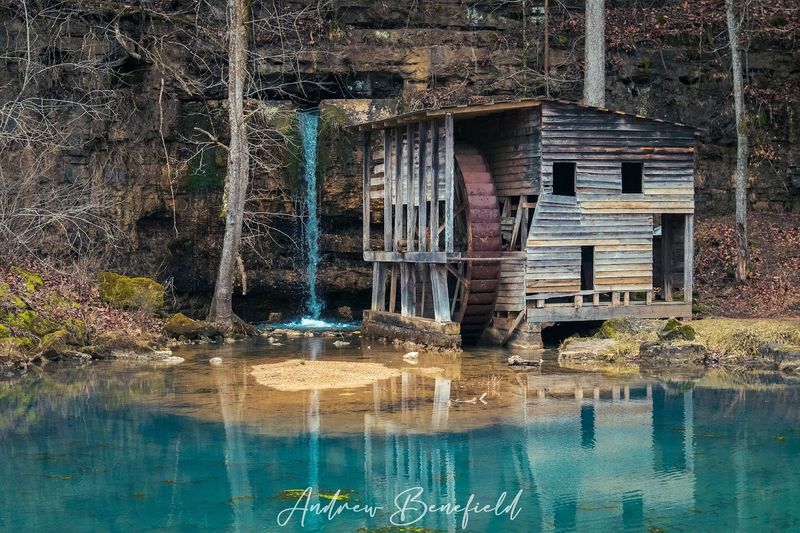
Falling Spring’s pond is not a static blue-green calm all year round. Depending on rainfall, sunlight angle, and the time of day you arrive, the water can shift from a pale turquoise to a deeper, almost tropical teal.
Midday sun tends to bring out the brightest color, cutting through the water and lighting up the pond from below, while overcast mornings give the whole scene a moodier, glassier look that feels more mysterious than postcard-perfect.
Rainfall plays a role too. After a heavy rain, sediment can cloud the water slightly before it settles back into its usual clarity within a day or two.
Photographers who know the spot often time their visit around late morning, when the sun sits high enough to reach the pond without washing out the surrounding bluff and greenery. Even repeat visitors say the color never looks quite the same twice, which is part of what keeps people coming back to the same eight-tenths of a mile of Ozark creek.
Late Spring And Early Fall Offer The Easiest Access
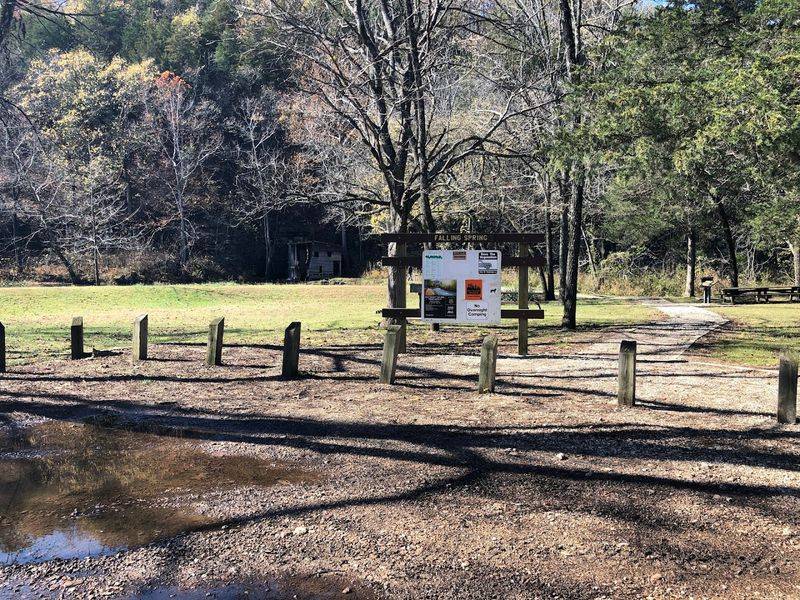
Timing a visit here matters more than it might at a typical roadside waterfall. The gravel road leading in is steep and narrow in places, and heavy spring rains can turn it into a slick, rutted climb that is far more comfortable in a four-wheel-drive vehicle than a standard sedan.
Summer, meanwhile, brings the thickest crowds, especially on weekends, when the picnic tables and grassy areas around the pond fill up fast.
Late spring, once the roads have had a chance to dry out from winter runoff, and early fall, before the first winter weather moves through, tend to offer the best combination of manageable road conditions and thinner crowds. The creek is usually running strong in both windows without the road becoming a hazard.
Winter access is technically possible but riskier, since the steep gravel sections can ice over without warning. Checking recent road conditions before heading out is worth the extra five minutes.
An Overshot Wheel Traveled Three Miles To Reach Its New Home
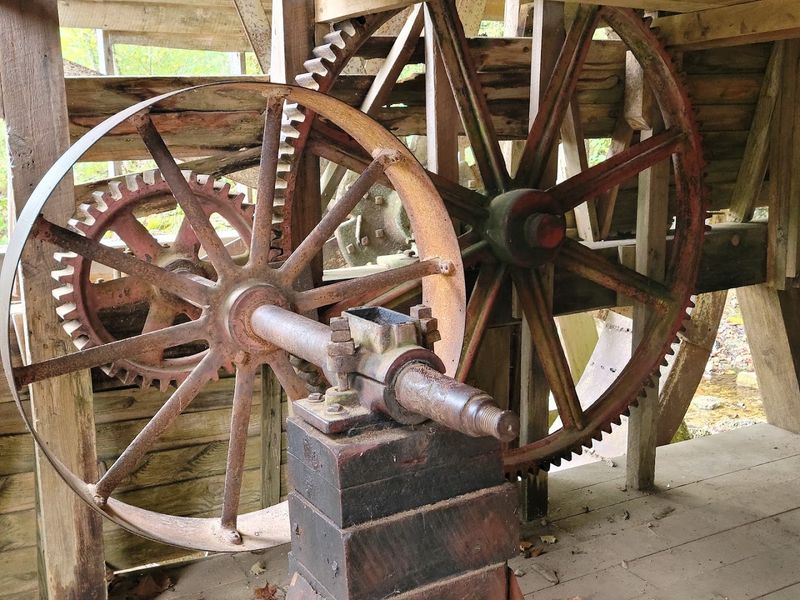
The prominent overshot wheel at Falling Spring Mill has a journey of its own. This substantial piece of machinery did not originate at the mill.
Instead, it traveled approximately three miles from Johnson Spring, which sits further down Hurricane Creek.
Imagine the effort required to transport such a heavy, awkward piece of equipment across rough Ozark terrain in 1927. There were no modern trucks or cranes to assist.
The determination and ingenuity of the builders shine through this feat.
This traveling wheel adds a unique chapter to the mill’s story. It represents resourcefulness and the willingness to repurpose existing materials.
The wheel found a new purpose at Falling Spring, where it faithfully turned for years, powered by the reliable flow of Missouri spring water.
An 1851 Homestead Adds Another Chapter To The Setting
The history of Falling Spring extends back even further than the mill. In 1851, Thomas and Jane Brown homesteaded this land after traveling from Tennessee.
The Ozark landscape reminded them of home, so they decided to settle here and build a life.
A historic log cabin, known as the Thomas Brown Cabin, still stands on the site. It was the first of four homes built near the spring.
The cabin showcases impressive craftsmanship, with half-dovetail notches at its corners designed to shed water and ensure longevity.
Currently, the cabin has sustained damage and is closed to visitors for safety reasons. Even so, its presence adds a profound layer to the narrative of this Missouri site.
The Browns were true pioneers, carving out a homestead in the wilderness.
A Steep Gravel Road Helps Keep This Ozark Escape Quiet
Reaching Falling Spring Mill requires a little patience and a sense of adventure. The gravel roads can become rough after rain, with steep, narrow sections that feel more like a forest trail than a typical drive.
All-wheel or four-wheel drive may make the journey easier during wet conditions. The uneven road naturally discourages casual traffic, helping preserve the peaceful atmosphere.
Cell service is also weak or nonexistent, so download directions before leaving.
You may question the route once or twice, but keep going. Take it slowly, allow extra time, and trust that the destination makes the bumps worthwhile.
That remoteness is part of the appeal. Instead of crowds and traffic noise, you arrive to rushing water, quiet woods, and room to breathe.
Is a rough stretch of road worth the serenity waiting at the end? Here, the answer feels pretty clear.
Picnic Tables Beside The Pond Turn A Quick Stop Into An Afternoon Escape
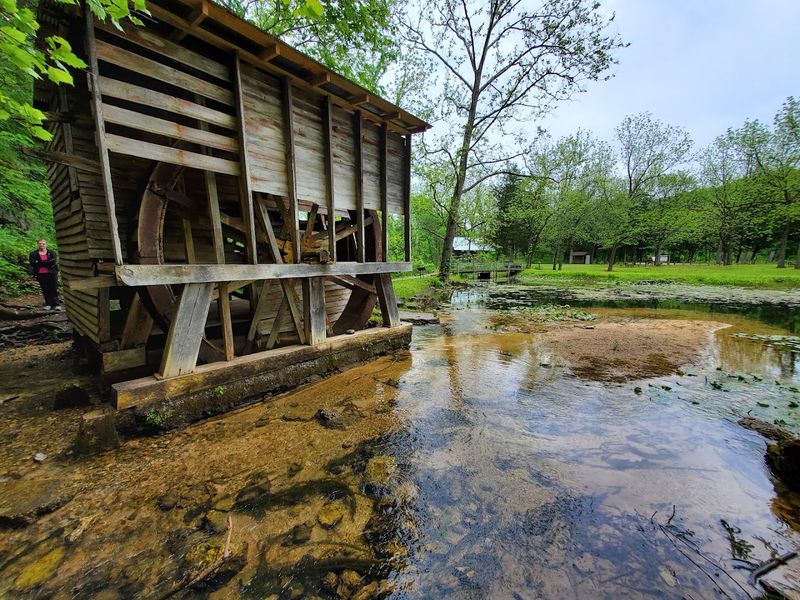
Falling Spring Mill is much more than a quick photo opportunity. Scattered around the scenic pond, you will find picnic tables perfect for spreading out a lunch and settling in.
Some spots even offer pedestal grills for outdoor cooking enthusiasts.
Spacious grassy areas provide room for children to play or for visitors to simply relax and soak in the natural beauty. The U.S.
Forest Service manages this day-use area, ensuring it remains accessible and well-maintained. Clean pit toilets are available, though there is no running water on site.
With proper state permits, you can even fish in the pond. This tranquil setting invites you to extend your visit into a full afternoon escape.