
Tearing Down This Abandoned New York Asylum Would Cost Too Much So It Still Stands
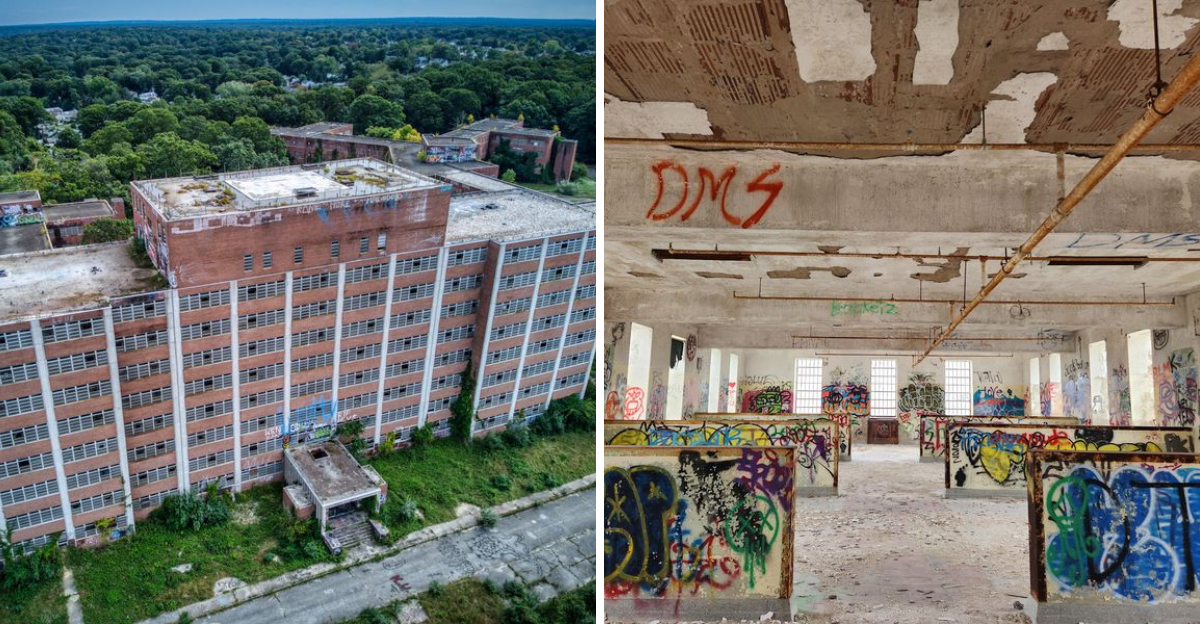
What makes a place too costly to erase? One abandoned New York asylum found the answer, and it is staggering enough to keep every crumbling wall standing decades later.
Over a hundred buildings once hummed with life here, then went quiet almost overnight.
Brick towers rise broken against the sky while a slow river curves past below. Vines climb through shattered windows left wide open, and trails now trace an old rail line straight toward open water.
Birds nest where thousands once wandered these quiet fields.
New York keeps this kind of story rare, a price tag deciding what stays standing and what finally falls. The real reason nothing came down might surprise anyone expecting a ghost story instead of a spreadsheet.
From Farm Colony to Sprawling Asylum City
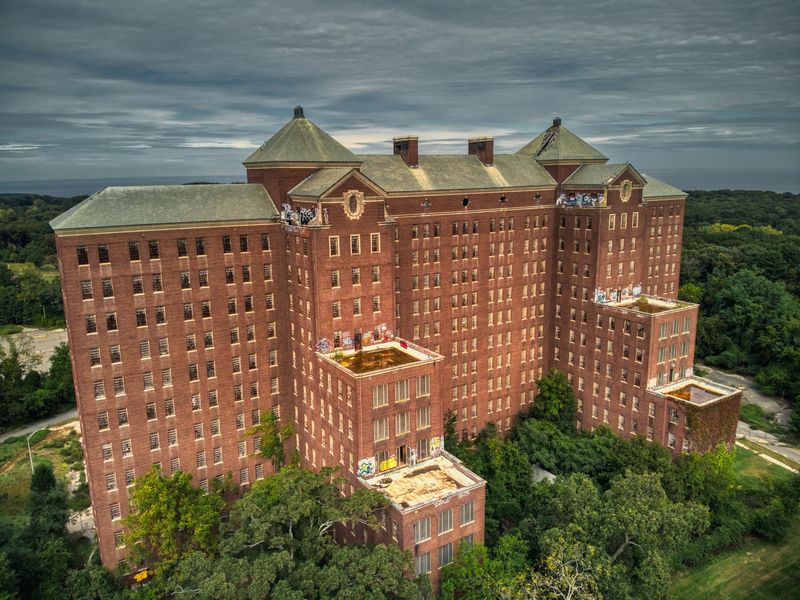
Back in 1885, Kings County, now known as Brooklyn, had a problem. Its urban asylums were overflowing, and something had to change.
The solution was bold: buy a large tract of land on Long Island and build a brand-new facility far from the crowded city.
The early vision was rooted in a “farm colony” model. Patients worked the land as part of their treatment.
Fresh air, open fields, and physical activity were considered progressive therapy at the time.
By the early 20th century, the campus had expanded dramatically. New York State took control in 1895 and renamed it Kings Park State Hospital.
The surrounding community, once called Indian Head or St. Johnland, eventually adopted the name “Kings Park” because the hospital’s presence was so dominant. The institution generated its own power, operated its own railroad spur, and functioned almost entirely as a self-sufficient town.
It was ambitious, sprawling, and unlike anything else on Long Island at the time.
Building 93 and the Peak of an Era
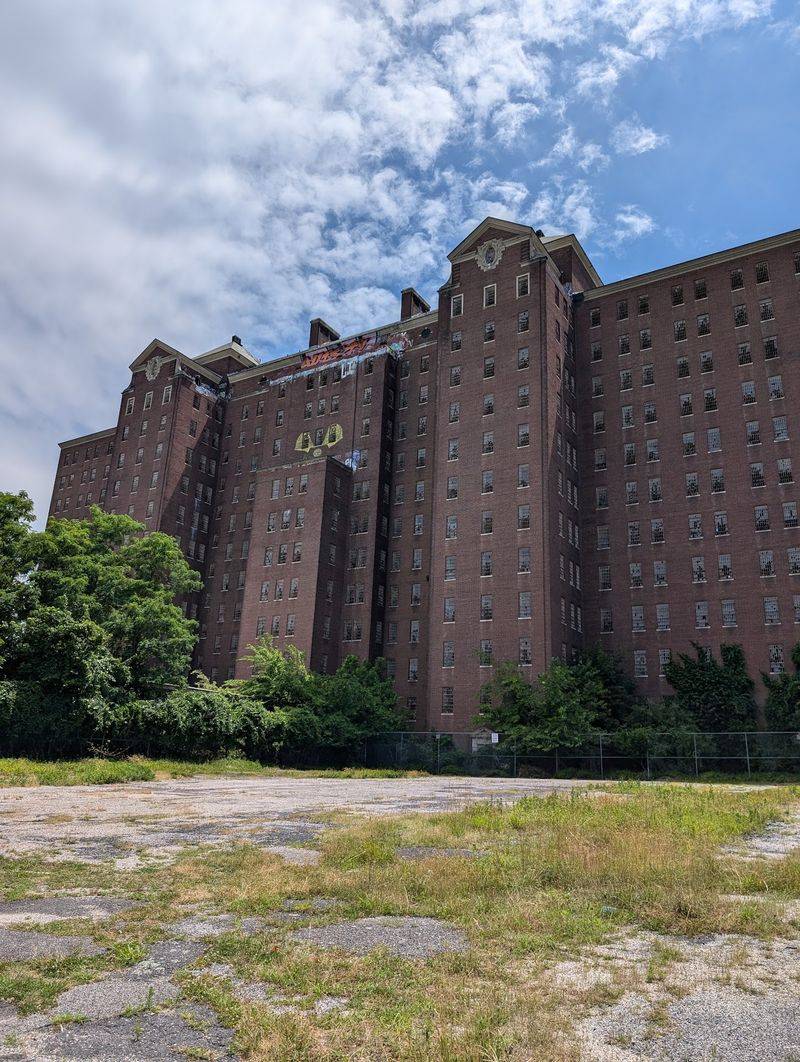
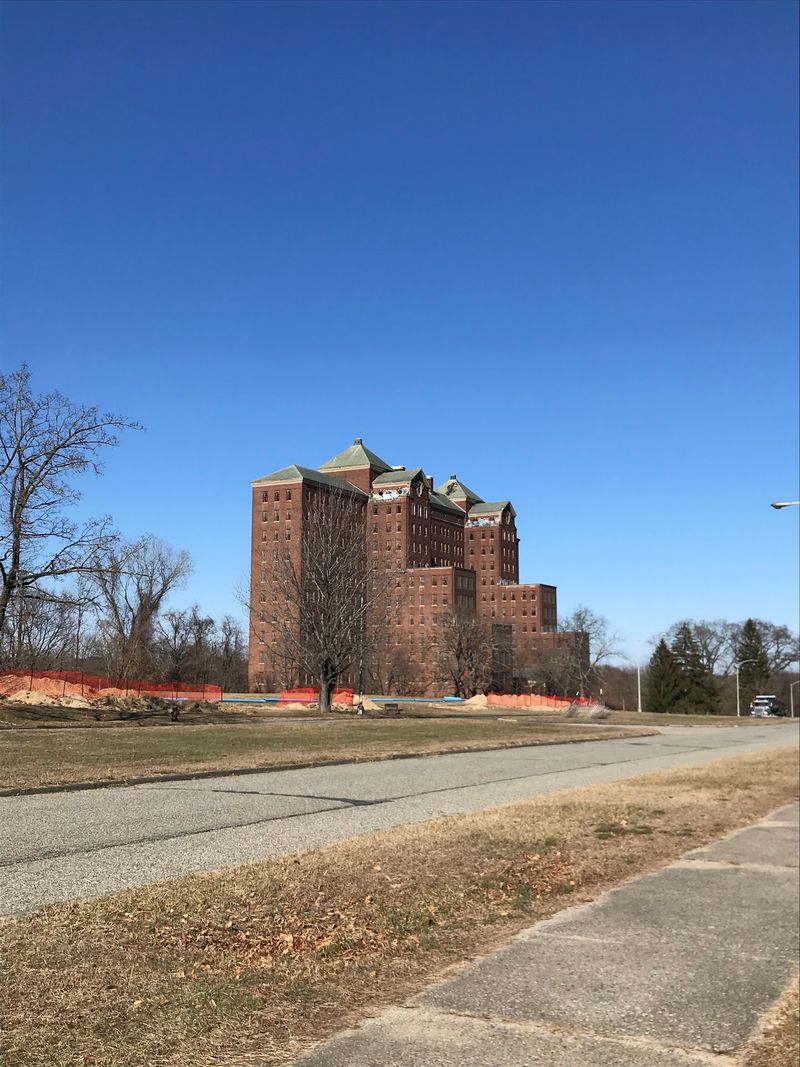
Few buildings in New York carry as much visual weight as Building 93. Completed in 1939 and funded through the Works Progress Administration, this 13-story tower was designed to house geriatric patients and those with chronic physical conditions.
It loomed over the campus like a concrete monument to institutional ambition.
By 1954, Kings Park Psychiatric Center had reached its peak population. Over 9,300 patients lived on the grounds at one time.
The campus held more than 100 structures, including power plants, two marinas, an amusement hall, and a dedicated railroad connection.
The scale was almost hard to comprehend. This was not just a hospital.
It was a parallel city, operating entirely within its own walls. Building 93 became the symbol of that era, and today it remains the most photographed structure on the site.
Its broken windows and weathered brick tell a story that no historical document could fully capture. Visitors still stop and stare, often speechless at its sheer size.
The Medication That Changed Everything
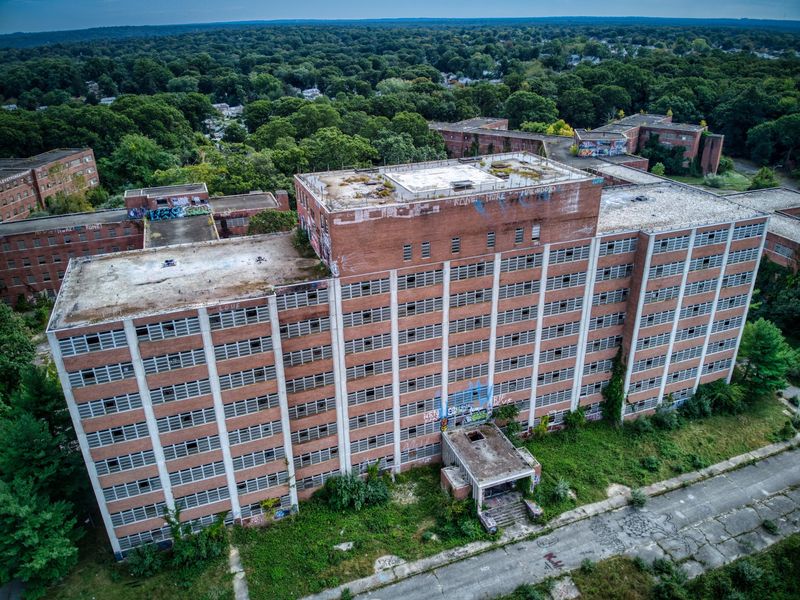
The mid-20th century brought a revolution to mental healthcare, and it came in pill form. The introduction of psychotropic medications in the 1950s changed how doctors approached treatment.
Suddenly, many patients could manage their conditions outside of large institutional settings.
This medical shift triggered a nationwide movement known as deinstitutionalization. Governments began reducing the size of state hospitals, believing that community-based care would fill the gap.
For Kings Park, this meant a steady and irreversible decline in patient numbers. Buildings that once buzzed with activity started going dark one by one.
The transition was not smooth. Community mental health centers were never fully developed to handle the demand.
Many patients who left institutional care struggled to find adequate support. The policy, while well-intentioned, left a complicated legacy across New York and beyond.
Kings Park became a physical reminder of that shift, its empty halls reflecting both the promise and the failure of a changing system. The silence it left behind still echoes.
The Final Years Before the Lights Went Out
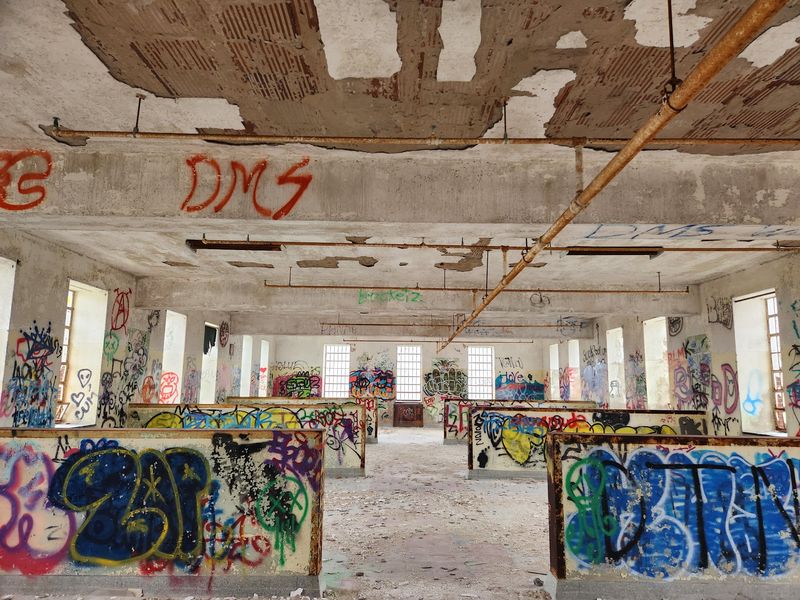
By the 1970s, Kings Park Psychiatric Center was visibly shrinking. Wards closed down in waves.
Staff numbers dropped. The sprawling campus that once housed thousands was operating at a fraction of its former capacity.
The energy that had once defined the place was draining away fast.
Federal inspectors raised serious concerns during the 1980s. Reports cited staff shortages, incomplete patient records, and fire safety violations.
At one point, the center temporarily lost federal Medicaid funding, a significant blow to an already struggling institution.
New York State eventually made the call to close Kings Park, along with Central Islip Psychiatric Center, another Long Island facility. In November 1996, after 111 years of continuous operation, the center shut its doors permanently.
Remaining patients were transferred to Pilgrim Psychiatric Center in Brentwood. The closure was quiet but carried enormous weight.
Over a century of history, thousands of lives, and hundreds of buildings were left behind. The campus fell silent almost overnight, and nature began its slow return.
Why the Wrecking Ball Has Not Arrived Yet
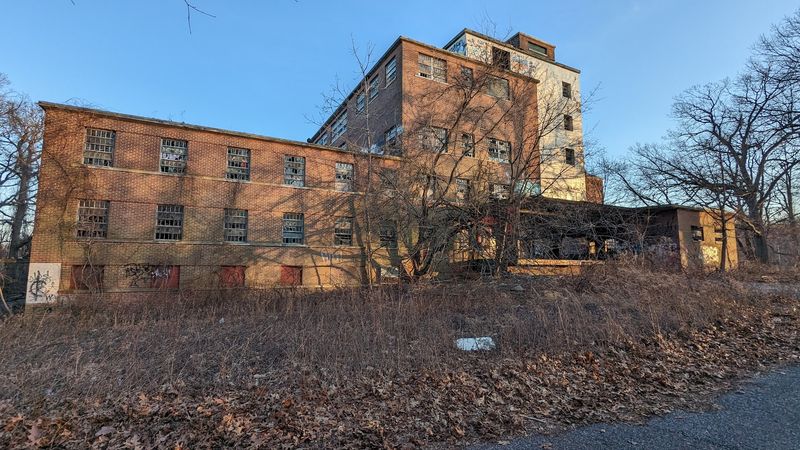
The most common question people ask about Kings Park is simple: why is it still standing? The answer is equally straightforward, even if the situation is anything but.
A comprehensive engineering study completed in 2010 estimated the total cost of demolishing all 57 remaining abandoned buildings at approximately $215 million.
That number breaks down in telling ways. Roughly $186 million covers structural demolition and the removal of hazardous materials, particularly asbestos, which is laced throughout many of the buildings.
Another $26 million targets five miles of underground steam tunnels, also heavily contaminated. An additional $3.7 million accounts for materials dumped on the property over the decades.
Earlier informal estimates had hovered around $60 million, so the updated figure came as a shock to many. The financial reality has made sweeping demolition nearly impossible to prioritize.
New York State continues to manage the site, but the cost alone has kept most of the old structures standing. The ruins persist not out of sentiment, but out of sheer fiscal impossibility.
Nissequogue River State Park Rises From the Ruins
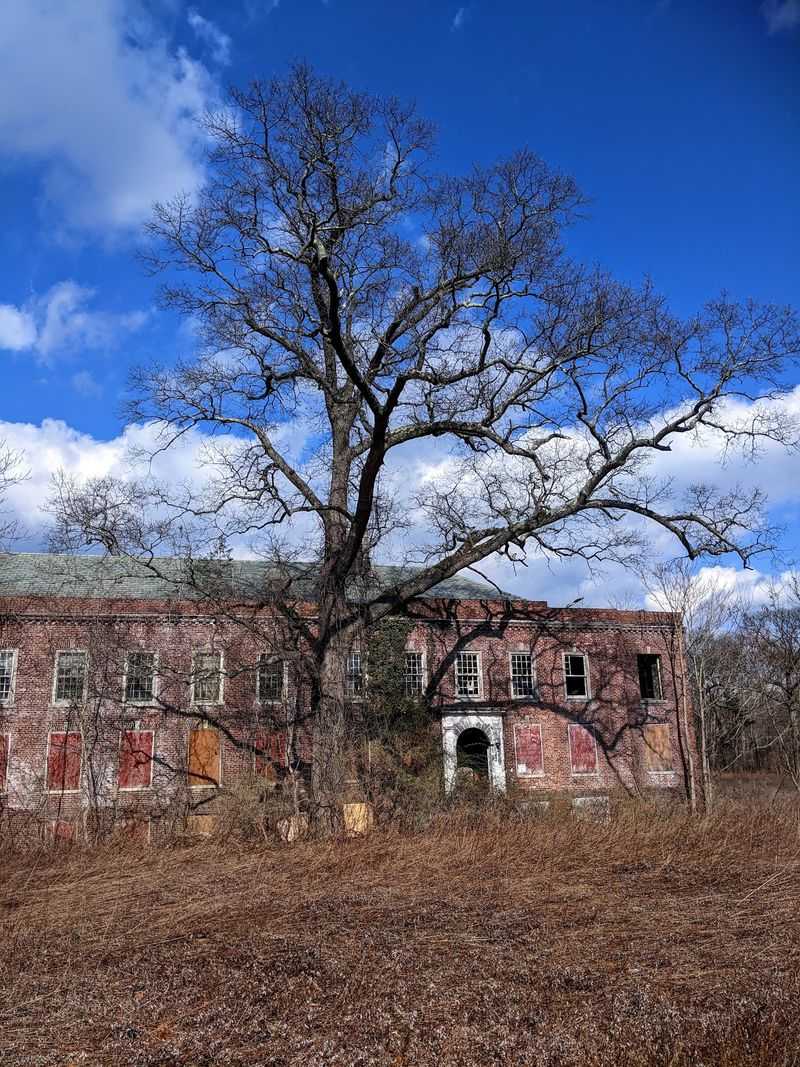
Out of abandonment came something unexpected: a thriving state park. In 2000, the waterfront section of the former hospital campus was officially reopened as Nissequogue River State Park.
The move was partly driven by community concern over private development claiming the valuable Long Island land.
The park expanded further in 2006 and 2007, absorbing hundreds of additional acres from the former hospital property. Today, the park covers over 500 acres.
Its entrance at 799 St Johnland Rd, Kings Park, NY 11754, welcomes visitors year-round to a place that blends natural beauty with layers of complicated history.
The contrast is striking. Lush walking trails and peaceful riverbanks sit within view of decaying brick towers.
Birds call from the treetops while old asylum buildings quietly crumble in the background. The park has given this land a second life, one that feels both hopeful and haunted at the same time.
It is a rare kind of place that rewards both the curious and the contemplative visitor equally.
Trails, Birds, and a River Worth Exploring
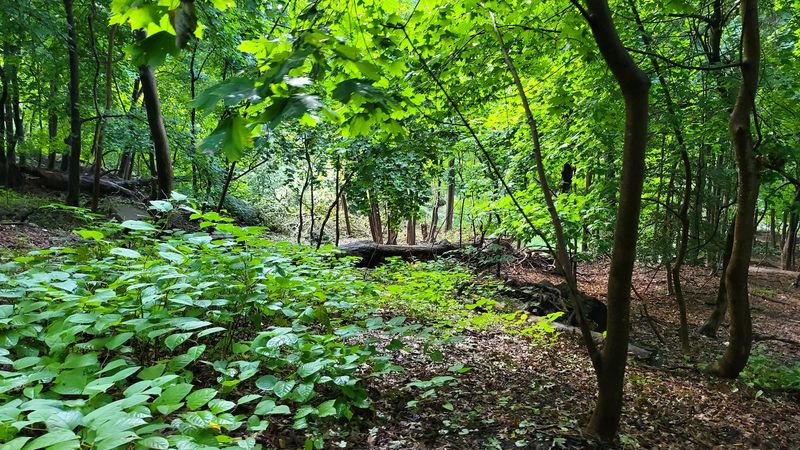
Outdoor recreation at Nissequogue River State Park goes well beyond a simple stroll. Miles of walking and hiking trails cut through dense woodlands and along the banks of the Nissequogue River.
The paths are well-suited for anyone looking to decompress, move at their own pace, and take in some genuinely beautiful Long Island scenery.
The park holds a Bird Conservation Area designation, which reflects its importance as a habitat for overwintering waterfowl and migratory species. Egrets, herons, and a rotating cast of seasonal visitors make this a rewarding spot for birdwatchers of any skill level.
On the water, options include fishing, canoeing, and kayaking, with a dedicated launch point for those arriving with their own gear. A marina with seasonal boat slips handles the boating crowd.
One standout feature is the Kings Park Hike and Bike Trail, a 1.7-mile route that follows the old hospital railroad spur and connects downtown Kings Park all the way to the Long Island Sound. It is a clever piece of history repurposed into something active and accessible.
The Eerie Atmosphere That Keeps People Coming Back
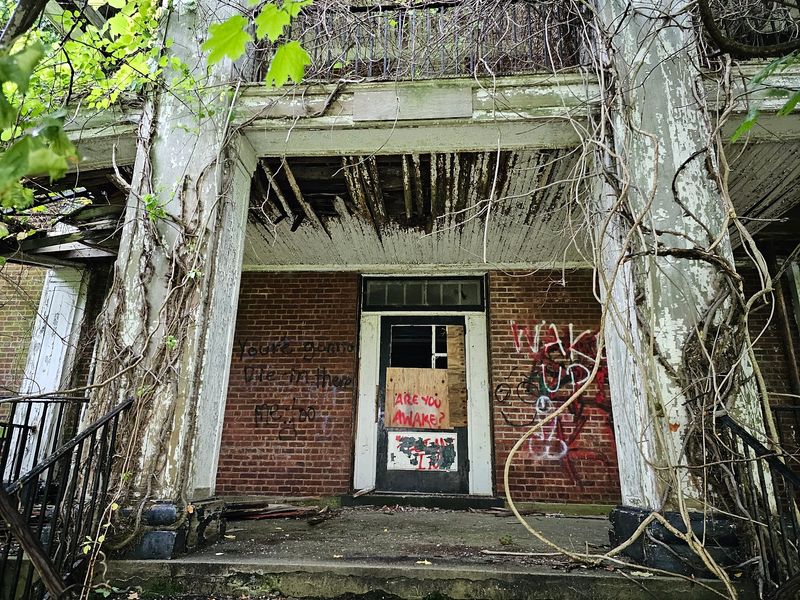
Plenty of abandoned places exist across New York, but few carry the same weight as this one. The sheer scale of Kings Park Psychiatric Center sets it apart.
Crumbling facades, broken windows, and corridors slowly being reclaimed by vines create a visual experience that photographs struggle to fully capture.
The site has earned a reputation for being haunted, fueled by local legend and the natural silence that settles over the grounds. Visitors often describe a profound stillness around the older buildings, the kind that makes ordinary sounds feel louder than they should.
Whether or not anything supernatural lingers here, the atmosphere is undeniably powerful.
Urban explorers and photographers are drawn to the dramatic visual contrasts. Bright green ivy climbing dark brick walls.
Sunlight cutting through broken skylights. A rusted gate framing a view of the river beyond.
All buildings are sealed and off-limits to entry, but the exteriors alone offer more than enough to hold attention for hours. The experience is equal parts historical reflection and raw, unscripted drama.
Very few places on Long Island deliver both at once.
What the Master Plan Means for the Future
The future of Kings Park Psychiatric Center is not entirely unplanned. In November 2022, the New York State Office of Parks, Recreation and Historic Preservation released a draft Master Plan for Nissequogue River State Park.
The document outlines a careful approach that balances further demolition with adaptive reuse of select historic buildings.
Some structures have already been removed.In 2013, the hospital’s large smokestack came down as part of a project that also removed 19 additional buildings. Other buildings are being repurposed rather than demolished.
York Hall, the former auditorium and community theater, is in the process of being restored. A renovated Veterans Hospital building now serves as a welcome center for park visitors.
The Department of Environmental Conservation is also building new headquarters on the site, adding another layer of active use to the grounds. Preservation Long Island has advocated for retaining key historical elements, including Kings Park Boulevard, the road that once bisected the entire facility.
Progress is slow and deliberate, shaped by financial limits and logistical challenges. But the direction is forward, even if the pace sometimes feels as unhurried as the decay itself.
Visiting Tips for First-Timers to This Unique Destination
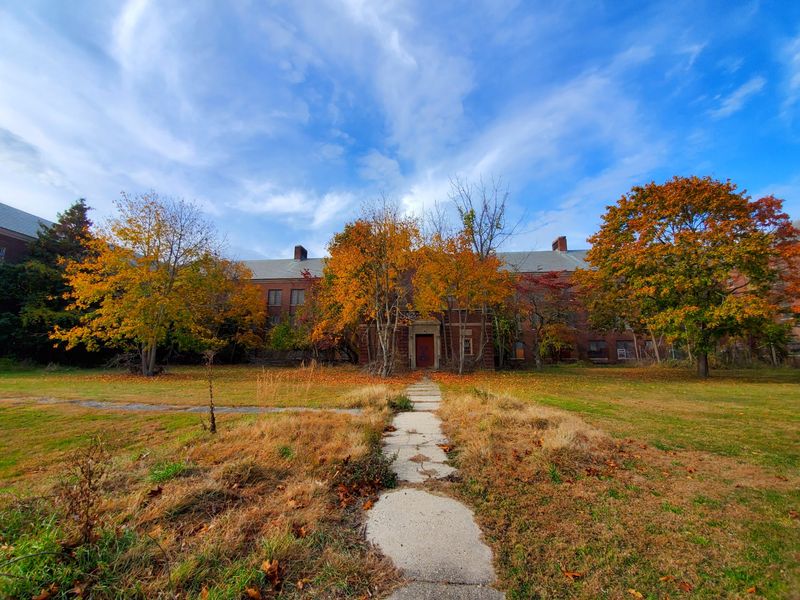
First-time visitors to Nissequogue River State Park often underestimate how much ground there is to cover. The park spans over 500 acres, and the former hospital buildings are spread across a wide area.
Comfortable walking shoes and a charged phone for photos are both strongly recommended before setting out.
All abandoned structures on the property are sealed and secured. Entry into any building is strictly prohibited, and authorities do enforce this.
The experience of exploring the grounds from the outside, however, is entirely rewarding on its own. The exteriors are dramatic, historically rich, and endlessly photogenic from every angle.
Dogs are welcome in the park, making it a popular destination for pet owners looking for a longer, more interesting walk than the average trail offers. Parking is available near the entrance.
The park is easy to locate and well-signed from the main roads in Kings Park. Bringing water and a snack is a smart move, especially if the plan is to walk the full trail to the Long Island Sound and back.
The journey is worth every step.