
The Mississippi State Park Where The Sky Gets So Dark You Can See The Milky Way With Your Own Eyes
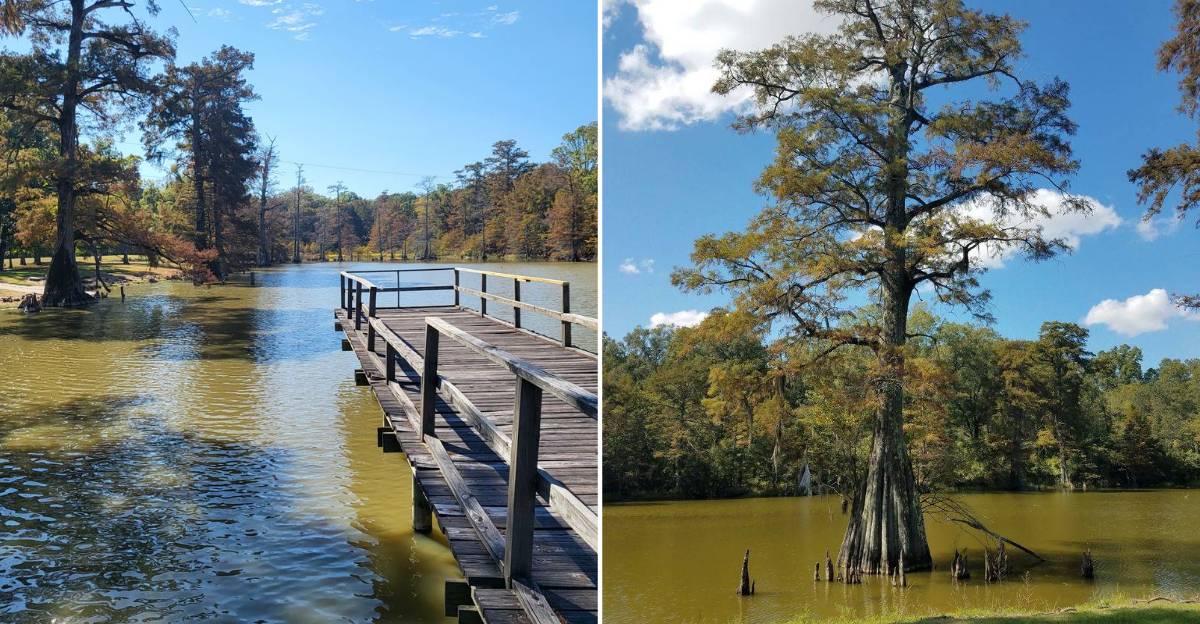
There’s no more romantic moment than watching stars fill the night sky. Mississippi holds a state park with skies dark enough to reveal the Milky Way without any special equipment.
Light pollution here stays minimal, unlike most areas closer to bigger cities nearby. Regulars know the best nights to visit, timing trips around new moons for maximum visibility.
Nothing about the park feels overrun despite its growing reputation among stargazers. Trails and open fields offer plenty of space to set up and watch comfortably.
Photography opportunities exist for those patient enough to capture the sky properly. This park proved that sometimes the most breathtaking views require nothing more than looking up.
Perfect Conditions For Milky Way Observation
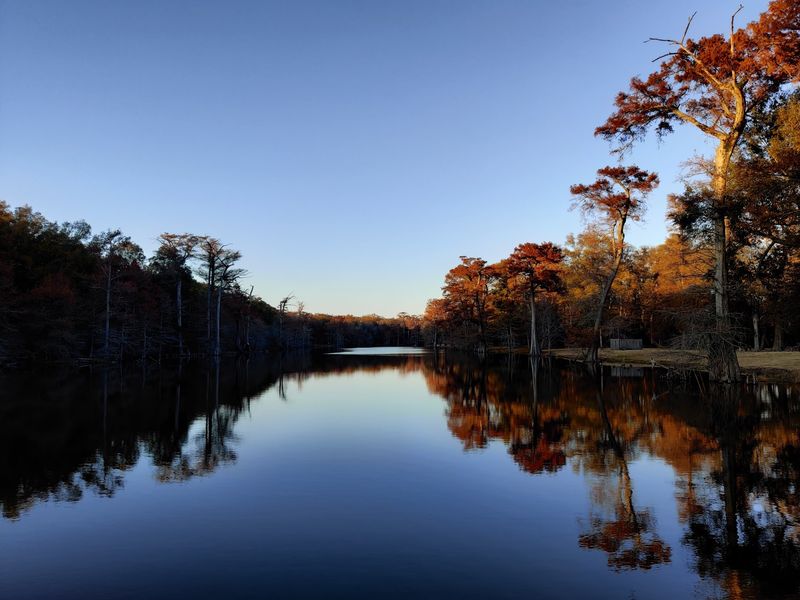
Astronomers rank night skies on something called the Bortle scale, running from 1 for pristine wilderness to 9 for downtown glare. Leroy Percy State Park sits at Class 3, which is rural dark and genuinely rare east of the Mississippi River.
What that number means in plain terms is simple. The Milky Way shows up as an actual band of light with texture and shape, not the faint smudge most people squint at from their backyards.
Geography does a lot of the heavy lifting here. The Delta is flat, famously flat, so no hills or ridges are blocking the horizon in any direction.
Constellations look sharper too. Stars that normally vanish into the haze of suburban glow suddenly snap into focus, and the sky feels crowded instead of empty.
Timing matters more than gear. A clear forecast paired with a new moon gives the darkest possible conditions, since even a half moon washes out fainter objects fast.
Travelers who have stargazed across the eastern United States often rank this sky among the better ones they have found. That is a bold claim for a small park in Washington County.
The surrounding farmland helps as well, since there are no strip malls or stadium lights for miles. Visitors can find it at 1400-1402 MS-12, Hollandale, MS 38748.
How To Prepare For A Nighttime Visit
Human eyes are slow learners in the dark. Full night vision takes roughly 20 to 30 minutes to develop, and one careless glance at a phone screen resets the whole process.
That is why a red-light headlamp belongs at the top of any packing list. Red wavelengths let people walk around safely without wrecking their adjusted vision or anyone else’s.
Warm layers surprise a lot of first-timers. Clear nights lose heat quickly, and sitting still for two hours makes even a mild Delta evening feel chilly.
Comfort changes everything about a stargazing session. A reclining chair or a thick blanket spread on the ground keeps necks from staging a rebellion halfway through.
Snacks, water, and a thermos of something hot stretch a short visit into a long, lazy one. Nobody regrets bringing coffee at midnight.
Checking two things before leaving home saves a wasted trip. Look at the cloud forecast, then check a moon phase calendar and aim for the nights closest to a new moon.
Binoculars in the 10×50 range reveal star clusters and moons of Jupiter without the fuss of a telescope. Astronomy apps with a red-screen mode work well for finding targets.
One more thing, and it is not optional in the Delta. Bug spray, the mosquitoes here are legendary, and they clock in early.
Exploring Nocturnal Wildlife In The Park
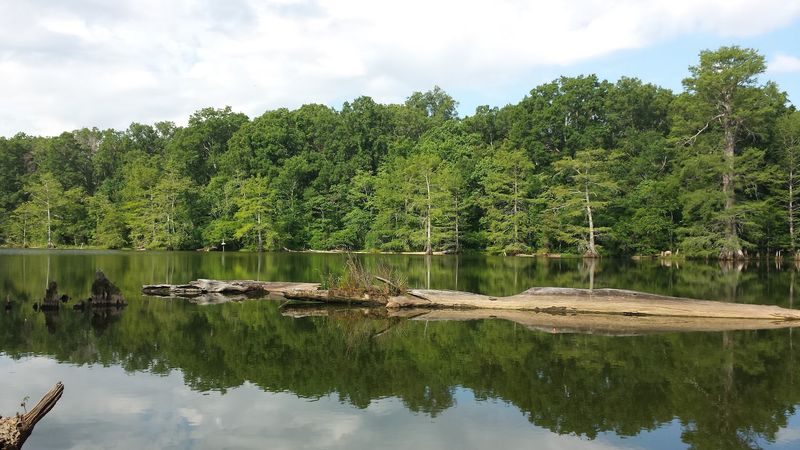
Here is a fact worth knowing before dark falls. Leroy Percy is the oldest state park in Mississippi and the only one with its own dedicated wildlife preserve, which explains why the place feels so alive after sunset.
Alligators are the headliners. They gather around a warm artesian water habitat fed from underground, and two elevated observation towers let people watch from a safe height.
Swimming in Alligator Lake is, for reasons that should be obvious, a terrible idea. Fishing from the bank is the smarter hobby.
Daytime wildlife includes deer, wild turkeys, squirrels, ducks, and doves moving through the hardwood bottoms. Birders have logged more than 100 species across the park.
Spring and fall mornings bring the busiest bird activity, with warblers and waders working the shallows. Quiet observers see the most.
Then the sun drops, and the soundtrack changes completely. Afternoon birdsong fades out, and frogs, insects, and owls take over the shift.
Cypress swamps amplify all of it. Sound carries strangely over still water, which makes an ordinary bullfrog sound like something considerably larger.
Feral cats have been spotted around the grounds too, adding an odd suburban note to an otherwise wild scene. Keeping food secured is smart practice.
Listening in the dark turns out to be half the fun. The sky gets the credit, but the swamp provides the music.
Understanding Light Pollution Impact On Stargazing
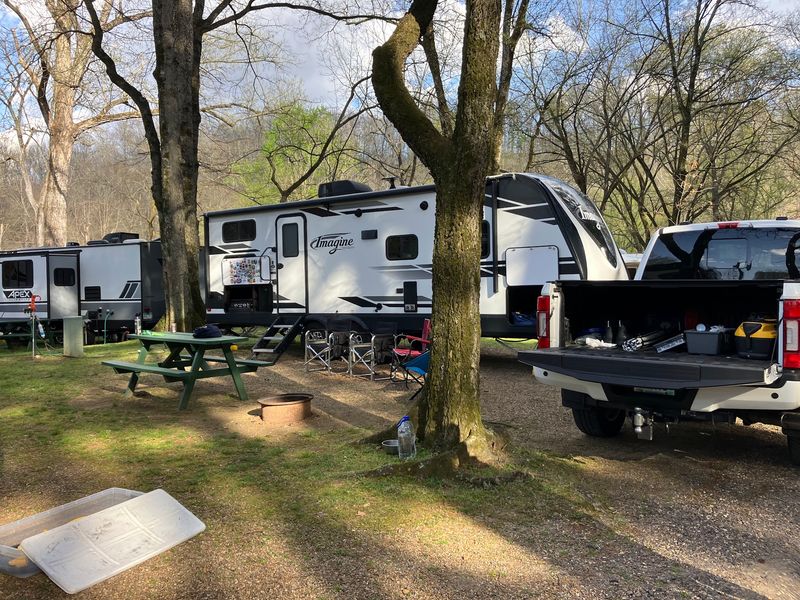
Skyglow is the reason most Americans have never actually seen the Milky Way. Artificial light bounces off dust and water droplets in the air, turning the whole sky into a dim orange lamp.
Under those conditions, the eye never fully adapts. Pupils stay narrow, faint stars disappear, and the galaxy simply is not there anymore.
The Bortle Class 3 rating here tells a different story. Rural darkness means the galactic band is visible without equipment, and the difference from a suburban backyard is dramatic rather than subtle.
Weather plays a supporting role. Humidity, haze, and thin clouds scatter stray light more efficiently, which is why muggy summer nights can look milkier than crisp ones.
Air pollution does the same thing on a larger scale. Cleaner air holds detail better and lets star colors stay true.
The moon counts as light pollution too, which catches people off guard. A full moon can wash out everything except the brightest planets and stars.
Planning around lunar phases is therefore the cheapest upgrade available. New moon weekends deliver the deepest black skies with zero extra cost or gear.
Distance from towns matters enormously. Farmland surrounds this park, and cropland does not need parking lot floodlights at two in the morning.
That accidental combination of geography and agriculture is what preserves the darkness here.
Popular Trails For Evening Hikes
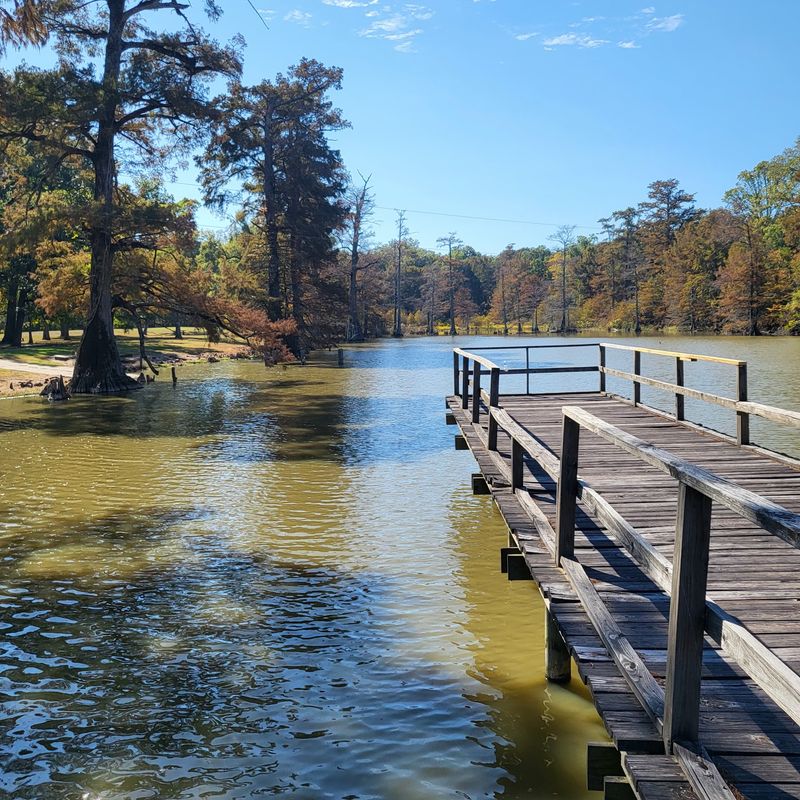
Walking here means moving through three landscapes in a single afternoon. Shaded hardwood forest gives way to cypress swamp, which opens onto the edge of the lake.
Alligator Lake Trail is the main event, a three-mile loop that circles the water. Wildlife sightings are common along the quieter stretches.
Short on time? A 1.5-mile route on the south side of the lake covers the highlights without the full commitment.
Other options stay easy and flat. The Lake Trail, the Woodland Connector Trail, and the Cypress Swamp Trail with its boardwalk sections all work for casual walkers.
Boardwalks matter more than they sound. They keep feet dry over soggy ground and put hikers right above swamp water where the interesting creatures live.
Trail conditions vary with the seasons and with maintenance schedules. Fallen limbs and soft spots near the bayou call for careful footing.
Sturdy shoes or boots beat sneakers every time out here. Long sleeves and long pants cut down on bug bites and brush scratches.
Most hikers should finish longer loops before full dark unless they came specifically for a night walk with proper lights.
Timing an evening hike to end near an open field works beautifully. The legs get their exercise, then the eyes get the sky.
Bug spray, again, is not negotiable at dusk.
Tips For Night Photography And Astrophotography
Astrophotography rewards patience and punishes shaky hands. A camera with manual controls, a wide-angle lens, and a solid tripod form the entire foundation.
A workable starting point is 20 to 25 seconds at ISO 3200, then adjust from there. Longer exposures start turning stars into short trails as the Earth rotates.
Autofocus tends to hunt uselessly in the dark. Switching to manual focus and dialing in on a bright star solves the problem.
Screen brightness sabotages more sessions than anything else. Turning the display down to its dimmest setting protects the 15 to 30 minutes of night vision already earned.
Open ground matters for framing. The disc golf area and the field near the picnic grounds both offer broad, unobstructed views without tree branches crowding the frame.
The galactic core generally appears in the southern sky. Its angle shifts through the night, standing more upright early and tilting later.
New moon nights produce the cleanest results. Even a crescent adds enough glow to flatten contrast in the final image.
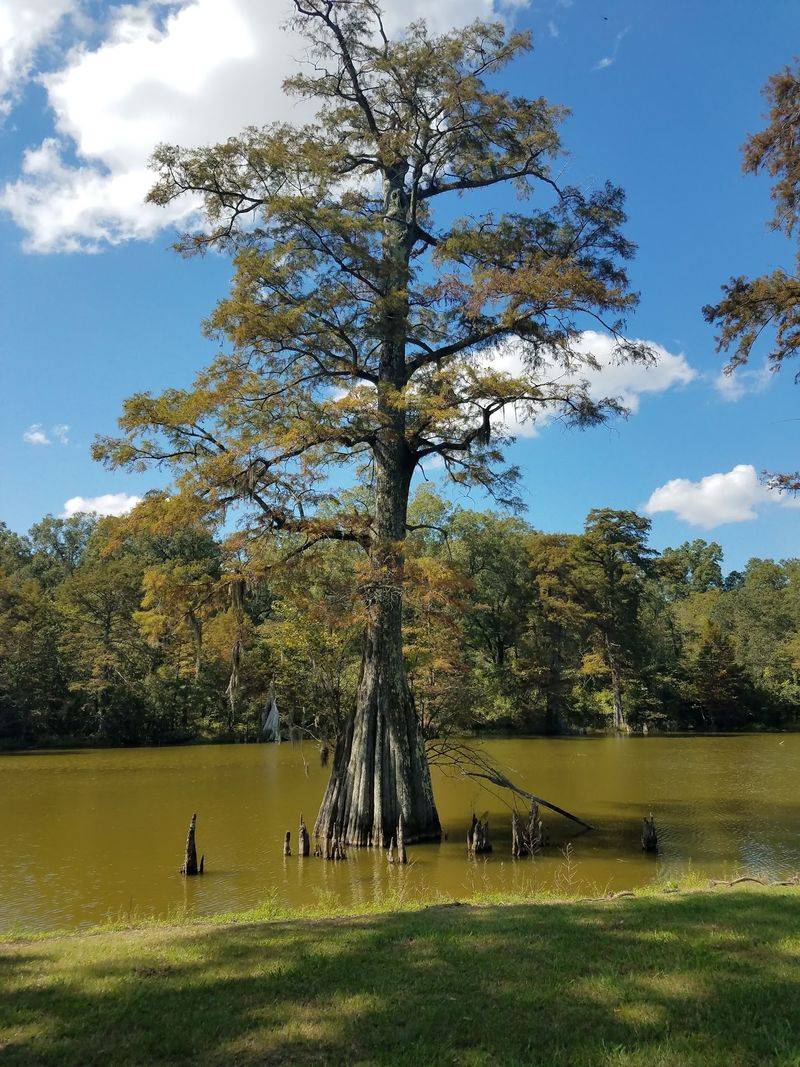
Foreground makes a photo memorable. Cypress silhouettes, a still lake surface, or the shape of a cabin roof give the stars something to hang above.
Cell service can be spotty, so downloading star maps ahead of time is wise. Fully charged spare batteries also die slower than cold ones.
Seasonal Changes Affecting Sky Visibility
The Milky Way never actually leaves, but its bright center follows a schedule. The galactic core, the thick glowing part everyone photographs, is only above the horizon during certain months.
April through September is the working season for core hunters. June, July, and August deliver the boldest views, with the band climbing close to overhead.
Spring visitors get a convenient bonus. From April into June, the core rises earlier in the evening, so nobody has to stay up until two in the morning.
Midsummer flips that. Around midnight in July and August, the core hits its highest point, which is when it looks most dramatic to the naked eye.
Autumn shifts things again. September and October keep the Milky Way visible roughly between 8 PM and midnight, setting a little earlier each week.
Fall has two underrated advantages. Temperatures drop into comfortable territory, and the mosquito population finally calms down.
November through January removes the galactic core from the picture entirely. It is below the horizon during dark hours.
Winter still deserves a visit, though. Cold air holds less moisture and haze, producing some of the sharpest, blackest skies of the entire year.
Orion, the Pleiades, and a scatter of bright winter stars fill the gap nicely. Different show, same excellent theater.
Safe Camping Practices In Remote Areas
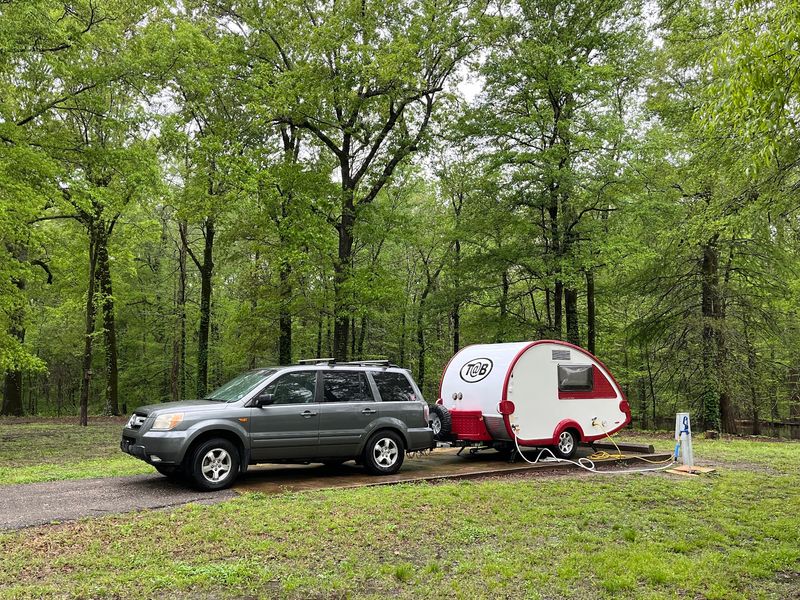
Camping options here run from full-hookup RV sites with concrete pads to simple primitive tent spots. Reservations are a good idea, especially for the RV sites during busy weekends.
Arriving with daylight left is the single best safety habit. It gives time to scan the site for fire ant beds, wasp nests, poison ivy, and uneven ground.
Setting up a tent properly takes a few small rules. Keep it at least 15 feet upwind from grills or fires, with three feet of cleared space around it.
Inside a tent, battery lights only. Nothing that burns fuel, since carbon monoxide is silent and unforgiving.
Food storage protects both people and animals. Sealed containers inside a vehicle keep raccoons and other visitors from treating the picnic table like a buffet.
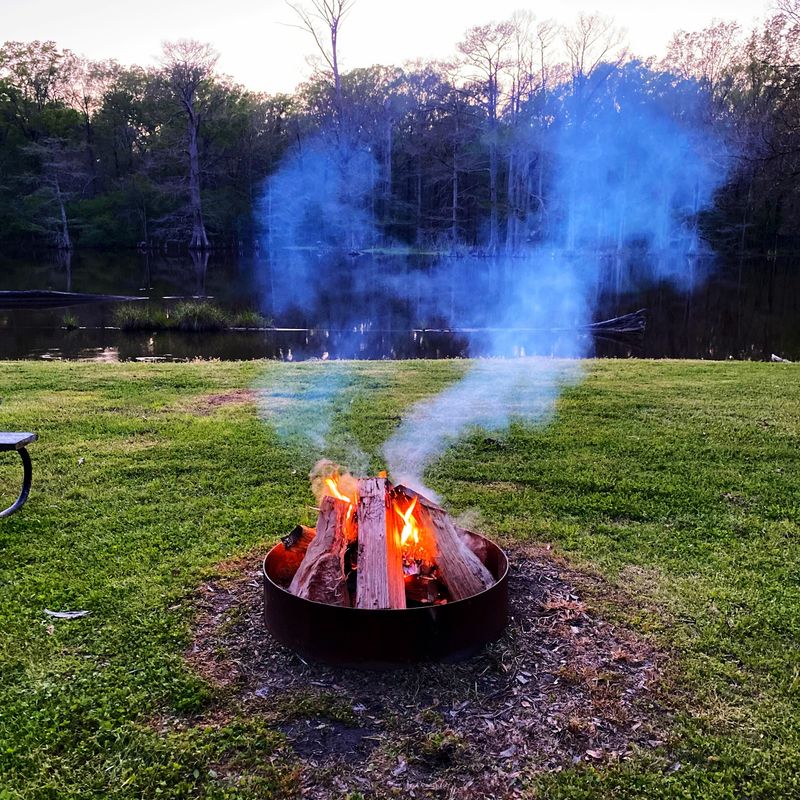
Campfires need a clear spot, a modest size, constant supervision, and water plus a shovel nearby. Check current fire restrictions before striking a match.
Only downed wood should be burned. Standing trees stay standing.
A first-aid kit, a map, a compass, a dependable flashlight, water, and high-energy snacks cover most emergencies. Telling someone the plan and expected return time costs nothing.
Cell service can drop out completely in spots, so a charged phone is backup rather than a lifeline. Pack out every scrap of trash on the way home.