
These 7 Free Stops Along Mississippi’s Natchez Trace Let Kids Stand Next To Mounds Built By Hand Centuries Ago
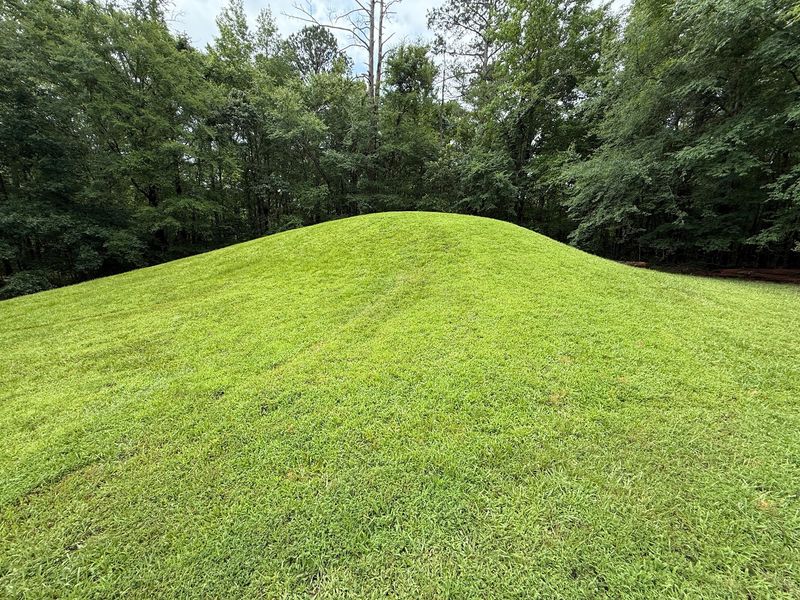
Grassy hills kept popping up beside the road, and at first they looked like nothing special. Then a small brown sign said otherwise, and suddenly the whole drive through Mississippi felt like a treasure hunt.
People built these earth mounds by hand, basket by basket, hundreds and even thousands of years ago. Here are seven easy stops where kids can stretch their legs and stand next to real history.
1. Emerald Mound, Natchez, MS
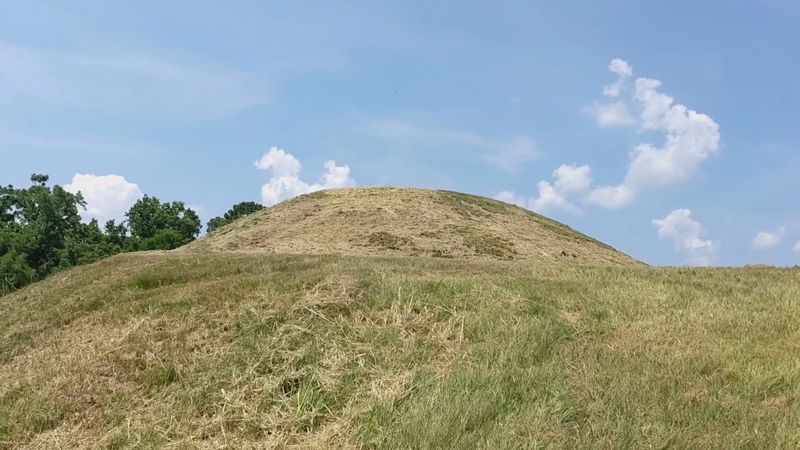
Picture a hill so big it covers eight acres, then imagine people building it by hand. Emerald Mound is the second-largest Mississippian Period ceremonial mound in the United States, and it was used between about 1200 and 1600 CE.
The main mound rises 35 feet with a wide, flat top. Two smaller mounds sit on that top, which pushes the total height to roughly 60 feet.
A trail leads right up, so kids can climb and look out over the countryside the way ancient leaders once did.
Getting there takes only a quick detour. Turn off the Parkway onto Emerald Mound Road and follow the country backroad for about a mile.
The free parking lot has plenty of history plaques to read, and the interpretive display there is accessible.
Standing on top gives a real sense of height and scale that photos simply miss. The setting stays peaceful, with tall grass swaying around the edges.
Hours run from 8 AM to 5 PM every day.
Want a calmer visit? Mondays and Friday mornings tend to be quiet.
Weekends and Wednesdays draw more people, though there is space for everyone to roam.
2. Mangum Mound, NTP Milemarker 45.7
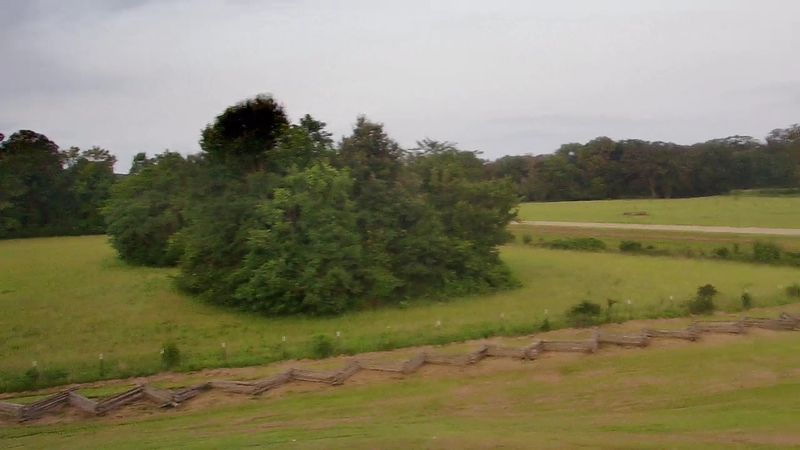
Not every mound looks like a pyramid. At first glance, Mangum Mound seems like an ordinary wooded hill, and that is partly true, since builders shaped it from a natural rise nearly 1,000 years ago.
A Mississippian society used the site as a burial ground between 1350 and 1500 AD, during a time archaeologists call the Foster Phase. Digs in the 1960s found rare copper plates here.
Many travelers call it a smaller cousin of Emerald Mound.
Kids should know one key rule before hopping out. Mangum Mound is sacred, so it is meant to be viewed from the ground, not climbed.
That makes it a good spot to talk about respect for places that still matter to American Indian nations today.
Driving something tall? The access road has a bridge clearance of 11 feet 6 inches.
Larger vehicles should park at the nearby Grindstone Ford lot and take a short walk over.
Leashed dogs are welcome, and the stop near Hermanville is popular with cyclists riding the Trace. Watch for milepost 45.7 so you do not breeze right past it.
3. Boyd Site, Natchez Trace Parkway
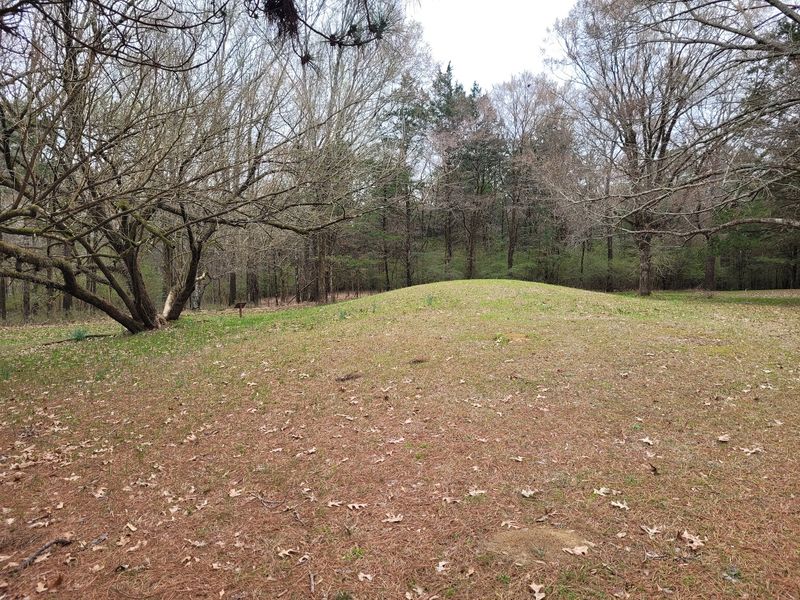
Layers tell the story at milepost 106.9. Long ago, people built two separate mounds here, and later someone built a third mound right over the top of them.
Archaeologists see that last step as a sign that old spiritual traditions were coming back to life. The site dates to a change between the Late Woodland and Early Mississippian eras, roughly 800 to 1100 AD.
Families lived around this spot for centuries.
Farming and erosion have worn the mound down over time, so it sits lower than it once did. Even so, kids can trace its shape and picture three mounds stacked into one.
Think of it like a cake with hidden layers inside.
A historical marker waits at the end of the short turnoff road with helpful background. The Boyd Site remains sacred to the Choctaw and other tribal nations, so quiet voices and careful steps fit the mood.
Located near Madison, the stop is quick and easy to add to a drive. Dogs are allowed, and weekday mornings are usually calm.
Bring along a question or two for the kids to answer from the sign.
4. Bynum Mounds, Houston, MS
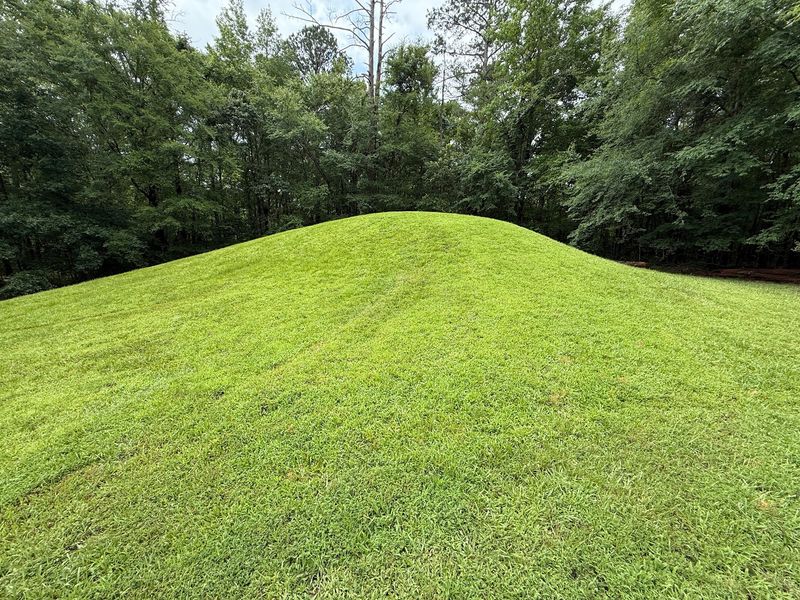
How old is old? Bynum Mounds were built between 100 BCE and 100 CE, which makes them the oldest mound site along the Natchez Trace Parkway.
Middle Woodland Period people raised six cone-shaped burial mounds here, from five to fourteen feet tall. After digs in the 1940s, the two largest were restored.
They stand neat and rounded on the lawn today.
A paved, accessible path about 200 feet long loops around the site. Strollers and wheelchairs roll along it easily, and little legs never get tired.
Interpretive shelters along the way explain who the builders were.
Some of the coolest clues came from far away. Workers found copper and greenstone here, materials that traveled across a huge trade network in the Southeast.
Ask kids to guess how goods moved without trucks or roads.
Listen for the audio kiosk, too, since it shares the story out loud. Between birdsong and breeze, the stop near Houston feels soothing.
It sits at milepost 232.4 and makes a smart break on a long drive.
5. Pharr Mounds
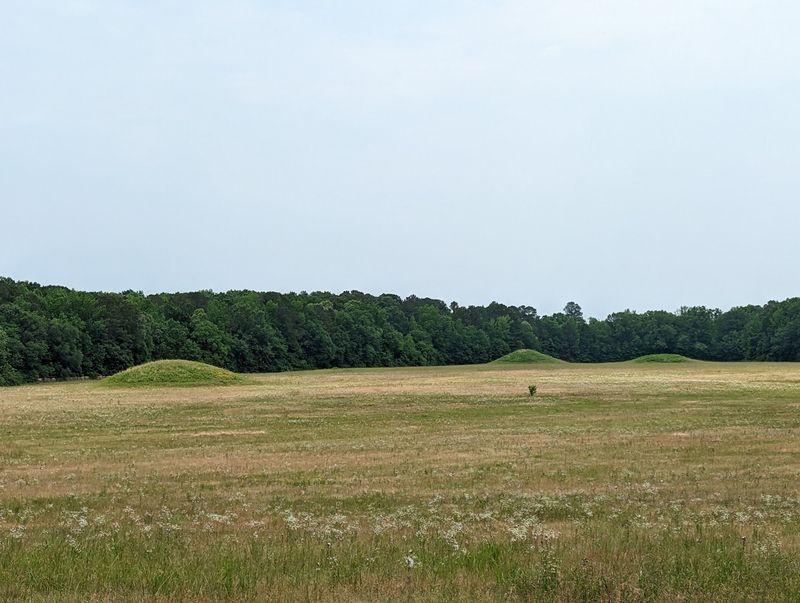
Eight giant domes rise from a field that stretches across 90 acres. Pharr Mounds ranks among the largest and most important archaeological sites in northern Mississippi.
Nomadic hunters and gatherers built these burial mounds roughly between 1 and 200 CE. Rather than staying in one place, groups returned here again and again over time to honor their loved ones, placing belongings alongside them.
The open landscape is the big surprise. From the pull-off, you can see almost all the mounds at once, which helps kids grasp just how much earth people moved by hand.
Counting them makes a fun game.
Respect matters here as well. The mounds are sacred, so viewing them from a distance is the right move.
Interpretive signs fill in the details while a short, easy walk lets everyone stretch.
Find it at milepost 286.7 in the Belmont and Prentiss County area of northeastern Mississippi. Wide skies and rolling grass make the site especially pretty on a clear day.
The history packed into this field is truly impressive.
6. Bear Creek Mound, Tishomingo, MS
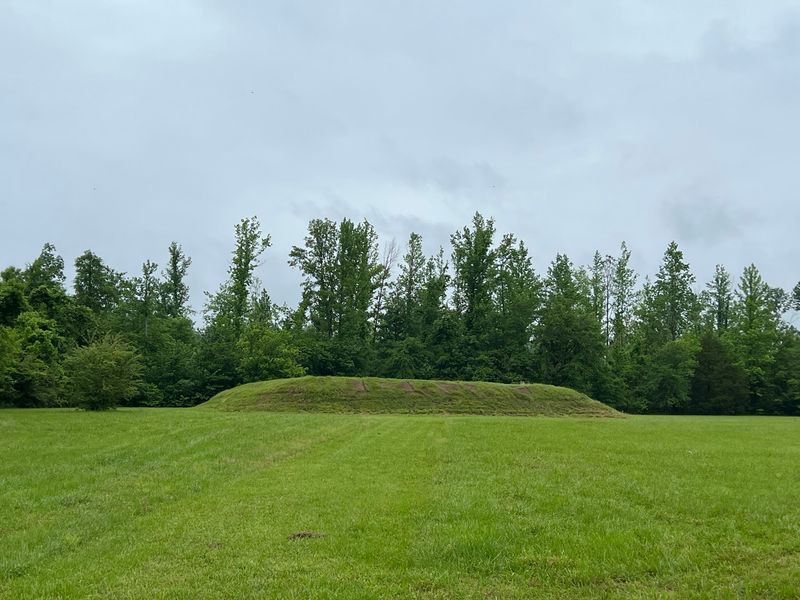
Close to the Alabama line, a lone flat-topped mound holds one of the longest stories on the Trace. Hunters visited the Bear Creek area as early as 8,000 BCE.
Mound building started here about 900 years ago. The National Park Service restored the platform to around eight feet tall, and its flat top likely held a house or temple.
Spiritual life in the village centered on that building.
Earlier, from the time of Christ to about 1000 AD, people moving through this area grew a little food. They also gathered nuts and fruit and caught game and fish from nearby streams.
Kids might enjoy imagining a menu from that time.
Unlike the cone-shaped burial mounds farther south, Bear Creek shows a different purpose. It was a stage for ceremonies, not a resting place.
That contrast makes a great talking point.
The mound sits at milepost 308.8, only a short hop off the Parkway near Tishomingo. Informational markers explain the history, and the small site is quick to explore.
Many call it the oldest archaeological site on the Trace.
7. Owl Creek Indian Mounds, New Houlka, MS
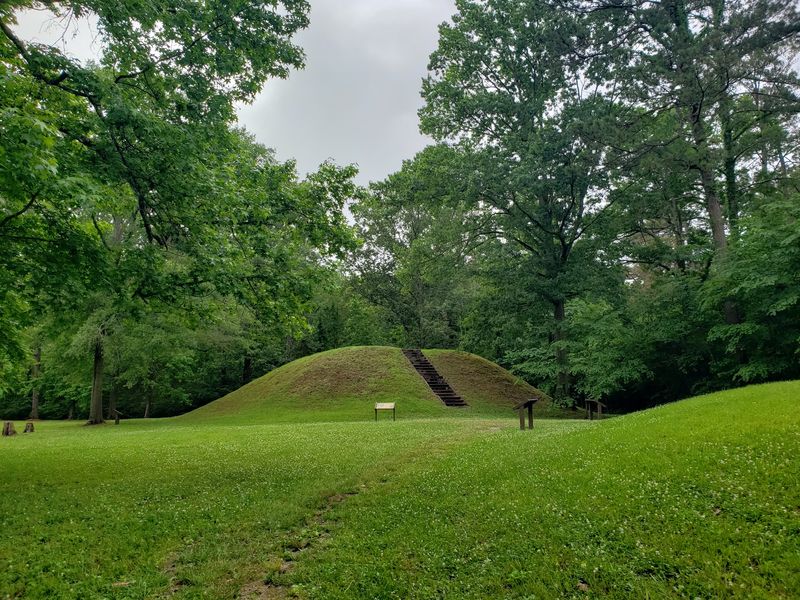
Sometimes the best stop is the one nobody planned. Many travelers find Owl Creek by accident while cruising the Trace, and it quickly becomes a highlight.
Tucked along County Road 413 near New Houlka, the site preserves several ceremonial earthworks built centuries ago. The mounds are well kept, with neatly mowed grass that shows their shapes clearly.
Interpretive displays explain who built them and why.
A trail winds through the area, giving kids a chance to burn off energy between car rides. Pair the walk with the signs and you have a short outdoor history lesson.
The setting feels shaded and quiet.
Practical perks help too. On-site parking makes arriving simple, and a restroom is available, which parents with young kids will appreciate.
Few stops on this list offer that bonus.
Owl Creek also works well with nearby outings, such as a weekend at Trace State Park. Because it sits just off the main route, it rounds out the journey nicely.
End your mound tour here and the kids will have seven ancient places to brag about.