
This 2.5-Mile Hike In Massachusetts Takes You Through The Ruins Of A Forgotten Mansion
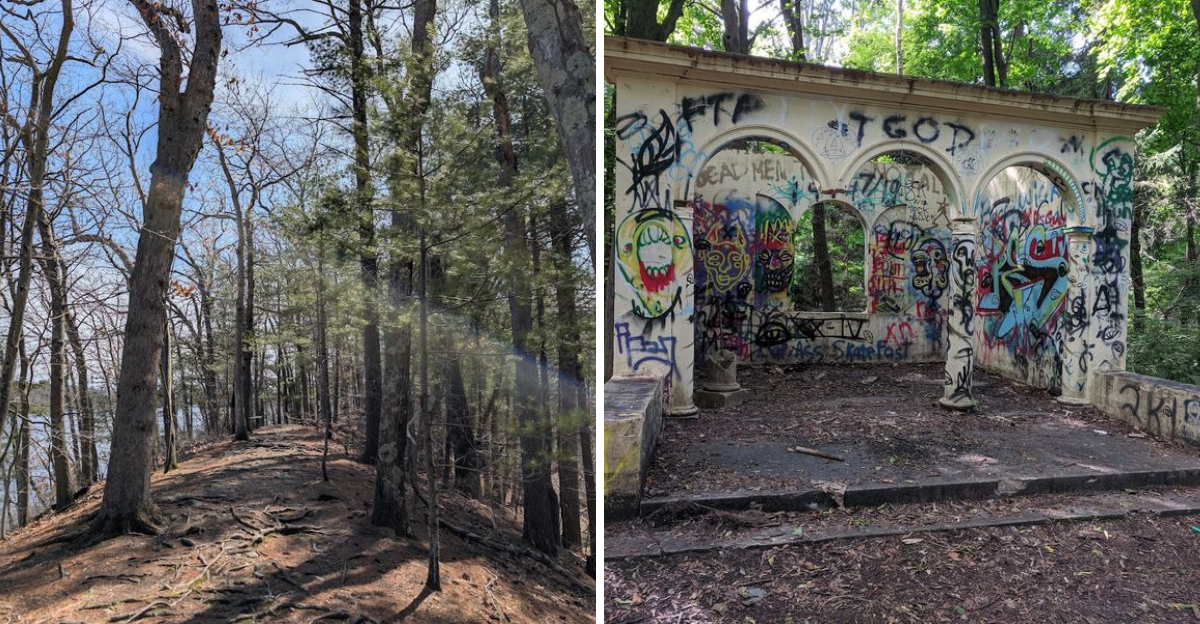
Most hikes offer trees, birds, and a quiet stretch of trail. This one adds the ruins of a forgotten mansion.
Massachusetts hikers can follow a 2.5 mile route through thick woods until old stone walls begin appearing between the trees. What remains is weathered and incomplete, yet that makes the discovery even more intriguing.
Doorways open into empty rooms. Moss covers foundations that once supported an impressive estate.
Nature has slowly reclaimed nearly everything, leaving hikers to imagine the people who lived there and the events that ended its story. The walk itself is manageable, but the ruins give it a sense of mystery that lasts long after the trail ends.
It is part outdoor escape and part accidental history lesson, with each crumbling wall raising another question. Few local hikes make the past feel this close, especially when it appears without warning in the middle of the forest.
The Highover Estate Ruins Turn Your Hike Into A Walk Through History
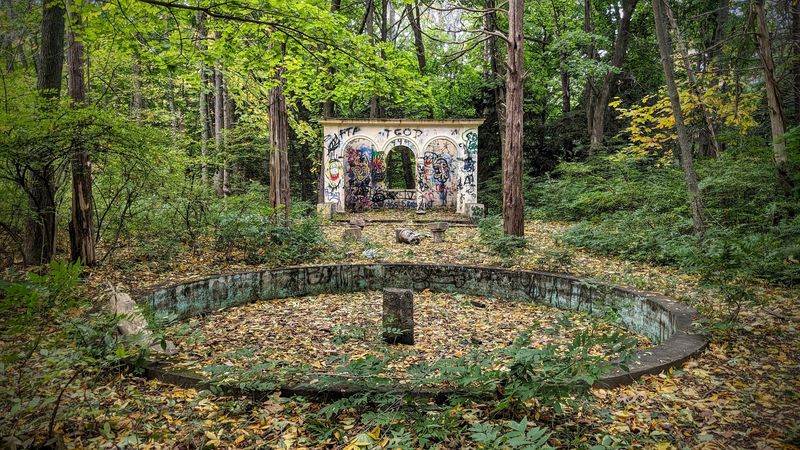
Stone does not lie. When you reach the top of Prospect Hill inside the J.C. Phillips Nature Preserve, the ruins of Highover speak with quiet authority about a life that once flourished here.
The Italianate mansion was built in 1913 by William Phillips, the son of John Phillips, who had already established the surrounding land as Moraine Farm decades earlier.
William lived in Highover and shortly after he passed, the mansion was consumed by fire in 1968.
What remains today are the outer foundation walls, a courtyard area, back steps, and a prominent fountain that somehow still holds its shape despite years of exposure to New England winters.
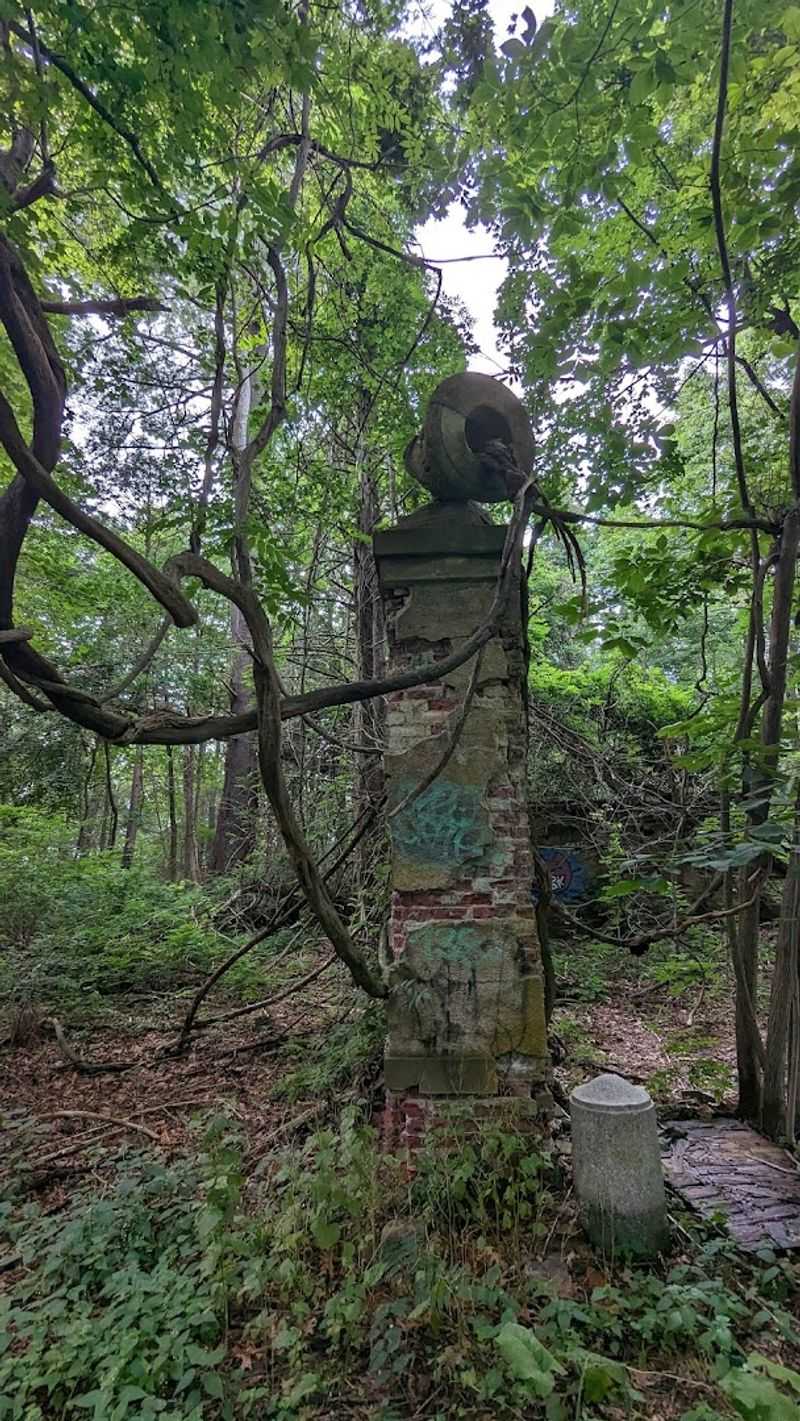
An old iron gate, now threaded through with wild vines, marks what was once a formal entrance. A small headless stone statue on a pedestal, possibly a satyr, stands nearby with graffiti worn into its surface.
A kiosk positioned near the ruins shares historical background for those who want context before exploring. The atmosphere up here is genuinely arresting, a place where forest and memory overlap in a way that feels both melancholy and oddly peaceful.
Echoes Of A Grand Past Along Wenham Lake
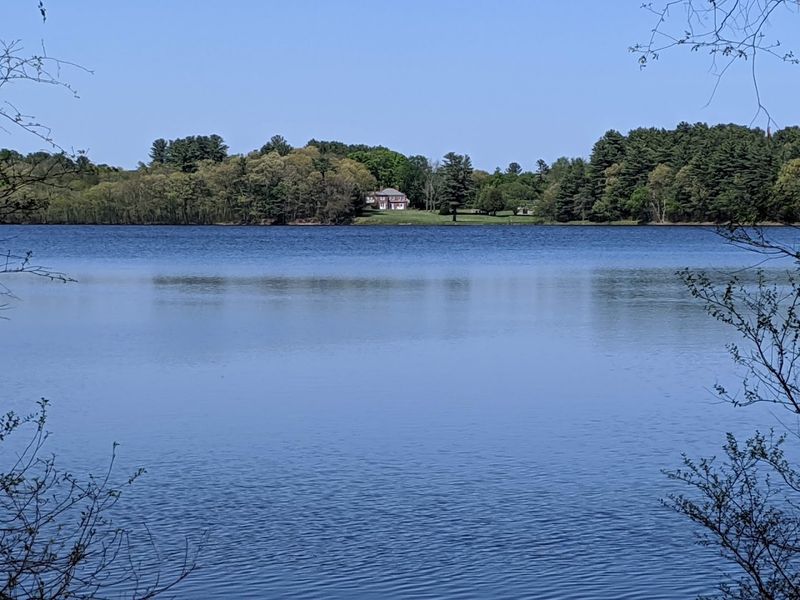
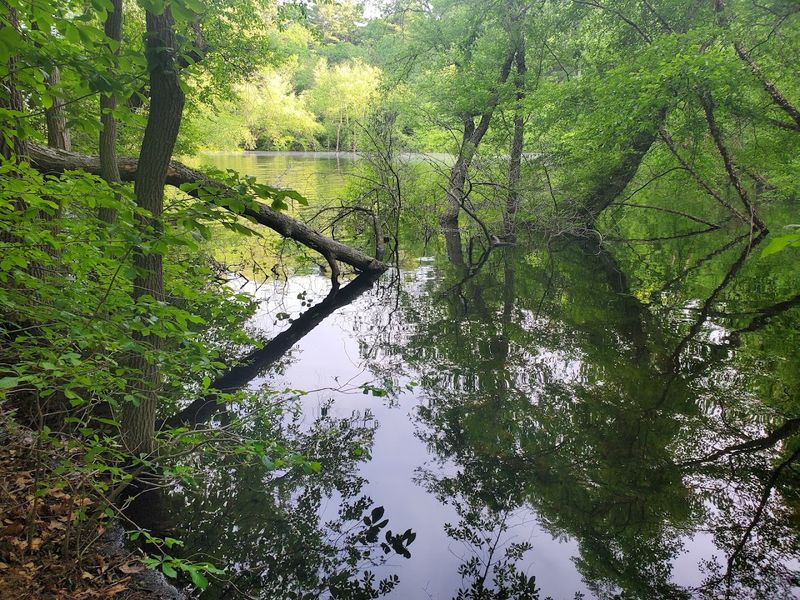
Wenham Lake appears through the trees like a quiet reward for those who stay on the trail long enough.
The preserve borders the lake along a significant stretch of the loop, and the views across the water carry a certain stillness that is hard to manufacture anywhere else.
This is not a recreational lake with paddleboats and swimmers. Wenham Lake serves as a drinking water source for Beverly and Salem, so boating and swimming are strictly prohibited.
That restriction, while limiting for some visitors, is precisely what keeps the shoreline so undisturbed.
The water stays clear, the banks remain free of foot traffic, and the wildlife that depends on the lake has room to exist without constant human interruption.
Bald eagles have been spotted soaring above the water, and owls are known to move through the surrounding woodland at dusk.
Walking the ridge that runs above the lake is one of the more rewarding stretches of the entire trail. The path is wide and well-defined at this point, making it easy to look up and actually appreciate the view rather than watching every step.
Early morning visits offer the best light and the most peaceful atmosphere along this section of the preserve.
Frederick Law Olmsted’s Enduring Legacy In Beverly
Most people associate Frederick Law Olmsted with Central Park in New York City, but his influence stretched far beyond Manhattan. The broader landscape of Moraine Farm, the original property from which the J.C.
Phillips Nature Preserve was carved, was shaped by Olmsted’s design philosophy. John Phillips, who established the farm in 1882 and built a farmhouse there that same year, engaged Olmsted to help shape the land into something both functional and beautiful.
Olmsted believed that designed landscapes should feel as though nature arranged them without human interference.
Walking through the preserve today, that principle still reads clearly in how the trails move through the terrain, how the woodland opens and closes, and how the lake appears at just the right moment to provide relief from the canopy above.
This connection to Olmsted gives the preserve a layer of significance that goes beyond a typical municipal green space. It is a living piece of American landscape history, maintained by The Trustees of Reservations and the Essex County Greenbelt.
For anyone interested in how designed and natural environments can coexist gracefully, this 85-acre property at 801 Cabot St, Beverly, MA 01915 offers a compelling and understated example of that vision in practice.
The Climb To Prospect Hill Reveals Foundations Nearly Lost To Time
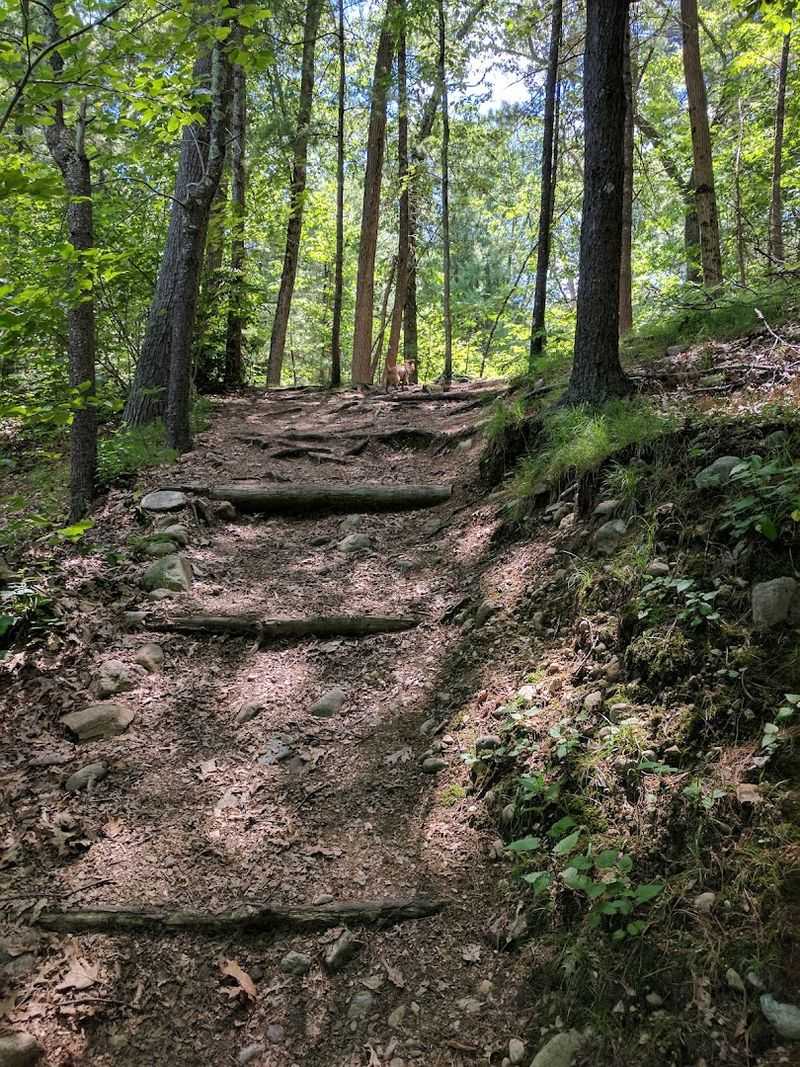
The trail to Prospect Hill is not a grueling climb by any measure. The elevation change throughout the entire 2.5-mile loop is minimal, and the spur trail that branches off toward the mansion ruins is manageable for most fitness levels.
That said, the approach to the hilltop carries a certain anticipation that makes even a modest ascent feel meaningful.
As the trees thin slightly near the top, the first stone walls come into view. Most visitors slow down instinctively at this point, not because the terrain demands it, but because the ruins seem to ask for a more deliberate pace.
The foundation walls of Highover are substantial enough to convey the scale of what once stood here, and walking along their perimeter gives a real sense of the mansion’s original footprint.
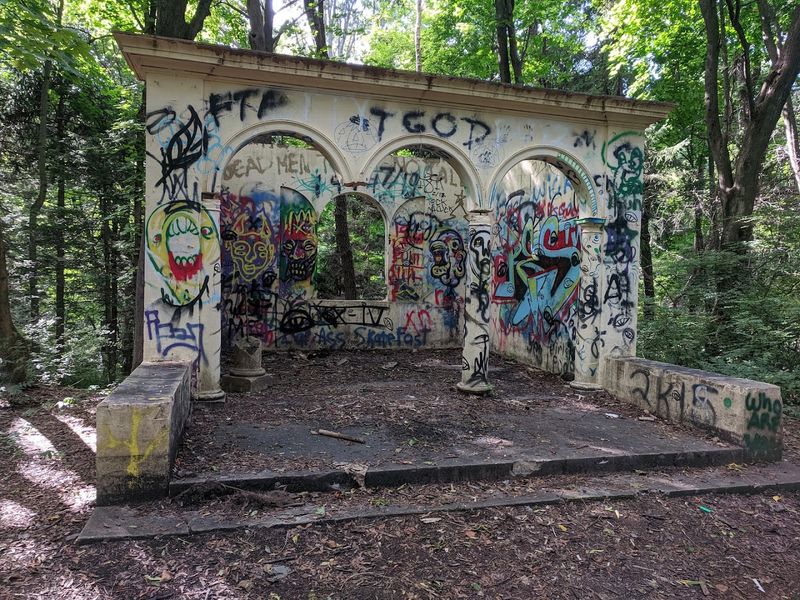
An outbuilding with arches has also been noted among the remaining structures, adding another dimension to the site’s character.
Signage at the kiosk near the ruins provides historical context, though the stones themselves tell a story that no placard can fully capture.
Bring sturdy footwear, as the trail surface is unpaved and can be slippery after rain. Exposed roots and patches of mud are common throughout this section of the preserve, particularly in spring.
See How Nature Is Slowly Reclaiming The Stone Ruins
There is something quietly compelling about watching a forest take back what was once human territory. At the Highover ruins, that process is well underway.
The iron gate that once marked a formal entrance to the estate is now thoroughly threaded with wild growth, its metal surface darkened and rough with age.
Vines have worked their way into every gap, and the surrounding vegetation has softened the hard lines that architecture once imposed on this hilltop.
The headless stone statue nearby adds an almost surreal note to the scene. Likely depicting a satyr based on its remaining form, the figure stands on a pedestal with graffiti marking its surface, a reminder that not all visitors have treated the site with equal care.
Despite that, the statue retains a strange dignity in its setting, partly obscured by shadow and surrounded by moss-covered ground.
Poison ivy grows throughout the preserve, so staying on the marked trail is strongly advised, especially around the ruins where vegetation is densest. The reclamation happening here is not merely aesthetic.
It represents decades of ecological succession, where woodland plants, fungi, and insects have gradually colonized the spaces that human occupation once held.
Visiting in early spring, before full leaf-out, offers the clearest views of the remaining structural elements.
The Preserve’s Gentle Trails Make The Journey Easy To Follow
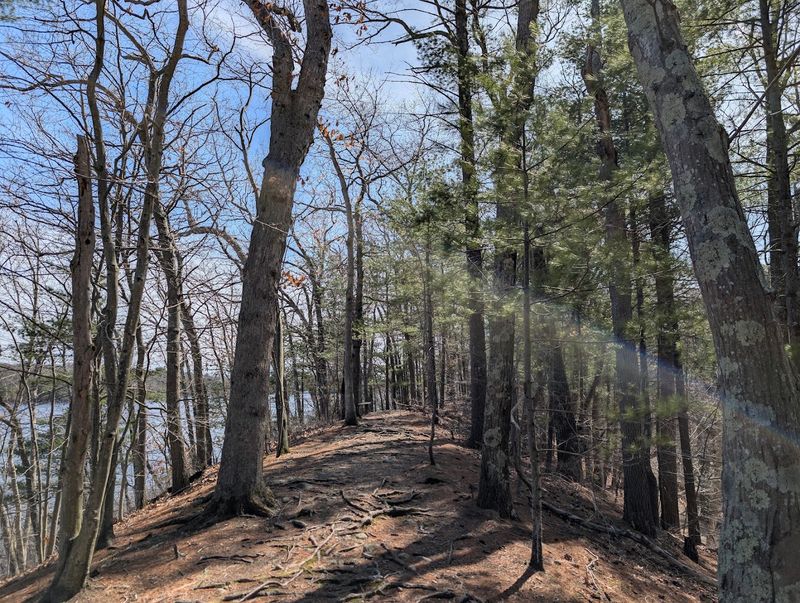
The Phillips Loop, as the main trail is often called, covers approximately 2.5 miles and is broadly considered an easy route. The path is wide for most of its length, clearly defined, and does not demand any technical skill or specialized gear.
Families with older children, older adults in good health, and casual hikers will all find the terrain approachable without feeling underwhelmed by the challenge.
A few cut-through trails branch off from the main loop, which can occasionally cause confusion, particularly for first-time visitors.
Photographing the trail map at the trailhead before setting off is a practical move, as signage at some intersections resembles other nearby markers closely enough to send you in the wrong direction.
The loop is compact enough that getting seriously lost is unlikely, but backtracking wastes time that could be better spent near the lake or the ruins.
Dogs are welcome on leashes throughout the preserve, and the trail sees a steady stream of dog walkers on weekends.
The park opens at 6 AM daily, making it an excellent destination for early risers who prefer the quiet of a trail before the rest of the world catches up.
No restroom facilities are available on site, so plan accordingly before arriving.
Watch For Wildlife As The Trail Passes Through Wetlands And Woodlands
The 85 acres that make up J.C. Phillips Nature Preserve support a surprisingly varied mix of habitats for a property of its size.
The trail moves through hardwood forest, skirts wetland edges, and follows the shoreline of Wenham Lake, creating conditions that attract a wide range of wildlife.
Bald eagles and owls are among the more dramatic sightings reported by regular visitors, while pileated woodpeckers drum away at standing trees with a persistence that is hard to ignore.
Red foxes, coyotes, squirrels, chipmunks, frogs, and toads all make appearances depending on the season and time of day. Spring is particularly rewarding for wildflower enthusiasts, as the forest floor fills in quickly once temperatures rise.
The wetland sections of the trail support plant communities that thrive in saturated soil, adding a textural contrast to the drier upland forest nearby.
Bug spray is a practical necessity from late spring through summer. Mosquitoes and other insects are active in the wetter sections of the preserve, and a good repellent makes the difference between an enjoyable walk and an uncomfortable one.
The preserve is co-managed by The Trustees of Reservations and the Essex County Greenbelt, both of which work to maintain the ecological integrity of the land for future visitors and resident wildlife alike.
Wenham Lake Plays A Much Bigger Role Beyond The Ruins
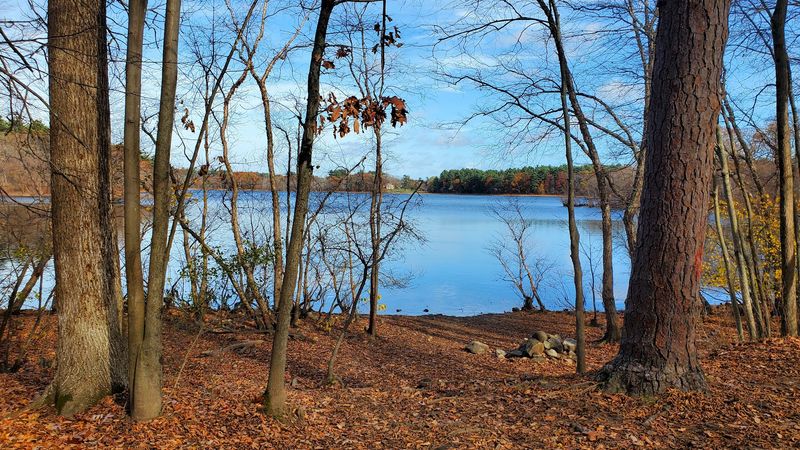
Wenham Lake is not merely a scenic backdrop for the preserve. It is an active drinking water supply serving the communities of Beverly and Salem, which explains why the lake is off-limits for swimming, boating, and any recreational water use.
That protective status has preserved the lake in a condition that most suburban water bodies in Massachusetts can no longer claim, and the result is a shoreline that feels genuinely wild.
A tribute within the preserve honors Dom Manzoli, a dedicated advocate for Wenham Lake’s water quality whose efforts helped protect the lake for future generations.
His legacy is woven into the stewardship philosophy that guides how the preserve is managed today.
The lake’s protected status also means that the wildlife depending on its shores, including the eagles and waterfowl observed from the ridge trail, have a stable and undisturbed habitat.
Sitting on one of the benches positioned along the water-facing sections of the trail, the scale of what conservation accomplishes becomes genuinely apparent.
The preserve at 801 Cabot St, Beverly, MA 01915 is open daily from 6 AM to 8 PM, with extended hours on Tuesdays until 9 PM.
For a two-and-a-half-mile walk that delivers history, wildlife, and a working watershed in one loop, the value is difficult to overstate.