
This Boulder City Park In Nevada Draws Hundreds Of Artists Every Fall Weekend
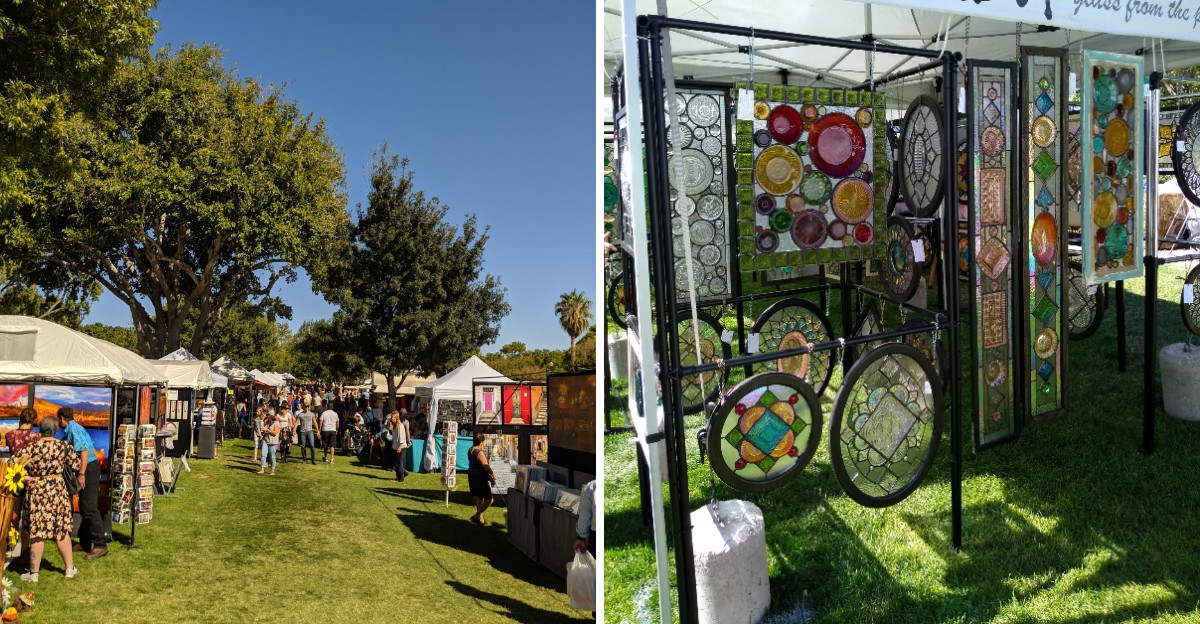
Picture hundreds of artists filling a small Nevada park under October sun. Booths stretch across green lawns, and music drifts over from a garden bandstand.
This fall weekend turns four quiet parks into one giant outdoor gallery. Painters, potters, and jewelry makers set up right beside families hunting for one of a kind finds.
Sixty years back, a handful of hospital volunteers started with a simple art sale. Today it pulls in six figure crowds, and every dollar still goes toward that same small town cause.
Wander from lawn to lawn and something new grabs your attention every few steps. A juried show keeps the quality high, so mass produced filler never makes the cut.
Nevada throws a party once autumn rolls around, and this one belongs on your calendar.
Four Parks, One Sprawling Gallery
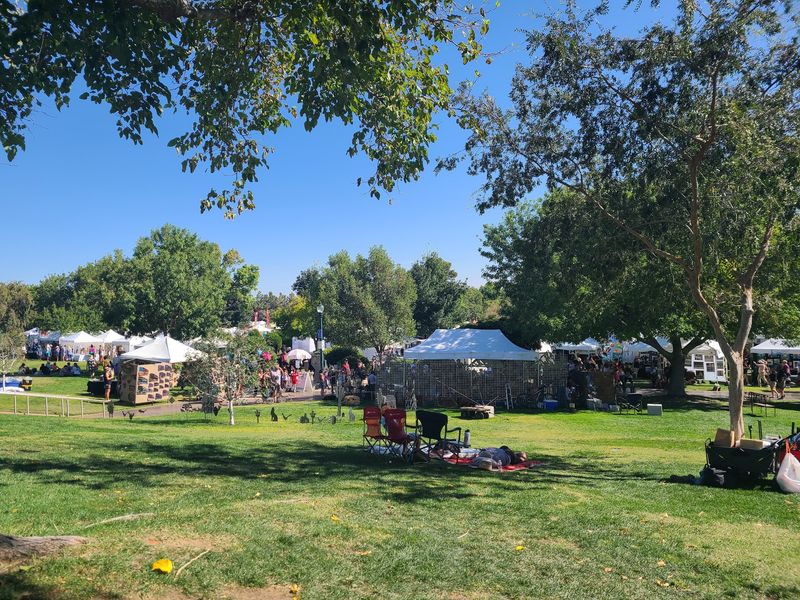
Four parks. One festival.
That is the layout that surprises most first-timers.
Art in the Park does not squeeze into a single field. It spreads across Bicentennial Park, Wilbur Square, and both North and South Escalante Parks, with activity spilling onto Arizona and Colorado Streets.
Bicentennial Park covers roughly seven acres of grass and mature trees, anchored by a gazebo bandstand that often hosts live entertainment. Its address is 999 Colorado Street.
Wilbur Square carries history in its soil, dating back to the Hoover Dam construction era. Walking paths curve past benches and tall shade trees.
The Escalante Parks fill in the uptown stretch with landscaped lawns and views toward the old downtown storefronts.
Because the venues connect through closed streets, the whole center of Boulder City becomes walkable. No shuttles between fields, no fenced-off sections.
Visitors drift from one park to the next without ever noticing where one ends. That flow is half the charm of the layout.
Live Music Drifting Through The Trees
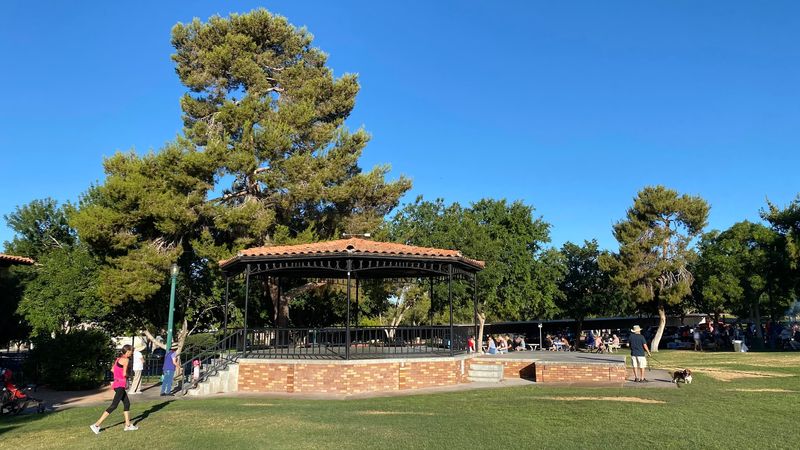
Sound travels well across open lawns. The gazebo bandstand in Bicentennial Park sends live music rolling over the booths and picnic blankets.
Performances give the weekend a rhythm. Shoppers pause, sit on the grass, and listen for a song or two before moving on.
Artist demonstrations add another layer of entertainment. Watching a potter center clay or a painter block in a background turns browsing into something closer to a workshop.
Kids get their own territory too. A dedicated arts and crafts area lets younger visitors glue, paint, and build their own creations.
Parents appreciate the break. Children appreciate taking something home that they made themselves.
Raffle giveaways keep the excitement going, with original artwork donated by participating artists as prizes. Money from those tickets heads straight back to Boulder City Hospital.
By midafternoon the mix of music, chatter, and clinking craft tools creates a hum you can hear from a block away. The festival sounds as busy as it looks.
A Hospital Fundraiser That Outgrew Its Roots
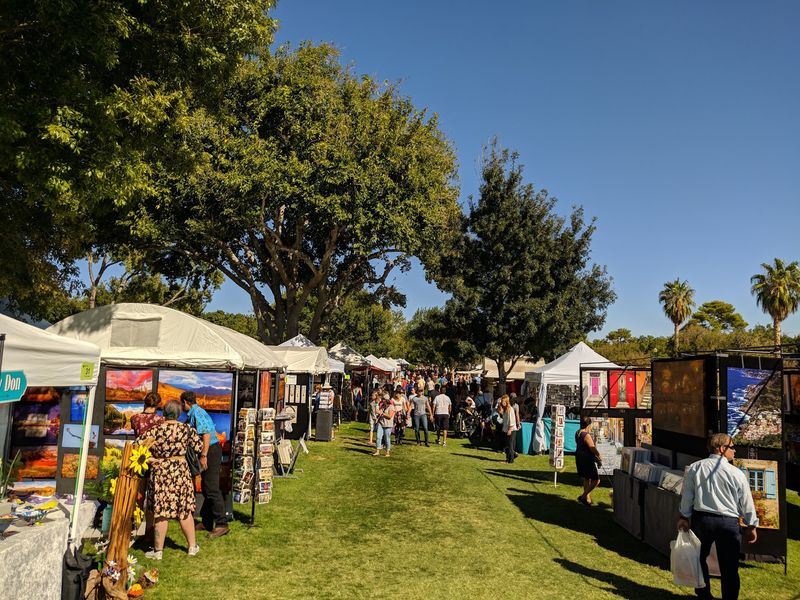
Back in the early 1960s, a group of hospital volunteers known as the Pink Ladies had a simple idea. Sell some art, help the struggling local hospital.
That first gathering featured a well-known Arizona artist and raised real money for equipment and care. Nobody expected it to last six decades.
The Boulder City Hospital Foundation took over the reins in 1995, and Art in the Park kept growing. Booths multiplied.
Artists began traveling in from across the country.
Today the festival ranks as the foundation’s largest fundraiser, and proceeds still flow back into hospital services. The cause has never changed, only the scale.
That history explains the tone of the whole weekend. Shoppers are not just buying ceramics; they are chipping in for a small-town hospital that operates without a taxing district behind it.
The festival spreads across the historic downtown district, anchored by Bicentennial Park at 999 Colorado Street, Boulder City, Nevada 89005.
Knowing the backstory changes how the crowds feel. Those long lines at the raffle table suddenly make a lot more sense.
Street Food Worth Planning Around
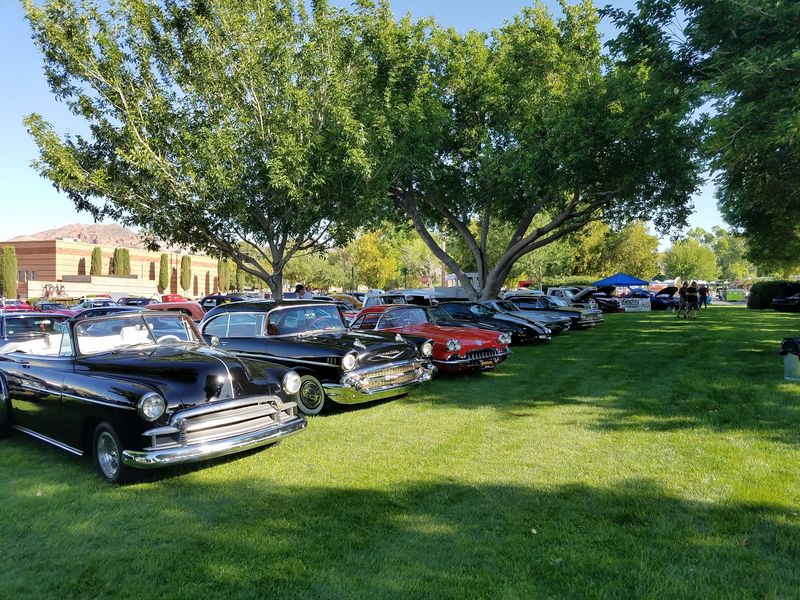
Roasted corn beats a granola bar every time. Around fifteen or sixteen food vendors set up during Art in the Park, and the variety runs wider than most expect.
Hot dogs and hamburgers hold down the classics. Beyond them, Italian, Mexican, Greek, and Chinese options fill out the lineup.
The smart move is arriving hungry rather than fed. Eating at the festival supports the same fundraising cause as the art booths.
Picnic tables and benches sit scattered through the parks, though shade spots fill fast once lunchtime hits. Grass works fine as backup seating.
Mature trees across Bicentennial Park and Wilbur Square provide natural cover, which matters even in cooler October weather.
Bringing a refillable water bottle helps. Desert air stays dry regardless of temperature, and walking several parks adds up quickly.
One practical tip: eat before peak crowds arrive midday. Lines shrink considerably in the first hour or two after opening.
Food here is not an afterthought. It is part of the reason locals return annually.
Juried Booths And Serious Craftsmanship
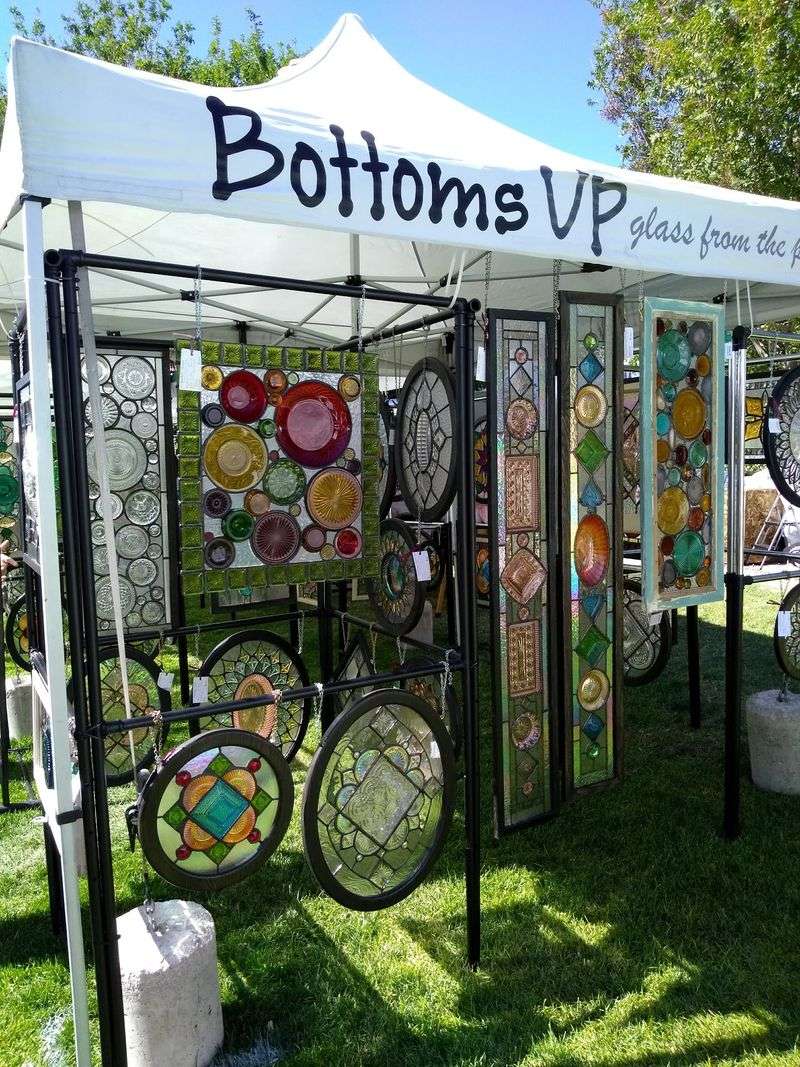
Not every booth makes the cut here. Art in the Park runs as a juried show, meaning a panel reviews and ranks submissions before anyone gets a space.
The result is noticeable. Quality stays high, and mass-produced filler rarely appears.
More than 300 artists typically participate, arriving from across the country with handmade work in tow. Categories span fine art, fine craft, contemporary craft, and traditional craft.
Paintings share the lawn with sculpture, blown glass, ceramics, textiles, woodwork, and jewelry. Ribbons go to first, second, and third place in multiple categories, plus an overall Best in Show.
Talking with makers is part of the appeal. Ask about a glaze or a carving technique and most will happily explain it.
That direct connection is something a gallery wall cannot offer. The person who made the piece stands right there.
Shoppers looking for one-of-a-kind finds tend to leave Boulder City with full arms and lighter wallets. Browsers leave with ideas instead.
Volunteers Who Make It All Work
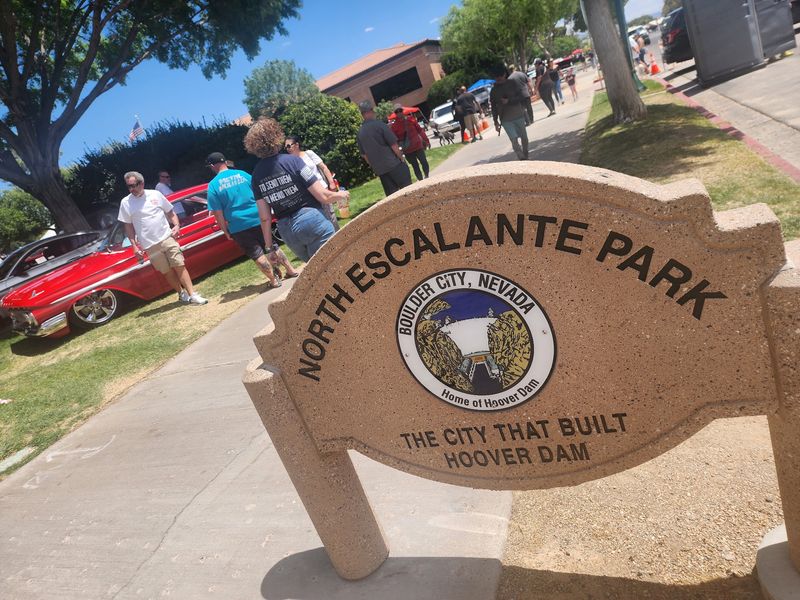
More than 180 volunteers show up each year. That number alone explains how a small town pulls off something this big.
Hospital staff, high school students, and longtime residents handle artist check-in, judging logistics, booth support, and visitor questions. Many return year after year.
The City of Boulder City supports the effort too, closing streets and coordinating park use so the festival can spread across four green spaces.
Boulder City Hospital operates as a Critical Access Hospital and depends heavily on donations, since it does not receive backing from a taxing district. That context raises the stakes for every volunteer shift.
Visitors notice the difference. Questions get answered, trash gets picked up, and lost-looking guests get pointed in the right direction.
Those matching shirts and lanyards belong to neighbors, not hired crews. The whole operation runs on local goodwill.
Art gets the spotlight, but the people directing traffic and taping down signs deserve a share of the applause. Without them, the lawns would stay empty.
October Weather That Actually Cooperates
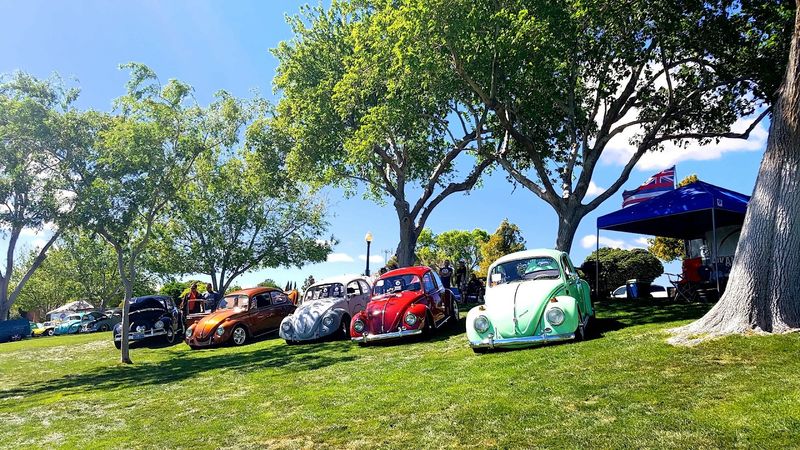
October in the Mojave feels like a reward. The brutal summer heat has backed off, and mornings turn crisp enough for a light jacket.
Art in the Park usually runs over two days in early October, which is no accident. Organizers picked the sweet spot on the calendar.
Comfortable temperatures let visitors linger instead of racing between shaded spots. Hours disappear easily when the weather cooperates.
Tree canopies across the parks add extra relief during the warmer afternoon stretch. Benches beneath them become prime real estate.
Artists benefit too. Paint dries reasonably, tents stay put, and nobody wilts behind their display table.
Desert nights cool off fast, so anyone staying into the evening should pack an extra layer. Sunscreen still earns its place in the bag.
Exact dates shift year to year, so checking the current schedule before booking travel makes sense.
Nevada gets a reputation for punishing sun. This particular weekend proves the state knows how to behave when it wants to.
Parking, Crowds, And Smart Timing
Eighty thousand visitors. Sometimes more than a hundred thousand across the weekend.
Those numbers hit a town of modest size, which makes timing the most useful tool a visitor has. Early arrivals get easier parking and thinner aisles.
Admission to Art in the Park is free, so the real cost is patience. Free street parking surrounds the parks but fills quickly once midmorning arrives.
Remote parking with shuttle service has appeared in some years, though availability varies and should not be assumed. Rideshare drop-off removes the guesswork entirely.
Comfortable shoes matter more than any other packing choice. Covering four parks plus closed streets adds serious mileage.
Grabbing a program map early helps prioritize favorite categories instead of wandering in circles. Some booths sell out of popular pieces before the second day.
Cash and cards both circulate, though individual artists set their own payment methods.
A little planning turns a crowded weekend in Boulder City into a relaxed one. Show up unprepared and the crowd wins.
A Dam Town With Art Deco Bones
Hoover Dam built this town. Boulder City started as a federal community created to house dam workers in the 1930s.
That origin left behind a downtown full of California Mission-style buildings and art deco details. Antique shops and storefronts line the main stretch.
Festival booths sit directly against that backdrop, which gives Art in the Park a setting no convention hall could match. History frames the art.
Beyond the parks, the town rewards a wander. Independent shops, cafes, and historic markers fill the blocks around the festival footprint.
Lake Mead and Hoover Dam sit a short drive away, making an easy add-on for anyone with an extra afternoon.
Las Vegas glitters less than an hour away, a striking contrast to the slower pace here in this corner of Nevada.
Locals often mention the town’s protected bighorn sheep, which occasionally turn up near the outskirts.
Arriving a day early pays off. The festival is the headline, but the town itself is the opening act worth catching.
Why Locals Circle The Date Every Year
Ask a Boulder City resident about the first weekend of October and watch the reaction. This festival counts as a hometown holiday.
Families plan reunions around it. Repeat visitors arrive with folding wagons and shopping lists from previous years.
Art in the Park works because it never stopped being about the community. Sixty years of fundraising created a tradition that belongs to everyone who shows up.
The mix of sounds, colors, and smells across the parks makes the day feel bigger than a shopping trip. Children’s laughter carries from the craft area while music drifts over from the bandstand.
Artists build relationships with returning customers, sometimes over decades. That continuity gives the booths a familiar, welcoming feel.
Green lawns, tall trees, and desert sunlight complete the picture. Few festivals get a setting this pleasant.
Anyone visiting southern Nevada in autumn should carve out the time. A weekend spent among hundreds of makers, generous volunteers, and one very well-loved park delivers far more than souvenirs.