Standing beside enormous mammoth skeletons and fossilized dinosaur footprints might sound like an expensive museum adventure, but one remarkable destination in western Massachusetts offers all of this for free.
Spread across three floors, this fascinating natural history museum houses prehistoric treasures that tell the story of life on Earth over hundreds of millions of years.
Visitors can admire a fearsome Tyrannosaurus skull replica, examine ancient footprints, and marvel at colorful minerals from around the world.
The collection even includes fossils that helped shape the early understanding of dinosaurs in North America.
With exhibits that appeal to curious children and history-loving adults alike, this overlooked museum makes a rewarding family outing without putting a dent in your weekend budget.
Free Admission Makes Every Trip A Bargain
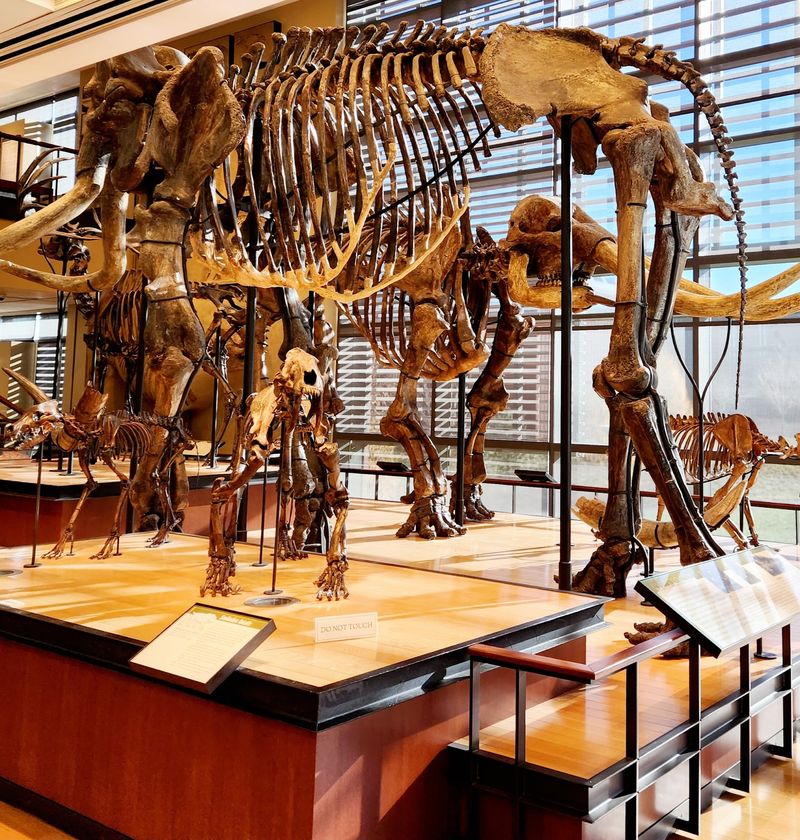
Your wallet gets the day off here. The Beneski Museum of Natural History charges nothing at the door, and that rule applies to everyone.
Families, students, and fossil fans all walk in on equal terms.
Free does not mean small or dusty. The museum cares for nearly 200,000 objects, including fossils, minerals, meteorites, and cultural artifacts.
Only part of that huge collection is on display, yet it still fills three well-lit floors.
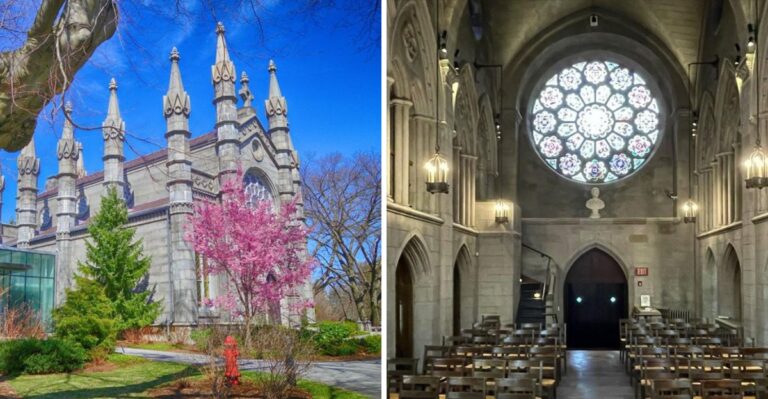
The building sits on the Amherst College campus at 11 Barrett Hill Drive, Amherst, MA 01002. It opened in its current home, the Beneski Earth Sciences Building, in 2006.
The collections themselves are much older, dating back to the earliest days of the college.
Planning is simple. Doors open Tuesday through Friday from 10 AM to 4 PM.
On Saturday and Sunday, hours stretch from 10 AM to 5 PM. Mondays are closed, and hours can shift with the seasons, so a quick check online is smart.
Parking on campus can feel like a puzzle at first. Many people use the nearby public lot across the street and stroll over.
The building also has an elevator and restrooms, which helps with strollers and grandparents alike.
A free ticket also means zero pressure. Pop in for an hour, or linger all afternoon.
Either way, you leave richer in knowledge and still holding your cash.
Footprints That Made Science History
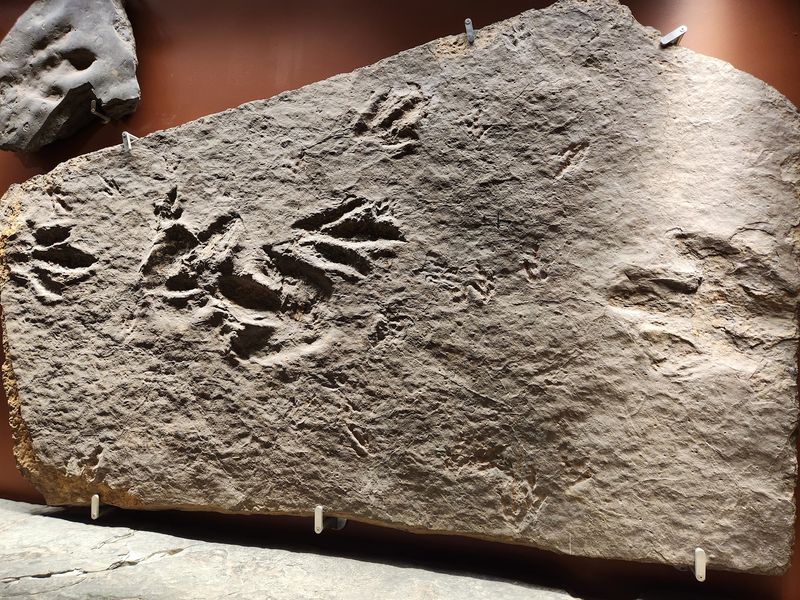
Stone walls rarely tell stories, but these ones never stop talking. The lower level holds the Edward Hitchcock Ichnological Cabinet.
It ranks among the largest displays of fossil dinosaur tracks anywhere on Earth.
More than 1,700 slabs of rock sit in this collection. Each one carries prints pressed into ancient mud long ago.
The collection contains numerous types of fossil tracks left by dinosaurs and other prehistoric creatures.
Edward Hitchcock was a geologist and the third president of Amherst College. He started gathering these slabs in the mid-1800s.
Back then, many people thought the three-toed prints came from giant birds.
That guess was not totally silly. Today, experts know birds are living descendants of theropod dinosaurs and are themselves classified as dinosaurs.
So Hitchcock was closer to the truth than he could have known.
Tracks show something bones cannot. They reveal how an animal moved, how fast it went, and sometimes whether it traveled with others.
Looking at a long trail feels like watching a paused video from the distant past.
Most of these footprints came from the Connecticut River Valley. That means dinosaurs roamed the same Massachusetts ground where towns now stand.
A handy QR code tour guides you through the slabs at your own pace.
Tip for young explorers: put your hand beside a print and compare sizes. Some are tiny, and some would swallow your sneaker whole.
Noah’s Raven And The First Big Discovery
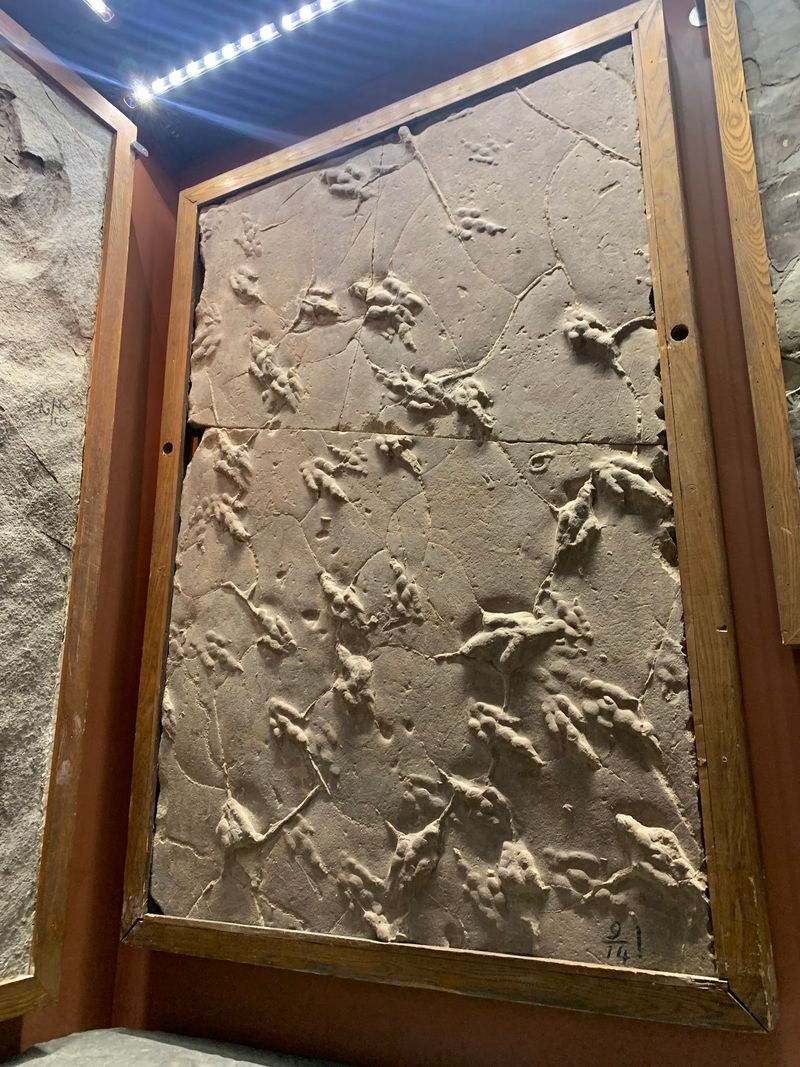
Long before anyone said the word dinosaur, a farm boy found some strange bird-like prints. The year was 1802, and the place was South Hadley, Massachusetts.
His name was Pliny Moody, and he had no idea how famous his find would become.
People nicknamed the tracks Noah’s Raven. Some imagined a giant bird from the Bible story had left them behind.
It was a creative idea for a time with few answers.
Here is the exciting part. These tracks are considered the first dinosaur fossils ever collected in North America.
That makes them a true treasure of American science.
Today, the slab rests in the Beneski Museum of Natural History. You can stand right in front of it.
It looks simple, yet it opened the door to a whole new field of study.
Think about how much has changed since 1802. Back then, no one knew about T-Rex, Triceratops, or fossil hunting in the West.
This modest stone started the conversation.
History fans will enjoy pairing this slab with the larger track wall nearby. One piece shows the beginning, and the rest shows how far the research grew.
Together they create a neat timeline you can walk through in minutes.
Snap a photo here. Few people can say they stood beside the continent’s very first dinosaur discovery.
Mammoths And A Mastodon Steal The Spotlight
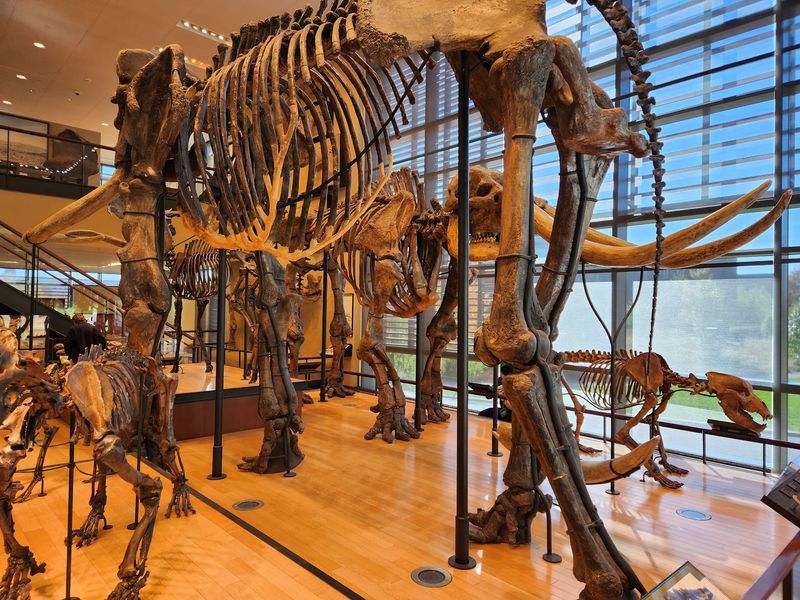
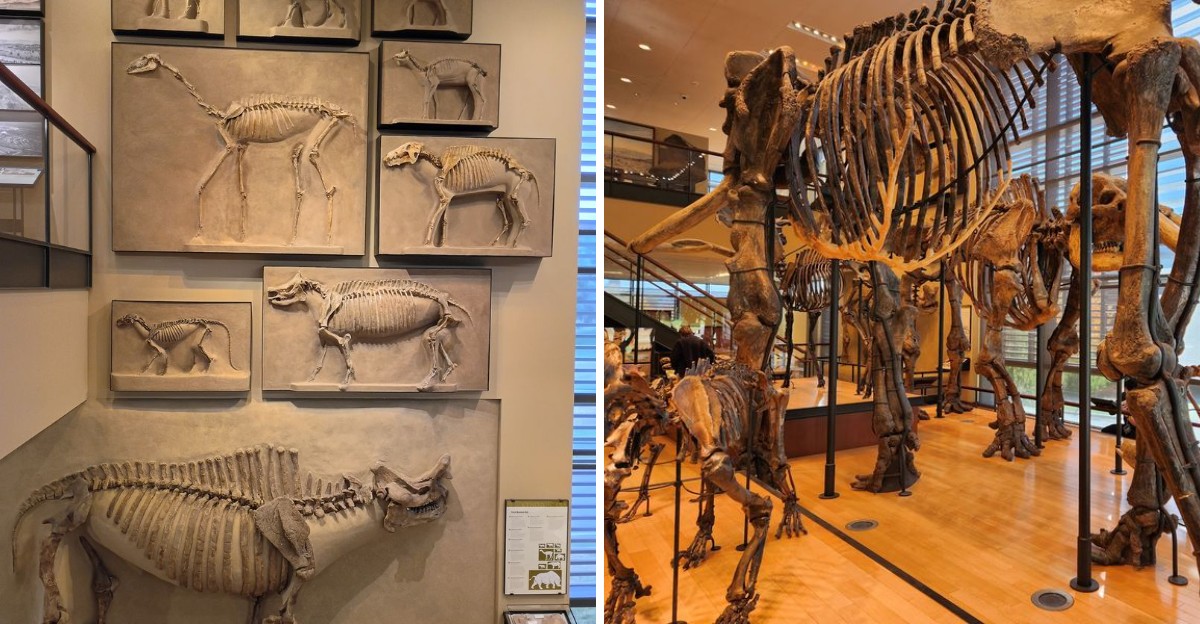
Tusks the length of a car tend to grab attention fast. On the first floor, huge Ice Age skeletons tower over the room.
Neck muscles get a real workout from all the looking up.
One star is a mastodon dug up in 1869 by Charles Shepard. Another is a mammoth found in 1923 by Frederic Brewster Loomis.
Both men were tied to Amherst College and its long love of science.
Many people mix up these two giants. Mammoths had ridged teeth for grinding grass, a bit like cows.
Mastodons had cone-shaped teeth, better for munching twigs and leaves.
Spotting the difference turns into a fun game. Compare their skulls, backs, and tusk curves.
Kids often become little experts in about five minutes.
These animals lived during the last Ice Age. Some roamed North America, including areas near New England.
Standing beside their bones helps you picture a much colder world full of big creatures.
Lighting in this gallery makes the skeletons easy to see from every angle. Walk slowly around them for the best view.
The ribs alone are bigger than many kitchen tables.
Bring a sketchbook if you like to draw. The curved tusks and giant legs make wonderful subjects.
Even stick figures look impressive when they are next to a mammoth.
Saber Teeth, Dire Wolves, And A Giant Elk
Ice Age neighbors were anything but ordinary. Near the mammoths, you will meet a crew of ancient mammals that sound like movie characters.
Each one tells a different chapter of life long ago.
A sabertooth cat, known to scientists as Smilodon, shows off its famous long upper teeth. Those fangs could reach about seven inches.
It was not a close cousin of today’s tigers, which surprises many people.
Next comes the dire wolf. It was larger and sturdier than a modern gray wolf.
An ancient bear skeleton also joins the group, reminding everyone how big some Ice Age animals grew.
Then look for the Irish Elk. Its scientific name is Megaloceros giganteus, and it truly lives up to that title.
Its antlers spread wider than most doorways.
Fun fact: the Irish Elk was not only found in Ireland, and it was not truly an elk. It was a giant deer that lived across Europe and Asia.
Names in science can be tricky like that.
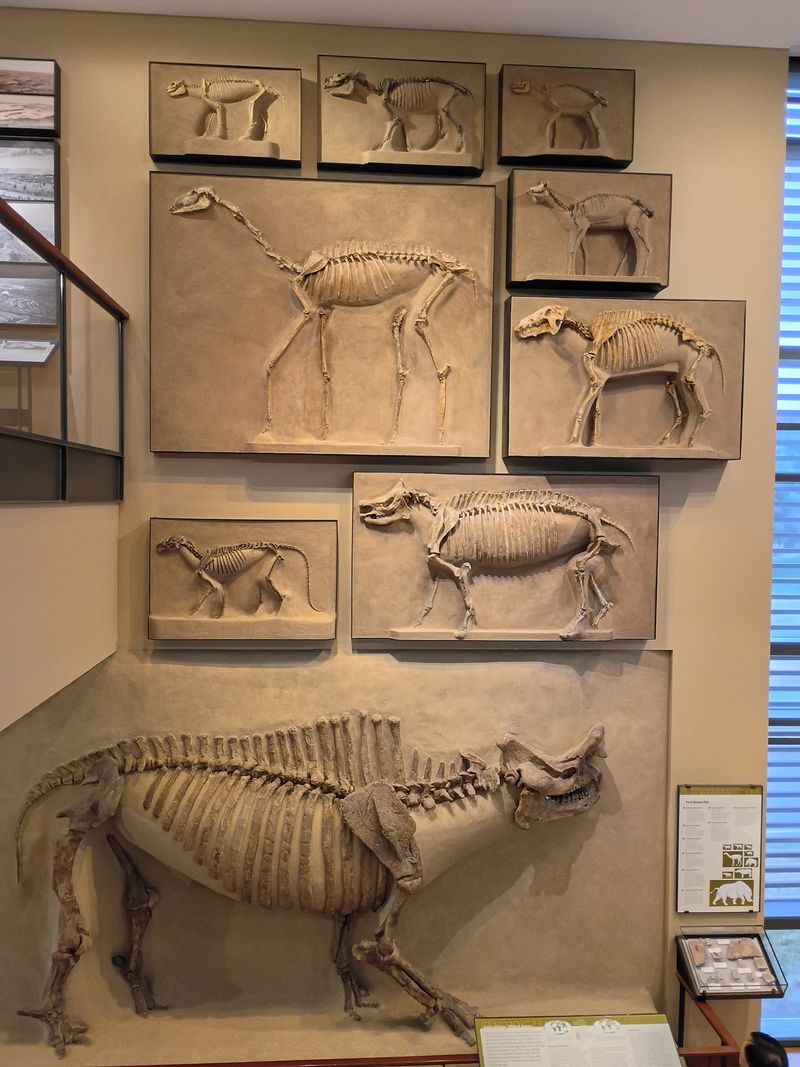
Nearby displays also trace the evolution of the North American horse. Early horses were about the size of a dog.
Over millions of years, they grew taller and faster.
Pull open the drawers along the walls, too. Extra specimens often hide inside, waiting for curious hands.
Tyrannosaurus Skull And Other Toothy Giants
Few faces are more famous than the grin of a Tyrannosaurus. The museum displays a cast of a T-Rex skull, and it is every bit as dramatic as you hope.
Those rows of jagged teeth look ready for lunch.
A cast is a detailed copy made from a real fossil. Museums use casts so more people can study rare specimens.
The shape, size, and texture match the original closely.
Nearby, look for a fossilized tyrannosaur jawbone discovered in 1924. It adds a real fossil touch to the predator theme.
Comparing it with the big skull is a neat lesson in family resemblance.
Plant-eaters get their moment too. A Triceratops skull found in Montana in 1929 shows off its bony frill and horns.
It makes a perfect partner for the T-Rex, since the two lived at the same time.
Smaller stars appear as well. Casts of Compsognathus, a tiny meat-eater, and Archaeopteryx, an early bird-like dinosaur, sit on display.
They prove dinosaurs came in many sizes.
Families often spend extra time here. Kids can admire the enormous teeth up close, while adults enjoy the history of each find.
It is a great place to talk about how scientists figure out what dinosaurs ate.
Dryosaurus, Sauropod Legs, And Lower Level Wonders
Size is not the only thing that makes a fossil special. Down on the lower level, one skeleton wins attention for being nearly complete.
It belongs to a Dryosaurus, a speedy plant-eating dinosaur.
This remarkably complete Dryosaurus specimen offers valuable insight into the dinosaur’s anatomy. That is a big deal, because most dinosaur skeletons are found in scattered pieces.
Having so many bones together helps scientists understand how the animal moved.
Dryosaurus was lightly built and walked on two legs. Its long tail likely helped it balance while running.
Picture a quick, alert grazer always ready to dash away.
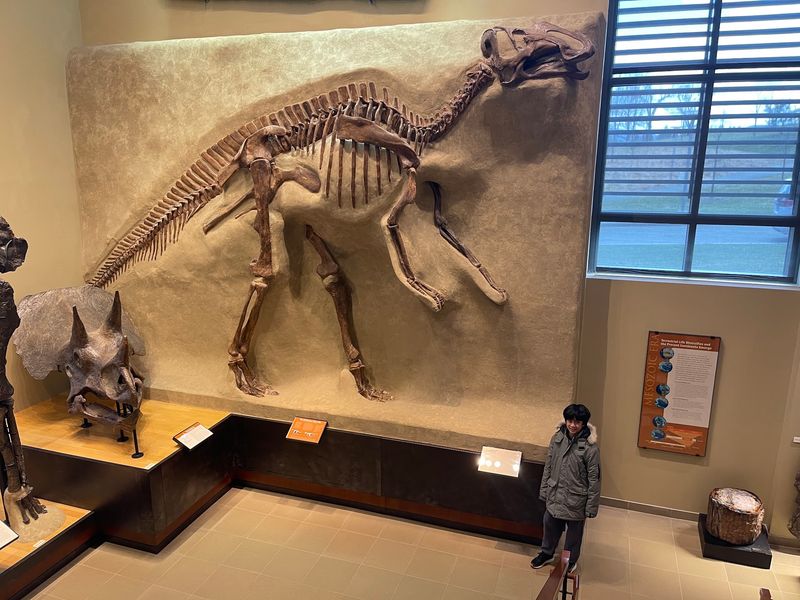
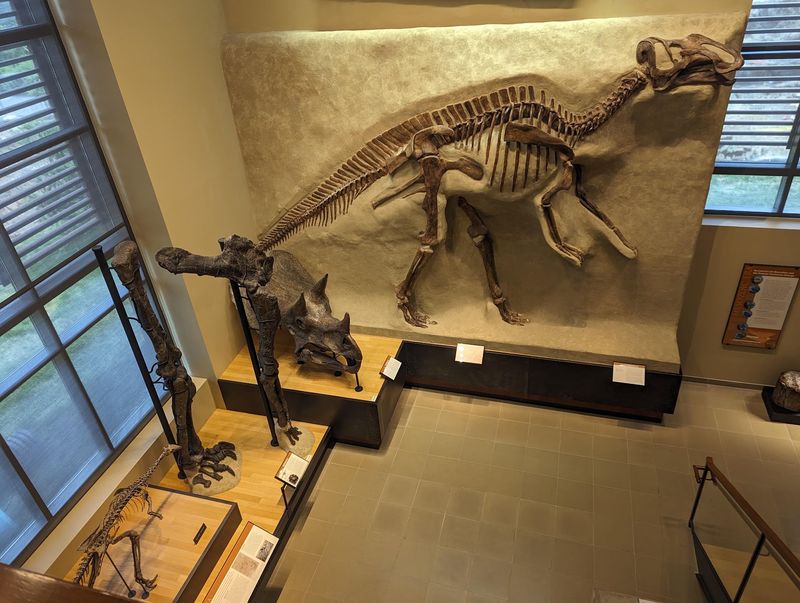
Across the room, prepare for a jaw-drop. Legs from a sauropod called Dyslocosaurus stand tall and heavy.
Sauropods were the long-necked giants, some among the largest land animals ever.
The contrast is fun to notice. One dinosaur was built for speed, while the other was built like a walking building.
Seeing both in one space shows how varied dinosaur life truly was.
These fossils share the level with the famous track collection. So the whole floor feels like a journey through the age of reptiles.
Bones, footprints, and stories all connect.
Give yourself enough time down here. Many people rush the first floor and then wish they had saved energy for this impressive area.
Sparkling Minerals, Meteorites, And Valley Geology
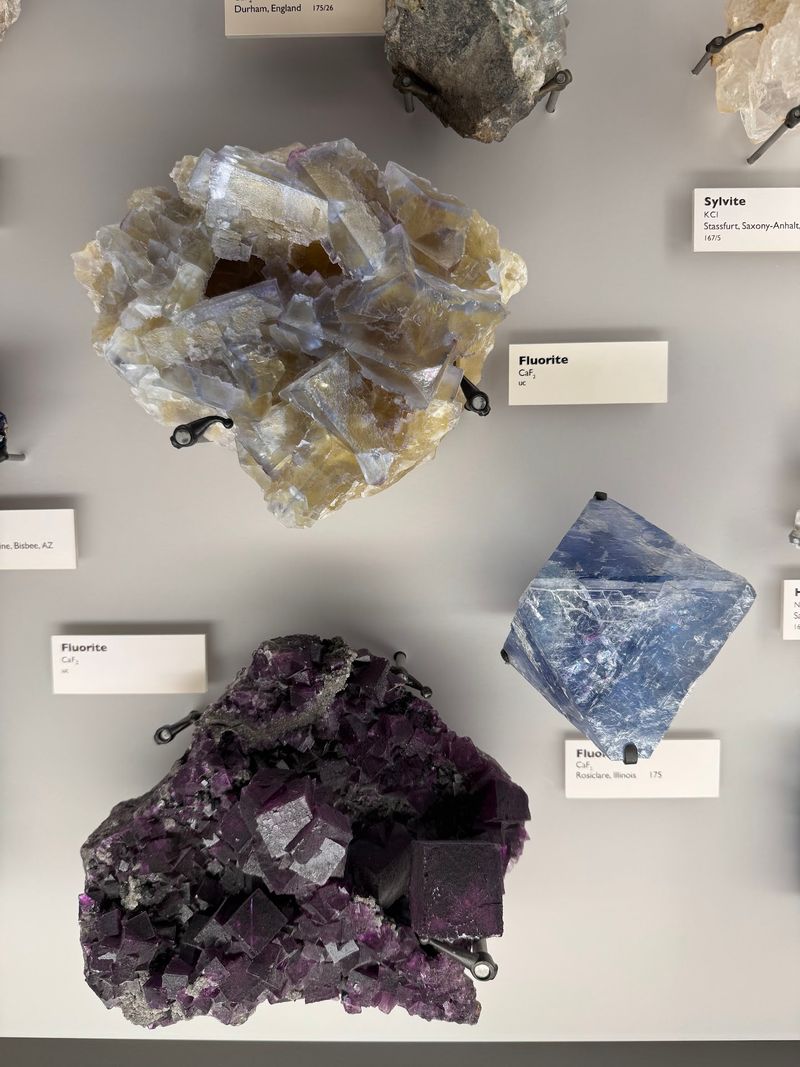
Rocks may sound boring until they start glowing in every color of the rainbow. The second floor proves that minerals can be dazzling.
Purple crystals, bright greens, and fiery oranges fill the cases.
Specimens come from all over the world. Some sparkle like jewelry, while others form odd spikes and bubbly shapes.
Budding rock hounds tend to press their noses right up to the glass.
Space fans get a treat too. The collection includes meteorites, which are rocks that fell to Earth from beyond our planet.
Touching history is one thing, but seeing a piece of outer space is even wilder.
This floor also holds invertebrate fossils. Think ancient shells, sea creatures, and animals without backbones.
Some date back hundreds of millions of years.
A special exhibit explores the geology of the Connecticut Valley. It explains how this part of Massachusetts formed over time.
Suddenly, the hills outside the window make much more sense.
Students from Amherst College often help at the museum. They are friendly and happy to answer questions.
Asking them about a favorite specimen can lead to great stories.
Before you leave the Beneski Museum of Natural History, take one last look around. From footprints to meteorites, few free outings pack in this much wonder.
Your next adventure might start with a single sparkling stone.