
This Free New York Ferry Has Been Crossing The River For More Than 200 Years
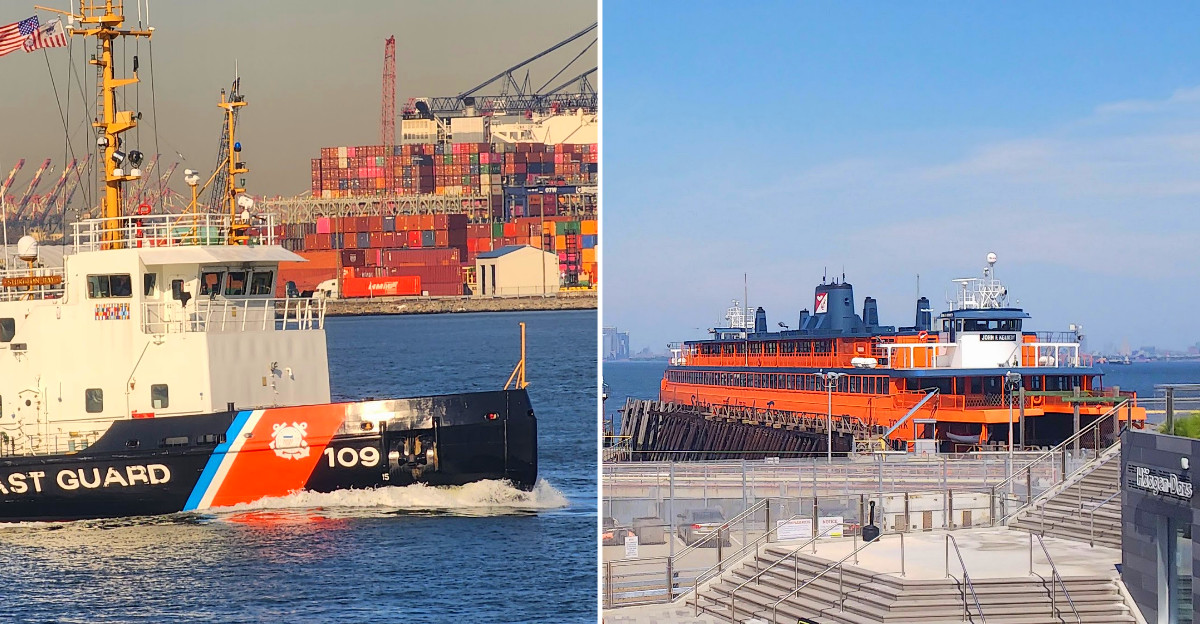
New York is not exactly famous for giving things away, which makes this ride feel almost suspiciously good.
For no fare at all, passengers can cross New York Harbor with the Manhattan skyline stretching behind them and the Statue of Liberty rising off the water.
Ferry service between Manhattan and Staten Island has roots going back more than two centuries, yet the experience still feels surprisingly fresh once those big orange boats pull away from the terminal.
The trip takes about 25 minutes and covers roughly five miles, which is just enough time to watch bridges, skyscrapers, ferries, and harbor traffic slide past.
Just show up, board, grab a good spot by the windows, and enjoy one of the simplest free adventures New York still offers.
A Two Century Habit That Still Costs Nothing
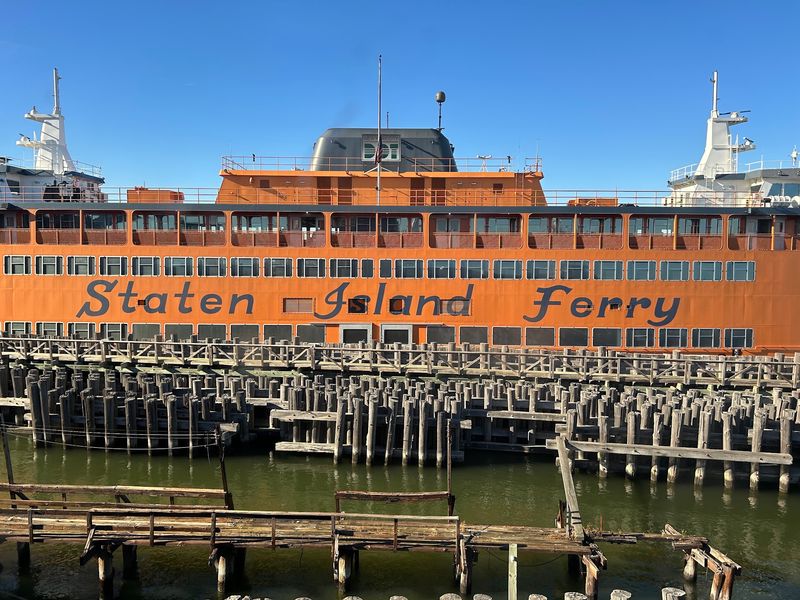
Very few harbor rides in the world carry a history this long. Motorized service across New York Harbor started in 1817 under the Richmond Turnpike Company, and boats have been running the crossing ever since.
The City of New York took over operations in 1905, and the route has kept going without a break. That kind of streak is rare anywhere, let alone in a harbor this busy.
Then came 1997, the year the fare disappeared entirely. Riders now board with no ticket, no turnstile, and no line at a booth.
Bicycles ride free too, which makes the boat a genuine bridge for cyclists between two boroughs. Vehicles travel without charge as well, though commercial trucks are not permitted.
What makes the whole arrangement feel almost mischievous is the view. You get the Statue of Liberty, Ellis Island, Governors Island, and the Brooklyn skyline for the price of showing up.
Roughly 25 minutes each way means a round trip fits neatly into a lunch break. Locals treat it as a commute, visitors treat it as a cruise, and both groups are right.
Two centuries of service, zero dollars owed. New York rarely offers a deal that clean.
Whitehall Terminal, The Manhattan Launch Point
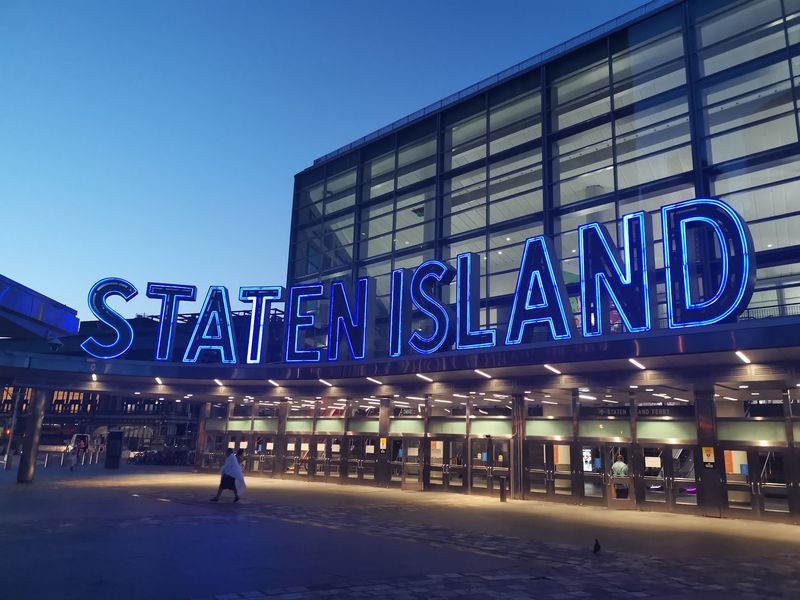
Manhattan’s side of the trip runs out of Whitehall Terminal, sitting along the southern waterfront at 4 South Street, New York, NY 10004. The building faces New York Bay, and its tall windows frame the harbor before you even board.
The terminal is genuinely large, with wide waiting halls, restrooms, and concession counters selling coffee and quick food. Movement is the design principle here, so crowds gather and then clear fast.
The South Ferry subway station sits right at the door, which makes arriving simple. The 1 train ends there, and the R and W trains stop at Whitehall Street a short walk away.
On the Staten Island end, boats dock at the St. George Ferry Terminal on Bay Street near Richmond Terrace. Buses and the Staten Island Railway connect from there.
Battery Park and Castle Clinton sit a few minutes from the Manhattan terminal on foot, so the ferry pairs well with a morning of harbor history.
Wind whips along that stretch of shoreline, especially in winter. A jacket earns its keep while you wait for the gates to open.
Round The Clock, Every Single Day
Sleep is not part of this schedule. Boats run 24 hours a day, seven days a week, 365 days a year, which puts the ferry in rare company among transit systems.
Weekday rush hours bring the heaviest rhythm, with departures every 15 to 20 minutes between 6:00 AM and 9:00 AM, then again between 4:00 PM and 7:00 PM. Midday service from 9:00 AM to 4:00 PM runs every 30 minutes.
Late evening and overnight trips leave once an hour, from 7:00 PM through 6:00 AM on weekdays. Fewer people, wider decks, and a skyline glittering across black water.
Saturdays and Sundays follow a simpler pattern. Daytime boats leave every 30 minutes between 6:00 AM and 10:00 PM, then shift to hourly service overnight.
Holidays including New Year’s Day, Martin Luther King, Jr. Day, Presidents’ Day, Memorial Day, Labor Day, Thanksgiving Day, and Christmas Day run on a 30 minute schedule all day.
Gates typically stay open until about five minutes past the posted departure. Arriving 10 or 15 minutes early spares you a sprint.
Pick Your Side For Lady Liberty
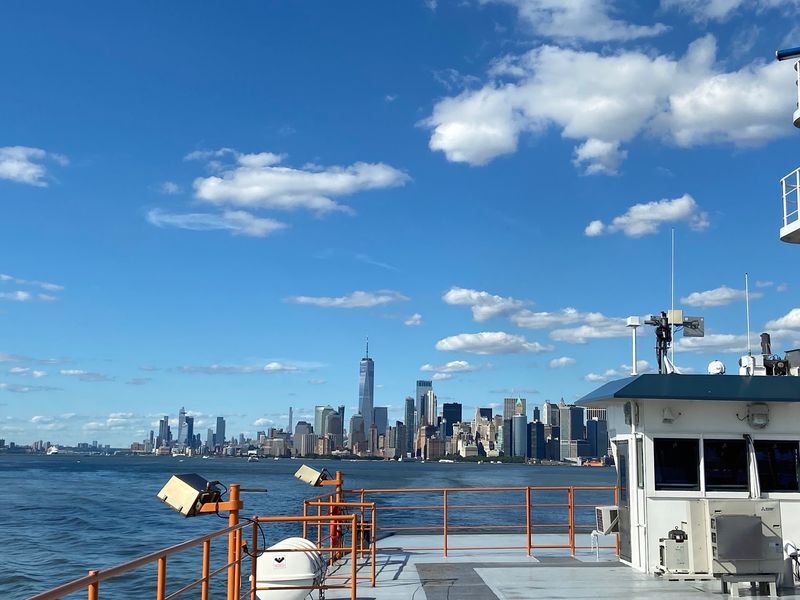
Seat choice decides your photos. Heading toward Staten Island, the starboard side puts the Statue of Liberty in clear view, so claim a spot on the right as you face forward.
Coming back to Manhattan, switch sides. Liberty Island sits farther off on the return leg, so the outbound trip is the one to aim your camera at.
Outdoor decks make the biggest difference for pictures. Interior windows collect salt spray and city grit, and a smudged pane can dull an otherwise crisp shot.
The upper promenade rewards patience. Standing near the bow gives you the harbor opening up ahead, with Ellis Island and Governors Island sliding past.
Lower decks near the stern offer a different treat, a long look back at Lower Manhattan shrinking behind the wake. Sunset turns those towers copper and gold.
Crowds thin out considerably outside rush hour and early in the morning. A 7:00 AM weekend boat feels almost private compared with a sunny Saturday afternoon.
One more trick for the return trip, stay on the bottom deck for a faster exit to the street and subway.
The Big Orange Fleet Explained
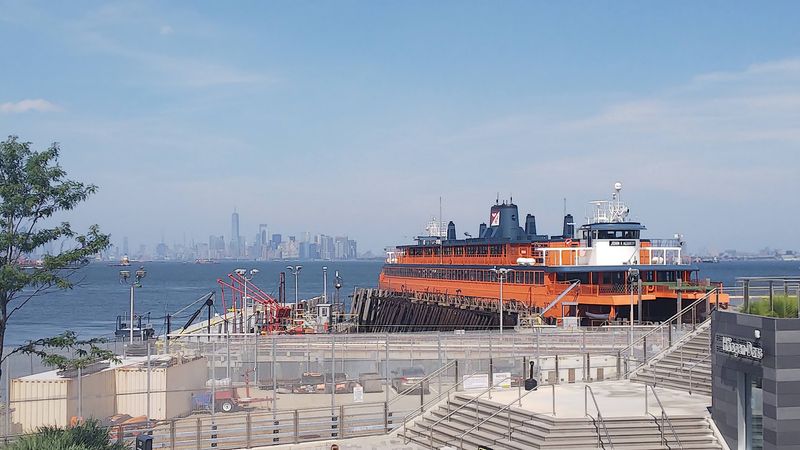
Those unmistakable orange hulls are not one boat but several classes, each with its own character.
The color choice is practical, since bright orange stands out against gray water and fog.
The newest vessels belong to the Ollis Class, carrying up to 4,500 passengers apiece. They include phone charging outlets and an open air upper deck promenade built for exactly the kind of gawking this ride encourages.
Barberi Class boats are the heavyweights, with room for as many as 5,200 riders. On a packed summer afternoon, that capacity earns its reputation.
Molinari Class ferries hold 4,427 passengers and have been workhorses of the route for years. Elevators and multiple seating levels make moving around easy.
Each boat offers indoor seating, restrooms, and a snack counter on many runs. Benches line the windows, and standing room along the rails fills first when weather cooperates.
Crews handle docking dozens of times a day, and the arrival at Whitehall can feel slightly bumpier than at St. George thanks to harbor wind.
Skyline Sightlines Worth The Detour
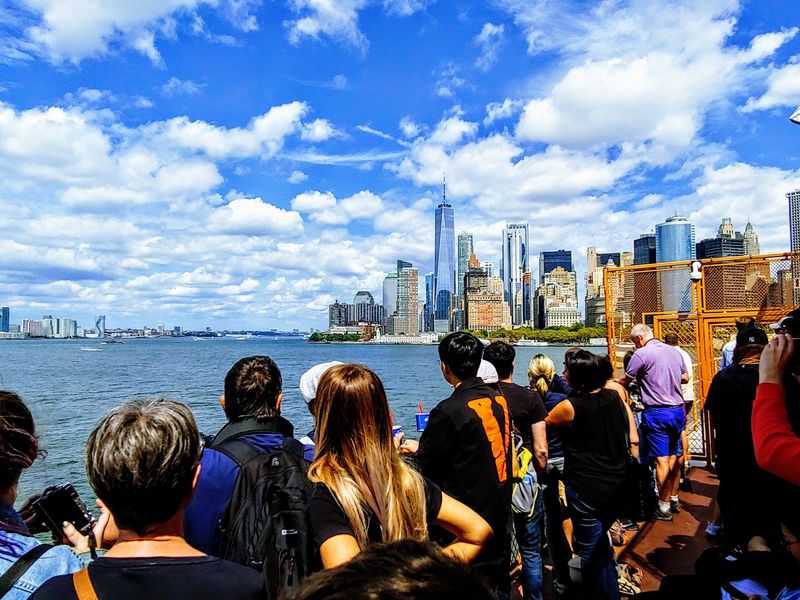
Photographers pay real money for angles this good. The crossing delivers Lower Manhattan, the Brooklyn Bridge, the Verrazzano Narrows Bridge, and the New Jersey waterfront around Jersey City and Hoboken.
On a clear day you can pick out all five boroughs at some point along the route. That is a geography lesson no classroom can match.
Governors Island drifts by early in the trip, low and green against the harbor. Ellis Island sits beyond Liberty Island, its red brick buildings visible with a decent zoom.
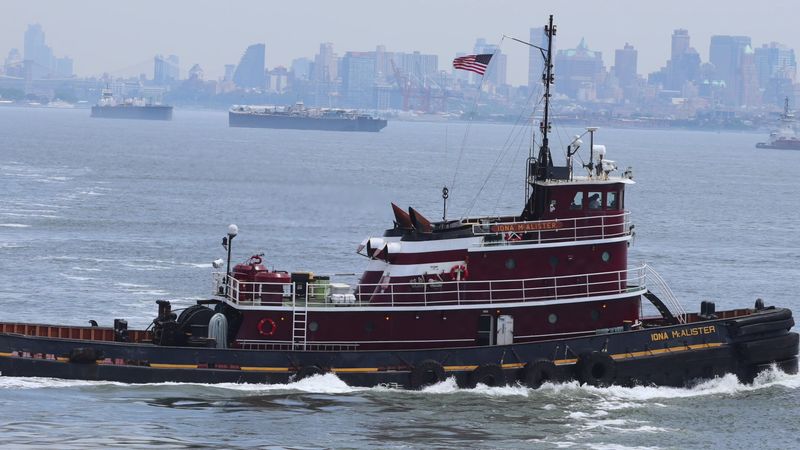
The harbor itself supplies constant motion. Sailboats, tugs, container ships, and smaller ferries crisscross the water, so the scene never sits still.
Dawn and dusk are the standout windows. Low sun paints the skyline warm, and the terminal windows themselves catch beautiful light at both hours.
Fog days change the mood entirely. Towers vanish into soft gray, and the trip becomes quieter and stranger in the best way.
Snacks, Seats, And Small Comforts
Hunger has an easy answer before you board. The Manhattan terminal houses several food and beverage counters, giving riders a chance to grab coffee or a quick bite on the way through.
Names inside the terminal have included familiar quick service spots, so choices lean casual and fast. Nothing fussy, which suits a building designed around movement.
Restrooms exist in the terminal and aboard the boats, a detail that matters more than people expect on a long sightseeing day.
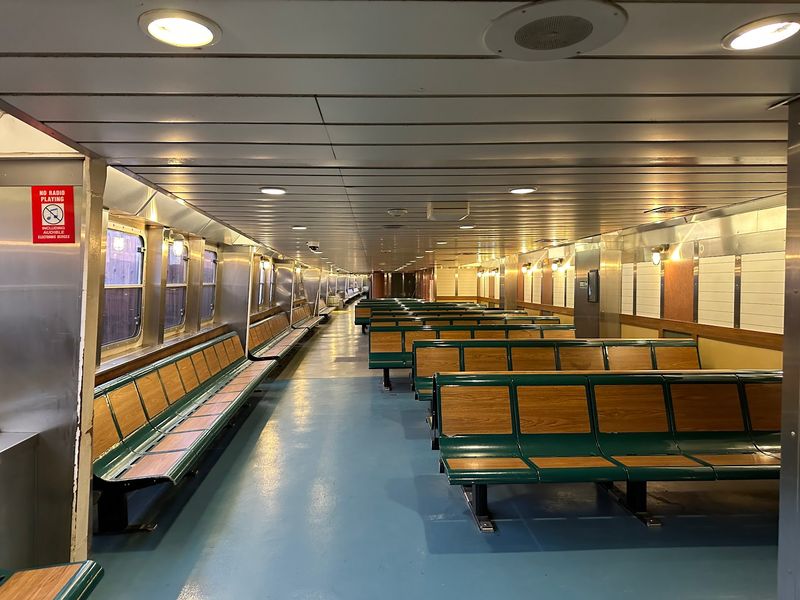
Seating aboard is generous, with benches on multiple levels and plenty of standing room at the rails. Elevators help riders with strollers, luggage, or mobility needs.
Newer Ollis Class boats carry charging outlets, handy after a morning of photo taking drains your battery.
Weather shapes comfort more than anything else. The plaza in front of the Manhattan terminal sits fully exposed to wind and rain, so an umbrella and a warm layer pay off in cooler months.
One practical note for visitors, vendors near the waterfront sometimes sell tickets for other harbor tours. The Staten Island Ferry itself never requires a ticket.
Ninety Minutes, Start To Finish
Timing this trip is refreshingly simple. Each crossing runs about 25 minutes, so a round trip with boarding and walking comes to roughly 90 minutes.
You do have to step off at St. George, since boats empty completely at each end. Walking briskly around the Staten Island terminal often lets you catch the very next departure back.
That quick turnaround is the classic move for sightseers on a tight schedule. Two crossings, one free afternoon, zero planning stress.
Standing near the entry gate 10 to 15 minutes before departure improves your odds of snagging a rail spot. Popular sailings fill quickly in good weather.
Stretching the trip is also worth considering. Staten Island holds the St. George Theatre, a ballpark near the waterfront, and neighborhood restaurants within easy reach of the terminal.
Riders coming from uptown can reach the Manhattan terminal on the 1 train, which ends at South Ferry. Buses also serve the area.
Build in buffer time either way, because harbor wind and heavy crowds can slow docking. Patience is a small price for a trip this cheap.
Seasons Change The Crossing
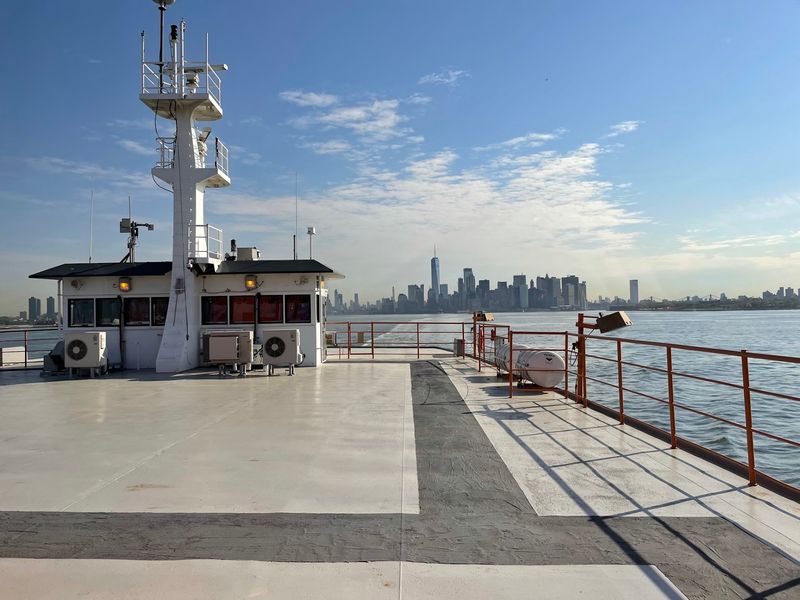
Summer turns the decks into a moving block party, with visitors from everywhere leaning over the rails. Harbor breeze cuts the heat, which makes the boat one of the coolest free spots in the city.
Autumn might be the sweet spot. Air clears, humidity drops, and the skyline sharpens into crisp detail for photos.
Winter crossings demand real layers, since the open water amplifies every gust. The reward is near empty decks and a harbor that feels enormous and still.
Spring brings longer daylight and rising crowds. Weekday mornings stay manageable, and the early boats carry mostly commuters.
Holiday schedules shift to 30 minute intervals throughout the day, which helps during busy travel weeks. Service itself never pauses, not for snow, not for holidays.
Sunset timing changes dramatically by season, so check when the sun sets before planning a golden hour ride. In December that means a late afternoon departure.
New York rewards repeat visits on this route. The same 5.2 miles look different in July haze than in January clarity, which is reason enough to ride it more than once.