
This Nevada Park Lets Kids Dig For Real Fossils Where Giant Ichthyosaurs Were Found
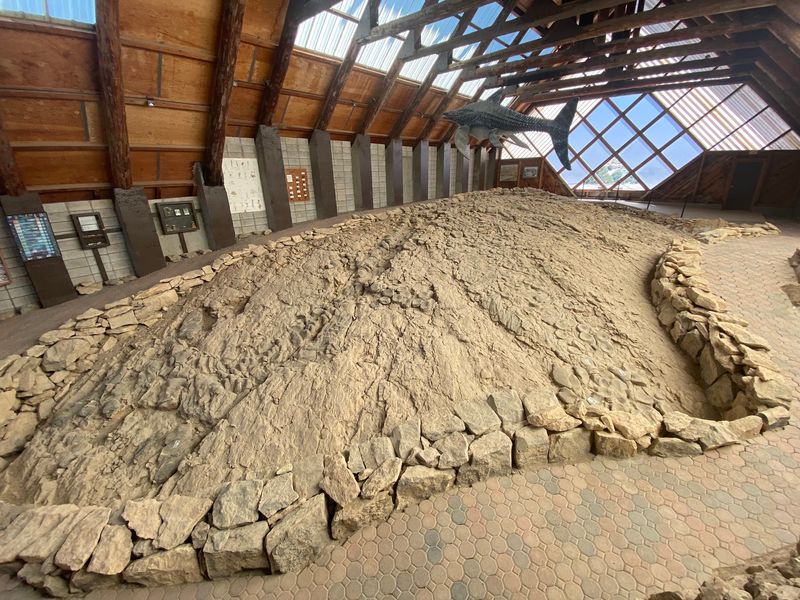
Sea monsters the length of a school bus once swam through the middle of Nevada. Their bones are still lying in the rock, right where scientists found them.
The creatures lived about 225 million years ago, when a warm ocean covered this high desert. One species found here even became the official state fossil.
I like how this place mixes real science with a little dirt under the fingernails. Kids have had the chance to try a small fossil dig with real fossils.
Parents get ranger stories, quiet mountain views, and a ghost town down the road.
It sits far from the nearest big town, and the last stretch is gravel. Getting there takes planning.
So what does a family actually find at the end of that long Nevada drive?
A Covered Quarry Holding Real Giants In The Rock
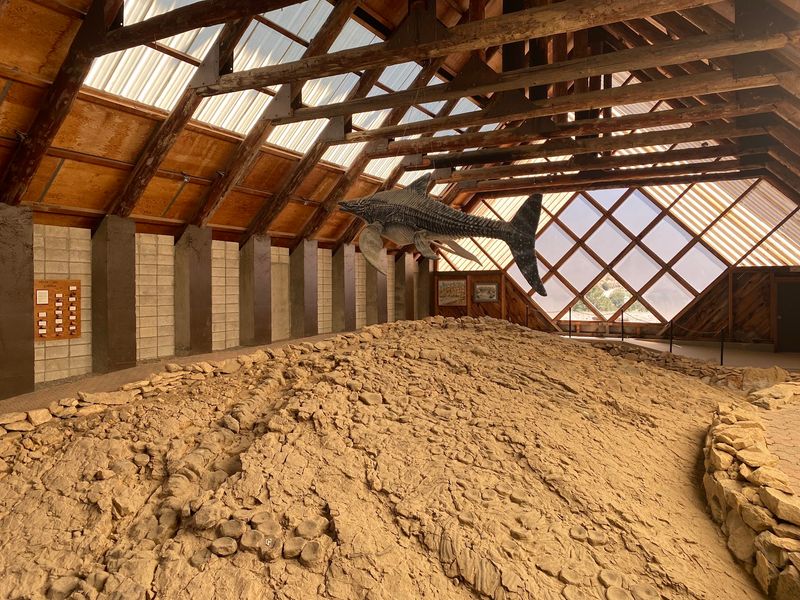
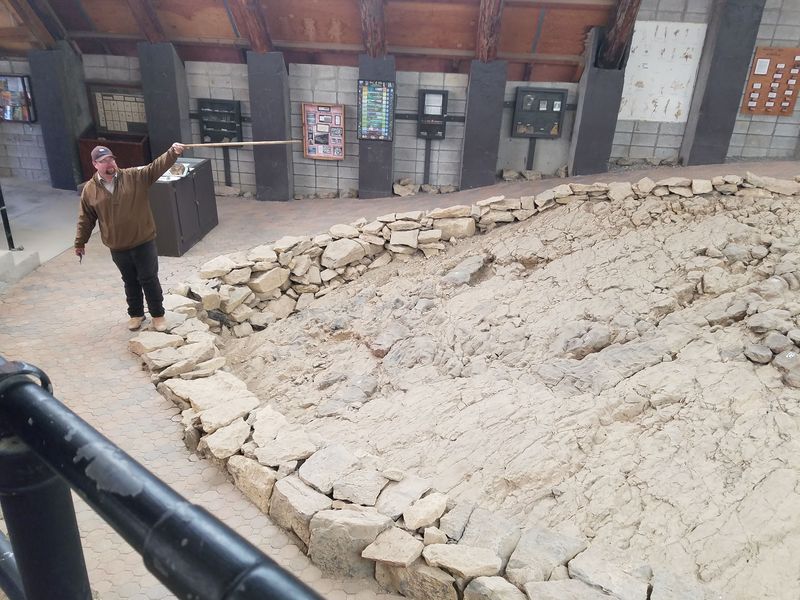
Few buildings in Nevada guard anything quite this old. The Ichthyosaur Fossil Shelter, also called the Fossil House, covers an active quarry inside Berlin-Ichthyosaur State Park.
Inside, ichthyosaur bones remain set in the stone where they were uncovered. Nothing was hauled off to a faraway museum, which makes the scene feel refreshingly honest.
The shelter sits in the Shoshone Mountains of Nye County, in central Nevada. Families reach the park by heading about 23 miles east of Gabbs on State Route 844.
Inside the park, the shelter is a short drive or walk beyond the old town of Berlin. A gentle nature trail of about 0.4 miles links the campground to the Fossil House.
The park protects the largest known concentration of ichthyosaur fossils in North America. That’s a big claim for a modest wooden building on a quiet hillside.
Kids tend to understand the payoff fast. These aren’t plaster copies or cartoon displays, but genuine bones from a lost ocean world.
The building is fairly small, so it pairs well with the rest of the park. Plan to treat it as the headline act of a much bigger day.
Bus-Sized Reptiles From A Long-Gone Nevada Ocean
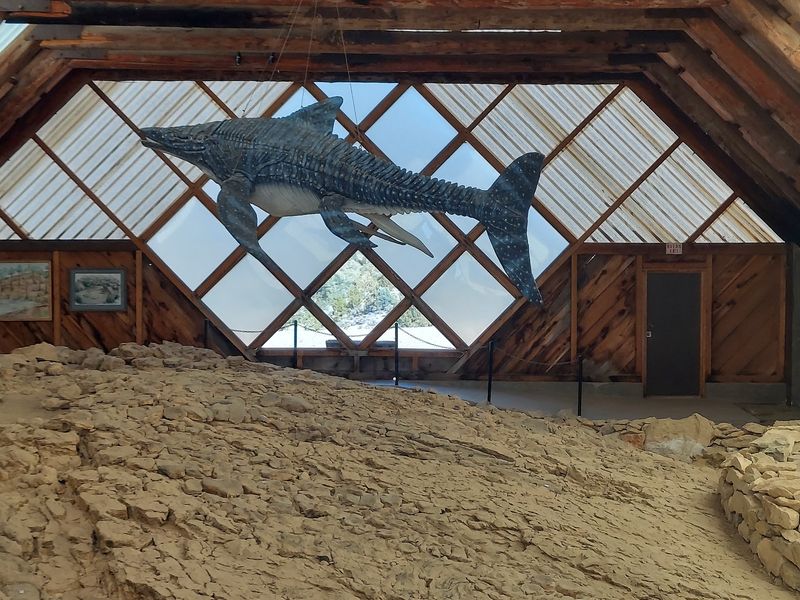
Some of these animals reached nearly 50 feet long. That’s longer than many city buses, and they lived roughly 225 million years ago.
Ichthyosaurs looked a lot like dolphins or big fish. They were actually air-breathing marine reptiles that ruled a warm sea covering central Nevada.
The species preserved here is Shonisaurus popularis. Nevada named it the official state fossil, which gives this spot serious bragging rights.
Close to 40 ichthyosaurs have been unearthed in this one concentrated area. Researchers have suggested the site may have been a place where these giants gathered to breed and give birth.
That idea tends to spark big questions from young visitors. Why here, and why so many at once?
Scientists are still studying those answers.
I can’t imagine a better way to make deep time feel real for a child. Pointing at a vertebra the size of a dinner plate does more than any textbook chapter.
The fossils overlap in a jumble, so they can look like plain gray rocks at first. A little guidance turns that jumble into several huge individual animals, and that moment is worth the drive.
Ranger Tours That Turn Gray Stone Into Skeletons
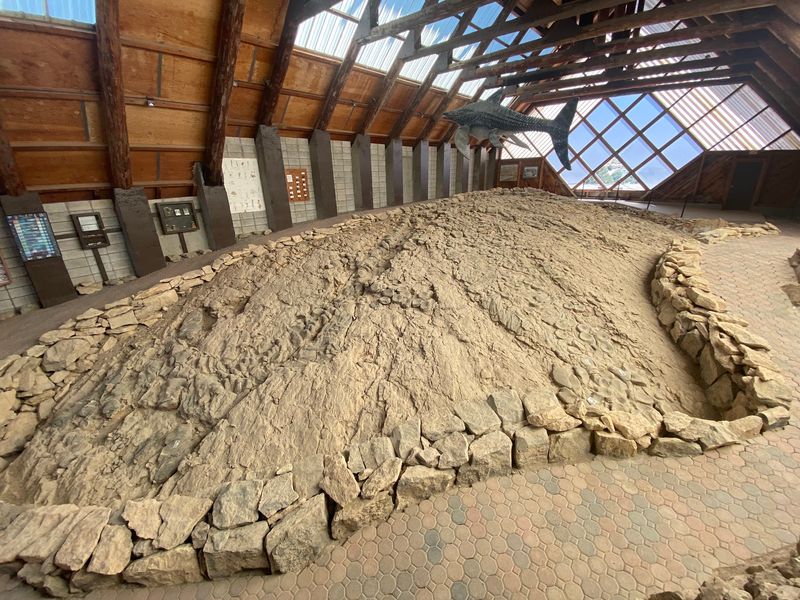
Here’s the trick to this whole place: time your visit for a guided tour. The ranger-led walk through the Fossil House runs about 40 minutes.
Rangers point out vertebrae, ribs, and jaw pieces using numbered markers in the quarry. Visual materials help sort the tangle of bones into individual animals.
Families get a real budget bonus too. Kids 12 and under have been able to join these tours for free.
Tour times have run at 10 a.m. and 2 p.m. during certain seasons. The building has also been open mainly on weekends at times, so schedules can shift.
Please confirm current tour days with the park before leaving home. This area is far from everything, and a missed tour means a long drive for a window peek.
Rangers here have built a strong reputation for patient, curious answers. That matters when a seven-year-old has twelve questions about sea reptile teeth.
A printed guidebook and diagram of the exhibit can make the tour even easier to follow. Grab one if it’s available and let the kids track each bone as the ranger talks.
Little Paleontologists Get Their Own Dig
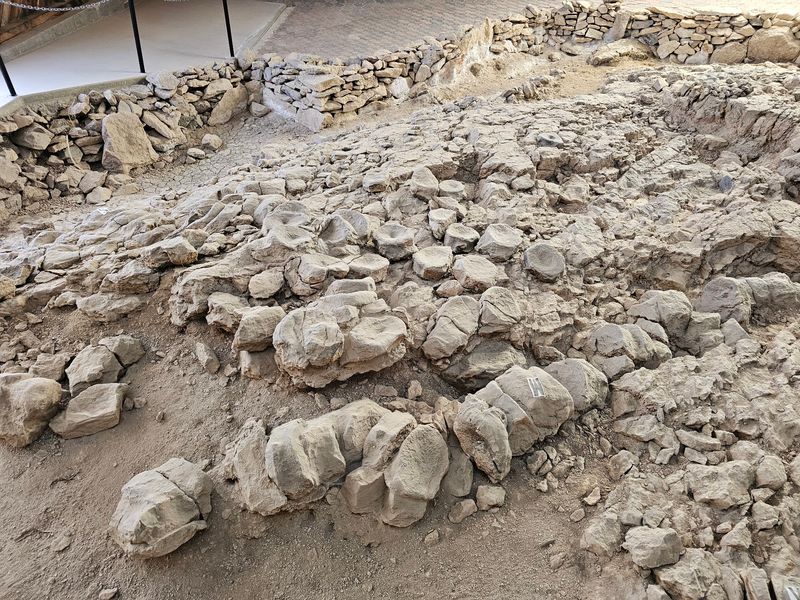
Watching bones under glass is great. Brushing dirt off a fossil with your own hands is even better, at least to a third grader.
The shelter has offered a small fossil dig with real fossils for kids. It gives young visitors a hands-on taste of what paleontologists actually do.
Offerings like this can change over time, so ask a ranger what’s available during your visit. Even a short try can make the giant bones in the quarry click.
Inside, there’s also plenty to read. Displays explain the ichthyosaurs and the many other fossils found nearby in this part of Nevada.
One quirky bonus: archaeology-themed comics have hung in an unexpected spot for years. Keep your eyes open and see who spots them first.
The combination works well for mixed ages. Teens can dig into the science panels while younger kids stay busy with hands-on discovery.
I believe this is where the trip becomes memorable for children. They don’t just see history, they get to play a small part in uncovering it.
Missed The Tour? The Windows Still Deliver
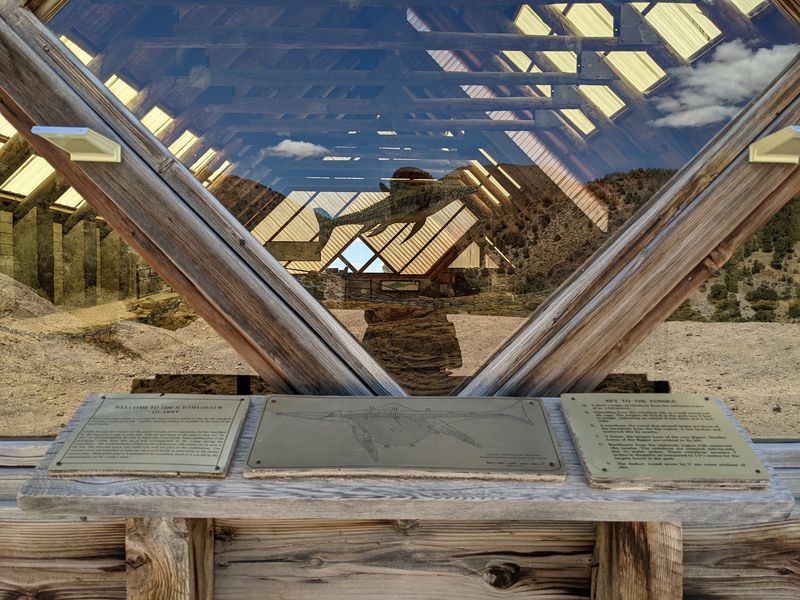
Bad timing happens, especially on a road trip with kids. Thankfully, a closed door here doesn’t mean a wasted afternoon.
Large viewing windows at each end of the building let visitors peer into the quarry. You can see the exposed fossils without stepping inside.
Interpretive panels on the outside explain what’s lying in the rock. They help connect the gray shapes to the huge animals that once swam overhead.
Honestly, the view through glass is a smaller experience than the guided version. Without a ranger, it’s harder to tell where one animal ends and another begins.
Still, it’s free to look once you’ve paid park entry. That makes it a reasonable backup when the schedule doesn’t cooperate.
The setting adds something too. The hillside overlooks a wide valley, and the mountain views alone can justify a pause.
Families who arrive off-schedule can shift focus to the ghost town and trails. Then circle back to the windows for a quick fossil fix before heading home.
A Ghost Town Stands Just Down The Hill
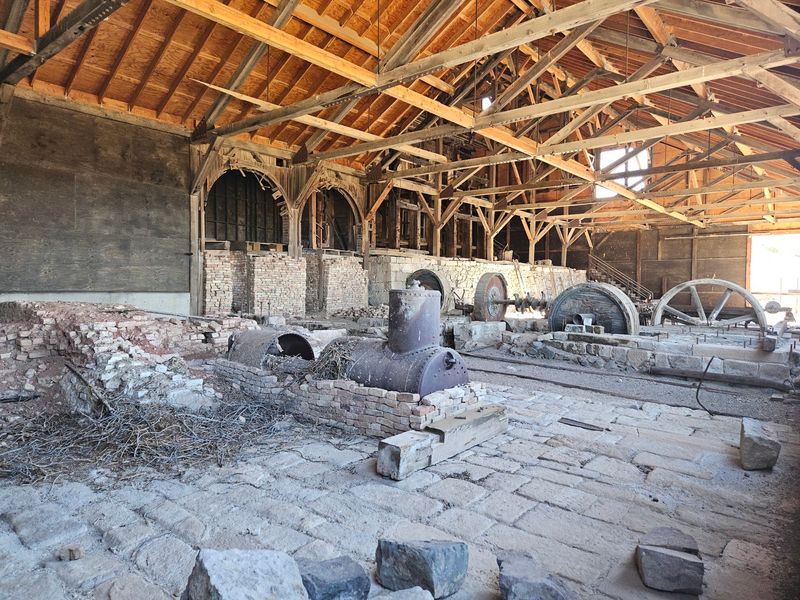
Two eras share one park, and they’re separated by millions of years. Just below the fossils sits Berlin, a mining town preserved in arrested decay.
Berlin grew in the 1890s on gold and silver mining. By 1911, the town was empty.
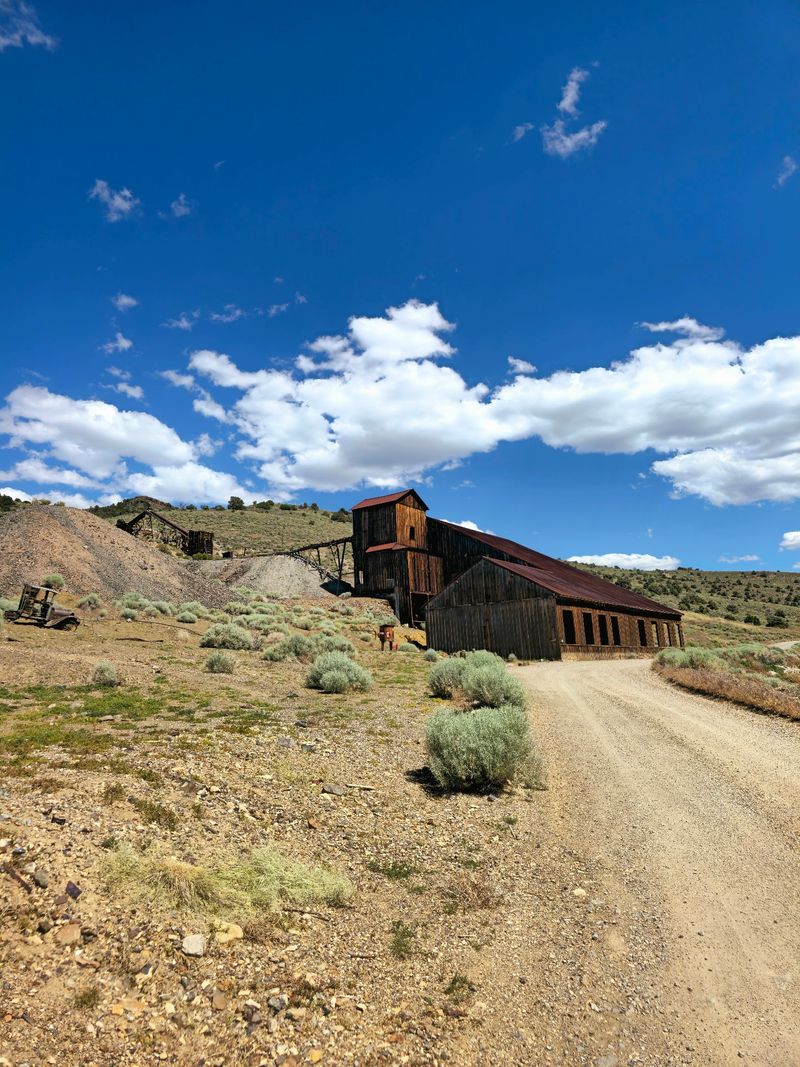
Today, many original wooden buildings still stand. Signs guide a self-guided walk through the townsite and the nearby Union mining camp.
Families can pass the old mill, homes, a blacksmith shop, and a machine shop. Some spots allow a peek inside or a view through windows.
The mill tends to steal the show. It’s a big, weathered reminder of how hard people worked to pull metal from these hills.
For kids, this section feels like walking through a Western movie set. Except everything here is real, and the dust is authentic.
I like how the two stories complement each other. Ancient sea giants on one hill, a short-lived boomtown on the next, and both hold up well in Nevada’s dry climate.
Wear sturdy shoes and expect uneven ground between buildings.
Campsites, Trails, And Seriously Dark Skies
One day may not be enough for everything here. The park offers a small year-round campground with well-spaced sites.
There are 14 units, many suitable for RVs up to 25 feet. Each site has a fire ring, grill, and covered picnic table.
Drinking water is typically available from mid-April through October. Restrooms are close by, though there are no hookups.
Leave the giant RV or long trailer at home. The road up to the fossils is narrow, steep, and twisty gravel.
Trails add more to explore between meals. The 0.4-mile nature trail connects the campground to the Fossil House, and the Berlin Townsite Loop wanders through town.
The 2-mile Richmond Canyon Loop suits families wanting a longer walk. Mule deer, rabbits, and raptors may show up along the way.
Pack layers for the evening. The elevation means nights can turn cold quickly, even after a warm day.
Busy summer stretches can fill the small campground. Confirm current camping rules and availability with Nevada State Parks before you go.
A Few Dollars Buys A Full Prehistoric Day
Budget-friendly doesn’t get much clearer than this. Park entry has been a small per-vehicle fee, lower for Nevada-registered cars than for out-of-state vehicles.
Camping is a separate fee, also based on residency. Bring cash or a check, since card payments haven’t been accepted.
The mailing address is HC 61 Box 61200, Austin, NV 89310. Don’t let that fool you, though, because the park sits a long drive from Austin itself.
Fill the gas tank before leaving the highway. Services are scarce, and the last stretch involves gravel roads.
Pack lunch, plenty of water, and snacks for everyone. There’s no cafe waiting at the end of the road.
A realistic visit easily fills most of a day. Between the tour, the ghost town, and a trail or two, nobody will feel shortchanged.
So is the Ichthyosaur Fossil Shelter worth the effort? For curious kids and grandparents who love real history, it’s hard to beat.
Check tour days, pack well, and let Nevada’s ancient ocean do the rest.