
This Stunning Nevada Castle Looks Too Magical To Be Real
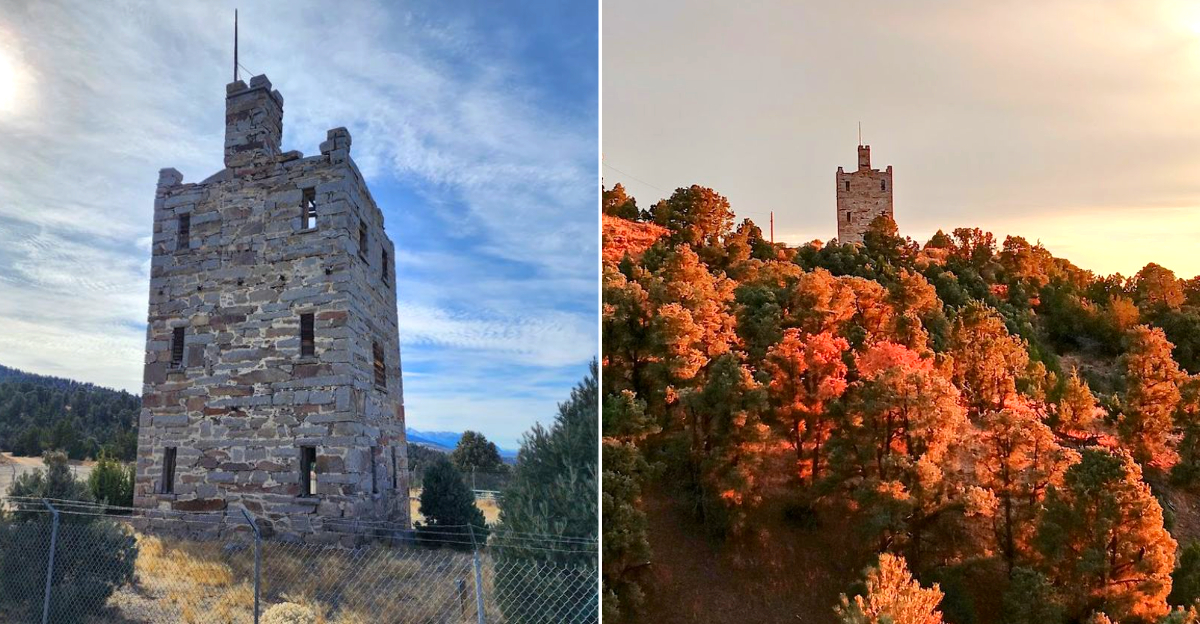
A lonely stone tower rises against the desert sky, looking wildly out of place and impossible to ignore. Its weathered walls hint at ambition, fortune, and stories left behind.
How did something straight from a medieval tale end up in Nevada’s rugged landscape? That mystery is exactly what makes it so memorable.
Built during a booming mining era, the tower served its original purpose only briefly, yet it still commands attention today. The roofless stone structure feels dramatic and slightly mysterious, while the surrounding views make the stop even more rewarding.
Come for the unusual architecture, stay for the atmosphere, and leave wondering what other surprises are hiding beyond the highway.
How The Stone Tower Became A Landmark
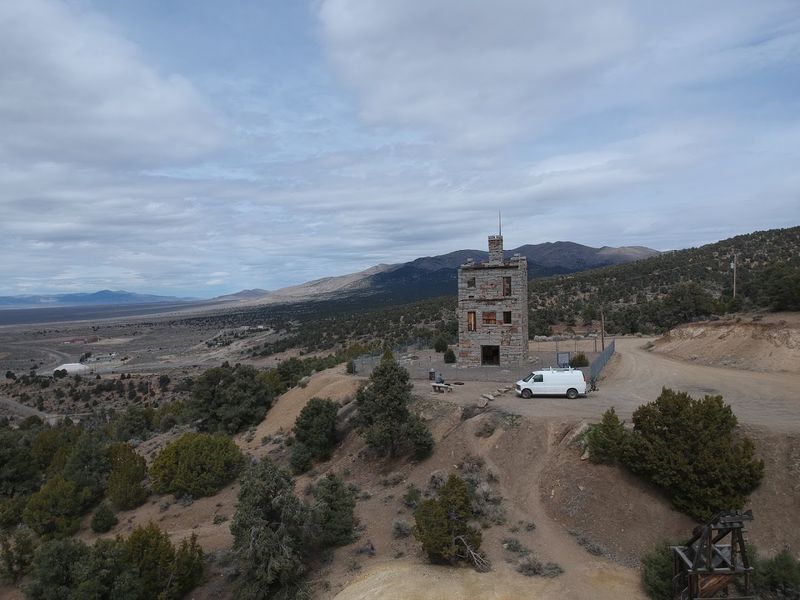
Back in 1897, a powerful and wealthy man named Anson Phelps Stokes decided to build something extraordinary in the Nevada desert. He was a mine developer, railroad magnate, and member of one of the most prominent families on the East Coast.
Stokes had traveled through Italy and fallen in love with a medieval tower he spotted near Rome. He wanted to recreate that same feeling right here in the American West.
Construction began in the fall of 1896 and was completed by June 1897. Local workers in Austin, Nevada, cut native granite by hand and raised the massive stones using a hand winch. Clay mortar and rock wedging held everything together.
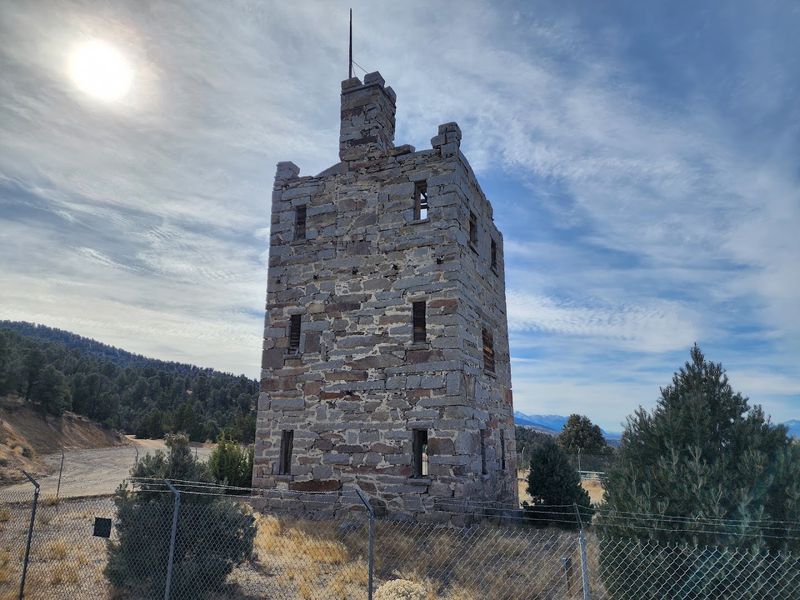
The result was a three-story granite tower with fireplaces on every floor, plate glass windows, balconies on the upper levels, and a battlemented rooftop terrace.
Here is the part that makes this story almost unbelievable: the castle was used by the Stokes family for just one brief period in June and July of 1897. After those two short months, the structure was essentially abandoned and has remained unoccupied ever since.
What you see today is a monument to both the ambition of one wealthy man and the incredible skill of the local craftsmen who built it.
What The Architecture Actually Looks Like Up Close
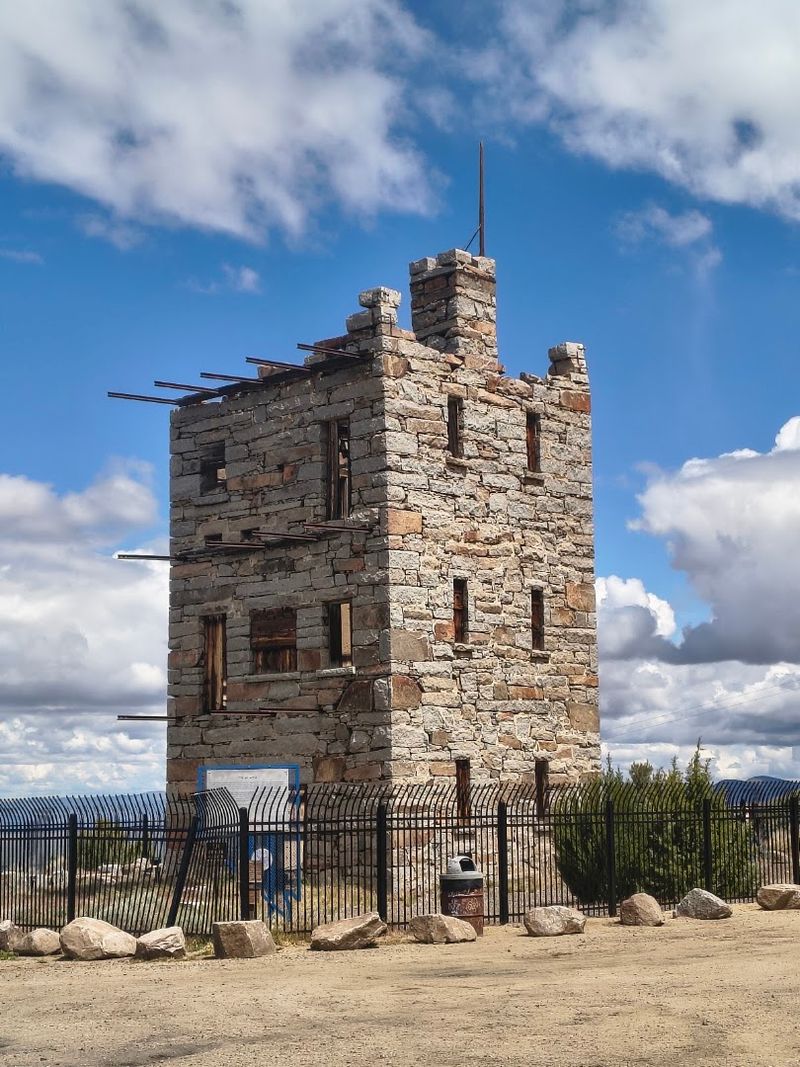
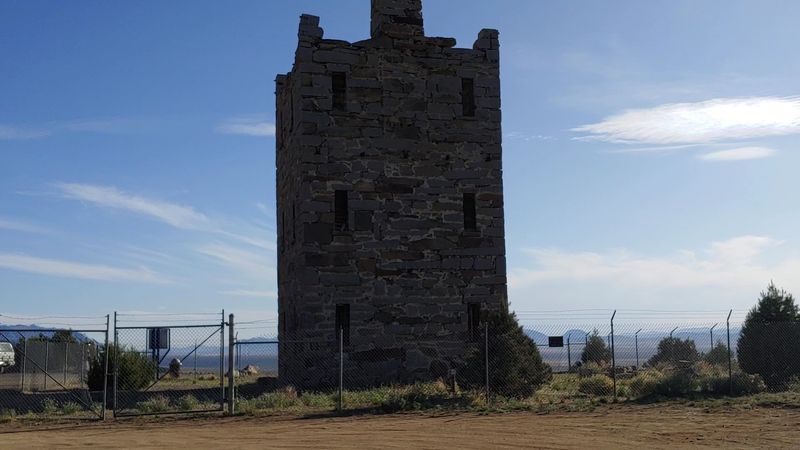
You might expect a castle in the Nevada desert to feel out of place, but standing in front of Stokes Castle, the opposite is true. The rough granite walls seem to grow right out of the hillside, as if the tower was always meant to be there.
The stone blocks are enormous, each one cut and placed by hand in a way that makes the whole structure feel both raw and refined at the same time.
The architectural style draws directly from medieval Italian towers. Anson Stokes modeled it after a specific tower he admired near Rome, and that influence is clear in every detail.
The battlemented rooftop, narrow windows, and towering walls give the building a distinctly European character. It feels strikingly unexpected against Nevada’s basin-and-range landscape.
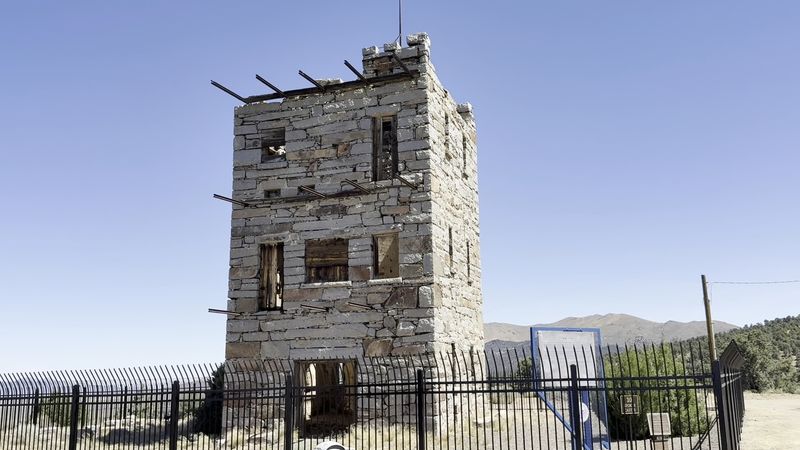
Railroad tracks were actually used as floor and balcony joists inside the structure, which is a fascinating detail that speaks to the resourcefulness of the era. There is one fireplace that opens to all three floors, a design that was both practical and clever for its time.
The exterior walls remain largely intact, preserving the building’s original scale despite decades of interior deterioration.
The Hilltop Drive Worth Taking
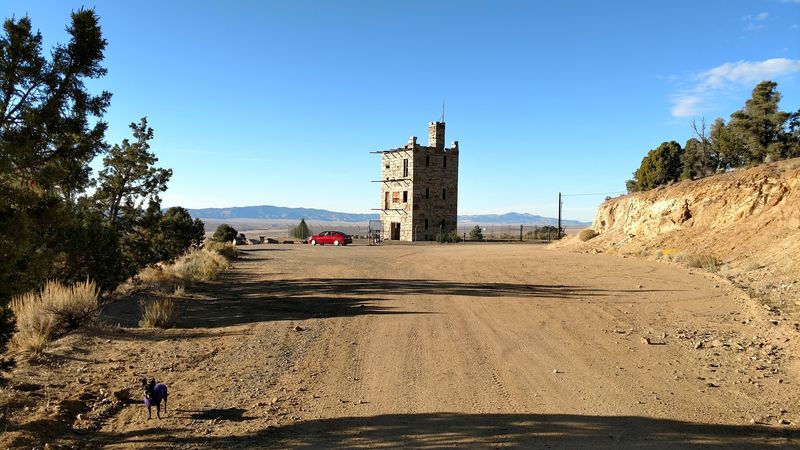
The drive up to Stokes Castle is part of the experience. From the town of Austin, Nevada, you follow a short dirt road that winds up the side of a hill. The road is only about 0.6 miles long, which means you can reach the top in just a few minutes.
The road is generally manageable in a standard car, but avoid it after rain because the unpaved surface can become slippery.
The road is narrow in places, and the passenger side offers an open view down the hillside that can feel a little nerve-wracking if you are not used to mountain roads. Drive slowly and stay aware of other vehicles coming down, since passing can be tight.
There is enough space at the top to turn around comfortably, so you do not need to worry about getting stuck.
Some visitors choose to walk the road on foot, and there also appears to be a biking trail in the area for those who prefer to arrive under their own power. The full address is Austin, NV 89310, and the site opens at 7 AM daily.
Parking at the top is informal but manageable, and you will find a small area where you can stop and take in the surroundings before walking over to the castle itself.
The Overlook That Makes The Trip Unforgettable
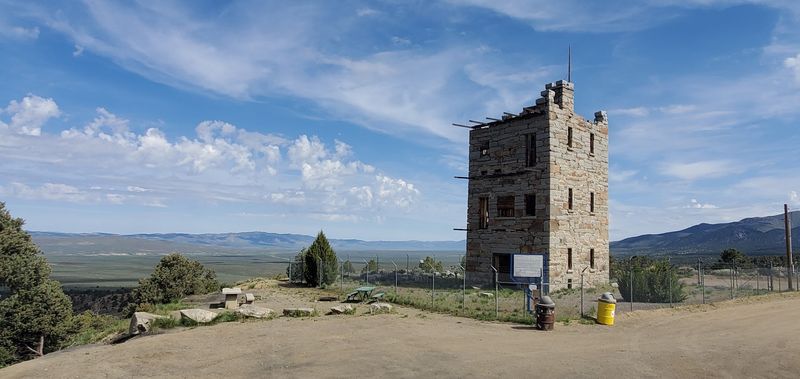
Even if the castle itself did not exist, the views from this hilltop would make the short drive worthwhile. Standing near Stokes Castle, you can see for miles across the Reese River Valley below.
Nevada’s basin-and-range landscape spreads in every direction, with mountain ridges framing the vast desert floor. It is the kind of view that makes you stop talking for a moment and just take it all in.
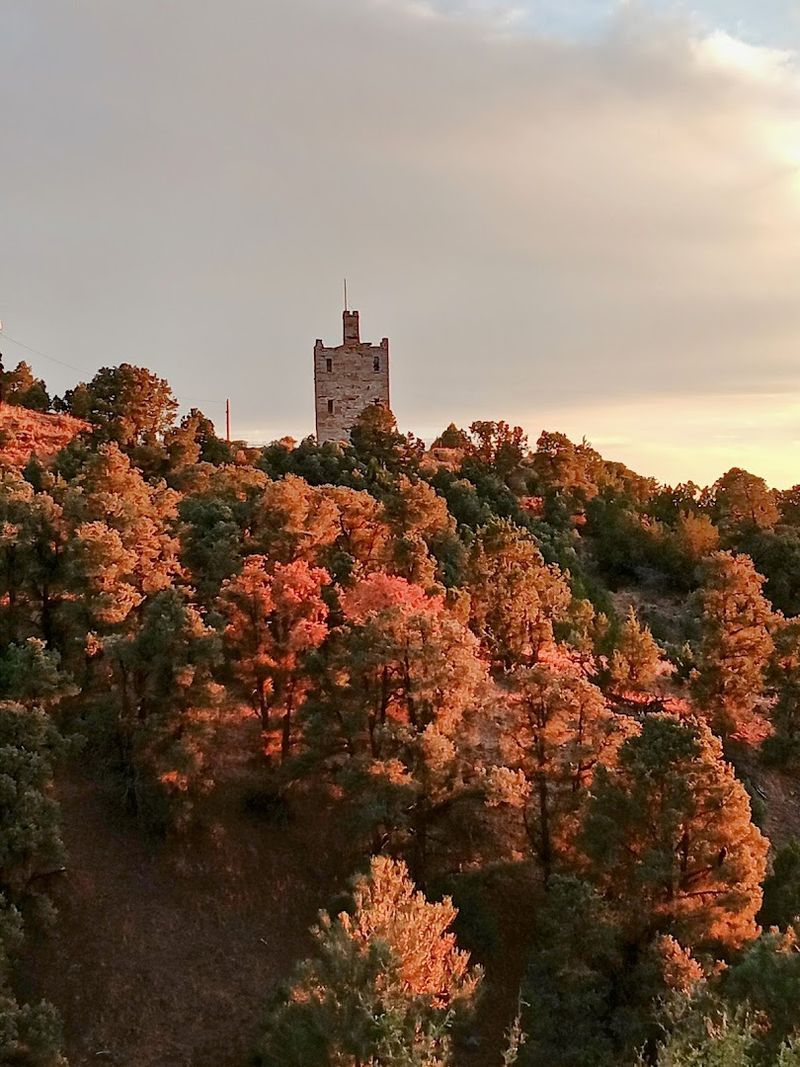
The overlook is especially beautiful in the early morning or late afternoon when the light shifts across the landscape. Shadows move across the valley floor, the colors of the desert change, and the whole scene takes on a quiet, almost cinematic quality.
You can see the path of US Route 50 cutting through the land below, which gives you a real sense of just how vast and open this part of Nevada truly is.
There are a couple of picnic tables at the site, making it a great spot to stop for lunch and soak up the surroundings. Many visitors say the view alone is reason enough to make the turn off the highway.
Bring a camera, because the combination of the stone tower and the sweeping valley backdrop creates a photograph that genuinely does not look real at first glance.
A Roadside Stop That Rewards Curiosity
US Route 50 through Nevada has earned the nickname the Loneliest Road in America, and driving it is an experience unlike any other in the country. The highway stretches across the state through wide open desert, small historic towns, and dramatic mountain passes.
Austin, Nevada, sits right along this route, and Stokes Castle is one of the most distinctive stops you can make along the entire stretch.
Road trippers who travel US 50 often mention Stokes Castle as a highlight of the journey. The site is only a short detour off the highway, making it easy to add to any cross-state drive without losing much time.
You pull off, head up the hill, explore for ten to fifteen minutes, and return to the road feeling like you found something special.
The 100th anniversary of US Route 50 is coming up in 2026, which makes this an especially exciting time to plan a drive along the highway.
Stokes Castle fits perfectly into the spirit of that road, a place that feels authentic, historic, and completely tied to the culture of the American West. Nevada has plenty of wide-open spaces, but few stops along US 50 combine history, architecture, and scenery so perfectly.
How One Builder Created A Lasting Legacy
Anson Phelps Stokes was not an ordinary man. He came from enormous wealth and moved in powerful circles on the East Coast, yet he was drawn to the rugged mining landscape of central Nevada.
He invested heavily in mines around Austin. His presence reflected the area’s strong economic activity in the late nineteenth century.
Building the castle was, in many ways, an act of personal expression. Stokes had seen a medieval tower near Rome during his travels in Italy, and he wanted to bring that same sense of permanence and grandeur to the Nevada frontier.
The tower was built as an occasional summer retreat for the Stokes family and their business associates. Sources do not show that it was intended specifically for J.G.
Phelps Stokes. The level of craftsmanship that went into the structure reflects both the ambition of the client and the skill of the local workers who carried out the project.
What makes the story resonate today is the contrast between the scale of the effort and the brevity of its use. An enormous amount of labor and money went into creating something that was occupied for only two months.
The castle is Nevada State Historical Marker No. 59, recognizing its importance to the state’s history.
How To Plan A Smooth Visit
Planning a visit to Stokes Castle is simple, and the site is free to enjoy. The grounds are open every day of the week from 7 AM to 7 PM, giving you a solid window to visit at whatever time works best for your schedule.
Morning visits tend to offer softer light for photography, while late afternoon brings warm golden tones that make the granite walls glow. Both are excellent choices depending on what you are looking for.
The castle itself sits behind a chain link fence, so you cannot enter the structure. You can, however, walk right up to the fence and get a close look at the stonework.
Informational placards are posted near the site and provide a solid overview of the history, construction, and significance of the building. Reading through them adds real depth to the visit and helps you understand what you are actually looking at.
There are no restroom facilities or running water at the site, so plan accordingly before you make the drive up. A small snack and some water are a good idea, especially in warmer months when the Nevada sun can be intense.
The picnic tables make it a comfortable place to take a break. Nearby mountain trails and camping areas offer more ways to extend your time in the region.
Why This Hilltop Landmark Is Worth The Detour
Some places earn their reputation through size or spectacle. Stokes Castle earns its place through something quieter and more lasting. Standing before a hand-built granite tower in the Nevada desert creates a real connection to the past.
Local craftsmen built it in the 1890s using a hand winch and clay mortar. That feeling is hard to manufacture and even harder to forget.
The site does not demand hours of your time. A visit of ten to fifteen minutes is enough to see the tower, read the placards, take photos, and enjoy the views. But the impression it leaves tends to stay with you long after you have driven away.
It is the kind of stop that makes a road trip feel meaningful rather than just a series of miles covered.
Nevada has remarkable landscapes and a rich history, and Stokes Castle sits right at the intersection of both. The dramatic stone tower and sweeping valley views make this a rewarding stop. Free admission and easy access just off US Route 50 add to the appeal.
If your travels bring you anywhere near Austin, Nevada, make the short turn off the highway. You will drive away glad that you did, and you will probably find yourself telling others about it for years to come.