
This Tennessee Fossil Site Lets You Dig Through A 76-Million-Year-Old Seafloor And Keep The Fossils You Find
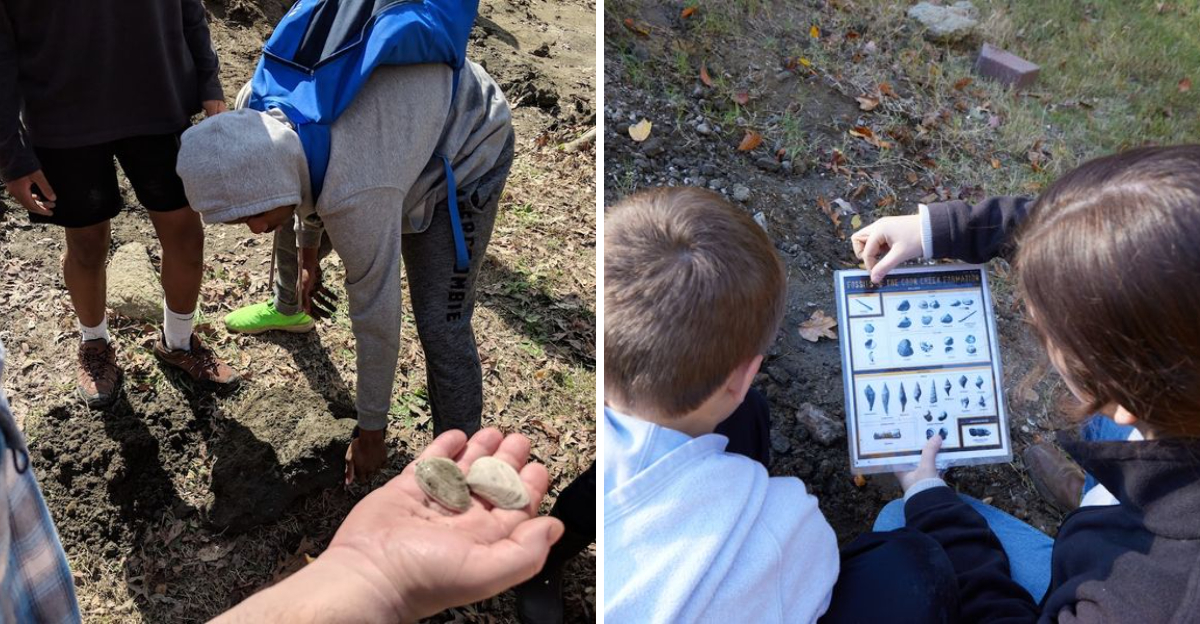
What if your next Tennessee adventure ended with a fossil millions of years old sitting in your hand?
At this remarkable site, visitors can search through the remains of an ancient seafloor that existed 76 million years ago.
Long before roads and towns covered the region, marine creatures moved through warm coastal waters and left behind shells, bones, and other traces of prehistoric life.
Now, families and curious explorers can dig through the earth and uncover pieces of that distant world. Even better, many of the fossils you find can go home with you.
No museum glass stands between you and the discovery. You get to kneel in the dirt, examine each unusual shape, and feel the excitement of finding something no one has touched for ages.
This Tennessee fossil site turns a simple day outdoors into a real prehistoric treasure hunt.
A Journey Through Geologic Time
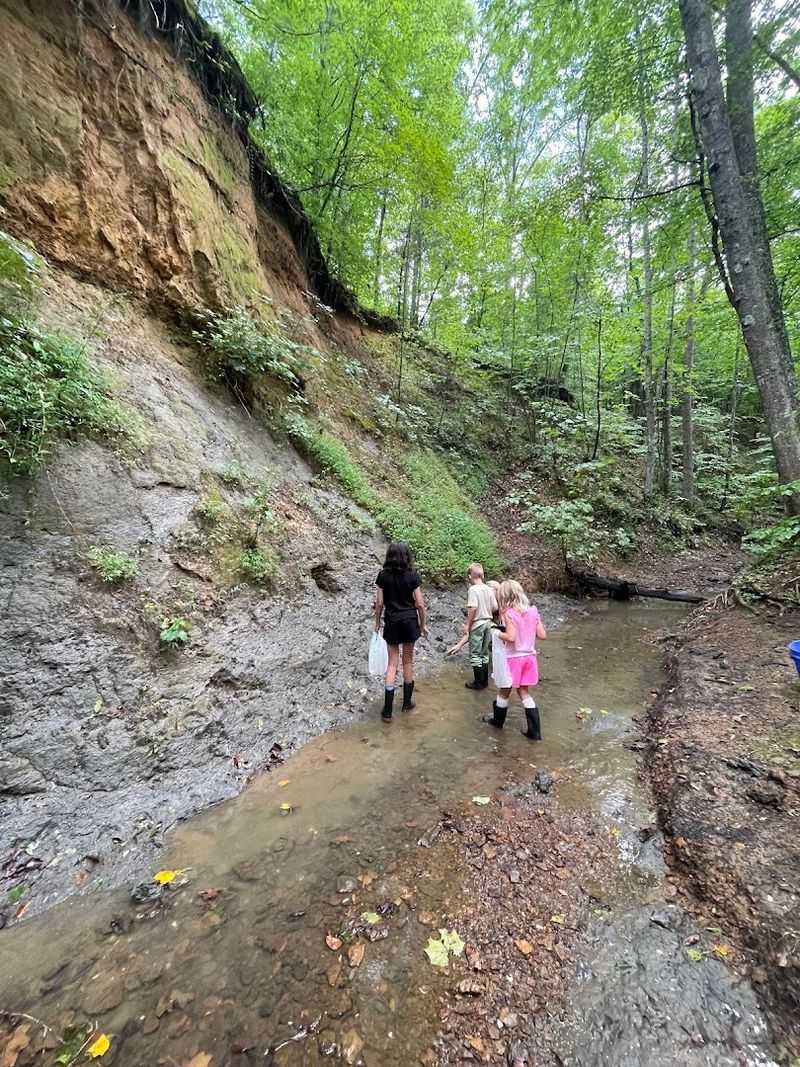
Long before Tennessee had forests, farms, or highways, it sat beneath a warm, shallow sea.
That sea existed during the Late Cretaceous period, roughly 76 million years ago, when much of central North America was submerged under what scientists call the Western Interior Seaway.
The creatures that lived and died in that ocean settled into the seafloor, and over millions of years, they turned to stone.
Coon Creek is one of the rare places on Earth where that ancient seafloor is exposed and accessible. The geological record here is remarkably well-preserved, offering a direct window into a world that has otherwise vanished.
The sediment layers tell a continuous story, one that professional paleontologists and curious families can both read.
Walking through the creek bed at Coon Creek Science Center, you are not just looking at old rocks. You are standing on the floor of a sea that no longer exists.
Each layer of clay and sand represents thousands of years of ocean history. That kind of geological storytelling is rare, and this site delivers it with remarkable clarity.
The Ancient Crest Of A Continental Sea
The Western Interior Seaway was one of the defining geographical features of the Cretaceous world. It stretched from the Arctic Ocean all the way down to the Gulf of Mexico, splitting North America into two separate landmasses.
Tennessee sat along its eastern edge, and the waters here were warm, rich, and teeming with life. Ammonites spiraled through the current. Bivalves clustered on the seafloor. Gastropods crept along the silty bottom.
These were not exotic creatures from science fiction. They were real animals that lived in real water, eating, moving, and dying in the same spot where you now stand with a small trowel in your hand.
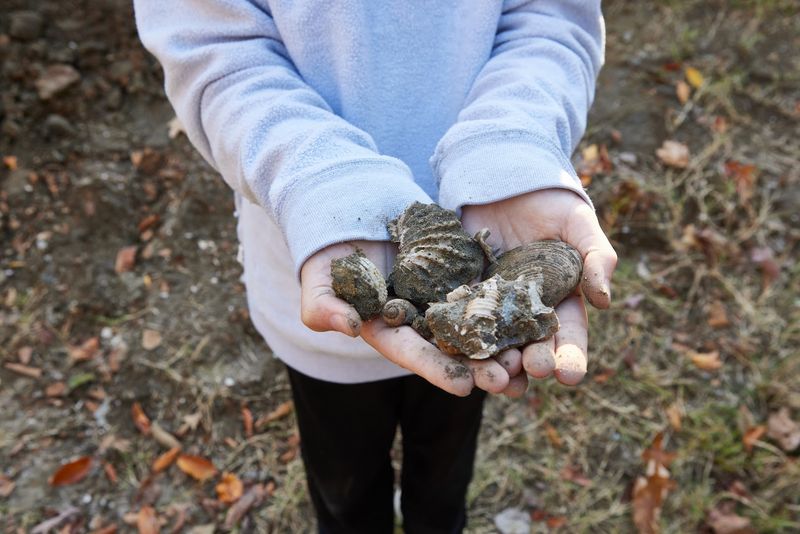
What makes Coon Creek especially significant is the quality of preservation. The fossils found here are not fragments or impressions.
Many are complete, three-dimensional specimens with original shell material still intact. That level of preservation is unusual for any fossil site, and it places Coon Creek in a category shared by only a handful of locations worldwide.
The ancient sea left behind more than sediment. It left behind a record of extraordinary biological detail.
A Fossil-Rich Lagerstatte Revelation
The term Lagerstatte comes from German and refers to a sedimentary deposit that contains exceptionally well-preserved fossils. Coon Creek qualifies as one of the most significant Lagerstatten in the United States.
Scientists have identified over 600 species of invertebrate fossils at this site, a number that continues to grow with each new excavation season.
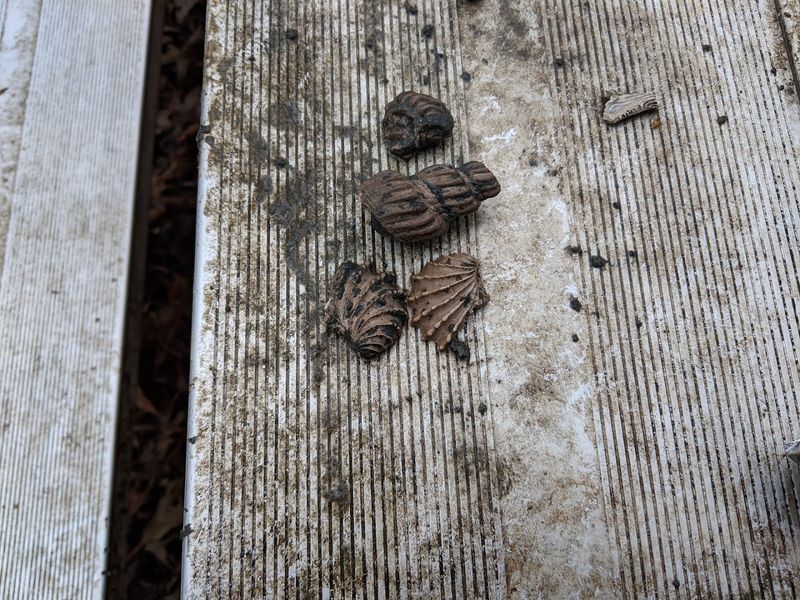
That density of species is staggering. In a single afternoon of careful digging, you might uncover bivalves, snails, crabs, shrimp, and worm tubes, all from the same ancient seafloor.
The variety alone makes the site extraordinary, but the preservation quality elevates it further. Shells retain their original three-dimensional form, and in some cases, original color patterns are still faintly visible.
Researchers from universities and natural history museums have studied Coon Creek for over a century.
The site is managed by the University of Tennessee at Martin, which operates the science center and maintains its scientific integrity while keeping it open for educational programs.
The combination of rigorous research and public access is genuinely uncommon. Most Lagerstatte sites are off-limits to the general public, making Coon Creek a rare and generous exception.
Uncovering The Cretaceous Fauna
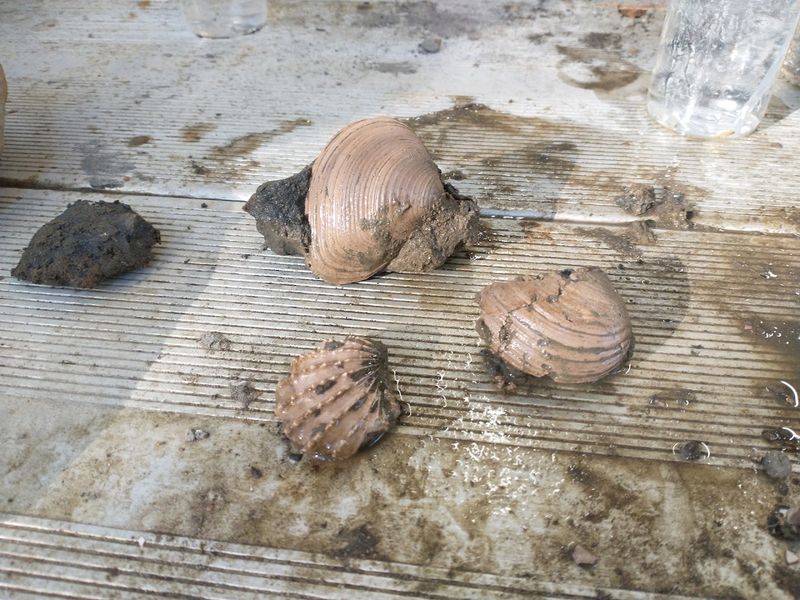
Pick up a handful of creek sediment at Coon Creek and you are holding the same material that buried sea creatures 76 million years ago. The fossils here are not planted or placed for convenience.
They erode naturally from the banks and creek bed, and after a rain, fresh specimens appear right on the surface, waiting to be noticed.
The fauna represented at the site includes ammonites, which are coiled cephalopods related to modern nautiluses. You will also find oysters, turritella snails, pectinid scallops, and the occasional echinoderm.
Crab claws and lobster fragments appear with enough regularity to generate real excitement among diggers of any age. Each species tells a specific story about the ecological conditions of that ancient sea.
The experience of finding something real and ancient is difficult to replicate in any classroom or museum.
Holding an ammonite that no human hand has touched since it sank to the seafloor during the Cretaceous period carries a weight that goes beyond simple curiosity.
It becomes a personal connection to deep time, and that connection tends to stay with people long after they leave the creek bed.
The Joy Of Discovery And Preservation
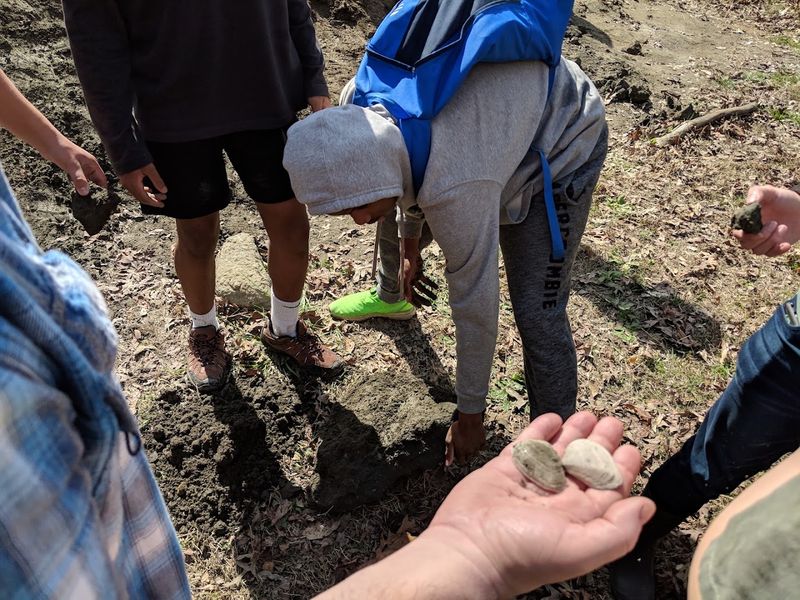
There is something fundamentally satisfying about finding a fossil with your own hands.
No screen, no simulation, and no guided tour can replicate the moment when your fingers brush clay away from a shell that last saw sunlight before humans existed.
At Coon Creek, that moment happens regularly, and it happens for people of all ages and backgrounds.
The site welcomes school groups, families, and independent learners. Programs are designed to be accessible and engaging, with staff who explain the geological context before sending participants into the creek.
The educational framing matters because it transforms a simple activity into a meaningful encounter with natural history. You are not just digging.
You are participating in paleontology.
And when the day ends, you take your finds home. That policy is part of what makes Coon Creek stand apart from most fossil sites, which prohibit collection entirely.
Keeping what you find creates a lasting connection between the individual and the science. A fossil on your shelf is a daily reminder of an ancient world, and of the afternoon you reached down and pulled it from the earth with your own hands.
Preparing For Your Paleontological Excursion
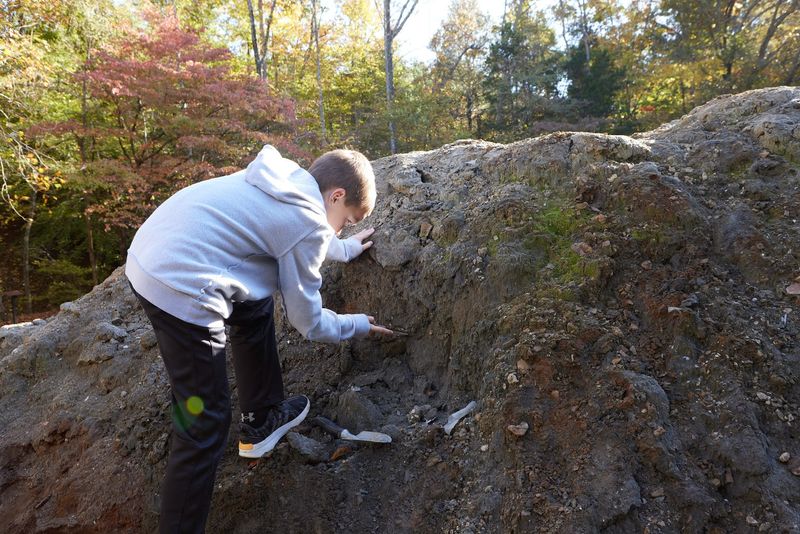
A little preparation goes a long way at Coon Creek. The site sits along an active creek, which means the ground can be wet, muddy, and uneven.
Waterproof boots or old sneakers you do not mind getting dirty are the right footwear. After rainfall, the creek runs shallow but the banks get slick, so solid footing matters more than most people anticipate.
Dress in layers, especially during spring and fall visits. The site is outdoors and exposed, and temperatures along the creek can feel several degrees cooler than nearby roads.
A change of clothes kept in the car is a practical move, particularly for younger participants who tend to get fully immersed in the experience, literally.
Bring a small bag or container for your fossil finds. A soft brush, like an old toothbrush, helps clean specimens in the field without damaging them.
Sunscreen and water are also worth packing, since time passes quickly once you start finding things. To plan a program or confirm availability, contact the center at +1 731-646-1636 or check their website at http://www.utm.edu/ccsc.
Arriving prepared means spending less time managing logistics and more time with your hands in the creek.
The Science Center’s Enduring Legacy
Coon Creek has been a site of scientific interest since the late 1800s, when early naturalists first recognized the exceptional quality of its fossil record.
Over more than a century of research, the site has contributed specimens to major natural history collections and has been the subject of dozens of peer-reviewed studies.
That legacy continues today under the stewardship of the University of Tennessee at Martin.
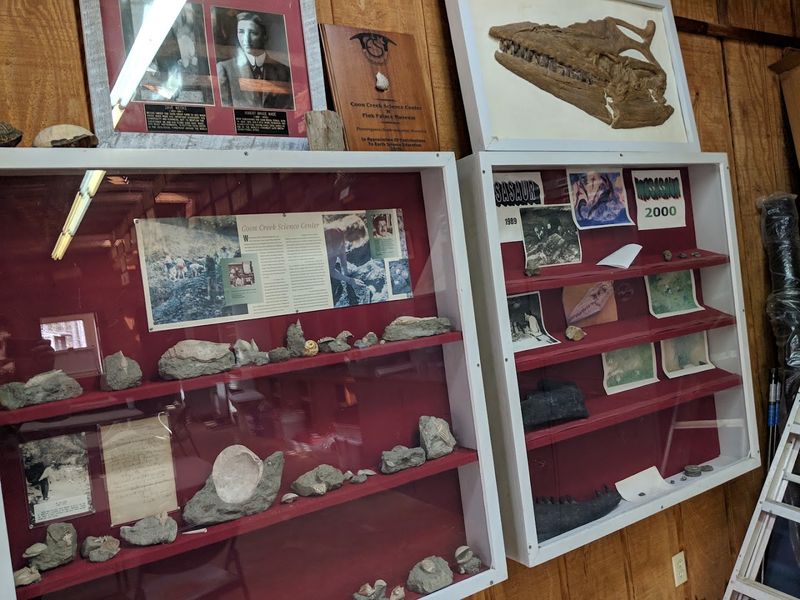
The science center itself serves as both a research station and an educational facility. Interpretive displays explain the geological history of the site, introduce the major fossil groups found there, and place Coon Creek within the broader context of Cretaceous North America.
The presentation is clear and well-organized, making it useful for first-time visitors and returning learners alike.
What the center has maintained over the decades is a careful balance between scientific rigor and public accessibility. It has not become a commercial attraction or a casual tourist stop.
It remains, at its core, a place of learning. That commitment to education gives Coon Creek a seriousness that enriches every program offered there.
The fossils you find carry the weight of genuine science behind them.
Citizen Science And Educational Engagements
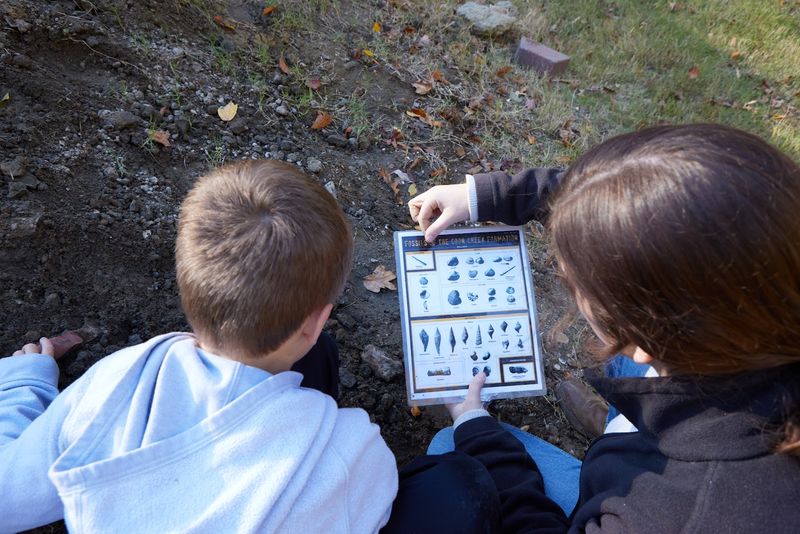
One of the most compelling aspects of Coon Creek Science Center is the way it turns ordinary participants into contributors to real science. When groups come to dig, they are not just having fun.
They are helping to document what continues to erode from the creek banks each season. Staff members record notable finds, and significant specimens occasionally enter the scientific record.
Programs are available for school groups at multiple grade levels, from elementary through college.
University of Tennessee at Martin has brought paleontology courses to the site for decades, and the academic connection gives the programs an intellectual depth that purely recreational dig sites simply cannot match.
The staff who lead sessions bring genuine expertise and a real enthusiasm for the material.
For families and independent groups, scheduled programs offer structured guidance through the site.
The introduction given before each session covers the geological timeline, the major fossil types, and the techniques used to identify and preserve what you find.
That foundation makes the digging more productive and more meaningful.
Coon Creek is located at 2983 Hardin Graveyard Rd, Adamsville, TN 38310, and the experience it offers, scientific, hands-on, and genuinely memorable, is unlike anything else in the region.