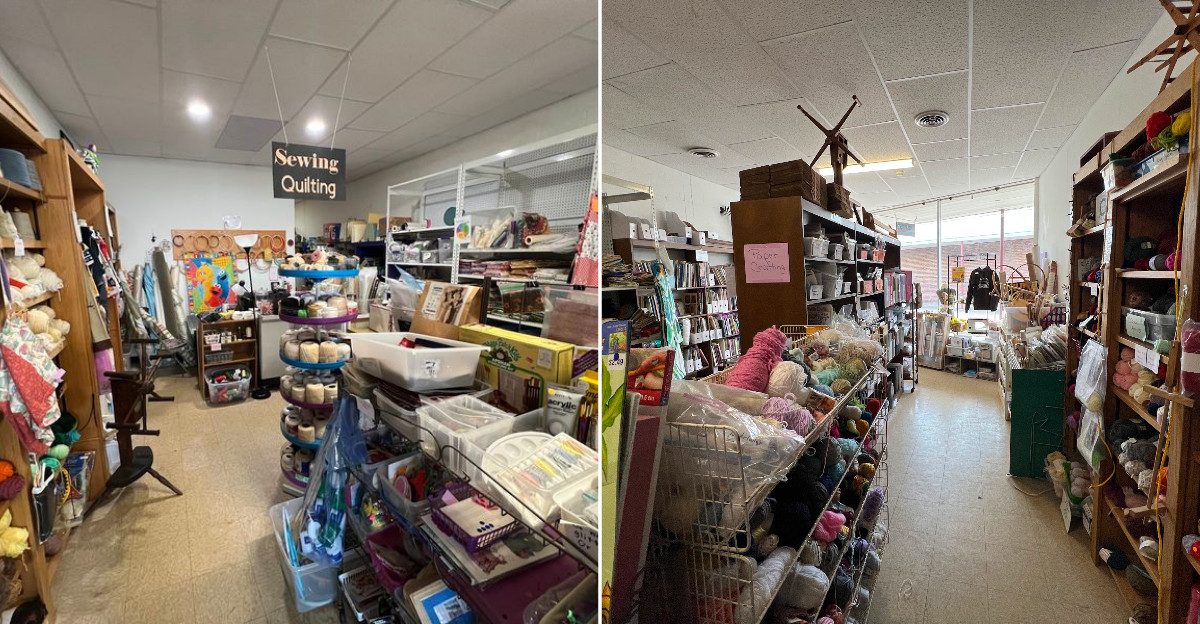
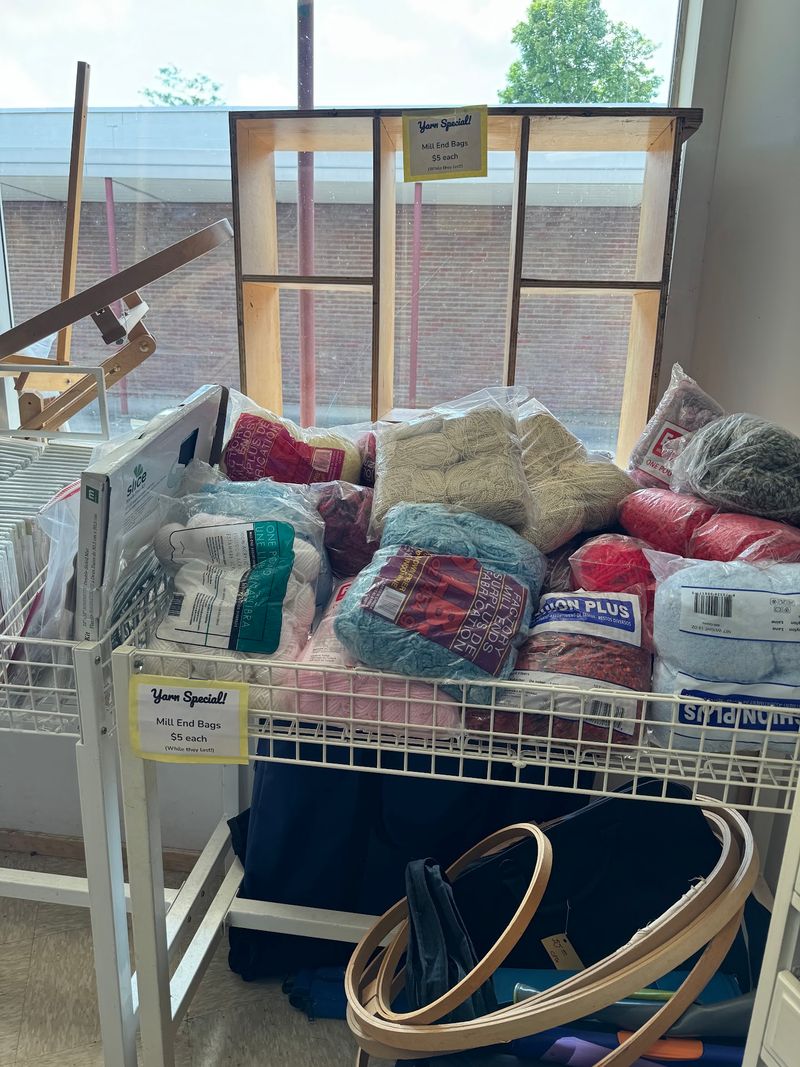
Some of the yarn, fabric, and stamp sets on these shelves can cost as little as a dollar. Every penny of profit goes toward food and clean water for people who need it.
That’s a pretty great trade for a bag of craft supplies. The whole inventory comes from donations, and volunteers keep the place running.
This little New York shop has already sent nearly $150,000 to charities. Those groups work on hunger and water access close to home and around the world.
Sewing machines, beads, junk journal paper, and even free jigsaw puzzles all share the space. So how much can one small storefront really hold?
A Thrift Store Built Entirely For People Who Hoard Glue Sticks
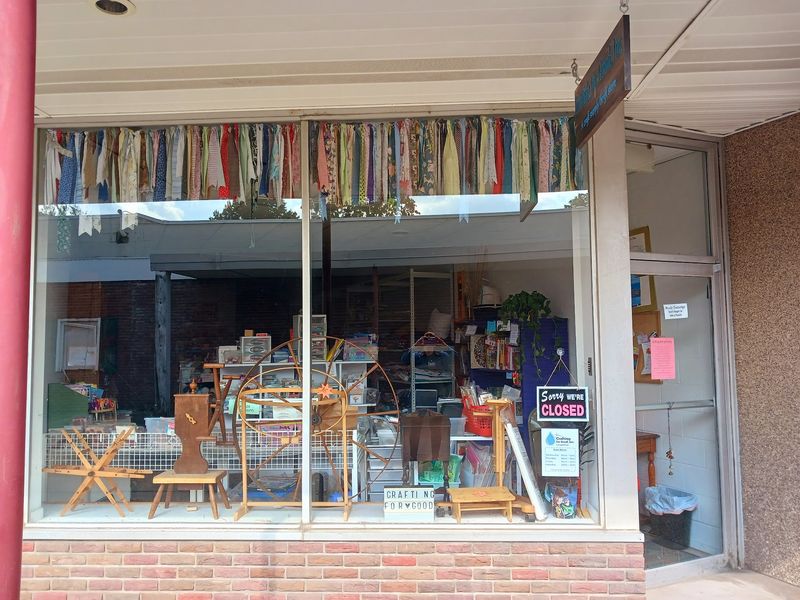
Crafters have a reputation for stashing supplies like squirrels before winter. Crafting for Good, Inc. turns all those extra stashes into something useful for everyone.
The North Chili shop works as a non-profit craft thrift store. Every item on its shelves arrived as a donation from someone who had more than they needed.
That setup keeps prices deeply discounted, with some finds costing just a dollar. The goal is simple: make crafting affordable for anyone who wants to try it.
Think of it like a regular thrift store that skipped the clothes and kitchenware. Here, the focus stays on yarn, fabric, beads, paper, stamps, and the tools that go with them.
Since supplies depend on donations, the selection changes all the time. Your favorite find today might be gone next week, and something brand new could take its spot.
That makes each trip feel a bit like a treasure hunt. You may show up for one spool of thread and leave holding a pattern you never knew you wanted.
Big box stores can’t really copy that feeling. They have rows of matching products, while this place has surprises tucked onto every shelf.
Your Shopping Bag Turns Into Food And Clean Water
Nearly $150,000. That’s how much money this small shop had donated to charity by October 2026.
All profits go to groups that tackle hunger and bring clean water to people. The help reaches local neighbors, families across the country, and communities around the globe.
Foodlink received about $42,000 to tackle food insecurity in Rochester and the Finger Lakes. That means your fabric purchase can help feed families just a short drive away.
DigDeep got around $26,000 for clean water projects in Appalachia and the Navajo Nation. World Central Kitchen received roughly $25,000 to serve meals during crises.
The biggest share, about $49,000, went to The Water Project, Inc. That group brings clean water and sanitation to communities in sub-Saharan Africa.
Sales keep growing, too. The first half of 2026 brought a 34% jump compared with the same stretch the year before.
So when you grab one more skein of yarn, you have a solid excuse. You aren’t overbuying, you’re supporting clean water. That logic might not fly with everyone at home, but it’s honestly true here.
Few shopping trips come with a bonus quite this meaningful.
Sewists And Quilters, Clear Some Room In The Car
Refurbished sewing machines sit among the deals here, which is a big deal for beginners. A working machine can be the hardest part of starting to sew.
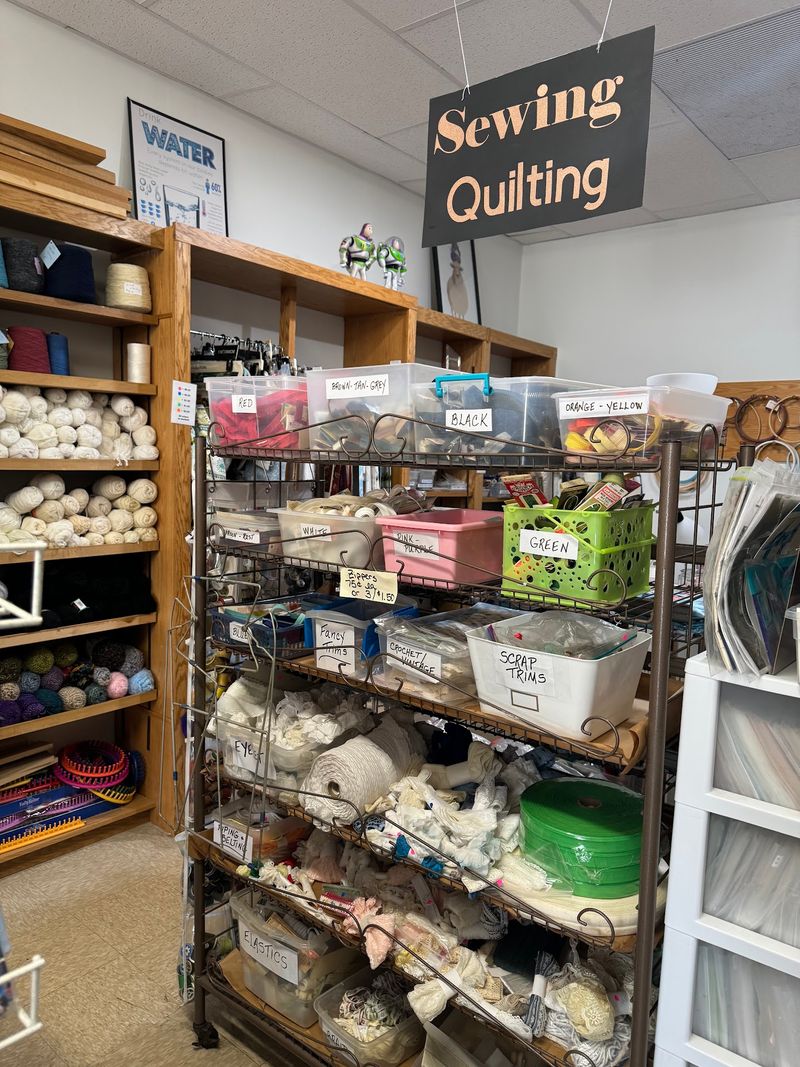
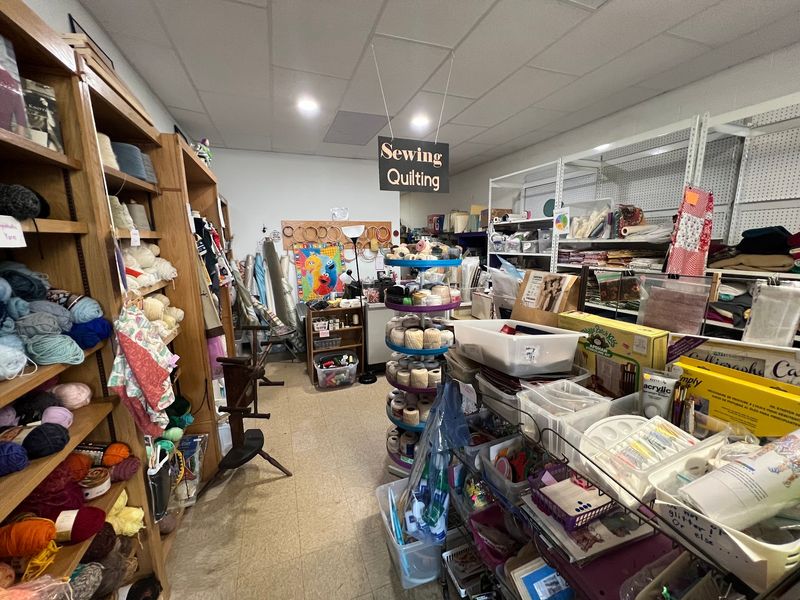
The sewing and quilting section goes far beyond machines. You’ll find fabric yardage, quilting patterns, thread, notions, and cutting and sewing tools.
One smart rule keeps things tidy. The shop sells real fabric yardage, not bags of tiny scraps you’d have to sort through.
Quilters planning a big project can take advantage of that. Stretching a budget across many colors and prints gets much easier when prices stay this low.
The book selection has its own quirky twist. Sewing and quilting books on the shelves are either published before 1970 or after 2010.
That leaves you with two fun choices. Older books often show classic techniques, while newer ones cover fresh styles and modern patterns.
Notions are worth a close look, too. Those small items like snaps, pins, and fasteners add up fast at regular stores.
Here, you can stock up without wincing at the total. Your sewing basket will thank you, even if your closet space politely complains.
Paper Lovers Will Lose Track Of Time In These Aisles
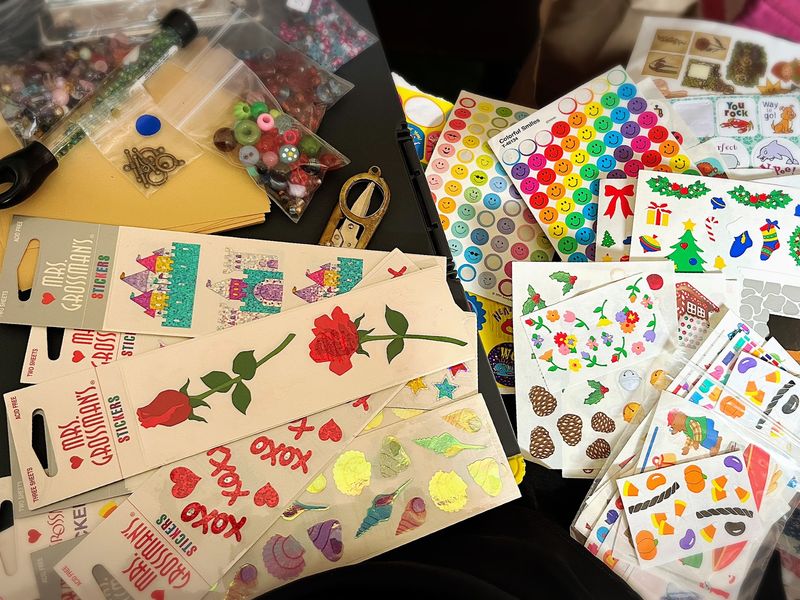
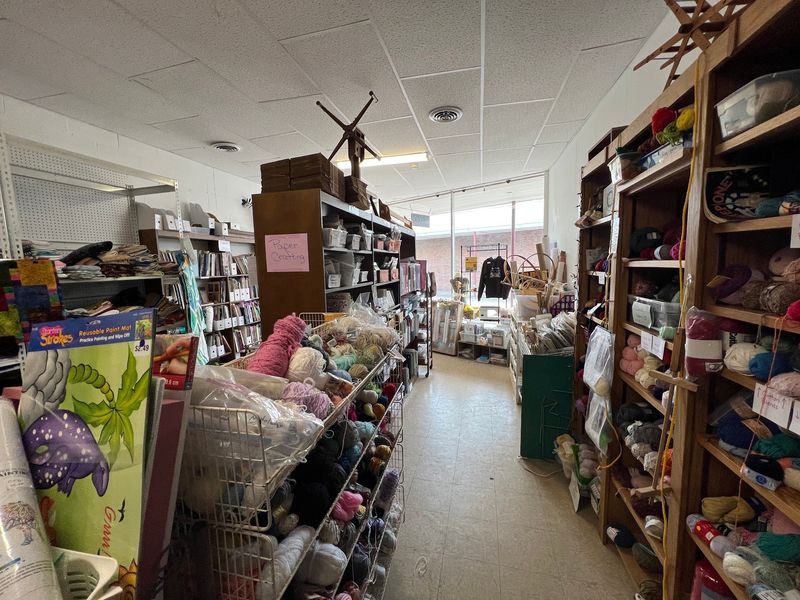
Card makers, scrapbookers, and junk journal fans, this section was made for you. The paper crafting area covers almost every tool you could want.
Shelves hold loose and packaged paper, scrapbooks, embellishments, and adhesives. There are also punches, cutting tools, and embossing tools for adding texture.
Rubber stamp fans get a nice bonus. Stamp sets come with inks, so you can start creating as soon as you get home.
There’s one helpful rule here. The store sells complete stamp sets, not random loose stamps, and it skips paper scraps too.
That keeps the section neat and easy to shop. You won’t need to dig through piles of mismatched bits to find something useful.
Junk journaling has become a huge hobby lately. It mixes papers, stickers, and found items into one creative book.
A craft thrift store fits that style perfectly. Donated supplies come from many different people and eras, so you get an interesting mix.
Collage makers can find a wide range of materials to layer and combine. Honestly, one tidy drawer of supplies at home might become two after a visit. Maybe three.
Yarn Hunters, Brace Yourselves For Some Serious Bargains
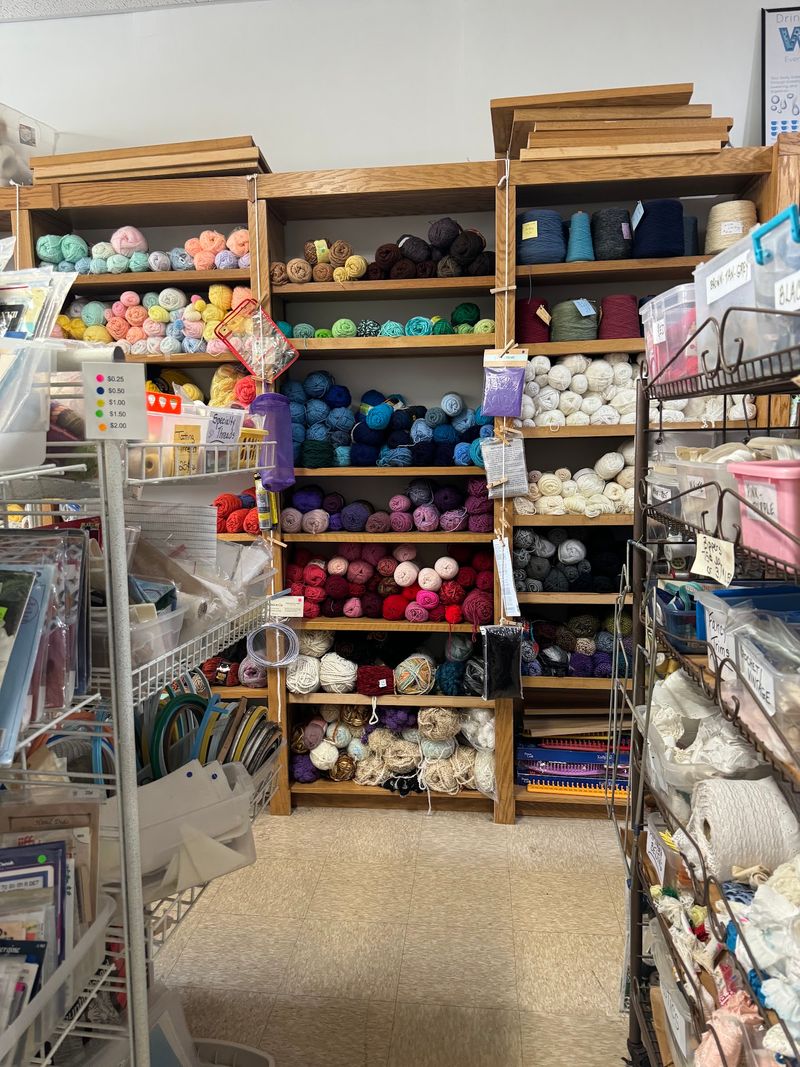
Knitters know the struggle of loving yarn more than their budget allows. This handwork section offers a friendly fix for that problem.
Yarn fills a good part of the shop. You’ll also find knitting needles, crochet hooks, embroidery tools, kits, notions, patterns, and charts.
Crocheters can grab a new hook size without paying full price. Embroidery fans can pick up kits that include everything needed for a project.
Beads and jewelry supplies live in this category as well. Jewelry findings help you turn loose beads into earrings, bracelets, or necklaces.
Handwork books follow the same rule as the sewing books. They’re either from before 1970 or after 2010.
That vintage side can be a real treat for fiber artists. Old patterns sometimes feature stitches and designs that are tricky to find elsewhere.
Because everything is donated, colors and fibers vary from visit to visit. You might spot a rare shade that no store carries anymore.
New crafters can benefit most of all. Trying knitting or crochet costs very little here, so a failed first scarf won’t sting your wallet. Practice makes perfect, and cheap yarn makes practice easier.
Grab A Free Jigsaw Puzzle On Your Way Out
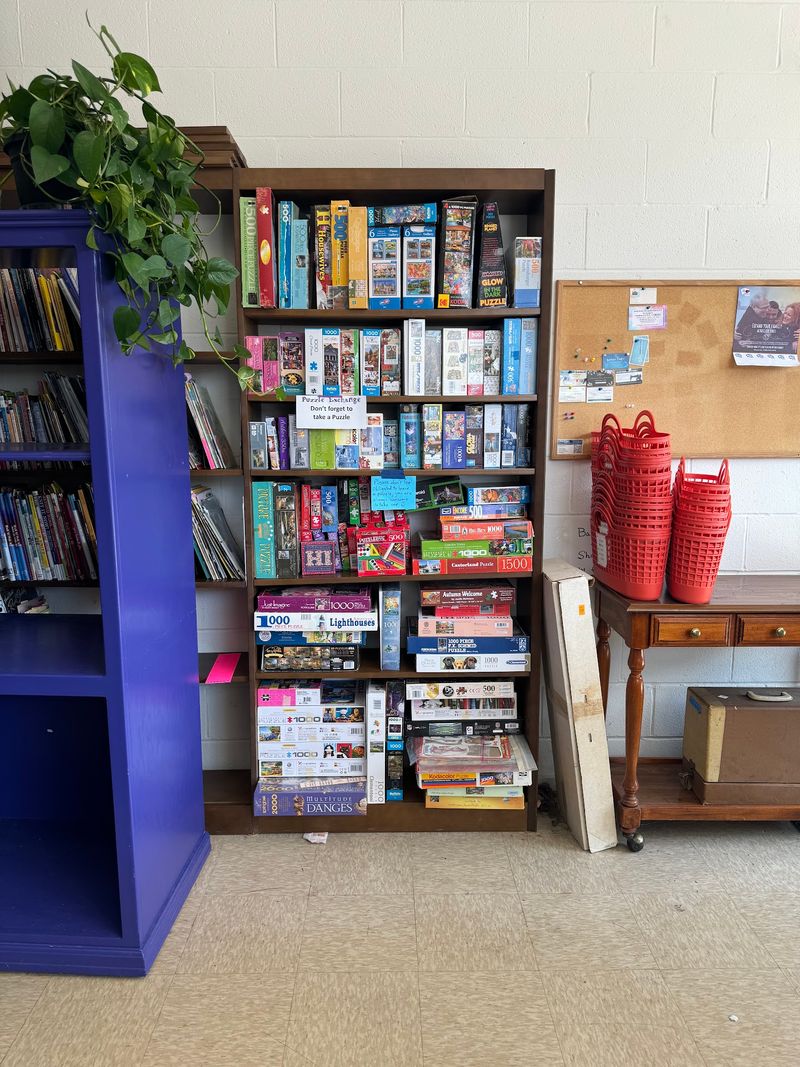
Free stuff always gets attention. At Crafting for Good, the puzzle swap lets shoppers take jigsaw puzzles without paying a cent.
It’s a lovely little extra in a store already packed with deals. Puzzles aren’t exactly craft supplies, but they fit the cozy, creative mood.
The idea works like a sharing shelf. Someone finishes a puzzle, brings it back, and another person gets to enjoy it next.
That keeps puzzles out of closets and away from the trash. It also gives families an easy rainy-day activity for no money at all.
Western New York winters can feel long. A fresh puzzle on the kitchen table might make a gray Saturday afternoon much more pleasant.
If you plan to drop one off, a little care goes a long way. Check that every piece is there before sharing it.
Nobody wants to reach the final corner and find a hole. That moment can test anyone’s patience.
The swap also reflects what the shop is all about. Reusing what we already have and passing it along helps more people enjoy a hobby. Plus, a free puzzle pairs nicely with a bag of discounted yarn.
How A Church Room Grew Into A Charity Powerhouse
Sheryl Byers started Crafting for Good in a single room at the First Congregational Church in Churchville. That humble beginning came around 2017 or 2018.
The idea came from a friend who often shopped at a similar craft thrift store. Byers saw how well the concept could work and decided to build her own version.
Her charitable focus came from a mission trip to the Dominican Republic. There, she saw poor living conditions and families without clean water.
That experience shaped where the profits go today. Food and clean water became the heart of the whole mission.
A temporary closure followed during a tough stretch, like it did for so many places. In 2021, the shop reopened in a more accessible commercial space.
That new home made it easier for crafters to stop by and shop. Sales have kept climbing ever since.
Byers once hoped to host crafting classes in the space. So far, the huge pile of inventory has claimed every spare corner.
Honestly, that’s a nice problem to have. Too many donations means the community believes in the mission, and the shelves stay full of goodies.
Volunteers Keep The Lights On And The Shelves Stocked
Behind every tidy shelf is a crew of volunteers giving their time. They’re the reason this non-profit can keep prices so low.
By October 2026, the shop ran with eight regular volunteers. About six more pitched in on specific projects.
Earlier that year, in July, the store counted 20 volunteers in total. Numbers shift with seasons and schedules, but the commitment keeps going.
Sorting donations is a big job. Someone has to check items, organize them by category, and get them onto the shelves.
All that work helps explain why the space feels so organized. Fitting this much inventory into a small storefront takes real skill.
Craft lovers might enjoy chatting with people who share their hobbies. Volunteers in a shop like this naturally know a thing or two about supplies.
Thinking about helping out yourself? Giving a few hours could be a great way to meet fellow crafters and support a good cause.
It’s also a reminder of how much a small team can do. A handful of dedicated helpers turned donated supplies into thousands of dollars for hungry families and thirsty communities.
Plan Your Trip Around These Short But Sweet Hours
Timing matters here, so mark your calendar. The shop isn’t open every day, since volunteers run the whole operation.
Crafting for Good opens Wednesday through Friday from noon to 5 p.m. On Saturdays, the doors open from 10 a.m. to 3 p.m.
Sunday, Monday, and Tuesday are closed. Showing up on those days will only earn you a view of a locked door.
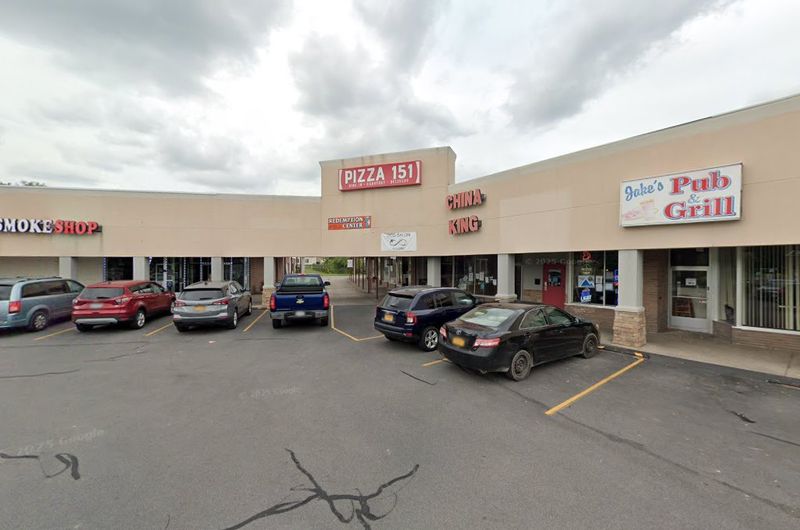
You’ll find the store in Towne Plaza at 4390 Buffalo Rd, North Chili, NY 14514. It sits in the Greater Rochester Area of New York.
That location makes it an easy stop for anyone near Rochester. Crafters coming from farther away can turn it into a fun day trip.
One note for generous crafters: donations are temporarily paused. The shop received so much that it needs time to catch up.
Check before you load up your old supplies to drop off. For now, plan on leaving with more than you bring.
Bring a sturdy bag, or maybe two. Leave extra trunk space, too. With prices this low and goodies this varied, restraint might be the hardest craft skill to practice here.