
You Can Find Prehistoric Fossils In Plain Sight At This Secret Wisconsin Creek
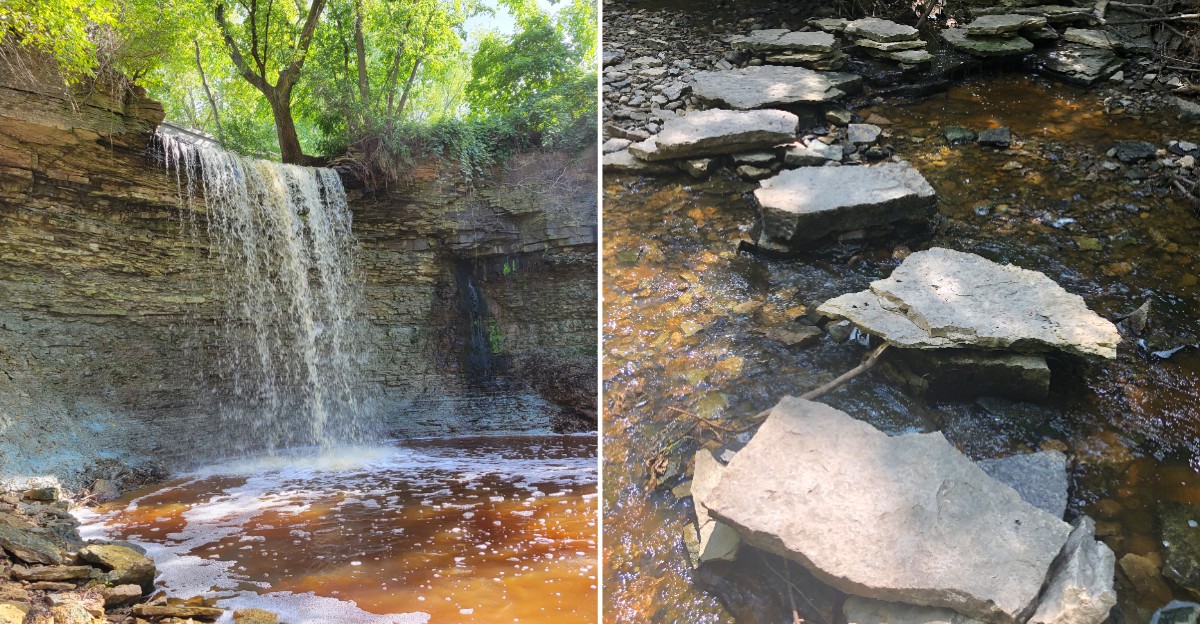
Millions of years are sitting just below the road, and most drivers never realize it.
This small Wisconsin stop drops you into a rocky ravine where ancient limestone walls still hold traces of sea life from roughly 420 million years ago. Long before dinosaurs appeared, this landscape sat beneath a warm, shallow ocean.
Stone steps lead down into the gorge, where layered rock, exposed fossils, and a creek bed make the short walk feel far bigger than it is. A seasonal waterfall adds even more movement after wetter weather.
Up top, shade trees and picnic tables make it easy to linger before heading back out. You can see plenty in less than an hour, but slowing down pays off. Look closely at the rock beneath your feet. Some of the most interesting finds are easy to miss on the first pass.
Ancient Sea Life Locked In The Rock Walls
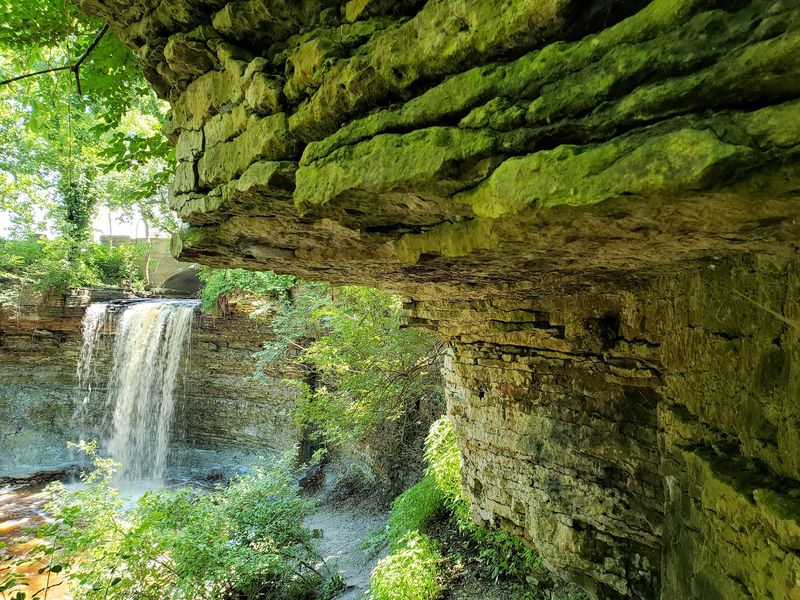
Around 420 million years ago, the ground you stand on at Wequiock Falls County Park sat beneath a warm, shallow tropical sea. Corals, sponges, and shelled creatures lived and died there, and their remains slowly hardened into the gray rock you see today.
You can spot the evidence without any tools at all. Look for small round shapes that resemble tiny honeycombs, curved fan patterns, and shell outlines pressed into the stone like stamps. Brachiopods, corals, crinoid stems, and gastropods all show up in these layers.
The exposed rock around the falls offers a close look at the layers of the Niagara Escarpment, especially from designated viewing areas. Damp stone often reveals patterns that dry rock hides, so an overcast day works in your favor.
You should bring a small flashlight and hold it at a low angle against the wall. Shadows make faint fossil outlines pop into view almost instantly.
Collecting is not allowed in a county park, so photograph what you find and leave it in place. Honestly, seeing an ocean creature frozen in stone hundreds of feet above the modern bay is reward enough.
Where To Park And How To Get There
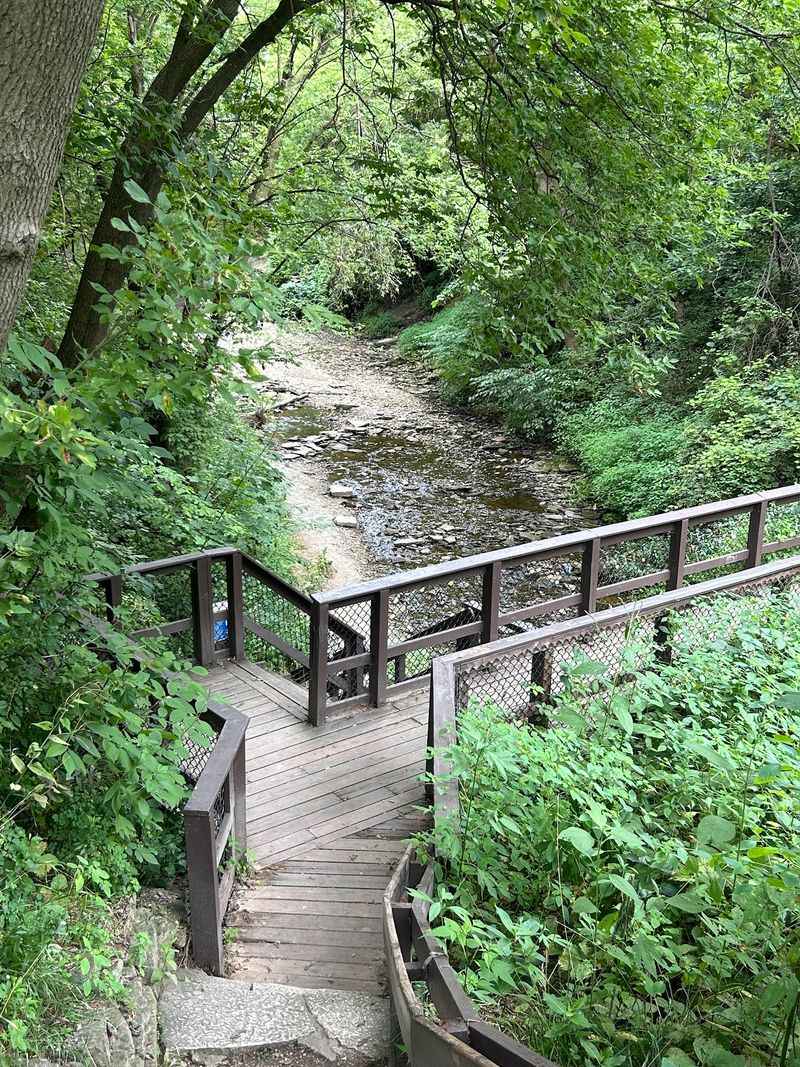
Getting here could not be much simpler. The park sits directly off Highway 57 at 3426 Bay Settlement Rd, Green Bay, WI 54311, roughly ten minutes northeast of downtown Green Bay and right on the common route toward Door County.
Parking is limited, so busy spring days can fill the small lot quickly. Weekend afternoons in late spring fill up fastest, so an early morning arrival gives you the lot mostly to yourself. Wequiock Falls County Park is open from dawn to dusk. No entrance fee applies for walking and hiking.
You will notice the turn comes up quickly. Slow down as you approach, because the sign is small and traffic on the highway moves fast.
Once you park, the lawn, picnic tables, and historical markers sit within a few steps. The staircase down to the creek begins on the west side of the grounds.
Brown County staff maintain the grounds, and you can reach the parks office with questions about seasonal conditions before you drive out.
Taking The Stone Steps Down Into The Ravine
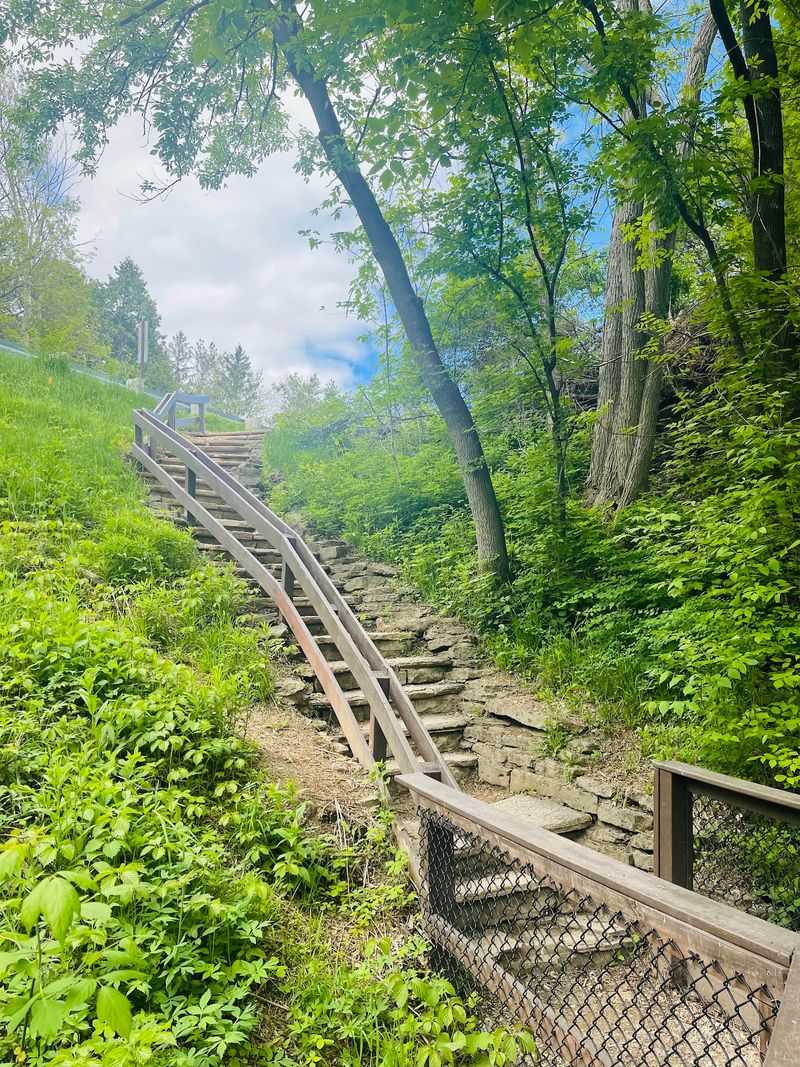
About fifty steps separate the grassy picnic area from the creek bed below, and that short descent changes everything. The air cools, highway noise fades, and rock walls rise on both sides of you.
Footing matters here. The stairs at Wequiock Falls County Park are old stone and concrete, and moisture makes the lower treads slick. Sneakers with real tread beat sandals every time.
Take the descent slowly and use the rail. If you visit with kids, keep them close, since the steps get steep near the bottom and the rocks below are uneven.
The stairs lead toward a lower viewing area where you can get a closer look at the ravine and exposed rock. Stay within designated areas and behind the railings, since terrain beyond them is not maintained.
Guests who cannot manage stairs still have options. A viewing platform and a small walking bridge near the top give you a clear look at the falls and the layered cliff without any climbing involved.
Plan about five minutes each way, plus however long your curiosity keeps you down there.
Timing Your Visit With The Seasonal Waterfall
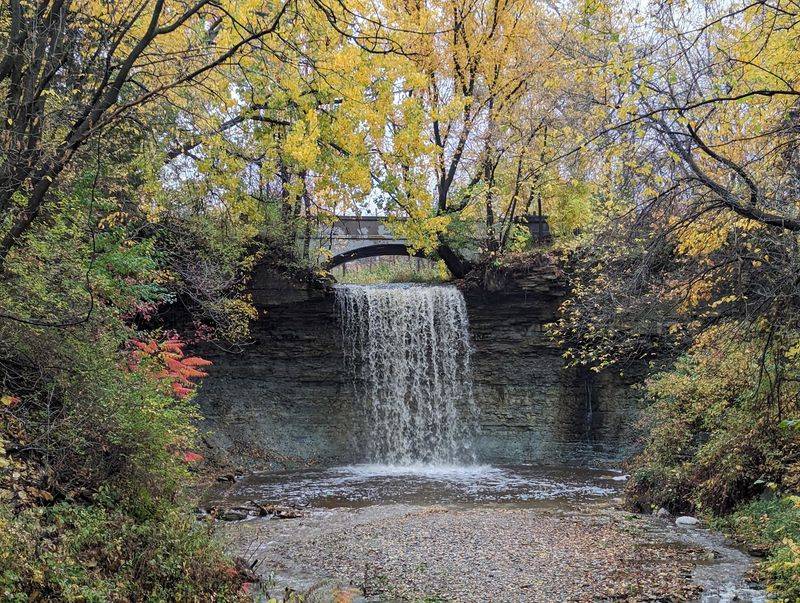
Water flow here changes dramatically through the year, and that matters more than you might expect for fossil hunting. Spring snowmelt and heavy rain send a strong curtain of water over the ledge, which looks beautiful but covers part of the rock face.
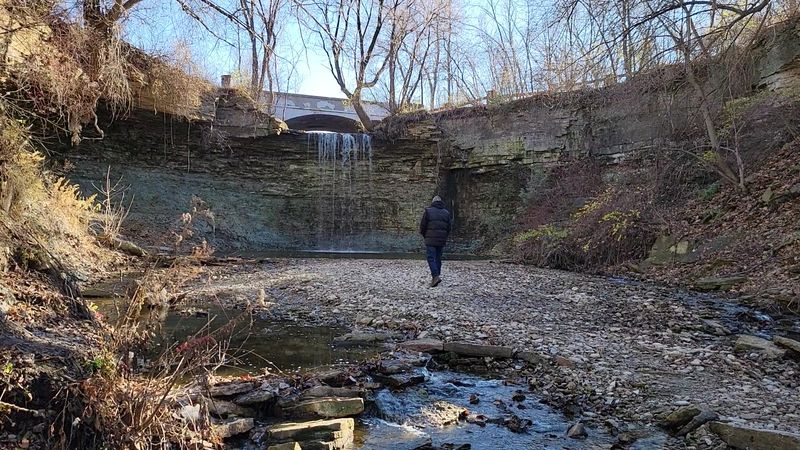
Late summer tells the opposite story. By August the creek often runs dry, and the falls at Wequiock Falls County Park slow to a trickle or stop completely, leaving the entire streambed open for exploring.
A dry spell in summer can expose more of the rock around the falls, making geological details easier to see from designated viewing areas.
Want the waterfall too? Visit a day or two after a good rain in April or May, when flow is strong and the waterfall is especially noticeable from the viewing areas.
Winter brings a different treat. Freezing temperatures turn the seep into columns of ice, and the exposed gray rock behind them stands out sharply. Checking a recent weather forecast before you drive saves disappointment either way.
Reading The Niagara Escarpment Story
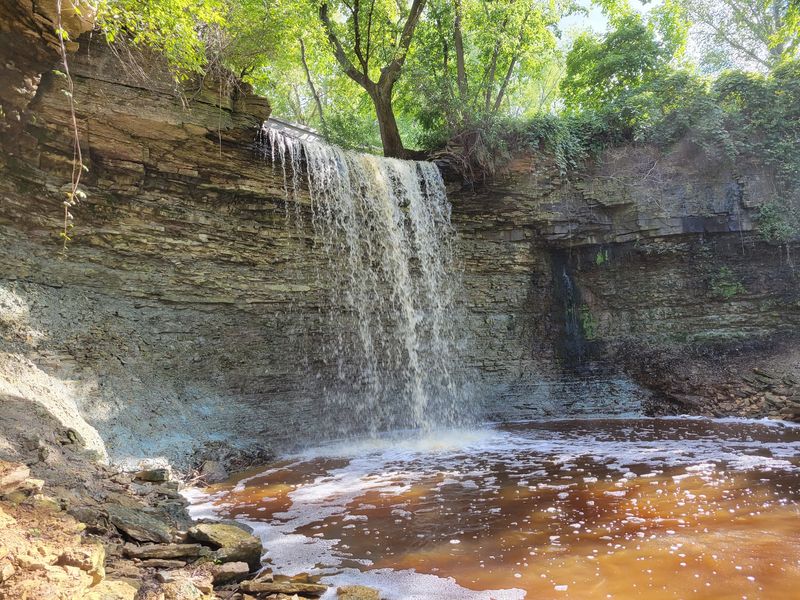
Here is a fact that surprises most people: the same Niagara Escarpment that extends toward Niagara Falls in New York runs through this part of Wisconsin.
Geologists call it the Niagara Escarpment, a long curved ridge of hard dolomite that arcs through Wisconsin, Michigan, Ontario, and New York.
At Wequiock Falls County Park, the escarpment shows itself as a clean vertical wall of layered stone. Each horizontal band represents a different stretch of time when sediment settled on that ancient sea floor.
You can trace the layers with your eyes and see how some bands hold more fossils than others. Some layers preserve fossils and other clues to the ancient marine environment in which these rocks formed.
That same hard rock is why the waterfall exists. Softer material below erodes faster, the tough dolomite cap hangs on, and a ledge forms. Historical markers up top explain a bit of the local background, including early settlement in this part of Wisconsin.
Standing at the base and looking up, you get a rare chance to see hundreds of thousands of years stacked neatly in front of you.
What To Pack Before You Head Out
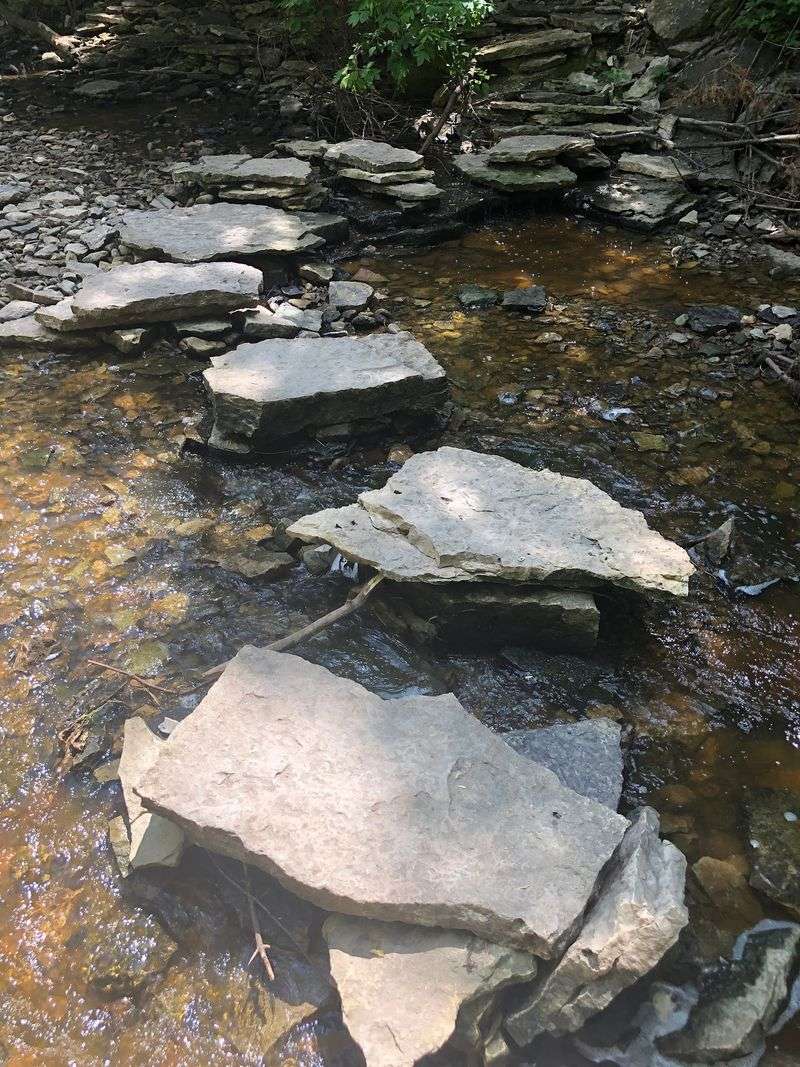
A little preparation turns a quick stop into a genuinely fun outing. Closed-toe shoes with grip top the list, because the creek bed is all loose rock and uneven ledges.
Bug spray deserves a spot in your bag too. Shaded ravines hold moisture, and mosquitoes get lively in summer evenings near Wequiock Creek.
Bring a small magnifying glass or use your phone camera zoom to inspect fossil details. A flashlight or phone camera can help you inspect small details without disturbing the rock.
Water is available at the park, and restrooms sit near the picnic area, which makes this an easy stop for families traveling through northeastern Wisconsin.
Pack out whatever you carry in. Trash cans are not provided, so a spare bag keeps the ravine looking the way you found it. A light jacket helps in spring and fall, since the bottom of the gorge runs noticeably cooler than the parking lot.
Leave the hammers and chisels at home. Rock collecting is not permitted in county parks, and photos travel a lot lighter anyway.
The Graffiti Tunnel And Other Surprises Below
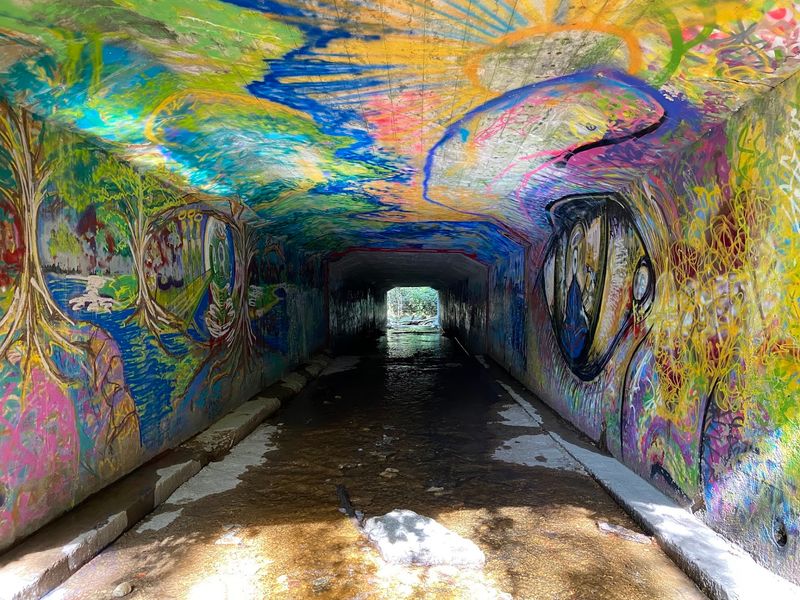
Look below the highway and you may notice a drainage tunnel marked with layers of colorful graffiti. It adds an unexpected man-made feature to a landscape otherwise defined by exposed rock, flowing water, and wooded slopes.
The contrast makes for an interesting view, but visitors should stick to designated areas and remain behind railings. Parts of the ravine beyond the maintained viewing areas can be uneven and are not maintained for public access.
Geocachers have another reason to stop here. Wequiock Falls is home to an EarthCache, which turns the park’s geology into the focus rather than leading visitors to a traditional hidden container.
Spring brings another change to the scenery as woodland plants and wildflowers begin appearing around the shaded slopes. Keep an eye on your footing while exploring the maintained areas, especially after rain when surfaces can become damp.
Small details like these make the park more than a quick waterfall stop. Take your time, look closely, and the landscape starts revealing more with every few steps.
Why A Short Stop Here Stays With You
Not every worthwhile destination requires a full day and a long drive. Wequiock Falls County Park proves that a fifteen-minute pull-off can deliver waterfalls, ancient fossils, wildflowers, and a genuinely quiet place to breathe.
You get something unusual here: physical evidence of the ancient sea that covered this region more than 400 million years ago. Running your eyes over coral patterns pressed into stone gives a sense of scale that no museum display quite matches.
The park works for almost any kind of visit. Families spread out on the lawn, road trippers stretch their legs on the way north, and photographers chase light in the ravine. Go when the creek is low if fossils are your goal, or after rain if the falls are what you want. Both versions reward the trip.
Treat the place gently while you are there. Stay on stable ground, leave the rocks where they sit, and carry your trash back up the stairs.
Next time you pass this stretch of northeastern Wisconsin, pull over. More than 400 million years of geological history are waiting beside the highway, and admission costs nothing.